Understanding Pressure Drop in Plate Heat Exchangers
In modern plant room design, the primary consideration when sizing a pump for heat exchanger applications is the inherent resistance created by the plate pack. Unlike simple pipe runs, a gasketed or brazed plate unit forces fluid through narrow, corrugated channels to maximise turbulence and heat transfer coefficients. This resistance, or pressure drop, must be accurately calculated at the design flow rate to ensure the circulator provides sufficient head. If the pump for heat exchanger duty is undersized, the required temperature approach will not be met, resulting in poor DHW or heating performance for the end user and potential complaints for the M&E contractor.
Building services consultants must refer to the manufacturer's thermal specification sheet, which details the kPa drop at specific flow rates. When UKGP Industrial sizes a unit, we provide detailed data for both the primary and secondary circuits. For instance, a DN100 gasketed unit might exhibit a 30kPa drop at design flow, which must be added to the index circuit resistance. It is critical to account for fouling factors as per BSRIA BG50 guidelines, as even minor scaling can increase the resistance over the system's lifecycle. Predicting these fluctuations ensures that the pump is not operating at the very edge of its curve, allowing for long-term operational stability.
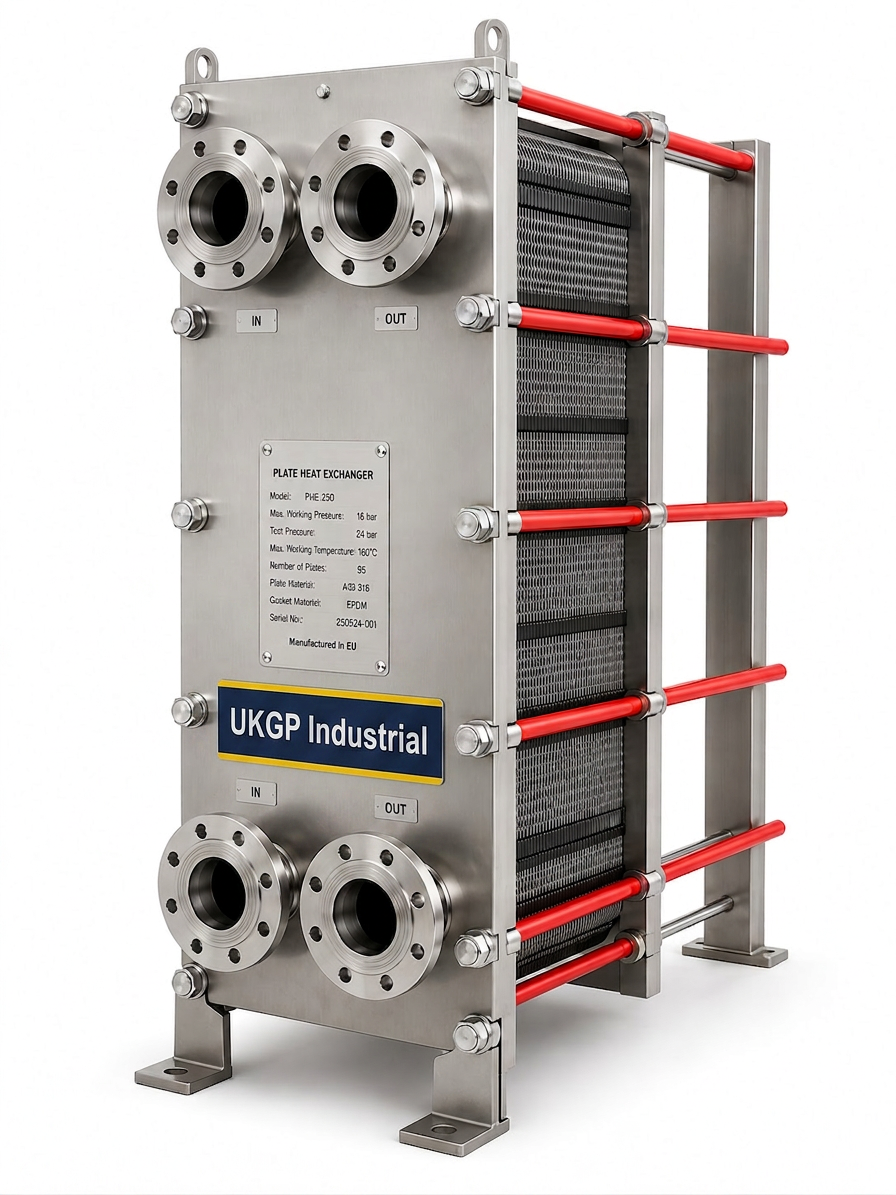
Choosing the right pump for heat exchanger duty also involves assessing the fluid properties. In UK systems, we often deal with glycol-water mixtures for ASHP or chilled water circuits. The increased viscosity of glycol compared to pure water significantly increases the pressure drop across the internal plates. Failing to account for this change results in a pump that cannot move the required volume of fluid, leading to short-cycling of the heat source. When requesting a quote for a UKGP plate heat exchanger, which is available from DN20-DN300 and sized from a full thermal spec, our engineers ensure that these fluid variables are integrated into the sizing process to prevent pump cavitation or overflow.
- Review manufacturer thermal data sheets for precise kPa drops
- Incorporate fouling factors according to BSRIA BG50 standards
- Adjust head calculations for glycol concentrations and viscosity changes
- Identify the index circuit through the heat exchanger for accurate sizing
Optimising Design Flow for Pump Sizing
Correctly sizing a pump for heat exchanger use starts with the fundamental equation Q = m x cp x dT. Understanding the temperature differential (dT) is paramount; a larger dT reduces the required flow rate, which in turn allows for a smaller pump with lower energy consumption. However, in low-temperature heating systems or heat pump applications, the dT is often compressed, necessitating higher flow rates. This increases the demand on the pump for heat exchanger circuits, requiring careful selection of variable speed drives (VSDs) to maintain hydraulic balance without wasting electricity. Consultants should always aim for the most efficient balance between plate surface area and circulator power.
System designers must ensure that the pump for heat exchanger secondary loops can handle the peak demand of the building, whether that is a domestic hot water (DHW) load or a space heating circuit. Over-pumping is a common issue in UK plant rooms, leading to erosion of the copper or stainless steel plates and increased noise levels. By using modern smart pumps that communicate via Modbus or BacNet, engineers can modulate the flow based on real-time temperature sensors. This ensures that the heat exchanger operates within its laminar or turbulent flow design window, as specified in the CIBSE Guide S, maintaining optimal thermal energy transfer throughout the day.
The interaction between the primary boiler circuit and the secondary pump for heat exchanger distribution must be managed via a low loss header or a buffer vessel. This decoupling ensures that the secondary pump does not interfere with the primary flow, preventing issues with boiler temperature sensors and ensuring smooth modulation. UKGP Industrial leads the market in supporting M&E contractors with full technical specifications, ensuring that the pump selected matches the DN size of the plate heat exchanger, which we supply with a 2-year warranty and a standard lead time of 4-6 weeks for both gasketed and brazed variants.
- Calculate mass flow rates based on thermal load and dT
- Utilise VSDs to manage variable flow demands efficiently
- Ensure laminar/turbulent flow transitions are maintained to BSRIA standards
- Utilise smart pump communication for real-time hydraulic balancing
Maintaining System Health and Pump Longevity
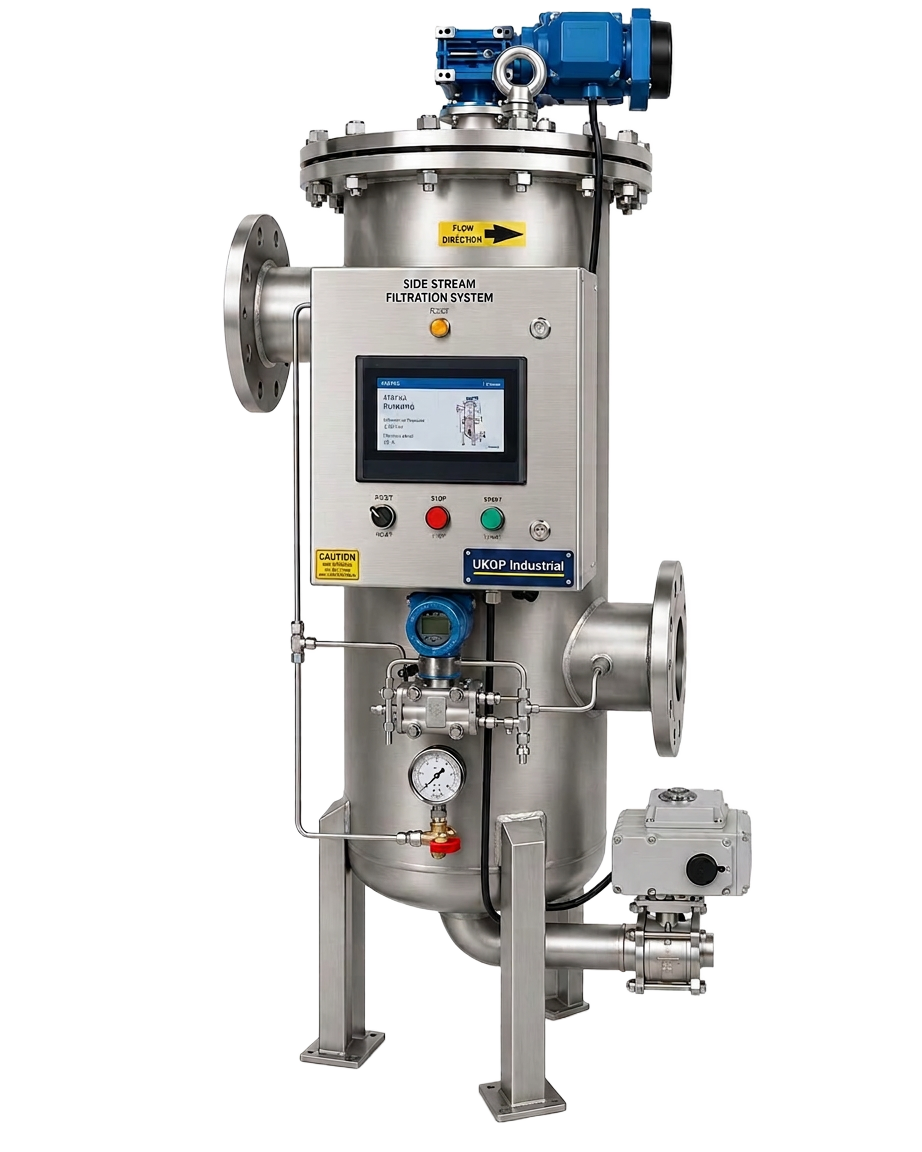
The longevity of a pump for heat exchanger applications is intrinsically linked to the water quality of the system. Suspended solids and magnetite are the primary enemies of both the pump impellers and the narrow channels within a plate heat exchanger. BSRIA BG29 and BG50 highlight the necessity of side stream filtration to remove debris that could otherwise settle in the low-velocity areas of the exchanger. If the pump is forced to circulate grit and sludge, the mechanical seals will fail prematurely, and the heat exchanger will require frequent chemical cleaning to restore its design pressure drop and thermal efficiency.
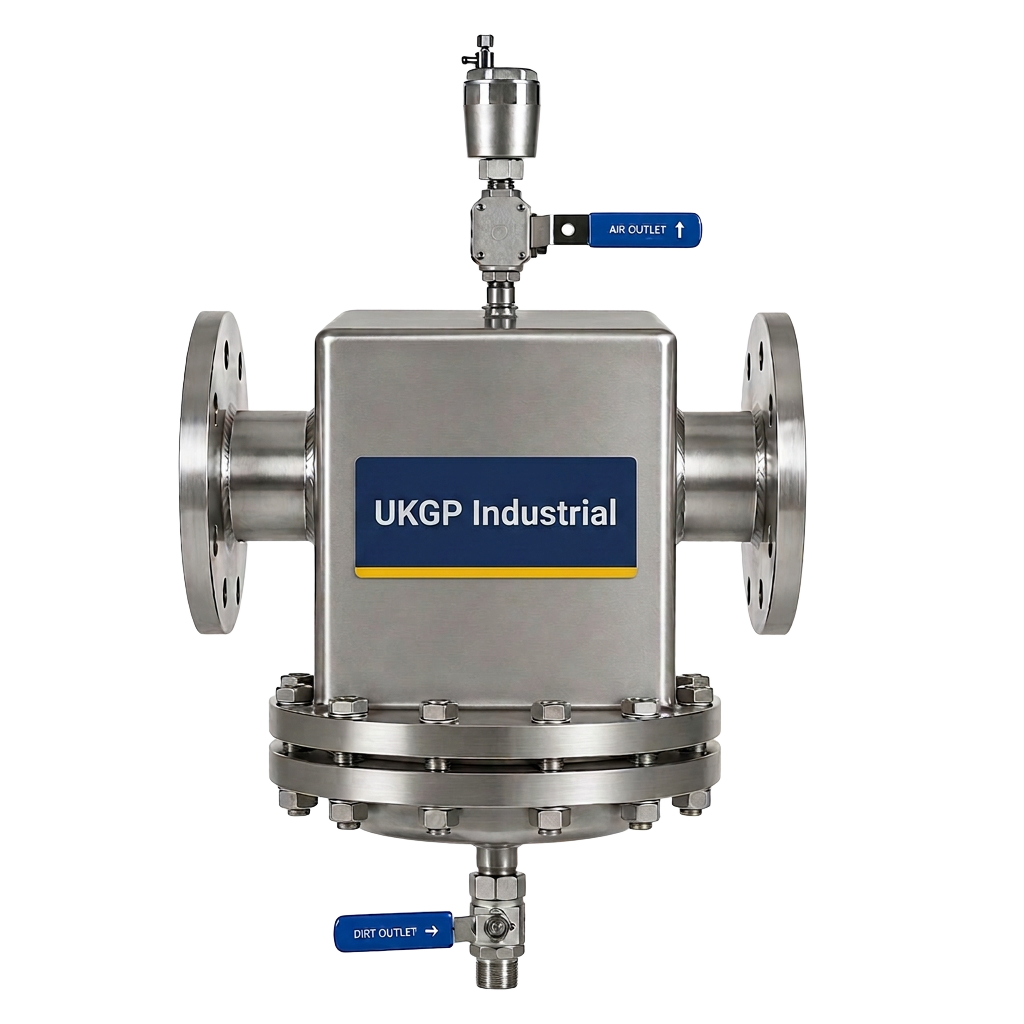
Integrating a high-efficiency air and dirt separator alongside the pump for heat exchanger loops is a mandatory requirement for high-performance UK installations. Entrained air leads to cavitation in the pump, which manifests as excessive noise and mechanical vibration. This vibration can transmit through the pipework to the plate heat exchanger, potentially cracking brazed joints or loosening gasketed seals over time. By maintaining a de-aerated system, the pump operates smoothly on its design curve, ensuring that the thermal energy from the primary source is effectively transferred to the secondary side without interruption or unexpected maintenance costs.
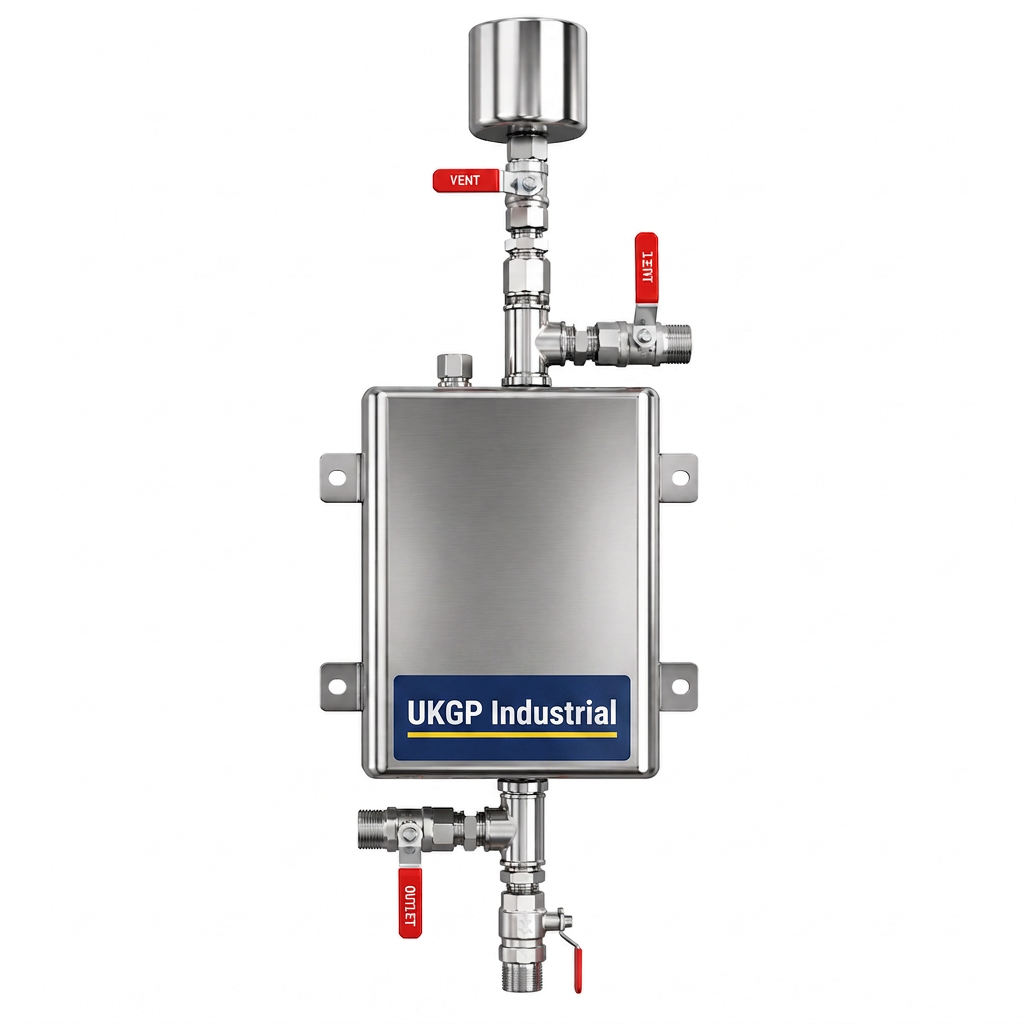
Furthermore, chemical dosing pots should be used to introduce inhibitors that prevent the corrosion of the internal surfaces. A pump for heat exchanger systems that is circulating corrosive water will soon suffer from reduced performance. UKGP Industrial offers a comprehensive range of plant room components, including chemical dosing pots and separators, to complement our plate heat exchangers. By ordering a complete package, contractors benefit from a single point of technical support and the assurance that all components are sized to handle the specific flow and pressure requirements of the project. Our gaskets and plates are designed for durability, supported by our robust 2-year warranty.
- Implement side stream filtration as per BSRIA BG29 guidelines
- Install air and dirt separators to prevent pump cavitation
- Maintain chemical inhibitor levels using dedicated dosing pots
- Perform regular water quality testing to BS 8552 standards
Vibration and Support for Expansion Bellows
Mechanical stress is a significant factor in the failure of a pump for heat exchanger installations. As the pump starts and stops, or modulates its frequency, it creates hydraulic shocks and mechanical vibrations. If the pipework is rigidly connected to the heat exchanger, these forces are transferred directly to the plate pack, which can lead to fatigue in the stainless steel. Utilising expansion bellows and flexible connectors at the pump and exchanger interfaces is essential to isolate these vibrations. This is particularly crucial in high-rise UK developments where thermal expansion of the risers can exert huge lateral forces on the plant room equipment.
Properly specified expansion bellows, compliant with BS EN 14917, allow the pump for heat exchanger circuits to move slightly without stressing the nozzles of the exchanger. When sizing these components, engineers must consider the maximum operating temperature and pressure, as well as the expected axial or lateral movement. Many M&E contractors overlook this during the procurement phase, leading to leaks at the flanged connections. UKGP provides a full range of bellows that perfectly match our DN20-DN300 heat exchanger range, ensuring that every connection is secure and resilient against the rigours of a modern HVAC environment.
Additionally, the mounting of the pump for heat exchanger duties should be on anti-vibration mats or inertia bases. This further reduces the acoustic footprint of the plant room, which is often a key requirement for FMs and building owners. When we provide a full thermal spec for a new plate heat exchanger, we also advise on the necessary ancillary components to ensure a quiet, vibration-free installation. Our 4-6 week lead time ensures that these critical safety and performance components arrive on site in time for the primary mechanical fit-out, allowing for a seamless commissioning process and long-term reliability.
- Use expansion bellows to isolate pump vibration from the exchanger
- Ensure compliance with BS EN 14917 for all flexible connectors
- Select anti-vibration mountings based on the pump's operating frequency
- Protect heat exchanger nozzles from pipework thermal expansion stress
Technical Specs and Lead Times for UK Projects
In the fast-paced UK construction sector, procurement leads require both technical accuracy and reliable delivery schedules. Specifying the correct pump for heat exchanger systems is only half the battle; ensuring the heat exchanger itself arrives on time is equally vital. UKGP Industrial specialises in providing gasketed and brazed plate heat exchangers from DN20 to DN300, tailored exactly to the project's thermal requirements. With a lead time of 4-6 weeks, we enable project managers to stick to tight commissioning deadlines without compromising on the quality or efficiency of the plant room components.
Choosing UKGP means you receive a product backed by a 2-year warranty and a full thermal specification. Whether you are replacing an old shell-and-tube unit or installing a new high-efficiency system, our range of plate heat exchangers is designed to work perfectly with your chosen pump for heat exchanger circuits. We provide all the necessary data—including pressure drops, flow rates, and connection sizes—to allow for a smooth integration into your BIM models and design documents. This transparency helps avoid the costly site modifications that occur when components from different manufacturers do not align correctly.
For plant room engineers and FMs, the ease of maintenance is a major factor. Our gasketed units are designed for easy disassembly, allowing for manual cleaning or plate addition if building loads increase in the future. This flexibility, combined with a correctly sized pump for heat exchanger loops, ensures the building remains efficient for decades. If you are currently sizing a system, we invite you to contact us for a full thermal specification and quote. Our Surrey-based technical team is ready to assist with your DN20 through to DN300 requirements, ensuring your next M&E project is a success.
- DN20 to DN300 sizes available for all HVAC applications
- Standard 4-6 week lead time for UK project sites
- Full thermal specification provided with every quotation
- 2-year warranty on all gasketed and brazed units
Monitoring and Control of Pump Performance
Post-installation, the focus shifts to monitoring the pump for heat exchanger performance to ensure it remains within the design parameters. Integrating pH sensors and transmitters into the circuit allows for real-time monitoring of the water chemistry, which indirectly protects the pump and the exchanger from corrosion or scaling. If the pH levels drift, it can indicate a leak or a failure in the chemical treatment regime, both of which can lead to increased pump strain and reduced heat transfer efficiency. Modern building management systems (BMS) should track these metrics to provide early warnings to FM teams.
The use of differential pressure sensors across the heat exchanger is another best practice. By comparing the actual pressure drop against the manufacturer's spec, engineers can identify exactly when the pump for heat exchanger duty is working harder than it should. An increasing pressure drop usually indicates fouling within the plate pack. Regular monitoring allows for planned maintenance rather than emergency shutdowns. This proactive approach, supported by high-quality UKGP components, ensures that the energy efficiency of the system does not degrade over time, keeping operational costs low for the building owner.
In summary, the selection of a pump for heat exchanger circuits requires a holistic view of the HVAC system. From the initial thermal sizing and pressure drop calculations to the installation of separators, bellows, and sensors, every component plays a role in the system's success. UKGP Industrial is your partner in this process, providing the high-quality plate heat exchangers and technical expertise needed to deliver world-class plant room solutions. Contact us today to discuss your thermal specs and let us provide the robust, warranted equipment your UK project deserves.
- Integrate pH sensors to monitor system health and protect equipment
- Use differential pressure sensors to detect heat exchanger fouling
- Connect all sensors to the BMS for real-time efficiency tracking
- Schedule preventative maintenance based on pump performance data
Frequently asked questions
How do I calculate the pressure drop for a pump for heat exchanger selection?
- The pressure drop is calculated based on the fluid velocity, plate geometry, and viscosity. It is best obtained from a manufacturer's thermal specification sheet. UKGP provides these details for all DN20-DN300 units to ensure your pump is correctly sized.
Can I use a standard circulator pump for heat exchanger duties?
- Yes, provided the pump can handle the specific pressure drop of the plate pack and the required flow rate. High-resistance exchangers often require pumps with a steeper head curve compared to standard radiator circuits.
What is the typical lead time for a UKGP plate heat exchanger?
- Our standard lead time for sized gasketed and brazed plate heat exchangers is 4-6 weeks, allowing for timely integration into your project schedule.
Does UKGP offer a warranty on their heat exchangers?
- Yes, all our plate heat exchangers come with a 2-year warranty, providing peace of mind for consultants and M&E contractors regarding the build quality and longevity.
Should I choose a gasketed or brazed heat exchanger for my pump circuit?
- Brazed units are compact and ideal for high-pressure/temp applications like HIUs. Gasketed units (DN20-DN300) allow for easier maintenance and expansion, often preferred for larger plant room duties where the pump for heat exchanger flow is higher.