The Fundamentals of Thermal Transfer in PHEs
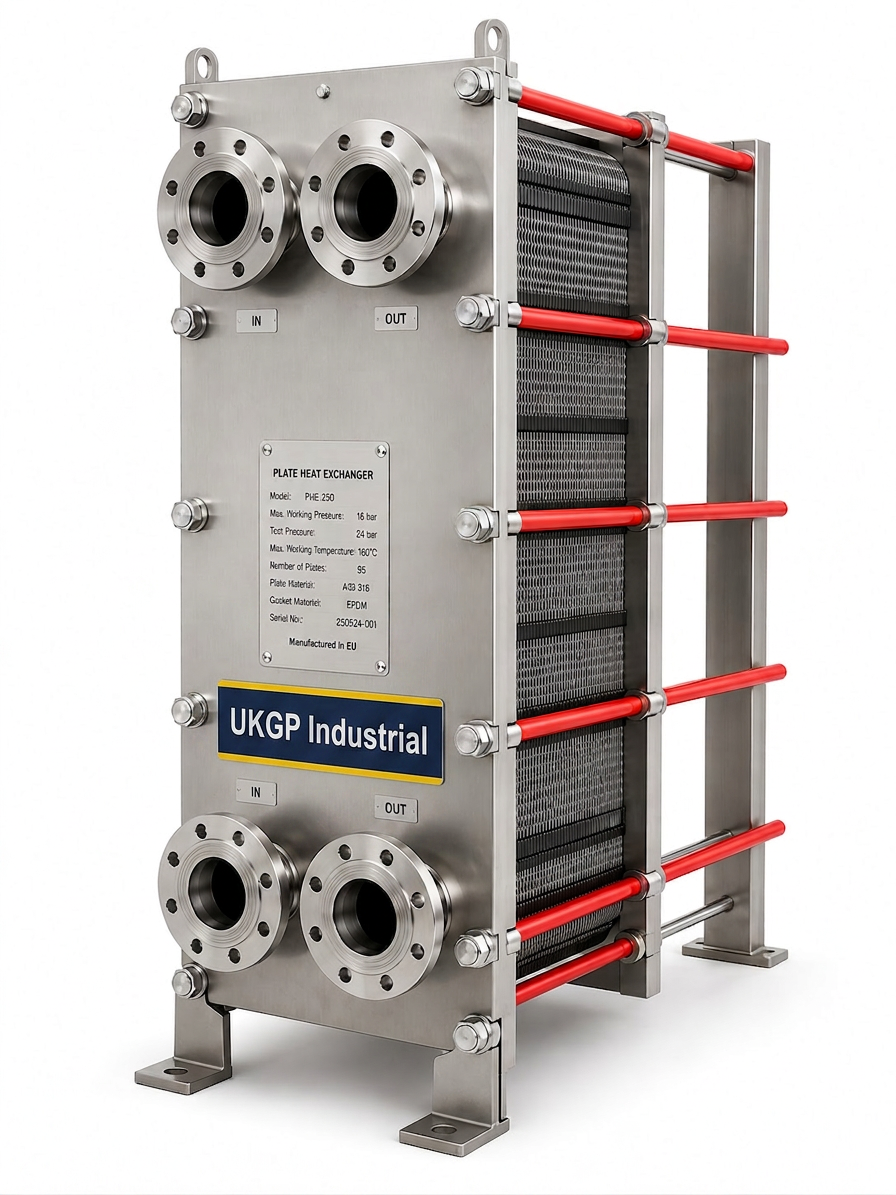
At its core, a plate heat exchanger facilitates the transfer of thermal energy between two fluids without them ever coming into direct contact. This is achieved by passing the fluids through a series of thin, corrugated metal plates. In a standard liquid-to-liquid application, the hot medium (primary) and the cold medium (secondary) flow through alternate channels created by the plate stack. The heat is conducted through the plate material—typically stainless steel—driven by the temperature gradient between the two circuits.
Unlike shell-and-tube exchangers, which rely on large volumes of fluid, the PHE utilises thin films of liquid. This design achieves a significantly higher heat transfer coefficient because the plate corrugations (often referred to as 'chevron' or 'herringbone' patterns) induce intentional turbulence. This turbulence breaks down the boundary layer of the fluid, ensuring that even at low flow rates, the heat transfer remains efficient. This characteristic allows for a very 'close approach,' where the output temperature of the secondary fluid can get within 1°C to 2°C of the primary inlet temperature.
In UK building services, the pressure drop across the plate pack is a critical design constraint. While higher turbulence leads to better heat transfer, it also increases the pumping energy required to move fluid through the narrow channels. Engineers must therefore strike a balance between thermal performance (size of the unit) and the operational costs associated with system pressure losses, typically aiming for drops between 20 kPa and 60 kPa for commercial heating applications.
- Primary and secondary fluid isolation.
- Corrugated plate patterns to induce turbulence.
- High surface-area-to-volume ratio.
- Counter-current flow regimes.
Frequently asked questions
Should I specify a brazed or gasketed heat exchanger?
- Brazed units are more compact and higher-pressure capable but cannot be opened for cleaning. Gasketed units (GPHEs) can be disassembled for plate cleaning or frame expansion, making them better suited for systems with higher fouling risks or where future load changes are expected.
What is the significance of LMTD in PHE selection?
- The LMTD expresses the average temperature difference between the hot and cold fluids. A smaller LMTD indicates a more efficient heat transfer but requires a larger surface area (more plates), which impacts both the footprint and the capital cost.
How does water quality affect PHE performance?
- BSRIA BG29/21 and BG50 highlight that PHEs act as debris traps. While the PHE transfers heat, it often protects expensive plant like chillers or boilers. High-efficiency filtration is required to prevent the narrow plate channels from clogging.
What is a typical 'approach temperature' for UK building services?
- Approach temperature is the difference between the primary inlet and secondary outlet (or vice versa). In UK district heating, an approach of 2°C to 5°C is common. Narrower approaches increase plate count and pressure drop.