Preparation and Safety Protocols
Before any mechanical work begins, the PHE must be fully isolated from the system. In district heating or high-temperature LTHW applications, the primary side may operate at significant pressures and temperatures. It is imperative to follow LOTO (Lock Out, Tag Out) procedures and allow the unit to cool to below 40°C. Failure to do so poses a significant risk of scalding and can cause thermal shock to the plate pack if cold water is introduced too quickly during the cleaning phase.
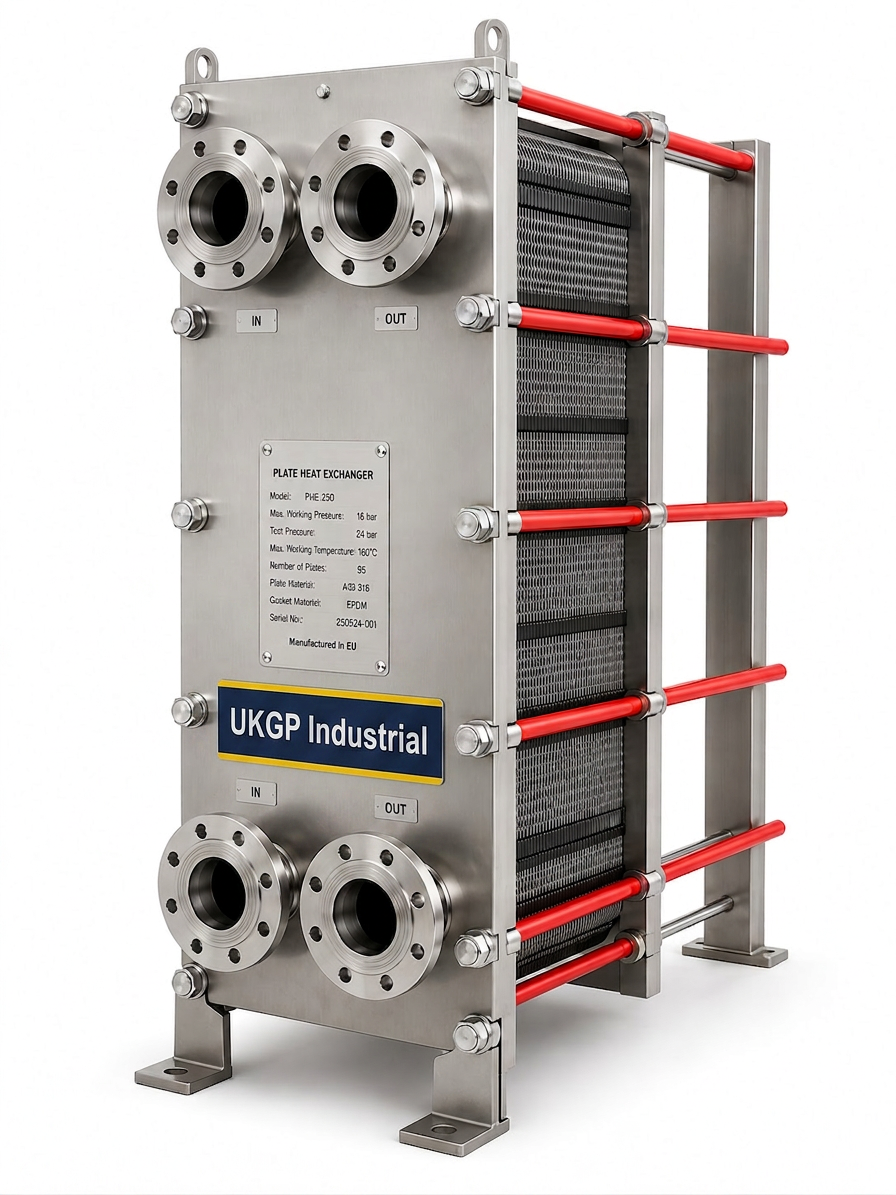
Documentation is the most overlooked step in PHE maintenance. Engineers must record the current plate pack compression. This 'A-measurement' is the distance between the fixed frame plate and the pressure plate (the follower). Even if the unit is leaking, the current measurement provides a baseline. You must also note the plating sequence—typically indicated by a diagonal line painted across the side of the pack—to ensure the 180-degree rotation of alternate plates is maintained during reassembly.
- Verify the original design pressure (bar) and temperature (°C).
- Isolate the PHE using primary and secondary valves.
- Drain the unit completely; note that high-holding-volume units may require several minutes to empty.
- Measure and record the current 'A-dimension' (the distance between the head and follower) at all four corners.
- Lubricate tie-bolt threads with MoS2 or equivalent industrial lubricant to prevent galling.
Frequently asked questions
How do I choose between EPDM and NBR gaskets?
- NBR (Nitrile) is standard for water/oil duties up to 110°C. EPDM is preferred for steam, water/glycol, and higher temperatures up to 160°C. For aggressive chemicals or higher temperatures, Viton (FKM) is required. Always check the original plate schedule before ordering.
Can I replace gaskets on-site or do I need to send the plate pack away?
- Yes, 'Clip-on' or 'Sonneclip' type gaskets can generally be replaced in the plant room if access allows. Glue-on gaskets require more intensive surface preparation and curing time, often making an off-site reconditioning service more cost-effective.
What are the typical signs that PHE gaskets have failed?
- Signs include external leakage (weeping), internal cross-contamination (indicated by pressure spikes or water quality changes), and visible hardening or 'brittleness' of the elastomer. Gaskets should generally be replaced every 4-6 years in constant-duty systems.
How do I know how much to tighten the tie-bolts?
- Consult the manufacturer’s data sheet for the 'A-measurement'. This is the distance between the inside of the frame plates when the pack is tightened. Under-tightening causes leaks; over-tightening can crush the gaskets and deform the plates.