The Engineering Behind Plate Heat Exchanger Plates
In the UK's commercial heating and cooling sector, the efficiency of heat transfer relies heavily on the design of plate heat exchanger plates. These plates are typically pressed with a herringbone or chevron pattern, which serves a dual purpose: it creates a high degree of turbulence even at low flow velocities and provides structural support across the plate pack. This turbulence is critical for achieving high heat transfer coefficients, allowing for a much smaller footprint compared to traditional shell and tube alternatives. UKGP provides bespoke plate heat exchanger solutions where these plates are manufactured to precision, ensuring that the pressure drop and thermal performance align perfectly with the consultant's original schedule and BSRIA BG29 requirements.
When specifying plate heat exchanger plates, engineers must consider the 'theta' value, which refers to the thermal length of the plate. High-theta plates feature a duller angle in the chevron pattern, increasing pressure drop but significantly improving heat transfer for low-temperature applications. Conversely, low-theta plates have a sharper angle, resulting in a lower pressure drop and lower heat transfer rates, ideal for high-flow-rate scenarios where energy consumption of the pumps is a primary concern. Choosing the right configuration of plate heat exchanger plates ensures that the system operates within its design envelope, preventing the common issue of over-pumping which can lead to increased operational costs and accelerated erosion of the mechanical seals.
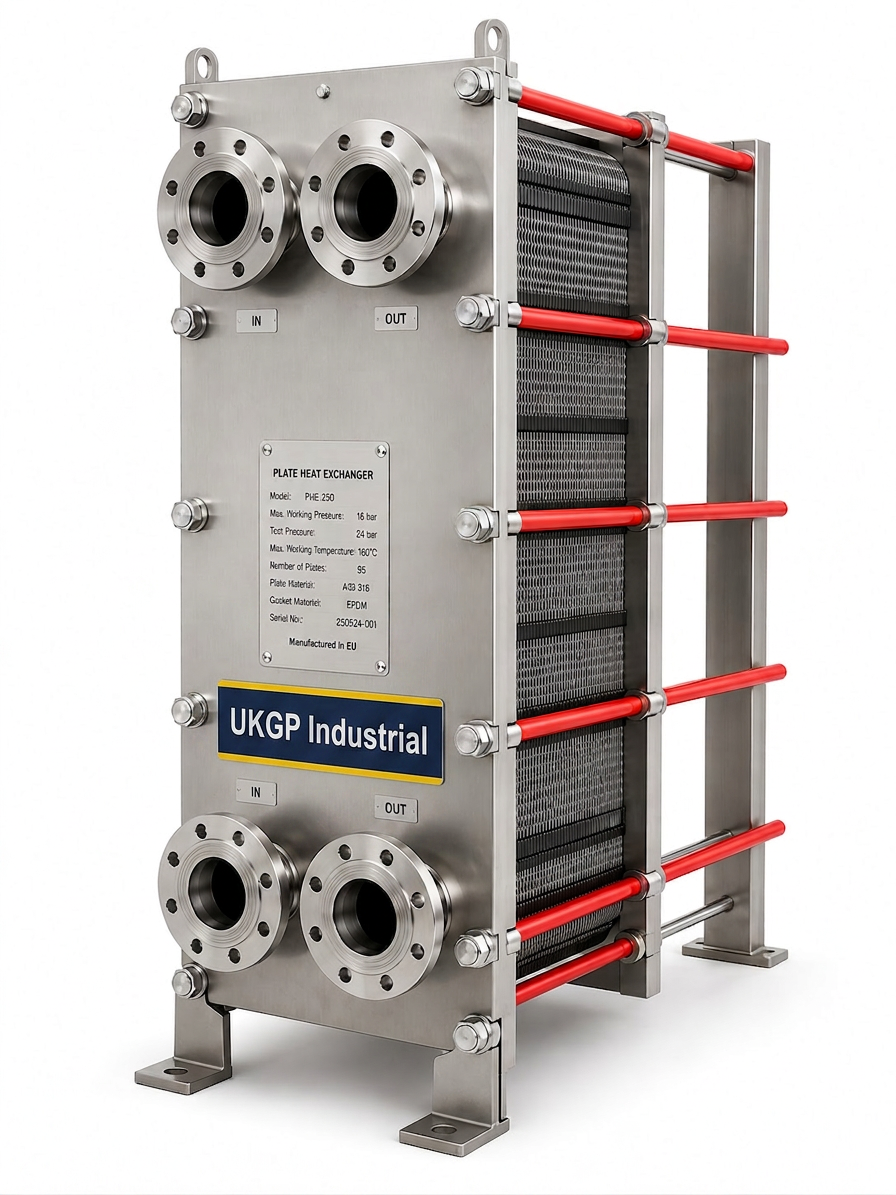
Durability is another hallmark of high-quality plate heat exchanger plates used in Surrey-based industrial and commercial projects. The plates must be rigid enough to withstand the differential pressures between the primary and secondary circuits without deforming. In a gasketed plate heat exchanger, these plates are held together by a frame and tightening bolts, creating a series of channels where the two fluids flow in counter-current directions. The precision of the pressing at UKGP ensures that each of the plate heat exchanger plates seats perfectly against its neighbour, maintaining the integrity of the seals even under fluctuating thermal loads. This reliability is why our gasketed and brazed units have become a staple for M&E contractors seeking long-term performance.
- Chevron patterns designed for maximum turbulence and thermal efficiency
- High-theta vs. Low-theta configurations to match specific flow requirements
- Counter-current flow design for optimal temperature approach
- Precision pressing to ensure structural integrity under pressure
Material Selection and Metallurgy Standards
Material selection for plate heat exchanger plates is dictated by the chemical composition of the primary and secondary fluids and the risk of corrosion. The most common material used in UK building services is 316L stainless steel, which offers excellent resistance to general corrosion and is suitable for most LTHW and chilled water circuits. However, in environments where high chloride levels are present, such as coastal locations or processes involving saline water, 316L may be susceptible to pitting. In these instances, engineers might specify Grade 1 Titanium or 304L stainless steel depending on the budget and the specific corrosive threats identified during the initial water analysis mandated by BS 8552.
Understanding the metallurgy of plate heat exchanger plates is vital for preventing stress corrosion cracking, particularly in systems with high operating temperatures and specific chemical additives. 316L stainless steel contains molybdenum, which enhances its resistance to localized corrosion compared to 304 stainless steel. When UKGP sizes a unit from a full thermal spec, we carefully evaluate the fluid properties to ensure the plate heat exchanger plates are compatible with the planned chemical dosing regime. This prevents the costly mid-lifecycle replacement of plate packs that have been degraded by incompatible inhibitors or high oxygen levels, which can occur if side stream filtration is not properly integrated.
For brazed plate heat exchangers, the plates are typically copper-brazed, though stainless steel brazing is available for aggressive fluids. The choice of brazing material is just as critical as the grade of the plate heat exchanger plates themselves. Copper-brazed units are the standard for most UK HVAC applications due to their cost-effectiveness and compact size. However, if the secondary fluid is corrosive to copper, such as in certain industrial processes or ammonia-based refrigeration, an all-stainless steel construction becomes necessary. At UKGP, we provide both gasketed and brazed options with DN20-DN300 connections to suit any plant room requirement, supported by a 2-year warranty for peace of mind.
- 316L Stainless Steel as the standard for superior corrosion resistance
- Titanium options for high-chloride or saline applications
- Copper vs. Stainless Steel brazing for different fluid compatibilities
- Compliance with BS 8552 for water quality and material longevity
Importance of Secondary Side Stream Filtration
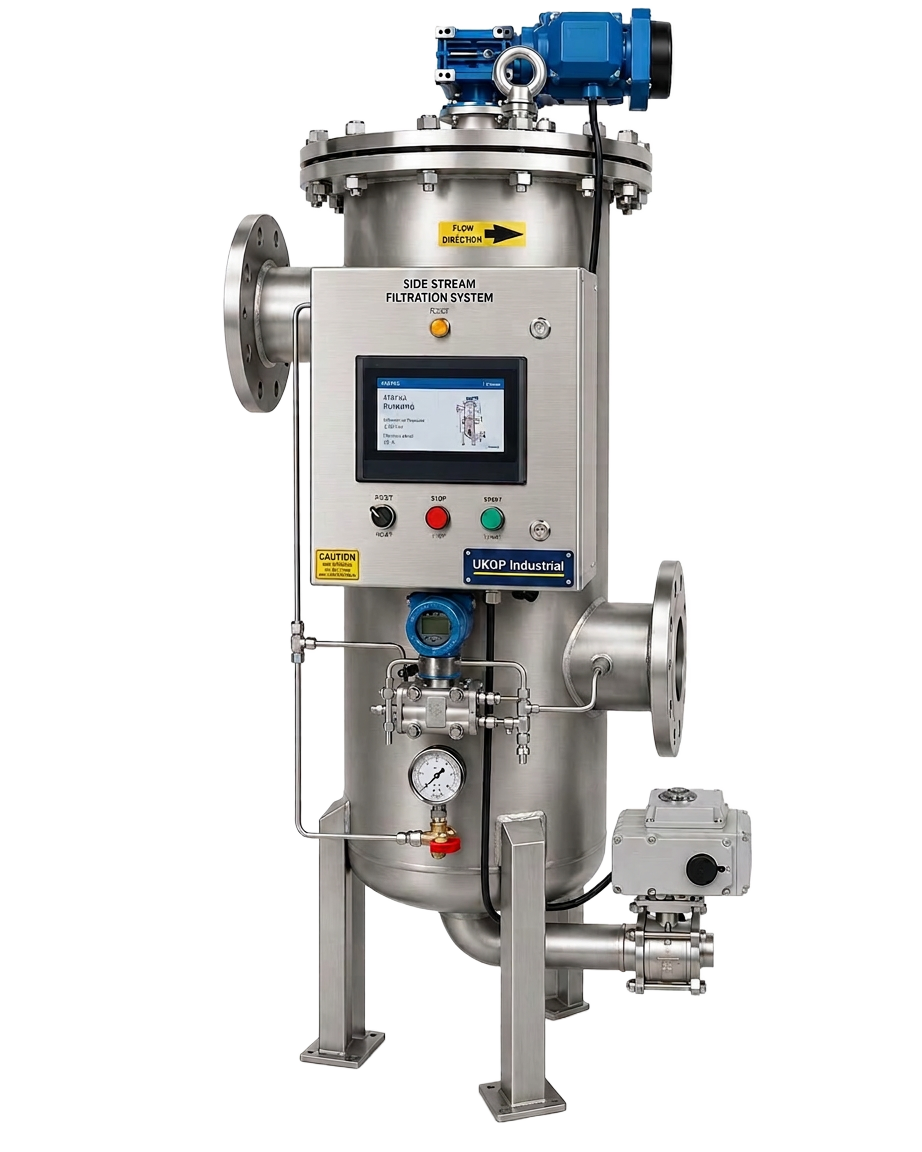
The longevity of plate heat exchanger plates is inextricably linked to the cleanliness of the circulating water. Suspended solids, magnetite, and debris can quickly foul the narrow channels between the plates, leading to reduced heat transfer and increased pressure drops. This is specifically why BSRIA BG50 emphasizes the role of side stream filtration in closed-loop systems. By installing a side stream filtration skid alongside your heat exchanger, you can continuously remove particles down to 5 microns, ensuring that the plate heat exchanger plates remain free from deposits that would otherwise cause insulating blankets and localized 'under-deposit' corrosion.
Fouling is the primary reason for the drop in performance of plate heat exchangers over time. When debris accumulates on the surface of the plate heat exchanger plates, the turbulent flow is disrupted, and the effective surface area for heat exchange is reduced. This often leads to increased boiler flow temperatures to compensate for the loss, which in turn reduces the overall seasonal efficiency of the heating plant. By employing a UKGP side stream filtration system, M&E contractors can ensure that the heat exchanger maintains its designed performance from day one, significantly reducing the frequency of scheduled teardowns and manual cleaning of the plate pack.
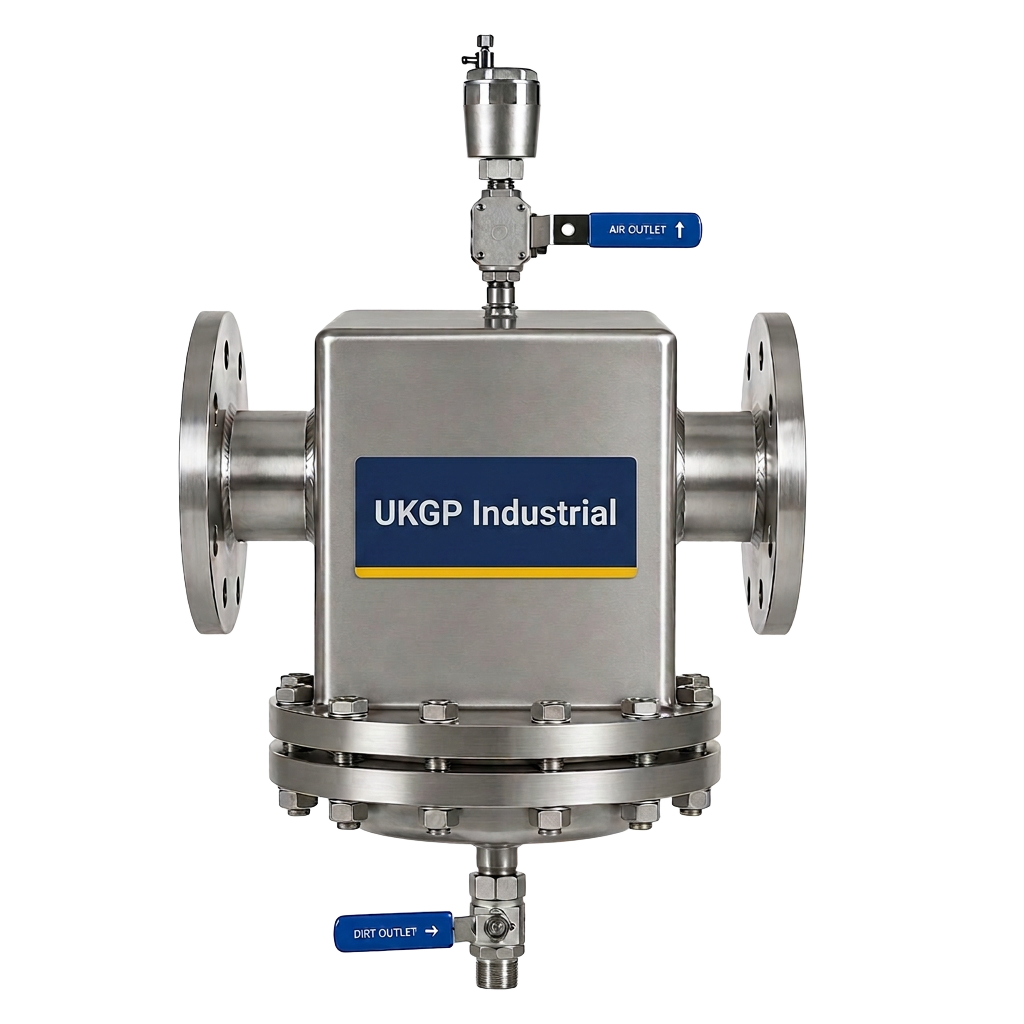
In addition to manual cleaning, the presence of abrasive solids in the water can lead to erosion of the plate heat exchanger plates. High-velocity particles can wear down the stainless steel over time, particularly at the pinch points of the chevron pattern. This erosion can eventually lead to plate perforation and cross-contamination between the primary and secondary circuits. Integrating robust filtration and air & dirt separators into the plant room design is a proactive measure to protect the investment in the heat exchanger. UKGP offers a range of filtration solutions that complement our plate heat exchangers, ensuring a comprehensive approach to system health and efficiency.
- Elimination of magnetite and debris that foul thin heat transfer channels
- Reduction in under-deposit corrosion risks for stainless steel plates
- Improved overall system efficiency by maintaining design Delta T
- Extended intervals between required heat exchanger maintenance
Gasket Types and Sealing Integrity
While the focus is often on the plate heat exchanger plates themselves, the gaskets that sit between them are equally critical for system reliability. Most UK applications utilize EPDM (Ethylene Propylene Diene Monomer) or NBR (Nitrile Butadiene Rubber) gaskets. EPDM is generally preferred for heating systems as it handles higher temperatures and is resistant to most water treatment chemicals. NBR is more commonly used for oil-based applications or lower-temperature chilled water. Ensuring the compatibility of the gasket material with the fluid and the plate heat exchanger plates is a fundamental step during the procurement process to avoid leaks and unplanned downtime.
The method by which gaskets are attached to the plate heat exchanger plates has evolved. Traditional glue-on gaskets are still found in older systems, but modern designs typically use clip-on or 'Sonneclip' systems. These glueless gaskets make on-site maintenance significantly faster and cleaner, as there is no need to scrape off old adhesive when replacing seals. For FMs and plant-room engineers, this means that a gasketed plate heat exchanger can be serviced, cleaned, and reassembled within a shorter window, minimizing disruption to building occupants. UKGP's range of gasketed units emphasizes this ease of maintenance, with lead times of just 4-6 weeks for new units or replacement packs.
Proper tightening of the plate pack is essential to ensure the gaskets create a watertight seal against the plate heat exchanger plates. Over-tightening can crush the gaskets and deform the plates, while under-tightening leads to bypass or external leaks. Technicians must always refer to the minimum and maximum tightening dimensions (the 'A' dimension) stamped on the unit's data plate. Following these manufacturer specifications, alongside BSRIA guidelines, ensures that the heat exchanger remains a reliable component of the HVAC infrastructure. If you are seeing leaks or a drop in performance, it may be time to request a quote for a new, precisely sized UKGP plate heat exchanger as a replacement.
- EPDM gaskets for high-temperature LTHW and DHS applications
- NBR gaskets for specialized cooling and oil-based circuits
- Clip-on gasket designs for rapid, glueless on-site servicing
- Strict adherence to 'A' dimensions to prevent plate and gasket damage
Maintaining Efficiency with Chemical Dosing Pots
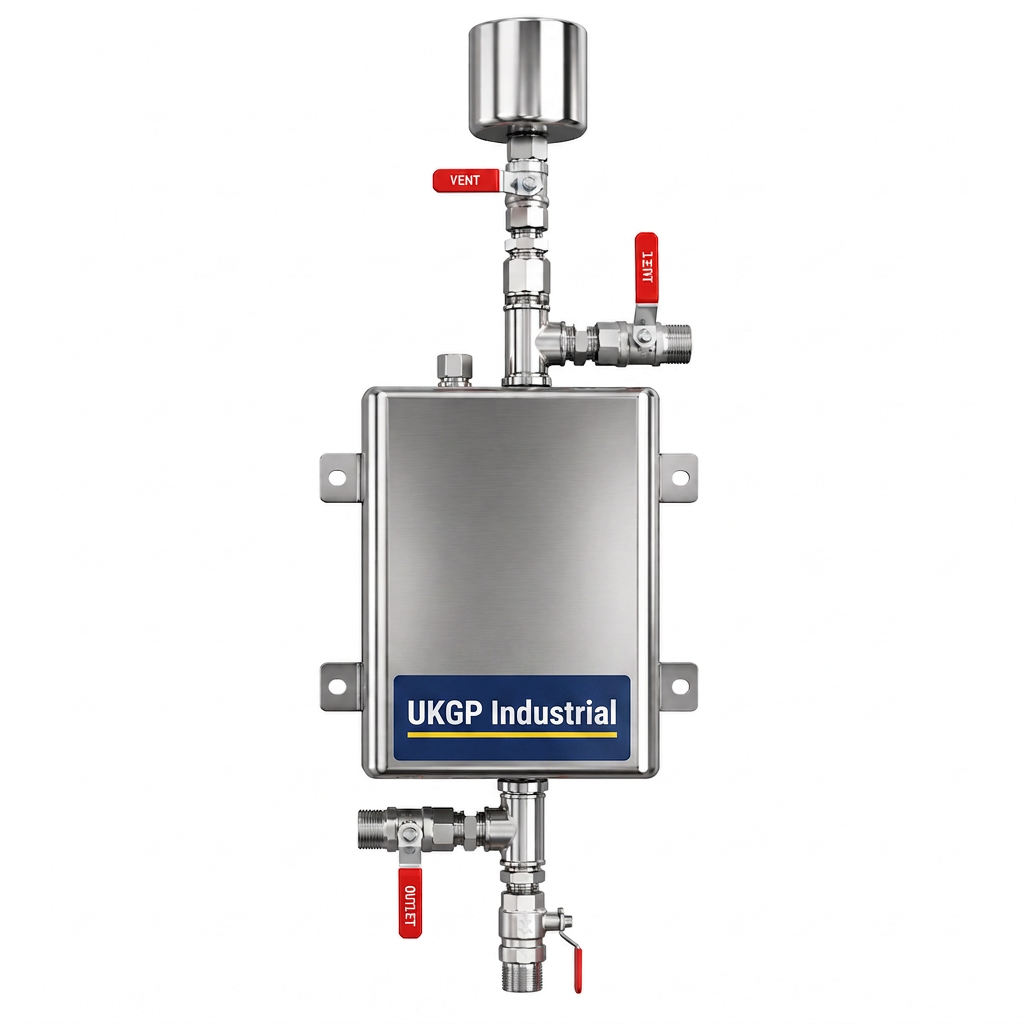
The chemical environment within the circuit significantly impacts the lifespan of plate heat exchanger plates. To prevent scaling and corrosion, water must be treated with appropriate inhibitors, which are typically introduced via a chemical dosing pot. Without correct dosing, calcium carbonate can precipitate onto the hot surfaces of the plate heat exchanger plates, creating a scale layer that acts as an insulator. This not only reduces heat transfer efficiency but can also cause certain areas of the plate to overheat, leading to thermal stress and potential fatigue cracks in the metal over many thermal cycles.
BSRIA BG29 and BG50 provide clear frameworks for the chemical cleaning and ongoing treatment of water systems to protect components like plate heat exchangers. Using a UKGP dosing pot ensures that these chemicals can be introduced safely and effectively into the system. It is vital that the dosing is monitored and maintained; too little inhibitor allows corrosion to proceed, while certain chemicals in excess can actually attack the gaskets or the plate heat exchanger plates. Proactive water treatment, verified by regular sampling and pH monitoring, is the most cost-effective way to preserve the integrity of the heat transfer surfaces and the wider system.
When designing a system, engineers often overlook the synergy between the chemical dosing regime and the physical components. A well-maintained system where the plate heat exchanger plates are kept clean of scale through disciplined dosing will always outperform a neglected one. At UKGP, we support engineers in Surrey and across the UK by providing high-quality dosing equipment alongside our heat exchangers. If your existing plates are heavily scaled or showing signs of corrosion, we can provide replacement plate packs or completely new gasketed units, DN20-DN300, sized from a full thermal spec and covered by our 2-year warranty for total peace of mind.
- Prevention of limescale insulation on heat transfer surfaces
- Safe introduction of inhibitors via industrial-grade dosing pots
- Adherence to BSRIA water treatment standards for system longevity
- Integration of pH sensors for real-time monitoring of fluid health
Replacing and Upgrading Plate Heat Exchangers
In many UK refurbishment projects, the decision must be made whether to replace individual plate heat exchanger plates or to install a completely new unit. If the frame is in good condition and only a few plates are damaged, a partial plate pack replacement might be viable. However, if the unit is more than 10-15 years old, the cost of a full set of replacement plates and gaskets often approaches the cost of a new, more efficient modern unit. Newer plate designs offer better thermal performance and lower pressure drops than older models, meaning a full replacement can often pay for itself through reduced energy bills and improved system reliability.
When specifying a replacement, it is crucial to provide a full thermal spec including flow rates, fluid types, and temperature profiles for both the primary and secondary sides. This allows UKGP to size a plate heat exchanger that perfectly matches the current requirements of the building, which may have changed since the original plant was installed. Our lead times of 4-6 weeks for both gasketed and brazed units ensure that projects remain on schedule, and our DN20 to DN300 connection range fits seamlessly into existing pipework configurations. Every unit we supply comes with a 2-year warranty, providing long-term security for procurement leads and facility managers.
Finally, when installing new plate heat exchanger plates or units, it is essential to consider the wider system components. This includes the use of expansion bellows to accommodate thermal movement in the pipework and air & dirt separators to keep the fluid clean. By taking a holistic approach to the plant room, you ensure that the plate heat exchanger operates in an environment that maximizes its lifespan. For expert advice or to request a quote based on your specific thermal requirements, contact the UKGP team. We specialize in high-performance heat transfer solutions tailored for the demanding UK building services market, ensuring compliance with all relevant CIBSE and BSRIA standards.
- Economic assessment of plate replacement vs. full unit upgrade
- Sizing from full thermal specifications for bespoke efficiency
- 4-6 week lead times to minimize downtime during plant refurbishments
- 2-year warranty on all gasketed and brazed heat exchangers
Frequently asked questions
What is the standard lead time for UKGP plate heat exchangers?
- Our standard lead time for both gasketed and brazed plate heat exchangers is 4-6 weeks, allowing for precision sizing and assembly to meet your specific thermal requirements.
How do I know if I need to replace my plate heat exchanger plates?
- Signs include a drop in heat transfer efficiency, increased pressure drop across the unit, visible external leaks, or cross-contamination of fluids. We recommend a full thermal assessment to determine if a plate pack or full unit replacement is necessary.
What materials are available for UKGP plate heat exchanger plates?
- We primarily supply 316L stainless steel for general HVAC applications, but we can also provide Titanium or other specialized alloys for more aggressive or saline environments.
Are your heat exchangers covered by a warranty?
- Yes, all UKGP plate heat exchangers come with a 2-year warranty as standard, covering both gasketed and brazed units from DN20 to DN300.
Can you size a heat exchanger for me?
- Absolutely. We size all our units based on a full thermal spec provided by the client, ensuring the plate configuration and material are optimized for your specific flow rates and temperatures.