Defining the Plate Fin Heat Exchanger Configuration
A plate fin heat exchanger is constructed using layers of corrugated sheets, or fins, sandwiched between flat metal separator plates. This architecture is typically vacuum-brazed to create a monolithic, highly compact block that offers a significant surface-area-to-volume ratio. In industrial gas processing or specific high-pressure gas-to-liquid applications, the plate fin heat exchanger excels due to its ability to handle multiple process streams within a single unit. For UK building services consultants, it is important to note that these units are often non-serviceable, meaning that any internal fouling or blockage can lead to complete replacement rather than a simple cleaning procedure, unlike modular gasketed alternatives.
Comparing the internal geometry of a plate fin heat exchanger against a traditional plate and frame unit reveals distinct mechanical differences. The fins in a plate fin heat exchanger provide structural support to the separators while dramatically increasing the heat transfer coefficient through induced turbulence. However, this intricate internal path is prone to particulate accumulation. For facilities managers following BS 8552 or BSRIA BG50 guidelines for water quality, the risk of high-pressure drops across such dense fin arrangements often outweighs the space-saving benefits in standard LTHW or DHW circuits. This is why UKGP focuses on accessible, gasketed solutions that ensure long-term operational viability in commercial plant rooms.
Engineers must consider the thermal stresses associated with the rigid brazed structure of a plate fin heat exchanger. Because the plates and fins are fused together, they lack the mechanical flexibility to handle rapid thermal cycling or significant expansion as effectively as an assembly with flexible gaskets. When sizing a unit for a commercial secondary heating loop, the robustness of a frame-supported plate pack usually provides a more forgiving solution to varying load demands. While the plate fin heat exchanger remains the gold standard for specialised cryogenics and liquid natural gas processing, the UK HVAC market generally finds higher value in the modularity and simplified maintenance of the plate and frame design.
- Extremely high surface area density for space-constrained industrial sites.
- Ideal for cryogenic applications or gas-liquid heat transfer.
- Vacuum-brazed construction provides high structural integrity.
- Support for multi-stream thermal exchange in a single block.
The Gasketed Plate and Frame Advantage
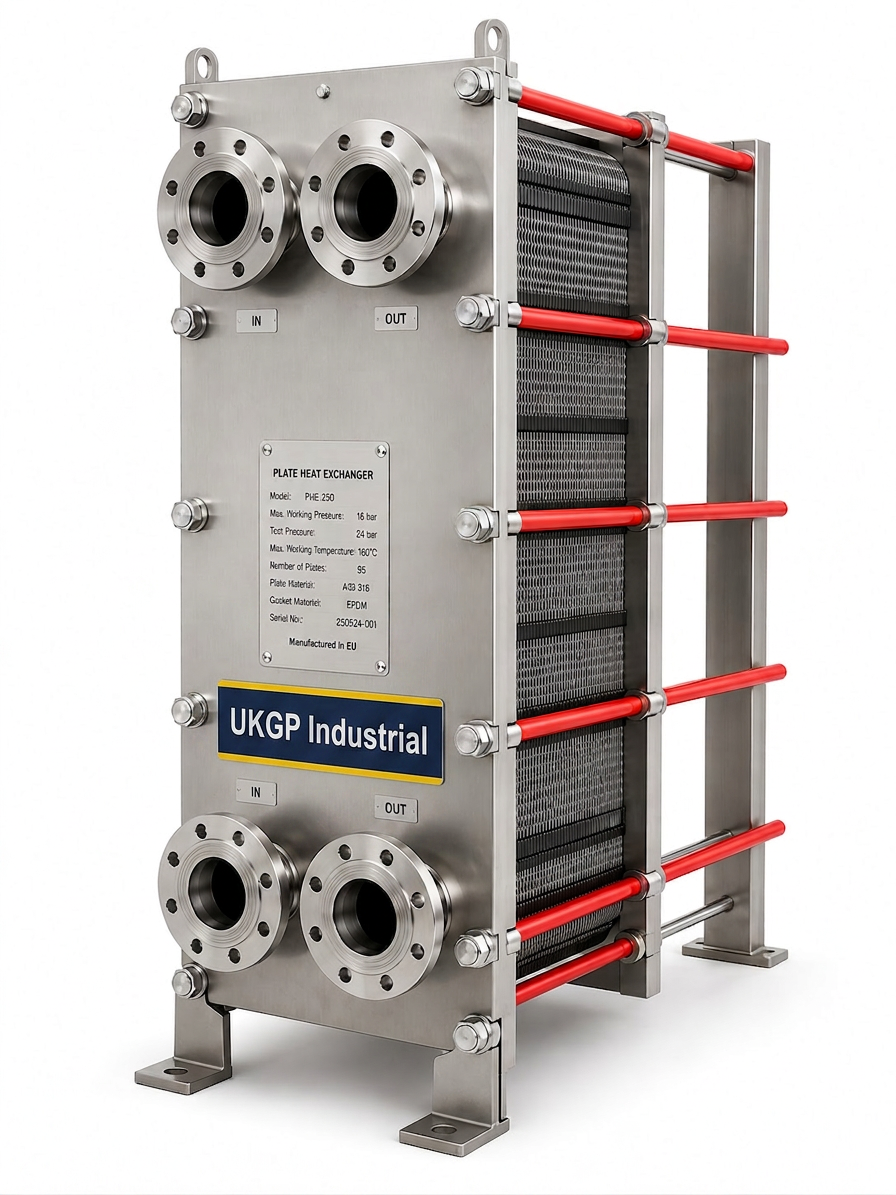
In the UK building services sector, the gasketed plate and frame heat exchanger is the dominant choice for plant room renovations and new builds alike. Unlike the permanent assembly of a plate fin heat exchanger, these units consist of individual stainless steel plates secured by a heavy-duty frame and compression bolts. This design allows for the unit to be completely dismantled for inspection, manual cleaning, or the addition of extra plates should the building load increase. This adaptability is vital for future-proofing HVAC systems in line with evolving CIBSE guidance on heat degredation and decarbonisation of the grid.
UKGP provides a comprehensive range of plate heat exchangers, available in both gasketed and brazed configurations from DN20 to DN300. When you move away from a plate fin heat exchanger towards a gasketed UKGP plate heat exchanger, you gain the luxury of site-serviceability. If a leak occurs or a plate becomes damaged, individual components can be replaced within hours, preventing long periods of system downtime. For procurement leads and plant room engineers, this represents a significant reduction in the total cost of ownership compared to replacing a fully brazed block that has reached the end of its service life.
Our units are sized specifically from a full thermal spec provided by the client, ensuring that the pressure drop and heat transfer parameters exactly match your system requirements. With a standard lead time of 4-6 weeks and a 2-year warranty, UKGP ensures that M&E contractors can meet tight project schedules without sacrificing quality. Whether you require a gasketed DN100 unit for an office block or a smaller brazed unit for a residential heat interface, we provide the technical expertise to ensure the plate configuration outperforms a generic plate fin heat exchanger in liquid-to-liquid HVAC scenarios.
- Modular design allows for easy capacity expansion or reduction.
- Gasketed seals permit complete disassembly for mechanical cleaning.
- Available in DN20 to DN300 sizes with 4-6 week lead times.
- Full 2-year warranty on all sized UKGP thermal solutions.
Maintenance Protocols and BSRIA Standards
Maintaining system efficiency requires strict adherence to water quality standards, specifically BSRIA BG29 for pre-commission cleaning and BG50 for ongoing water treatment. A plate fin heat exchanger is notoriously difficult to clean once fouled due to the microscopic passages between the fins. If the secondary loop contains debris from old pipework, a plate fin heat exchanger may act as a filter, quickly reaching a terminal pressure drop. In contrast, plate and frame exchangers allow for chemical cleaning-in-place (CIP) or manual scrubbing of each plate, which aligns better with the practical maintenance regimes demanded by UK facilities managers.
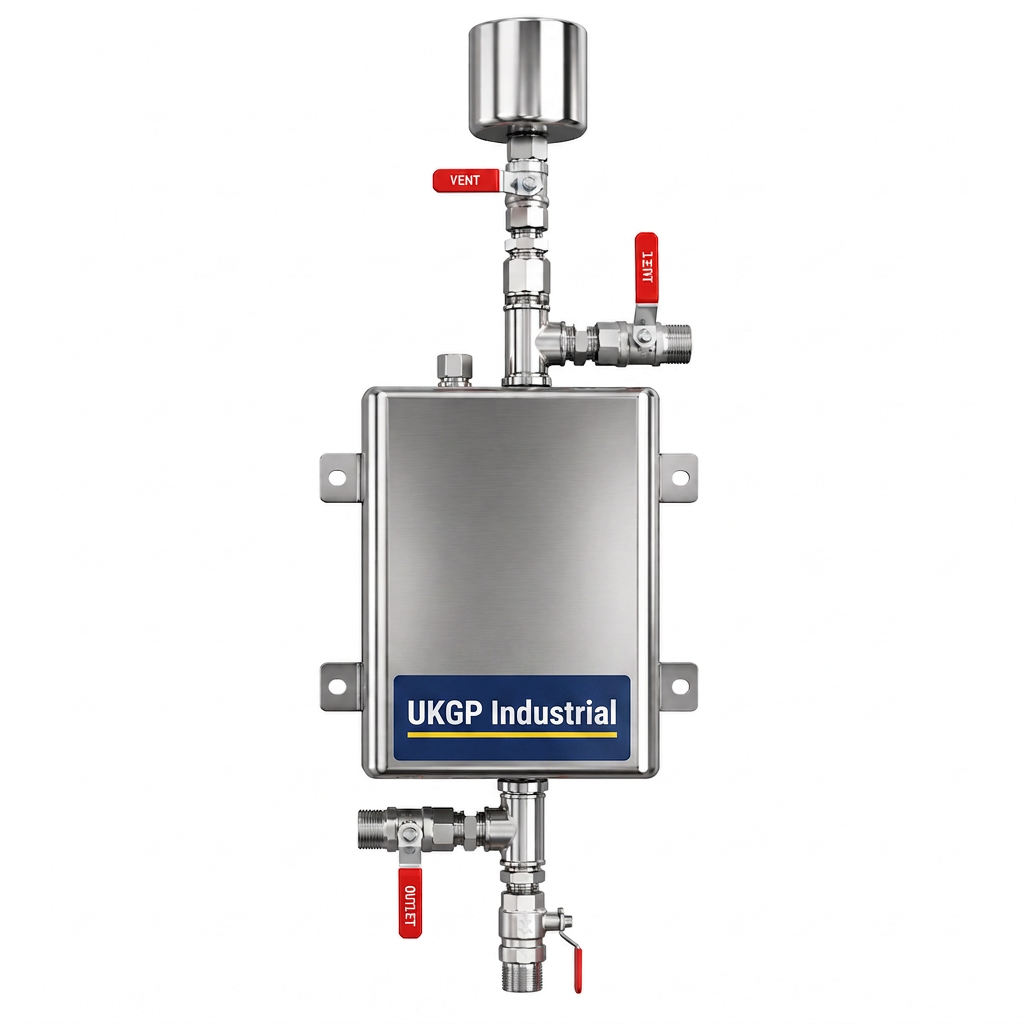
The application of chemical dosing is essential for protecting any heat transfer equipment. By using high-quality chemical dosing pots, engineers can ensure that corrosion inhibitors are correctly introduced to the circuit to prevent the pitting and scaling that plagues complex heat exchangers. While a plate fin heat exchanger might offer a 20% smaller footprint, the inability to verify the internal condition of the heat transfer surfaces can lead to hidden corrosion. The transparency of a plate and frame unit, where plates can be pulled and inspected under BS 8552 sampling protocols, provides a much higher level of asset assurance.
Ultimately, the choice comes down to the risk profile of the system. For oxygen-free, high-purity industrial gases, a plate fin heat exchanger is often the only viable option. However, for a commercial LTHW circuit where the primary energy source might be a heat pump or a gas-fired boiler, the plate and frame design offers superior longevity. Our technical team can help you navigate these choices, ensuring that your thermal separation meets both the performance requirements and the serviceability expectations of modern UK building management. We recommend a full water analysis before selecting a high-density exchanger to avoid premature failure and costly replacements.
- Compliance with BSRIA BG50 ensures long-term plate health.
- Manual inspection capabilities exceed brazed block alternatives.
- Lower risk of catastrophic blockages in secondary heating loops.
- Compatible with standard plant room chemical dosing regimes.
Pressure and Temperature Considerations
Mechanical limits often dictate whether a plate fin heat exchanger or a gasketed unit is the correct technical selection. Vacuum brazing allows a plate fin heat exchanger to handle extremely high pressures, sometimes exceeding 100 bar, which is well beyond the requirements of most UK commercial heating systems. For typical plant room applications where pressures rarely exceed 10 or 16 bar, the robust frame of a gasketed exchanger is more than sufficient. Using a highly specialised industrial component where a standard HVAC solution would suffice can unnecessarily complicate procurement and future maintenance schedules for the site owner.
Temperature range is another critical factor where the two technologies diverge. The gaskets in a plate and frame unit have a finite temperature limit, usually around 180°C depending on the material (EPDM, Nitrile, or Viton). A brazed plate fin heat exchanger can operate at much higher or lower temperatures since it lacks elastomer seals. However, for 99% of UK building services projects—including steam-to-water applications—standardised plate materials and high-temp gaskets provide a reliable solution within the mandatory safety margins required by CIBSE and UK insurance providers. UKGP ensures all our gaskets meet these rigorous standards.
Environmental conditions also play a role in the selection. In corrosive environments or coastal areas, the external frame of a UKGP plate heat exchanger can be specially coated to resist atmospheric corrosion, while the plates themselves are Grade 316 stainless steel or titanium for saline environments. A plate fin heat exchanger, often made of aluminium for weight savings, may require elaborate external protection to prevent oxidation. By choosing a material-appropriate gasketed solution, contractors can deliver a system that withstands the rigours of a standard UK commercial installation without the delicate handling required for aluminium heat exchangers.
- Standard HVAC pressures (6-16 bar) are ideal for gasketed units.
- Gasket materials are selected based on specific glycol or water chemistry.
- Stainless steel plate options provide better durability than aluminium fins.
- Compliance with Pressure Equipment Directive (PED) across all models.
Economic Impact and Lead Times
From a commercial perspective, the cost-to-benefit ratio of a plate fin heat exchanger is often difficult to justify for UK HVAC applications. The manufacturing process for vacuum-brazed fins is energy-intensive and requires specialised facilities, which can extend lead times significantly. In contrast, UKGP offers sized plate heat exchangers with a 4-6 week lead time, allowing projects to stay on track even when specifications change late in the design phase. Speed of delivery is often a primary driver for M&E contractors, and the availability of standardised DN sizes from DN20 to DN300 makes plate and frame units the pragmatic choice.
Lifecycle costs must include the potential for repair. If a plate fin heat exchanger develops an internal leak (cross-contamination between streams), it is typically impossible to repair, necessitating a 100% replacement cost. A gasketed plate and frame unit allows for individual plate replacement or gasket refresh at a fraction of the cost of a new unit. For facilities managers, this budget predictability is far more attractive than the risks associated with non-serviceable equipment. Investing in a quality plate and frame unit from UKGP ensures that the 2-year warranty is backed by a design that is inherently easy to maintain and troubleshoot.
Energy efficiency is roughly comparable between the two when both are clean, but the plate fin heat exchanger will see its performance degrade faster if the water side is not perfectly managed. The ability to keep plates in 'as-new' condition through periodic cleaning means the plate and frame unit maintains its design COP (Coefficient of Performance) for the life of the plant. When assessing the commercial viability of a project, the ROI on a UKGP unit is bolstered by these reduced maintenance costs and the longevity of the stainless steel components, making it the preferred specification for most Surrey and UK-wide industrial users.
- Shorter lead times compared to bespoke brazed industrial blocks.
- Lower lifecycle costs due to component-level repairability.
- Sized from full thermal specs to optimise pump energy usage.
- Minimal downtime during routine maintenance or gasket swaps.
Final Selection Criteria for Engineering Teams
When finalising a plant room design, the decision between a plate fin heat exchanger and a plate and frame unit should be based on fluid type, serviceability, and system pressure. If your project involves standard water-to-water or water-to-glycol heat transfer, the gasketed exchanger provides the best balance of performance and reliability. Consultants should always ask if the unit can be opened for inspection; if the answer is no, and the application is standard HVAC, then a brazed or plate fin model may be an unnecessary risk. UKGP provides the technical documentation and thermal calculations required to satisfy even the most stringent CIBSE design reviews.
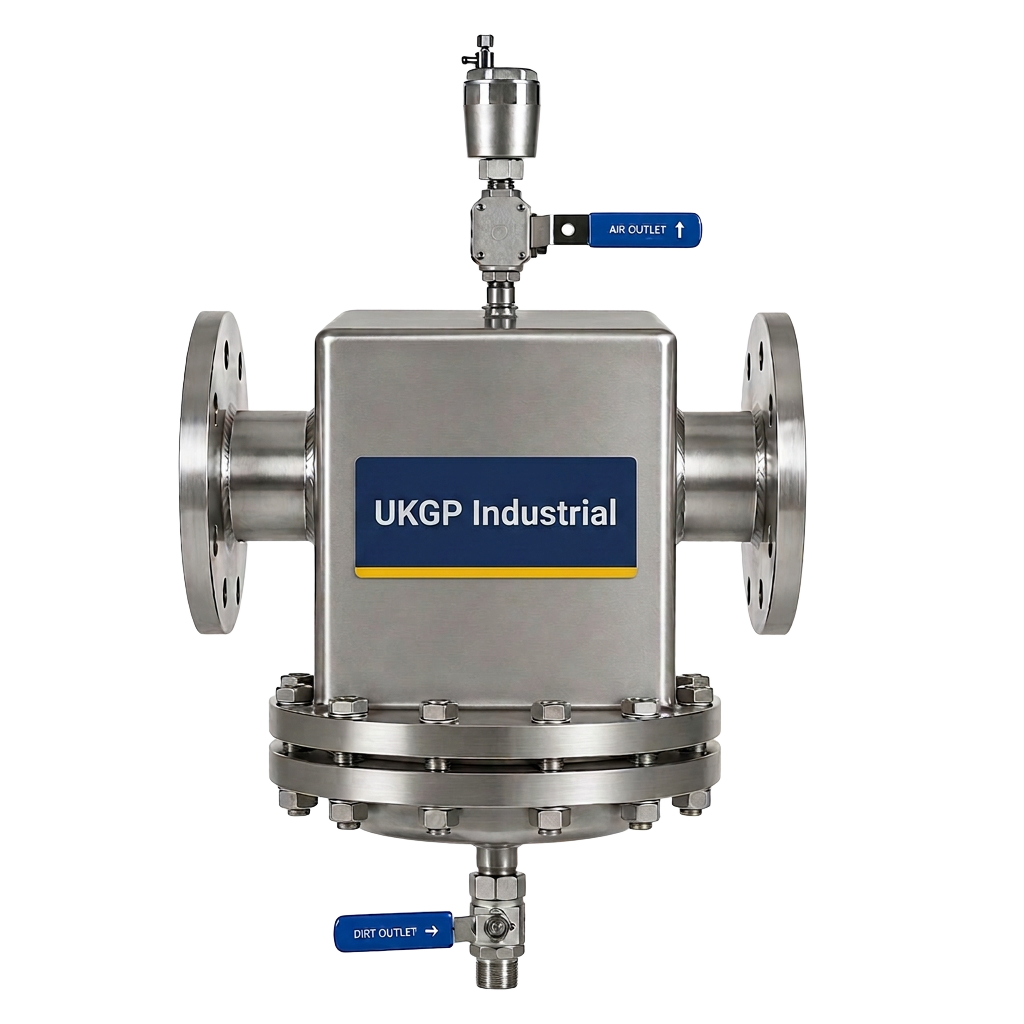
In specialised industrial settings where weight and volume are the absolute priority—such as skid-mounted offshore units—the plate fin heat exchanger may be the only option. However, for UK commercial buildings, the focus is on ease of operation. Ensuring that separators and low loss headers are integrated correctly with the heat exchanger can mitigate many of the air and debris issues that cause failures in more sensitive equipment. UKGP's holistic approach to plant room products ensures that the heat exchanger is protected by the correct ancillary equipment, regardless of its internal configuration.
To get an accurate quote and thermal sizing, provide our team with your primary/secondary flow and return temperatures, fluid concentrations, and maximum allowable pressure drop. We will provide a solution sized for optimal efficiency, finished to the highest UK standards. With our 2-year warranty and commitment to 4-6 week delivery, UKGP is the partner of choice for contractors looking to avoid the complexities of industrial-only equipment like the plate fin heat exchanger while still achieving world-class thermal performance. Reach out today for a full technical consultation on your next project.
- Focus on serviceability for commercial HVAC applications.
- Request full thermal sizing to ensure pressure drop compliance.
- Verify fluid compatibility with 316SS or Titanium plates.
- Integrate with UKGP separators for maximum unit protection.
Frequently asked questions
Can a plate fin heat exchanger be cleaned?
- Generally, no. Because plate fin units are vacuum-brazed into a solid block, they cannot be opened for manual cleaning. They rely on Chemical Cleaning-In-Place (CIP), which is often ineffective for heavy particulate blockages.
What is the typical lead time for a UKGP plate heat exchanger?
- We offer a standard lead time of 4-6 weeks for most gasketed and brazed units, ranging from DN20 to DN300, tailored to your specific thermal requirements.
Are plate and frame heat exchangers bigger than plate fin designs?
- Yes, they typically have a larger footprint because of the steel frame and compression bolts. However, this extra space allows for modularity and the ability to expand the plate pack later.
Is a UKGP plate heat exchanger covered by a warranty?
- Yes, all our plate heat exchangers come with a comprehensive 2-year warranty, providing peace of mind for both contractors and end-users.
When should I use a brazed heat exchanger instead of a gasketed one?
- Brazed units are ideal for high-pressure or high-temperature applications where the compactness of a fixed unit is required and the fluids involved are clean, reducing the need for internal access.