Core Mechanics of the Plate and Frame Heat Exchanger Working Principle
At its most fundamental level, the plate and frame heat exchanger working principle relies on the transfer of thermal energy between two fluids without them ever coming into direct contact. These fluids, often referred to as the primary and secondary media, flow through alternating channels created by a series of thin, pressed metal plates. The corrugated surface of these plates serves a dual purpose: it increases the total surface area available for heat exchange and induces turbulence. Turbulence is critical in modern building services because it disrupts the boundary layer of the fluid, significantly enhancing the heat transfer coefficient compared to traditional shell and tube alternatives. For UK engineers adhering to BSRIA BG50, maintaining this efficiency is vital for long-term system health.
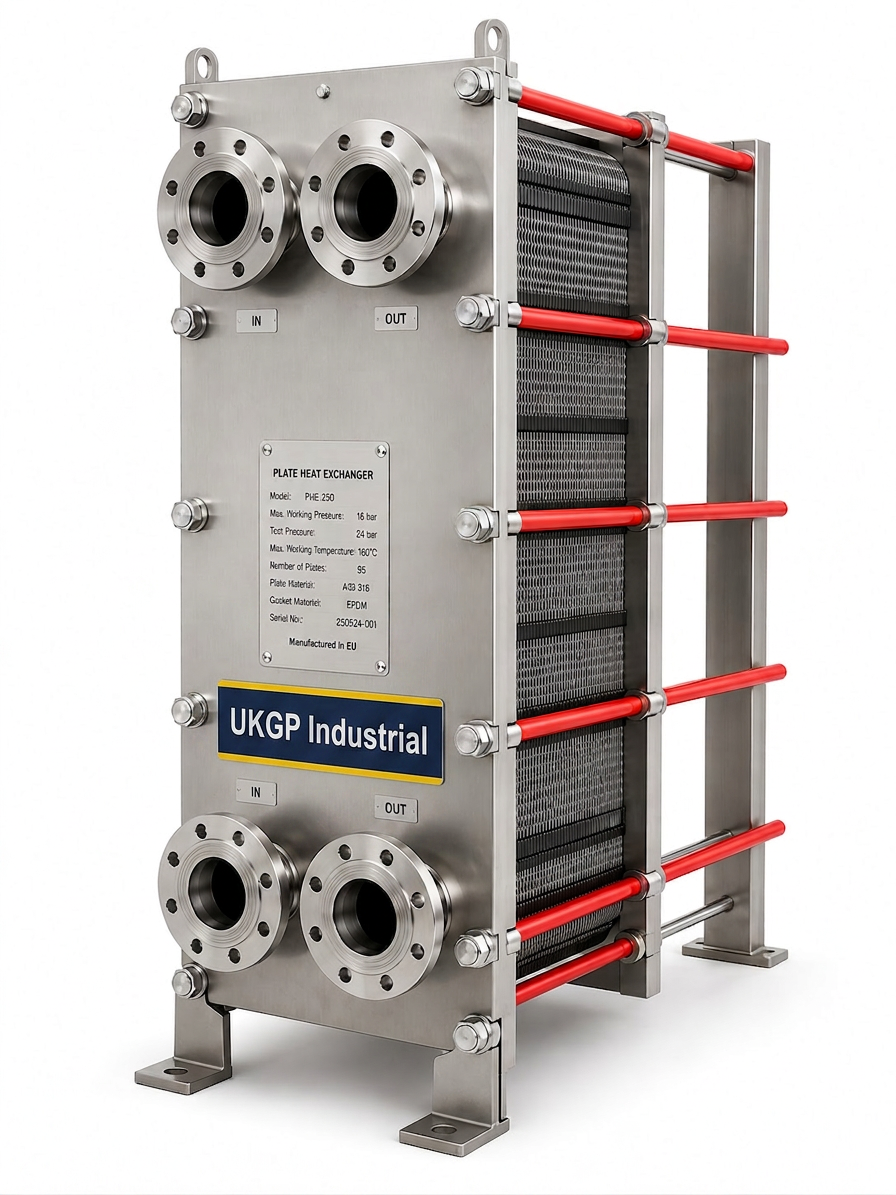
In a typical gasketed configuration, the plates are compressed between a fixed head and a movable follower using heavy-duty tightening bolts. Each plate features a high-performance gasket that seals the perimeter and directs the flow through specific ports. The plate and frame heat exchanger working principle dictates that the fluids generally move in a counter-current flow pattern. This means the hot fluid and the cold fluid enter from opposite ends, maintaining a consistent temperature gradient across the entire length of the heat transfer surface. This maximise the Logarithmic Mean Temperature Difference (LMTD), allowing for much tighter temperature approaches than other heat exchange methods. When you specify a UKGP unit, we calculate these thermal dynamics based on your exact bespoke requirements.
Precision in thermal sizing is what separates a standard installation from a high-performance plant room. Because the plate and frame heat exchanger working principle is so efficient, it allows for a significantly smaller footprint than other technologies. This is particularly advantageous in London plant rooms or refurbishment projects where space is at a premium. By selecting the correct plate profile—either 'hard' plates for high turbulence or 'soft' plates for low pressure drop—engineers can fine-tune the performance of the system. Our team at UKGP provides full thermal specifications to ensure that every DN20 to DN300 unit we supply meets the specific demands of your HVAC or industrial process, backed by a robust two-year warranty for peace of mind.
- Counter-current flow maximizes the LMTD for superior efficiency
- Corrugated plate designs induce turbulence to prevent laminar flow stagnation
- Gasketed designs allow for easy cleaning and future capacity expansion
- Compact footprint saves valuable site space in tight plant rooms
Component Analysis and Structural Integrity
Beyond the basic plate and frame heat exchanger working principle, the structural components are what ensure the longevity of the unit under pressure. The frame consists of a heavy-duty front plate and a rear pressure plate, supported by a carrying bar and a guiding bar. This robust assembly must withstand the hydraulic forces generated by high-pressure pumping systems. In accordance with BS EN 14917 and other relevant pressure vessel standards, the materials used for the plates are typically 316 stainless steel or titanium, depending on the corrosivity of the fluids involved. Poor structural assembly can lead to gasket bypass or external leaks, which is why UKGP ensures every unit is factory-tested before dispatch.
The gaskets are the unsung heroes of the thermal exchange process. They are not merely seals; they are precision-engineered components that define the flow channels. Common materials include Nitrile (NBR) and EPDM, chosen based on the operating temperature and chemical compatibility of the system water. Under the plate and frame heat exchanger working principle, the gaskets ensure that the two fluids are entirely isolated, preventing cross-contamination. This is particularly critical in applications such as potable water heating or process separation where fluid purity is non-negotiable. UKGP can assist in selecting the correct gasket elastomer for your specific operating environment, ensuring a 4-6 week lead time for your project deadlines.
Maintenance is a key consideration for FM leads. Unlike brazed heat exchangers which are sealed units, the gasketed plate and frame design allows for complete disassembly. This means that if the plate pack becomes fouled due to poor water quality—a common issue if BSRIA BG29 flushing protocols aren't strictly followed—the plates can be individually cleaned or replaced. This modularity is a core advantage of the gasketed plate and frame heat exchanger working principle, extending the lifecycle of the plant room equipment indefinitely. Using a UKGP dosing pot in conjunction with our heat exchangers helps to maintain the chemical balance of the system, further protecting the integrity of the heat transfer surfaces and gaskets.
- 316 Stainless Steel plates as standard for corrosion resistance
- EPDM or NBR gaskets tailored to your temperature requirements
- Removable plate packs for easy manual cleaning and inspection
- Alignment guided by heavy-duty carrying bars for perfect sealing
Thermal Efficiency and Heat Transfer Coefficients
The technical superiority of the plate and frame heat exchanger working principle is demonstrated by its extremely high U-values. In traditional HVAC systems, the goal is to achieve the greatest heat transfer with the lowest possible pressure drop. The 'herringbone' pattern pressed into the plates creates a tortuous path for the liquid, ensuring that every molecule of fluid comes into contact with the heat transfer surface. This creates a high level of shear stress at the plate wall, which not only improves heat transfer but also provides a self-cleaning effect, reducing the rate of fouling compared to smooth-tube heat exchangers. This is a vital commercial consideration for reducing long-term OPEX.
When designing a system, building services consultants must account for the specific gravity, viscosity, and thermal conductivity of the fluids. These factors dictate how the plate and frame heat exchanger working principle will perform under varied load conditions. For example, in a district heating application, the secondary return temperature must be kept as low as possible to maintain the efficiency of the primary energy centre. A well-sized plate heat exchanger can achieve a temperature approach of less than 1°C, which is nearly impossible for other heat exchanger types. UKGP utilizes advanced sizing software to provide a full thermal spec for every enquiry, ensuring your DN20-DN300 unit is perfectly matched to your load.
Another aspect of the plate and frame heat exchanger working principle is the ability to handle 'close approach' temperatures. In many modern heat pump applications, the temperature difference between the source and the sink is minimal. This requires a vast amount of surface area, which can only be provided cost-effectively by a plate-based system. By adding more plates to the frame, the capacity of the unit can be increased without replacing the entire installation. This future-proofing is why M&E contractors prefer UKGP's modular range. With a lead time of just 4-6 weeks and a 2-year warranty, our plate heat exchangers provide the reliability needed for critical infrastructure.
- High U-values lead to superior energy efficiency and lower carbon footprints
- Ability to achieve temperature approaches as low as 1 Degree Celsius
- Self-cleaning turbulent flow reduces the frequency of maintenance shutdowns
- Bespoke thermal sizing ensures optimal pressure drop across the unit
Operational Best Practices and System Protection
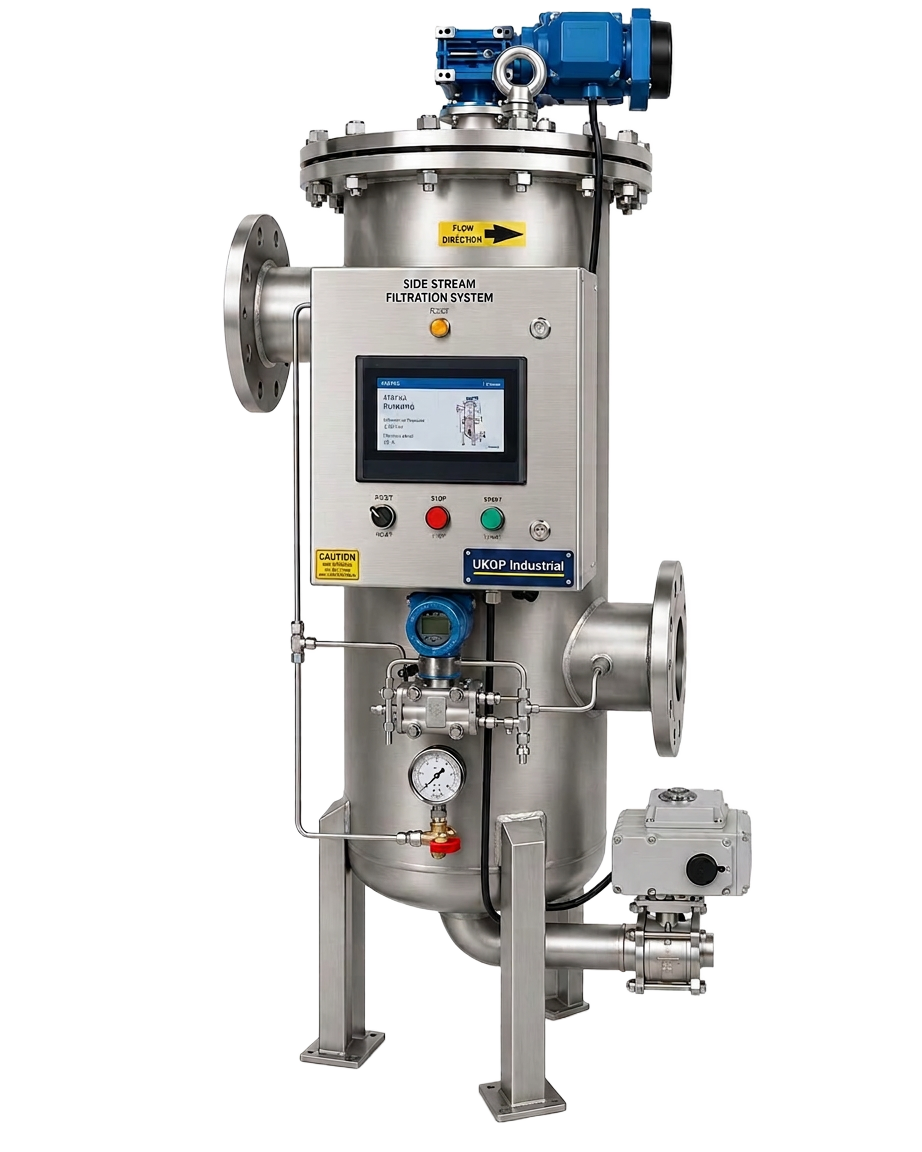
To ensure the plate and frame heat exchanger working principle continues to deliver peak performance, the surrounding system must be managed correctly. Debris and magnetite are the enemies of efficient heat transfer. Even a thin layer of scale or sludge on the plate surface acts as an insulator, significantly reducing the efficiency of the unit. We recommend the installation of side stream filtration and high-performance air and dirt separators to protect the intricate channels within the plate pack. According to BS 8552, monitoring water quality is a continuous requirement, not a one-off task, especially in large-scale commercial HVAC systems where plate fouling can lead to massive energy waste.
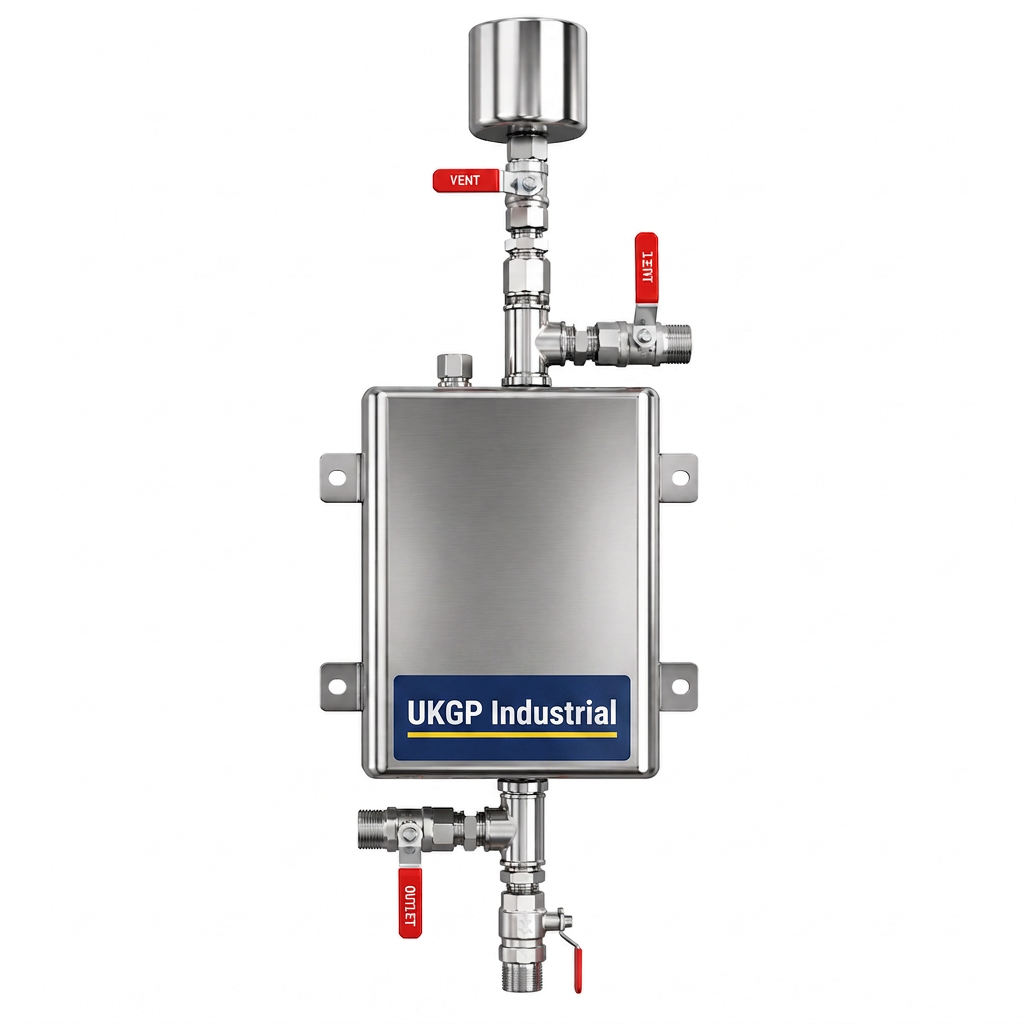
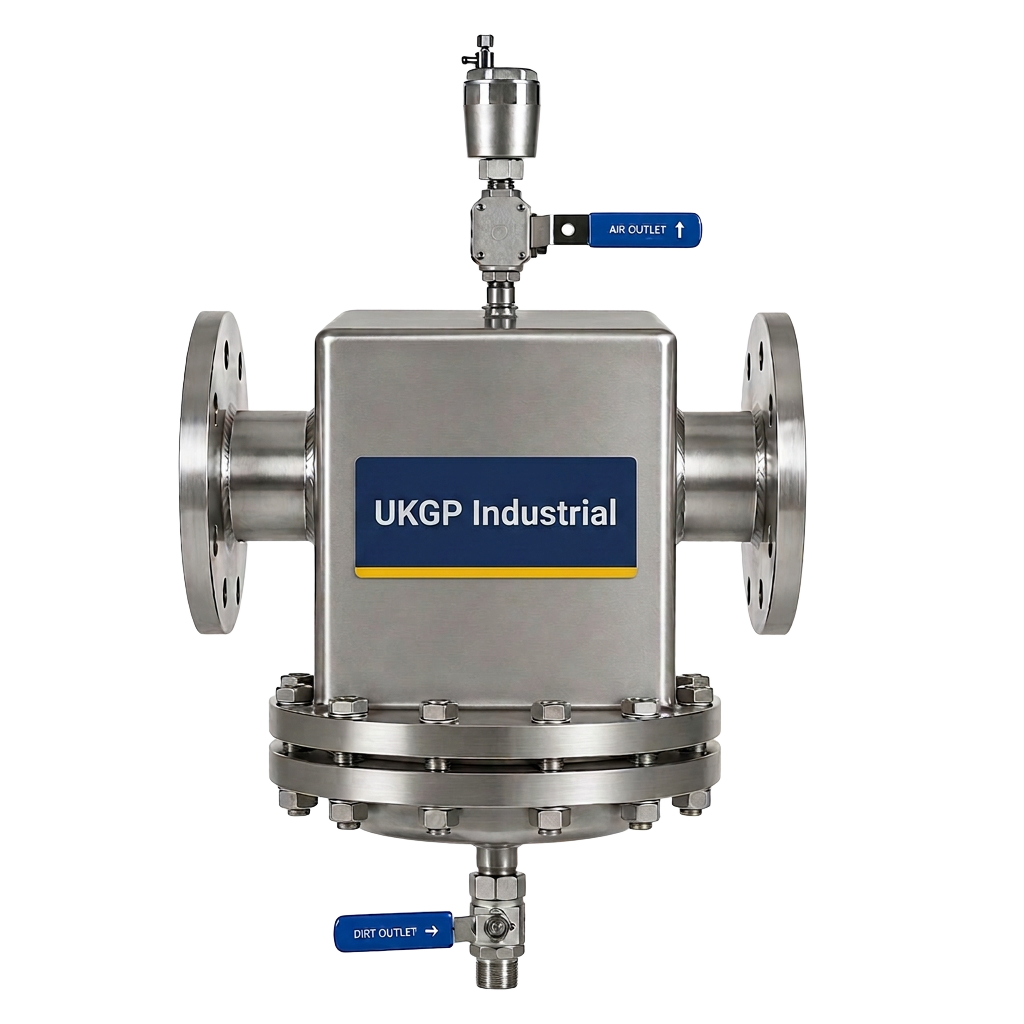
Pressure management is another critical factor. Rapid changes in flow or pressure can cause 'water hammer,' which puts immense stress on the gaskets and can lead to plate deformation. Proper commissioning involves slowly ramping up pumps and ensuring that the system is fully vented. In the context of the plate and frame heat exchanger working principle, any air trapped in the channels will create cold spots and reduce the effective heat transfer area. That is why UKGP's plate heat exchangers are often specified alongside our air and dirt separators, ensuring that the media entering the unit is clean and free of trapped gases, thereby protecting your investment.
Finally, insulation is often overlooked but essential for maintaining the energy gains made by the plate and frame heat exchanger working principle. UKGP offers custom-made insulation jackets for our DN20-DN300 range, which prevent heat loss to the plant room environment. This ensures that the thermal energy stays within the process where it belongs. When you order from UKGP, you are not just getting a piece of hardware; you are getting a thermally sized solution supported by technical experts. Our 2-year warranty reflects our confidence in the durability of our gasketed and brazed units, provided they are installed and maintained according to industry best practices.
- Install side stream filtration to prevent plate channel blockages
- Use air and dirt separators to maintain high thermal conductivity
- Utilize bespoke insulation jackets to minimize ambient heat loss
- Regularly check tightening dimensions to ensure gasket compression
Material Selection and Chemical Compatibility
The effectiveness of the plate and frame heat exchanger working principle is fundamentally linked to the materials used in construction. In the UK, water chemistry varies significantly by region, and the presence of chlorides can be particularly damaging to standard stainless steels. For most standard LTHW (Low Temperature Hot Water) applications, 316L stainless steel provides excellent corrosion resistance and thermal performance. However, for saline environments or aggressive industrial processes, titanium plates may be required to prevent pitting and stress corrosion cracking. UKGP can provide expert guidance on material selection based on your water analysis report to ensure the longevity of your plate heat exchanger.
Gasket compatibility is equally paramount. In systems where chemical cleaning is frequent or where inhibitors are used at high concentrations, the gasket material must be resistant to degradation. EPDM is generally preferred for hot water and steam applications due to its excellent heat resistance, while Nitrile is often used for oil-based fluids or water-glycol mixtures. If the gaskets fail, the plate and frame heat exchanger working principle is compromised, leading to costly leaks or internal cross-contamination. This is why UKGP's gasketed units are built with precision-moulded seals that sit securely within the plate grooves, designed to withstand the rigours of commercial heating and cooling.
Choosing between gasketed and brazed designs is another critical decision for the engineer. While the plate and frame heat exchanger working principle remains similar, brazed units offer a more compact, high-pressure alternative for smaller duties or refrigeration circuits where serviceability is less of a priority. Gasketed units, on the other hand, provide the DN20-DN300 flexibility required for larger commercial manifolds and primary-to-secondary circuit separation. UKGP supplies both types, sized from your full thermal spec, with a 4-6 week lead time. By aligning our products with CIBSE CP1 standards for heat networks, we help ensure your project meets current UK regulatory expectations for efficiency.
- 316L Stainless Steel for general HVAC and heating circuits
- Titanium plate options for sea water or aggressive chemical media
- Chemical compatibility checks for all gasket elastomers provided
- Brazed alternatives available for high-pressure refrigeration duty
Applications and Industry Standard Compliance
The versatility of the plate and frame heat exchanger working principle makes it the go-to choice for a vast range of UK industries. From separating a boiler circuit from a contaminated older heating system to providing instantaneous domestic hot water via a plate-fed cylinder, the applications are endless. In a district heating context, these units act as the thermal bridge between the energy centre and the consumer, ensuring efficient energy delivery. By following the guidelines set out in BSRIA BG29 and BG50, engineers can ensure that these units operate at peak efficiency for decades, provided they are sized correctly and protected from system contaminants.
Compliance with BS EN 14917 for expansion bellows and other plant room accessories is also vital, as the heat exchanger is just one part of a complex hydraulic system. Thermal expansion must be accounted for to prevent stress on the heat exchanger nozzles. At UKGP, we provide the full suite of equipment—from expansion bellows and side stream filters to the plate heat exchangers themselves—ensuring one-stop procurement for your M&E project. The plate and frame heat exchanger working principle ensures that even with fluctuating demand, the system can remain stable and responsive, provided the control valves and sensors are accurately calibrated and positioned.
For procurement leads and plant room engineers, the focus is often on balance between capital cost and lifetime value. Our plate heat exchangers, available in DN20 to DN300, offer a clear ROI through energy savings and reduced maintenance. With a 2-year warranty as standard and a technical team ready to size your unit from a full thermal spec, UKGP is the partner of choice for high-quality thermal solutions. Whether you are replacing an end-of-life unit or designing a brand-new energy centre, our 4-6 week lead time ensures your project stays on schedule. Contact us today for a quote based on your specific temperature and flow requirements.
- Ideal for hydraulic separation in refurbished heating systems
- Essential for DHW generation and district heating substations
- Fully compliant with CIBSE and BSRIA technical standards
- Available in DN20 to DN300 for a wide range of flow rates
Frequently asked questions
What is the main advantage of the plate and frame heat exchanger working principle?
- The primary advantage is high thermal efficiency in a compact size. The corrugated plates create turbulence, which significantly increases the heat transfer coefficient, allowing for much smaller units than traditional shell and tube designs.
How does counter-current flow improve efficiency?
- Counter-current flow maintains a consistent temperature difference between the two fluids across the entire length of the plate. This maximises the heat transfer rate and allows the secondary fluid to be heated very close to the temperature of the primary inlet.
Can I increase the capacity of my existing UKGP plate heat exchanger?
- Yes, one of the benefits of the gasketed plate and frame heat exchanger working principle is modularity. Provided the frame has sufficient length, additional plates can be added to increase the surface area and heat transfer capacity.
How often should a plate and frame heat exchanger be serviced?
- Service intervals depend on water quality and BSRIA BG50 compliance. In a clean system, they may only need an annual inspection. However, if pressure drops increase or heat transfer decreases, it may be time to open the unit and clean the plates manually.
What is the lead time for a new UKGP heat exchanger?
- Our standard lead time for both gasketed and brazed units, sized from a full thermal spec, is currently 4-6 weeks, and all units come with a 2-year warranty.