Identifying Common Failure Modes in Plate Heat Exchangers
In modern UK commercial plant rooms, understanding the root causes of failure is the first step toward successful industrial heat exchanger repair. Most issues originate from fouled surfaces or compromised gaskets which lead to cross-contamination or external leaking. When scale builds up on the internal plates, the thermal transfer rate drops significantly, forcing pumps and boilers to work harder to achieve the required set-points. This not only increases operational costs but also places undue mechanical stress on the entire primary circuit, often leading to early equipment fatigue.
Internal leakage, often referred to as 'intermixing,' is a more critical failure that demands immediate attention. This occurs when a plate becomes perforated due to erosion, corrosion, or pin-holing, usually caused by poor water chemistry management. If the secondary domestic water enters the primary heating loop, or vice versa, the system integrity is compromised. Engineers must perform regular pressure testing and visual inspections to identify these breaches before they escalate into catastrophic failures. Proper industrial heat exchanger repair often begins with a thorough strip-down and dye-penetrant testing to locate these invisible fissures.
Gasket failure is the third main culprit, often resulting from aggressive thermal cycling or over-tightening during previous maintenance attempts. As gaskets age, they lose their elasticity and ability to maintain a seal under the varying pressures of a busy HVAC circuit. Facilities managers should look for signs of 'weeping' or salt deposits around the plate pack perimeter. Addressing these early through planned industrial heat exchanger repair prevents major floods in the plant room and ensures that the system maintains the pressure required for optimal building-wide heat distribution.
- Mechanical fouling from suspended solids and calcium carbonate scale.
- Chemical corrosion caused by incorrect glycol concentrations or oxygen ingress.
- Erosion of plate material due to high local velocities or abrasive particles.
- Stress corrosion cracking in stainless steel plates near port areas.
The Impact of Water Quality on Industrial Heat Exchanger Repair
Water treatment is the single most influential factor in determining the frequency of industrial heat exchanger repair requirements. Following BSRIA BG29 and BG50 standards is mandatory for any consultant or contractor looking to protect high-value assets. If the circulating fluid is not properly filtered and chemically balanced, the narrow channels within a plate heat exchanger become the perfect trap for debris. This leads to localized hot spots and accelerated corrosion, which eventually necessitates a full overhaul or replacement of the plate pack to restore design performance levels.
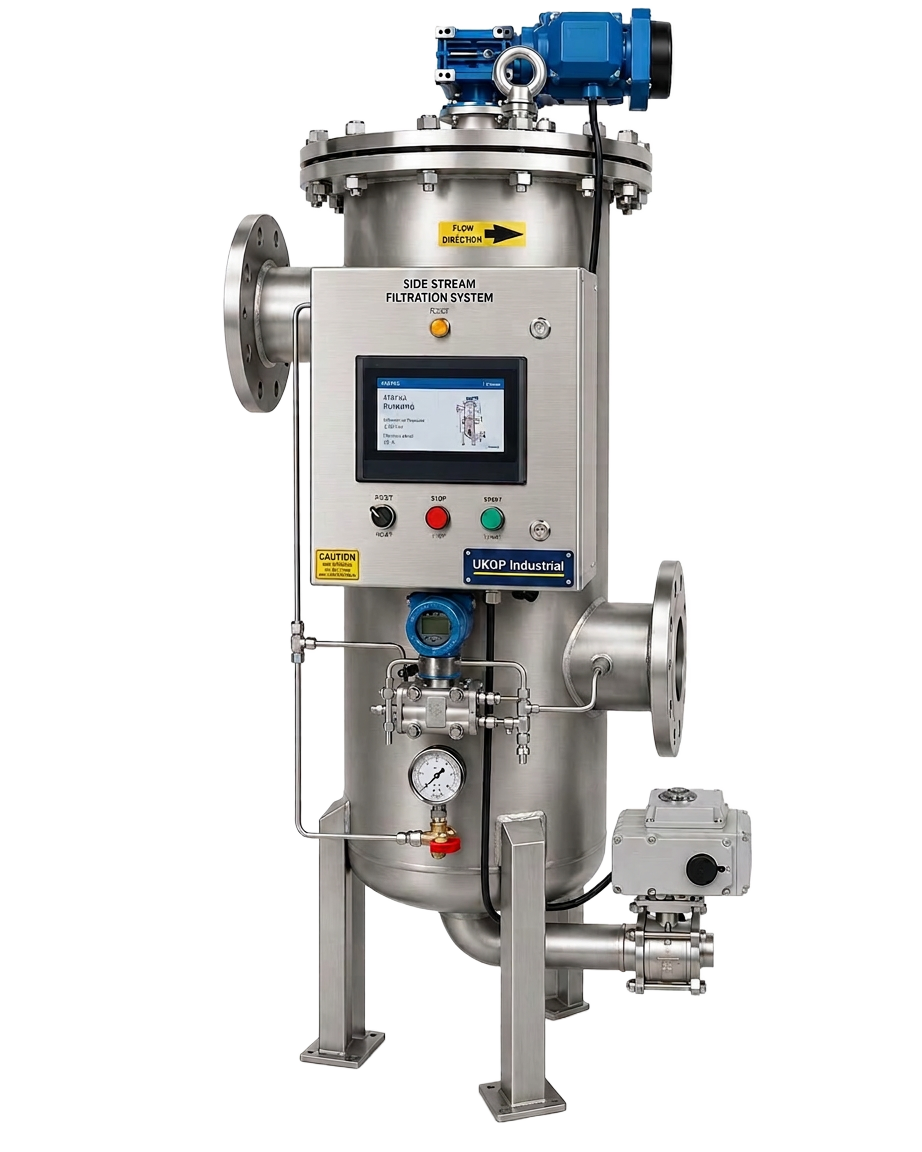
Side stream filtration is an essential component in managing this risk effectively. By continuously removing magnetic and non-magnetic particles from the system, you reduce the physical abrasion on the exchanger plates. When an engineer arrives to conduct an industrial heat exchanger repair, the presence of a well-maintained side stream filter often means the difference between a simple chemical clean and a total plate replacement. Maintaining a clean system also ensures that any chemical inhibitors added to the loop can actually reach the metal surfaces they are designed to protect.
Monitoring pH levels and conductivity is equally important for avoiding premature industrial heat exchanger repair. Sudden shifts in pH can indicate a leak or the introduction of raw, unconditioned water into the system. High-precision sensors and transmitters should be integrated into the BMS to provide real-time alerts. For procurement leads, investing in robust water quality monitoring today drastically reduces the long-term expenditure associated with emergency repairs and the replacement of expensive thermal transfer components, keeping the plant room running at peak efficiency year-round.
- Compliance with BS 8552 for sampling and monitoring water quality.
- Proper installation of de-aerators to remove oxygen and prevent pitting.
- Use of magnetic separators to capture black iron oxide (magnetite).
- Regular chemical analysis to verify inhibitor levels and biocidal efficacy.
When to Choose New Components Over Repair
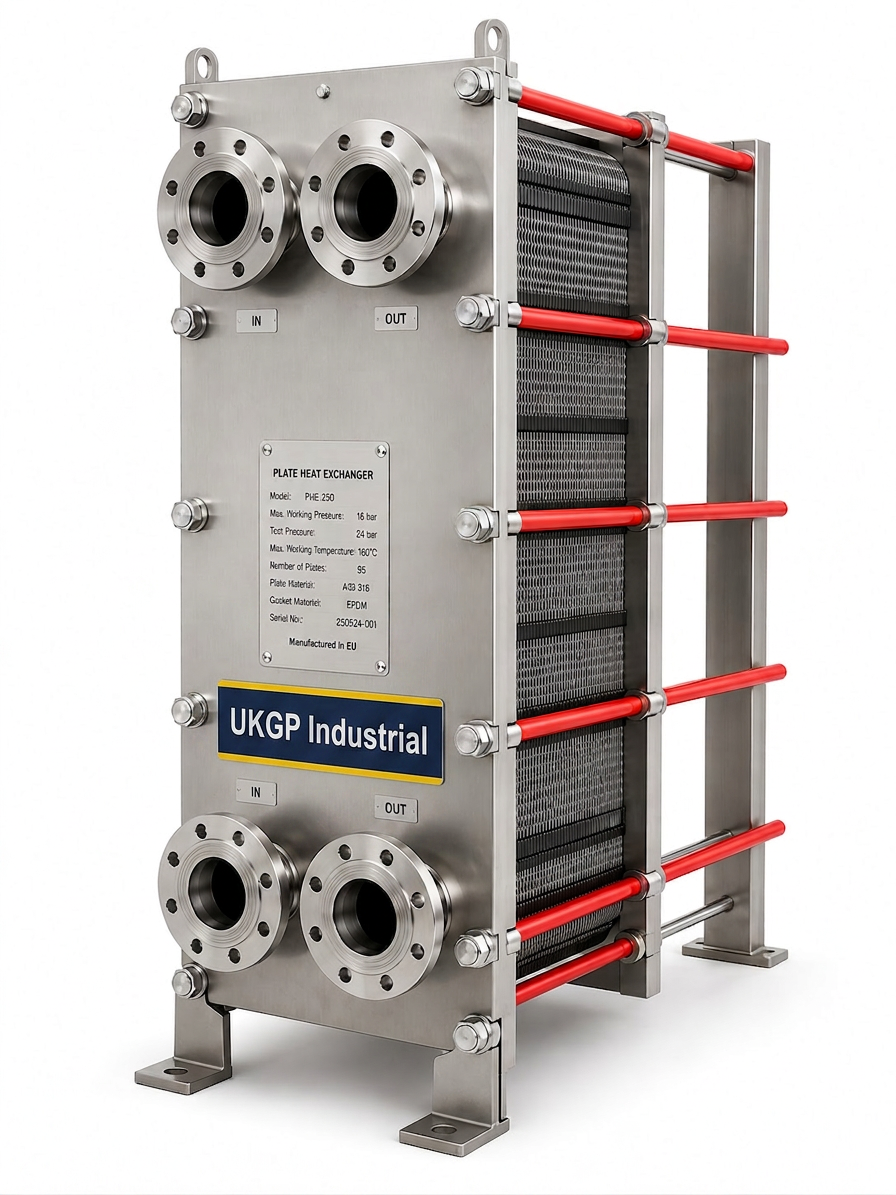
While industrial heat exchanger repair is often the first instinct to save costs, there comes a point where total replacement is the more commercially viable and technically sound decision. If more than 20% of the plate pack is damaged or if the frame itself suffers from severe structural corrosion, the integrity of the unit cannot be guaranteed. In such cases, replacing the unit with a UKGP plate heat exchanger ensures you are utilizing the latest in thermal technology, often resulting in lower pressure drops and higher heat transfer coefficients than older legacy models.
When specifying a replacement, UKGP offers both gasketed and brazed plate heat exchangers, with connection sizes ranging from DN20 to DN300 to suit any commercial application. Every unit is precisely sized from a full thermal specification provided by the client, ensuring the replacement matches the exact duty required for the building. With a standard lead time of only 4-6 weeks and an industry-leading 2-year warranty, opting for a new UKGP unit can often be faster and more reliable than sourcing difficult-to-find spare parts for an obsolete industrial heat exchanger repair project.
The procurement process for a new heat exchanger should always involve a review of current system demands. Buildings often evolve, and the heat load required today may differ from the original design intent. By working with UKGP, engineers can ensure their new plate heat exchanger is perfectly optimized for modern low-temperature heating regimes or high-efficiency condensing boiler circuits. Requesting a quote for a bespoke UKGP unit allows you to compare the cost of a complex industrial heat exchanger repair against a brand-new, warranted solution that offers peace of mind for years to come.
- Gasketed and brazed options available for diverse pressure requirements.
- Precision sizing from DN20 to DN300 for exact thermal duty.
- Fast 4-6 week lead times to minimize plant room downtime.
- Comprehensive 2-year warranty on all new UKGP PHE units.
Maintaining System Pressure Stability
Pressure fluctuations are a major catalyst for industrial heat exchanger repair needs. If a system lacks adequate expansion control, the resulting pressure spikes can cause sudden gasket blowouts or fatigue in the plate material itself. Expansion bellows and properly sized vessels are non-negotiable in large-scale HVAC circuits to absorb the volumetric changes in water as it heats and cools. Without these protective measures, even the most high-quality heat exchanger will eventually fail under the strain of constant hydraulic hammering and thermal expansion stresses.
Engineers must ensure that expansion bellows are installed according to BS EN 14917 standards to prevent lateral and axial stresses from being transferred directly to the heat exchanger nozzles. During an industrial heat exchanger repair, it is wise to inspect all flexible connections and expansion joints to ensure they are still functional and haven't 'bottomed out.' A failure in an expansion joint can lead to misaligned pipework, which puts uneven pressure on the heat exchanger frame, making it nearly impossible to achieve a watertight seal once the unit is reassembled.
For M&E contractors, the integration of high-quality expansion bellows alongside a UKGP heat exchanger provides a complete, resilient solution for the plant room. By controlling the mechanical stresses within the pipework, you significantly extend the mean time between failures (MTBF) and reduce the likelihood of needing an urgent industrial heat exchanger repair. When designing or refurbishing a plant room, always consider the synergy between thermal transfer components and the mechanical protection offered by superior expansion and pressure control equipment.
- Selection of bellows based on axial, lateral, and angular movement.
- Verification of pre-charge pressures in expansion vessels annually.
- Installation of guide anchors to control thermal growth of pipework.
- Regular checks for signs of fatigue or 'squirm' in metallic bellows.
The Role of Air and Dirt Separation
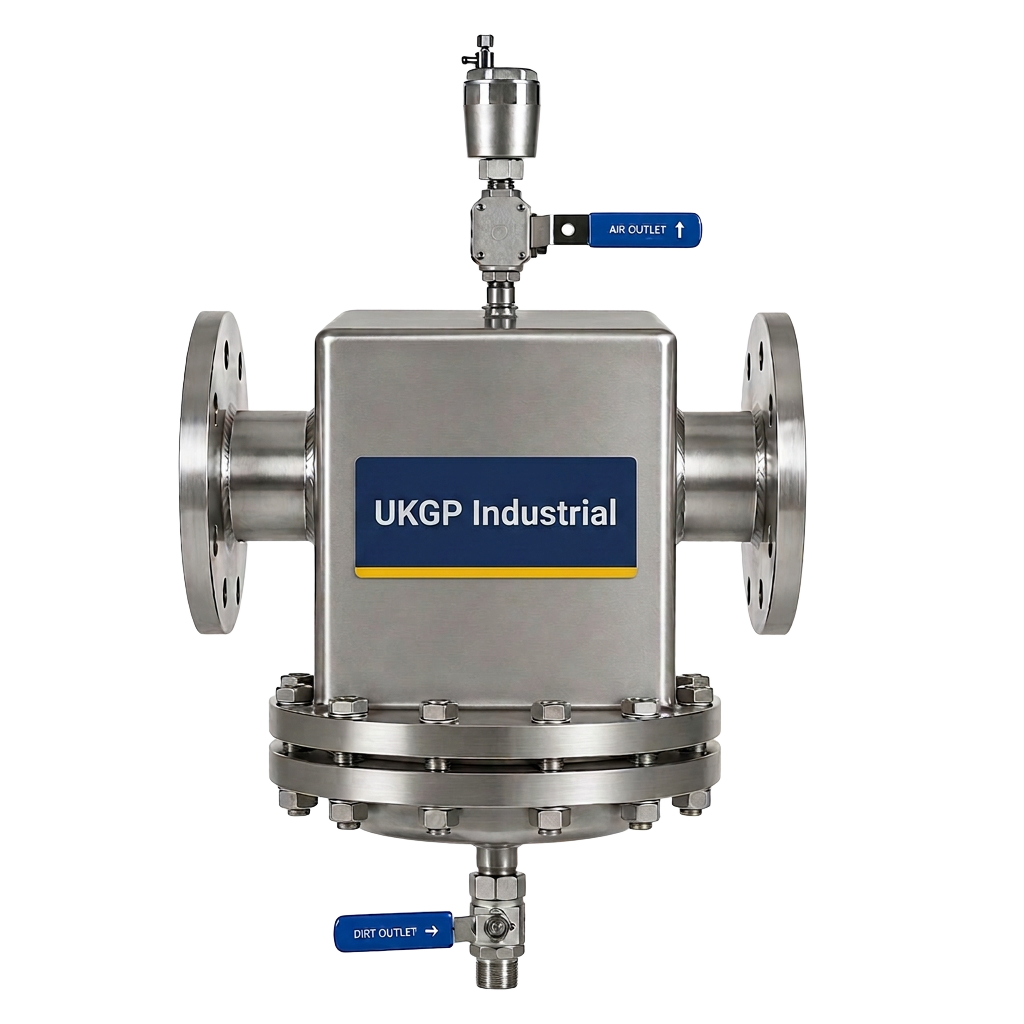
Air and dirt are the primary enemies of any efficient HVAC system and the leading drivers for industrial heat exchanger repair interventions. Micro-bubbles can lead to localized boiling and noise within the heat exchanger ports, while dirt and sludge settle in areas of low velocity, causing massive reductions in heat transfer. Integrating a high-performance air and dirt separator is essential for any plant room that relies on plate heat exchangers for critical tasks like DHW production or space heating. These units capture debris before it can enter the narrow plate channels.
During a typical industrial heat exchanger repair, technicians often find the bottom sections of the plates caked in black magnetite sludge. This sludge creates an insulating layer that prevents the primary water from heating the secondary water efficiently. By the time a drop in performance is noticeable at the taps or radiators, the damage to the plates may already be significant. A proactive approach involves installing combined air and dirt separators to ensure the circulating fluid remains as clean as possible, thereby protecting the delicate internal surfaces of the PHE.
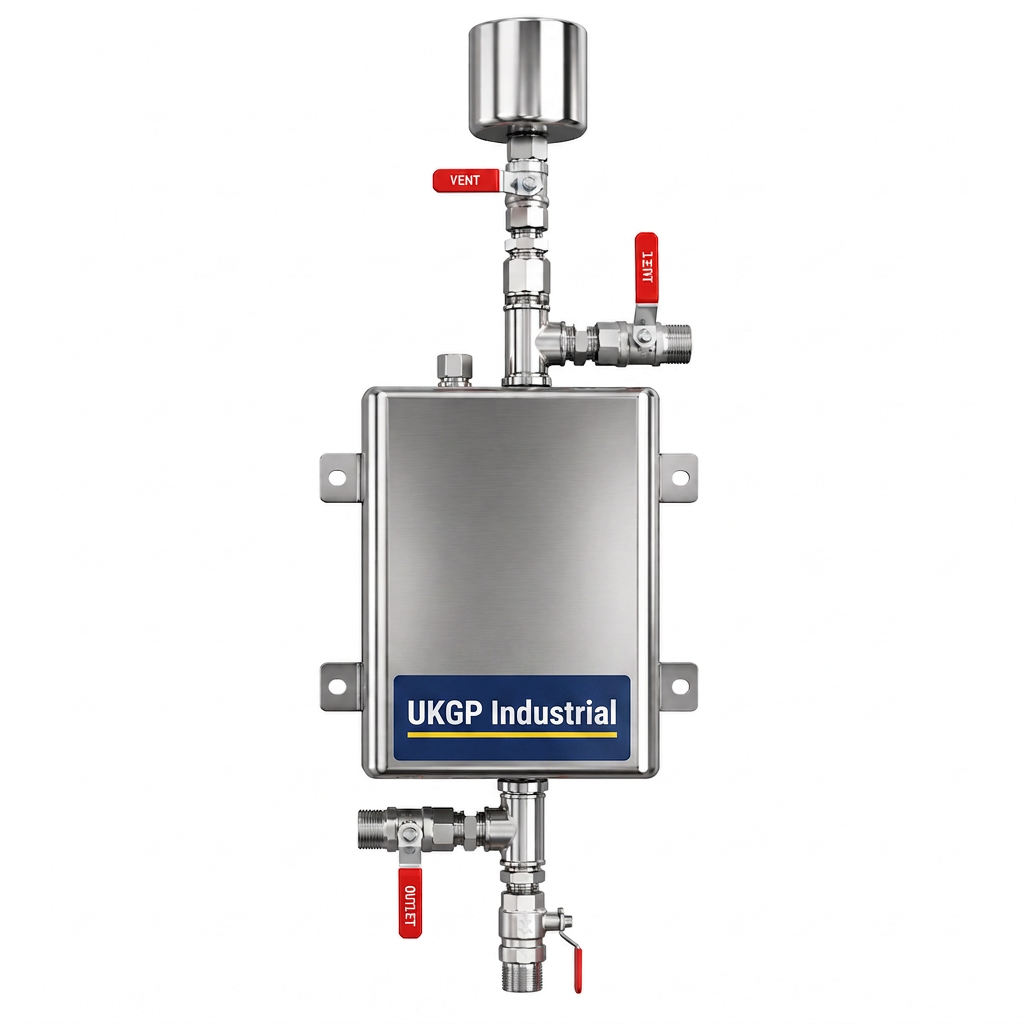
Using air and dirt separators also reduces the frequency of chemical dosing pot usage by keeping the system naturally cleaner. This creates a more stable environment for the metal components, reducing the chemical-induced corrosion that often necessitates industrial heat exchanger repair. For procurement leads, specifying these separators during the initial build or as part of a major plant room upgrade is a proven method for lowering life-cycle costs and ensuring the longevity of the heat exchangers and boilers they protect.
- Removal of micro-bubbles down to 10 microns for quiet operation.
- Continuous dirt separation to prevent accumulation in plate packs.
- Reduction in pump wear and localized overheating incidents.
- Easier maintenance compared to traditional Y-strainers.
Executing a Professional Industrial Heat Exchanger Repair
When the time comes to perform an industrial heat exchanger repair, a systematic approach is vital for success. The process should begin with a controlled isolation and drain-down of the unit, followed by a careful measurement of the current plate pack 'A-dimension.' This measurement is crucial because it ensures the plates are returned to the correct compression level upon reassembly. Any deviation from the manufacturer's specified dimension can result in either leaking if too loose, or plate deformation and gasket damage if over-tightened by the contractor.
Once disassembled, plates should be cleaned using appropriate methods—either high-pressure washing for loose debris or specialized chemical soaking for stubborn scale. It is imperative to avoid abrasive brushes or tools that could scratch the stainless steel, as these scratches become the starting point for future corrosion. Every industrial heat exchanger repair should include a 100% gasket replacement if the unit is more than five years old, as older gaskets rarely reseat perfectly after being compressed for long periods. Using genuine high-quality gaskets ensures compatibility with the fluid and temperature range.
The final stage of the industrial heat exchanger repair involves the re-compression of the plate pack and a rigorous pressure test. Following CIBSE guidelines, the unit should be tested at 1.5 times the working pressure to verify that no leaks are present before it is brought back online. For complex systems, it may be more efficient to source a pre-sized replacement from UKGP, especially when considering the 2-year warranty and DN20-DN300 availability. A new unit eliminates the uncertainty of repair and provides a documented performance curve for the building's energy management records.
- Accurate recording of the 'A-dimension' before disassembly.
- Chemical cleaning procedures tailored to the specific scale type.
- Dye penetrant testing to identify microscopic cracks in plates.
- Hydrostatic pressure testing to 1.5x design pressure before commissioning.
Frequently asked questions
How often should I perform an industrial heat exchanger repair review?
- It is recommended to conduct a visual inspection and performance check every 6 to 12 months. If you notice a drop in delta T or an increase in pressure drop, a full industrial heat exchanger repair or internal cleaning may be required sooner.
Can I replace individual plates during a repair?
- Yes, individual plates can be replaced if they are damaged or fouled beyond cleaning. However, it is usually recommended to replace the entire pack or at least groups of plates to ensure uniform heat transfer and sealing through the unit.
What is the lead time for a new UKGP plate heat exchanger if repair is impossible?
- UKGP provides custom-sized plate heat exchangers from DN20 to DN300 with a standard lead time of 4-6 weeks, allowing for rapid plant room restoration.
Does a UKGP plate heat exchanger come with a warranty?
- Yes, every new UKGP gasketed or brazed plate heat exchanger comes with a comprehensive 2-year warranty for peace of mind.
What standards should be followed during industrial heat exchanger repair?
- Repairs and maintenance should align with BSRIA BG29 and BG50 for water quality, CIBSE guidelines for HVAC maintenance, and BS EN 14917 for any associated expansion components.