Thermal scalability and the gasketed plate heat exchanger
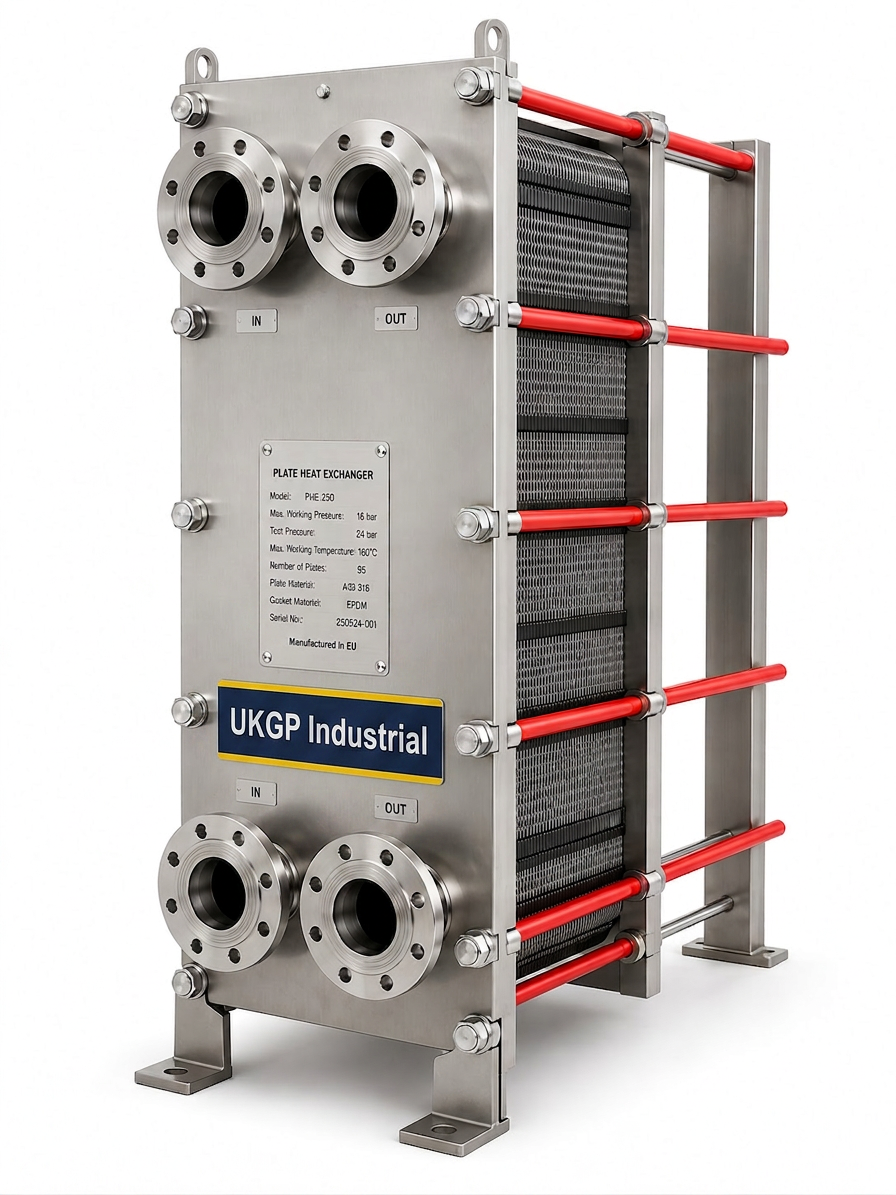
In the UK commercial sector, building loads are rarely static over a twenty-year life cycle. A gasketed plate heat exchanger offers a unique advantage that brazed alternatives cannot match: modularity. Because the plate pack is held together by heavy-duty compression bolts and a frame, engineers can easily increase or decrease the number of plates to accommodate changes in thermal demand. This is particularly relevant in district heating schemes or phased residential developments where the initial heat load may be significantly lower than the projected final capacity. By specifying a gasketed unit from the outset, UKGP ensures that your system remains adaptable without the need for a full plant-room refit or expensive pipework modifications later down the line.
When we look at the high-efficiency requirements of modern buildings, the ability to fine-tune a gasketed plate heat exchanger to the exact thermal spec is a major performance driver. Unlike brazed units that are off-the-shelf and fixed, our gasketed range is sized specifically for your duty, pressure drop, and temperature approach. This bespoke engineering approach reduces energy consumption by ensuring that the pumps are not working against an oversized or inefficient heat transfer surface. For consultants, this means easier compliance with CIBSE guidelines and more predictable operational costs for the end-user or facility manager, especially when dealing with DN20 to DN300 connections that require precise flow management and minimal bypass.
Furthermore, the gasketed plate heat exchanger is designed to handle high turbulence at lower velocities, which significantly enhances the heat transfer coefficient. This efficiency is vital when working with low-temperature hot water (LTHW) systems or heat pump integrations where the temperature approach is incredibly tight. In these scenarios, a fraction of a degree can be the difference between a system that meets its SCOP targets and one that fails. By utilizing a UKGP unit sized from a full thermal spec, you are guaranteed a solution that is optimised for the specific glycol concentrations or fluid types present in your primary and secondary circuits, ensuring the 2-year warranty remains valid through proper application.
- Modular plate packs for future-proof capacity adjustments
- Sized from full thermal specs to meet exact CIBSE requirements
- Higher turbulence at low velocities for superior heat transfer
- Available in a wide range of materials including 316 Stainless Steel and Titanium
Maintenance and the BSRIA BG50 compliance
BSRIA BG50 standards for water treatment emphasize the importance of maintaining system cleanliness to prevent corrosion and scaling. In hard water areas such as Surrey and London, the gasketed plate heat exchanger is often the only logical choice due to its serviceability. Unlike brazed units, which are sealed for life and must be chemically cleaned or replaced when fouled, a gasketed unit can be fully dismantled. This allows for mechanical cleaning of the plates, ensuring that every square millimetre of the heat transfer surface is restored to its original condition. For facility managers, this level of access is invaluable for maintaining the long-term efficiency of the heating or cooling circuit.
The ability to inspect the internal condition of the heat exchanger facilitates proactive maintenance rather than reactive replacement. When a gasketed plate heat exchanger is opened, it is possible to identify early signs of plate pitting or gasket degradation before a catastrophic cross-contamination event occurs. Our units, featuring high-quality NBR or EPDM gaskets, are designed for years of reliable service with a standard 4-6 week lead time for any custom configurations. Regular inspection routines supported by this hardware ensure that the plant room operates in accordance with BS 8552 monitoring guidelines, protecting the capital investment of the building owner and preventing unplanned downtime during peak winter months.
In many industrial and commercial settings, the cost of downtime far exceeds the initial capital expenditure of the hardware. The gasketed plate heat exchanger minimises this risk by allowing for individual plate or gasket replacement. If a single plate develops a leak, it can be bypassed or replaced without scrapping the entire unit. This sustainability aspect is increasingly important for BREEAM ratings and ESG targets. UKGP’s technical team provides full support during the specification phase to ensure the chosen materials are compatible with the local water chemistry, further extending the intervals between service periods and ensuring the unit performs according to its design parameters for its entire service life.
- Full mechanical cleaning capabilities for hard water areas
- Ease of inspection to prevent cross-contamination
- Individual component replacement reduces total cost of ownership
- Supports BSRIA BG50 and BS 8552 maintenance protocols
Handling debris with air and dirt separators
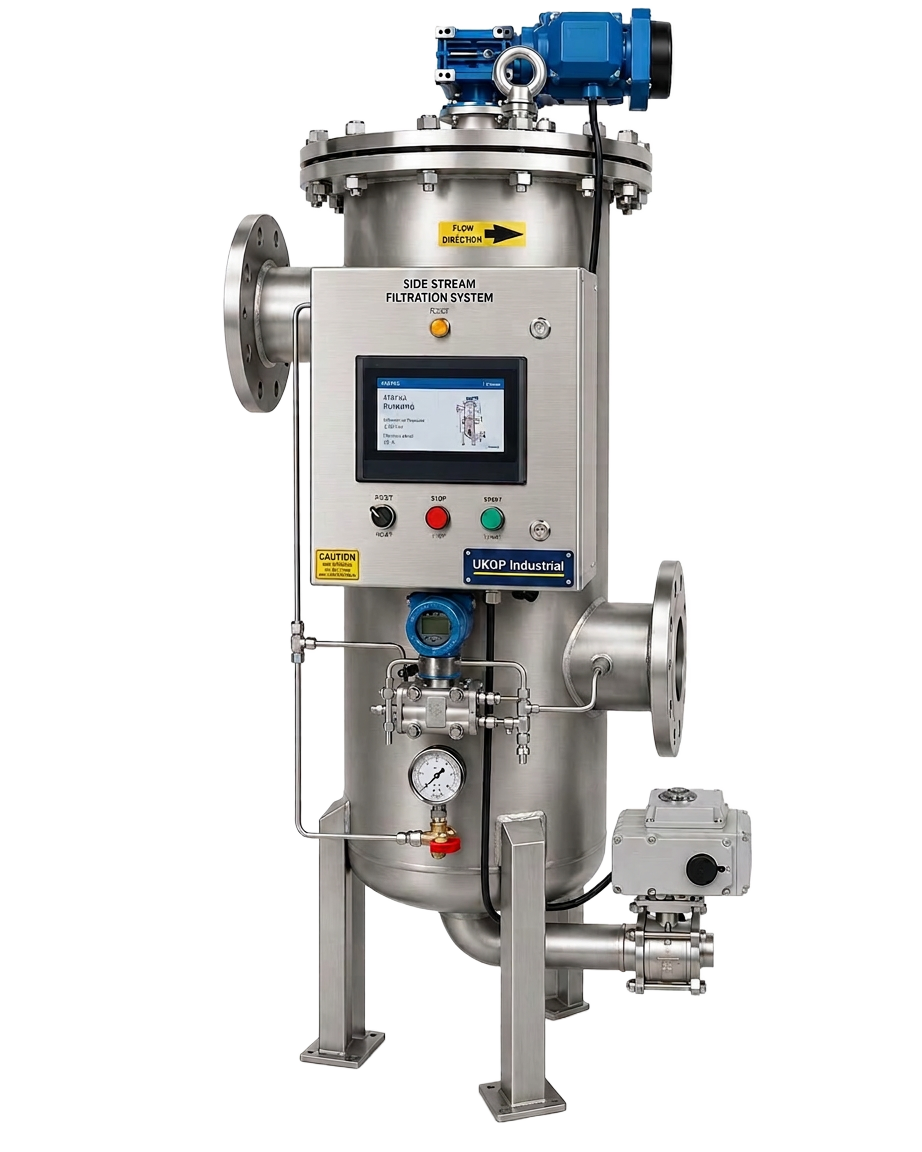
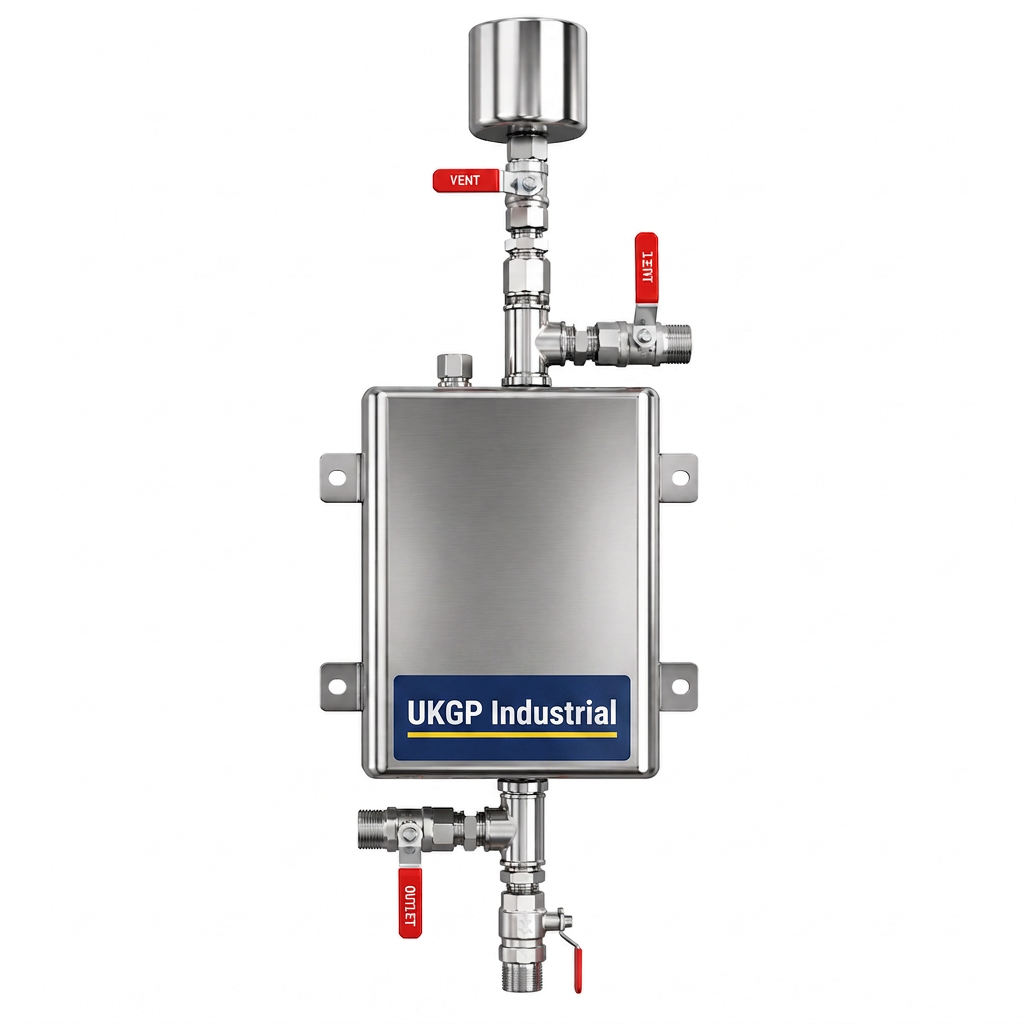
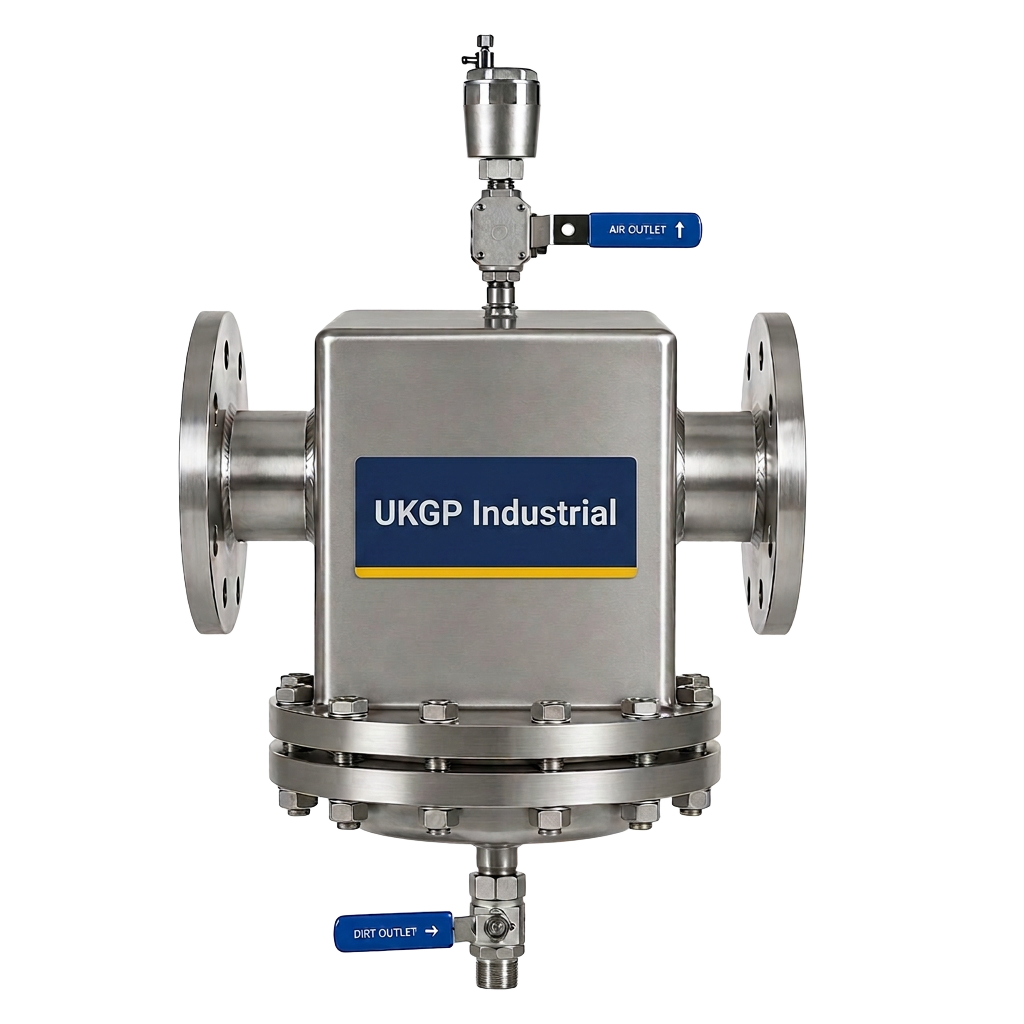
Even with the best heat exchanger, system debris can cause significant issues if not managed correctly. While the wide channels in a gasketed plate heat exchanger are more resilient to clogging than the narrow passages found in brazed models, protection is still a technical necessity. Small particles of magnetite or installation debris can lodge in the plate chevron patterns, leading to localised hotspots and reduced flow rates. This is why we recommend the installation of high-efficiency separators alongside your heat transfer equipment. By removing micro-bubbles and solid particulates before they reach the heat exchanger, you protect the integrity of the gaskets and maintain the thermal performance specified in your design.
Incorporating advanced separation technology ensures that the gasketed plate heat exchanger operates in a clean environment, which is particularly important in retrofit projects where existing pipework may contain years of accumulated sludge. The use of magnetic separators can capture fine iron oxide particles that would otherwise be difficult to remove through standard flushing. By keeping the primary and secondary fluids clean, the pressure drop across the heat exchanger remains within the design limits, preventing the pumps from overworking and consuming excess electricity. This holistic approach to plant room design is what sets UKGP apart, as we look at the system as an interconnected series of components rather than isolated products.
Correct separation also extends the life of the pumps and control valves within the circuit. When you order a gasketed plate heat exchanger from UKGP, our engineers can advise on the total system protection package. This includes sizing the separation equipment based on the flow rates and pipe sizes of your project, typically matching the DN20 to DN300 range of our heat exchangers. Providing a 2-year warranty on our equipment is a testament to our confidence in how these units perform when integrated into a properly designed and protected system. For contractors, this means fewer call-backs and a smoother handover process to the final client or building operator.
- Protects heat exchanger plates from abrasive magnetite
- Reduces the frequency of required plate cleaning
- Maintains design pressure drops for pump efficiency
- Integral for whole-system longevity and performance
Technical specifications and frame construction
The robustness of a gasketed plate heat exchanger comes from its structural frame, which is engineered to withstand significant pressure fluctuations and mechanical stress. Unlike brazed units that rely on the strength of the copper or nickel braze, gasketed units utilize heavy-duty carbon steel frames, often epoxy-coated for corrosion resistance. This makes them suitable for harsher environments where temperature cycling is frequent. The frame's ability to be tightened ensures a consistent seal across the entire gasket surface, which is critical for preventing leaks in high-pressure applications up to DN300 diameters. UKGP ensures every frame is manufactured to rigorous standards to meet the demands of UK industrial plant rooms.
Choosing the right plate material is equally vital. While 316 Stainless Steel is the standard for most LTHW applications, certain process environments may require Titanium or other specialty alloys to resist chloride-induced stress corrosion cracking. Because each gasketed plate heat exchanger we supply is sized from a full thermal spec, we can offer the most cost-effective material choice without compromising on safety or durability. This technical precision ensures that the unit is not only fit for purpose today but also resilient against the specific chemical composition of the fluids it will be handling over the long term. Our lead times of 4-6 weeks reflect this bespoke manufacturing process which prioritises quality over mass production.
Pressure testing is a non-negotiable part of our quality control. Every gasketed plate heat exchanger undergoes hydrostatic testing before leaving our facility to ensure the integrity of every seal and plate. This provides peace of mind for the installer, knowing that the unit will perform under the specified operating pressures of the building's HVAC system. When you compare this to the off-the-shelf nature of brazed units, the bespoke nature of the gasketed unit offers a much higher degree of certainty for mission-critical applications like data centres or healthcare facilities where heat rejection is vital for operational continuity. The 2-year warranty offered by UKGP further underscores the reliability of our construction methods.
- Heavy-duty frames designed for high-pressure environments
- Material options including 316 Stainless and Titanium
- Full hydrostatic pressure testing on every unit
- Optimised for temperature cycling and mechanical stress
Operational safety and leak detection
A critical safety advantage of the gasketed plate heat exchanger is the way it manages gasket failure. Most gaskets are designed with a 'leak-to-atmosphere' feature. If a seal fails, the fluid is directed out of the plate pack rather than allowing internal cross-contamination between the primary and secondary fluids. This is a vital consideration in applications where mixing the two fluids could be catastrophic, such as in domestic hot water (DHW) generation where primary boiler water must never mix with the potable supply. Brazed units, being sealed, cannot offer this visual diagnostic, often leading to hidden contamination issues that are only discovered after significant damage has occurred.
In addition to visual leaks, the gasketed plate heat exchanger allows for easy installation of drip trays and moisture sensors to alert the building management system (BMS) at the first sign of a seal breach. This level of monitoring is essential for high-end commercial properties and industrial sites where environmental protection and asset management are top priorities. By specifying one of our units, you are choosing a system that facilitates rapid response and minimal impact. The 4-6 week lead time allows us to incorporate specific port configurations that might be required for these safety systems, ensuring they fit perfectly into your plant room layout from day one.
The gaskets themselves are a core component of this safety profile. We use high-grade elastomers that are selected based on the operating temperatures and fluid types defined in your thermal spec. Whether it is EPDM for standard heating or Nitrile for oily fluids, the selection is made to maximise the lifespan of the equipment. This careful engineering is why the gasketed plate heat exchanger remains the gold standard for large-scale heat transfer. It provides a level of operational transparency that brazed units simply cannot match, giving engineers the confidence that they can manage the equipment through every stage of its lifecycle, from commission to decommissioning.
- Leak-to-atmosphere gaskets prevent cross-contamination
- Compatible with BMS moisture sensing for early warning
- Port configurations available for safety valve integration
- Elastomers selected specifically for fluid compatibility
Commercial considerations and lead times
From a procurement perspective, the gasketed plate heat exchanger is often seen as a larger initial investment, but the return on investment (ROI) is significantly higher when including maintenance and replacement costs. A brazed unit is a 'disposable' item; when it fails or fouls beyond the reach of chemical cleaning, it must be replaced. In contrast, a gasketed unit is a lifetime asset. By investing in the UKGP range, which covers DN20 to DN300, you are reducing future capital expenditure by ensuring the frame and pipework connections remain in place for decades, with only the relatively inexpensive gaskets needing periodic replacement. This makes the commercial case very strong for long-term building owners.
Our current lead time of 4-6 weeks for a gasketed plate heat exchanger is highly competitive in the UK market, especially for units that are custom-sized to a full thermal spec. We understand that project timelines are tight and that M&E contractors need reliable delivery dates to coordinate with other trades on site. By manufacturing and sizing our units with such precision, we reduce the risk of installation delays caused by mismatched equipment or inadequate performance. The 2-year warranty we provide is double the industry standard for some heat transfer products, reflecting our commitment to the quality and durability of the gaskets, plates, and frames that leave our Surrey-based oversight.
Finally, the support provided by UKGP doesn't end at delivery. We provide detailed technical documentation and support during the commissioning phase to ensure your gasketed plate heat exchanger is operating at peak efficiency. For procurement leads, this means a lower risk profile and a higher quality of service for their clients. Whether you are looking for a compact unit for a small office block or a massive DN300 unit for an industrial cooling plant, our team is ready to provide a quote based on your specific requirements. The combination of local expertise, technical sizing, and robust warranties makes UKGP the preferred partner for heat transfer solutions across the UK building services sector.
- Higher ROI over the total lifecycle of the building
- Fixed 4-6 week lead times for better project planning
- Comprehensive 2-year warranty for peace of mind
- Expert technical support from initial sizing to commissioning
Frequently asked questions
What is the maximum pressure for a gasketed plate heat exchanger?
- Our gasketed units are typically designed for operating pressures up to 10 or 16 bar as standard, although higher pressure ratings can be accommodated through custom frame engineering. Every unit is sized from your full thermal spec to ensure safety.
How often do the gaskets need to be replaced?
- Under normal operating conditions with correct water treatment (BSRIA BG29/BG50), gaskets in a gasketed plate heat exchanger can last 5 to 10 years. Longevity depends on temperature cycling and fluid chemistry.
Can I upgrade my existing heat exchanger if my building load increases?
- Yes, one of the primary benefits of the gasketed plate heat exchanger is its modularity. You can add more plates to the existing frame, provided there is sufficient 'length' in the compression bolts, to increase the thermal capacity.
What connection sizes are available from UKGP?
- We offer a comprehensive range from DN20 for small-scale applications up to DN300 for large industrial and district heating projects, all available within our standard 4-6 week lead time.
Are these units suitable for cooling as well as heating?
- Absolutely. The gasketed plate heat exchanger is highly efficient for chilled water applications and process cooling, where tight temperature approaches are often required to maintain system efficiency.