The Role of a Domestic Plate Heat Exchanger in System Hygiene
In the UK commercial sector, maintaining the integrity of secondary domestic hot water (DHW) loops and primary heating circuits is paramount. A domestic plate heat exchanger serves as the critical barrier, ensuring that the primary energy source—whether a commercial boiler plant or a heat pump—is safely separated from the end-use water. This hydraulic separation is essential for preventing cross-contamination and managing pressure differentials across disparate system zones. When specifying these units, engineers must consider the thermal conductivity of the plates and the resilience of the gasket materials to ensure a long operational lifespan under varying load conditions.
Adhering to BSRIA BG29 and BG50 guidelines is vital during the commissioning and maintenance phases of any system incorporating a domestic plate heat exchanger. These documents emphasize the importance of water quality and the prevention of scale build-up, which can significantly impair the heat transfer coefficients of even the most advanced units. By utilizing a UKGP heat exchanger, which is available in both gasketed and brazed configurations from DN20 to DN300, facility managers can achieve the precise temperature approach required for modern low-temperature heating systems without compromising on total system energy efficiency or thermal performance.
The selection process for a domestic plate heat exchanger involves more than just matching flow rates; it requires a comprehensive understanding of the thermal spec, including the primary and secondary flow and return temperatures. UKGP provides bespoke sizing services based on these full thermal specifications to ensure that every unit delivered is perfectly matched to the building's peak demand. With a standard lead time of 4-6 weeks and a robust 2-year warranty, our heat exchangers offer peace of mind for M&E contractors who are responsible for the long-term reliability of commercial HVAC installations across the United Kingdom.
- Ensures total hydraulic separation between primary and secondary circuits
- Prevents the migration of magnetite and debris into high-efficiency boilers
- Optimises thermal transfer for DHW and space heating applications
- Facilitates easier system maintenance and localized chemical cleaning
Technical Sizing and Material Considerations
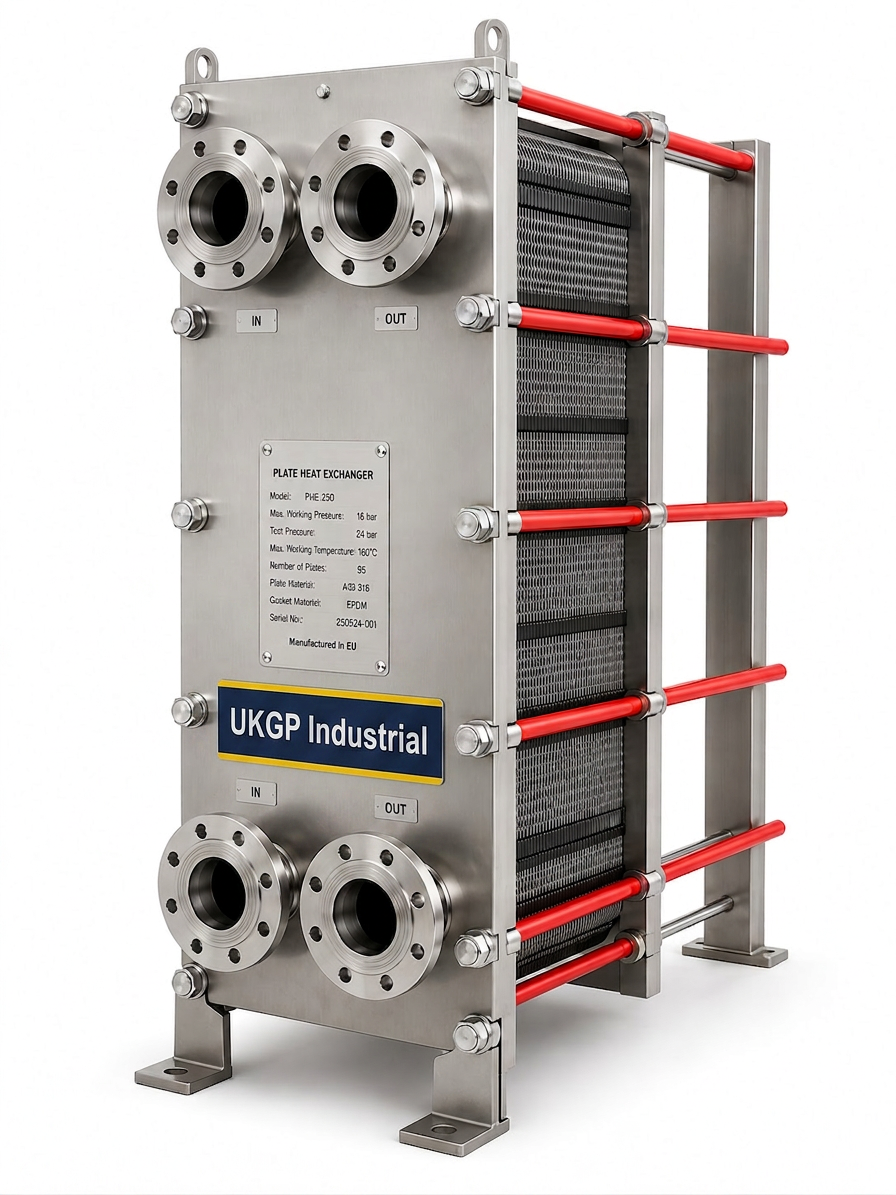
When integrating a domestic plate heat exchanger into a plant room, material selection is dictated by the chemical composition of the water and the intended application. For potable water systems, stainless steel plates (typically Grade 316) are standard to prevent corrosion and comply with UK water regulations. Gasketed plate heat exchangers (GPHE) offer the advantage of being expandable and easier to clean, which is highly beneficial in regions with hard water where limescale accumulation is a persistent threat. Conversely, brazed variants are compact and suitable for high-pressure environments where space is at a premium and the water chemistry is strictly controlled.
A well-sized domestic plate heat exchanger must account for the logarithmic mean temperature difference (LMTD) to ensure the requested heat load is transferred efficiently between the two fluids. Over-sizing can lead to low velocities and increased fouling, while under-sizing will fail to meet the peak DHW demand of the building. UKGP works closely with consultants to calculate the exact plate count and configuration required. Our range spans from DN20 to DN300, ensuring we have a solution for everything from small residential blocks to expansive commercial complexes that require significant thermal throughput and reliable operational uptime.
Furthermore, the integration of expansion bellows is often necessary to manage the thermal expansion within the piping connected to the heat exchanger. These components protect the domestic plate heat exchanger from mechanical stress and vibration, which could otherwise lead to premature gasket failure or fatigue in the pipework. Ensuring that the entire assembly is designed as a cohesive system is the hallmark of professional M&E contracting. UKGP supports this by offering a full range of ancillary components that complement our thermal transfer solutions, ensuring that your commercial heating project meets all BS EN standards for safety and performance.
- Range of plate materials including 304 and 316 stainless steel
- Available in gasketed and brazed designs to suit specific plant room layouts
- Comprehensive sizing based on full thermal specification provided by the client
- DN20 to DN300 connection sizes to accommodate various flow requirements
Compliance with BSRIA and British Standards
Compliance with British Standards such as BS EN 14917 and industry best practices like BSRIA BG50 is non-negotiable for commercial installations. A domestic plate heat exchanger must be able to withstand the pressure testing protocols and operational rigours defined in these documents. Failure to specify a unit that meets these standards can result in system downtime, increased energy costs, and potential liability issues. UKGP ensures that all heat exchangers provided are manufactured to the highest quality standards, featuring robust designs that are supported by a 2-year warranty for added security for the end-user and the installing contractor.
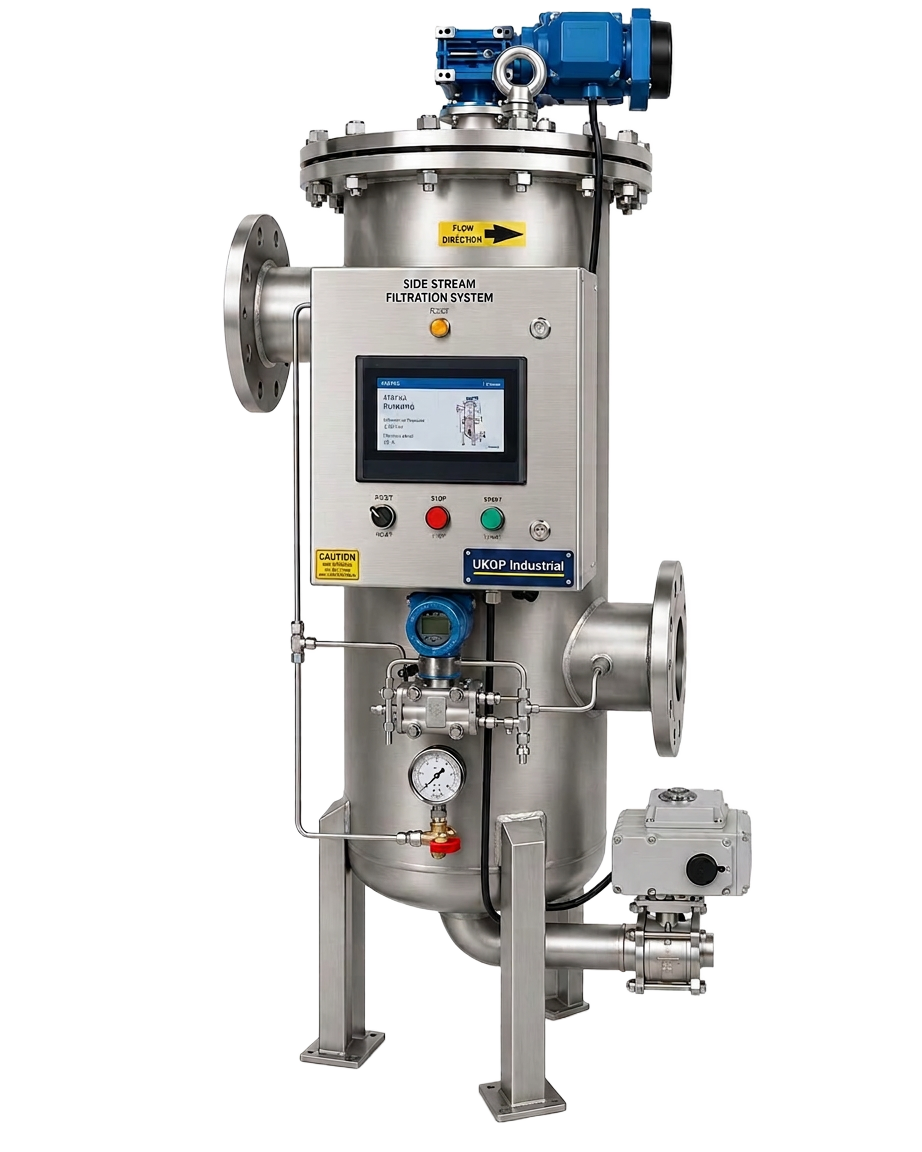
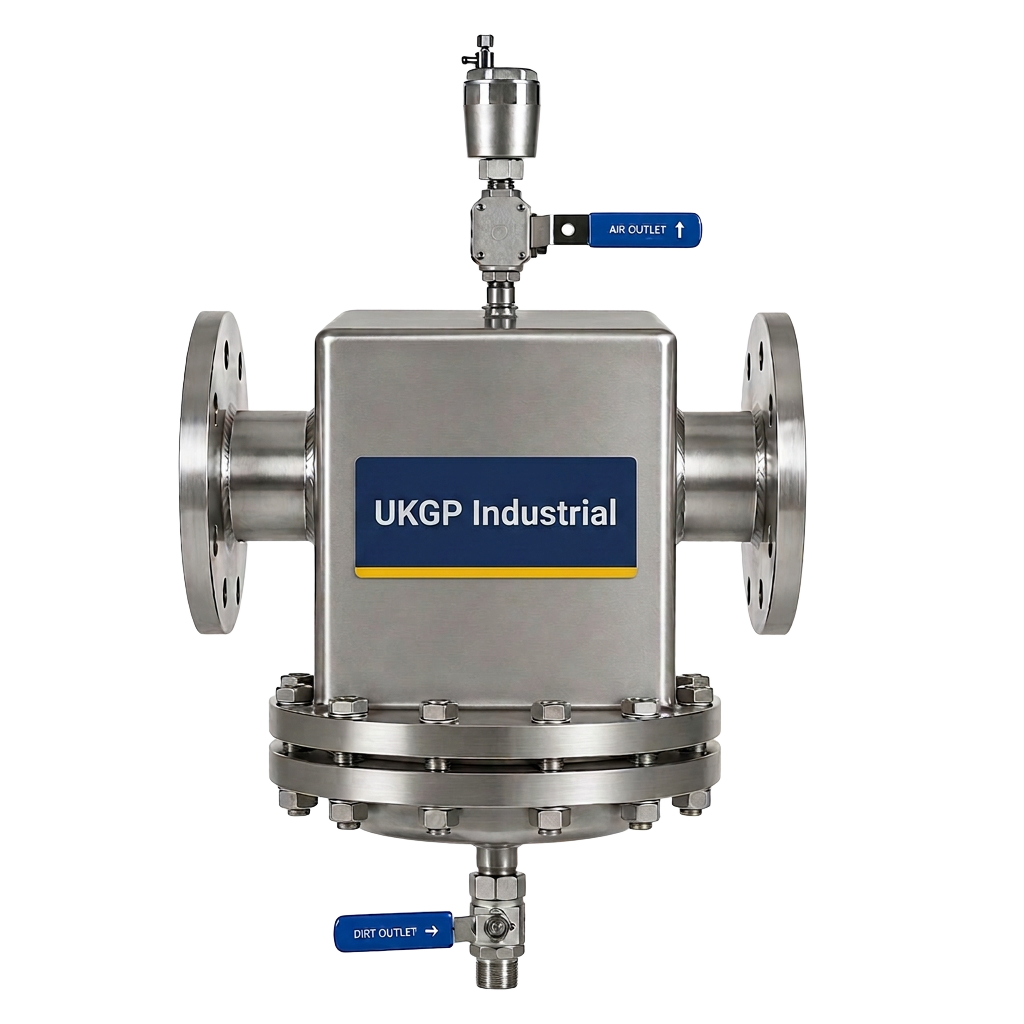
In the context of BS 8552, monitoring the water quality within systems using a domestic plate heat exchanger is essential. High levels of suspended solids can lead to erosion on the plate surfaces, reducing the wall thickness and eventually causing internal leaks. This is why UKGP advocates for the use of side stream filtration and air & dirt separators in conjunction with our heat exchange products. By maintaining clean system water, the efficiency of the heat transfer process is preserved, which reduces the carbon footprint of the building and ensures that commercial boiler plant efficiencies are maximized according to the latest CIBSE recommendations.
Thermal performance is also linked to the accuracy of temperature control. Using a domestic plate heat exchanger allows for precise control over the secondary side output, which is particularly important in healthcare or education settings where anti-scolding measures and Legionella control (L8) are top priorities. By providing a unit sized from a full thermal spec, UKGP ensures that the secondary flow temperature remains stable even during fluctuating demand. This stability not only improves user comfort but also protects the longevity of the entire heating distribution network by preventing thermal shock and excessive cycling of the primary heat source.
- Fully compliant with CIBSE and BSRIA maintenance guidelines
- Supplied with a comprehensive 2-year warranty for commercial peace of mind
- Sized to meet specific L8 Legionella control temperature requirements
- Engineered to withstand standard UK commercial system pressure testing
Installation and Maintenance Best Practices
Proper installation of a domestic plate heat exchanger requires adequate clearance for maintenance, particularly for gasketed units where the plate pack may need to be opened for manual cleaning. It is recommended that isolation valves and drain points are installed on all four ports to facilitate easier servicing and chemical flushing without draining the entire building circuit. This proactive approach to plant room design aligns with BSRIA BG50 recommendations for the lifelong care of closed-loop water systems. Contractors should also ensure that the unit is mounted on a level, vibration-free base to prevent mechanical stress on the connections.
During the commissioning phase, the domestic plate heat exchanger should be checked for any signs of leaks after reaching operational temperature and pressure. It is common for gasketed units to require a minor tightening of the compression bolts following the first thermal cycle; however, this must be done according to the manufacturer's torque specifications to avoid damaging the gaskets. UKGP provides detailed installation manuals and technical support to ensure that every DN20 to DN300 unit is installed correctly. Our 4-6 week lead time allows for detailed planning and integration into the broader mechanical schedule, ensuring that projects stay on track and within budget.
Long-term performance monitoring of the domestic plate heat exchanger can be enhanced by installing pressure gauges and temperature sensors on both the primary and secondary inlets and outlets. A significant change in the pressure drop across the unit often indicates fouling or blockage, signaling the need for a service intervention. By addressing these issues early, facility managers can prevent the total failure of the DHW system and maintain the high efficiency that modern high-performance buildings demand. UKGP is committed to providing the hardware and the technical insight required to keep commercial heating systems operating at their peak year after year.
- Include isolation valves and flush ports for streamlined maintenance
- Follow manufacturer torque settings for gasketed plate compression
- Monitor pressure drops to detect early signs of scaling or fouling
- Ensure adequate service clearance for plate removal and inspection
Energy Efficiency and Sustainability Benefits
Integrating a domestic plate heat exchanger into a commercial heating system is a strategic move toward sustainability. By allowing boilers to operate at their most efficient condensing temperatures while still providing high-temperature DHW where needed, these units significantly reduce fuel consumption and NOx emissions. Furthermore, the high turbulence promoted by the corrugated plate design within a UKGP exchanger ensures maximum heat recovery from the primary circuit. This efficiency is a core requirement for buildings aiming for high BREEAM ratings or meeting the increasingly stringent Part L building regulations in the UK.
The durability of a domestic plate heat exchanger also contributes to the circular economy. Gasketed units manufactured by UKGP can be refurbished by replacing individual plates or gaskets, extending the service life of the component for decades rather than requiring a full replacement. This reduces the embodied carbon associated with the mechanical system over the building's lifecycle. Our team can size these units from a full thermal spec to optimize the surface area, ensuring that energy is not wasted and that the pump energy required to move fluid across the plates is kept to an absolute minimum through intelligent hydraulic design.
Moreover, the use of a domestic plate heat exchanger enables the integration of renewable energy sources, such as solar thermal or air source heat pumps, into existing heating networks. The heat exchanger acts as a bridge, allowing these low-carbon technologies to pre-heat water safely and efficiently. As the UK moves toward net-zero, the flexibility provided by hardware from DN20 to DN300 becomes essential for retrofitting older commercial properties with modern, green heating solutions. Delivering these bespoke units with a 2-year warranty ensures that the transition to sustainable heating is backed by reliable, high-quality British engineering.
- Supports condensing boiler efficiency across all load profiles
- Enables integration of renewable heat sources into commercial loops
- Reduces operational carbon through high-efficiency thermal transfer
- Refurbishable design extends the lifecycle and reduces waste
Procurement and Lead Times with UKGP
For procurement leads and M&E contractors, the reliability of the supply chain is as important as the quality of the domestic plate heat exchanger itself. UKGP understands the pressures of modern construction schedules, which is why we offer a predictable 4-6 week lead time on our range of heat exchangers. Whether you require a compact DN20 brazed unit or a large-scale DN300 gasketed assembly, our manufacturing processes are streamlined to ensure timely delivery to sites across the UK. This reliability helps project managers avoid the costly delays associated with international shipping and fragmented supply chains.
When requesting a quote for a domestic plate heat exchanger, providing a full thermal spec is the first step toward a successful installation. Our technical team uses advanced software to model the heat transfer requirements, ensuring the unit is neither under-specified nor unnecessarily over-engineered. This technical precision, combined with a 2-year warranty, makes UKGP a preferred partner for UK building services consultants who demand accountability and high performance. We focus on transparency and technical accuracy, ensuring that all performance data provided is verifiable and meets the rigorous standards expected in the UK B2B HVAC market.
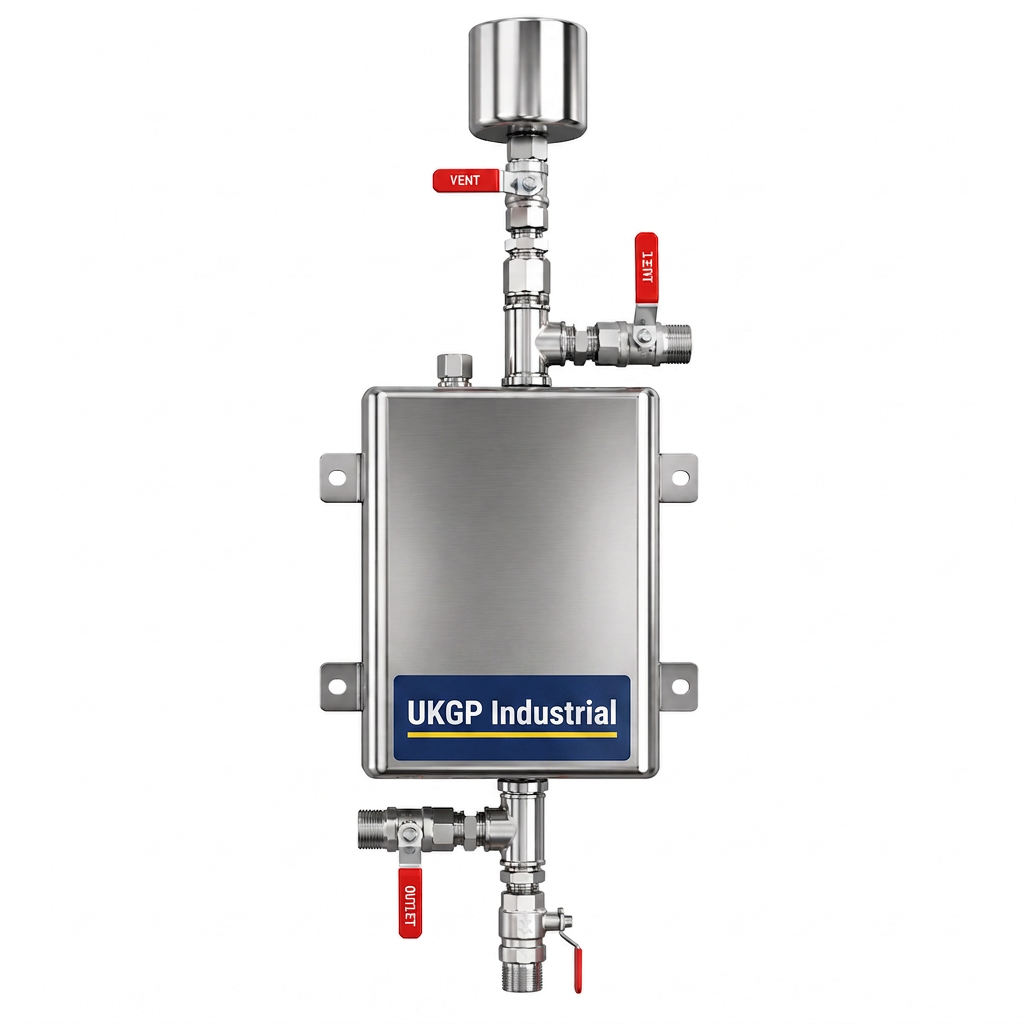
Choosing UKGP for your domestic plate heat exchanger needs also means accessing expert UK-based support. From the initial design phase through to after-sales maintenance advice, we are here to ensure your thermal systems operate flawlessly. Our commitment to quality extends through our entire product range, from plate heat exchangers to dosing pots and air separators, providing a one-stop-shop for high-quality plant room components. Contact our Surrey-based team today to discuss your next project and experience the benefits of working with a manufacturer that truly understands the technical demands of the UK commercial heating sector.
- Reliable 4-6 week lead times for all standard and bespoke orders
- Expert technical support based in Surrey, United Kingdon
- Transparent quoting process based on accurate thermal modelling
- Comprehensive 2-year warranty on all gasketed and brazed units
Frequently asked questions
What is the typical lead time for a UKGP domestic plate heat exchanger?
- Our standard lead time for both gasketed and brazed domestic plate heat exchangers, sized from DN20 to DN300, is 4-6 weeks from the date of order and technical approval.
Do you provide a warranty on your heat exchangers?
- Yes, all UKGP domestic plate heat exchangers come with a robust 2-year warranty, reflecting our confidence in the build quality and engineering excellence of our products.
Can you size a domestic plate heat exchanger from our project drawings?
- We require a full thermal spec (flow rates, primary/secondary temperatures, and heat load) to accurately size a domestic plate heat exchanger. Our team can help you define these parameters if needed.
Are your heat exchangers suitable for potable water?
- Absolutely. We supply domestic plate heat exchangers with 316-grade stainless steel plates and WRAS-approved gasket materials, making them ideal for domestic hot water (DHW) applications.
What connection sizes are available for commercial systems?
- We offer a wide range of connection sizes from DN20 for smaller requirements up to DN300 for large-scale industrial or district heating applications.