Thermal Efficiency and the DHW Plate Heat Exchanger
In modern commercial plantrooms, the dhw plate heat exchanger serves as the primary interface between the low-temperature hot water (LTHW) circuit and the domestic water supply. This configuration is essential for decoupling the primary heating loop from the potable water, preventing cross-contamination and allowing for precise temperature control. When specifying a dhw plate heat exchanger, M&E contractors must consider the approach temperature—the difference between the primary flow and the secondary outlet. A narrower approach temperature typically requires more plates, increasing the surface area for heat transfer, which in turn enhances the energy efficiency of the entire DHW system. Using a correctly sized unit ensures that the boiler return temperatures remain low, maximising the condensing efficiency of modern commercial boiler plant.
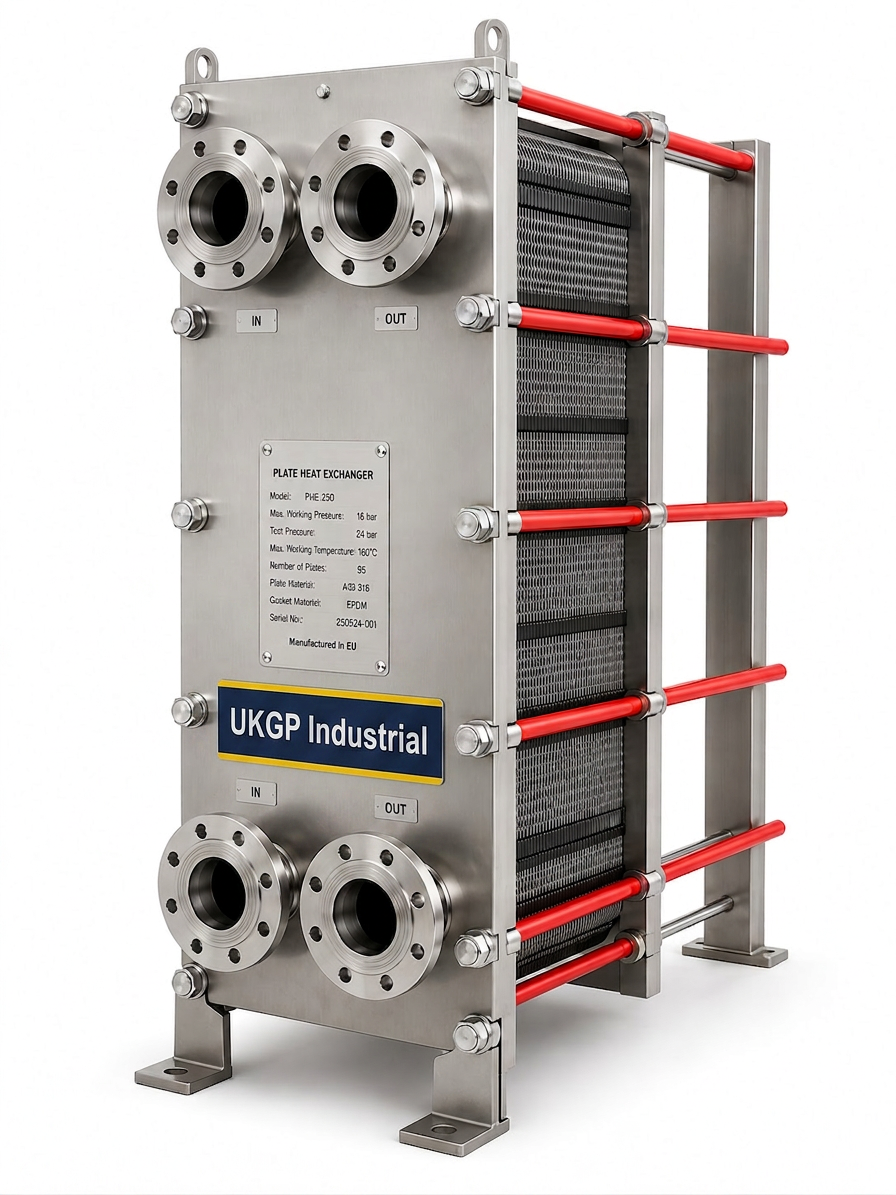
Choosing between a gasketed or brazed dhw plate heat exchanger depends heavily on the specific application and future maintenance requirements. Gasketed units offer the advantage of being fully serviceable; they can be stripped down for manual cleaning or plate additions if demand increases. Conversely, brazed versions are compact and cost-effective for smaller DHW loads. At UKGP, we provide both gasketed and brazed options ranging from DN20 to DN300. Every dhw plate heat exchanger we supply is sized from a full thermal spec provided by the client, ensuring it meets the unique peak load profile of the building. This bespoke sizing approach is critical for high-occupancy environments like hotels or student accommodation where demand fluctuates significantly throughout the day.
To ensure long-term reliability and peace of mind for facility managers, all our plate heat exchangers come with a 2-year warranty as standard. We understand that project timelines in the UK construction sector are often tight, which is why we maintain a lead time of 4-6 weeks for most configurations. By selecting a high-quality dhw plate heat exchanger, engineers can mitigate common issues such as thermal shock and uneven heating. Our technical team works closely with procurement leads to ensure that the chosen unit matches the technical requirements of the BS EN 806 standards for domestic water installations, providing a solution that is both compliant and commercially viable for high-traffic UK commercial buildings.
- Primary to secondary decoupling for hygiene and safety
- Gasketed units for easy maintenance and scalability
- Compact brazed units for space-restricted plantrooms
- Optimised approach temperatures for maximum boiler efficiency
Compliance with BSRIA BG50 and BS 8552
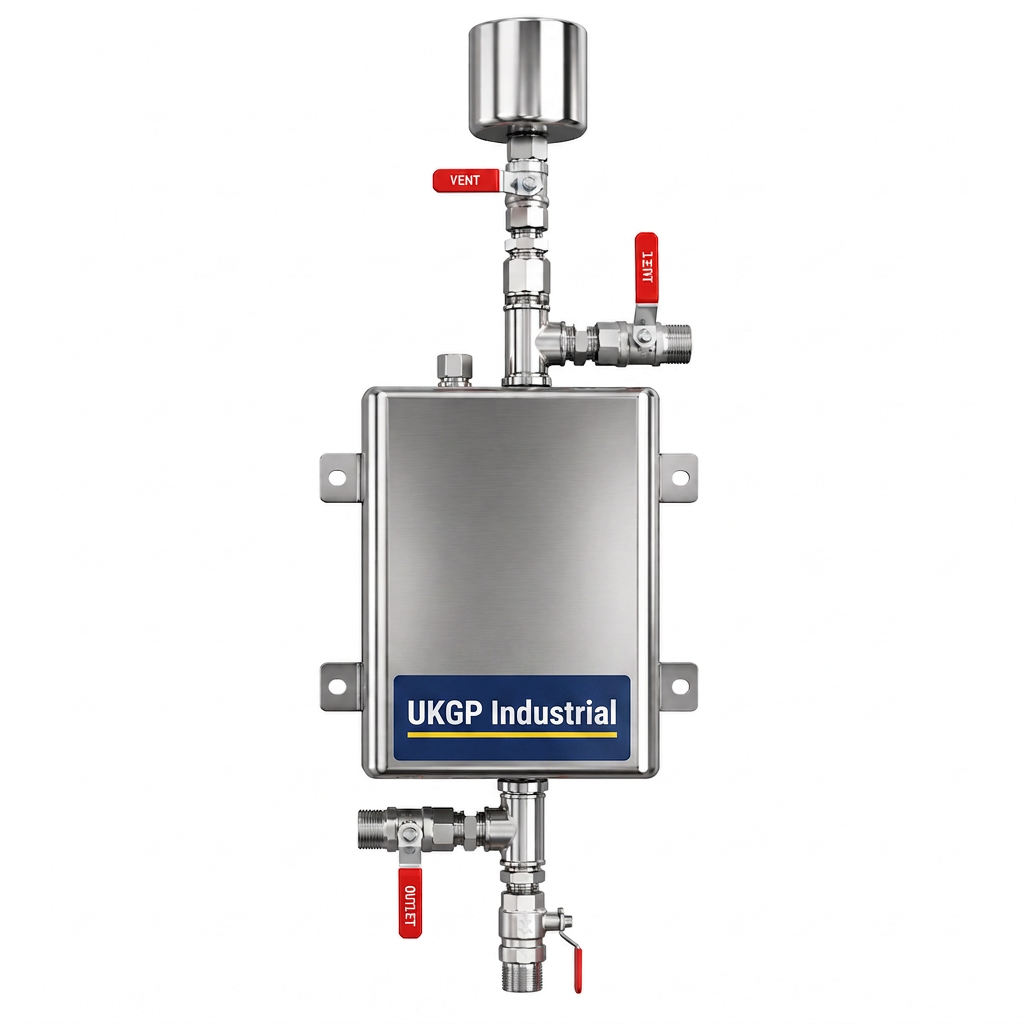
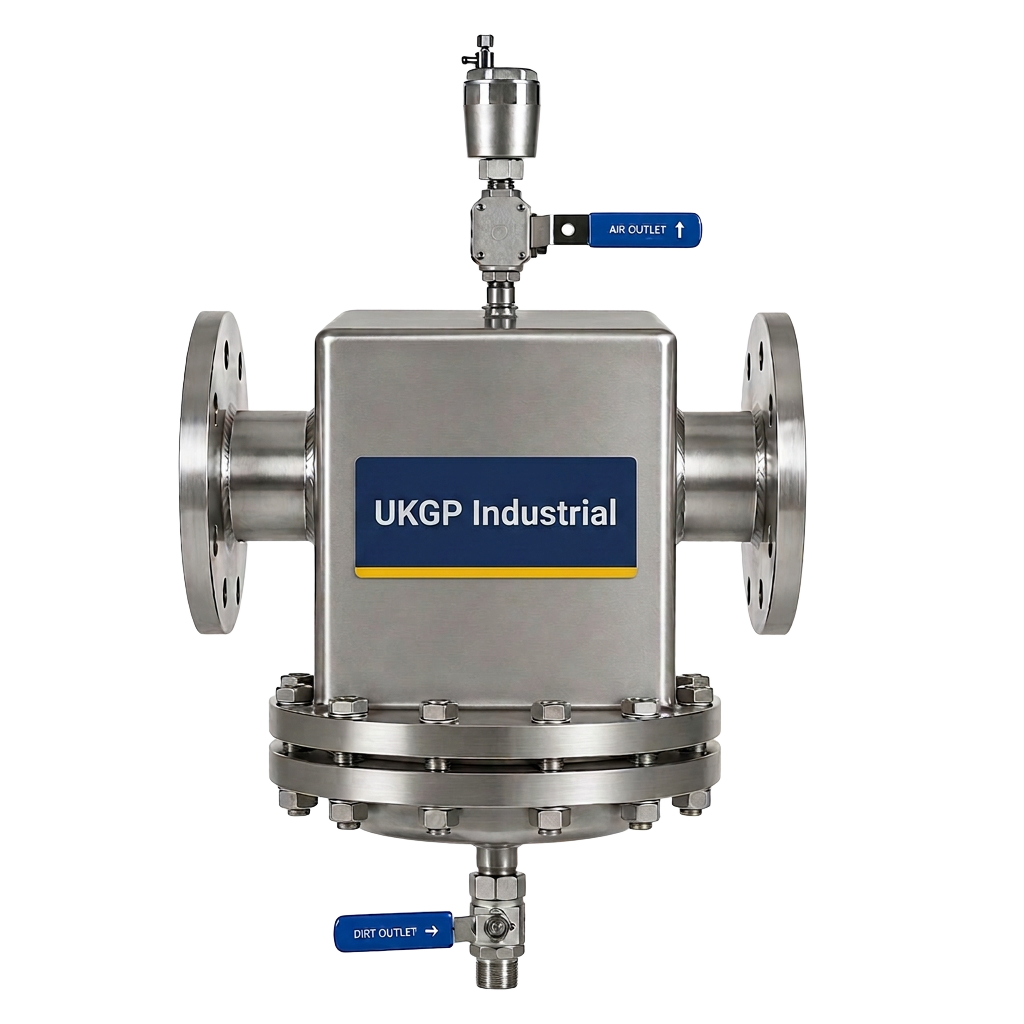
Adhering to BSRIA BG50 (Water Treatment for Closed Heating and Cooling Systems) is vital when integrating a dhw plate heat exchanger into a larger commercial network. While BG50 focuses on the primary circuit, the health of the primary water directly impacts the heat transfer efficiency of the secondary DHW side. Scale buildup or magnetite deposition on the primary side of the plates can lead to reduced thermal performance and eventual failure. To prevent this, engineers must implement robust filtration strategies. BS 8552 provides the framework for sampling and monitoring water quality, ensuring that the chemical levels within the system do not lead to the corrosion of the DHW plate heat exchanger's internal components, particularly if stainless steel 316 plates are used.
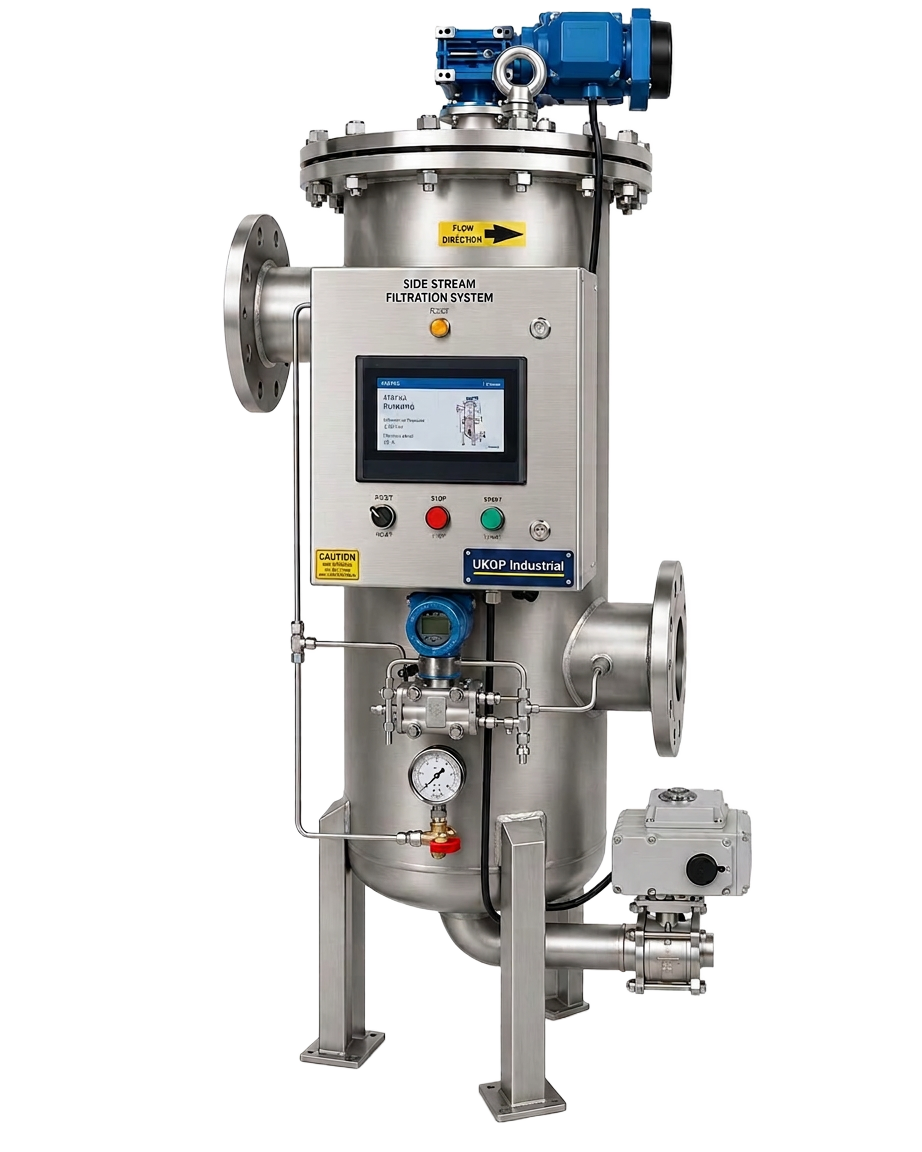
A common challenge in hard water areas across the UK is lime-scale accumulation on the secondary side of the heat exchanger. As the secondary water is heated, minerals precipitate out of the solution and coat the plates. This layer acts as an insulator, forcing the primary circuit to run hotter to achieve the same DHW output, which wastes energy. Integrating a side stream filtration unit alongside your dhw plate heat exchanger can significantly extend the interval between maintenance cycles. By keeping the primary water clear of suspended solids, you ensure that the complex flow patterns within the plate channels remain unobstructed, maintaining the design turbulence required for efficient heat exchange as specified during the initial sizing process.
Effective water treatment is not just a recommendation; it is a requirement for the longevity of high-value plantroom assets. When a dhw plate heat exchanger is installed, a commissioning period follows where water chemistry must be stabilised. BSRIA BG29 (Pre-commission Cleaning of Pipework Systems) provides the necessary steps to ensure that the system is free from debris before the heat exchanger is brought online. Failure to follow these guidelines can result in early-stage fouling of the plates. Our team at UKGP provides detailed technical support to ensure your installation meets these UK standards, protecting your 2-year warranty and ensuring the DN20 to DN300 units perform optimally from day one of operation.
- Strict adherence to BSRIA BG50 for primary circuit health
- Monitoring via BS 8552 to prevent plate corrosion
- Pre-commission cleaning according to BG29 guidelines
- Mitigation of scale to maintain design thermal efficiency
Sizing and Selection Criteria
Sizing a dhw plate heat exchanger is a precise science that requires a full thermal specification, including flow rates, inlet/outlet temperatures for both the primary and secondary sides, and the maximum allowable pressure drop. Oversizing can lead to low velocity through the plates, which promotes fouling, while undersizing will result in an inability to meet peak DHW demand, leading to cold water complaints. In large commercial projects, the DN20 up to DN300 range allows for significant flexibility. For instance, a DN100 unit might be ideal for a mid-sized office complex, whereas a DN250 unit might be required for a large hospital wing or a leisure centre with high shower usage.
The material selection for the plates and gaskets is another critical factor. Most commercial DHW applications utilise 316-grade stainless steel plates due to their excellent corrosion resistance and hygiene properties. However, in environments with high chloride content, alternative materials may be necessary. For gasketed units, EPDM gaskets are the industry standard for DHW because of their ability to withstand the necessary temperatures and provide a reliable seal over many years. When you request a quote for a UKGP dhw plate heat exchanger, we take these factors into account during the design phase to ensure that the unit provided is perfectly matched to the fluid properties of your specific site.
Lead times are often a pain point for M&E contractors and procurement leads. Waiting 12 to 16 weeks for a customised heat exchanger is rarely feasible on fast-track projects. At UKGP, we have streamlined our assembly and testing processes to offer a 4-6 week lead time. This allows project managers to keep their work schedules on track without compromising on the quality or the bespoke nature of the dhw plate heat exchanger. By providing a unit that is built to a full thermal spec, we eliminate the guesswork and ensure that the plantroom operates at peak efficiency from the moment the system is commissioned for use.
- Full thermal spec sizing for optimized performance
- Wide range of sizes from DN20 to DN300 available
- High-grade 316 stainless steel for potable water safety
- Standard 4-6 week lead times for rapid project delivery
Maintenance and Longevity of DHW Systems
Long-term maintenance of the dhw plate heat exchanger is essential for preventing Legionella growth and ensuring consistent water delivery. Stagnation and low temperatures are the primary drivers of bacterial risk; therefore, the heat exchanger must be able to maintain the secondary loop at a constant 60°C. Regular inspection of the gaskets and plates in a gasketed unit allows for the early detection of leaks or scale buildup. Because our units come with a 2-year warranty, facility managers can be confident in the build quality, but proactive maintenance following CIBSE Guide G recommendations will always extend the service life of the equipment beyond the initial warranty period.
For brazed units, which cannot be opened, chemical cleaning or 'Clean-In-Place' (CIP) procedures are the standard maintenance method. This involves circulating a descaling solution through the dhw plate heat exchanger to dissolve mineral deposits. It is crucial to ensure that the chemicals used are compatible with the copper brazing and the stainless steel plates to avoid internal damage. In comparison, gasketed units can be mechanically cleaned, which is often more effective for heavy fouling. Regardless of the type, monitoring the pressure drop across the exchanger is a reliable way to gauge when cleaning is required, as a rising pressure drop usually indicates that the internal channels are becoming restricted.
Choosing a reliable supplier for your dhw plate heat exchanger is about more than just the hardware; it is about the technical support and the assurance of quality. With sizes ranging from DN20 to DN300, UKGP provides solutions that fit into any commercial infrastructure. Our commitment to provide a 2-year warranty reflects our confidence in the durability of our products. When engineers specify a UKGP unit, they are getting a component that has been meticulously designed to meet the demands of the UK's unique water conditions and regulatory environment, ensuring that the building's domestic hot water system remains efficient, safe, and compliant for the long term.
- Legionella prevention through consistent 60°C delivery
- CIP procedures for brazed units to maintain flow
- Mechanical cleaning options for gasketed plate units
- Pressure drop monitoring as a key maintenance indicator
Integration with Modern Boiler Plant
Modern commercial boilers, such as those from leading UK commercial boiler OEMs, require low return temperatures to operate in condensing mode. A well-designed dhw plate heat exchanger is the key to achieving this. By ensuring a large temperature drop on the primary side, the heat exchanger sends cooler water back to the boiler, significantly increasing the seasonal efficiency of the entire heating system. This integration is a core component of achieving a high BREEAM rating or meeting the carbon reduction targets set out in the latest Part L Building Regulations. Proper sizing is the only way to guarantee these thermal outcomes in a real-world setting.
The interaction between the boiler's control system and the dhw plate heat exchanger's secondary pump is critical for stable hot water temperatures. If the primary flow rate is too high, the boiler may short-cycle; if it is too low, the secondary water will not reach the required setpoint. Using a dhw plate heat exchanger that has been sized from a full thermal spec ensures that the flow rates on both sides are balanced. This balance prevents thermal stress on the boiler's own internal heat exchanger and ensures that the dhw plate heat exchanger can handle the sudden 'slugs' of cold water that enter the system during peak morning or evening periods.
For procurement leads and M&E contractors, the commercial advantages of our DHW solutions are clear. With a 4-6 week lead time, we help avoid the delays that often plague large-scale installations. Our range of DN20 to DN300 units means we can supply everything from a small office kitchenette solution to a massive industrial-scale water heating station. Each dhw plate heat exchanger is a testament to UK-based engineering excellence, providing a robust, 2-year warranted solution that interfaces seamlessly with any major commercial boiler on the market today, ensuring long-term operational success for the end-user and the facility management team.
- Optimised for low return temperatures and boiler condensing
- Helps achieve BREEAM and Part L compliance
- Balances primary and secondary flow for system stability
- Robust 316 stainless steel plates for industrial durability
Advanced Controls and Sensors
To truly master the performance of a dhw plate heat exchanger, digital monitoring is becoming the industry standard. Integrating pH sensors and transmitters into the secondary loop allows for real-time monitoring of water quality. Changes in pH can indicate the presence of corrosive elements that might threaten the integrity of the plates. For high-value installations, this proactive approach to data allows facility managers to intervene before a small chemistry issue becomes a catastrophic failure. Our pH sensors are designed for easy integration, providing the level of detail required for a truly BSRIA-aligned maintenance regime that goes beyond simple visual inspections.
Furthermore, the use of accurate temperature sensors at the inlet and outlet of the dhw plate heat exchanger allows for the calculation of the 'k-value' or heat transfer coefficient. A drop in the k-value is a definitive signal that fouling is occurring. This data-driven approach allows for 'maintenance on demand' rather than relying on fixed calendar intervals, which can either be too frequent (wasting money) or too infrequent (risking failure). By combining our DN20-DN300 heat exchangers with precision sensing equipment, UK engineers can create high-reliability hot water systems that meet the most demanding specifications found in current UK building services designs.
Ultimately, the dhw plate heat exchanger is the heart of the DHW system, but it relies on a supporting cast of high-quality components. Whether you are looking for a gasketed unit for a major hospital or a brazed unit for a small retail unit, UKGP delivers with a 2-year warranty and a 4-6 week lead time. By requesting a quote based on your full thermal spec, you ensure that you receive a unit that is fit for purpose, energy efficient, and fully compliant with the latest BSRIA and CIBSE guidelines, providing a reliable source of domestic hot water for years to come.
- pH monitoring for early detection of corrosion risks
- Real-time k-value calculation for predictive maintenance
- Integration with BMS for remote system oversight
- Data-driven decisions to extend exchanger service life
Frequently asked questions
What is the standard lead time for a dhw plate heat exchanger from UKGP?
- Our standard lead time for both gasketed and brazed dhw plate heat exchangers is 4-6 weeks, allowing you to meet tight project deadlines.
Does a UKGP dhw plate heat exchanger come with a warranty?
- Yes, all of our plate heat exchangers are supplied with a 2-year warranty as standard, covering both gasketed and brazed configurations.
What sizes are available for commercial DHW applications?
- We offer a comprehensive range of sizes from DN20 up to DN300, ensuring we can accommodate everything from minor commercial refurbishments to major industrial plantrooms.
How do I ensure I get the correctly sized dhw plate heat exchanger?
- We size every dhw plate heat exchanger based on a full thermal spec provided by the client, including flow rates, temperatures, and pressure drop requirements.
Why is BSRIA BG50 relevant to my DHW heat exchanger?
- BSRIA BG50 ensures the primary heating water is correctly treated. Clean primary water prevents fouling on the plates of the dhw plate heat exchanger, maintaining its efficiency and longevity.