Identifying When Cleaning Plate Heat Exchanger Units is Required
In typical UK commercial HVAC installations, the performance of heat transfer equipment is frequently compromised by the gradual accumulation of magnetite, limescale, and biological growth. Monitoring approach temperatures is the most effective way of determining the exact moment when cleaning plate heat exchanger units becomes a commercial and operational necessity. When the temperature difference between the primary flow and the secondary return begins to widen beyond the original design parameters specified in your thermal data sheets, it indicates a thermal resistance barrier on the plate surfaces. This loss of efficiency often forces circulatory pumps to work harder and boilers to modulate higher, increasing energy consumption across the entire building footprint.
System indicators such as increased pressure drops across the heat exchanger also serve as a critical diagnostic marker for fouling. BSRIA BG50 highlights that water quality monitoring is essential for closed-loop systems, but physical debris often bypasses basic strainers and settles within the narrow channels of the plate pack. This build-up creates turbulent flow imbalances and localized hot spots, which can lead to stress corrosion cracking if left unaddressed. For UK facilities managers, identifying these symptoms early prevents the need for emergency reactive maintenance and allows for scheduled downtime that does not disrupt building occupants or industrial processes.
Consulting the original design specification is the first step in any maintenance routine. UKGP provides comprehensive thermal specs for all units, allowing engineers to compare current field performance against factory-tested baselines. If your current unit is showing irreversible signs of degradation or if the cost of professional chemical cleaning exceeds the value of the asset, upgrading to a high-efficiency UKGP plate heat exchanger may be the most cost-effective path. Our range covers DN20 to DN300 connections, ensuring we can provide a replacement or a redundant backup unit that integrates perfectly with your existing pipework and BMS controls.
- Monitor approach temperatures daily via the BMS
- Check pressure gauges for deviations from the commissioning data
- Audit water chemistry in accordance with BS 8552
- Inspect external gaskets for signs of weeping caused by pressure spikes
Best Practices for Cleaning Plate Heat Exchanger Gasketed Units
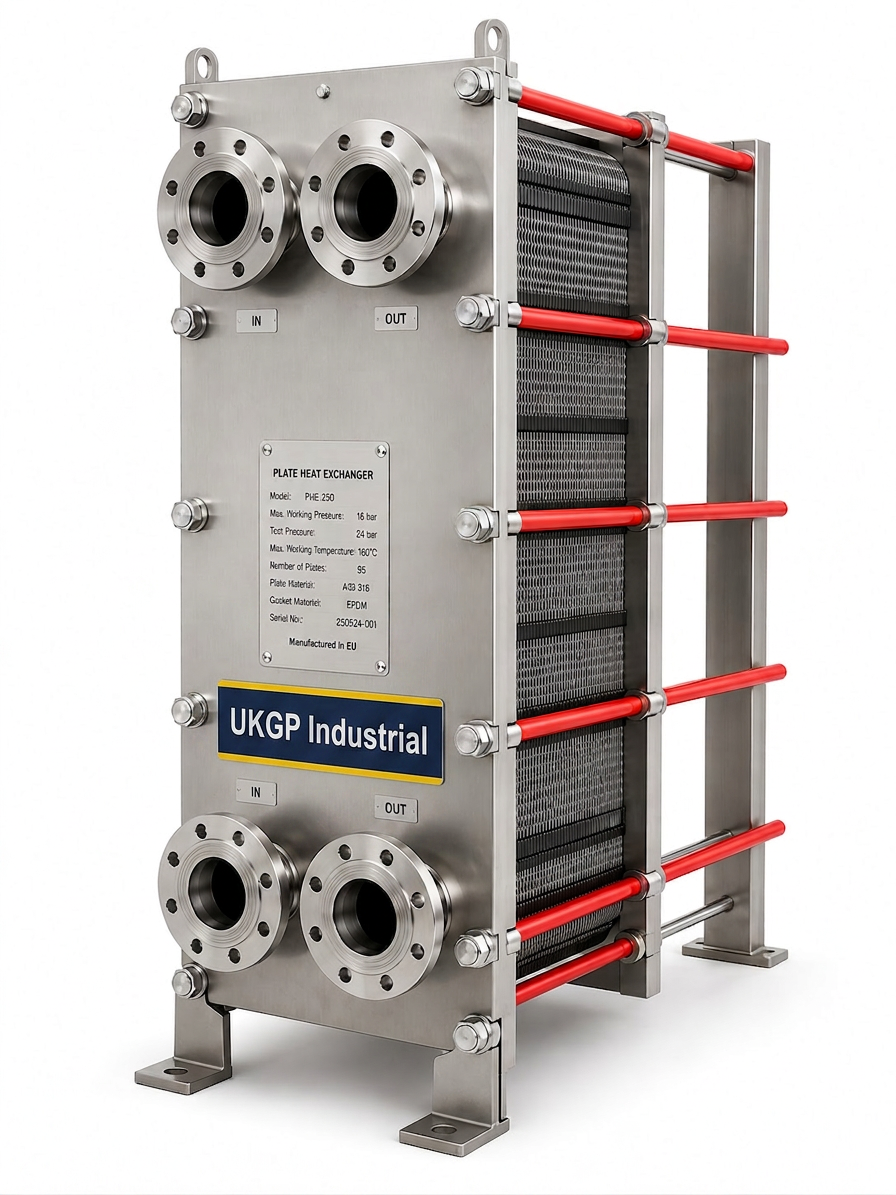
Gasketed plate heat exchangers (GPHE) offer the distinct advantage of being fully serviceable, allowing for mechanical cleaning of every individual plate. The process begins with isolating the unit from the primary and secondary circuits and slowly venting any residual pressure to avoid thermal shock. Once the tensioning bolts are loosened and the pressure plate is moved back, each plate should be inspected for specific fouling patterns. Cleaning plate heat exchanger sets mechanically involves using soft brushes and high-pressure water jets; however, the use of wire brushes or abrasive tools is strictly forbidden as they can scratch the stainless steel surface, creating pits where corrosion can flourish.
Chemical cleaning, often referred to as Cleaning-In-Place (CIP), is frequently employed when downtime must be minimised. This involves circulating a mild acidic or alkaline solution through the unit to dissolve scale and organic matter. It is vital to ensure that the chemical cleaning agent is compatible with both the plate material (typically 316L stainless steel) and the gasket elastomer (EPDM or Nitrile). Failure to verify chemical compatibility can lead to gasket swelling or embrittlement, resulting in catastrophic leaks upon re-pressurisation. Following any chemical intervention, the unit must be thoroughly flushed with neutralising agents to return the internal pH to a stable level of 8.0 to 10.0, as per BSRIA guidelines.
After cleaning plate heat exchanger surfaces, the reassembly process is just as critical as the cleaning itself. Plates must be reinstalled in the exact sequence and orientation specified in the manufacturer's plate hanging list to ensure the correct flow pattern. The tightening of the bolt assembly must be done evenly and in a diagonal pattern to ensure parallel compression. UKGP units come with a 2-year warranty and are designed for ease of maintenance, with clear sizing from a full thermal spec provided at the point of sale. If you require a quote for a new gasketed unit with a 4-6 week lead time, our Surrey-based technical team is available to assist with matching your system requirements.
- Always use a soft-bristled non-metallic brush for manual cleaning
- Verify plate sequence against the hanging list before closure
- Check 'A' dimension measurements during tensioning to prevent over-compression
- Ensure all gaskets are seated correctly and free from grit
Maintaining Brazed Units and the Role of Side Stream Filtration
Unlike their gasketed counterparts, brazed plate heat exchangers (BPHE) are hermetically sealed units that cannot be opened for mechanical cleaning. This makes the prevention of fouling even more critical for these components. When cleaning plate heat exchanger units of the brazed variety, CIP is the only viable method for restoring thermal performance. Because the internal channels are extremely narrow, even small particles of magnetite can cause permanent blockages that chemical flushing cannot dislodge. This is why BSRIA BG29 and BG50 place such a high emphasis on pre-commissioning cleaning and ongoing water quality management to protect these compact but sensitive assets.
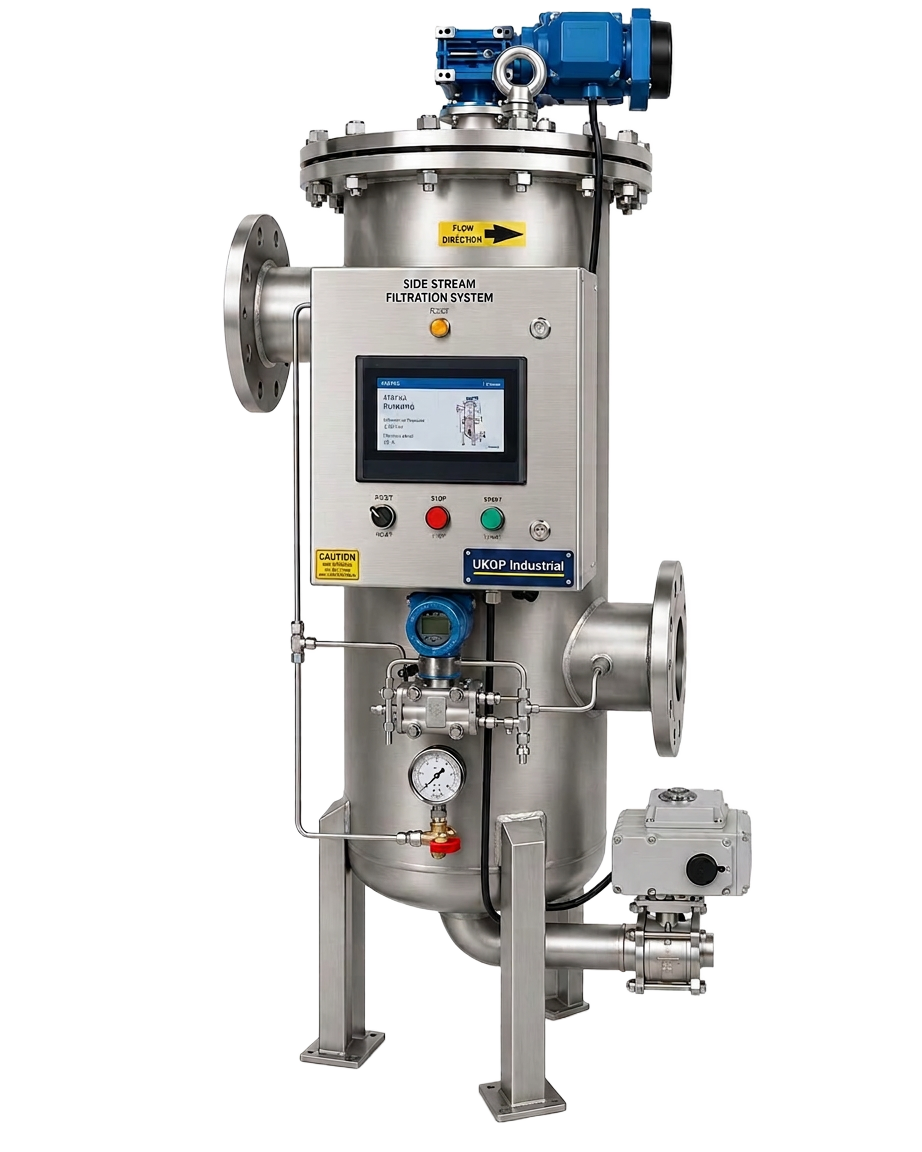
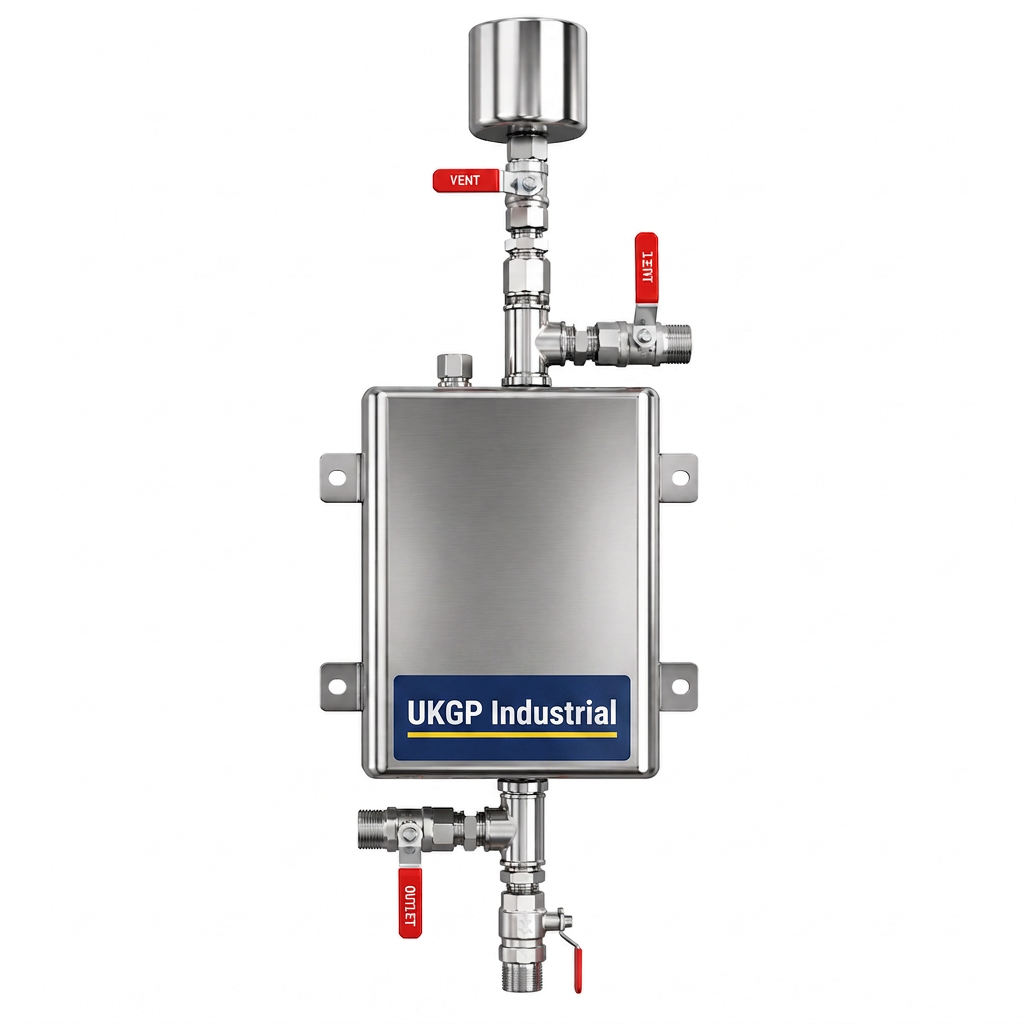
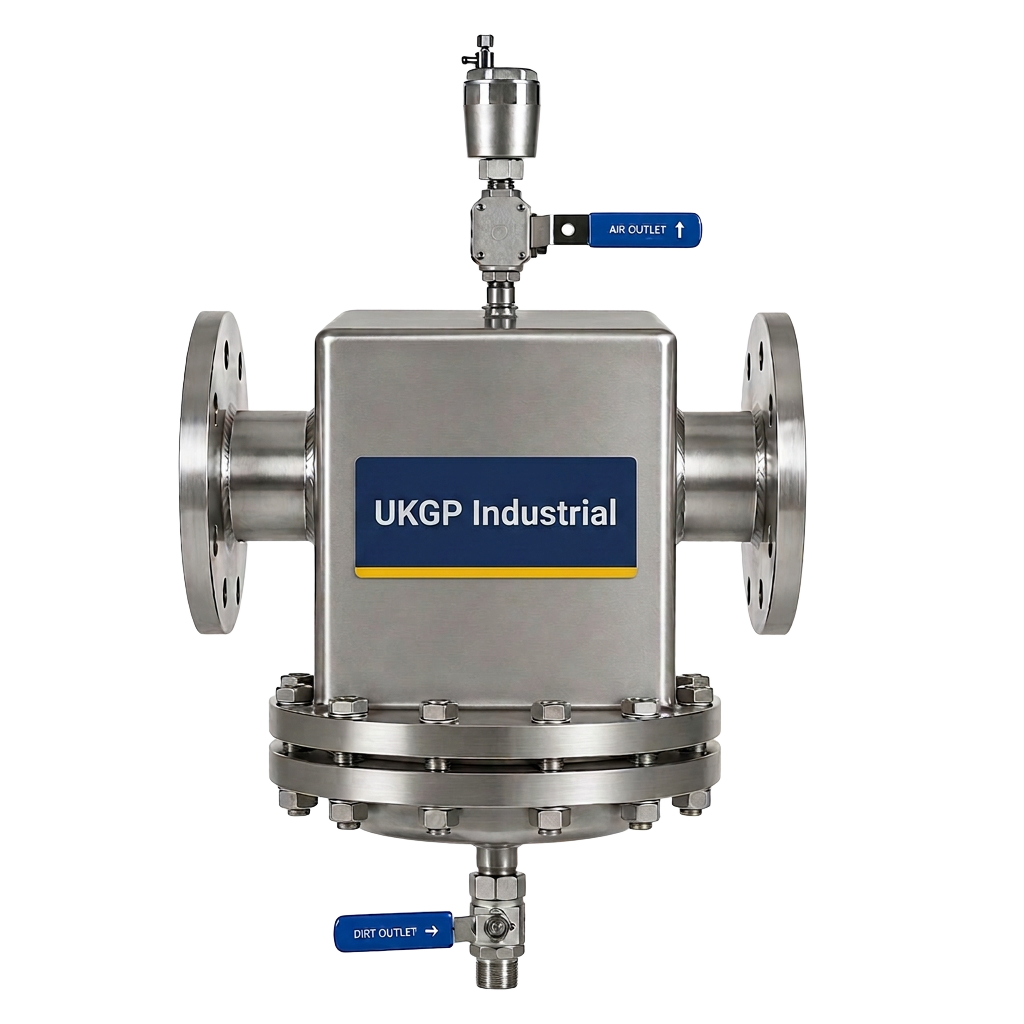
One of the most effective ways to reduce the frequency of cleaning plate heat exchanger units is the installation of high-efficiency side stream filtration. By continuously removing suspended solids and magnetic particles from the system water, a side stream filter prevents the 'sandblasting' effect on internal copper brazing and stops the accumulation of sludge in the heat exchanger's plate troughs. For M&E contractors, specifying a filtration skid alongside a new heat exchanger is a mark of best practice that significantly extends the mean time between service intervals. This proactive approach ensures that the heat transfer coefficients remain close to design levels for the duration of the equipment's lifespan.
UKGP supplies bespoke side stream filtration skids that are engineered to complement our range of heat transfer products. These units are essential for modern low-temperature heating systems where flow rates are lower and the risk of sedimentation is higher. By integrating a filtration solution, you protect your investment in a UKGP plate heat exchanger, which we can size from a full thermal spec for any application from DN20 to DN300. With a standard 4-6 week lead time and a robust 2-year warranty, our equipment provides the reliability required for prestigious UK commercial developments and public sector infrastructure projects.
- Utilize high-intensity magnetic filtration to capture magnetite
- Implement 5-micron particle removal to protect narrow plate channels
- Monitor filter pressure drops to ensure timely media replacement
- Conduct regular water sampling in line with BS 8552
Regulatory Compliance and BSRIA Standards for Heat Transfer
In the UK building services sector, compliance with BSRIA BG50 (Water Treatment for Closed Heating and Cooling Systems) is the benchmark for operational excellence. This document provides clear guidance on the chemistry required to prevent the very fouling that necessitates cleaning plate heat exchanger sets. It emphasizes that heat exchangers act as 'debris traps' due to the change in velocity that occurs as fluid enters the plate pack. Consequently, any breakdown in the water treatment regime—such as a drop in inhibitor levels or an increase in dissolved oxygen—will manifest first as a loss of efficiency in the heat exchanger, making it the 'canary in the coal mine' for the entire system.
Furthermore, BS EN 14917 standards regarding expansion joints and the integrity of pressurized vessels ensure that the wider system architecture supports the heat exchanger's operation. When cleaning plate heat exchanger units, engineers must also be mindful of the environmental regulations surrounding the disposal of cleaning chemicals and flushed system water. Guidance from the Environment Agency and local water authorities must be followed when discharging neutralized acidic cleaners into the foul sewer. Documentation of the cleaning process, including the chemicals used and the final water analysis, should be kept in the building's O&M manual to demonstrate compliance during statutory inspections.
Choosing high-quality components from the outset simplifies long-term compliance and maintenance. UKGP's plate heat exchangers are manufactured to the highest standards, ensuring that when the time comes for cleaning, the units are robust enough to withstand the rigours of the process. Whether you are looking for gasketed or brazed options, our technical team provides the necessary documentation and support to ensure your installation meets all UK regulatory requirements. With a 2-year warranty and a commitment to 4-6 week lead times, we support UK contractors in delivering projects that are both efficient and easily maintainable according to the latest industry codes.
- Adhere to BSRIA BG50 for closed-loop water chemistry
- Ensure all cleaning procedures are logged in the site O&M manual
- Verify discharge permits for chemical cleaning effluent
- Align maintenance schedules with SFG20 requirements
The Commercial Impact of Thermal Fouling in UK Systems
The financial implications of neglected heat exchanger maintenance are substantial for UK businesses. A fouled heat exchanger can result in a 10% to 30% increase in energy consumption as the primary heat source must run for longer periods to satisfy the secondary load. In a large commercial office or a healthcare facility, these costs can equate to thousands of pounds in wasted gas or electricity every month. Beyond pure energy costs, the thermal stress placed on boilers and chillers when a heat exchanger is blocked can lead to premature component failure. This necessitates a strategic approach to cleaning plate heat exchanger units as a core part of a facility's energy management strategy.
Market volatility in energy prices has made the ROI on cleaning plate heat exchanger equipment shorter than ever before. For procurement leads and FMs, the decision to invest in a professional cleaning regime or a high-efficiency replacement is often driven by the total cost of ownership (TCO). A unit that is properly maintained will offer a service life of 15-20 years, whereas a neglected unit may require replacement in half that time. By maintaining the design Delta T through regular cleaning, plant-room engineers ensure that the system operates within its most efficient window, reducing carbon emissions and supporting the building's Net Zero targets.
If your current system is under-performing, it may be time to request a quote for a new UKGP plate heat exchanger. We provide both gasketed and brazed units, precisely sized from a full thermal spec provided by your design team. Our range spans from DN20 to DN300, catering to everything from small commercial blocks to large-scale district heating schemes. With a 4-6 week lead time and a 2-year warranty, we provide the hardware and technical expertise needed to transform a failing plant room into a model of energy efficiency and reliability.
- Calculate the energy savings from a 1°C improvement in approach temperature
- Include fouling factors in all initial plant design calculations
- Factor in the cost of downtime vs the cost of a redundant standby unit
- Utilize UKGP technical data for precise energy benchmarking
Safe Procedures for De-scaling and Chemical Circulation
Safety is paramount when undertaking the task of cleaning plate heat exchanger units in a live plant room environment. Engineers must be equipped with appropriate PPE, including chemical-resistant gloves and eye protection, especially when handling acidic de-scalers. The plant room must be well-ventilated to prevent the accumulation of fumes that can be released during the reaction between the cleaning agent and the scale. It is also essential to ensure that the cleaning pump and hoses are rated for the chemicals and temperatures being used. A poorly planned CIP procedure can lead to accidental spills, damaged floor finishes, or injury to personnel.
During the circulation phase of cleaning plate heat exchanger sets, it is often beneficial to reverse the flow direction compared to normal operation. This 'back-flushing' technique helps to dislodge particulate matter that may be wedged in the inlet ports. The concentration of the cleaning solution should be monitored throughout the process; as the acid reacts with the calcium carbonate scale, its strength will diminish. Neutralizing the solution before disposal is not just a regulatory requirement but a safety necessity to protect the building's drainage infrastructure from corrosion and to ensure the safety of wastewater treatment workers downstream.
Finally, after the cleaning is complete and the unit is flushed, a passivating agent should be used to protect the freshly cleaned metal surfaces from flash rusting or rapid re-fouling. When specifying equipment for new projects, choosing a UKGP plate heat exchanger ensures you receive a product designed for longevity and ease of service. Our units are available in a variety of materials and configurations to suit specific water qualities. From thermal spec to delivery in 4-6 weeks, we ensure UK engineering firms have access to the best heat transfer technology, backed by our comprehensive 2-year warranty and a team of Surrey-based experts.
- Carry out a full COSHH assessment before introducing chemicals
- Maintain a spill kit on-site during all CIP operations
- Test the effluent pH before discharging to the foul sewer
- Monitor for leaks immediately after re-establishing system pressure
Frequently asked questions
How often should I be cleaning plate heat exchanger units in a commercial system?
- The frequency depends on water quality and system load. Typically, an annual inspection is recommended, with a full cleaning of the plate heat exchanger being performed when the approach temperature deviates by more than 2-3°C from the design specification or if the pressure drop increases by 10-15%.
Can I use hydrochloric acid for cleaning plate heat exchanger units?
- Hydrochloric acid should never be used on stainless steel plates as it can cause rapid pitting and stress corrosion cracking. Instead, use phosphoric, citric, or sulfamic acids specifically formulated for HVAC applications, ensuring they are compatible with the gasket materials.
What is the benefit of a gasketed unit over a brazed unit for maintenance?
- Gasketed units can be fully dismantled, allowing for mechanical cleaning plate heat exchanger surfaces and the replacement of individual damaged plates. Brazed units are more compact and cost-effective but can only be cleaned using chemical circulation (CIP).
Does BSRIA specify how to clean heat exchangers?
- BSRIA BG50 provides the framework for water treatment and maintenance but the specific method for cleaning plate heat exchanger units should follow the manufacturer's O&M instructions to ensure the warranty is not voided and the unit's integrity is maintained.
What information is needed to size a replacement plate heat exchanger?
- To provide an accurate quote and 4-6 week lead time, UKGP requires a full thermal spec including flow rates, inlet/outlet temperatures for both sides, fluid types, and maximum allowable pressure drops. We cover sizes from DN20 to DN300.