Technical Anatomy of a Brazed Plate Heat Exchanger
A brazed plate heat exchanger is constructed by vacuum-brazing a series of corrugated stainless steel plates together using a filler material, typically copper or nickel. Unlike gasketed units, this permanent bond creates a pressure-vessel-like structure that eliminates the need for elastomeric gaskets and heavy frame bolts. For UK building services engineers, this means a significantly reduced physical footprint, making them ideal for space-constrained London plant rooms. The chevron pattern on the plates induces high-frequency turbulence even at lower flow velocities, which optimises the heat transfer coefficient and ensures that temperature approach remains extremely tight. However, because these units cannot be opened for manual cleaning, the water quality must be strictly managed in accordance with BSRIA BG29 and BG50 standards to prevent internal fouling and performance degradation over time.
The manufacturing process of a brazed plate heat exchanger involves heating the stacked plates to temperatures exceeding 1000 degrees Celsius in a vacuum furnace. This ensures the filler metal melts and forms a precise seal at every contact point between the plates, creating two independent circuits in a counter-current flow arrangement. This construction provides exceptional resistance to internal pressure cycles and thermal fatigue, provided the operating parameters remain within the design limits. At UKGP, we understand that selecting the right brazed unit requires more than just looking at a catalogue. We size our units from a full thermal spec, ensuring that fluid velocities are sufficient to maintain a self-cleaning effect without causing erosion-corrosion. Our brazed range complements our gasketed units, offering flexibility for varied mechanical specifications and installation environments.
One of the primary advantages of this technology is the high design pressure it can withstand compared to traditional shell and tube alternatives. It is common for a brazed plate heat exchanger to handle operating pressures up to 30 or 40 bar depending on the model, facilitating its use in high-rise applications where static head pressure is a significant factor. Furthermore, the absence of gaskets means these units are compatible with a wider range of refrigerants and aggressive fluids that might otherwise perish Nitrile or EPDM seals. From a procurement perspective, these units are cost-effective and readily available. When you partner with UKGP, you gain access to expert sizing and a robust 2-year warranty, giving you peace of mind that the selected thermal interface will perform reliably throughout its service life in commercial HVAC or industrial process circuits.
- Compact footprint ideal for modular plant room designs
- High pressure and temperature resistance due to vacuum brazing
- Elimination of gasket leak paths and routine tightening maintenance
- Superior heat transfer coefficients through corrugated plate design
Primary Commercial HVAC Applications
In the UK building services sector, the brazed plate heat exchanger is most frequently utilised as a pressure break in high-rise developments. By decoupling the primary heating or cooling plant from the terminal units in the secondary circuit, engineers can protect boiler heat exchangers or chillers from high static pressures found at the base of tall buildings. This application is essential for maintaining system integrity and meeting the safety requirements of BS EN 12828. Additionally, these units are ubiquitous in District Heating Sub-Stations (DHSS) where they serve as the hydraulic interface between the district network and the individual building's internal distribution system. The high efficiency of the plate geometry allows for a very close temperature approach, which is vital for maintaining the low return temperatures required for network efficiency.
Domestic Hot Water (DHW) generation is another area where the brazed plate heat exchanger excels. In instantaneous water heating systems or plate-loaded cylinders, these units provide the rapid thermal response needed to meet fluctuating demand without the need for massive storage volumes. This reduces the risk of Legionella proliferation by minimising stagnant water storage, aligning with HSE ACoP L8 guidelines. Consultants often specify these units for their reliability and ease of installation, as their lightweight design allows for wall-mounting or placement within compact skid-mounted assemblies. UKGP provides comprehensive support for these applications, ensuring that every unit is sized to match the specific peak loads of the building, whether it is a high-occupancy residential block or a busy commercial facility.
Furthermore, these heat exchangers are increasingly used in heat pump integrations. As the UK moves toward low-carbon heating, the brazed plate heat exchanger acts as the evaporator or condenser within the refrigeration cycle itself. Their ability to handle high-pressure refrigerants like R32 or R410A makes them a staple in air-to-water and water-to-water heat pump systems. By optimising the thermal exchange between the refrigerant and the hydronic circuit, they help achieve the high Seasonal Coefficient of Performance (SCOP) values required by modern building regulations Part L. When selecting a unit for a heat pump project, UKGP ensures that the internal volume and plate geometry are perfectly balanced to prevent freezing risks while maximising heat recovery during the defrost cycle, backed by our technical expertise and 4-6 week lead times.
- Effective hydraulic separation in high-rise district heating schemes
- Instantaneous DHW production to reduce Legionella risks
- Refrigerant evaporators and condensers in modern heat pump skids
- Thermal decoupling for protective boiler and chiller circuits
Understanding the Limits of a Brazed Plate Heat Exchanger
Despite their many benefits, a brazed plate heat exchanger has distinct operational limits that must be understood to avoid premature failure. The most significant limitation is that the unit is non-serviceable; once the plates are fused, they cannot be separated for manual cleaning. This means that if the unit becomes severely fouled with Limescale or magnetite, the only solution is chemical cleaning or total replacement. In systems with high hardness water, such as those in London and the South East, professional grade water treatment and side stream filtration are non-negotiable. Without these protections, the narrow channels within the heat exchanger can quickly bridge with debris, leading to a rapid drop in thermal performance and an increase in pressure drop across the primary and secondary ports.
Thermal shock and mechanical fatigue are also critical considerations. While a brazed plate heat exchanger is robust, rapid and extreme fluctuations in temperature can cause stress at the brazing points. In steam-to-water applications, for instance, careful control of the steam modulating valve is required to prevent 'water hammer' or thermal cycling that could lead to internal plate cracking. It is generally recommended to use gasketed plate heat exchangers for steam applications with high duty requirements, but for smaller loads, a specially designed brazed unit can be used if the system is engineered correctly. At UKGP, we provide full thermal specs to ensure the unit is never operating at the edge of its physical capabilities, thus safeguarding your installation against unforeseen mechanical stress.
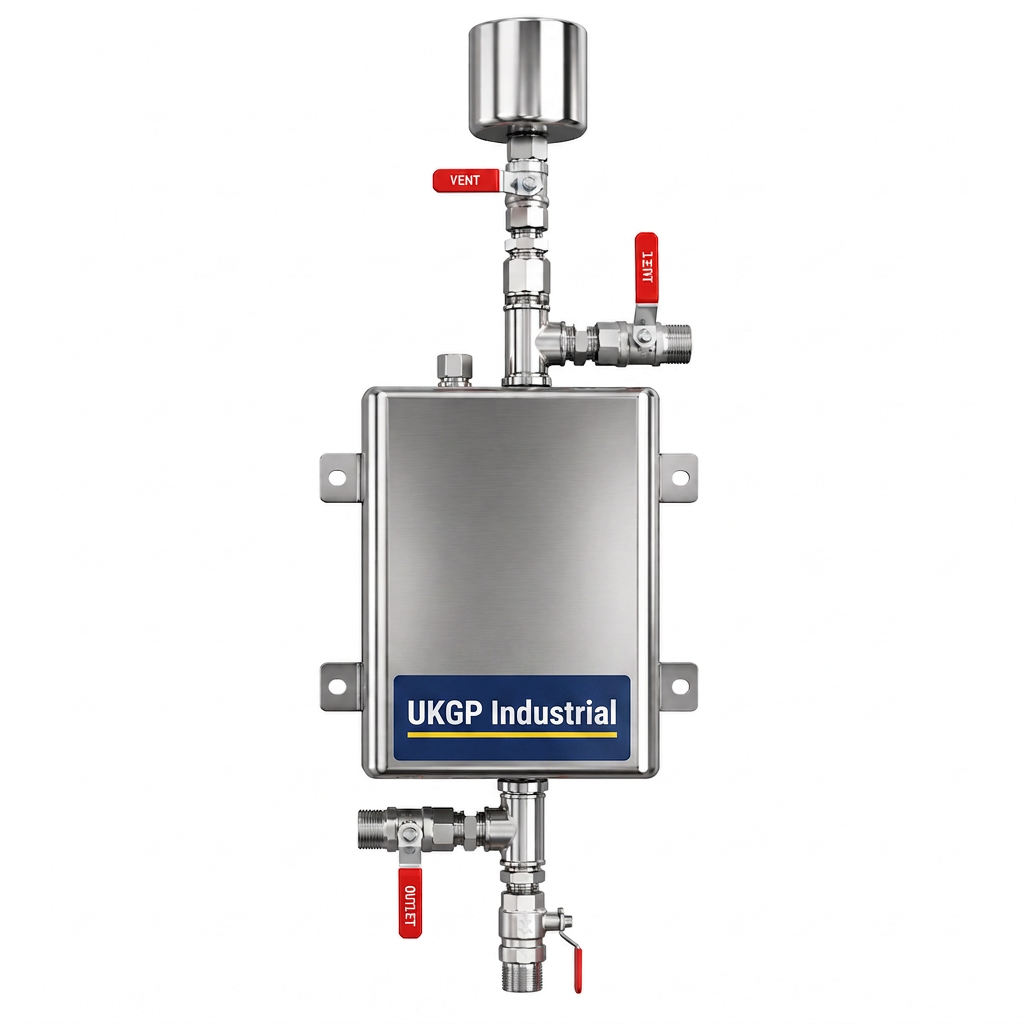
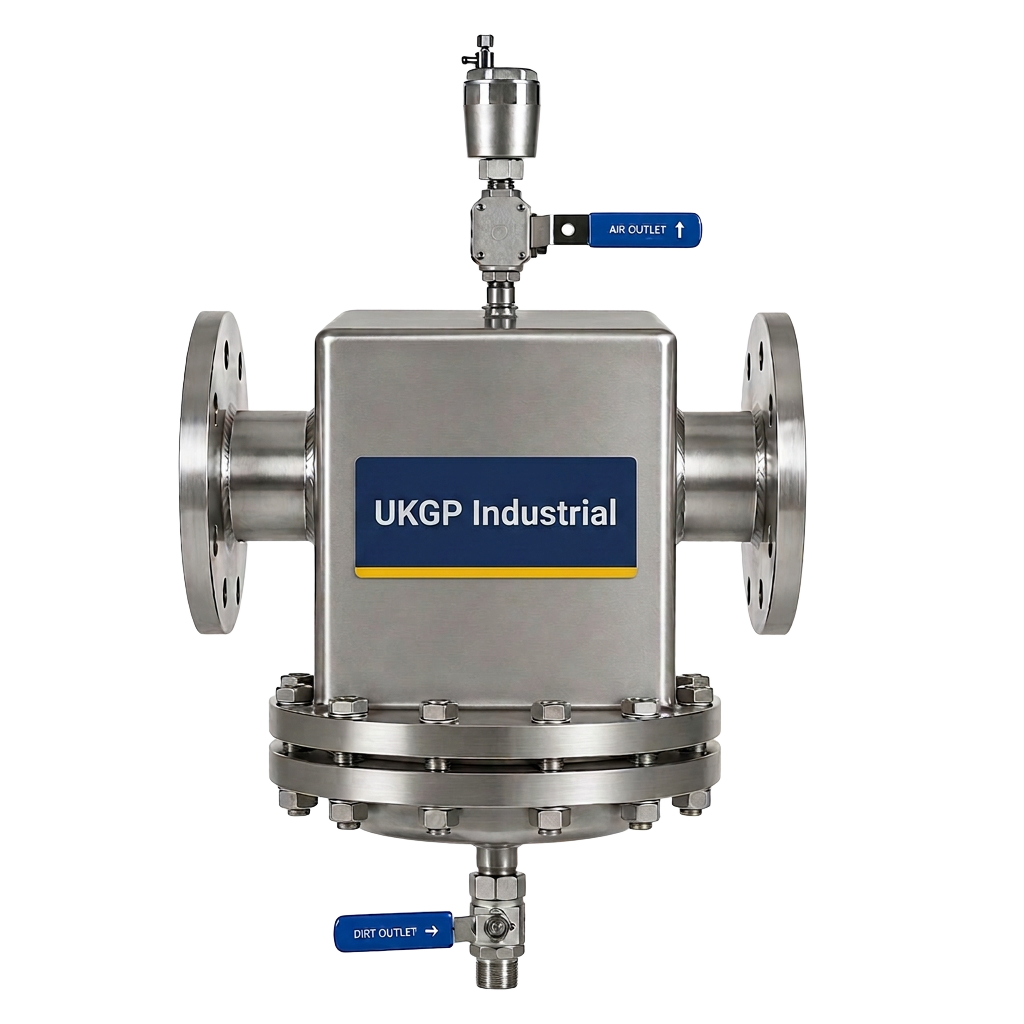
Another limit relates to the fluid compatibility and particulate size. Because the gap between plates is typically only 1.5mm to 3mm, any large particles in the system flow can easily lodge in the plate entry, causing blockages and flow imbalances. This makes the installation of high-quality strainers and air & dirt separators upstream of the heat exchanger an absolute necessity. Furthermore, fluids that are corrosive to copper—such as certain industrial chemicals or highly deionised water—require the use of nickel-brazed or stainless steel-fused units rather than the standard copper-brazed variety. UKGP's technical team can advise on the correct metallurgy for your specific fluid profile, ensuring that your investment is protected by a 2-year warranty and complies with all relevant British Standards for material safety.
- Non-serviceable design requires strict adherence to BSRIA water quality
- Vulnerability to 'bridging' and blockages from large particulates
- Sensitivity to extreme thermal cycling and steam-hammer issues
- Material limitations regarding copper-corrosive fluids and chemicals
Installation and Maintenance Best Practices
Correct installation is paramount to the performance of a brazed plate heat exchanger. It should always be installed in a vertical orientation with the pipework supported independently to prevent strain on the unit's nozzles. Counter-current flow—where the primary and secondary fluids enter from opposite ends—is essential to achieve the designed thermal efficiency. If the unit is piped in co-current flow, the heat transfer capacity can drop significantly, failing to meet the specified temperature setpoints. Additionally, including isolation valves and bypass pipework allows for easier maintenance and chemical cleaning cycles without necessitating a full system drain-down. UKGP recommends the inclusion of temperature and pressure test points on all four ports to allow Facilities Managers to monitor performance trends effectively.
Maintenance for a brazed unit is primarily focused on the preventative side. Since you cannot open the unit, the focus shifts to the water chemistry of the entire system. Regular testing of the primary and secondary loops for pH levels, inhibitor concentrations, and microbial activity is required per BS 8552. If a decrease in performance is noted, an acid-based' Clean-In-Place' (CIP) procedure can often restore the unit to near-original capacity by circulating a mild descaling solution through the plates. However, this must be done carefully to avoid damaging the copper brazing material. By maintaining a clean system, the life expectancy of the heat exchanger can exceed 15 years, providing an excellent return on investment for the building owner and reducing the total cost of ownership.
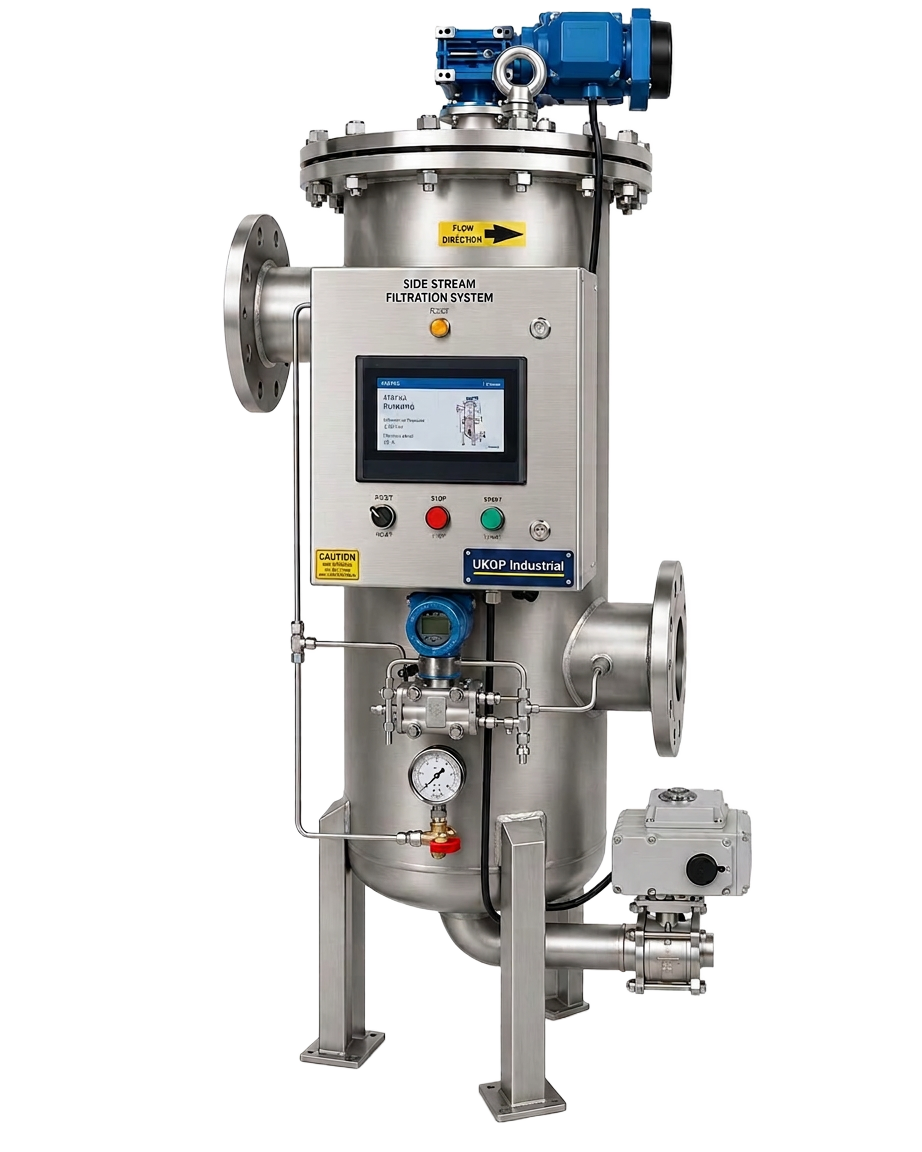
To further protect the brazed plate heat exchanger, many engineers specify the installation of a side stream filtration skid. These systems continuously remove suspended solids and magnetite that can accumulate in the narrow channels of the heat exchanger. This is particularly important in older systems that are being retrofitted with new, high-efficiency plate units. UKGP offers a range of side stream filtration solutions that work in tandem with our heat exchangers to ensure long-term reliability. When you purchase from UKGP, you are not just getting a component; you are getting a thermally sized solution designed to thrive in the demanding conditions of UK commercial plant rooms, backed by a lead time of just 4-6 weeks for most standard configurations.
- Ensure counter-current flow for maximum thermal efficiency
- Install vertical orientation with adequate pipework support
- Implement side stream filtration to protect narrow plate gaps
- Regularly monitor pressure drops to identify early-stage fouling
Comparison: Brazed vs Gasketed Plate Units
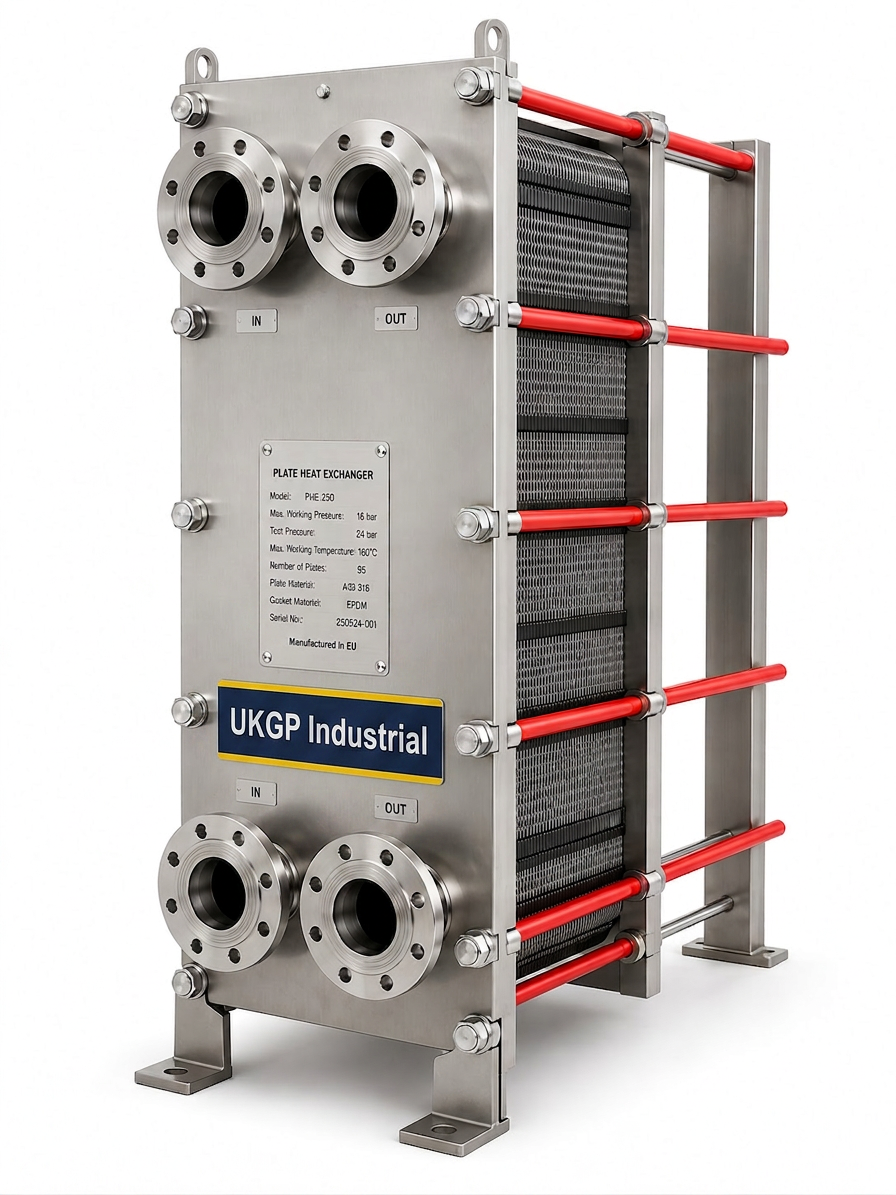
Choosing between a brazed plate heat exchanger and a gasketed variant involves balancing initial capital cost, space, and serviceability requirements. A brazed unit is typically more compact and has a lower initial purchase price, making it the preferred choice for smaller duties and residential developments. Gasketed units, however, offer the advantage of being expandable—extra plates can be added if the building's load increases in the future. They can also be fully stripped down for mechanical cleaning, which is a major advantage in systems where water quality cannot be perfectly controlled. For very large duties beyond DN300, or where the temperature approach is extremely demanding, the gasketed variant often becomes the more practical engineering choice for high-availability commercial environments.
In terms of lead times and procurement, UKGP offers both technologies to provide the best fit for your specific project. While brazed units are excellent for standard applications, our gasketed units are sized from a full thermal spec and offer DN20 to DN300 connections to handle massive industrial and commercial loads. Both ranges come with a 2-year warranty, reflecting our confidence in the build quality and material selection. For contractors working on tight schedules, our 4-6 week lead time ensures that even custom-sized units arrive on-site when needed for the installation phase. We help consultants determine if the higher pressure rating of a brazed unit or the serviceability of a gasketed unit is the correct technical trade-off for their specific plant room layout.
Ultimately, the decision should be driven by the operational profile of the building. If the application involves high-pressure DHW or a heat pump circuit where space is at a premium and the water quality is strictly monitored via BSRIA BG50 protocols, the brazed plate heat exchanger is often the superior choice. Conversely, for primary heating circuits in older buildings or heavy industrial processes where fluids may contain oils or particulates, the gasketed unit provides the necessary robustness and ease of repair. UKGP's expertise across the entire plate heat exchanger spectrum allows its engineers to recommend the most commercially aware and technically sound solution for every enquiry, ensuring that the end-user receives a system that is both efficient and easy to maintain.
- Brazed units are more compact and cost-efficient for smaller duties
- Gasketed units offer expandability and manual cleaning capabilities
- Brazed units handle higher pressures and more diverse temperatures
- Gasketed units are preferred for very high flow rates (up to DN300)
The Role of Technical Sizing in System Success
Incorrectly sizing a brazed plate heat exchanger is one of the most common causes of system inefficiency and equipment failure. Oversizing a unit can lead to low fluid velocities, which reduces the 'self-scrubbing' turbulence needed to keep the plates clean, leading to premature fouling. Undersizing, on the other hand, results in an excessive pressure drop that forces pumps to work harder, increasing energy consumption and potentially causing erosion through the thin stainless steel plates. UKGP engineers use advanced thermal modelling software to ensure that every unit is sized according to the exact flow rates and temperature deltas required by the design specification. This process ensures that the heat exchanger operates at the peak of its efficiency curve, contributing to the overall building energy performance certificate rating.
When requesting a quote for a UKGP plate heat exchanger, whether gasketed or brazed, providing a full thermal spec allows our team to select the optimal plate geometry and pass arrangement. This precision engineering means that the unit will perfectly match the boiler or chiller output, ensuring that the secondary circuit receives the required thermal energy without wasted pump head. Our DN20 to DN300 range ensures we have the right connection sizes for everything from a small commercial office to a large-scale district energy centre. With a 2-year warranty and a focused 4-6 week lead time, we bridge the gap between technical excellence and commercial reality, providing UK contractors with a reliable partner for all thermal transfer requirements.
In conclusion, the brazed plate heat exchanger is a cornerstone of modern HVAC design, offering efficiency, pressure resistance, and a compact footprint. By understanding its limits and ensuring its protection through correct water treatment and filtration, it provides a decades-long service life. Whether you are designing a new build or retrofitting an existing plant room, UKGP’s technical team is ready to assist with sizing and selection. Reach out to us today for a full technical proposal and a quote for your next project, and benefit from our Surrey-based expertise and commitment to the UK building services industry. Our goal is to ensure your thermal systems are as robust and efficient as possible, adhering to the latest CIBSE and BSRIA standards for peak performance.
- Avoid low-velocity fouling by precise thermal sizing for every project
- Optimise pump energy by matching plate pressure drops to system head
- Custom plate geometry selection for specific temperature approach targets
- Access to Surrey-based technical support for rapid specification help
Frequently asked questions
What is the typical lifespan of a brazed plate heat exchanger?
- With correct water treatment according to BSRIA BG50 and the use of side stream filtration, a brazed plate heat exchanger can last between 15 to 20 years. Lifespan is significantly reduced if the unit is subjected to scale-forming hard water or untreated corrosive fluids.
Can a brazed plate heat exchanger be repaired if it leaks?
- Generally, no. Because the plates are vacuum-brazed into a single solid unit, it cannot be opened to replace individual plates or seals. If an internal or external leak occurs, the entire unit usually needs to be replaced.
What is the lead time for a UKGP plate heat exchanger?
- We typically offer a lead time of 4-6 weeks for both gasketed and brazed units sized from a full thermal spec. This ensure you receive a unit perfectly matched to your project requirements rather than a generic off-the-shelf model.
Are brazed heat exchangers suitable for steam-to-water duties?
- They can be used for small-scale steam applications, but they require very careful control to prevent thermal shock and water hammer. For major steam duties, a gasketed plate heat exchanger or a shell and tube design is often more resilient.
Does UKGP provide a warranty for their heat exchangers?
- Yes, we provide a robust 2-year warranty on our entire range of plate heat exchangers, covering manufacturing defects and ensuring peace of mind for M&E contractors and end-users.