Understanding Water Filtration Systems Industrial Requirements
In the UK commercial landscape, the integrity of a closed-loop heating or chilled water system is directly tied to its fluid quality. Industrial-scale facilities, from data centres to hospitals, generate significant amounts of magnetite and suspended debris during normal operation. Without effective water filtration systems industrial interventions, these particles settle in low-flow areas such as plate heat exchangers or control valves, leading to increased pressure drops and reduced heat transfer efficiency. The financial implications of untreated system water are profound, often resulting in premature component failure and voided warranties from major UK commercial boiler OEMs.
Engineering specifications must align with BSRIA BG29 (Pre-commission Cleaning of Pipework Systems) and BSRIA BG50 (Water Treatment for Closed Heating and Cooling Systems). These standards highlight that conventional full-flow strainers are insufficient for capturing the fine particulate matter, often sub-50 microns, that causes the most damage. Using purpose-built water filtration systems industrial installations ensures that the entire system volume is progressively polished. By diverting a percentage of the total flow—typically between 5% and 15%—through a high-efficiency bypass skid, engineers can maintain water clarity without the massive pressure penalties associated with full-flow fine filtration.
Choosing UKGP as your supply partner ensures that your project benefits from British-manufactured expertise designed specifically for the rigours of local building services. Our technical team supports consultants in the early design stages to ensure that the specified water filtration systems industrial packages meet the specific load requirements of the plant room. From high-rise residential blocks in London to manufacturing hubs in the Midlands, our equipment is built to handle high-flow scenarios while providing the necessary isolation for safe, offline maintenance. This proactive approach to debris management is the cornerstone of a resilient mechanical strategy.
- Compliance with BSRIA BG29 and BG50 frameworks
- Reduction in magnetite accumulation and microbial growth risk
- Protection for high-efficiency heat exchangers and variable speed pumps
- Extended lifespan of glycol and chemical inhibitors within the loop
Sizing Side Stream Filtration for Your Facility
Correct sizing of water filtration systems industrial skids is a delicate balance between turnover rate and system volume. A standard industry benchmark suggests that the side stream loop should be capable of processing the total system water volume every 24 hours. For large-scale industrial circuits, this typically requires a flow rate between 5 m³/h and 50 m³/h. If the flow rate is too low, the filtration process cannot keep pace with the rate of corrosion and sediment generation. Conversely, over-sizing the unit leads to unnecessary capital expenditure and excessive pump energy consumption, which can negatively impact the overall building energy rating.
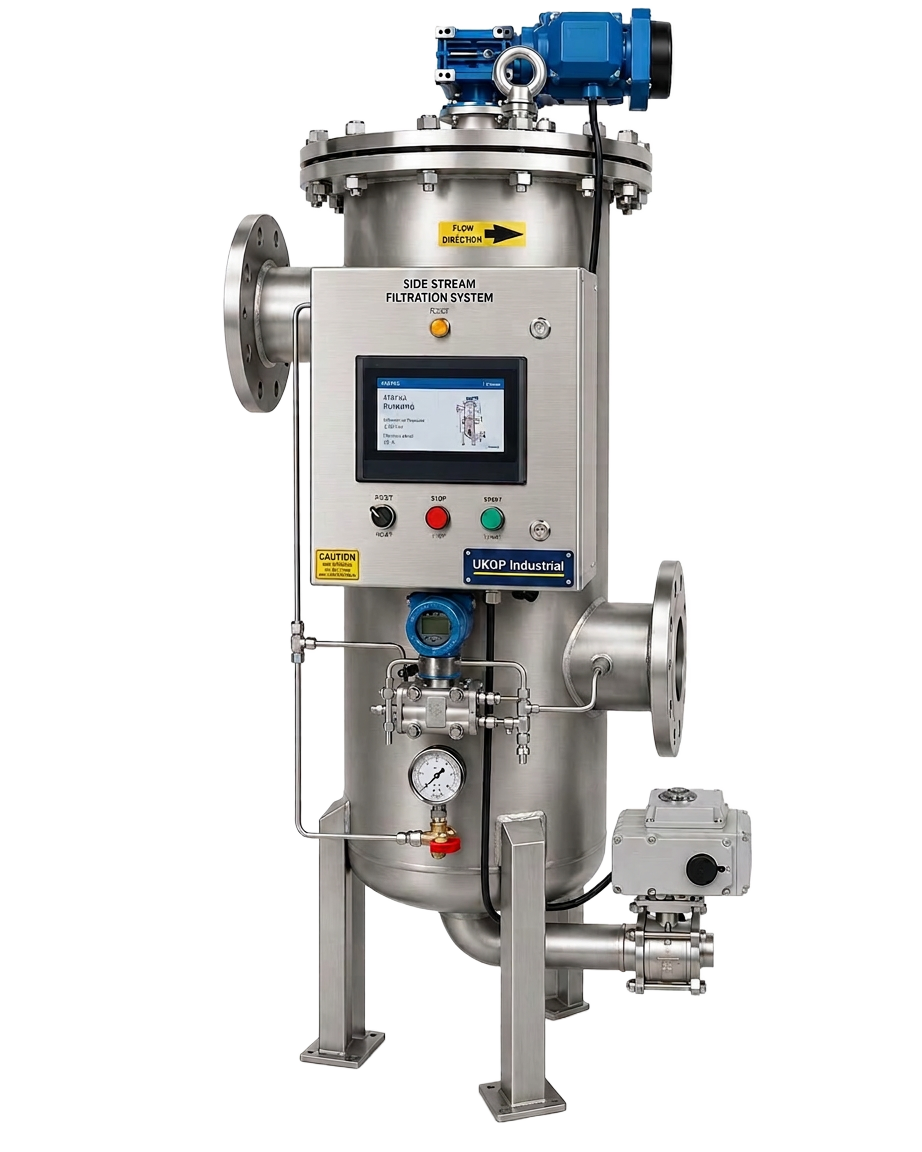
The physical footprint of the plant room also dictates the selection process. UKGP provides skid-mounted solutions that are pre-piped and pre-wired to simplify the installation for M&E contractors. When integrating water filtration systems industrial units into a retrofit project, it is essential to identify the most effective tap-off points. Usually, the inlet is taken from the high-pressure side of the main circulators and returned to the suction side. This differential pressure often drives the flow through the filter without the need for an additional dedicated pump, though integrated booster pumps are available for systems where the available pressure drop is insufficient.
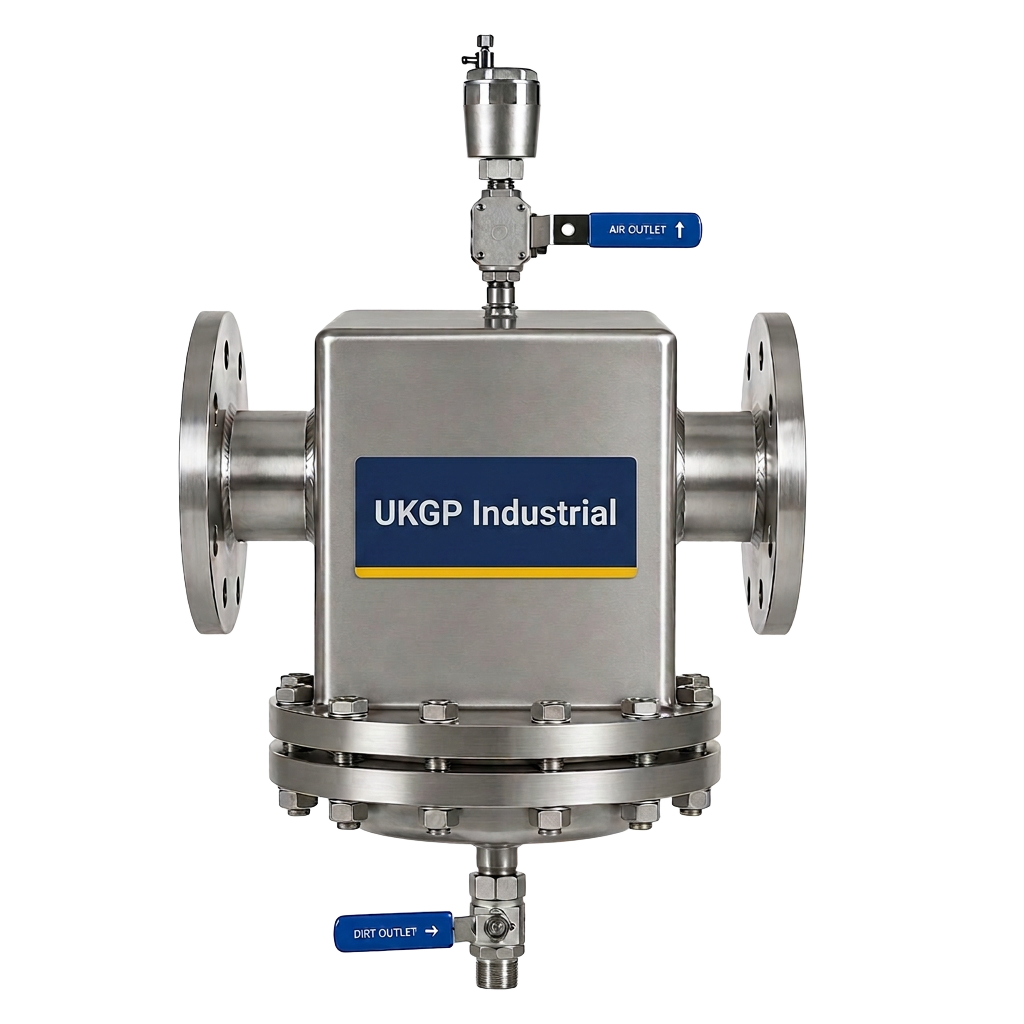
Maintenance access is the final pillar of effective sizing and selection. An industrial-grade side stream filter must be positioned so that engineers can change bags or cartridges without shutting down the entire HVAC system. Our skids feature high-quality isolation valves and pressure gauges as standard, allowing for clear visual indicators of when a filter change-out is required. By selecting water filtration systems industrial solutions from UKGP, you are investing in a system that balances 25 µm high-capacity bag filtration with powerful magnetic interception, ensuring that both metallic and non-metallic contaminants are removed efficiently from the circulating fluid.
- Flow rates ranging from 5 to 50 m³/h to suit various system volumes
- Dual-stage filtration: Magnetic capture plus 25 µm particulate removal
- Compact skid-mounted design for ease of plant room integration
- Integrated pressure monitoring for predictive maintenance schedules
The Role of Magnetic Interception in Industrial Loops
Magnetite (black iron oxide) is the primary enemy of modern hydronic systems. In the context of water filtration systems industrial applications, magnetic interception is the first line of defence. As water passes through the filter housing, high-intensity neodymium magnets pull suspended metallic particles out of the flow stream. This is particularly vital for systems utilising high-efficiency pumps with permanent magnet motors, as these components are highly susceptible to attracting magnetite into their internal bearings, causing rapid wear and eventual seizure. A robust magnetic stage within the filtration skid ensures these particles are trapped before they reach sensitive equipment.
Beyond simple protection, the removal of magnetite through water filtration systems industrial kits significantly improves the chemical efficacy of the system. When suspended solids are present in high concentrations, they can 'shroud' the pipework surfaces, preventing chemical inhibitors from forming a protective film. This leads to localised under-deposit corrosion. By maintaining low turbidity through consistent magnetic and mechanical filtration, the chemical water treatment regime becomes more stable and cost-effective. FMs find that chemical dosing requirements are reduced when the physical filtration system is operating at peak performance, leading to lower OpEx.
For engineers specifying new builds, the inclusion of a UKGP side stream filtration skid provides peace of mind that the system starts its life with the best possible water quality. Our units are designed to be BSRIA BG29 and BG50 aligned, offering a 2-year warranty that reflects our confidence in the build quality. Whether you are dealing with a mission-critical data centre or a large educational campus, the magnetic capability of our water filtration systems industrial range ensures that even the microscopic iron oxide particles that pass through standard strainers are successfully removed, keeping the system clean and the heat transfer rates high.
- High-intensity neodymium magnetic rod assemblies
- Prevention of magnetite build-up in variable speed pump rotors
- Enhanced performance of chemical corrosion inhibitors
- Easy-clean magnetic cores to reduce engineer service time
Integrating Chemical Dosing with Filtration Strategies
While mechanical water filtration systems industrial units remove physical debris, chemical management remains essential for controlling pH and microbial activity. British Standard BS 8552 provides guidance on the sampling and monitoring of water quality in closed-circuit systems. A common technical error is to view filtration and chemical dosing as separate entities; in reality, they are synergistic. A clean system, free from sludge, allows biocides and inhibitors to circulate freely. To facilitate this, many plant room designs incorporate a dosing pot in close proximity to the side stream filtration skid to allow for controlled chemical introduction.
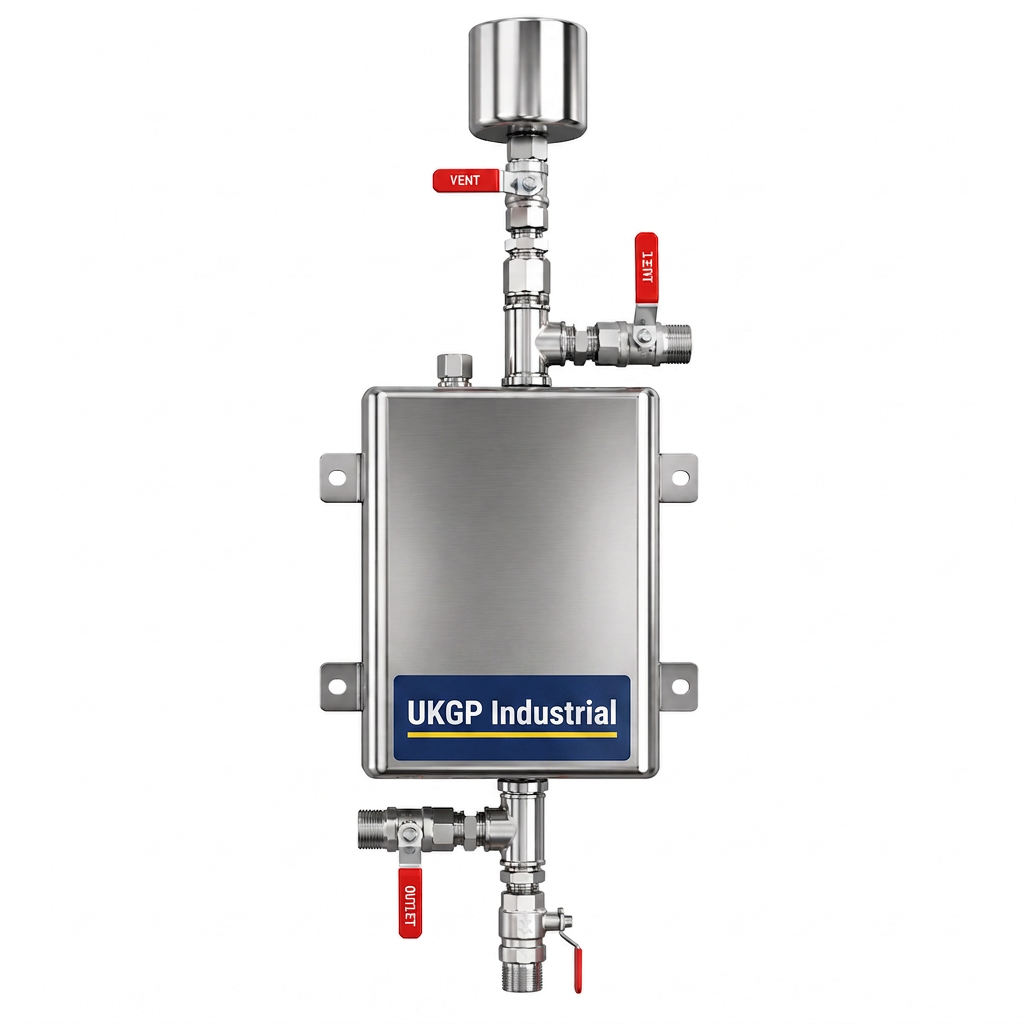
UKGP manufactures chemical dosing pots that complement our filtration range, providing a robust solution for the manual introduction of liquid chemicals. These pots are designed for ease of use and long-term durability, constructed to the same exacting standards as our primary filtration equipment. When integrated into a comprehensive water treatment strategy, these components ensure that the water filtration systems industrial installation is not working against a deteriorating chemical environment. Regular testing of the water, as recommended by CIBSE guidelines, will dictate the frequency of dosing and the required micron rating of the filter media.
Selecting the right accessories for your filtration loop, such as a high-quality dosing pot, ensures that the system is easy to maintain for the Facilities Management team. Our dosing pots feature stainless steel construction and high-quality valves to prevent leaks and ensure operator safety. By sourcing both your dosing and water filtration systems industrial equipment from a single UK supplier like UKGP, you ensure component compatibility and streamlined procurement. This holistic approach to system health is what differentiates a high-performance plant room from one prone to constant reactive maintenance and efficiency losses.
- Synergistic operation between physical filtration and chemical treatment
- Compliance with BS 8552 monitoring and sampling protocols
- Manual dosing pots available for controlled inhibitor introduction
- Improved biocide effectiveness in low-turbidity environments
Maintaining Heat Transfer Efficiency in Plate Heat Exchangers
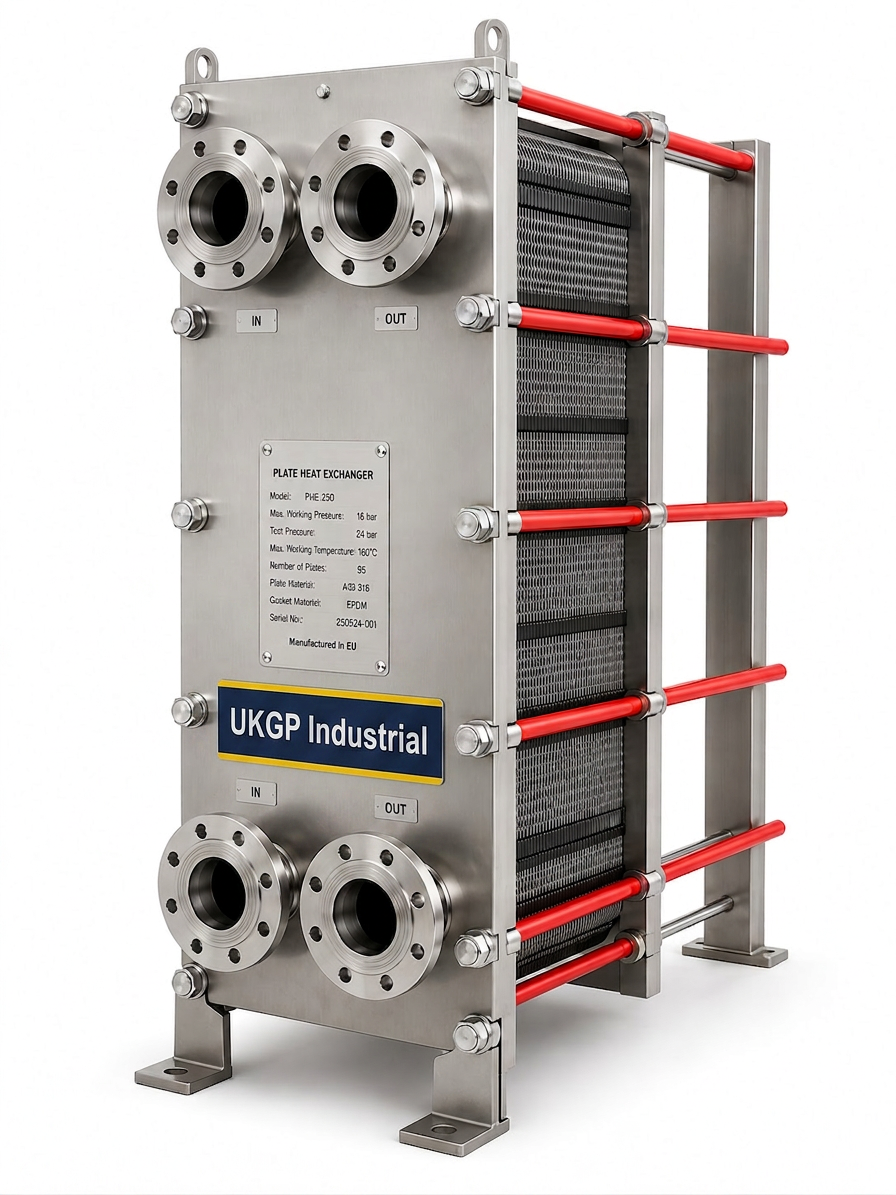
Plate heat exchangers (PHEs) are particularly vulnerable to the contaminants that water filtration systems industrial designs are intended to remove. The narrow channels between the plates are prone to fouling, which creates a thermal barrier and increases the pumping power required to achieve the desired flow. In many District Heating or HIU systems, the PHE is the most critical point of heat transfer. Even a thin layer of scale or magnetite can degrade performance by as much as 10-20%, leading to higher fuel bills and uncomfortable indoor climates for the end-users.
Installing a dedicated side stream filter significantly reduces the risk of PHE fouling by capturing the particles that would otherwise settle within the plate pack. This is especially important for secondary heating loops where the water quality might not be as strictly controlled as the primary boiler circuit. By employing water filtration systems industrial solutions, engineers can ensure that the PHE remains at its design efficiency for much longer. This reduces the frequency of expensive 'strip and clean' maintenance procedures, which often require the system to be drained and the heat exchanger dismantled, causing significant operational downtime.
At UKGP, we understand the critical relationship between water quality and heat exchange. Our filtration skids are engineered to protect these sensitive components, and we offer a range of PHEs designed for commercial and industrial duty. When you request a quote for a UKGP side stream filtration skid—spanning 5-50 m³/h with magnetic and 25 µm bag filtration—you are investing in the long-term protection of your entire thermal network. Our BSRIA-aligned equipment ensures that your water filtration systems industrial strategy meets the highest standards of modern engineering, providing reliable Service Life across all system components.
- Prevention of narrow-channel fouling in plate heat exchangers
- Reduction in differential pressure across heat exchange surfaces
- Lower frequency of aggressive chemical cleaning requirements
- Stabilised thermal performance for District Heating networks
Lifecycle Benefits and Warranty of UKGP Systems
The decision to invest in high-quality water filtration systems industrial tech is often justified by the total cost of ownership (TCO). While cheaper, substandard strainers might satisfy a minimum tender requirement, they fail to provide the same level of protection as a dedicated 25 µm side stream skid. Over a 10-year period, the cost of replacing damaged pump seals, cleaning blocked heat exchangers, and the extra energy consumed by a fouled system far outweighs the initial investment in a UKGP skid. Our systems are designed for the long haul, featuring robust materials and straightforward maintenance paths.
UKGP offers a comprehensive 2-year warranty on our side stream filtration units, providing consultants and contractors with confidence in their specification. This warranty covers the integrity of the skid, the filtration vessel, and the associated isolation valves. Because our water filtration systems industrial packages are fully aligned with BSRIA BG29 and BG50, they are recognised as best-practice solutions by insurance companies and building auditors. Supporting the 'Golden Thread' of building information, our technical documentation allows FMs to demonstrate that they are managing their hydraulic systems according to the latest industry standards.
To conclude, effective selection of water filtration systems industrial hardware requires an understanding of system volume, contaminant load, and maintenance requirements. By choosing a UKGP skid, you are choosing a product that is locally supported, engineered for the UK market, and designed to perform in the most demanding commercial environments. We invite M&E specifiers and plant room engineers to contact us today for a bespoke quote tailored to your project requirements. Protect your assets, ensure efficiency, and meet your BSRIA compliance goals with the industry’s most reliable side stream filtration technology.
- Significant reduction in long-term operational and energy costs
- Comprehensive 2-year warranty on all skid-mounted components
- Full technical support and CAD drawings for consultant specifications
- Durable construction suitable for high-demand plant room environments
Frequently asked questions
What is the recommended flow rate for water filtration systems industrial skids?
- General engineering practice suggests that the side stream filtration system should process the total volume of the hydronic circuit every 24 hours. For most commercial and industrial applications, this results in a flow rate between 5 m³/h and 50 m³/h, depending on the scale of the facility.
How does side stream filtration help with BSRIA BG50 compliance?
- BSRIA BG50 emphasises the importance of maintaining water quality to prevent corrosion and scale. High-quality water filtration systems industrial units provide the continuous removal of suspended solids down to 25 microns, which is essential for meeting the water clarity and laboratory testing requirements outlined in the BG50 framework.
Can I install water filtration systems industrial units in a retrofit project?
- Yes, side stream filtration is ideal for retrofits. Because it only handles a percentage of the flow, it can be installed on a bypass loop with minimal disruption to the main system. This allows for the 'cleaning' of old, fouled systems without requiring a full system drain-down or oversized full-flow filters.
What filter media should be used in an industrial side stream skid?
- For most industrial heating and cooling loops, a combination of a high-power magnetic rod and a 25 µm bag or cartridge filter is recommended. The magnet captures the fine magnetite, while the bag filter removes non-metallic debris, scale, and biological flock.
How often should the filters be changed in an industrial system?
- Frequency depends on the system's condition. Initially, in a newly commissioned or cleaned system, filters may need changing every few weeks. Once the system is stabilised, this usually extends to every 3-6 months. Integrated differential pressure gauges on the UKGP skid indicate exactly when a change is required.