Understanding Ultrasonic Heat Exchanger Cleaning
Ultrasonic heat exchanger cleaning is an intensive off-site or specialised on-site process that uses high-frequency sound waves to create cavitation bubbles in a cleaning solvent. This microscopic implosion effectively strips stubborn limescale, magnetite, and biological biofilms from the intricate corrugations of stainless steel plates without the abrasive damage associated with mechanical scrubbing. For UK building services consultants, this method is often viewed as a restorative measure when a system has been severely neglected and traditional flushing has failed to restore approach temperatures. It is particularly effective for removing carbonised deposits that are resistant to standard chemical circulation, making it a powerful tool for rehabilitating older heating and cooling networks.
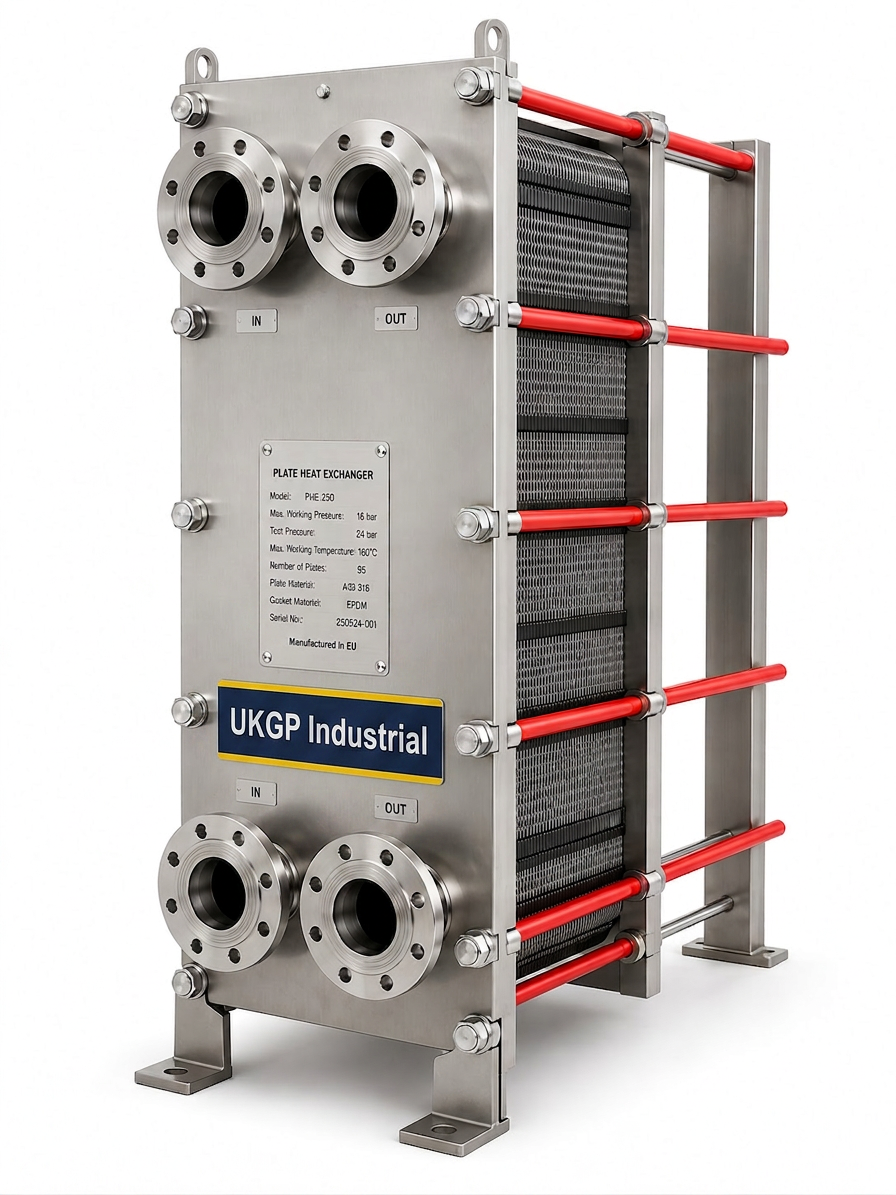
However, implementing ultrasonic heat exchanger cleaning requires the complete decommissioning and disassembly of the plate pack, which can lead to significant plant-room downtime. Each plate must be removed, inspected, and submerged in a transducer-equipped tank, which necessitates the replacement of all gaskets upon reassembly to prevent leaks. While the results are often impressive, returning the plates to a factory-clean state, the logistical overhead is substantial. Contractors must factor in the cost of new gaskets, the labour for plate removal, and the potential risk of plate deformation if the stack is not re-tightened to the exact manufacturer specifications using a calibrated torque wrench or hydraulic tensioner.
From a commercial perspective, relying solely on ultrasonic heat exchanger cleaning as a reactive maintenance strategy is often more expensive over a ten-year lifecycle than investing in prevention. While the process produces excellent results, it does nothing to prevent the recirculating debris from immediately beginning to foul the clean surfaces once the system is back online. For this reason, many UK engineers are pivoting toward a combined approach where a deep clean is followed by the installation of a UKGP side stream filtration skid to ensure the system remains within the water quality parameters defined by CIBSE and BSRIA BG50 guidelines.
- Removes microscopic scale and magnetite from plate corrugations.
- Ideal for restorative maintenance of severely fouled systems.
- Requires full teardown and replacement of EPDM or NBR gaskets.
- Non-abrasive compared to wire brushing or high-pressure jetting.
The Limitations of CIP (Cleaning-in-Place)
Cleaning-in-Place (CIP) is a common alternative to ultrasonic heat exchanger cleaning, involving the circulation of acidic or alkaline chemicals through the heat exchanger without dismantling the unit. While CIP is faster and less invasive, its effectiveness is limited by the flow paths within the plate pack. If some channels are completely blocked with magnetite or debris, the cleaning solution will simply bypass these areas, following the path of least resistance. This leads to uneven cleaning and can leave significant deposits behind, which eventually flake off and cause further downstream issues in the circuit. Furthermore, the chemicals used in CIP must be carefully selected to avoid corroding the plates or damaging the gaskets, requiring strict adherence to BS 8552 monitoring.
One of the primary risks with CIP is the potential for chemical entrapment. If the system is not thoroughly neutralised and flushed after the cleaning cycle, residual acids can lead to localised pitting corrosion, particularly on 316-grade stainless steel plates. This is where ultrasonic heat exchanger cleaning often proves superior, as the plates are individually rinsed and inspected before being put back into service. CIP also produces a significant volume of chemical waste that must be disposed of according to UK environmental regulations, adding to the total cost and complexity of the maintenance window. For many M&E contractors, CIP is a useful mid-term solution, but it lack the thoroughness required for high-efficiency modern commercial boilers and chillers.
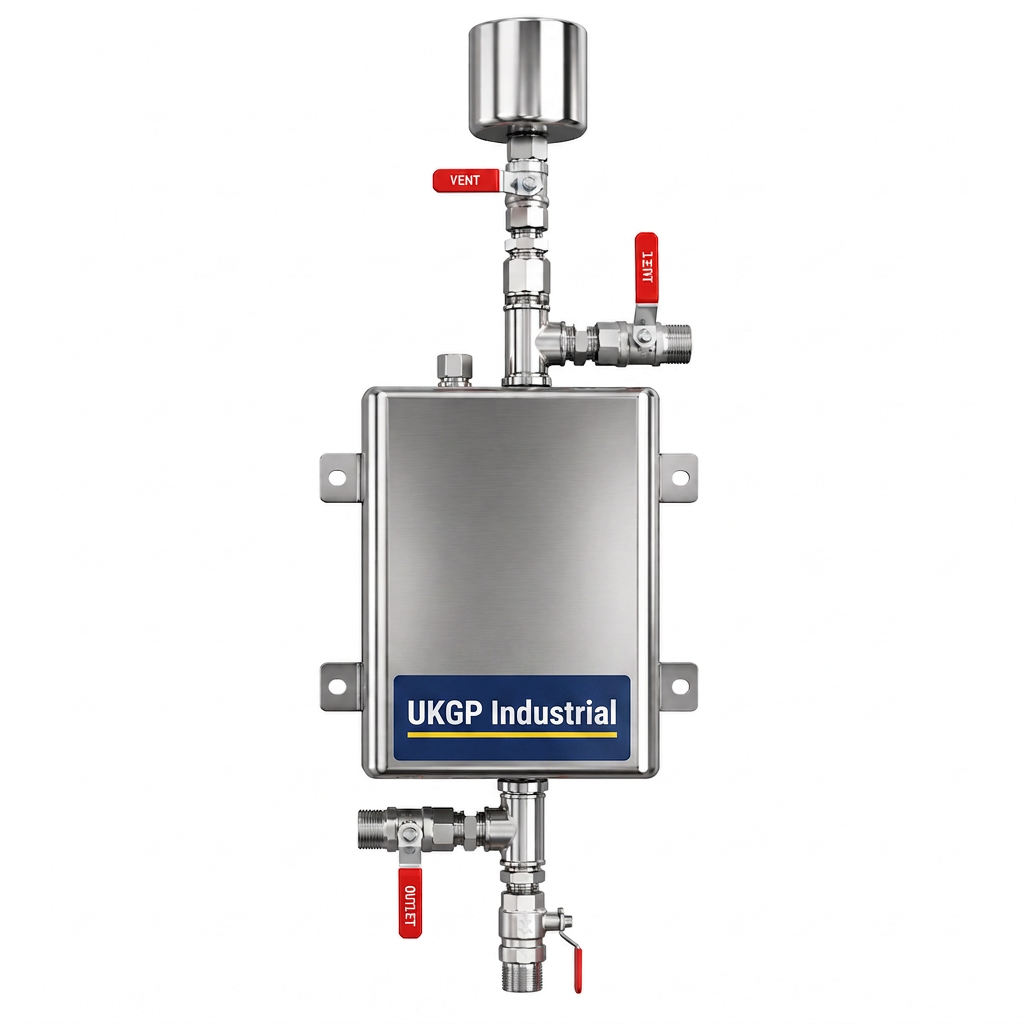
In comparison to modern filtration, CIP is fundamentally reactive. It addresses the symptoms of poor water quality rather than the root cause. While a CIP cycle might temporarily restore heat transfer coefficients, the underlying issue of suspended solids and corrosive byproducts remains. Our UKGP dosing pots can assist in the regular introduction of inhibitors to mitigate this, but once fouling has taken hold, more aggressive measures are required. To avoid the high costs of regular CIP or the intensive labour of ultrasonic heat exchanger cleaning, industry leaders are increasingly specifying high-capacity side stream filtration to continuously remove particulates down to sub-micron levels, maintaining peak efficiency year-round.
- Faster than ultrasonic cleaning but prone to 'shadowing' in blocked channels.
- Higher risk of chemical corrosion if neutralisation is incomplete.
- Generates significant chemical waste requiring specialised disposal.
- Often fails to remove 100% of hardened magnetite deposits.
The Superiority of Continuous Side Stream Filtration
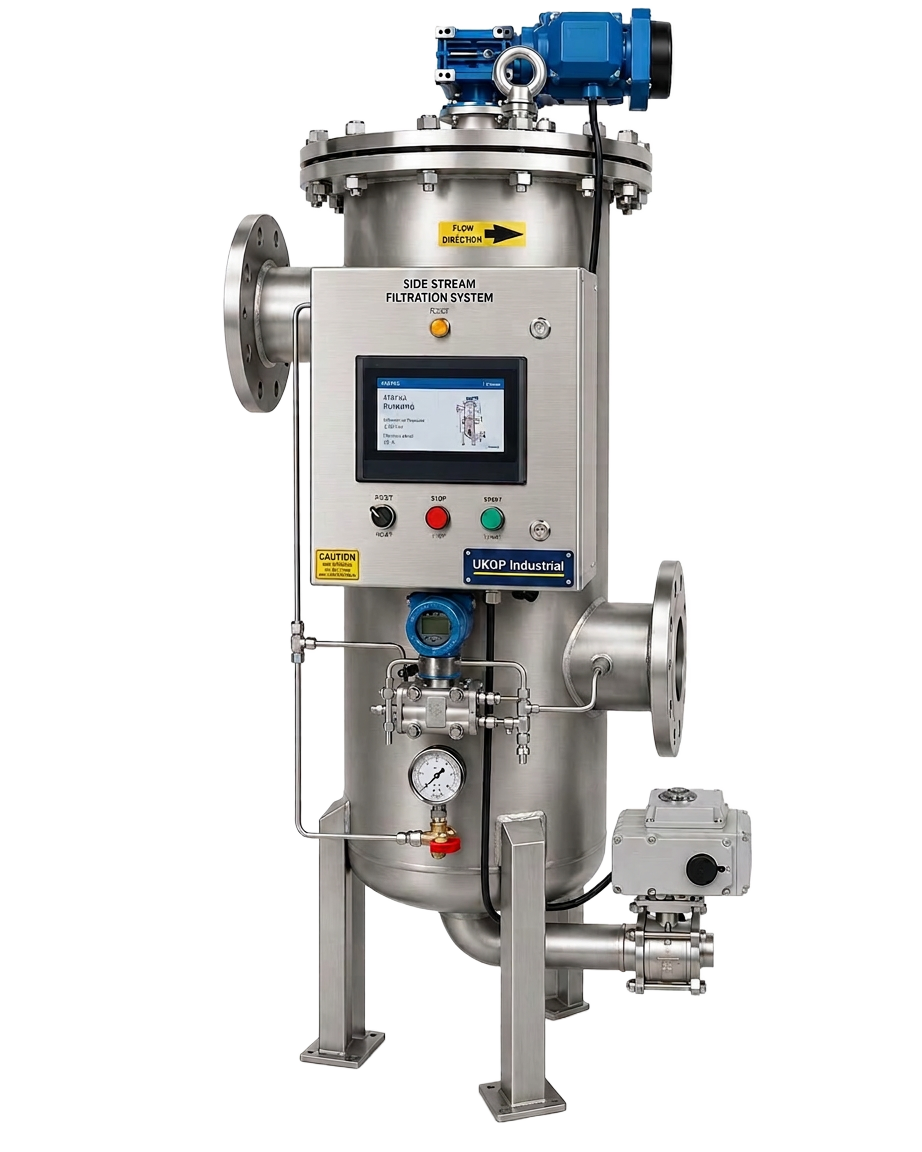
While ultrasonic heat exchanger cleaning is a brilliant restorative tool, the most cost-effective long-term strategy is the prevention of fouling through side stream filtration. At UKGP, we manufacture side stream filtration skids designed specifically for the UK market, accommodating pipe sizes from DN50 to DN100. By diverting 5-15% of the total system flow through a high-efficiency filter, these units continuously remove the magnetite and debris that would otherwise settle in plate heat exchangers. This proactive approach significantly extends the intervals between required deep cleans, often negating the need for ultrasonic heat exchanger cleaning for many years. Our skids are made to order with a 6-8 week lead time and are priced from £6,800+VAT, providing a rapid return on investment via energy savings.
The technical benefits of installing a UKGP skid are aligned with BSRIA BG29 and BG50 standards for water quality. By maintaining low levels of total suspended solids (TSS), the skid protects the turbulent flow environment within the heat exchanger, ensuring that heat transfer remains at the design specification. Unlike the one-off recovery provided by ultrasonic heat exchanger cleaning, side stream filtration provides 24/7 protection. Our units come with a comprehensive 2-year warranty and are built in Surrey, ensuring that UK building services engineers have access to local technical support and parts. Investing in a permanent filtration solution is a capital expenditure that pays for itself by reducing reactive labour costs and preventing the efficiency drift commonly seen in fouled plant-room equipment.
For procurement leads and FMs, the commercial case is clear. A single ultrasonic heat exchanger cleaning session for a large multi-plate unit, including gaskets and labour, can easily exceed several thousand pounds, and the process must be repeated every few years if water quality isn't addressed. A UKGP side stream filtration skid, starting from £6,800+VAT, offers a permanent fix. Our skids are engineered for ease of maintenance, allowing for filter changes without interrupting the main system flow. When you consider the avoided downtime and the preservation of expensive plant-room assets, the transition from reactive cleaning to proactive filtration is the most logical path for any modern UK commercial facility.
- Continuous removal of magnetite and scale-forming debris.
- Reduces the frequency of expensive ultrasonic cleaning cycles.
- Compliant with BSRIA BG50 guidelines for closed-loop systems.
- Available from DN50 to DN100 with 6-8 week lead times.
Comparing Costs: Restoration vs. Prevention
When evaluating the lifecycle costs of ultrasonic heat exchanger cleaning versus permanent filtration, engineers must look beyond the initial purchase price. Ultrasonic cleaning is an Opex-heavy activity, involving repeated costs for gaskets, solvents, and specialist contractor fees. In a typical Surrey-based commercial plant room, the cost of a full teardown and clean for a large PHE can range from £2,500 to £5,000 including parts. If this is required every two years due to poor water quality, the 10-year cost far exceeds the investment in a dedicated filtration skid. By contrast, a UKGP side stream unit requires minimal ongoing Opex, primarily focused on periodic filter element replacement and basic monitoring, while keeping the heat exchanger in 'as-new' condition.
The impact on energy bills is another critical factor. A fouled heat exchanger can lose up to 30% of its efficiency before the pressure drop becomes significant enough to trigger an alarm. This 'invisible' energy waste can cost a large facility tens of thousands of pounds annually. While ultrasonic heat exchanger cleaning restores that efficiency, the decay begins again the moment the pumps are turned back on. Continuous filtration prevents this decay by trapping particles before they can settle, ensuring the heat exchanger operates at its peak coefficient constantly. This aligns with modern ESG goals and the UK government's drive toward more efficient building operations, making filtration the preferred choice for forward-thinking consultants.
Finally, the risk of component failure is greatly reduced with filtration. High levels of suspended solids don't just foul heat exchangers; they erode pump impellers and seize control valves. By opting for a UKGP side stream filtration skid rather than relying on reactive ultrasonic heat exchanger cleaning, you are protecting the entire HVAC infrastructure. Our skids are designed for robust performance in demanding environments, ensuring that whether you are managing a London office block or a Surrey hospital, your critical heating and cooling services remain resilient. Request a quote today to see how our DN50-DN100 skids can be integrated into your next project with a reliable 2-year warranty.
- Filtration prevents 'efficiency drift' and reduces energy consumption.
- Avoids the recurring cost of PHE gaskets and specialist labour.
- Extends the lifespan of pumps, valves, and boilers.
- UKGP skids offer a 2-year warranty for long-term peace of mind.
Technical Integration and BSRIA Compliance
Successfully managing a plant room requires strict adherence to industry best practices, notably BSRIA BG29 for pre-commission cleaning and BG50 for ongoing water treatment. While ultrasonic heat exchanger cleaning is a valid method for meeting water quality targets during a system 'reset,' it is not a substitute for the continuous monitoring and filtration defined in these documents. BSRIA guidelines emphasise the need to keep suspended solids to a minimum to prevent under-deposit corrosion. A UKGP side stream filtration skid is the most effective way to meet these targets, provided it is correctly sized for the system volume and flow rate. Our technical team can assist in selecting the right DN50 to DN100 model for your specific requirements.
The installation of a side stream skid is relatively straightforward compared to the logistics of removing plates for ultrasonic heat exchanger cleaning. It requires two tappings into the main return header, allowing the skid to operate in parallel with the main pumps. This means no system shutdown is required for installation or future maintenance. This 'always-on' protection is why CIBSE-accredited engineers increasingly move away from reactive chemical flushes toward mechanical filtration. By maintaining the water to BS 8552 standards, you ensure that the heat exchanger surfaces remain clear, preventing the thermal resistance that leads to increased boiler firing or chiller load.
In summary, while ultrasonic heat exchanger cleaning has its place for reclaiming neglected equipment, it should be viewed as a last resort. For new builds and well-maintained refurbishments, the integration of a UKGP filtration skid is the industry-standard approach. Our made-to-order units are manufactured to the highest standards in our Surrey facility, ensuring that every skid meets the rigorous demands of UK building services. With a 6-8 week lead time and prices starting from £6,800+VAT, there is no better time to upgrade your system's defences and move away from the cycle of reactive cleaning and costly downtime.
- Supports compliance with BSRIA BG50 and CIBSE recommendations.
- Easier to install than the logistics of off-site plate cleaning.
- Maintains heat transfer surfaces at design specifications 24/7.
- Made-to-order in the UK for specific system flow requirements.
Final Verdict: When to Choose Each Method
The choice between these methods depends on the current state of your system. If a plate heat exchanger is virtually blocked and heat transfer has plummeted, ultrasonic heat exchanger cleaning is the most effective way to restore it to factory conditions. It is a 'reset' button for your hardware. However, once that reset is performed, it is essential to install a side stream filtration system to prevent a recurrence of the fouling. Without filtration, you are simply waiting for the next maintenance crisis. Our team at UKGP provides the hardware necessary to break this cycle, offering high-quality skids that handle the heavy lifting of water quality management.
For systems that are currently performing well, the priority should be the immediate installation of a UKGP side stream filtration skid. This is the 'insurance policy' that keeps your plant room running efficiently. Priced from £6,800+VAT and featuring a 2-year warranty, it is a prudent financial decision for any facility manager. Avoid the mess and disruption of CIP or the high expense of ultrasonic heat exchanger cleaning by removing the contaminants at the source. Our DN50 to DN100 skids are designed to deal with the specific water challenges found in UK closed-loop networks, providing a robust and reliable solution for long-term operational success.
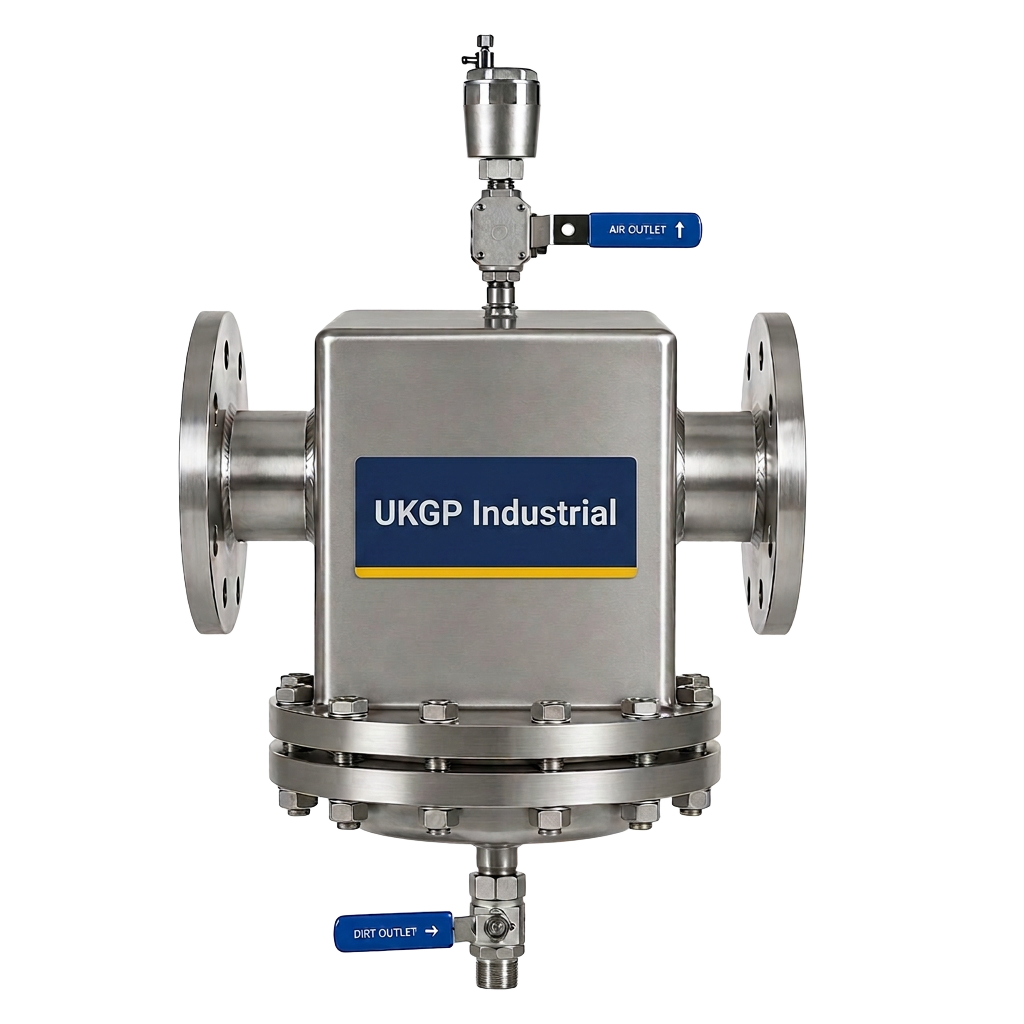
Ultimately, a holistic approach to water treatment is key. Use ultrasonic heat exchanger cleaning for recovery, but rely on UKGP manufacturing for prevention. Our skids, dosing pots, and air & dirt separators work in harmony to create a clean, efficient, and BSRIA-compliant system. Contact us today to discuss your project requirements or to receive a detailed quote for a filtration skid. With a 6-8 week lead time, we can ensure your plant room is protected before the next heating or cooling season begins. Trust the Surrey-based experts at UKGP to provide the technical equipment your building services project deserves.
- Use ultrasonic cleaning for restoration of neglected PHEs.
- Use side stream filtration for long-term prevention and efficiency.
- Combine both strategies for the ultimate system rehabilitation.
- Consult UKGP for bespoke skid manufacturing and technical advice.
Frequently asked questions
How often should ultrasonic heat exchanger cleaning be performed?
- It should be performed reactively when heat transfer falls below 80% of design or proactively every 5-7 years if side stream filtration is not present. With a UKGP skid installed, the need for ultrasonic cleaning can be deferred for over a decade.
What is the lead time for a UKGP side stream filtration skid?
- Our skids are made to order in our Surrey workshop with a standard lead time of 6-8 weeks, ensuring each unit is perfectly suited to your DN50 to DN100 requirements.
Is CIP better than ultrasonic cleaning for PHEs?
- CIP is less invasive as it doesn't require dismantling, but it is often less effective. Ultrasonic heat exchanger cleaning is far superior for removing hardened magnetite and reaching areas that chemical circulation might bypass.
Do UKGP filtration skids come with a warranty?
- Yes, all our side stream filtration skids come with a comprehensive 2-year warranty, reflecting our confidence in our UK-based manufacturing quality.
How much does a side stream filtration skid cost?
- Prices for a UKGP made-to-order side stream filtration skid start from £6,800+VAT, depending on the specific pipe size and flow requirements of your plant room.