The Fundamentals of Side Stream Filtration
Side stream filtration is the process of diverting a small percentage of the total circulating water flow (typically 5% to 15%) from the primary loop, passing it through a high-efficiency filtration medium, and returning it to the main system. Unlike full-flow filtration, which requires massive housings and can cause significant pressure drops across the entire system, a side stream approach operates independently of the main circulation pumps. This set-up allows for the fine-tuned removal of suspended solids, pipe scale, and iron oxides without risking the hydraulic balance of the building.
In UK commercial heating and cooling systems, the primary enemy is magnetite (Fe3O4). This black, abrasive sludge is a byproduct of internal corrosion and, if left unchecked, settles in low-flow areas or adheres to heat transfer surfaces. Side stream filtration is designed to break the cycle of accumulation. By constantly 'polishing' a fraction of the water, it eventually processes the entire system volume multiple times a day, ensuring that the overall turbidity and iron levels remain within the parameters specified by CIBSE and BSRIA.
The beauty of the side stream design lies in its simplicity and accessibility. Because the filtration unit is piped in parallel to the main flow, engineers can isolate the filter for maintenance—such as changing bags or cleaning magnetic rods—without shutting down the boilers or chillers. This is particularly vital in 24/7 environments like hospitals, data centres, and industrial manufacturing plants where system downtime is not an option.
- Continuous removal of suspended solids and magnetite.
- Reduction in erosive and corrosive wear on pumps and valves.
- Protection of high-efficiency plate heat exchangers and boiler heat cells.
- System cleaning without interrupting primary flow or occupant comfort.
Compliance and Industry Standards: BSRIA BG50
In the UK, the design and maintenance of closed-loop systems are largely governed by BSRIA (Building Services Research and Information Association) guidelines. Specifically, BG50/2021 highlights the importance of keeping suspended solids to a minimum to prevent both mechanical wear and the formation of biofilms. High levels of suspended solids can shield bacteria from biocides and neutralise corrosion inhibitors, leading to 'under-deposit corrosion'—a rapid and destructive form of localised pitting.
The use of a side stream filter is now considered 'best practice' for any system exceeding 2,500 litres in volume, or any system where high-efficiency equipment like condensing boilers or plate heat exchangers are installed. These modern components often feature narrow waterways that are easily blocked by debris. Failing to install adequate filtration can often lead to manufacturers voiding warranties upon the discovery of magnetite during a component failure.
Compliance isn't just about the initial install; it’s about ongoing monitoring. BSRIA recommends regular water analysis to check for iron, copper, and total suspended solids (TSS). A side stream filtration system provides the physical means to correct water quality when these parameters exceed the recommended limits, acting as a permanent insurance policy for the building’s mechanical assets.
- BSRIA BG29/21: Pre-commission Cleaning of Pipework Systems.
- BSRIA BG50/21: Water Treatment for Closed Heating and Cooling Systems.
- BS 8552: Sampling and monitoring of water from building services.
How Side Stream Filtration Works
The mechanics of a side stream system involve a bypass loop, usually taken from the return header of the system where the pressure is lower, or across the primary pumps where a pressure differential can be utilised. The water enters the filtration skid and typically passes through a multi-stage process. The first stage often involves magnetic filtration, where high-intensity neodymium magnets capture the fine iron oxide particles that would otherwise pass through mechanical mesh.
Following magnetic capture, the water enters a mechanical filter housing. Depending on the system's needs, this might contain a felt or nylon bag with a specific micron rating—typically 5 to 25 microns for general HVAC applications. The combination of magnetic and mechanical filtration ensures that even the smallest non-ferrous particles, such as silica or copper fragments, are trapped and removed from circulation.
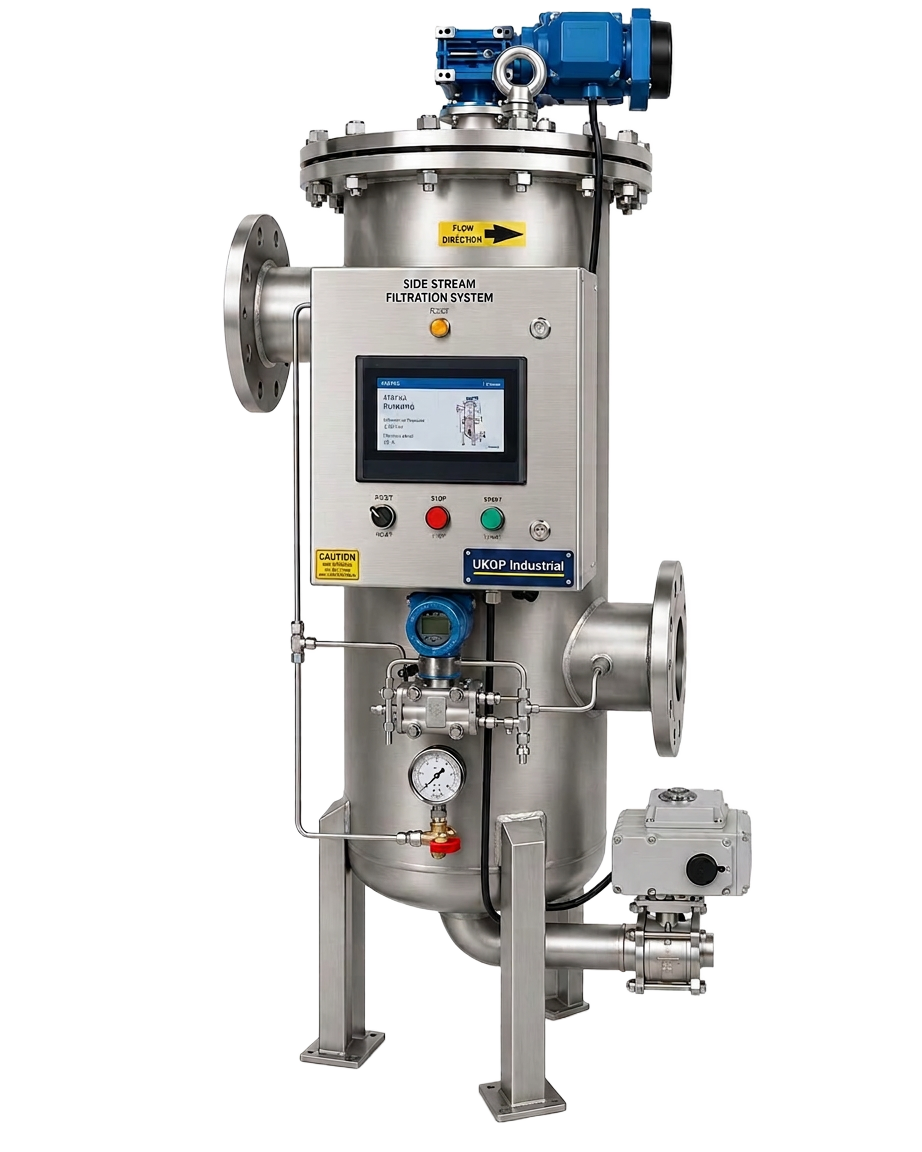
Advanced units, such as the UKGP side stream filtration skid, are designed to be self-contained. They often incorporate their own dedicated booster pump to ensure a constant flow through the media, regardless of the fluctuations in the main system's hydraulic demand. This ensures that the filtration rate remains consistent, providing predictable water quality outcomes over time.
- Centrifugal Separators: Effective for heavy, dense particles.
- Bag Filters: Ideal for high dirt loading and varying particle sizes.
- Cartridge Filters: Used for fine polishing and sub-micron removal.
- Magnetic Separation: The most effective method for removing magnetite.
The Impact of Magnetite on System Efficiency
Magnetite is not just a nuisance; it is an insulator. When a layer of iron oxide builds up on the internal surfaces of a heat exchanger, it creates thermal resistance. Even a 1mm layer of scale or sludge can reduce heat transfer efficiency by as much as 10-12%. In a large commercial plant room, this inefficiency translates directly into higher fuel bills and increased carbon emissions. In these scenarios, the side stream filter pays for itself through energy savings alone.
Furthermore, the presence of abrasive magnetite in the water stream acts like liquid sandpaper. It erodes pump impellers, destroys mechanical seals, and causes control valves to stick or fail. This leads to 'hunting' in the HVAC system, where valves cannot accurately modulate flow to meet demand, further degrading the efficiency of the building's climate control. Side stream filtration removes these abrasive particles, extending the mean time between failures (MTBF) for expensive plant equipment.
In chilled water systems, the problem is compounded by the density of the water and the presence of glycol. Sludge in a chilled system can lead to massive flow restrictions in terminal units (fan coils/AHU coils), resulting in 'dead legs' and poor temperature control. Maintaining low turbidity through constant filtration is the only reliable way to prevent these issues in large-scale chilled loops.
- Maintaining design Delta T across heat exchangers.
- Reducing energy consumption by improving heat transfer efficiency.
- Lowering carbon emissions through optimised system performance.
Key Components of a Filtration Skid
A professionally engineered filtration skid is more than just a filter housing. To be effective, it must include precise instrumentation. Pressure gauges on the inlet and outlet are essential; they allow facilities managers to see at a glance when the filter media is saturated. When the pressure drop exceeds a certain threshold (usually 0.8 to 1.0 bar), the media requires cleaning or replacement. This data-driven approach to maintenance is far superior to calendar-based servicing.
A high-quality skid also incorporates a flow-regulating valve or a dedicated pump. Because the skid is often installed as a bypass, it requires a steady flow to ensure the 'polishing' effect is achieved. Without a dedicated pump, the flow through the filter can vary wildly as the main system pumps ramp up and down via VFDs, often leading to periods where no filtration is occurring at all.
Finally, the inclusion of magnetic rods is a non-negotiable for UK systems. Given that most UK pipework is carbon steel, magnetic oxides will always be the primary contaminant. The UKGP side stream filtration skid integrates high-strength magnetic assemblies that can be easily removed and wiped clean, providing a visual confirmation of the system's cleanliness and reducing the frequency of bag filter replacements.
- Pressure differential gauges for monitoring filter blockages.
- Dedicated pumps for consistent flow rates.
- Integrated dosing points for chemical maintenance.
- Compact footprint for plant-room retrofits.
Integrating Chemical Dosing and Air Separation
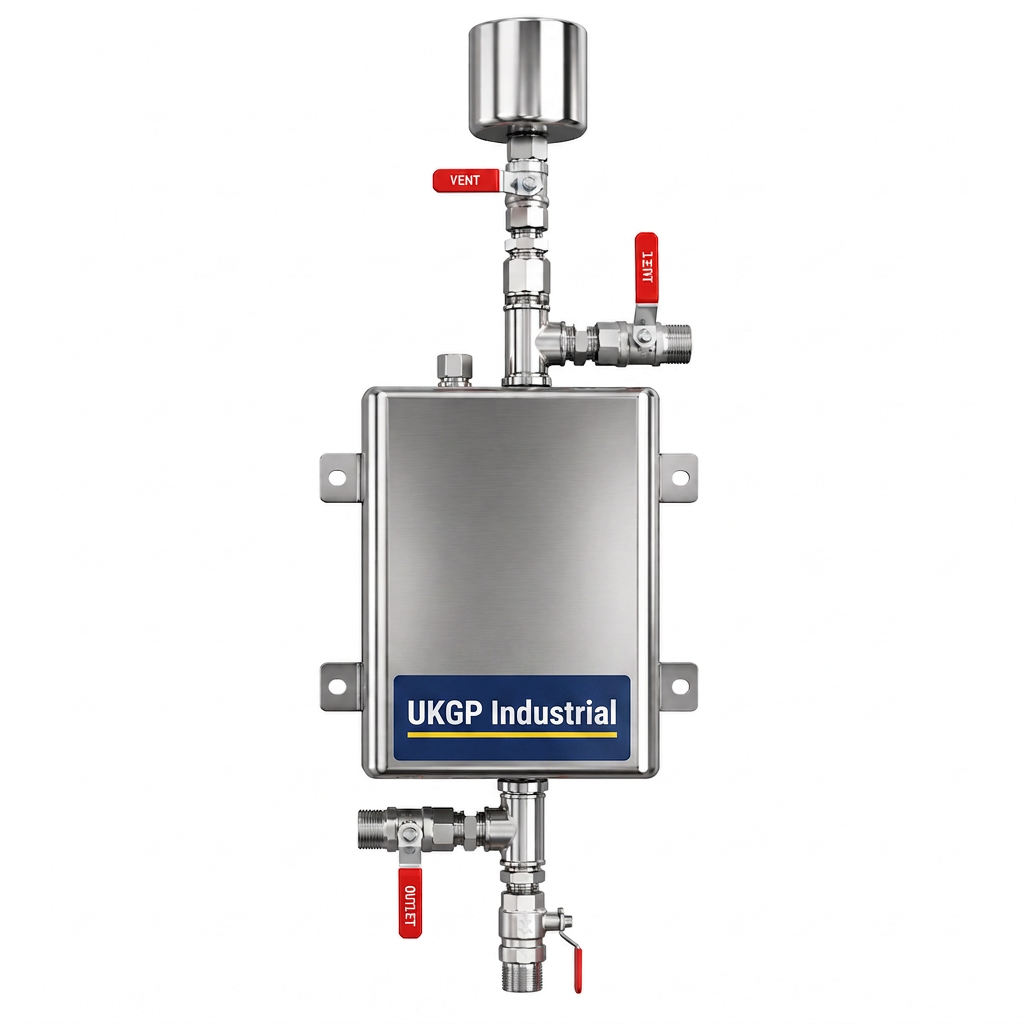
Filtration is only one pillar of water treatment; the others are chemical inhibition and deaeration. While the side stream filter removes the physical contaminants, chemicals like corrosion inhibitors and biocides prevent the chemical reactions that create those contaminants in the first place. For manual dosing and small-scale system corrections, the use of UKGP chemical dosing pots provides an easy entry point for these essential fluids.
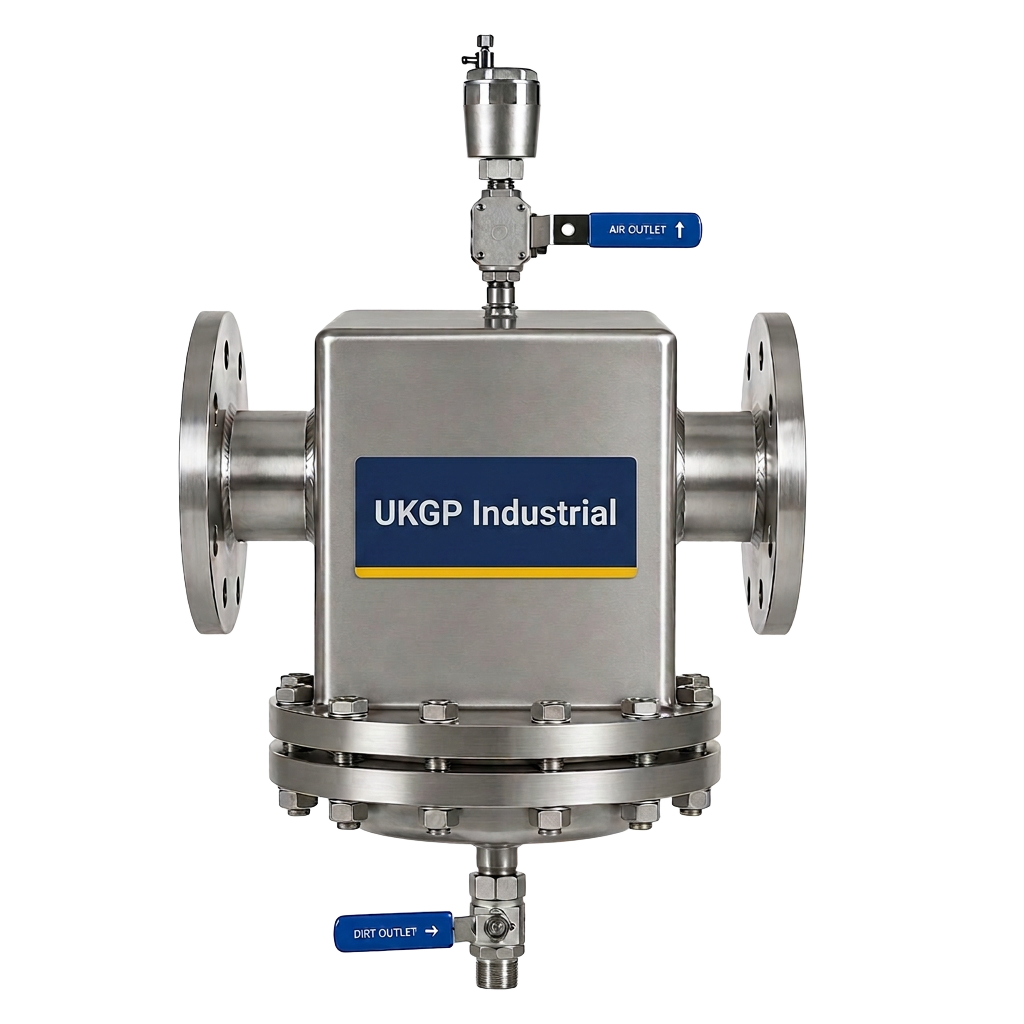
Air is the primary driver of corrosion. Oxygen in the water reacts with the steel pipework to create the very iron oxides that the filter is trying to remove. Therefore, any robust system design should pair side stream filtration with effective deaeration. By using UKGP air & dirt separators on the main flow and side stream filters on the bypass, an engineer creates a 'belt and braces' approach that handles both macro-debris and micro-particulates alongside dissolved gases.
This holistic approach is what separates a well-managed plant room from one prone to constant breakdowns. By managing the physical (filtration), the chemical (dosing), and the atmospheric (deaeration), the life expectancy of the system can be extended by decades. This is the standard expected by modern consultants and the cornerstone of CIBSE CP1 guidelines for heat networks.
- Use for minor chemical injections or top-ups.
- Provides a controlled way to introduce inhibitors without system drainage.
- Pairs well with filtration for total water quality management.
The Economic Case for Engineers and FMs
From a CAPEX perspective, side stream filtration is significantly more cost-effective than full-flow filtration for large pipe diameters. Protecting a 200mm main with an inline filter would require a massive, expensive vessel and create a permanent pressure drop that the pumps would have to overcome for the life of the building. A side stream skid, by comparison, is compact, easier to install in retrofits, and has a lower impact on the overall pump head requirements.
OPEX savings are even more compelling. The cost of labor and chemicals for a full system flush (which is often the 'solution' to dirty water) is astronomical. A side stream filter acts as a 'continuous flush', keeping the water at a high quality 365 days a year. This prevents the need for invasive cleaning procedures that can actually introduce more oxygen and fresh water (and thus more corrosion) into the system.
For the Facilities Manager, the main benefit is the reduction in reactive maintenance. When water is clean, control valves don't seize, heat exchangers don't foul, and pumps don't leak. The transition from reactive 'firefighting' to planned preventative maintenance (PPM) is only possible when the fundamental medium—the water—is managed correctly. It is the single most effective investment a building owner can make in their mechanical infrastructure.
- Simplified plant room design.
- Lower upfront cost for large systems.
- Zero downtime for servicing.
- Adaptability to changing water quality conditions.
Installation Best Practices and Maintenance
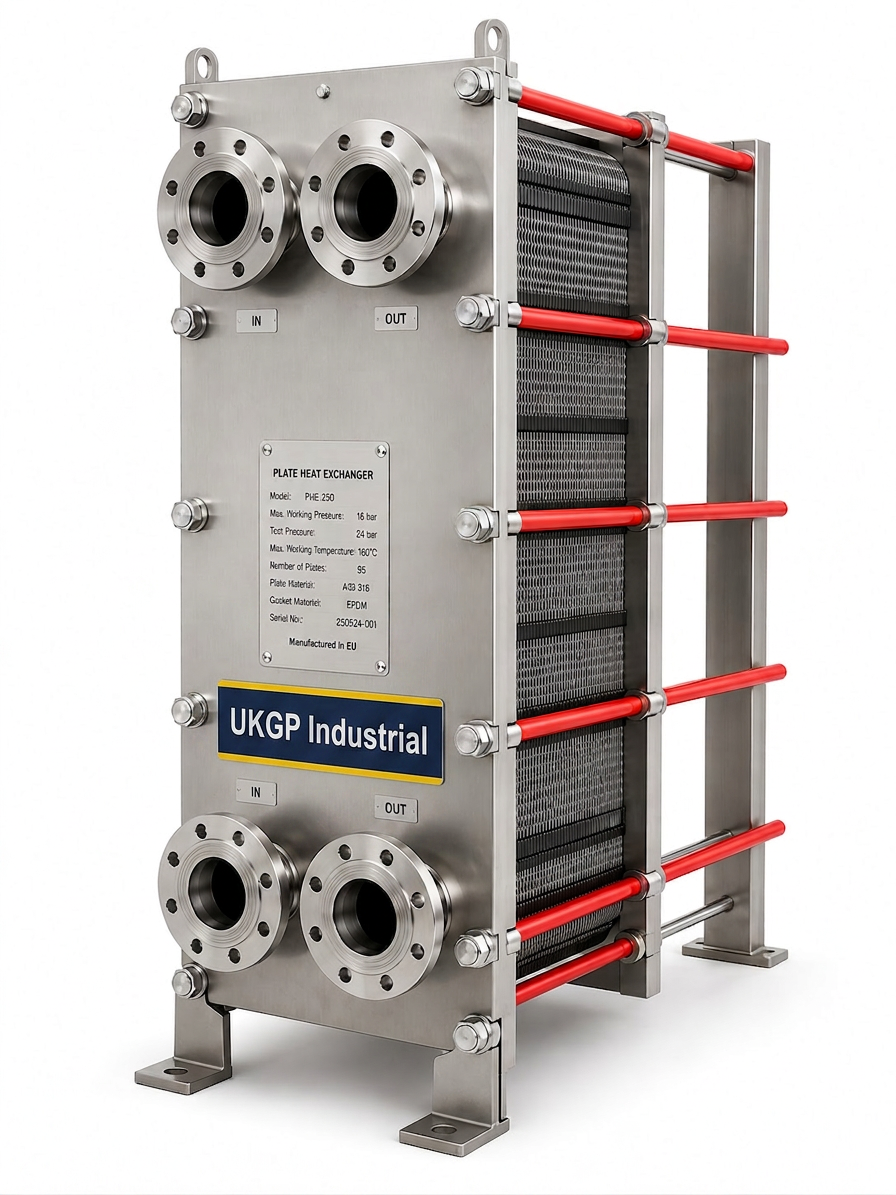
For maximum effectiveness, the side stream filter should be installed on the return header, just before the water enters the boilers or the UKGP plate heat exchanger. This ensures that the water is 'cleaned' before it hits the most sensitive heat transfer surfaces. The connections should be made in a 'bridge' fashion, typically with an isolation valve on the flow and return of the skid to allow for complete removal of the unit if necessary.
Maintenance involves two primary tasks: cleaning the magnetic rods and replacing the filter media. This should be done based on the differential pressure readings. In a newly commissioned system, this might be required every few days. As the water quality stabilises, this typically moves to a monthly or quarterly schedule. It is vital that the waste collected is disposed of correctly and that a record of the cleaning is kept as part of the building's water management logbook.
Finally, the importance of sampling cannot be overstated. A side stream skid should ideally include a sampling point that allows for the collection of a representative water sample. This sample should then be sent to a specialist lab for analysis. By comparing the lab results with the debris found in the filter, engineers can dial in the chemical dosing rates and Ensure the system is operating within the 'sweet spot' of BSRIA BG50 compliance.
- Install on the return line before the heat source.
- Ensure adequate space for filter bag removal.
- Match the skid pump to the required turnover rate.
- Incorporate sampling points for BSRIA-compliant testing.
Summary: The Future of Water Treatment
As the UK moves towards lower-temperature heating systems (such as heat pumps) and more sensitive heat exchange technology, the margin for error in water quality is shrinking. Suspended solids that might have been tolerable in an old cast-iron sectional boiler system are catastrophic in a modern, micro-bore heat pump circuit. Side stream filtration is no longer an optional extra; it is the heartbeat of a modern, efficient mechanical system.
By implementing a robust filtration strategy, engineers can guarantee system performance, satisfy manufacturer warranty conditions, and contribute to the national drive for energy efficiency. Whether it is a new-build project or a critical retrofit, the integration of high-performance filtration skids is the most reliable way to ensure that 'clear water' remains a reality, not just a goal, for the life of the building.
In conclusion, side stream filtration solves the persistent problem of debris in closed-loop systems with minimal disruption and maximum efficiency. It is a proven, engineer-led solution that addresses the physical realities of metallic corrosion and provides a clear pathway to long-term operational excellence.
- Constant water polishing.
- Compliance with BSRIA BG29/BG50.
- Protection of boilers, chillers, and valves.
- Lower total cost of ownership.
Frequently asked questions
What is the recommended flow rate for side stream filtration?
- BSRIA BG29 and BG50 recommend that a side stream filter should generally treat 5% to 15% of the total system volume per hour to maintain water quality targets.
Can side stream filtration replace chemical dosing?
- No. Side stream filtration removes suspended solids, but chemical treatment (inhibitors and biocides) is still required to manage dissolved oxygen and bacteriological growth. The two technologies work in tandem.
How does side stream filtration differ from inline dirt separators?
- Unlike standard air and dirt separators, side stream filters can capture particles down to sub-micron levels depending on the media used, and they allow for maintenance without shutting down the primary system.
How do I know when the filter media needs replacing?
- High pressure drops across the filter (monitored via gauges) or an increase in turbidity (NTU) in the system water are the primary indicators that service is required.