The Engineering Logic Behind a Sidestream Filter
In a busy plant room environment, maintaining water clarity is a continuous challenge as corrosion products and debris naturally accumulate over time. A sidestream filter operates by continuously diverting approximately 5% to 15% of the total circulating water through a dedicated filtration loop. This method is preferred by M&E contractors because it prevents the significant pressure drops associated with full-flow filtration while still achieving a total system turnover multiple times per day. By targeting fine particulates that chemical treatments alone cannot eliminate, this technology serves as a critical mechanical safeguard for high-value assets such as plate heat exchangers and modern high-efficiency boilers.
The physics of a sidestream filter relies on the consistent removal of magnetite and non-magnetic debris that would otherwise settle in low-flow areas of the system. In UK commercial installations, these contaminants often result from the internal corrosion of steel pipework or legacy radiator circuits. Without a reliable sidestream filter station, these suspended solids can lead to localized under-deposit corrosion and erosion at high-velocity points. This proactive approach to water quality management is not just a secondary consideration; it is a fundamental requirement for any engineer or facility manager looking to maximize the return on investment for their mechanical infrastructure.
Designers must ensure that the sidestream filter is sized appropriately for the system volume and flow rates, typically following the guidance laid out in BSRIA BG29 and BG50. These documents highlight the importance of maintaining low levels of Total Suspended Solids (TSS) during the pre-commissioning cleaning phase and throughout the steady-state operation of the system. UKGP provide fully packaged solutions that simplify this integration, ensuring that the plant room remains within the tight tolerances required by major UK commercial boiler OEMs and heat pump manufacturers. Strategic filtration planning ensures that the plant room remains a clean, efficient, and reliable energy centre for the entire lifetime of the building.
- Continuous removal of suspended solids without disrupting primary flow.
- Reduces the risk of under-deposit corrosion in steel pipework.
- Maintains heat transfer efficiency by preventing sludge buildup.
- Essential for meeting BSRIA BG29 and BG50 water quality benchmarks.
Achieving BSRIA BG50 Compliance with Sidestream Filtration
Compliance with BSRIA BG50 'Water Treatment for Closed Heating and Cooling Systems' is the gold standard for UK facility managers and building owners. This guidance explicitly recommends the use of a sidestream filter to manage the inevitable buildup of corrosion products in closed loops. The standard emphasizes that chemical inhibitors alone are insufficient if physical debris is allowed to circulate unchecked. Suspended solids act as abrasive agents, damaging pump seals and eroding control valves, which eventually leads to system failure and unplanned downtime. Integrating a UKGP sidestream filter ensures that the mechanical filtration requirements of BG50 are met with minimal maintenance intervention.
Furthermore, BSRIA BG29 provides rigorous guidelines for pre-commissioning cleaning, where a sidestream filter plays a pivotal role. During the initial flushing and dosing stages, high concentrations of debris are released into the system water. Using a high-capacity filter during this phase protects new components from early-life damage. Modern UKGP units feature magnetic 25 µm bag or cartridge filtration, which is specifically designed to capture the microscopic magnetite particles that standard strainers simply cannot catch. This level of protection is essential for maintaining the manufacturer's warranty on core plant items and ensuring the long-term integrity of the closed-loop system design.
Procurement leads and M&E contractors often select our sidestream filter solutions because they provide a documented trail of water quality management. By monitoring the pressure differential across the filter housing, maintenance teams can quantify the amount of debris being removed from the system. This provides tangible evidence of system health and helps in scheduling preventative maintenance tasks rather than reacting to catastrophic failures. In an era where energy performance certificates and operational efficiency are under intense scrutiny, the inclusion of a BSRIA-aligned filtration strategy is a non-negotiable component of modern building services engineering and responsible facility management.
- Direct alignment with BSRIA BG50 standards for closed-loop systems.
- Supports BG29 pre-commissioning cleaning protocols for new builds.
- Magnetic separation specifically targets erosive magnetite sludge.
- Provides clear diagnostic indicators for system cleanliness levels.
Technical Specifications of the UKGP Sidestream Filter
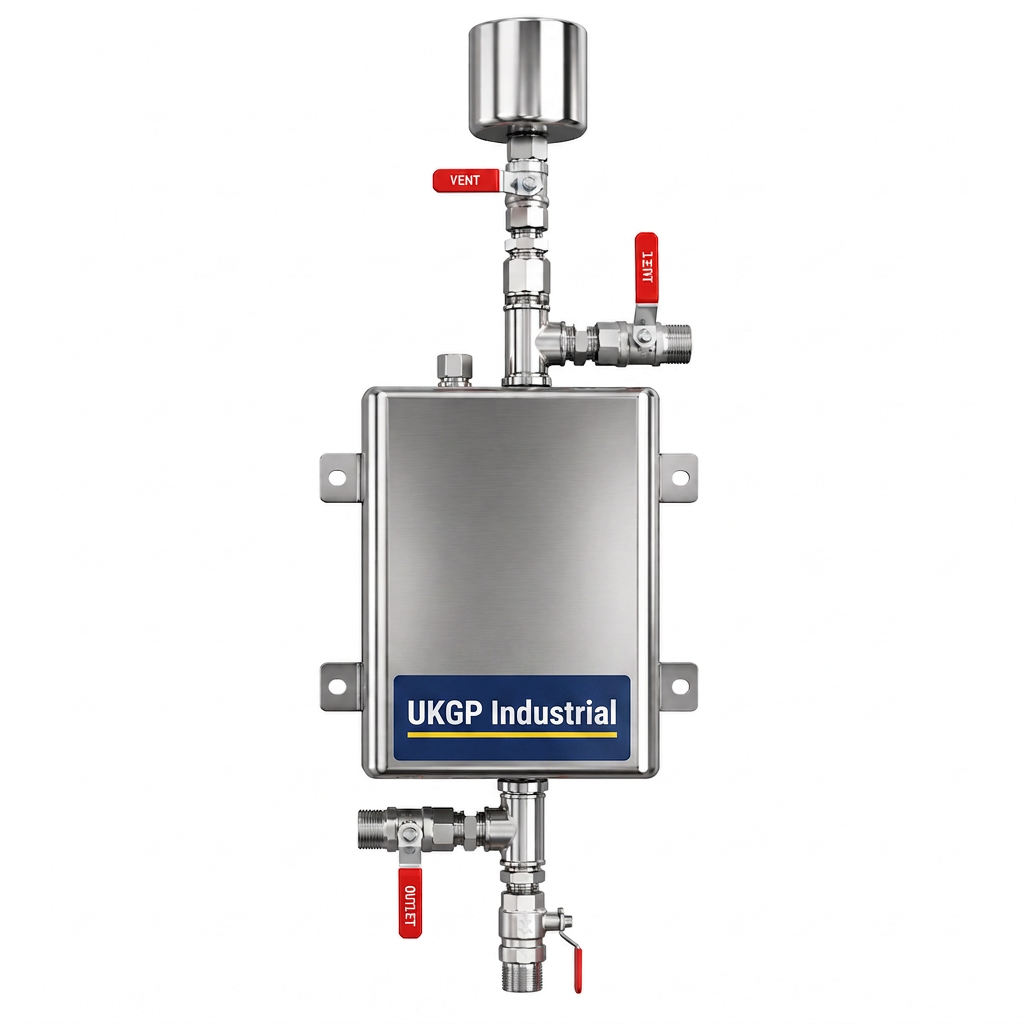
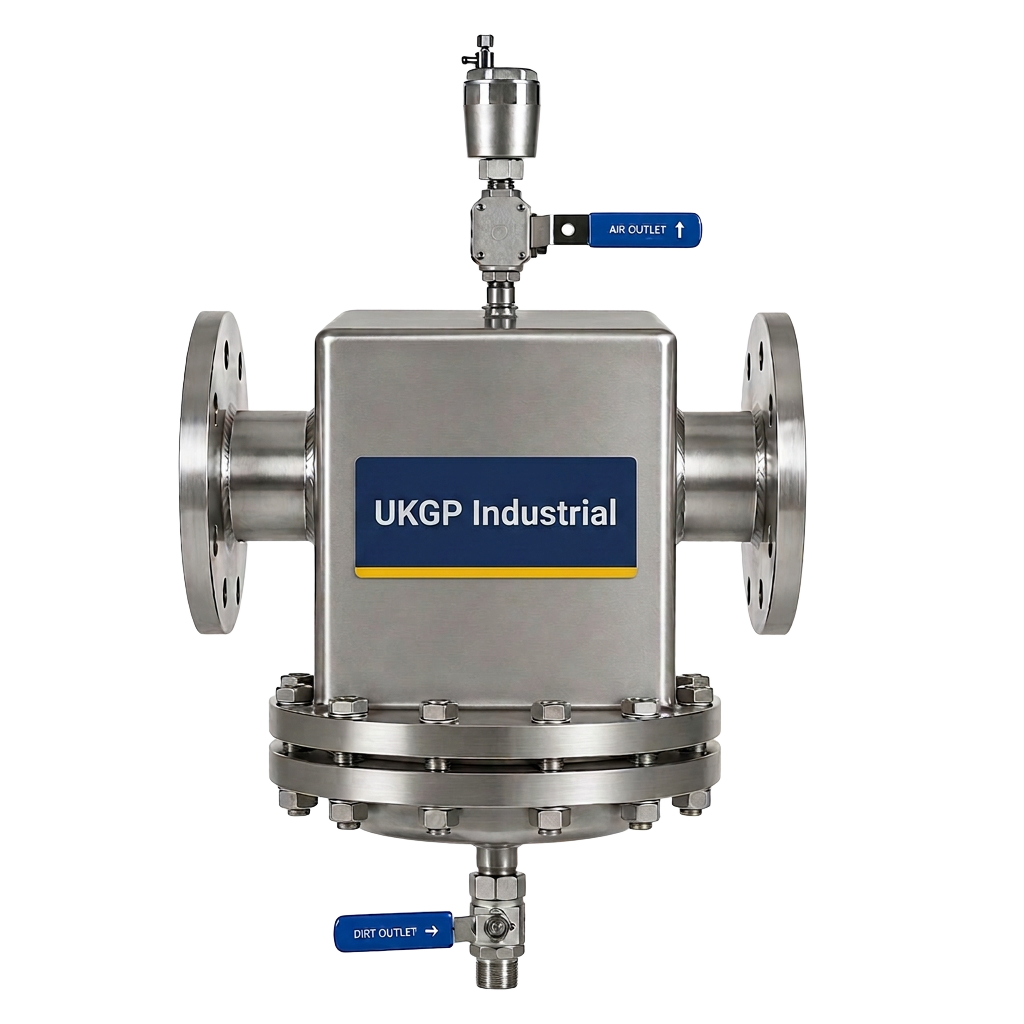
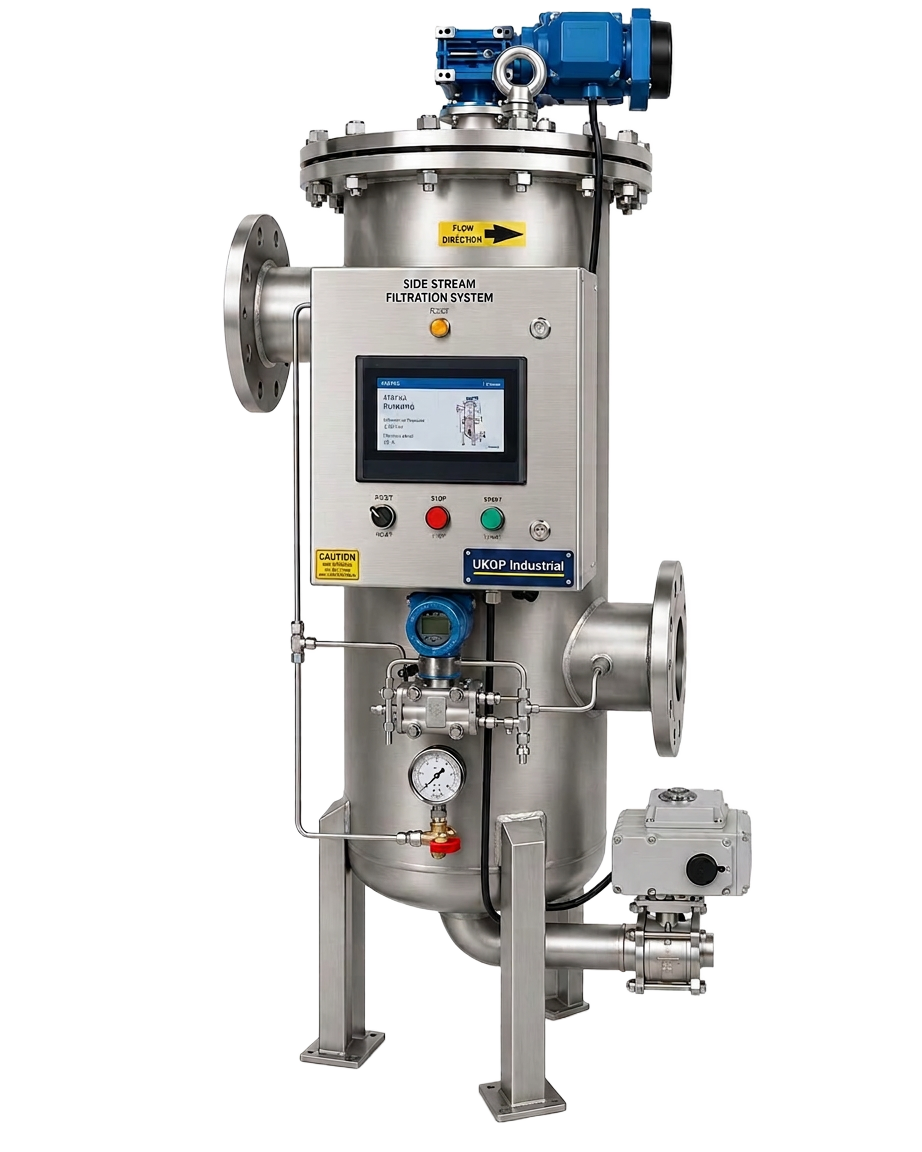
The UKGP sidestream filter range is engineered for the rigours of commercial plant rooms, offering flow rates from 5 to 50 m³/h to suit a wide variety of system volumes. Each unit is provided as a complete skid-mounted package, featuring high-grade isolation valves and a robust stainless steel housing that is built to last. The core of the design is a dual-action filtration process that combines powerful magnetic separation with a 25 µm bag or cartridge filter. This ensures that both metallic and non-metallic particles are efficiently trapped before they can cause damage to sensitive system components like chillers or heat exchangers.
One of the standout features of our sidestream filter is the ease of maintenance. The skid-mounted design allows for quick access to the filter media, minimizing the time required for cleaning or replacement. Because the unit is installed on a bypass loop, the main system can continue to operate at full capacity during servicing, which is a critical advantage for mission-critical facilities like data centres or hospitals. With a comprehensive 2-year warranty and a design that prioritizes durability, UKGP filters offer peace of mind to consultants specifying high-performance HVAC systems. The inclusion of standard pressure gauges allows for immediate visual verification of filter status.
Every UKGP sidestream filter is built following strict quality control measures to ensure it meets the demands of UK building services. The compact footprint makes them ideal for retrofit projects where space in the plant room is often at a premium. By selecting a pre-assembled skid, contractors save significant time on-site, reducing labour costs and ensuring that the installation is consistent with the highest engineering standards. Whether you are dealing with a small commercial heating loop or a massive district heating network, our filtration technology provides the necessary performance to keep the water clear and the system running at peak thermal efficiency.
- Standard flow rates ranging from 5 m³/h to 50 m³/h for all system sizes.
- Includes premium isolation valves and stainless steel housing.
- 25 µm filtration media captures even the finest suspended particles.
- Skid-mounted design for rapid on-site installation and commissioning.
The Role of Plate Heat Exchangers in Filtered Systems
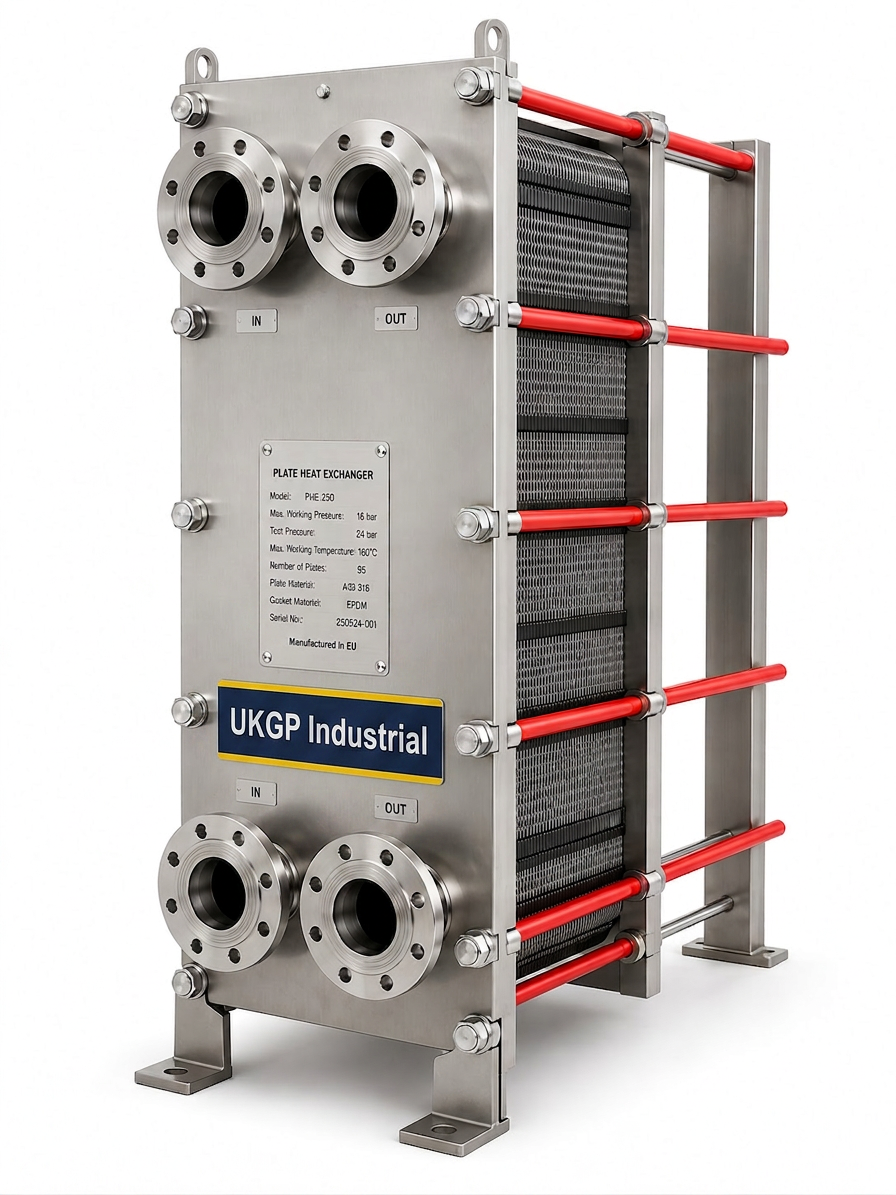
Plate heat exchangers are highly efficient at transferring energy between circuits, but their narrow channels make them extremely susceptible to fouling from suspended solids. When a sidestream filter is absent, magnetite and other debris can rapidly accumulate within the plates, causing a drop in heat transfer efficiency and an increase in pump energy consumption. This fouling leads to higher operational costs and can eventually cause the heat exchanger to exceed its design temperature limits. By implementing effective bypass filtration, you protect these critical components and ensure that the energy transfer remains consistent with the original design specifications of the building.
For systems utilizing primary and secondary circuits, the interaction between a sidestream filter and a plate heat exchanger is vital for long-term reliability. The filter ensures that the water entering the heat exchanger is free from particulates that could cause abrasion or scaling on the plate surfaces. This is particularly important in systems where the secondary side may involve sensitive domestic hot water or chilled water circuits. UKGP supplies high-quality plate heat exchangers that, when paired with our filtration skids, provide a complete thermal management solution that is both robust and easy to maintain throughout the life of the plant room.
In many UK commercial applications, the maintenance of heat exchange surfaces is a significant part of the annual budget. By reducing the frequency of chemical cleaning and manual teardowns through superior filtration, facility managers can achieve significant cost savings. A clean system is an efficient system, and the synergy between a reliable sidestream filter and a high-performance heat exchanger is the key to achieving the low-carbon goals required by modern building regulations. Consultants should always consider the cleanliness of the circulating fluid as a primary factor in the durability of the heat exchange equipment they specify for their clients.
- Prevents fouling and blockages in narrow plate heat exchanger channels.
- Reduces energy consumption by maintaining optimal heat transfer.
- Extends the service life of thermal transfer equipment significantly.
- Minimizes the need for aggressive chemical cleaning of plates.
Protecting Expansion Bellows and Pipework Integrity
Expansion bellows are sensitive components designed to absorb thermal expansion and movement within large-scale pipework. However, if the system water is contaminated with abrasive solids, the internal surfaces of these bellows can suffer from premature wear or stress corrosion cracking. A sidestream filter helps to mitigate this risk by removing the particulate matter that can become trapped in the convolutions of the bellows. Without clean water, the friction caused by circulating debris can weaken the bellows, leading to leaks or catastrophic failure in the distribution network. Protecting these components is crucial for the safety and stability of the entire HVAC system.
In addition to protecting bellows, the use of a sidestream filter preserves the internal lining and surface finish of the main distribution pipework. Excessive sediment buildup at the base of risers or within low-flow horizontal runs can create an environment ripe for microbiologically influenced corrosion (MIC). By maintaining low turbidity through continuous filtration, you reduce the surface area available for bacterial growth and the accumulation of corrosive sludge. This is in accordance with BS 8552, which provides guidance on the sampling and monitoring of water in building services. Clean water is the first line of defence against the systemic decay of mechanical infrastructure.
Contractors must ensure that all components, including bellows and valves, are protected from the erosive nature of high-velocity particulates. The installation of a UKGP sidestream filter provides this protection systematically across the entire building. When procurement teams look for long-term value, they recognize that investing in filtration today prevents the high cost of emergency repairs and component replacements tomorrow. Our technical team can advise on the best placement for the filtration skid to ensure maximum coverage and protection for your expansion joints and pipework assets, ensuring a resilient system that stands the test of time.
- Protects expansion bellows convolutions from debris accumulation.
- Reduces the risk of stress corrosion cracking in flexible joints.
- Prevents abrasive wear on internal pipework and valve seats.
- Lowers the risk of microbiologically influenced corrosion (MIC).
Commercial Benefits and Long-Term ROI
From a commercial perspective, the installation of a sidestream filter is one of the most cost-effective upgrades a facility manager can make. The initial capital expenditure is quickly offset by reduced chemical consumption, lower energy bills, and a significant decrease in reactive maintenance calls. Systems that operate with clean water are inherently more efficient, requiring less pump power to transport heat across the building. This translates directly into lower operational costs and a smaller carbon footprint, which is increasingly important for corporate sustainability reporting and MEES compliance in the UK commercial property market.
Furthermore, the longevity of major plant items is greatly extended when they are not subjected to the constant 'sandblasting' effect of circulating particulates. A sidestream filter ensures that expensive boilers, chillers, and pumps reach their full theoretical service life, delaying the need for multi-million-pound capital replacements. For building owners, this means more predictable long-term financial planning and a reduction in the total cost of ownership for the mechanical services. Our units come with a 2-year warranty, reflecting our confidence in the build quality and the long-term value they provide to any commercial or industrial facility across Britain.
Lastly, the ease of integration offered by UKGP's skid-mounted solutions means that even retrofitting an older plant room is a straightforward process. By improving the water quality in an existing system, you can often restore much of its lost efficiency and resolve persistent issues like cold spots in radiators or frequently failing pump seals. In a competitive market, providing a high-quality environment for tenants is essential, and reliable climate control starts with a clean, filtered heating and cooling circuit. Request a quote from our team today to discover how our tailored filtration solutions can transform the performance of your commercial plant room and protect your vital assets.
- Significant reduction in annual maintenance and repair costs.
- Enhanced energy efficiency and lower utility expenditure.
- Extended life expectancy for all primary plant room equipment.
- Simplified compliance with environmental and building regulations.
Frequently asked questions
What is the recommended flow rate for a sidestream filter?
- Common industry practice, supported by BSRIA BG50, suggests that the sidestream filter should process between 5% and 15% of the total system flow. UKGP units offer capacities from 5 to 50 m³/h, allowing us to cater to everything from small commercial units to large-scale district heating systems.
How often does the filter media need to be changed?
- This depends entirely on the cleanliness of your system. In a new installation following BSRIA BG29 flushing, changes may be frequent initially. Once the system stabilizes, cleaning or replacing the 25 µm bag or cartridge is typically conducted during quarterly or bi-annual maintenance checks.
Can a sidestream filter remove magnetite?
- Yes, provided it is equipped with a magnetic insert. The UKGP sidestream filter uses a combination of high-intensity magnets and a 25 µm mechanical filter to ensure both black iron oxide sludge and non-magnetic debris are effectively removed from the system.
Is a sidestream filter required for BSRIA BG50 compliance?
- While BSRIA BG50 does not mandate a specific brand, it strongly recommends sidestream filtration as an essential part of a water treatment strategy. It is considered best practice for managing suspended solids in closed-loop heating and cooling systems.
Does the filter protect the boiler warranty?
- Most leading commercial boiler manufacturers specify strict water quality parameters. Failure to maintain these can void your warranty. Installing a sidestream filter helps ensure you stay within the required Total Suspended Solids (TSS) and iron limits, protecting your investment.