The Role of a Power Flushing System in Modern Plant Rooms
In the UK building services sector, the term power flushing system typically refers to a high-velocity, low-pressure mechanical cleaning process intended to remove accumulated sludge and corrosion debris from existing pipework. This reactive maintenance approach is often triggered when circulation drops or boiler heat exchangers begin to foul. While effective at dislodging heavy magnetite deposits in residential settings, large-scale commercial applications require a more nuanced strategy to manage debris without compromising delicate seals. The primary objective of using a power flushing system is to restore system efficiency by clearing blockages, yet it often fails to address the underlying cause of the corrosion cycle that led to the build-up initially.
Consultants and M&E contractors should note that relying solely on a power flushing system can be a disruptive process. It necessitates significant downtime, as the system must be taken offline, and often requires the introduction of harsh chemical cleaners that must be thoroughly neutralised and flushed to drain. This process can place undue stress on older pipework joints and valve packings due to the increased flow rates required to suspend solids. For many Facilities Managers, the logistical challenge of setting up a temporary power flushing system in a busy plant room, coupled with the water disposal costs, makes it a less attractive option for ongoing maintenance compared to permanent filtration solutions.
Ultimately, while a power flushing system serves a specific purpose for rapid recovery of neglected circuits, it is frequently viewed as a 'sticking plaster' rather than a sustainable management strategy. BSRIA guides increasingly emphasise the importance of proactive water quality management. For those managing complex commercial infrastructures, moving away from periodic reactive flushing toward a continuous filtration model is often the more cost-effective and technically sound approach. UKGP Industrial recommends evaluating the total lifecycle cost of repeated flushing versus a one-off capital investment in high-quality filtration hardware that maintains water clarity 24/7.
- High-velocity debris removal for neglected systems
- Reactive maintenance requiring significant system downtime
- Potential risk to aged seals and joints from pressure
- Temporary solution that does not prevent future corrosion
The Shift Toward Side Stream Filtration
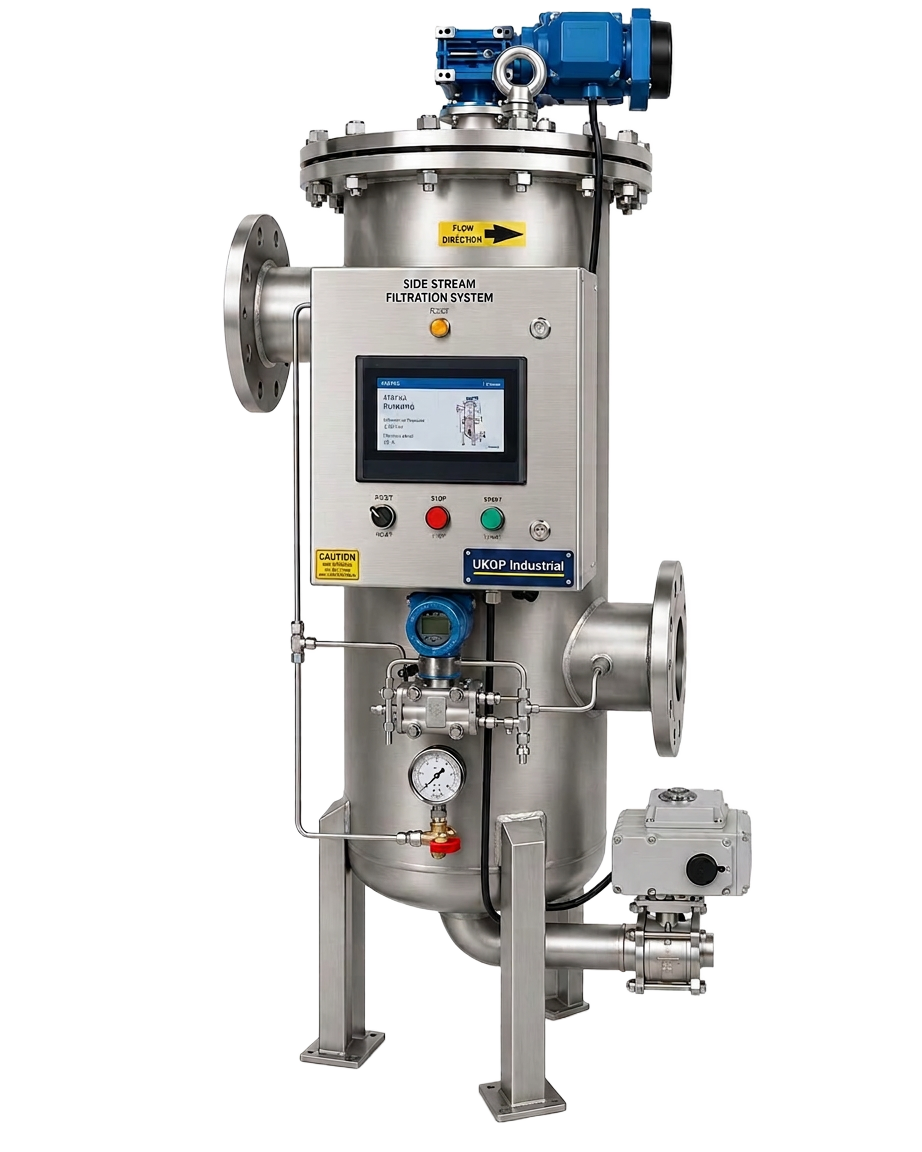
Side stream filtration has largely superseded the temporary power flushing system for commercial H&V applications, particularly where BSRIA BG50 guidelines are enforced. Unlike a flush, which only addresses debris at a single point in time, side stream units continuously process a portion of the system volume (typically 5-15%). This ensures that any magnetite or suspended solids generated through inevitable microscopic corrosion are captured before they can settle in low-velocity areas. By installing a permanent skid, you eliminate the need for the repetitive logistical headache of a power flushing system, ensuring that heat transfer surfaces remain clean and pump energy consumption stays at design levels throughout the year.
Choosing side stream filtration over a power flushing system provides peace of mind for site engineers. UKGP Industrial's filtration skids are engineered to capture particles down to sub-micron levels when specified with the correct filter media. Our units, ranging from DN50 to DN100, are made to order with a standard 6-8 weeks lead time. Starting from £6,800+VAT, these skids offer a robust alternative to hiring external contractors for periodic flushes. Each unit comes with a 2-year warranty, reflecting our confidence in the British manufacturing quality required for UK plant rooms and the demanding standards of the modern M&E landscape.
Furthermore, permanent filtration allows for integrated chemical dosing and air separation, creating a holistic water treatment station. In contrast, a power flushing system is a singular event that often requires high water usage and professional disposal of chemical-laden effluent. By transitioning to a continuous filtration model, FM teams can monitor pressure drops across filters as a diagnostic tool, identifying early-rate corrosion before it becomes a critical failure. This proactive stance is the hallmark of modern building management, moving away from crisis-response maintenance and toward predictable, data-driven plant room care that protects multimillion-pound HVAC assets.
- Continuous 24/7 removal of suspended solids
- Reduces high-velocity erosion risks found in flushing
- Lower long-term water and chemical consumption
- Standard lead times of 6-8 weeks for bespoke skids
Comparing Compliance with BSRIA BG29 and BG50
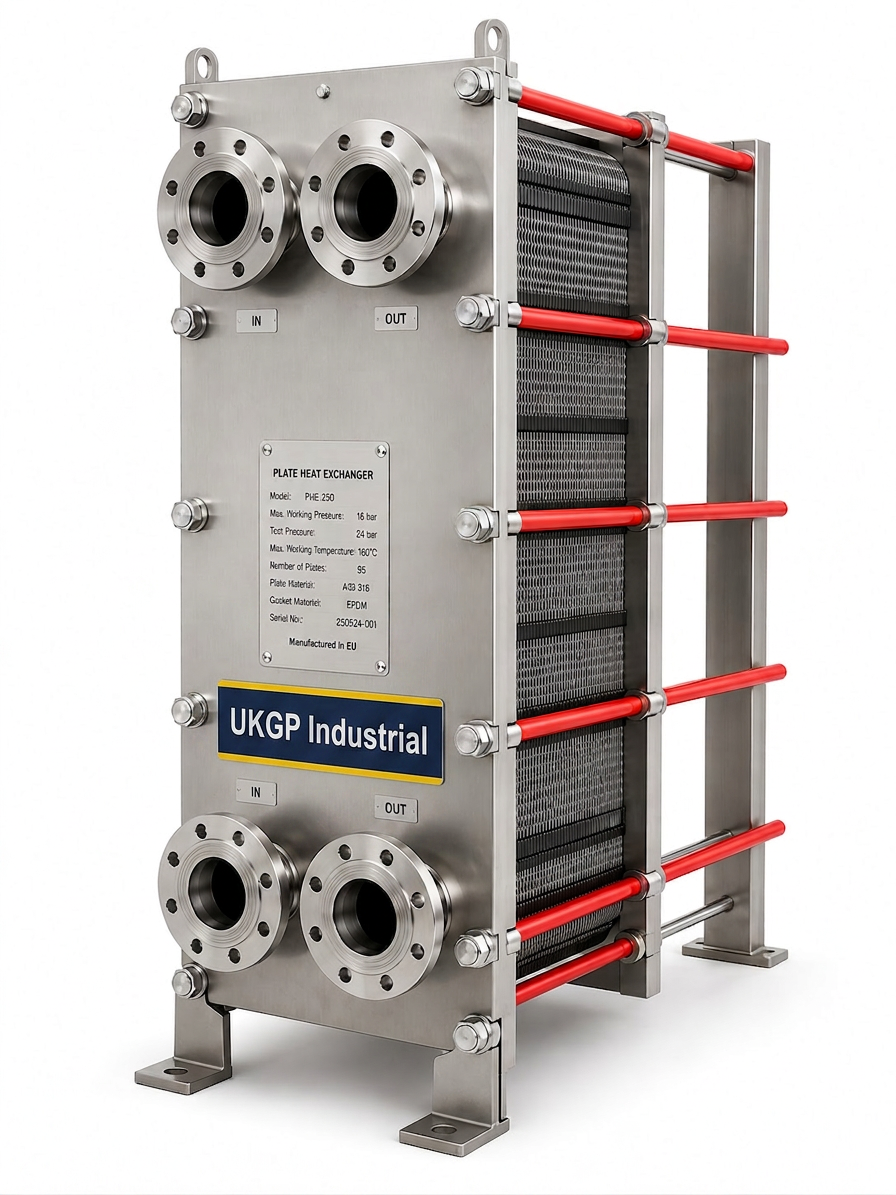
Compliance with BSRIA standards is the benchmark for UK mechanical engineers. BG29 2020 focus on pre-commission cleaning, where a power flushing system might be considered part of the initial cleanup protocol. However, for the operational life of the building, BG50 emphasises the continuous maintenance of water quality. A power flushing system is often insufficient for meeting these long-term standards because it does not provide the ongoing monitoring or fine-particle capture necessary to maintain the strict water chemistry boundaries required for high-efficiency condensing boilers and modern plate heat exchangers which have very narrow plate gaps.
When a system is flushed using a power flushing system, the sudden introduction of fresh, oxygenated water can actually accelerate corrosion if the system is not properly inhibited immediately. Side stream filtration avoids this risk by maintaining a closed-loop environment where the water is continuously polished without the need for large-scale replacement. This is specifically why CIBSE and BSRIA both lean toward the installation of permanent filtration skids. UKGP Industrial skids are designed to make samples easily accessible via BS 8552 compliant sampling points, allowing for accurate laboratory analysis without disrupting the circuit's operation or integrity.
For procurement leads, the decision between a power flushing system and permanent filtration often comes down to risk management. A system that relies on reactive flushing is prone to unexpected outages and expensive emergency repairs. Conversely, investing in a DN50 to DN100 side stream skid—starting from £6,800+VAT—secures the system's thermal efficiency and protects the 2-year warranty on primary plant equipment. It is a commercially aware choice that aligns with the UK's push for more sustainable and energy-efficient building operations, reducing both carbon footprint and total cost of ownership over the life of the HVAC installation.
- Aligns with BG50 continuous monitoring recommendations
- Reduces the risk of oxygen ingress during cleaning
- Supports BS 8552 compliant water sampling protocols
- Protects narrow-gap plate heat exchangers from fouling
Operational Impact and Downtime Considerations
One of the most significant drawbacks of using a power flushing system in a commercial B2B environment is the operational disruption. A full flush often requires the plant room to be partially dismantled or bypassed, leading to lost heating or cooling days for tenants or industrial processes. In a school, hospital, or data centre, this downtime is rarely acceptable. Because a power flushing system operates at high flow rates, it can also disturb settled debris that it cannot fully remove, leading to further clogs in downstream terminal units like fan coil units or radiators shortly after the service is completed.
In contrast, side stream filtration units are installed in parallel to the main flow, meaning they can be serviced, and filters changed, without ever shutting down the building's HVAC system. This 'live' maintenance capability is a major advantage for facilities managers. When you specify a UKGP side stream filtration skid, you are choosing a system that facilitates 100% uptime. Our units are made to order in our Surrey facility, ensuring that every connection and specification meets the exact needs of your plant room layout, reducing on-site installation time and complexity significantly compared to temporary rigs.
If you are currently facing a system that is showing signs of high turbidity or magnetite sludge, consider the long-term benefits of filtration before committing to an expensive power flushing system. At £6,800+VAT, the entry-level cost for a professional-grade skid is often comparable to two or three professional flushing visits, meaning the unit pays for itself within a few years. Furthermore, the 2-year warranty provided by UKGP Industrial guarantees that your investment is protected against manufacturing defects, providing a level of commercial security that a temporary service simply cannot match.
- Eliminates building-wide heating/cooling shutdowns
- Avoids the 'debris relocation' issues of high-flow flushing
- Made-to-order skids ensure perfect plant room integration
- Simplified maintenance with accessible filter housing
Integrating Chemical Dosing and Air Separation
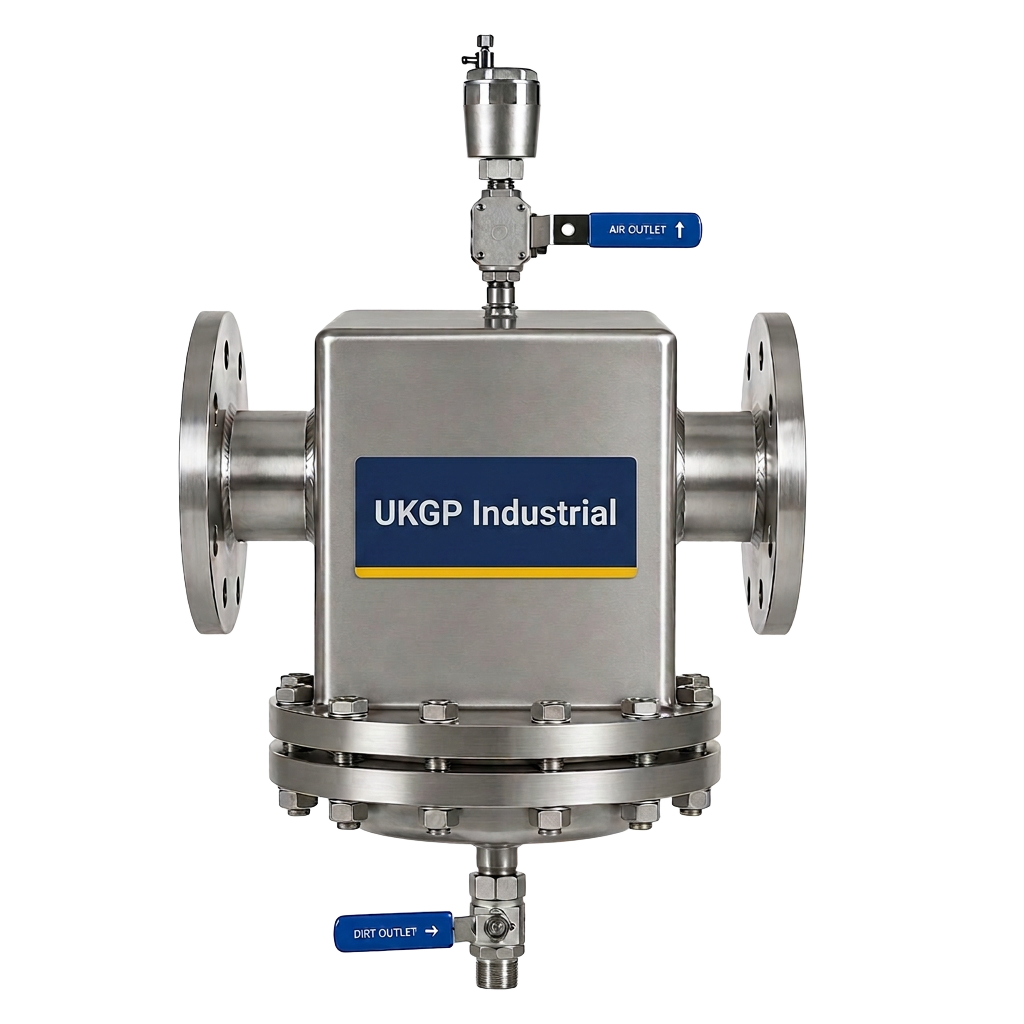
While a power flushing system focuses on the physical removal of sludge, it often ignores the corrosive gasses and chemical imbalances that create the sludge in the first place. For a truly healthy HVAC system, filtration must be paired with effective air and dirt separation and precise chemical dosing. By installing an air and dirt separator alongside your filtration skid, you remove microbubbles that cause internal oxidation. This multi-pronged approach treats the cause of the problem, whereas a power flushing system only treats the symptoms. This integrated strategy is the expert recommendation for any consultant drafting a new-build or retrofit specification.
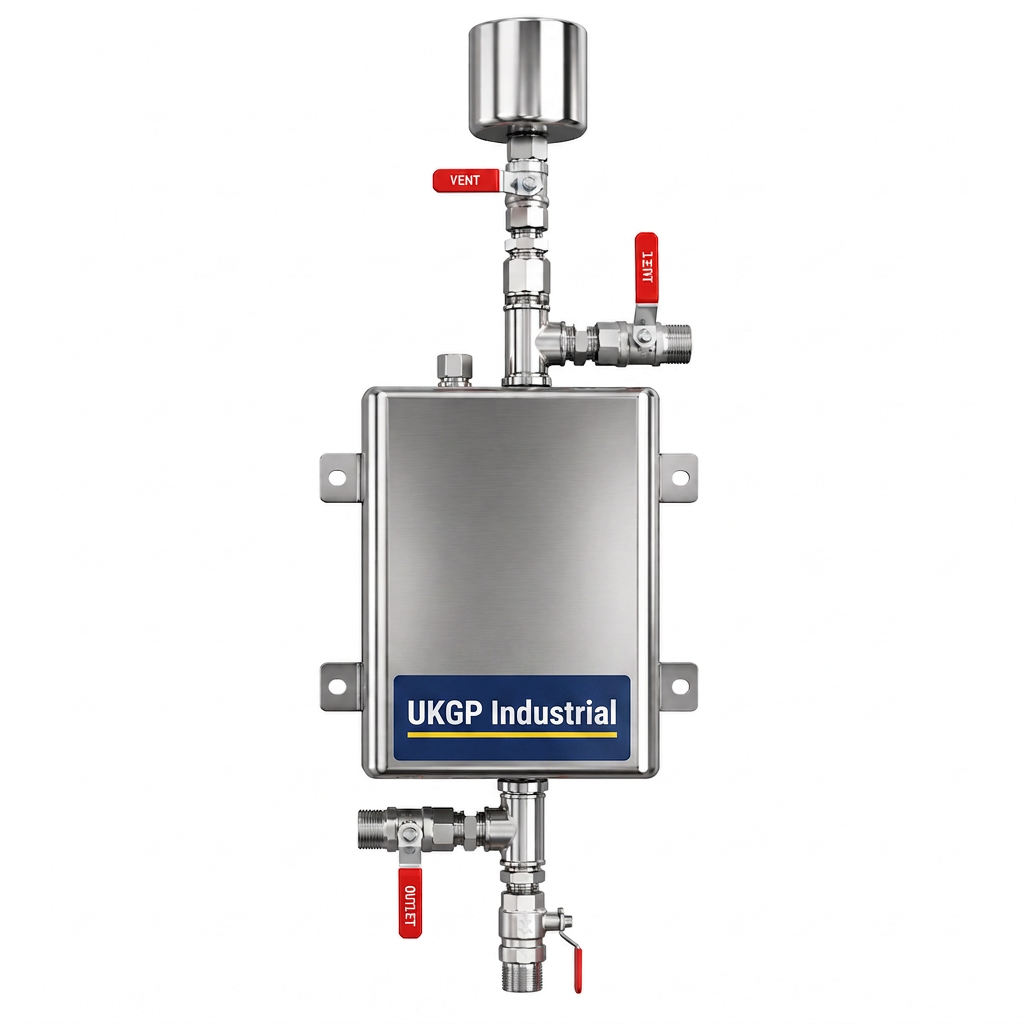
Chemical dosing pots are another vital component. After a power flushing system has completed its cycle, the system must be manually dosed with inhibitors. A permanent filtration skid often includes a dosing pot in the assembly, allowing for easy, controlled maintenance of inhibitor levels as per BS 8552 guidelines. This ensures the water chemistry remains stable and the 'passivation' layer on the internal pipework remains intact. UKGP Industrial provides these components as part of a comprehensive plant room solution, ensuring that every aspect of the water's physical and chemical state is under control for years to come.
When procurement leads compare a one-off power flushing system fee to a full UKGP treatment package, they must consider the life extension of the boilers and pumps. Preventing the 'black water' associated with untreated systems protects expensive VFD pumps and keeps heat exchangers performing at their rated efficiency. With most units made to order in 6-8 weeks, planning for a permanent installation allows for a professional, commissioned solution rather than a rushed emergency flush. Contact our Surrey-based technical team for a detailed quote on a DN50 to DN100 skid tailored for your specific system volume.
- Removes corrosive microbubbles via air separation
- Simplifies chemical inhibitor maintenance via dosing pots
- Protects expensive VFD pumps from abrasive magnetite
- Ensures long-term stability of system water chemistry
Conclusion: Choosing the Superior Technical Option
In summary, while the power flushing system remains a tool in the engineer's kit for extreme restoration cases, it is no longer the preferred method for modern B2B water quality management. The shift toward permanent, high-efficiency side stream filtration is driven by the need for energy efficiency, compliance with BSRIA BG50, and the avoidance of costly system downtime. For building services consultants and plant room engineers, the evidence is clear: continuous polishing of system water is the only way to ensure the 20-plus year lifespan of modern HVAC components and maintain optimal thermal performance.
UKGP Industrial stands ready to support your next project with our range of made-to-order filtration skids. Starting from £6,800+VAT, our solutions provide a robust, British-made alternative to the periodic costs and risks of an external power flushing system. By choosing our DN50 to DN100 range, you benefit from a 2-year warranty and a product designed specifically for the rigours of UK plant rooms. Our lead times of 6-8 weeks mean you can schedule your system upgrades with confidence, knowing you are installing a solution that will protect your assets for the long haul.
Don't wait for your heat exchangers to block or your pumps to fail. Move beyond the limitations of a reactive power flushing system and invest in a permanent filtration strategy that pays dividends in reduced energy bills and maintenance hours. Whether you are leading a large-scale commercial retrofit or managing a critical infrastructure site, our technical team in Surrey is available to provide the expert advice and high-specification hardware you need. Request a quote today for a UKGP side stream filtration skid and secure the future of your heating and cooling systems.
- Sustainable 20-year asset protection strategy
- Lower lifecycle costs compared to frequent flushing
- High-specification UK manufacturing and support
- Proven ROI through energy and maintenance savings
Frequently asked questions
Is a power flushing system necessary for new-build systems?
- Per BSRIA BG29, a dynamic flush is part of pre-commission cleaning, but it is not a replacement for permanent side stream filtration which maintains water quality throughout the system's operational life.
What is the typical cost of a commercial filtration skid?
- UKGP Industrial provides made-to-order side stream filtration skids starting from £6,800+VAT (DN50 to DN100 models), which offer a far higher ROI than repeated reactive flushing.
How long does it take to get a UKGP filtration skid?
- Our units are manufactured in the UK with a standard lead time of 6-8 weeks, ensuring they are built to the specific technical requirements of your project.
Does a power flushing system remove all magnetite?
- No, it often only removes the larger debris. Small, sub-micron particles will remain and eventually settle once flow velocities return to normal, which is why continuous sidestream filtration is required.
What warranty is provided with UKGP filtration units?
- All our commercial side stream filtration skids come with a comprehensive 2-year warranty, providing security for contractors and end-users alike.