The Engineering Case for Power Flushing London
In the demanding environment of London's commercial properties, HVAC systems are frequently subjected to high operational pressures and diverse water chemistries. Power flushing London is the essential mechanical process of circulating high-velocity, low-pressure water through a closed-loop system to dislodge sludgy deposits and corrosion remnants. These particulates, primarily magnetite (black iron oxide), settle in low-flow areas such as plate heat exchangers and boiler headers, significantly increasing thermal resistance. By commissioning a specialist power flushing London project, plant room engineers can restore the intended flow rates and heat transfer coefficients, ensuring the primary plant operates within its design parameters and reducing the risk of premature component failure.
The necessity of power flushing London is further underscored by the age and complexity of many metropolitan district heating schemes and multi-storey office blocks. Over time, oxygen ingress and galvanic corrosion lead to a buildup that standard chemical dosing cannot always reach. A comprehensive flush effectively prepares the internal surfaces for the application of passivating inhibitors. Without this mechanical intervention, new high-efficiency boilers and chillers are vulnerable to immediate contamination from legacy debris, which can void manufacturer warranties and lead to costly downtime during peak demand. Engineers must treat the flushing process as a critical remedial stage before implementing long-term water treatment strategies recommended under BS 8552 guidelines.
Furthermore, the commercial implications of postponing power flushing London are substantial. Increased pumping energy, reduced heat transfer efficiency, and the potential for flow-induced vibrations can lead to a 10-15% increase in annual energy expenditure. For procurement leads managing large portfolios, the return on investment for a professional flush is realised through lower utility bills and extended lifecycle for expensive plant assets. By removing the insulating layer of scale and sludge, the system return temperatures are lowered, allowing modern condensing boilers to operate in their most efficient mode. This alignment with decarbonisation targets is a key driver for upgrading plant room maintenance schedules to include periodic deep-cleaning cycles.
- Restores design flow rates across complex commercial circuits
- Prevents localised overheating in primary heat exchangers
- Reduces pumping energy requirements by eliminating blockages
- Essential precursor for BSRIA BG29 pre-commission cleaning
- Minimises the risk of oxygen-pitting on pipework internal walls
Aligning Power Flushing with BSRIA Standards
While power flushing London provides an immediate remedy for fouled systems, the British Building Services Research and Information Association (BSRIA) provides the framework for long-term health via BG29 (Pre-commission cleaning) and BG50 (Water treatment for closed-loop systems). These standards emphasise that mechanical cleaning is only one part of the equation. To maintain the cleanliness achieved during a flush, a system must be equipped with continuous filtration. Post-flush, the water may appear clear, but microscopic particulates continue to circulate, acting as an abrasive that wears down pump seals and sensor probes. Integrating side-stream technology ensures that the results of the flush are preserved indefinitely, preventing the re-formation of magnetite clusters.
The transition from a reactive power flushing London mindset to a proactive maintenance strategy involves monitoring key indices like dissolved oxygen, conductivity, and pH levels. BS 8552:2012 provides the sampling protocols required to verify if the system has been sufficiently cleaned. If the iron levels remain high after a flush, it indicates that internal corrosion is still active or that the cleaning velocity was insufficient to lift heavy deposits. In such cases, the installation of a high-performance filtration unit becomes non-negotiable. This unit acts as a secondary line of defence, capturing any remaining debris that was missed during the high-velocity flush or that has been liberated as pipes expand and contract.
For M&E contractors, documenting the alignment with these standards is vital for handovers. A successful power flushing London programme should be accompanied by a water analysis report that proves the system is within the BSRIA-recommended chemical and particulate limits. This documentation protects the installer and provides the end-user with a clean baseline for their maintenance records. By adopting a 'clean and maintain' philosophy, commercial sites can avoid the cycle of frequent remedial flushes and instead focus on minor preventative adjustments. The goal is to move beyond the emergency flush toward a state of constant system clarity and operational reliability through engineered filtration solutions.
- Adherence to BSRIA BG29 for new system installations
- Compliance with BG50 for life-extension of legacy systems
- Verification through BS 8552 water quality sampling
- Documented iron levels and turbidity post-cleaning
- Strategic application of corrosion inhibitors after mechanical flush
The Role of Side Stream Filtration Post-Flush
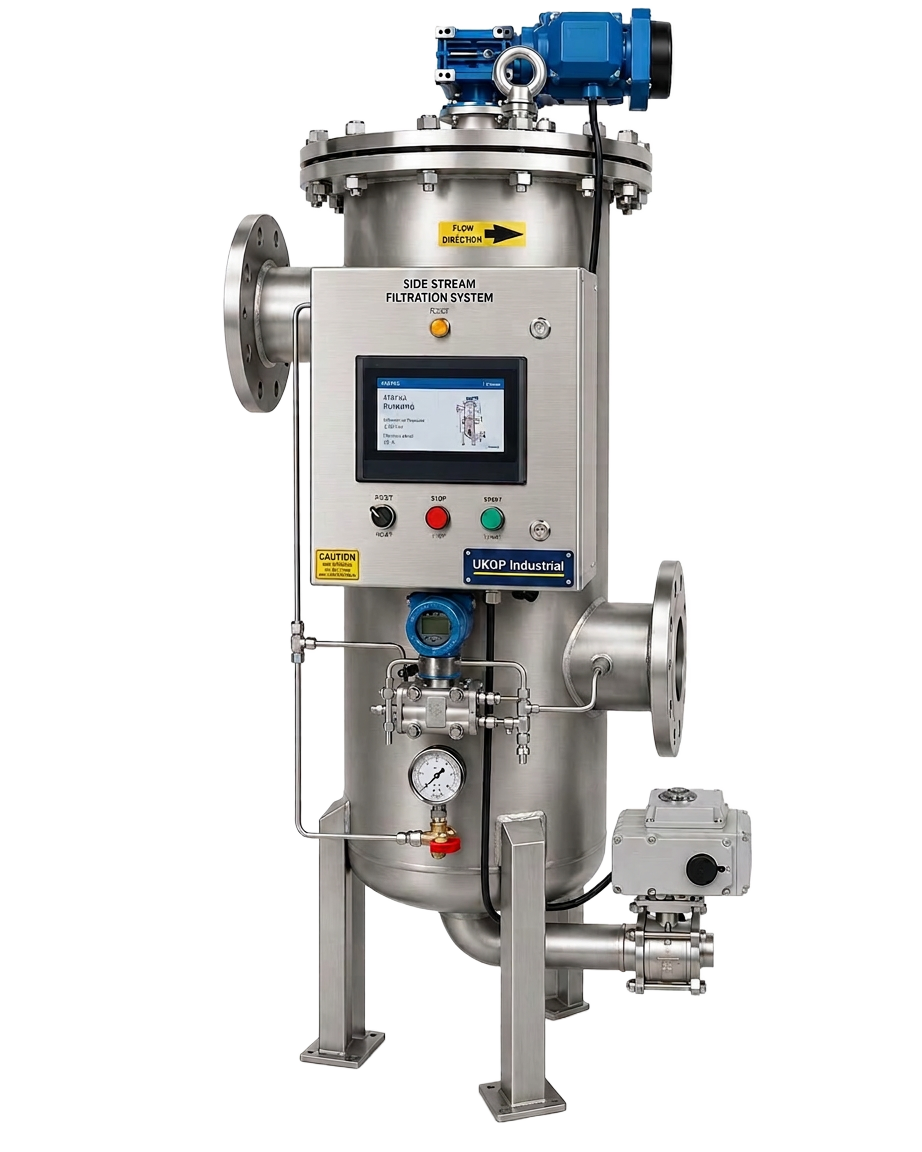
Even the most thorough power flushing London service cannot remove 100% of accumulated debris, particularly in large-scale systems with stagnant dead-legs. This is where the UKGP side stream filtration skid becomes indispensable. Designed to handle flow rates from 5 to 50 m³/h, our skids provide continuous cleaning by diverting a fraction of the system water through a dual-action filtration process. By combining a high-intensity magnetic core with a 25 µm bag or cartridge filter, the skid captures both magnetic and non-magnetic contaminants that the initial power flush might have left suspended. This ensures that the water quality remains high, protecting sensitive downstream components from fouling and maintaining the cooling or heating performance.
Our skids are BSRIA BG29/BG50 aligned and come fully skid-mounted with isolation valves for easy integration into existing plant rooms. When installed following a power flushing London project, the skid acts as a continuous polishing unit. Unlike bypass filters that only catch larger debris, our 25 µm media is fine enough to capture the microscopic silt that causes the most damage to variable speed pump bearings. With a 2-year warranty and a design optimized for the UK market, the UKGP skid is the professional's choice for ensuring that a costly flush provides lasting value. Moving from a single-point cleaning event to continuous protection is the hallmark of modern building services engineering.
Integrating a UKGP side stream filtration unit also simplifies the maintenance routine for facility managers. Rather than needing to shut down or isolate large sections of the plant for a repeat power flushing London session, maintenance crews can simply replace the filter bags or clean the magnetic rod while the system remains fully operational. This reduces service costs and ensures there is no disruption to building occupants. For London-based facilities where uptime is critical, this infrastructure investment is essential. We encourage consultants to specify these skids as a standard requirement in all boiler room refurbishments to provide the necessary peace of mind regarding water high-clarity and system longevity.
- Magnetic and 25 µm mechanical filtration for total debris removal
- Skid-mounted design for rapid on-site installation and commissioning
- Standard range covering 5 m³/h to 50 m³/h for all plant sizes
- Integrated isolation valves for zero-downtime maintenance cycles
- Full 2-year warranty ensuring long-term asset protection
Protecting Critical Plant Components
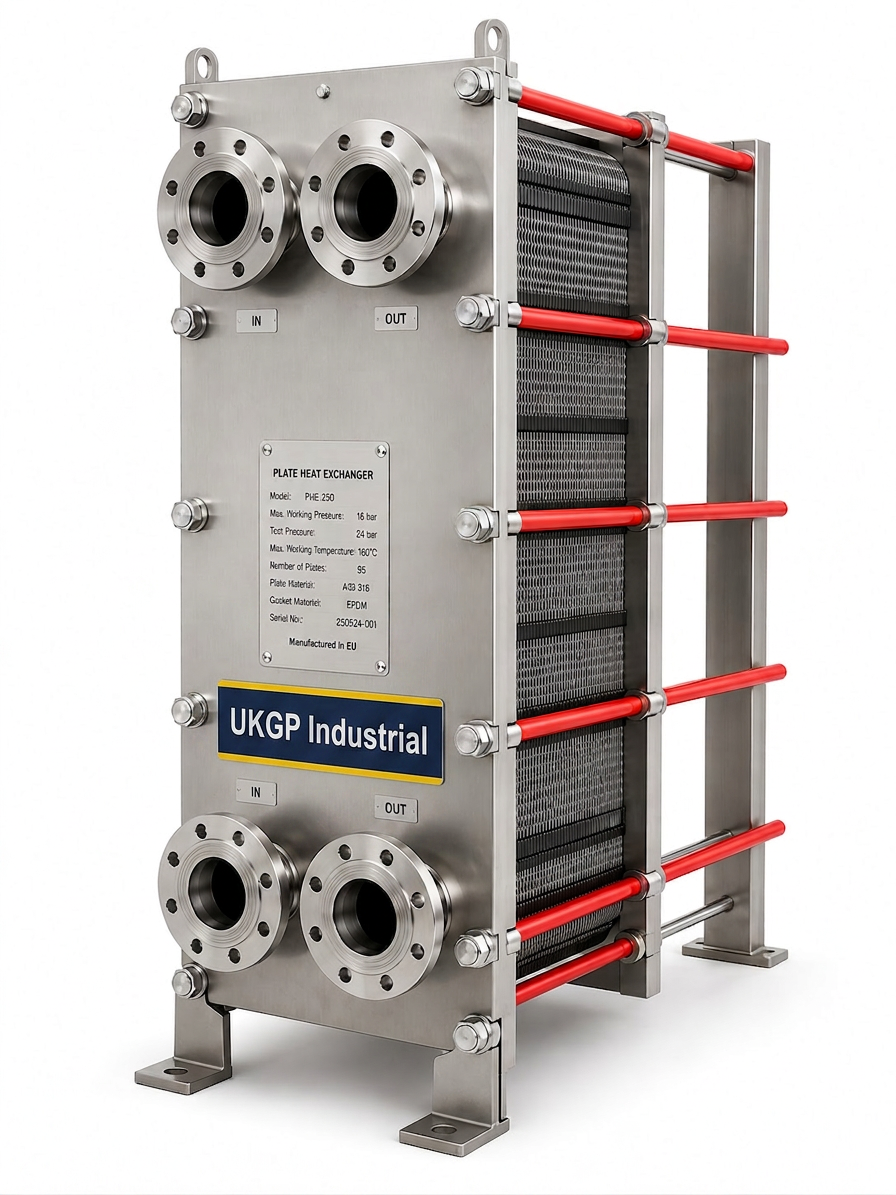
The impact of a power flushing London exercise is most visible when looking at the performance of plate heat exchangers and boiler headers. These components feature narrow channels where water velocity can drop, allowing suspended solids to settle and form scale or sludge blankets. This fouling reduces the effective surface area available for heat transfer, forcing primary boilers to run hotter and longer to meet setpoint temperatures. By removing these deposits through a professional flush and then maintaining the water quality with a UKGP plate heat exchanger, you ensure that the primary and secondary circuits remain hydraulically separate and hygienically clean, preventing cross-contamination and preserving efficiency.
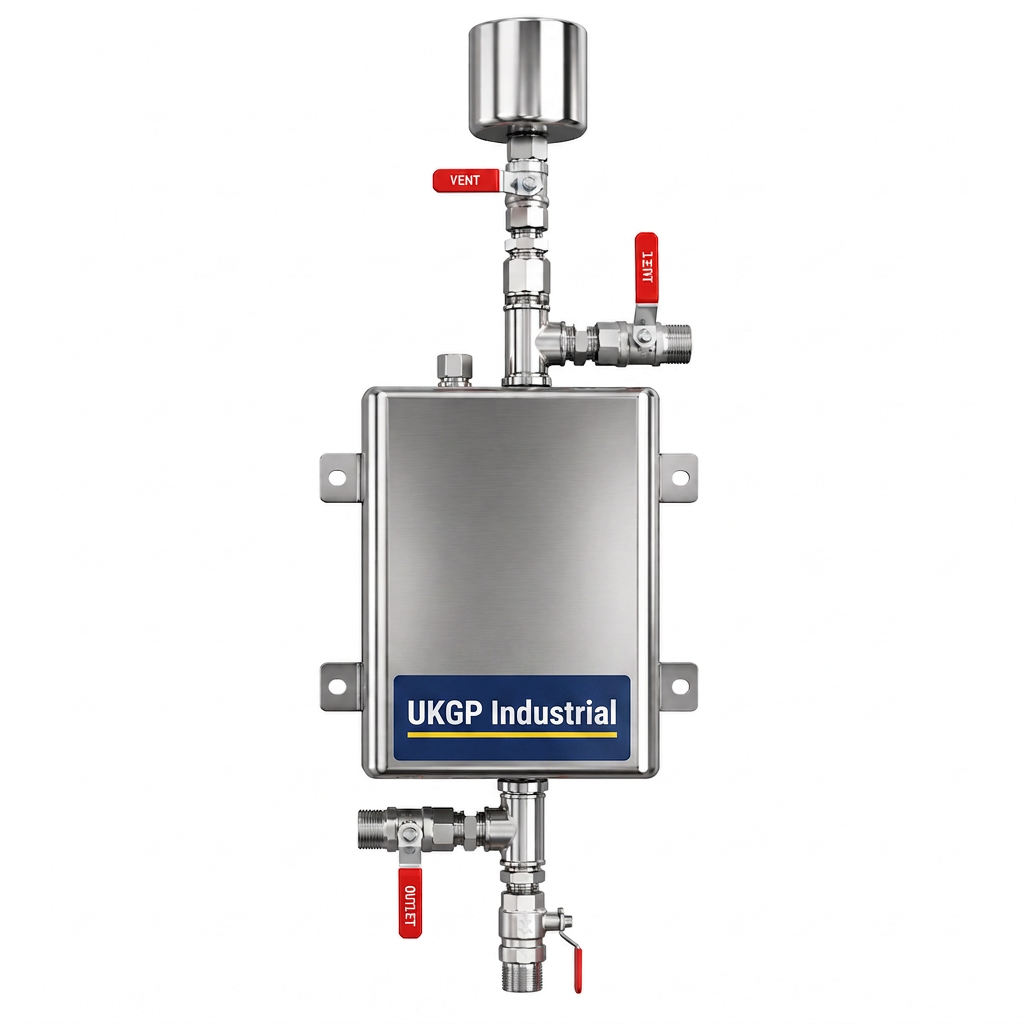
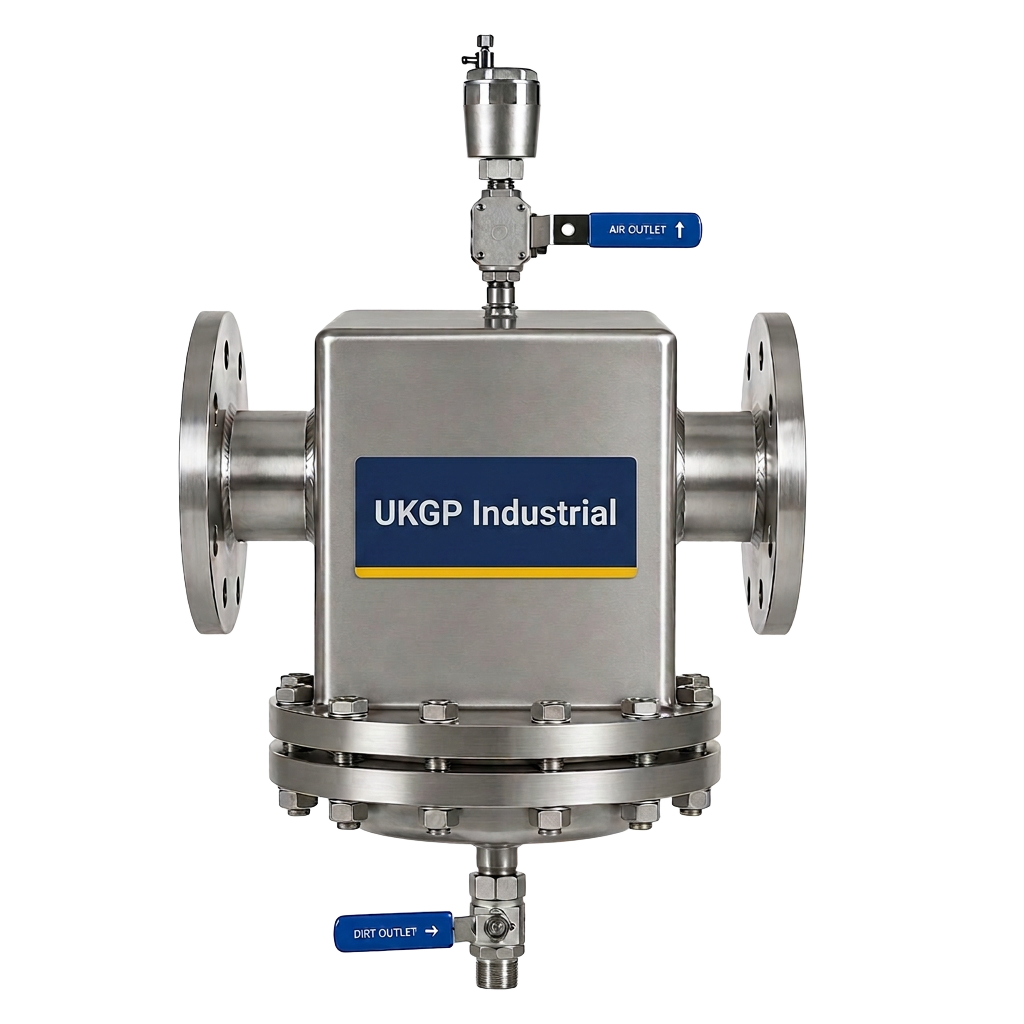
In addition to heat exchangers, expansion bellows and air & dirt separators are highly sensitive to the water quality achieved after power flushing London. Magnetite accumulation can impair the flexibility of bellows and clog the venting mechanisms of separators, leading to system pressurisation issues and air locks. By ensuring the system is cleanly flushed and then filtered, these components can perform their vital roles in managing thermal expansion and removing microbubbles without interference from grit. A holistic approach to system health considers every valve and sensor, ensuring that the heavy investment in high-efficiency plant is not undermined by poor water hygiene or mechanical blockage.
For plant room engineers, the integration of pH sensors & transmitters provides the final layer of visibility. Following a power flushing London intervention, monitoring the pH level is crucial to ensure that the chemical balance is correct to prevent further corrosion. If the pH drift is not caught early, the results of the flush can be undone within months. Automated dosing pots and real-time monitoring allow for precise control of the system chemistry. When these technologies are paired with high-quality filtration, the need for future remedial flushing is virtually eliminated, providing a stable and predictable environment for the building's mechanical services to operate within for decades.
- Prevents fouling in narrow-channel plate heat exchangers
- Protects expansion bellows from abrasive internal wear
- Ensures air & dirt separators remain clear for optimal venting
- Maintains the accuracy of pH sensors and flow transmitters
- Extends the service life of high-efficiency commercial boilers
Executing a Sustainable Flushing Strategy
Sustainability in London's built environment is about more than just energy; it is about resource management. A professional power flushing London strategy reduces the volume of water wasted through frequent blow-downs and system drains. When a system is properly cleaned and filtered, the water remains chemically stable for longer, reducing the environmental impact of chemical disposal. As BREEAM and LEED certifications become the standard for London developments, demonstrating a high-efficiency HVAC maintenance plan that includes proper mechanical cleaning and side stream filtration is essential for compliance and corporate social responsibility targets.
Choosing a local expert for power flushing London also ensures that the waste water is handled according to Thames Water and local council regulations. Discharging highly concentrated sludge and chemicals into the sewers requires specific permits and neutralization steps. A professional service provider will ensure that all effluent is treated correctly, protecting the local environment and ensuring the building owner is not liable for environmental infractions. This level of professional oversight is what separates a standard residential-grade flush from a true commercial-grade plant room remediation project, which is what large-scale London HVAC systems require to function correctly.
Finally, the move toward low-temperature heating systems, such as those fed by heat pumps, makes the cleanliness achieved by power flushing London even more critical. Low-temperature systems have a much narrower margin for error regarding heat transfer efficiency. Any buildup on heat emitters or in the plant room will have a disproportionate effect on the system's ability to maintain comfort levels. Therefore, as London transitions away from traditional gas-fired plant to more sensitive renewable technologies, the demand for high-velocity flushing and ultra-fine filtration will only increase. Preparation today via a UKGP filtration skid ensures your facility is ready for the future of heating.
- Reduces water consumption by eliminating frequent blow-downs
- Ensures compliance with environmental discharge regulations
- Supports BREEAM 'Management of Water Quality' credits
- Future-proofs systems for low-temperature renewable integration
- Reduces the carbon footprint of the building’s HVAC operations
Technical Specifications and Procurement
When specifying power flushing London services, procurement leads must look for contractors who utilize high-flow pumping equipment capable of reaching the Reynolds numbers required for turbulent flow. Standard domestic pumps are insufficient for moving the volumes of water found in commercial headers or low loss headers. The process should be systematic, isolating individual zones or circuits to ensure maximum velocity is achieved in every branch. This is the only way to ensure that heavy magnetite is effectively lifted and transported to the purge point. The use of thermal imaging during the flush can also help identify cold spots where blockages are occurring in real-time.
Post-flushing, the procurement of a UKGP side stream filtration skid should be viewed as an insurance policy. With options for magnetic cores and 25 µm bags, these units are sized to circulate the entire system volume several times a day. This 'polishing' effect is what maintains the clarity required by major UK commercial boiler OEMs to uphold their product warranties. When requesting a quote, specify the system's total water volume and the required flow rate (between 5 and 50 m³/h) to ensure the skid is correctly matched to your plant room's needs. All our units are built to withstand the rigours of a busy commercial environment.
In conclusion, the health of London's HVAC systems depends on a rigorous approach to water hygiene. Starting with a comprehensive power flushing London program to clear legacy debris, followed by the installation of a UKGP side stream filtration skid, provides the ultimate protection for your investment. This dual-pronged approach ensures compliance with BSRIA BG29 and BG50, reduces energy costs, and prevents the unplanned outages that can be so disruptive in a city that never stops. Contact our Surrey-based technical team today to discuss your project requirements or to request a detailed specification for our high-performance filtration solutions.
- High-velocity pumping for turbulent flow in large bore pipes
- Zone-by-zone isolation for targeted debris removal
- Thermal imaging verification of restored circulation
- Integration of 25 µm filtration to prevent re-contamination
- Alignment with manufacturer warranty requirements for water clarity
Frequently asked questions
How long does a commercial power flushing London project take?
- Duration depends on system size and contamination levels. A typical commercial plant room may take 2-5 days to flush thoroughly using high-velocity equipment while following BSRIA guidelines.
Why is side stream filtration needed after power flushing London?
- Power flushing is a one-time event; side stream filtration provides 24/7 protection. It captures fine 25 µm particles and magnetite that are liberated during normal operation following the initial flush.
Will power flushing London fix cold spots in my radiators or AHUs?
- Yes, by generating high-velocity turbulent flow, power flushing dislodges the sludge that causes cold spots, restoring full thermal output to heat emitters and air handling units.
Does UKGP provide equipment for power flushing London?
- We provide the essential permanent filtration equipment, such as side stream filtration skids and dosing pots, that should be installed alongside or after a power flush to maintain system cleanliness.
What are the signs that my London plant room needs a power flush?
- Key indicators include high iron levels in water samples, noisy pumps, frequent heat exchanger scaling, and a noticeable drop in Delta T across the primary plant.