Why Power Flushing Central Heating System Assets is Critical
In a commercial environment, the accumulation of magnetite, scale, and biological growth can severely impede the thermal performance of your HVAC infrastructure. Opting for power flushing central heating system components is often the first line of defence when radiators are cold at the bottom or when plate heat exchangers become frequently blocked. Unlike domestic systems, commercial circuits involve higher volumes and more complex pipework configurations, meaning a standard flush may not suffice to move heavy settlement. Neglecting this process leads to increased fuel consumption, higher carbon emissions, and the potential for a catastrophic pump or boiler failure that could have been avoided with proactive thermal fluid management and filtration.
From a commercial buyer's perspective, the decision to invest in a power flushing central heating system service or equipment should be based on a thorough water analysis. BS 8552 provides the framework for sampling and monitoring, which identifies whether your system is suffering from active corrosion or simply historical debris. If left unaddressed, the operational costs of ignoring dirty system water far exceed the initial outlay for a professional flush. Furthermore, many UK boiler manufacturers now mandate that the system be cleaned to BSRIA BG29 standards to maintain the validity of their commercial warranties, making the flushing process a mandatory step in any refurbishment or lifecycle replacement project.
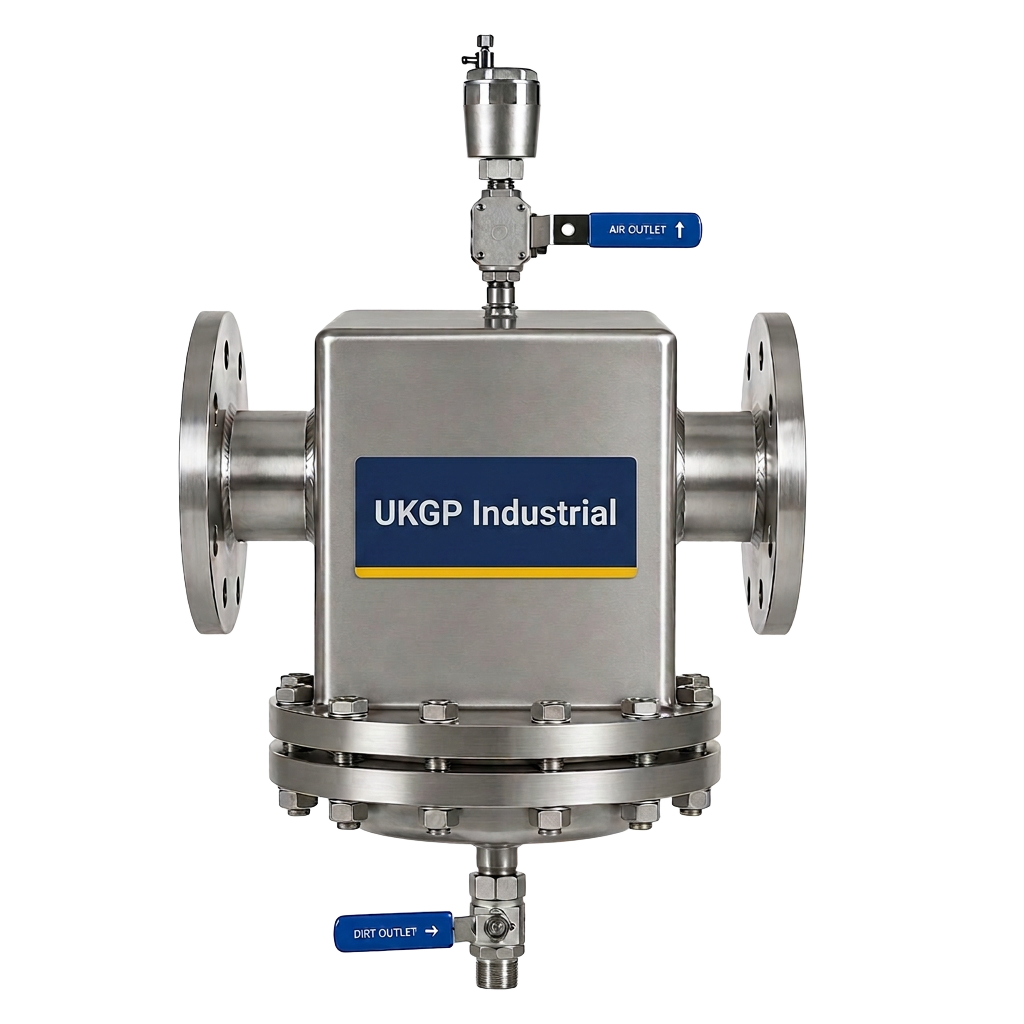
When planning a flush, consider the lead times for necessary remedial equipment. At UKGP Industrial, we support these projects with made-to-order solutions delivered globally from our Surrey base. We recommend integrating high-quality equipment such as our air and dirt separators to maintain the cleanliness achieved during the flush. By stabilising the water chemistry post-flush, you prevent the rapid re-accumulation of magnetite. Commercial buyers should be aware that while a flush cleans the system, only permanent filtration solutions can keep it clean in the long term, thereby protecting the significant capital investment made in the central plant and distribution pipework across the building.
- Restores design heat output across all terminal units
- Significantly reduces the risk of pump cavitation and wear
- Ensures compliance with British Standards and manufacturer warranties
- Lowers energy bills by improving heat transfer efficiency
- Extends the lifespan of critical plant room assets
Adhering to BSRIA BG29 and BG50 Standards
Engineers must strictly follow BSRIA BG29/2021 for pre-commissioning cleaning and BG50/2021 for the ongoing water treatment of closed heating and cooling systems. These documents outline the best practices for power flushing central heating system pipework to ensure that hydraulic balance is maintained and that corrosive contaminants are eliminated. A professional flush involves high-velocity water movement, often augmented by chemical cleaners, to mobilise settled solids. Without following these structured guidelines, there is a high risk that debris will simply relocate rather than be removed, leading to localized blockages in sensitive components like control valves and small-bore pipework which can be extremely costly to remediate once a building is occupied.
A critical aspect of the BG50 guidance is the emphasis on continuous monitoring and the use of sidestream devices to capture solids that a one-time flush might miss. While power flushing central heating system circuits provides a 'reset' for the water quality, the ongoing ingress of oxygen or the presence of dissimilar metals can trigger new corrosion cycles almost immediately. This is particularly relevant in larger Surrey commercial estates where expansion bellows or older iron pipework might contribute a steady stream of particulates. Therefore, procurement leads should look for sub-contractors who provide full reporting, including pre-flush and post-flush water samples, to verify that the system has reached the target turbidity and iron levels required.
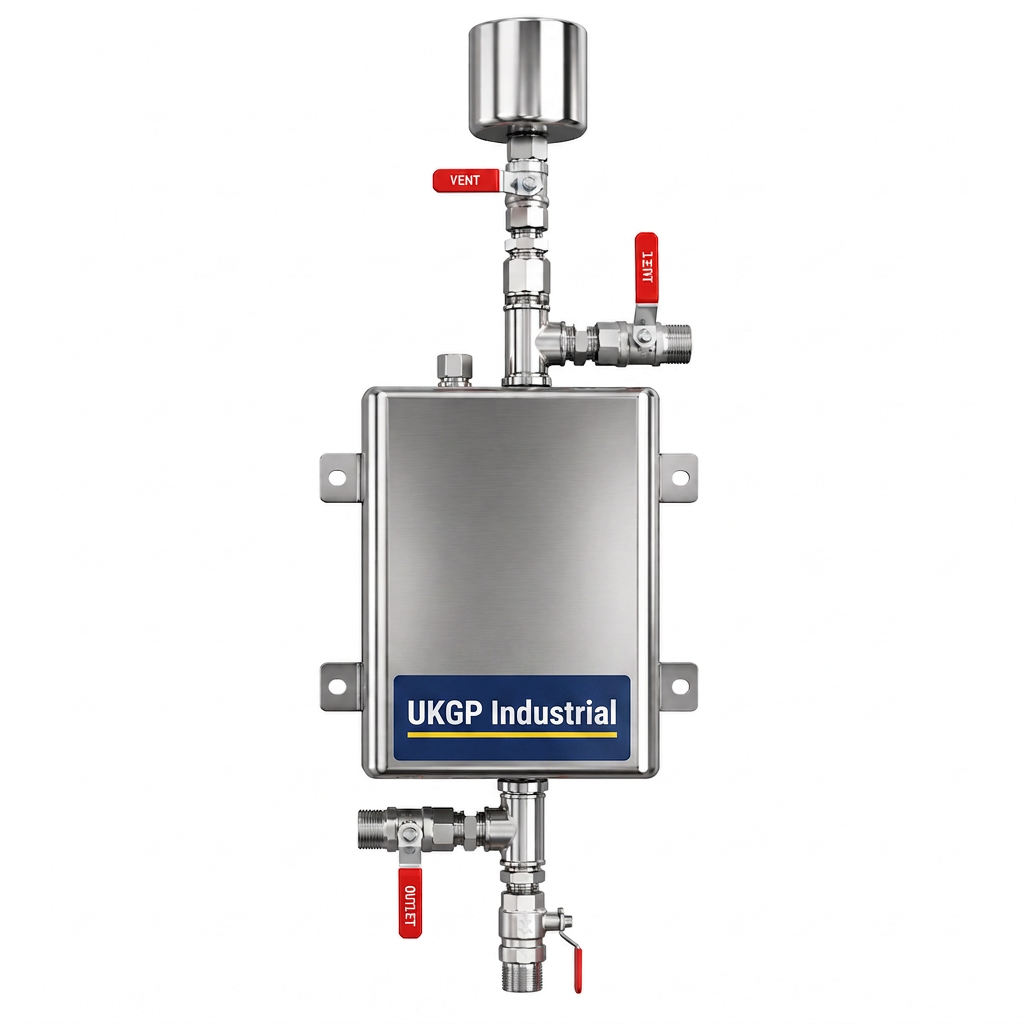
As part of a holistic maintenance strategy,UKGP suggests that after a power flush, systems should be protected by a chemical dosing pot to ensure inhibitors are kept at the correct concentration. These pots allow for the safe introduction of chemicals without shutting down the system. For M&E contractors, specifying a UK-manufactured dosing pot ensures that the build quality meets British standards for high-pressure applications. When managing a large-scale project, ensure that your flushing contractor is using industrial-grade pumps capable of achieving the minimum 0.5 to 1.5 metres per second flow velocity required to lift particulates in commercial-size mains, as domestic-grade power flushing machines are rarely adequate for these environments.
- BG29 covers pre-commission cleaning of new installations
- BG50 provides guidance on maintenance for legacy systems
- Verifiable water sampling is essential for audit trails
- Minimum flow velocities must be met to ensure effective debris lift
- Chemical inhibitors are vital to prevent post-flush oxidation
The Role of Side Stream Filtration Post-Flush
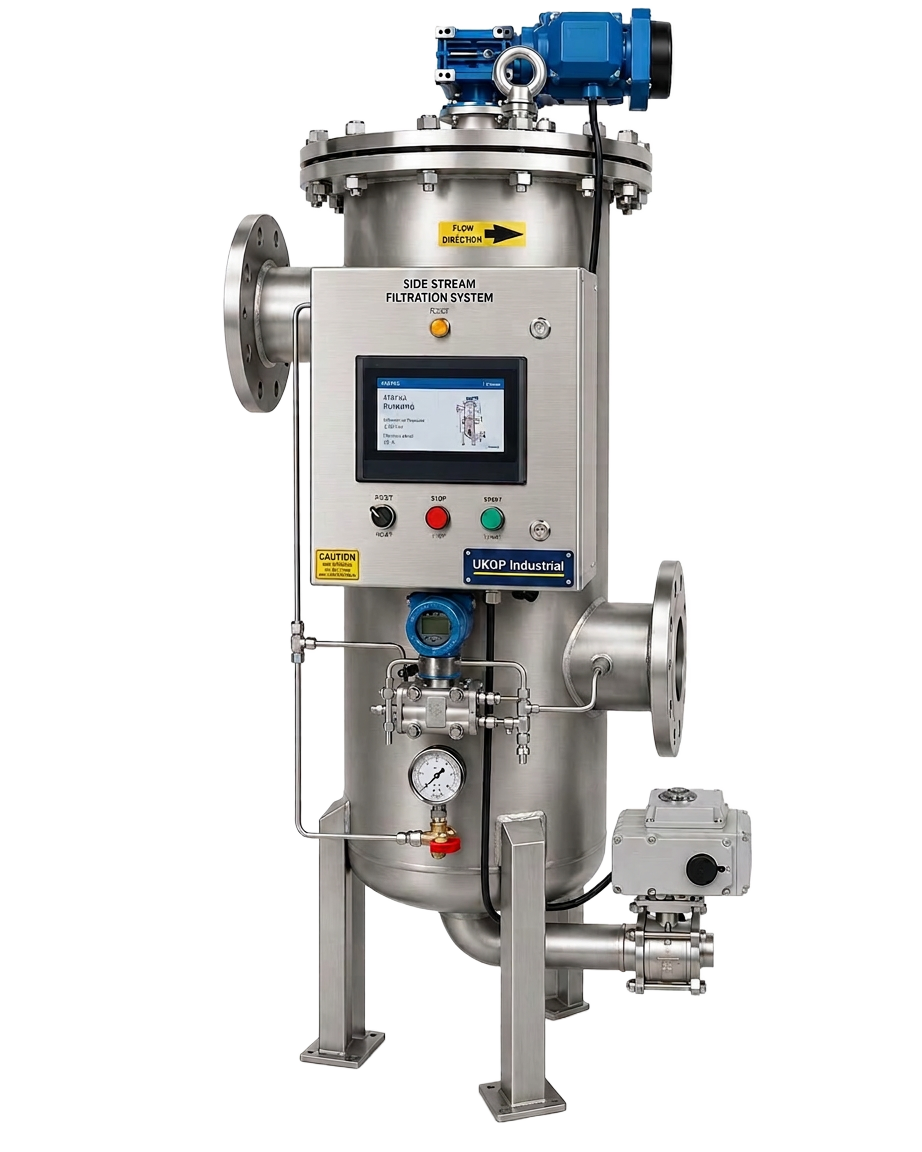
Even the most thorough power flushing central heating system project will rarely remove 100% of internal scale and magnetite. This is why BSRIA recommends the installation of side stream filtration to provide continuous cleaning of approximately 5-15% of the total system volume. After the initial power flush is complete, a side stream filtration skid acts as a permanent guardian, capturing fine suspended solids down to sub-micron levels that traditional strainers would ignore. For commercial systems in the UK, we supply bespoke skids starting from £6,800+VAT. These units are made to order with a typical lead time of 6 to 8 weeks and are essential for maintaining the clarity established during the cleaning phase.
Choosing to install a side stream filtration skid alongside your power flushing central heating system strategy is a commercially wise move for facilities managers looking to reduce long-term O&M costs. Our skids are available in sizes from DN50 to DN100 and come with a comprehensive 2-year warranty for peace of mind. By continuously removing magnetite, you protect your plate heat exchangers (PHEs) from fouling, which is a common cause of efficiency drops in district heating and multi-storey commercial buildings. The cost of a skid is often recouped through reduced chemical usage and the prevention of emergency call-outs for blocked pumps or valves, making it a staple for any high-specification plant room refurbished to modern standards.
When requesting a quote, specify whether you require manual or automatic backwash functionality for your filtration skid. A UKGP side stream filtration unit is designed for ease of maintenance, allowing engineers to clean the filter media without isolating the entire heating loop. For contractors working to tight deadlines, we recommend planning for these units well in advance of the power flushing central heating system schedule. Integrating the skid into the return line before the boilers or PHEs ensures that any remaining particulates from the flush are trapped before they can cause damage. Reach out to our Surrey technical team today to discuss your project specifics and receive a tailored quote for your DN50 or DN100 filtration requirements.
- Continuously removes particles down to sub-micron levels
- Prices starting from £6,800+VAT for industrial quality
- Available in DN50 to DN100 sizes for diverse flow rates
- Reduces frequency of manual system cleaning and chemical dosing
- Protects expensive plate heat exchangers from magnetite fouling
Protecting Assets: Plate Heat Exchangers and Bellows
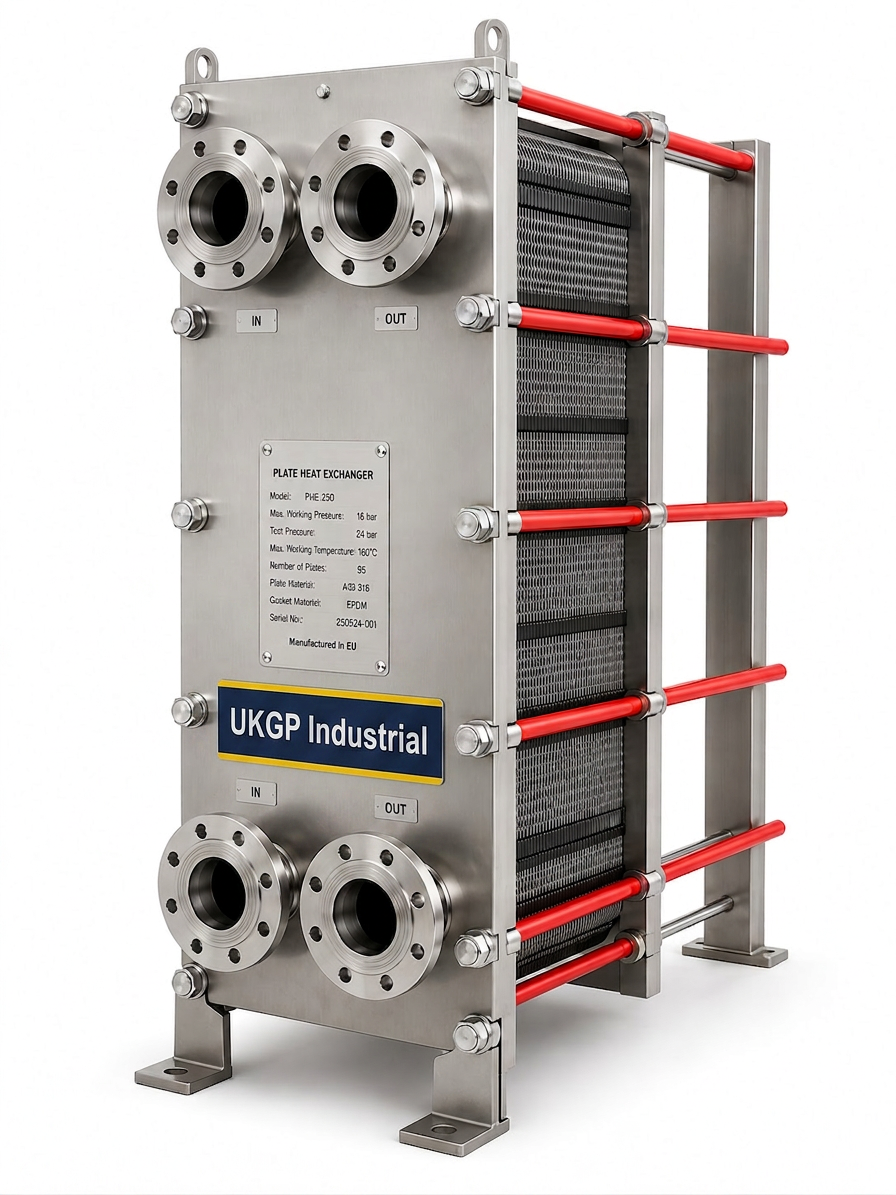
Commercial heating systems often utilise plate heat exchangers to separate primary and secondary circuits. These components have narrow channels that are highly susceptible to clogging if the power flushing central heating system process is not performed correctly or if debris is reintroduced. A blocked heat exchanger will result in poor delta-T performance and increased strain on the primary pumps. By ensuring the system is pristine and protected by high-efficiency separators, you can maintain the high turbulence required within the PHE plates for optimal heat transfer. UKGP offers advice on both the cleaning of existing units and the procurement of new, high-performance plate heat exchangers for plant room upgrades.
Another often-overlooked component in the flushing process is the expansion bellows. These flexible sections are designed to handle thermal expansion but can become traps for sludge and sediment if the system velocity is low. During a power flushing central heating system operation, it is important to ensure these areas are properly agitated or that the flush bypasses certain sensitive expansion joints to avoid damage from high-velocity particulates if they are already compromised. Replacing worn bellows with high-quality UKGP units after a flush is an excellent way to ensure the physical integrity of the pipework matches the improved quality of the water flowing through it, preventing future leaks and pressure losses.
In Surrey and throughout the UK, the move towards low-temperature heating systems (such as heat pumps) makes water cleanliness even more vital. Heat pump exchangers are notoriously intolerant of contaminants compared to old cast-iron boilers. Therefore, performing a power flushing central heating system clean is no longer an optional task but a technical necessity for modern HVAC integration. If you are a procurement lead or an M&E contractor, ensuring your bill of quantities includes both the flushing services and the permanent filtration equipment is key to delivering a project that remains efficient for its entire 20-30 year design life, rather than seeing performance degradation within the first 24 months of operation.
- Narrow PHE channels require clean water to avoid performance loss
- Expansion bellows should be inspected for integrity post-flush
- Low-temperature systems are hyper-sensitive to magnetite
- Proper hydraulic separation prevents cross-contamination of circuits
- Bespoke UKGP components ensure compatibility with industrial pressures
Operational Logistics and Procurement Considerations
Executing a power flushing central heating system plan requires careful coordination to minimize building downtime. For commercial offices or hospitals, this often means out-of-hours work or phased flushing of specific zones. Buyers should prioritize suppliers and manufacturers who can provide technical datasheets and BIM files early in the design phase to avoid installation clashes. At UKGP Industrial, we understand the pressure of construction schedules, which is why we provide clear communication on our 6-8 week lead times for manufactured items. Our side stream filtration skids and dosing pots are designed for quick site integration, helping contractors stay on track while meeting the rigid demands of BSRIA BG29 and internal quality standards.
The commercial cost of power flushing central heating system assets varies based on the number of radiators, the volume of the pipework, and the degree of contamination. However, the cost of the 'clean' is only one part of the budget; the physical hardware like separators and skids must be accounted for to prevent the need for a repeat flush in three years. When you source a side stream filtration unit from UKGP, you are investing in a Surrey-engineered product that is built to last, backed by a 2-year warranty. We encourage buyers to request a quote that includes all necessary ancillary components, from dosing pots to air separators, to ensure a complete and professional installation that meets the consultant’s original specification.
Finally, remember that the quality of the water used for the final fill is as important as the flush itself. In many UK regions, hard water can lead to rapid scaling if not treated with ions or chemicals during the refilling process. A successful power flushing central heating system project concludes with the system being inhibited and tested to ensure the pH and chemical levels are within the range specified by BSRIA BG50. By combining professional flushing with UKGP’s industrial-grade filtration and dosing equipment, you create a robust heating environment that supports the UK’s net-zero goals through sustained energy efficiency. Contact us today for technical support or to start your order for DN50-DN100 skids and separators.
- Plan for a 6-8 week lead time for bespoke technical skids
- Budget for both the service (flush) and the hardware (filtration)
- Ensure all technicians are familiar with BSRIA BG29/50 standards
- Utilise technical support for correct equipment sizing (DN50-DN100)
- Request detailed water quality reports post-commissioning
Frequently asked questions
How long does a commercial power flush take?
- A commercial power flushing central heating system project can take anywhere from 2 days to 2 weeks depending on system volume, the number of zones, and the level of debris. Unlike domestic flushes, commercial systems require high-capacity pumps and often multiple injection points to meet BSRIA flow velocity targets.
What is the cost of side stream filtration for commercial systems?
- At UKGP Industrial, our side stream filtration skids typically start from £6,800+VAT. These units are made to order in our Surrey facility with a 6-8 week lead time. They are sized between DN50 and DN100 and are essential for maintaining water quality after a power flush.
Why is BSRIA BG29 important for new buildings?
- BSRIA BG29 provides the industry-standard framework for pre-commissioning cleaning. It ensures that any jointing compounds, swarf, and oils from the construction process are removed before the system goes live, preventing early-stage corrosion and component failure.
Can I perform power flushing without chemicals?
- While high-velocity water can remove loose debris, a professional power flushing central heating system clean usually requires BSRIA-approved chemicals to loosen hardened magnetite and scale. Following the flush, the system must be neutralised and inhibited according to BG50 guidelines.
What warranty is provided on UKGP filtration equipment?
- We provide a 2-year warranty on our side stream filtration skids and other manufactured components. This reflects our confidence in our Surrey-based manufacturing quality and the robust materials used for commercial environments.