Understanding the role of a magnetite filter in plant rooms
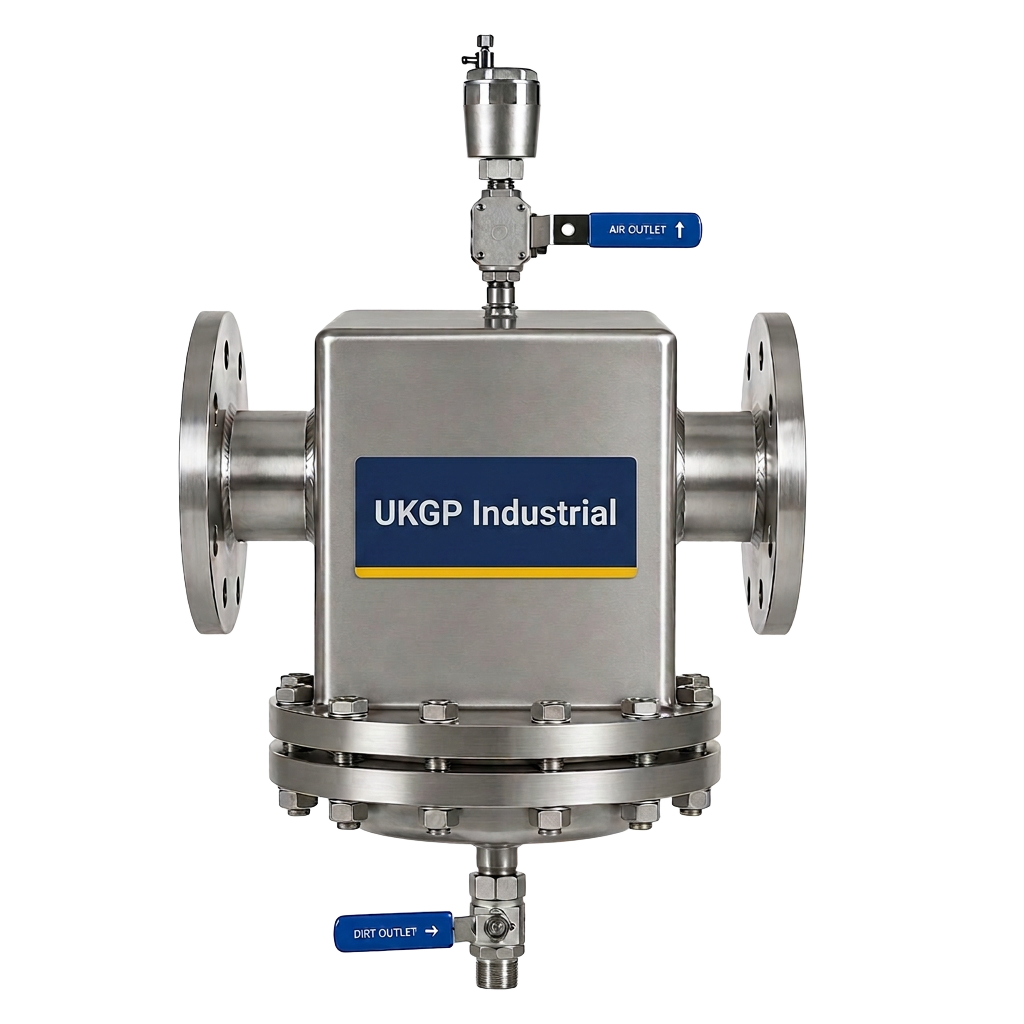
A standard magnetite filter is designed specifically to capture ferromagnetic particles that accumulate during the corrosion of steel pipework and components. In a commercial setting, these suspended solids, commonly known as black sludge, are highly destructive to high-efficiency boilers, circulators, and heat exchangers. By utilising high-strength neodymium magnets, these units pull iron oxide out of the primary flow, preventing it from settling in low-flow areas or coating expensive internal heating surfaces. This process is vital for maintaining the thermal conductivity of the system and preventing the premature catastrophic failure of modern, precision-engineered components found in high-spec UK plant room environments.
However, relying solely on a magnetite filter presents significant limitations when considering the total suspended solids (TSS) profile found in most commercial systems. While effective at removing magnetic debris, these devices often struggle with non-magnetic contaminants such as soldering flux, calcium carbonate scale, sand, and various microbiological by-products. In a large-scale heating circuit, these non-metallic particles can be just as abrasive as magnetite, leading to erosion-corrosion and the blockage of control valves or terminal units. Contractors and plant room managers must therefore assess whether a simple magnetic catch is sufficient for the specific water chemistry requirements of their site or if a more robust multi-stage filtration strategy is required.
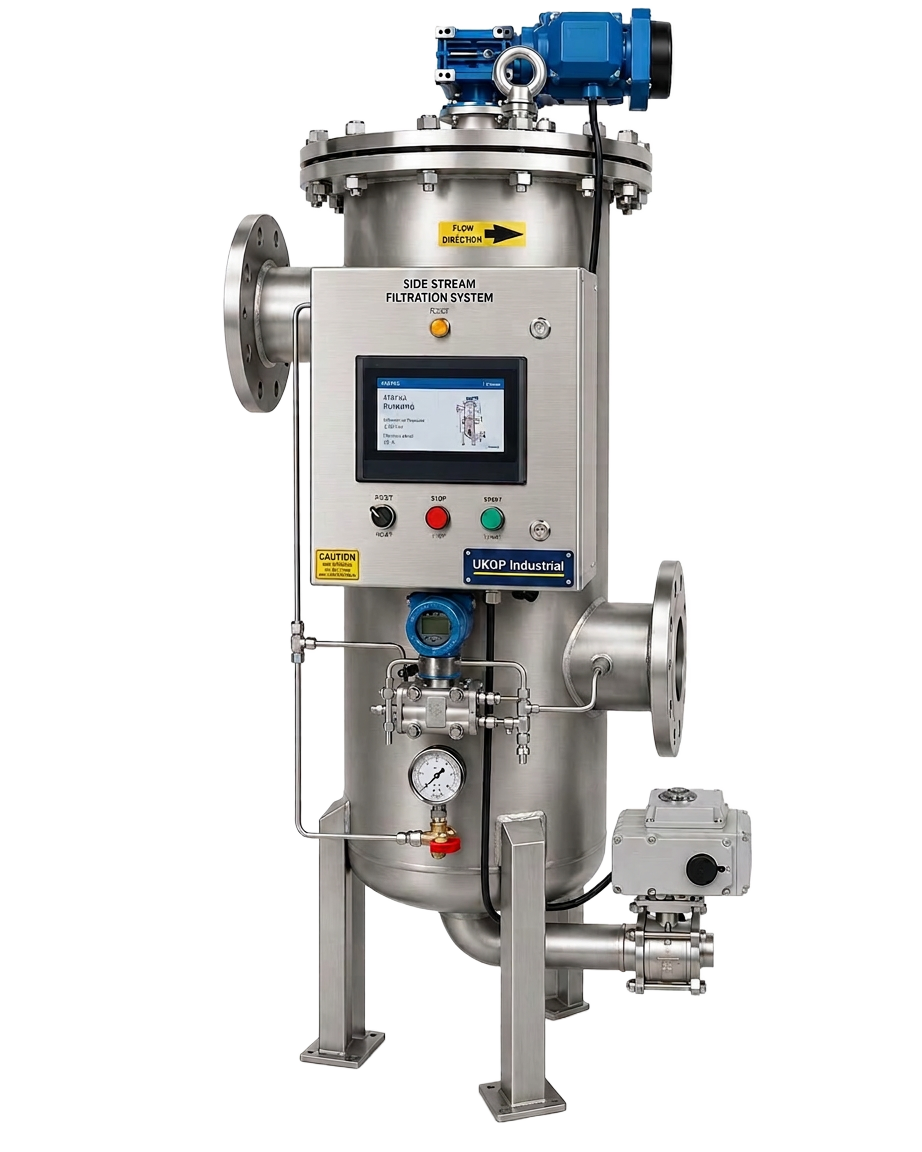
For smaller installations with limited footprints, a magnetic solution remains a baseline requirement for protecting boiler warranties and improving initial system longevity. Yet, for consultants designing systems for long-term operational stability, it is important to remember that these filters are often a reactive measure rather than a proactive management tool. Professional UKGP side stream filtration skids, by contrast, offer a continuous and bypassable method of polishing the water to much finer levels, often down to 5 or even 1 micron. This proactive approach ensures that both magnetic and non-magnetic debris are managed before they can accumulate into the dense sludge that typically plagues older commercial heating networks across the UK's ageing building stock.
- Primary focus on ferromagnetic iron oxide (magnetite) removal
- Essential for protecting high-efficiency boiler heat exchangers
- Cost-effective for smaller residential or light commercial loops
- Limited effectiveness against non-magnetic scale and debris
The benefits of upgrading to side stream filtration
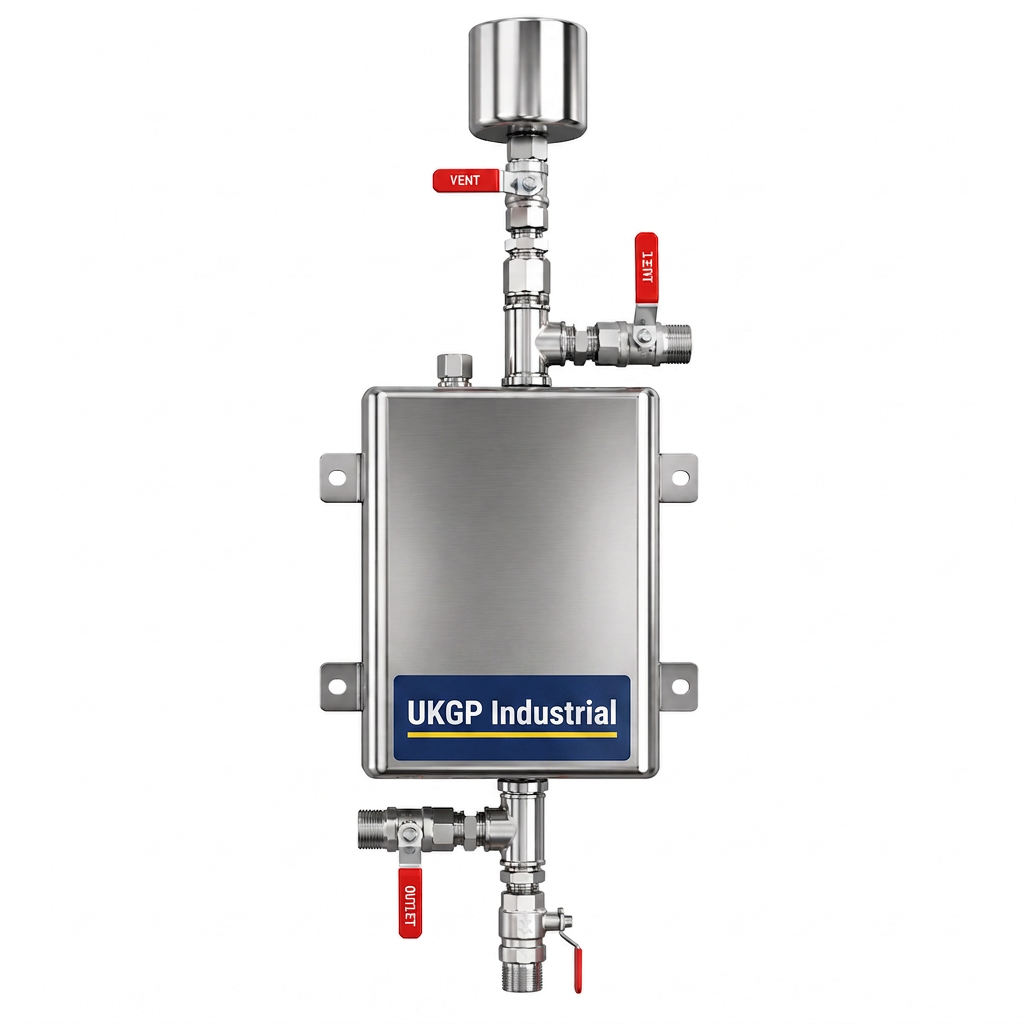
When a standard magnetite filter proves insufficient for the scale of a project, UKGP side stream filtration skids provide the comprehensive answer needed for BSRIA BG50 compliance. These skids incorporate high-performance stainless steel housings and fine-mesh filter bags or cartridges that handle the total volume of debris, regardless of its magnetic properties. By treating a percentage of the total system flow—typically between 5% and 15%—continuously, these units maintain water clarity and prevent the buildup of the suspended solids that hinder chemical inhibitor effectiveness. A dedicated UKGP skid also typically includes an integrated dosing pot, allowing for the precise introduction of chemicals without interrupting system operation or risking air ingress.
Choosing a side stream filtration unit over a simple magnetite filter also offers superior maintenance advantages for facility managers and service teams. Our UKGP skids are designed with isolating valves and pressure gauges, allowing for easy monitoring of filter saturation and 'no-nonsense' bag changes that can be performed in minutes. With UKGP side stream filtration kits starting from £6,800+VAT, the investment is justified by the significantly reduced frequency of system flushing and the extension of capital asset life. These units are made to order with a 6-8 week lead time, ensuring they are built to the specific DN50 to DN100 requirements of your project, and come with a full 2-year warranty for peace of mind.
From a commercial procurement perspective, the decision to install a high-capacity skid rather than a small magnetic device relates directly to life-cycle costs. While the initial capital expenditure for a skid is higher, the ROI is realised through reduced pumping energy, lower chemical top-up requirements, and fewer emergency call-outs. Designers following CIBSE guidelines and the BSRIA BG29/2021 pre-commission cleaning standards often specify side stream filtration to ensure that the initial water quality achieved during commissioning is maintained throughout the life of the building. This provides a repeatable and measurable standard of water hygiene that basic magnetic solutions simply cannot match in high-pressure or high-volume commercial environments.
- Removes particles down to 5-10 microns including non-magnetic debris
- Facilitates easy chemical dosing and water sampling
- Reduces long-term maintenance costs and system downtime
- Compliant with BSRIA BG50 water quality management protocols
How a magnetite filter complements chemical dosing
In many modern UK plant rooms, a magnetite filter is often paired with high-quality chemical dosing pots to manage the delicate internal environment of a heating or cooling circuit. Chemicals such as corrosion inhibitors and biocides are essential for preventing the initial formation of magnetite, but once it has formed, it must be mechanically removed. A well-placed dosing pot from UKGP allows maintenance teams to inject these treatments safely and efficiently. By combining chemical protection with magnetic capture, engineers can address both the cause and the symptoms of system degradation, ensuring that the primary thermal fluid remains within the parameters specified by BS 8552 and BSRIA BG50.
Properly maintained chemical levels ensure that the internal surfaces of steel and copper pipework remain passivated, significantly slowing the rate at which iron oxide enters the water stream. However, even with the best chemical regime, some oxygen ingress or galvanic corrosion is inevitable over time. This is where the magnetite filter acts as a safety net, catching the bypass products that the chemical inhibitor couldn't prevent from flaking off internal walls. At UKGP, we supply robust chemical dosing pots designed to work alongside our filtration range, providing a complete solution for contractors who need to hand over a system that is both clean and chemically stable.
It is worth noting that for systems with high volumes of makeup water, chemical levels can quickly become diluted, leading to a spike in magnetite production. This is often seen in systems with undetected leaks or failing expansion vessels. In these scenarios, having a reliable filter is the only thing standing between the system and a total blockage of the primary heat exchangers. We recommend that any procurement lead or contractor looking to protect their installation considers the synergy between physical filtration and chemical dosing. Our team can provide quotes for both dosing pots and magnetic solutions to suit various pipe sizes from DN15 upwards, ensuring a perfectly matched kit for your specific site requirements.
- Inhibitors prevent the formation of sludge and scale
- Dosing pots allow for safe chemical introduction without system shutdown
- Magnetic capture removes what the chemicals cannot prevent
- Crucial for passing BSRIA water quality audits
BSRIA BG50 and the standard for commercial water quality
Following the BSRIA BG50 'Water Treatment for Closed Heating and Cooling Systems' guide is essential for any FM or building services consultant. These guidelines emphasize that a simple magnetite filter may not be sufficient for large systems where total dissolved solids and suspended solids must be kept below specific thresholds to prevent corrosion and bacterial growth. BG50 highlights the importance of side stream filtration as a primary method for maintaining water clarity and ensuring that chemical additives can reach all parts of the system effectively. Without proper filtration, the 'hot spots' created by sludge accumulation can lead to localised under-deposit corrosion, which is often fatal for pipework integrity.
For contractors working on new builds or major refurbishments, adherence to BG29 and BG50 is often a contractual requirement. Providing a system that only relies on a basic magnetite filter might lead to non-compliance during the final water quality testing phases. This is particularly true if the system contains a mix of materials, such as aluminium heat exchangers and steel pipework, which are highly sensitive to pH fluctuations and debris. By specifying a UKGP side stream filtration skid, you are ensuring that the system is equipped to handle the rigorous monitoring required by BS 8552, which focuses on the periodic sampling of water to verify that treatment and filtration are performing correctly.
Ultimately, the goal of these standards is to reduce the environmental impact and financial burden of inefficient heating systems. A system clogged with magnetite and debris requires more pump power to move water around the circuit and more fuel to achieve the required temperature lift. By investing in the right equipment—starting with a high-quality filter and potentially upgrading to a full skid—building owners can ensure their plant rooms operate at peak efficiency for decades. Contact UKGP today to discuss how our UK-manufactured range can help your project meet these vital industry standards while staying within budget and on schedule.
- Promotes a proactive maintenance strategy over reactive repairs
- Specifies limits for suspended solids and iron content
- Encourages continuous monitoring and automated water polishing
- Reduces the carbon footprint by maintaining heat transfer efficiency
Technical considerations for DN50 to DN100 installations
When specifying a magnetite filter for a commercial project, pipe size is a critical factor for both flow rate and capture efficiency. At UKGP, we offer solutions that cater to DN50 up to DN100 pipework, ensuring that the pressure drop across the filter does not negatively impact the system's hydraulic balance. On larger systems, a single magnetic device may become saturated too quickly, leading to a bypass situation where debris is simply pushed past the magnets. This is why many engineers choose to install multiple units in parallel or move directly to a side stream filtration skid that provides a much larger surface area for debris collection and is less prone to sudden pressure spikes.
Our side stream filtration skids are engineered to be 'plug and play' for fast installation by M&E contractors. With a lead time of 6-8 weeks, these made-to-order units are delivered ready for connection to the main system via standard flanged fittings. Each unit is pressure tested and built to withstand the rigours of a busy commercial plant room. We include high-quality isolation valves and a robust structural frame to ensure that the skid remains a permanent, reliable fixture of the building's infrastructure. Whether you are looking for a basic magnetic solution or a fully integrated skid, UKGP provides the technical data and support needed to ensure your pipework sizing and flow rates are perfectly matched to the filtration equipment.
It is also important to consider the location of the filter within the plant room. Ideally, any magnetic device should be placed on the return header before the water enters the boilers or chillers. This ensures that the most sensitive components are the most protected. If you are unsure whether your project requires a standalone magnetite filter or a more advanced skid, our technical team is available to review your system drawings and provide a competitive quote. Our prices for filtration skids start at £6,800+VAT, representing a significant saving over the long-term cost of system failure and emergency maintenance. Request a quote today to secure your equipment and keep your project on track.
- DN50 to DN100 sizes available for large-scale commercial loops
- 6-8 week lead times for custom-built UKGP skids
- Minimal pressure drop design to maintain hydraulic efficiency
- 2-year warranty on all UKGP manufactured filtration products
Summary: Making the right choice for your project
The choice between a magnetite filter and a side stream filtration skid depends on the complexity, size, and criticality of your heating system. For smaller, less complex buildings, a high-quality magnetic filter might be the most cost-effective way to manage iron oxide. However, for large commercial and industrial sites, the multi-stage filtration provided by a UKGP skid is the only way to ensure full compliance with BSRIA BG50 and protect the building's investment. By removing both magnetic and non-magnetic contaminants, these skids provide a level of water clarity that keeps valves, pumps, and boilers running at their design efficiency for as long as possible.
As a Surrey-based manufacturer, UKGP prides itself on delivering high-quality, reliable equipment to UK contractors and consultants. We understand the pressure of project deadlines and the importance of UK-made reliability. Our filtration solutions are designed with the end-user in mind, offering easy maintenance and long-term durability. By choosing a UKGP solution, you are not just buying a piece of hardware; you are investing in a partnership backed by technical expertise and a commitment to water quality excellence. From our £6,800+VAT skids to our range of smaller separators, we have the stock and the manufacturing capability to meet your needs.
In conclusion, don't leave your system water quality to chance. A magnetite filter is a great start, but it is often just one part of a wider water management strategy. Evaluate your system's specific risks—such as the age of the pipework, the volume of the circuit, and the sensitivity of the boilers—before making your final selection. If you need assistance with specifications or pricing for your next project, reach out to the UKGP team. We provide detailed quotes, technical insights, and the reassurance of a 2-year warranty on our primary filtration range. Secure your plant room's future today with our expert-led filtration solutions.
- Compare initial CAPEX with long-term OPEX savings
- Consider the level of filtration required (5 micron vs 50 micron)
- Check lead times for custom-built side stream skids
- Ensure your choice meets BSRIA and CIBSE recommendations
Frequently asked questions
What is the main difference between a magnetite filter and side stream filtration?
- A magnetite filter focuses purely on removing magnetic iron oxide particles using magnets. Side stream filtration uses mechanical filter bags or cartridges to remove both magnetic and non-magnetic debris, such as scale, sand, and biological matter, polishing the water to much finer levels (down to 1-10 microns).
Is side stream filtration required by BSRIA BG50?
- While BG50 doesn't strictly mandate a specific brand of equipment, it highly recommends side stream filtration for commercial systems as a primary method for managing total suspended solids (TSS) and ensuring that water quality remains within parameters that prevent corrosion.
How much does a commercial side stream filtration skid cost?
- At UKGP, our high-performance side stream filtration skids typically start from £6,800+VAT. These are made-to-order units produced in the UK, generally featuring a 6-8 week lead time and a 2-year warranty.
How often do you need to clean a magnetite filter in a commercial plant room?
- The frequency depends on the system's condition. In a new, well-commissioned system, checking every 6 months may be sufficient. However, in older systems with high corrosion rates, they may require cleaning monthly until water quality improves.
Can I use both a magnetite filter and a dosing pot?
- Yes, they are complementary. The dosing pot allows for the introduction of chemical inhibitors that prevent corrosion, while the filter removes the physical contaminants that are already present or formed during operation.