Understanding the role of commercial power flushing
In the UK building services sector, commercial power flushing serves as a high-velocity remedial process designed to mobilise and remove accumulated magnetite, sludge, and debris from closed-loop heating and cooling systems. Unlike domestic flushing, industrial applications require significantly higher flow rates and specialized chemicals to break down stubborn haematite and metallic oxides that settle in low-flow areas of the circuit. For M&E contractors and facility managers, the decision to proceed with a flush is often driven by a noticeable decline in heat transfer efficiency or frequent pump failures caused by abrasive suspended solids. It is a necessary intervention when the water quality has deviated so far from BS 8552 guidelines that passive filtration alone cannot restore the system to an acceptable operating baseline.
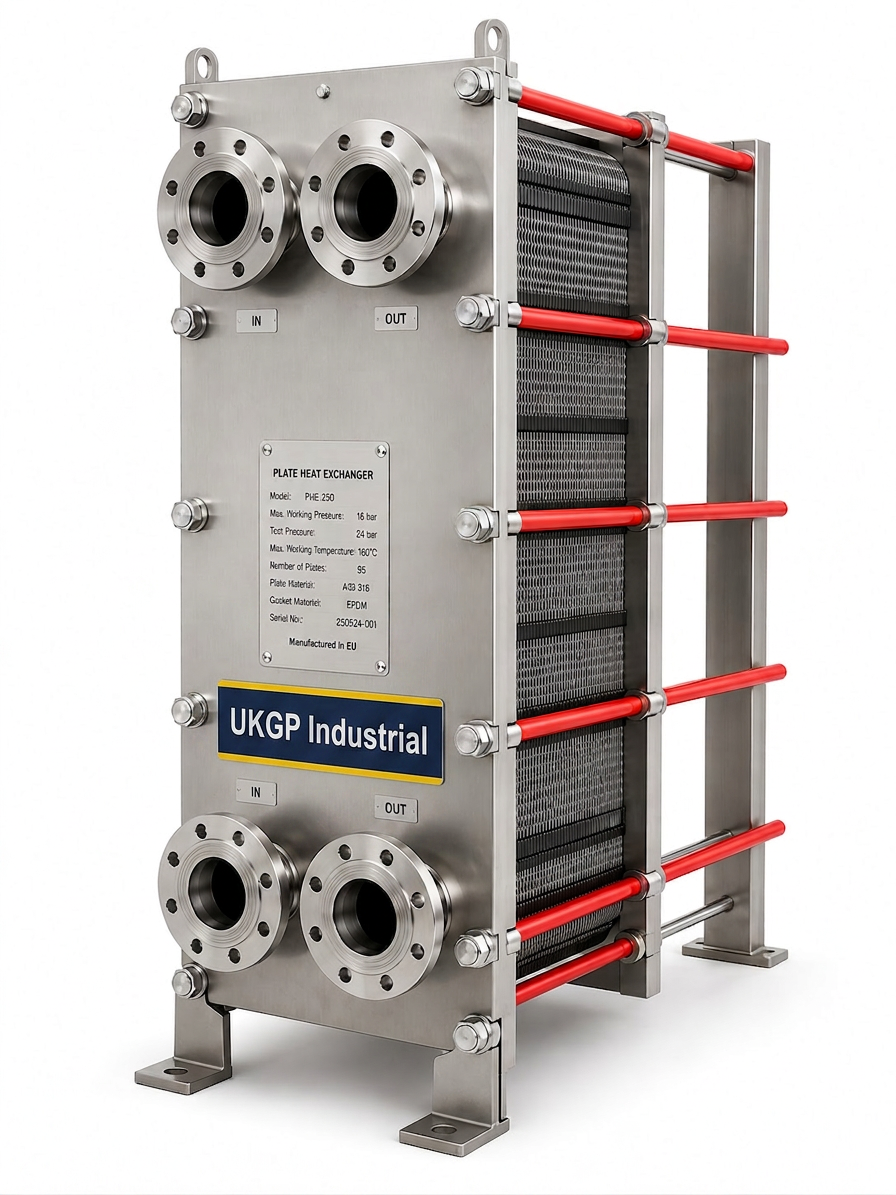
The process typically involves connecting a high-performance pumping station to the system, often at the site of the boiler or via a dedicated manifold, to circulate cleaning agents at high speeds. This mechanical scrubbing action is vital for restoring the internal diameter of pipework and clearing blocked heat exchanger plates. However, it is also a commercially intensive process that requires careful planning to minimize downtime. When executing commercial power flushing, engineers must ensure that all sensitive components, such as control valves and plate heat exchangers, are either bypassed or individually flushed to prevent the redistribution of sludge into narrow apertures. Failure to do so can exacerbate the very problems the flush was intended to solve, leading to costly secondary repairs and extended system outages.
While highly effective at removing the bulk of accumulated debris, a power flush is not a permanent cure-all. It represents a 'reset' point for the system's chemistry and cleanliness. Once the flush is complete and the system is refilled with treated water in accordance with BSRIA BG29 or BG50 standards, the focus must shift immediately to maintaining that clarity. Without a robust post-flush strategy involving side stream filtration and high-quality air and dirt separators, the physical and chemical reactions that created the sludge will resume immediately. This is why UKGP Industrial recommends a holistic approach where the flush is seen as the initial phase of a multi-year water quality management plan designed to protect high-value assets and ensure long-term energy efficiency.
- Restores system thermal efficiency and reduces energy waste.
- Removes abrasive magnetite that damages pump seals and impellers.
- Essential for clearing blockages in narrow-bore radiator valves and coils.
- Resets system chemistry to comply with BG50 water quality targets.
Identifying the technical triggers for a flush
Determining when commercial power flushing is the right call requires more than a cursory visual inspection of a sample jar. Technical triggers usually involve a combination of poor water chemistry results and physical performance symptoms. If your BS 8552 laboratory analysis shows iron levels exceeding 5mg/l or high levels of copper and aluminium, the system is likely suffering from active corrosion or a significant legacy sludge burden. Furthermore, if temperature differentials across the building are inconsistent—where some zones remain cold despite adequate pump head—sludge settlement in the distribution pipework is the likely culprit. At this stage, chemical dosing alone is insufficient as the biocides and inhibitors cannot penetrate deep layers of settled debris to treat the metal surface beneath.
Another critical indicator is the frequency of component failure. If plant room engineers are replacing heat exchangers or circulator pumps more than once every three years due to clogging or erosion, the system is fundamentally unstable. Commercial power flushing provides the mechanical force needed to clear the 'dead zones' in the pipework that periodic bleeding cannot reach. Consulting engineers often specify a flush during major plant room refurbishments to ensure that new, high-efficiency condensing boilers or heat pumps are not immediately contaminated by old sludge from the existing distribution network. Protecting these new assets is a priority for procurement leads looking to safeguard their 2-year warranties and long-term capital expenditure.
Finally, the cost of inaction must be weighed against the commercial power flushing investment. An inefficient system can see fuel bills rise by as much as 15% due to the insulating properties of magnetite on heat transfer surfaces. When the budget is constrained, FMs should prioritize flushing based on the criticality of the circuit. For instance, a primary heating loop serving a hospital or a data centre cooling circuit should be flushed at the first sign of elevated turbidity. In these environments, the risk of a total system failure far outweighs the cost of a scheduled maintenance flush. UKGP stands ready to support these projects with high-quality equipment designed to handle the rigorous demands of industrial system recovery.
- Iron levels in water samples consistently exceeding 5mg/l.
- Cold spots in emitters despite no air being present in the system.
- Frequent 'tripping' of boilers due to poor circulation or overheating.
- Preparation for installing high-efficiency modern boiler plant.
Maintaining water quality with side stream filtration
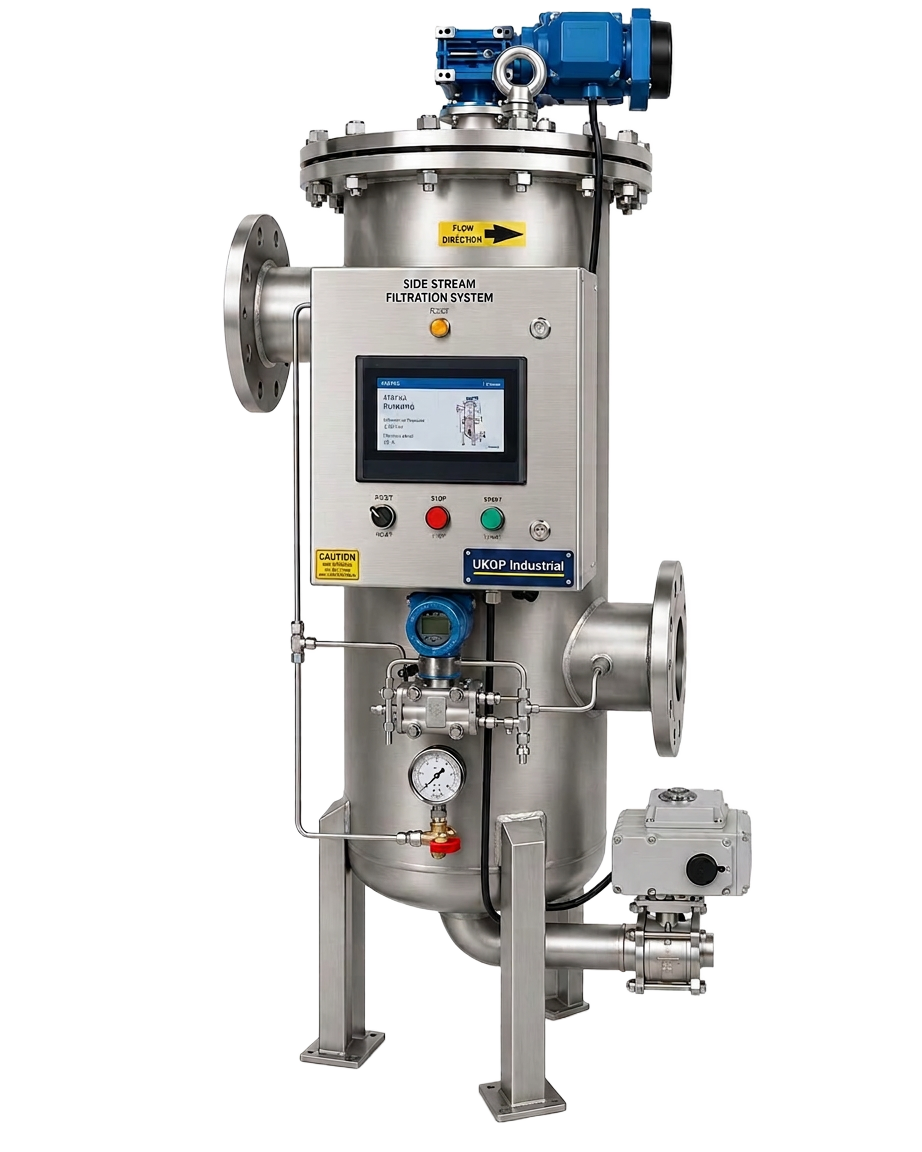
Once a system has undergone commercial power flushing, the most critical step is preventing the re-accumulation of debris. Even the most thorough flush will leave microscopic particles behind, and fresh fill water introduces oxygen that can trigger new corrosion cycles. This is where the installation of a UKGP side stream filtration skid becomes indispensable. By continuously diverting a portion of the system flow (typically 5-15%) through a high-efficiency filter housing, these units capture suspended solids as they are generated. This proactive approach ensures that the clarity achieved during the flush remains permanent, protecting the internal surfaces of the pipework and heat exchangers from the return of damaging magnetite and sludge.
For UK building services, our side stream filtration units are designed for quick installation and long-term reliability. We offer these skids made to order, typically within a 6 to 8-week lead time, ensuring they can be integrated into your project schedule alongside the flushing works. Ranging from DN50 to DN100 connections, these units are robust enough for the most demanding plant rooms and come with a comprehensive 2-year warranty for peace of mind. Starting from £6,800 + VAT, these skids represent a smart commercial investment that significantly extends the lifespan of the entire HVAC system. Rather than repeating a disruptive power flush every few years, an M&E contractor can provide a permanent solution that satisfies both BSRIA BG29 and BG50 requirements.
The operational benefits of adding filtration post-flush are clear: reduced maintenance call-outs, lower chemical consumption, and sustained heat transfer efficiency. A UKGP side stream filtration skid uses replaceable filter bags or cartridges that can be serviced without shutting down the primary system, making them ideal for facilities managers who need to maintain 24/7 uptime. When you request a quote for our bespoke skids, you are opting for UK-engineered quality that understands the specific hydronic challenges of British commercial buildings. By bridging the gap between a one-off clean and continuous protection, you ensure that the commercial power flushing project delivers the maximum possible return on investment for the building owner.
- Continuous removal of suspended solids down to 5 microns or less.
- Available in DN50 to DN100 sizes starting from £6,800+VAT.
- Short 6-8 week lead times for bespoke UK manufacturing.
- Complies with BSRIA BG50 recommendations for ongoing water monitoring.
The role of dosing and air separation in system health
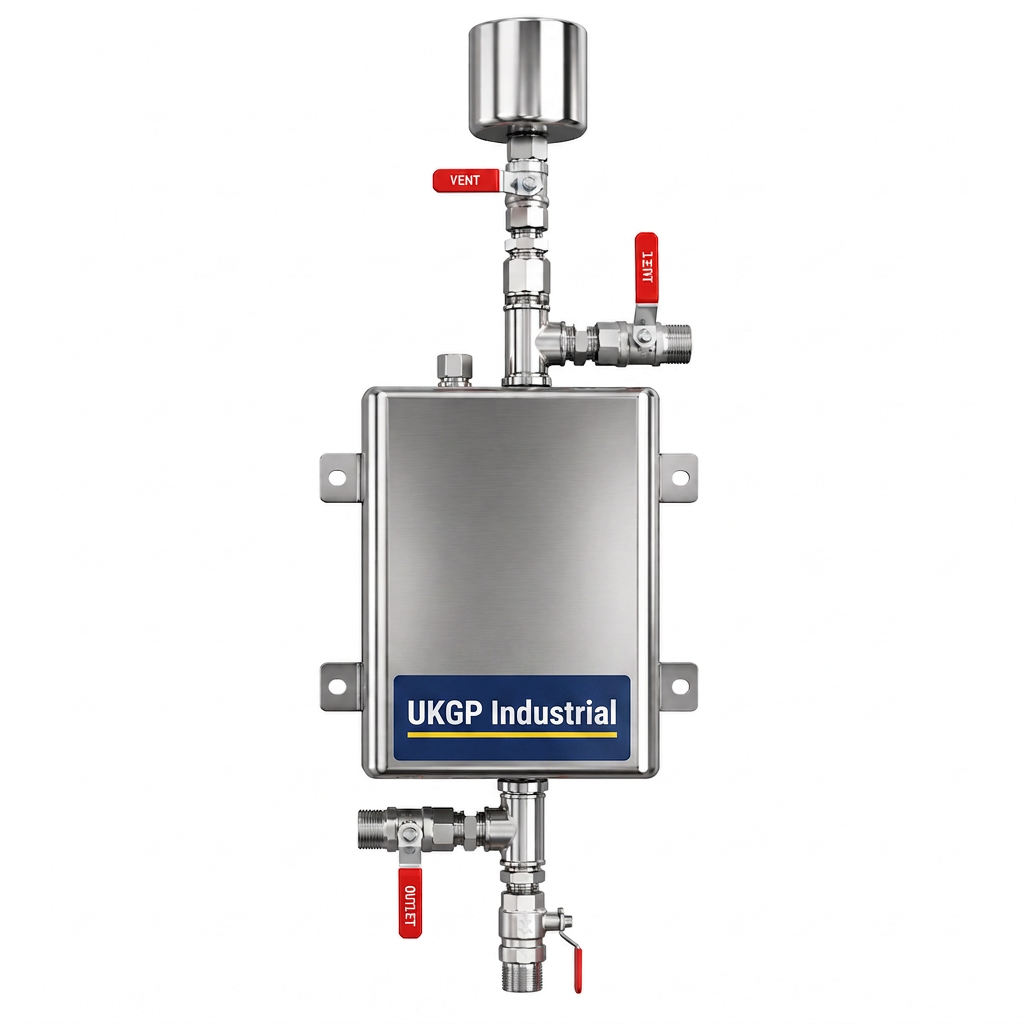
While commercial power flushing removes debris and filtration keeps it clean, chemical dosing is the third pillar of a healthy system. Without the correct concentration of corrosion inhibitors and biocides, the bare metal exposed during a flush is highly susceptible to rapid oxidation. Using a dedicated dosing pot allows engineers to safely and accurately introduce these chemicals into the pressurized circuit. It is a fundamental component of any plant room maintenance regieme, ensuring that the water chemistry remains within the parameters defined by BS 8552. A properly treated system minimizes the formation of new magnetite, thereby reducing the workload on the side stream filter and extending the intervals between maintenance.
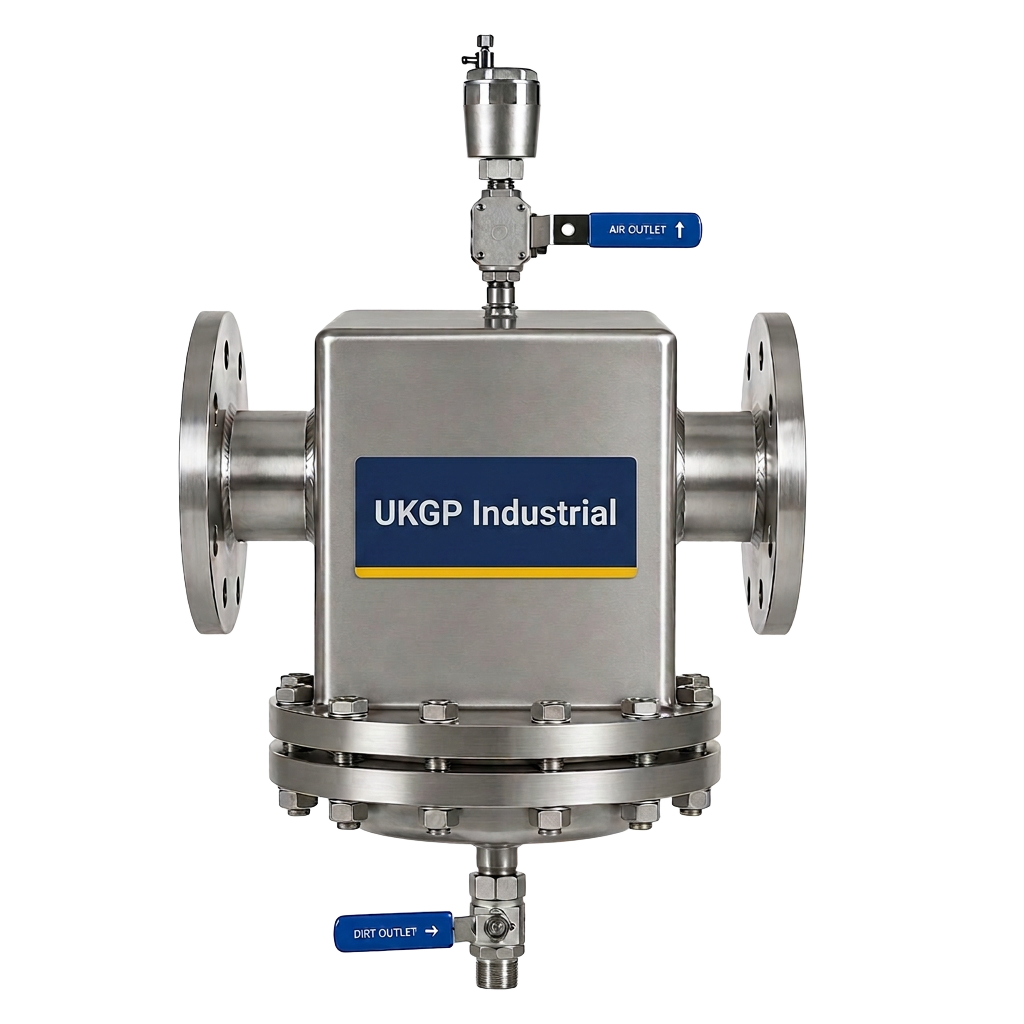
Air and dirt separators also play a vital role in protecting systems post-flush. Microbubbles in the system water act as a catalyst for corrosion; by removing these at the point of highest temperature and lowest pressure, you significantly reduce the potential for oxidization. These units work in tandem with commercial power flushing by capturing larger debris that might have been mobilized but not fully removed during the initial cleaning process. For procurement leads, specified air and dirt separators are a low-cost, high-impact addition to any boiler or chiller replacement project. They ensure the hydronic stability of the circuit, which is essential for the precise operation of modern variable speed pumps and modulating valves.
Integrating these components—dosing pots, air separators, and filtration—into a single maintenance strategy is the most effective way to manage a commercial system. When an M&E contractor plans a commercial power flushing operation, they should also audit the existing hardware to ensure these protective measures are in place. If they are missing, it is the perfect time to upgrade. UKGP Industrial specializes in providing these essential plant room components, ensuring that every project we assist with meets the highest standards of technical excellence and commercial durability. Contact our Surrey-based team to discuss how we can supply the necessary hardware to complement your next flushing project.
- Dosing pots enable precise chemical control for corrosion inhibition.
- Air separators prevent microbubble-induced corrosion and noise.
- Reduces the risk of air-locks in high-level distribution pipework.
- Supports compliance with CIBSE CP1 and other industry best practices.
Commercial considerations for FM and procurement
From a procurement perspective, commercial power flushing must be viewed as a capital-preserving activity. The cost of a flush is negligible compared to the replacement cost of a modular boiler bank or a large-scale chiller. When building service consultants are drafting specifications, they must ensure the contractor is qualified and using equipment capable of hitting the required velocities. A cut-price flush that fails to remove the sediment is a waste of resources. It is often better to invest in a comprehensive water quality package that includes the flush followed by the installation of a UKGP side stream filtration unit. This approach satisfies the long-term asset management goals of the facility and reduces the Total Cost of Ownership (TCO).
Lead times and logistics are also critical factors for projects involving commercial power flushing. Because these works often occur during the shoulder seasons (spring or autumn), coordinating equipment delivery is paramount. UKGP maintains a responsive manufacturing schedule in Surrey, offering 6-8 week lead times on our key filtration and separation products. This allows contractors to plan their flushing schedules with confidence, knowing that the permanent protection hardware will be on-site when the system is ready for commissioning. With prices starting at £6,800+VAT for our filtration skids, budgeting for high-quality UK manufacturing is straightforward and transparent for any B2B project.
Ultimately, the goal is to move away from reactive maintenance. If a site requires commercial power flushing every two or three years, the underlying cause of contamination has not been addressed. By combining the flush with superior British-made components like expansion bellows, separators, and filtration skids, FMs can move to a proactive 'monitor and maintain' model. This not only keeps the system compliant with BSRIA BG50 but also ensures the building remains operational and comfortable for occupiers. Our technical team is available to assist with sizing and specification to ensure your quote reflects the exact needs of your system, from DN50 up to DN100 and beyond.
- Protects high-value assets like boilers and chillers from premature failure.
- Improves GRESB and ESG ratings by reducing operational energy waste.
- Clear 2-year warranty on all UKGP filtration and separation equipment.
- Transparent pricing and UK-based technical support for all orders.
Summary: When to make the call
In summary, commercial power flushing is the right call when a system is suffering from chronic inefficiency, frequent component failures, or water quality that violates BS 8552 and BSRIA BG50 standards. It is a powerful remedial tool that 'cleans the slate' for an older or neglected HVAC system. However, for the investment to be worthwhile, it must be paired with modern filtration and separation technology. Without a UKGP side stream filtration skid to capture the ongoing lifecycle of debris, the benefits of the flush will quickly fade, leaving the system vulnerable once more to the damaging effects of magnetite and sludge.
M&E contractors and consultants should look for the combination of high iron counts, poor flow rates, and high turbidity as the primary indicators for a flush. When these signs appear, the commercial power flushing procedure should be scheduled alongside the installation of protective plant room equipment. By specifying UKGP products, you are ensuring that the system is not just clean today, but remains clean and efficient for the duration of its service life. Our Surrey-based factory is ready to help you specify the right solution, providing bespoke drawings and technical data to support your tender or maintenance proposal.
Ready to protect your commercial heating or cooling system? Whether you are planning a comprehensive commercial power flushing project or looking to upgrade your plant room protection, UKGP Industrial is your partner for high-quality UK-made hardware. From our side stream filtration skids (starting from £6,800+VAT) to our air & dirt separators and dosing pots, we provide the durability and performance your facility demands. Contact us today for a technical consultation or a formal quote, and let us help you achieve long-term hydronic stability and BSRIA compliance for your commercial projects.
- Flush when water samples show iron > 5mg/l or high turbidity.
- Flush prior to installing new high-efficiency boilers or heat pumps.
- Always follow a flush with side stream filtration for long-term protection.
- Consult with UKGP for the ideal filtration and dosing hardware package.
Frequently asked questions
How long does a commercial power flushing process usually take?
- Depending on the complexity and scale of the system, a commercial flush can take anywhere from 2 to 5 days. For larger sites, it is often performed in zones to ensure the required flow velocities are achieved in every section of the pipework.
Is a power flush mandatory under BSRIA BG29?
- BSRIA BG29 focuses on pre-commission cleaning for new systems. While power flushing is a common method to achieve the required cleanliness targets, the focus is on the final water quality results. For existing systems, BG50 recommends flushing if the monitoring reveals significant accumulation of solids.
What is the cost of a side stream filtration skid for a commercial system?
- UKGP Industrial side stream filtration skids start from £6,800 + VAT. They are made to order in our Surrey factory with a 6-8 week lead time and are available in sizes from DN50 to DN100.
Can I install side stream filtration without a power flush?
- Yes, if the water quality is within reasonable limits. However, if the system is heavily fouled with magnetite, a commercial power flushing is recommended first to remove the bulk debris, allowing the filter to manage the ongoing maintenance load effectively.
What warranty comes with UKGP plant room equipment?
- We provide a 2-year warranty on our side stream filtration skids, air and dirt separators, and other manufactured components, ensuring long-term reliability for UK building services applications.