The Role of a Powder Dosing System in Modern Plant Rooms
In the UK's commercial HVAC sector, the integrity of a closed-loop system is dictated by the chemical balance of the circulating fluid. A powder dosing system serves as the primary conduit for introducing essential solid-state chemicals, such as corrosion inhibitors and biocide granules, into the secondary circuit. Unlike liquid-only infusion methods, utilizing a dedicated entry point for powder ensures that concentrated treatments can be dissolved and distributed evenly without the immediate risk of localized high-concentration spikes that can damage sensitive internal components. By following the best practices established by BSRIA BG50, facility managers can significantly extend the operational lifespan of their district heating schemes and chiller networks. UKGP solutions provide the heavy-duty hardware required to manage these chemical introductions while remaining fully compliant with British industrial engineering standards.
Choosing the right powder dosing system requires a deep understanding of the system's total water volume and the specific chemical requirements of the site. Whether managing a small modular boiler room or a large-scale data centre cooling system, the mechanism for dosing must be pressure-rated to match the system’s working parameters. In many commercial applications, the use of powder-based treatments is preferred for long-term storage and ease of handling compared to bulky liquid drums. However, the hardware must be robust enough to handle the bypass pressure required to draw the dissolved powder into the main flow. UKGP's range of units, fabricated from high-grade carbon steel or 316 stainless steel, provides the necessary structural integrity to operate under high-pressure conditions while resisting the corrosive nature of concentrated chemical starters before they reach their target dilution.
Integrating a powder dosing system is not merely a matter of convenience; it is a fundamental requirement for adhering to BS 8552 and BSRIA BG29 pre-commission cleaning protocols. During the initial phases of a building’s life cycle, the introduction of cleaning agents via a bypass-mounted unit ensures that debris and mill scale are effectively managed. For maintenance professionals, the ability to safely vent and drain the dosing vessel is paramount. This is why UKGP units feature high-quality isolation valves and dedicated drain points as standard. By investing in a professionally manufactured solution, contractors ensure that every chemical addition is controlled, measurable, and compliant with the stringent expectations of modern UK building services consultants and M&E procurement leads who demand reliability and long-term warranty support for their plant-room assets.
- Ensures compliance with BSRIA BG50 water quality management
- Reduces manual handling risks associated with large liquid chemical drums
- Promotes even distribution of corrosion inhibitors across the circuit
- Accommodates powder-based biocides for cooling and heating loops
Technical Specifications for Dosing Pot Integration
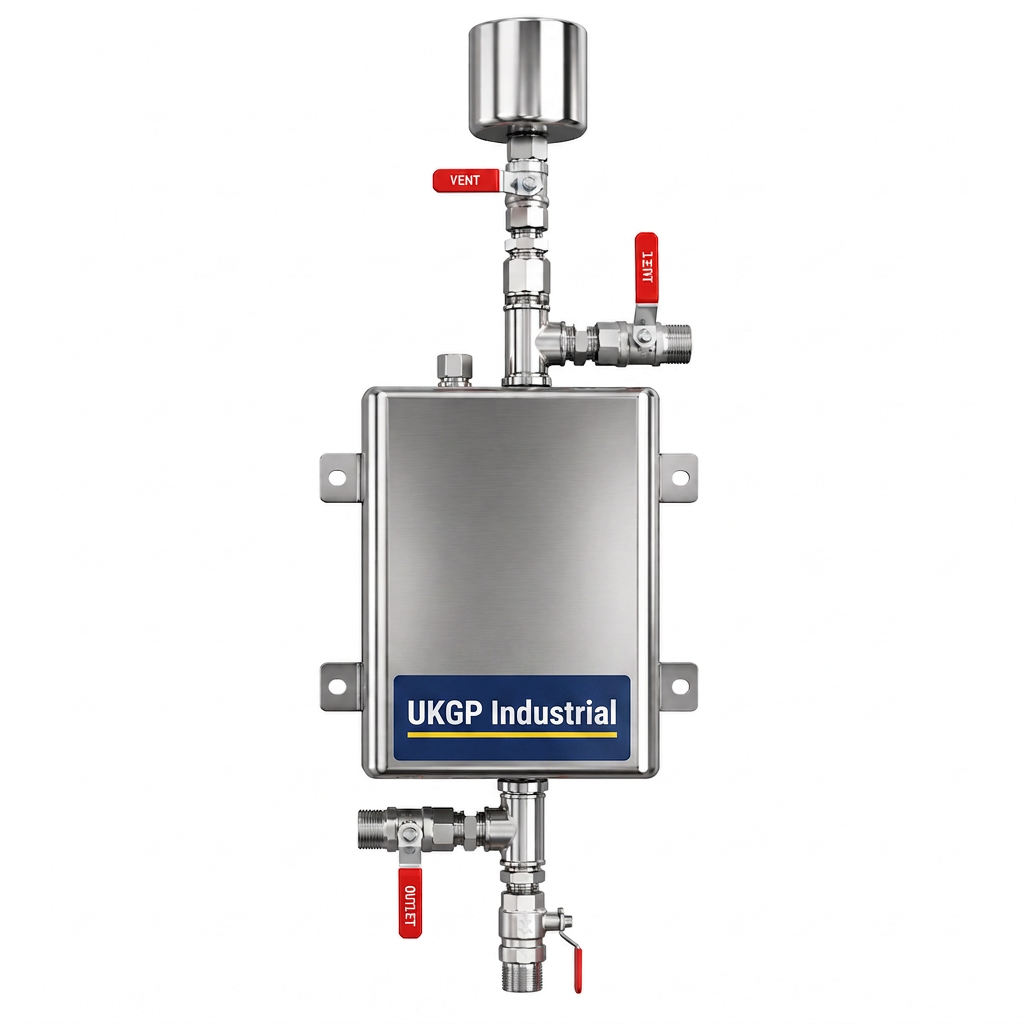
When specifying hardware for a powder dosing system, engineers must look closely at the physical construction and the valve arrangement. A standard UKGP chemical dosing pot, often used for these applications, is typically bypass-mounted to allow for chemical introduction without interrupting the main system flow. These units are available in 5L, 10L, and 25L capacities, ensuring that the volume of powder or glycol top-up matches the scale of the facility. The inclusion of industrial-grade isolation valves is non-negotiable, as they allow for the vessel to be safely isolated from the high-pressure loop during the filling process. Furthermore, the presence of a dedicated vent valve at the top of the vessel allows air to be purged, preventing the introduction of oxygen into the system, which is a primary driver of aerobic corrosion.
Material selection is equally critical when installing a powder dosing system in a high-demand environment. Carbon steel is a common and cost-effective choice for standard heating systems, but for chilled water loops or environments prone to external moisture, 316 stainless steel offers superior longevity and resistance to atmospheric corrosion. UKGP understands that every plant room is unique, which is why our products come with a 2-year warranty and are pressure tested to ensure they meet the rigorous demands of UK commercial installations. For contractors working on public sector projects or high-end commercial developments, having trade-verified components that meet BS EN 14917 and other relevant BS standards provides the necessary peace of mind for the client and the insurance provider alike.
To maximize the effectiveness of a powder dosing system, the placement within the plant room should be carefully considered. It is generally installed across the flow and return headers, utilizing the pressure differential to drive the fluid through the dosing vessel. This bypass configuration ensures that the solids are thoroughly mixed and dissolved before entering the primary heat exchangers or sensitive sensors. By opting for a UKGP chemical dosing pot, engineers gain a versatile tool that handles both initial inhibitor loading and ongoing glycol top-ups. This multipurpose functionality is highly valued by FM teams who need to manage system volumes efficiently while maintaining the chemical concentrations necessitated by leading commercial boiler OEMs and heat pump manufacturers to maintain their equipment warranties.
- Available in 5L, 10L, and 25L sizes to suit any system volume
- Includes isolation valves, drain valves, and air vents as standard
- Supplied with a 2-year warranty for commercial peace of mind
- Bypass-mounted configuration for easy maintenance and chemical loading
Adherence to BSRIA BG29 and BG50 Standards
The adoption of a powder dosing system is heavily influenced by the BSRIA BG29/2021 guide, which covers pre-commission cleaning of pipework systems. During this phase, the dosing pot is the gateway for the detergents and passivating agents that prepare the system for its operational life. Without a correctly sized and installed dosing unit, achieving the required chemical concentrations becomes a haphazard process that could lead to failed water samples and project delays. Building services consultants frequently specify UKGP hardware because it facilitates the controlled, repeatable chemical entry required to pass these stringent audits. By using a dedicated vessel, engineers can ensure that every gram of cleaning powder is accounted for and professionally introduced into the thermal network.
Moving into the operational phase, BSRIA BG50 focuses on the ongoing water treatment and monitoring of closed-loop systems. Here, the powder dosing system remains active as the primary point for annual inhibitor top-ups. Maintaining the correct level of molybdate or other tracer chemicals is essential for preventing the pitting and scale accumulation that ruins the efficiency of plate heat exchangers and commercial boilers. A failing in water chemistry is often cited as the leading cause of premature failure in heat generation plant. Using a UKGP dosing pot ensures that maintenance staff can perform their duties safely, with clearly marked valves and a robust design that eliminates the risk of leaks or bypass issues that could compromise the integrity of the water treatment regime.
Finally, the documentation and validation of the dosing process are critical for compliance. When a powder dosing system is used in conjunction with high-accuracy pH sensors and transmitters, the FM team can maintain a real-time overview of the system's health. UKGP provides the full suite of plant room ancillaries to make this possible. By sourcing the dosing hardware and the monitoring equipment from a single UK supplier, procurement leads can ensure compatibility and standardized performance across the site. This holistic approach to water quality not only satisfies the requirements of BSRIA but also ensures that the multi-million pound investment in plant-room equipment is protected for its entire designed service life, reducing the total cost of ownership and the likelihood of costly emergency repairs.
- Facilitates pre-commission cleaning in line with BSRIA BG29 rules
- Supports long-term chemical monitoring as required by BG50
- Allows for precise glycol and inhibitor concentration adjustments
- Works in tandem with pH sensors to maintain fluid stability
Installation Best Practices for HVAC Contractors
For the installing M&E contractor, the setup of a powder dosing system must be executed with precision to avoid air ingress and pressure drops. The unit should be positioned in an accessible location, allowing the technician enough space to add chemicals without straining or spilling. The pipework connecting the system to the bypass should be as short as possible to prevent stagnation. When installing a UKGP carbon steel or stainless steel unit, ensuring that the support brackets are properly anchored is essential, especially when dealing with the 25L versions, which can be heavy when filled with fluid. Following the schematic provided with our units ensures that the flow direction is correct, allowing the internal turbulence to dissolve powders rapidly and thoroughly.
Safety during installation and operation is a significant concern for any powder dosing system. The inclusion of a tundish for the drain and safety relief valves is recommended to manage any spillages during the chemical loading process. Engineers should also ensure that the isolation valves are of a high-specification ball valve type to provide a bubble-tight seal. This is particularly important when the system is operating at high temperatures or under high static heads. UKGP's commitment to quality means our dosing pots are designed to withstand these variables, but the installer’s expertise in sealing the joints and venting the assembly remains the final step in ensuring a leak-free environment that will stand up to the scrutiny of a BSRIA inspector.
Once the powder dosing system is physically installed, a commissioning pressure test is required to verify the integrity of all connections. This is especially vital when the system will be carrying expensive glycol mixes or high-potency biocides. Contractors should also provide training to the site's FM staff on the correct sequence of operation—always opening the vent before filling and ensuring the drain is closed—to prevent catastrophic air locks. By utilizing UKGP's commercially aware design, featuring clear labeling and intuitive valve arrangements, contractors can hand over a system that is both easy to use and remarkably durable, reflecting well on their professional standing and reducing the need for warranty call-outs during the defects liability period.
- Position units for easy maintenance access and chemical loading
- Utilize high-specification ball valves for reliable isolation
- Perform a full hydrostatic pressure test once installed
- Provide thorough O&M manuals to the end-user or FM lead
The Engineering Behind Precision Dosing
The fluid dynamics within a powder dosing system are more complex than they might appear. As the fluid enters the vessel from the high-pressure side of the bypass, it must create enough agitation to lift and dissolve the solid particles resting at the bottom. Without this action, the powder can sit in a clump, leading to inconsistent chemical levels and potential blockages. UKGP units are engineered to promote this mixing action, ensuring that by the time the fluid exits the pot and returns to the header, the chemicals are fully integrated into the solution. This is vital for protecting high-efficiency components like air and dirt separators, which can be fouled by undissolved solids if the dosing process is inefficiently handled.
Furthermore, the thermal expansion of the fluid within a closed powder dosing system must be considered. While the pot itself is a small volume, when isolated for filling and then reopened to a hot system, the thermal shock must be mitigated by using high-quality materials. UKGP uses heavy-wall steel to ensure that these temperature fluctuations do not lead to fatigue or stress cracking over time. This focus on material thickness and weld quality is what allows us to offer a confident 2-year warranty on our dosing range. Whether the system is handling low-temperature hot water (LTHW) or chilled water (CHW), our hardware remains a stable and predictable part of the circuit's infrastructure.
Finally, the commercial aspect of choosing a powder dosing system should not be overlooked. Procurement leads must balance the initial capital expenditure with the long-term reliability of the component. A cheap, poorly welded vessel from an unverified source might save a few pounds initially, but the cost of a catastrophic leak in a commercial plant room is immense. UKGP provides a high-value proposition: UK-sourced manufacturing quality, fast lead times, and technical support that speaks the language of British building services. When you request a quote for our 5L, 10L, or 25L units, you are investing in a solution that has been vetted for the toughest industrial environments in Surrey and across the UK.
- Engineered internal flow to maximize solid-state dissolving
- Resilient against thermal shock and pressure fluctuations
- Fast availability from UK-based industrial stockists
- Competitive commercial pricing for M&E contractor tenders
Maintaining Your Powder Dosing System
Regular maintenance of the powder dosing system is the final piece of the water quality puzzle. Over time, residual sludge can collect at the base of the vessel, which is why the drain valve must be utilized periodically to flush out any sediment. This prevents the pot from becoming a 'dead leg' that could harbor bacteria like pseudomonas, a common concern in BSRIA BG50 compliance. M&E contractors should check the condition of the isolation valves and ensure the air vent is functioning correctly at every service interval. If sensors indicate a drop in inhibitor levels, the dosing pot is the first tool the engineer will reach for to rectify the situation, making its reliability essential for constant system uptime.
The longevity of the powder dosing system itself is also dependent on the external environment. In damp plant rooms or those with poor ventilation, the exterior of the vessel should be checked for signs of corrosion. UKGP units are finished with high-quality industrial coatings to resist this, but any chips or damage should be addressed. For systems using more aggressive chemicals or in saline-heavy coastal environments, opting for the 316 stainless steel version of our dosing pot is a prudent investment. This ensures that the water treatment infrastructure remains as durable as the boilers and pumps it is designed to protect, maintaining the building's operational efficiency and environmental credentials.
In conclusion, a powder dosing system is more than just a steel vessel; it is a critical instrument for building health and regulatory compliance. By following the BSRIA framework and selecting high-quality hardware from UKGP, engineers can guarantee that their systems are protected against the twin threats of corrosion and scale. Whether you are looking for a compact 5L unit or a high-capacity 25L vessel for a district heating network, our team is ready to provide technical guidance and competitive quotes. Contact UKGP today to ensure your next project benefits from the very best in British-engineered water treatment hardware, backed by our 2-year warranty and commitment to plant-room excellence.
- Flush sediment regularly to prevent bacterial growth
- Inspect valve seals to maintain pressure integrity
- Consider 316 stainless steel for aggressive environments
- Document all dosing events to support water quality audits
Frequently asked questions
What size powder dosing system do I need for my building?
- The size depends on the total system volume and the chemical concentration required. Generally, 5L units are for smaller commercial sites, while 10L and 25L versions are used for large-scale developments or district heating. UKGP can assist in sizing based on your specific HVAC schematics.
Can I use a powder dosing system for liquid chemicals as well?
- Yes, UKGP dosing pots are versatile and can be used for liquid inhibitors, glycol top-ups, and powder-based treatments. The high-grade steel construction and isolation valves make them suitable for a wide range of water treatment media.
How does a powder dosing system help with BSRIA compliance?
- It provides a controlled and measurable way to introduce cleaning and inhibiting chemicals as required by BG29 and BG50. This ensures that the water chemistry reaches the mandatory targets for corrosion and microbiological control.
Do these units come with a warranty?
- All UKGP chemical dosing units, whether used as a powder dosing system or for liquid additives, come with a 2-year warranty, reflecting our confidence in our UK manufacturing and material quality.
Is stainless steel necessary for a powder dosing system?
- While carbon steel is standard for many heating systems, stainless steel is recommended for chilled water systems to prevent external corrosion due to condensation, or for systems using particularly aggressive chemical cleaners.