Understanding the Role of the Inhibitor Boiler Circuit
In the UK's commercial heating landscape, the efficiency of an inhibitor boiler circuit is paramount for long-term asset protection. Without a correctly specified chemical dosing regime, the steel and copper components within the plant room are susceptible to electrochemical corrosion. This leads to the formation of magnetite, which significantly impairs heat transfer and can cause premature failure of high-cost components such as primary heat exchangers and circulators. By ensuring the inhibitor boiler liquid remains within the correct pH and concentration levels, facility managers can mitigate the risk of hydrogen gas accumulation and localized pitting that often occurs in stagnant or low-flow areas of the secondary circuit.
BS 8552 provides a framework for water sampling in buildings, but the practical application starts with the physical hardware used to introduce chemicals. An inhibitor boiler system demands a robust method for adding corrosion inhibitors and biocides without introducing large volumes of fresh, oxygenated water. Every time a system is topped up, new oxygen enters the circuit, accelerating the corrosion process. Therefore, the specification of a bypass-mounted dosing vessel is not just a preference but a technical necessity in any modern M&E project. This ensures that the concentration of the inhibitor remains at the manufacturer-recommended levels even after minor maintenance or water loss through leaking valves.
From a commercial perspective, neglecting the inhibitor boiler water quality is a significant risk factor during warranty claims with major UK commercial boiler OEMs. Most manufacturers now mandate specific water quality standards before they will honour a heat exchanger warranty. By maintaining a clean, treated system, procurement leads and plant room engineers secure the operational lifespan of the building's core heating infrastructure. UKGP provides the essential hardware required to facilitate this, ensuring that the inhibitor boiler remains protected against the aggressive nature of untreated mains water which may be hard or high in dissolved solids depending on the regional location of the site.
- Protection against magnetite and hematite accumulation
- Reduction in thermal stress on primary heat exchange surfaces
- Compliance with BSRIA BG50 maintenance standards
- Prevention of microbiological growth in low-temperature systems
Specifying Chemicals for an Inhibitor Boiler System
When specifying chemical treatments for an inhibitor boiler, it is essential to consider the metallurgy of the entire system. Older systems may feature cast iron and carbon steel, whereas modern high-efficiency plant rooms often utilise stainless steel or aluminium alloys in their heat exchangers. The inhibitor must be multi-metal compatible to prevent sacrificial corrosion. A well-designed inhibitor boiler strategy will include a molybdate or nitrite-based corrosion inhibitor, alongside a biocide if the system operates at lower temperatures, such as those found in heat pump hybrid setups or underfloor heating circuits. Incorrect dosing can often be worse than no dosing at all, as under-dosing can lead to localized corrosion cells.
Professional installers must also account for glycol requirements in systems where frost protection is necessary. Adding glycol via an inhibitor boiler dosing pot is the standard industry practice, allowing for precise control of the mixture percentage without de-pressurising the entire loop. CIBSE guidelines suggest that water chemistry should be tested at least annually, though quarterly testing is preferred for large-scale district heating or commercial developments. This proactive monitoring ensures that the inhibitor boiler remains efficient and that the protective film formed on the internal pipework remains intact and effective against the constant flow of pressurized water through the primary and secondary headers.
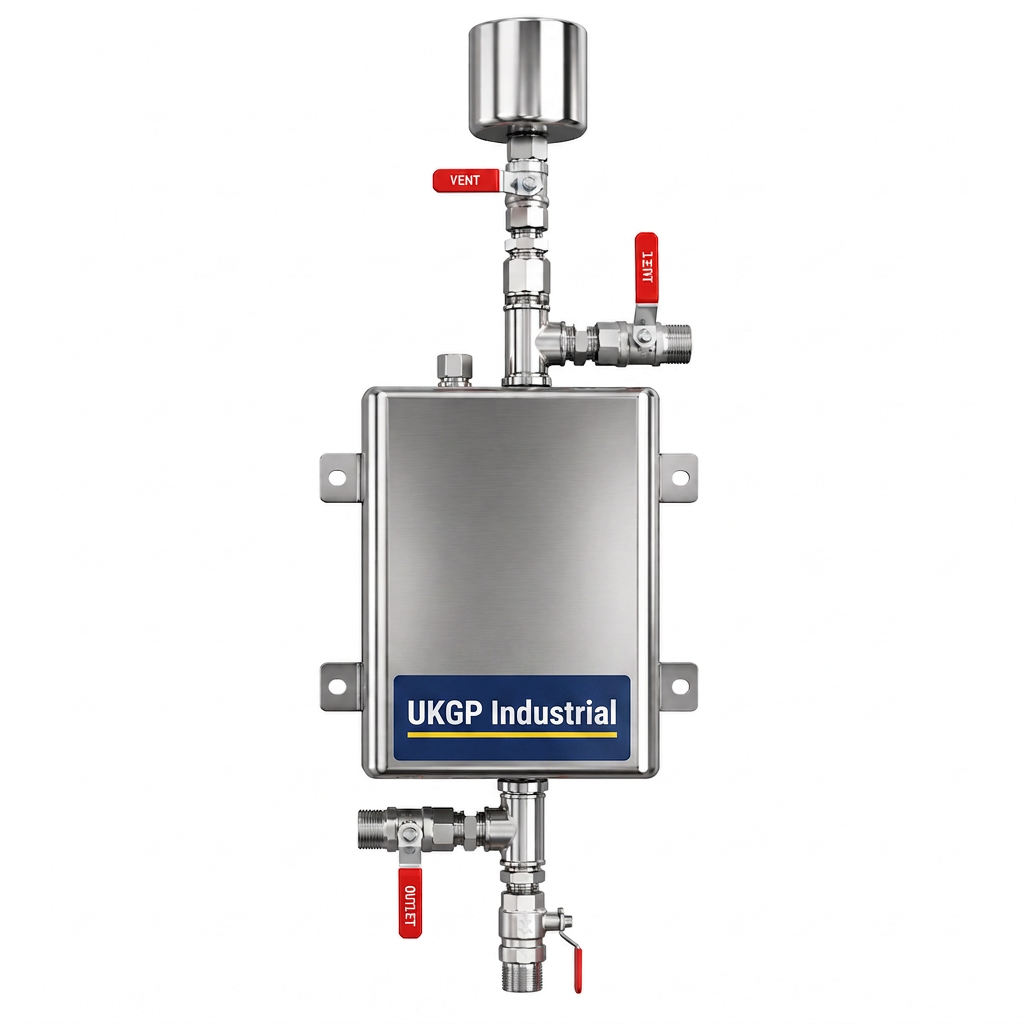
The hardware used for these additions must be durable and easy to operate. UKGP offers a range of chemical dosing pots tailored for this exact purpose, available in 5L, 10L, and 25L capacities to suit any system volume. These pots are typically bypass-mounted, allowing the plant engineer to isolate the vessel, fill it with the required inhibitor boiler chemicals, and then slowly introduce them into the main flow. Manufactured from either carbon steel or stainless steel, these units are built to withstand the typical pressures found in commercial plant rooms, featuring integral isolation valves, a drain valve, and a safety air vent to ensure a safe and controlled dosing process every time.
- Multi-metal compatibility for mixed-material circuits
- Sizing of dosing vessels based on total system volume
- Integration of glycol for external pipework frost protection
- Utilisation of Tuffa-style or stainless steel vessels for longevity
Installation Best Practices for Dosing Pots
Correct installation is critical to ensure the inhibitor boiler chemicals are distributed evenly throughout the pipework. The dosing pot should be installed across the flow and return headers, creating a differential pressure that encourages flow through the vessel when the bypass valves are opened. It is standard practice to include non-return valves where necessary and to ensure the vessel is mounted at a height that allows for ergonomic pouring of chemicals. For larger sites, a 25L UKGP dosing pot is often preferred to reduce the number of individual dosing cycles required during the initial commission of the inhibitor boiler circuit, significantly saving on-site labour time for M&E contractors.
Safety is a primary concern when handling concentrated water treatment chemicals. Every UKGP dosing pot is equipped with a funnel and robust isolation valves to prevent accidental discharge or thermal burns from high-temperature system water. During the commissioning phase, as outlined in BSRIA BG29, the system should be thoroughly flushed before the final inhibitor boiler dose is added. This ensures that construction debris, flux residues, and oils are removed, allowing the inhibitor to form a consistent protective layer on the clean metal surfaces. The use of a high-quality vessel ensures this process is repeatable for the life of the building, providing a reliable point of access for water treatment specialists.
Ongoing maintenance of the dosing hardware is simple but necessary. Engineers should check for signs of leakage around the gland nuts and ensure the internal sieve or funnel is clear of obstructions. Because UKGP dosing pots come with a 2-year warranty, procurement leads can be confident in the build quality and reliability of the unit. Whether you require a carbon steel unit for a standard heating loop or a stainless steel version for more corrosive environments or process-water applications, having a dedicated point for inhibitor boiler chemical entry is the fundamental building block of a professional HVAC maintenance strategy that meets modern UK insurance requirements.
- Bypass-mounting for zero-downtime chemical injection
- Inclusion of safety vents to prevent air-locks in the primary loop
- Ergonomic funnel design for spill-free chemical handling
- Provisions for easy draining and maintenance of the vessel
The Link Between Filtration and Inhibitor Boiler Efficiency
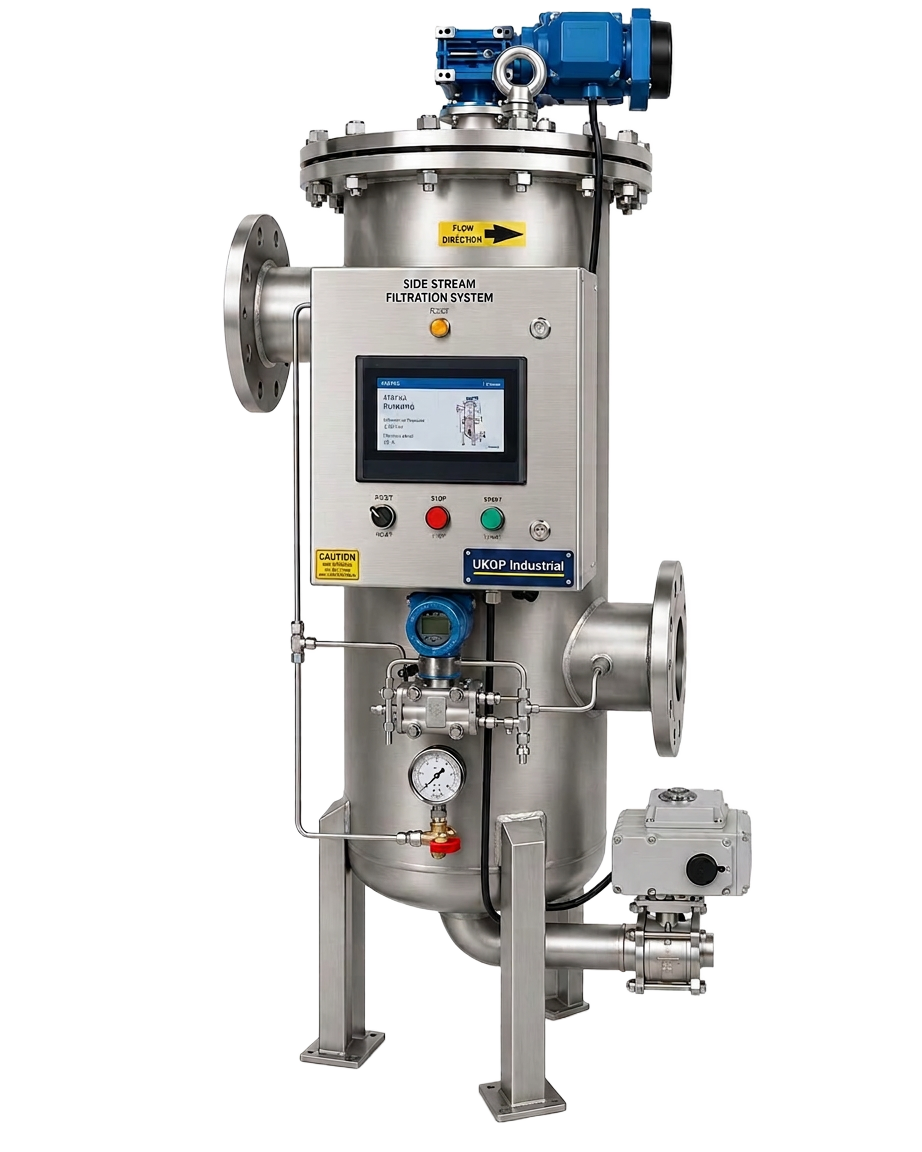
While chemical dosing provides the chemical barrier against corrosion, physical filtration is the second pillar of the BSRIA BG50 strategy for an inhibitor boiler. As magnetite is liberated from older pipework, it can stay in suspension, causing abrasive wear on pump seals and clogging control valves. Integrating a side stream filtration skid alongside the dosing pot allows for the continuous removal of these suspended solids. This synergy ensures that the inhibitor boiler chemicals can work effectively on clean surfaces rather than being wasted on reacting with loose sludge. A clean system translates to lower pump energy consumption and more predictable heat delivery across the building.
Side stream filtration typically handles 5% to 15% of the total flow, and when combined with a correctly dosed inhibitor boiler environment, it results in 'polishing' the water to a high standard of clarity. This is particularly important for modern modulating pumps which have tight tolerances and are highly sensitive to magnetic debris. When an engineer specifies a UKGP side stream filtration unit, they are often looking to solve persistent water quality issues that chemicals alone cannot fix. By removing the particulates, the inhibitor can provide a more uniform coating, extending the periods between major system flushes and reducing the overall chemical spend over the asset's lifecycle.
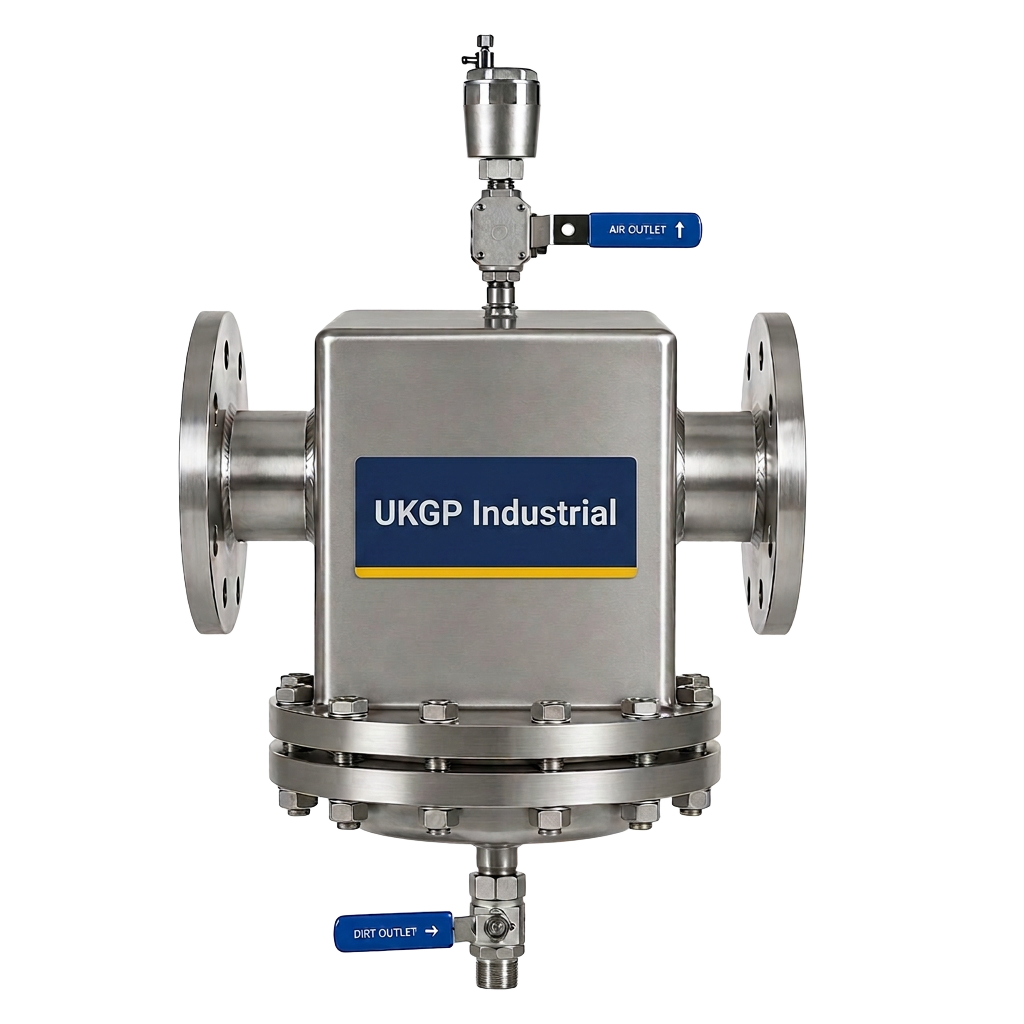
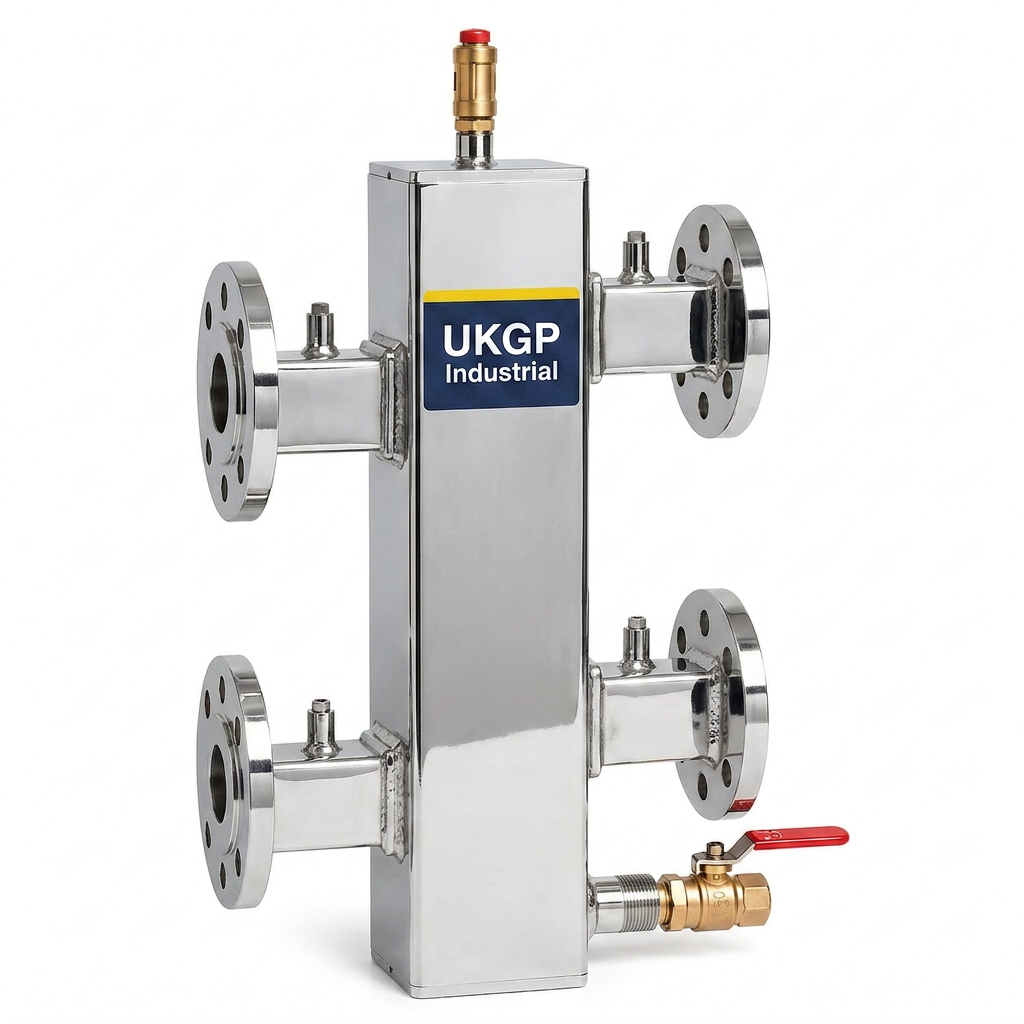
Furthermore, the presence of an air and dirt separator at the hottest point of the system further enhances the performance of the inhibitor boiler circuit. Removing micro-bubbles of oxygen via a high-efficiency separator stops the primary driver of oxidation before it can react with the metalwork. This multi-stage approach—comprising chemical dosing via a pot, mechanical filtration via a side stream unit, and deaeration—represents the gold standard for UK building services. It ensures the longevity of the plant room and provides the FM team with a manageable, reliable system that meets the environmental and efficiency targets set out by CIBSE and local building regulations.
- Continuous removal of magnetite through side stream filtration
- Synergistic effect of clean water and chemical inhibitors
- Reduced wear on high-efficiency circulator pump seals
- Lower maintenance costs and reduced frequency of system flushing
Technical Calculations for Dosing and Expansion
Calculating the correct volume for an inhibitor boiler dose requires an accurate assessment of the total system water volume. This includes the contents of all radiators, pipework, thermal stores, and the boilers themselves. Under-sizing a dosing pot can lead to frustration during the fill stage, whereas an oversized pot may take up valuable wall space in a compact plant room. UKGP provides technical guidance on sizing, with the 5L unit being popular for small commercial units, while the 10L and 25L options serve larger schools, hospitals, and office blocks. Ensuring the inhibitor boiler concentration reaches at least 100ppm of the active tracer (like Molybdenum) is the benchmark for many commercial service contracts.
In addition to chemical volume, one must consider the pressure fluctuations within the system. As water is heated in the inhibitor boiler, it expands, necessitating a correctly sized expansion vessel and, in some cases, expansion bellows to manage the physical movement of the pipework. If the system pressure is not managed, safety valves will lift, causing a loss of treated water. This water is usually replaced by raw, untreated mains water via the pressurisation unit, which dilutes the inhibitor. This constant cycle of dilution is the leading cause of secret corrosion. Therefore, a stable pressure regime is just as important as the initial chemical dose for maintaining a healthy HVAC system.
BS EN 14917 highlights the importance of managing these thermal expansions in metallic bellow expansion joints. When these components are protected by a high-quality inhibitor boiler treatment, the risk of stress corrosion cracking in the stainless steel membranes is significantly reduced. This illustrates how every component in the plant room, from the dosing pot to the expansion joint, relies on the chemical integrity of the water. High-quality UKGP components are designed to work together to form a cohesive, leak-free system that sustains the design efficiency of the building’s heating or cooling network from the day of commissioning onwards.
- Total system volume assessment for accurate chemical dosing
- Management of dilution risks from pressurisation top-ups
- Protection of expansion bellows via stable water chemistry
- Maintaining trace element concentrations for warranty compliance
Compliance and Warranty: The Value of UKGP Hardware
The procurement of plant room equipment like dosing pots often comes down to the balance of cost and compliance. By choosing a UKGP inhibitor boiler dosing solution, installers receive a product that is pressure tested and manufactured to exacting standards. Each unit comes with a 2-year warranty, providing peace of mind for both the contractor and the end-user. In an era where building safety and material traceability are paramount, using a UK-based supplier for your chemical dosing requirements ensures that the equipment meets all relevant British Standards and is suitable for the high-pressure environments of modern commercial developments.
For Facility Managers, the ease of use of a UKGP dosing pot means that periodic topping up of the inhibitor boiler circuit can be performed safely and quickly. The inclusion of clear labeling and robust valve handles prevents operational errors that could lead to system contamination or water damage. When it comes to the mandatory annual water quality reports, having a dedicated and well-maintained dosing station demonstrates to inspectors and insurance providers that the building's infrastructure is being managed professionally. This proactive approach to inhibitor boiler health is the most cost-effective way to avoid the five-figure costs associated with boiler failures and emergency repairs.
In summary, the inhibitor boiler is the heart of the building's warmth, but its lifespan is entirely dependent on the chemistry of the water circulating through it. By specifying UKGP dosing pots, side stream filters, and air separators, you are investing in a system that exceeds the minimum requirements of BSRIA and CIBSE. We invite M&E consultants and contractors to contact our Surrey-based technical team for a quote or to discuss the specific requirements of your next project. Our range of 5L, 10L, and 25L dosing pots are available in carbon or stainless steel to ensure we have the right solution for every commercial application in the UK.
- Two-year warranty for long-term project security
- Available in carbon steel or 316 stainless steel options
- Support for BSRIA BG50 compliance and audit trails
- UK-based technical support and fast delivery for plant room upgrades
Frequently asked questions
What size dosing pot do I need for my system?
- Sizing is based on the total system volume. For smaller commercial systems up to 5,000 litres, a 5L or 10L pot is usually sufficient to add the initial dose in a few cycles. For larger systems or district heating, a 25L pot is recommended to minimize the time spent on-site during commissioning.
Can I use a carbon steel dosing pot with a stainless steel boiler?
- Yes, provided the system is closed-loop and appropriately inhibited. However, for high-purity systems or where there is a specific risk of external corrosion, a UKGP stainless steel dosing pot is available for enhanced durability.
How often should I add inhibitor to the boiler circuit?
- According to BSRIA BG50, water quality should be checked at least annually. If the inhibitor levels have dropped due to leaks or maintenance, top up the system via the dosing pot until the manufacturer's recommended concentration is reached.
Is a cooling system different for an inhibitor boiler dose?
- Chilled water systems require different chemicals (often glycol and biocides), but the hardware remains the same. A UKGP dosing pot is rated for both heating and cooling applications, providing a versatile solution for all HVAC circuits.
What is the benefit of a bypass-mounted dosing pot?
- Bypass mounting allows the inhibitor boiler to remain operational while chemicals are being added. It also ensures that the high-concentration chemicals are introduced gradually into the flow, preventing 'slugs' of chemical from causing issues with sensitive sensors.