The Importance of Accurate Dosing Pot Revit Models
In the current UK construction landscape, BIM Level 2 compliance and beyond necessitates that every component within a commercial plant-room is represented with accurate geometry and metadata. A dosing pot Revit model is far more than just a 3D placeholder; it is a critical data point that informs the spatially constrained environment of a modern energy centre. By using high-fidelity Revit assets, M&E consultants can ensure that the bypass-mounted configuration—essential for manual chemical induction—is perfectly aligned with the secondary pipework, avoiding the costly on-site ‘clash’ scenarios that frequently plague poorly coordinated mechanical installations.
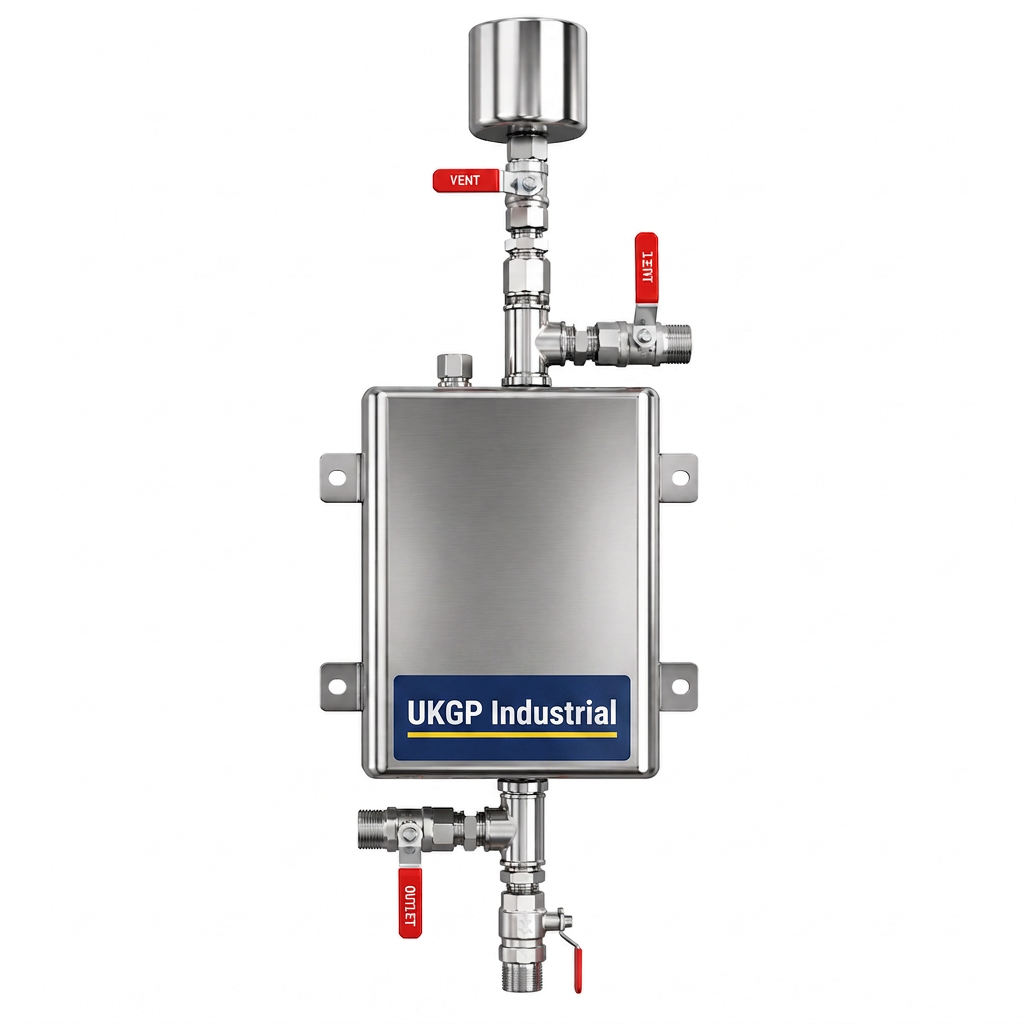
When integrating a dosing pot Revit family, engineering leads must consider the physical footprint of the unit alongside the required clearance for operation and maintenance. UKGP chemical dosing pots are designed for bypass mounting and include essential isolation valves, a drain, and a vent. These physical attributes must be accurately mirrored in the digital twin to ensure that Facilities Management (FM) teams have sufficient space to pour inhibitors or glycol without obstruction. Accurate digital representation ensures that the 5L, 10L, or 25L variants are selected appropriately for the system volume, preventing the common mistake of undersizing the dosing equipment during the initial design phase.
Beyond spatial coordination, the inclusion of technical metadata within the Revit asset supports the long-term lifecycle of the building. Detailed parameters such as maximum working pressure, temperature ratings, and material specifications (whether carbon steel or stainless steel) provide essential information for the eventual handover to the client. This level of detail aligns with the ‘Golden Thread’ of information, ensuring that every asset, from a simple dosing pot to a complex plate heat exchanger, is fully documented and traceable throughout its operational lifespan in the commercial heating system.
- Reduction in on-site spatial conflicts via accurate 3D geometry
- Streamlined procurement with embedded manufacturer metadata
- Improved FM access planning for manual chemical dosing
- Full alignment with ISO 19650 BIM standards for M&E services
Adhering to BSRIA and CIBSE via Dosing Pot Revit Assets
Adherence to BSRIA BG29 (Pre-commission cleaning) and BG50 (Water treatment for closed systems) is non-negotiable for high-performing UK heating networks. Using a dosing pot Revit family allows designers to place chemical induction points at the optimal hydraulic positions as recommended by CIBSE guidelines. Traditionally, dosing pots are located across the flow and return headers to utilise the differential pressure for circulation. By modelling these accurately, engineers can confirm that the dosing pot is accessible for the initial system flush and the subsequent introduction of corrosion inhibitors, which are vital for protecting the heat exchangers and boiler plant.
The technical integration of these units within a Revit environment also allows for the automated generation of equipment schedules, ensuring that the specification for a UKGP 10L stainless steel dosing pot is consistently communicated from the consultant to the procurement lead. This reduces the risk of sub-standard substitutes being installed on-site, which could lead to premature system degradation or failure to meet BS 8552 water quality monitoring requirements. Correct placement in the digital model ensures the unit is situated away from high-velocity zones but remains fully functional for total system volume treatment, protecting your commercial investment.
Furthermore, the integration of these models aids in the calculation of system volume and the subsequent required dosage of glycol or inhibitor. When the dosing pot Revit family is part of a wider BIM-enabled system, it becomes easier to calculate the exact amount of chemical required for the plant-room. UKGP Industrial's range includes robust isolation valves and a tundish for safe chemical handling, and seeing these components within the digital model allows the lead engineer to verify that safety protocols—such as proper drainage for the vent and drain valves—are designed into the pipework layout from day one.
- Ensure compliance with BSRIA BG29 and BG50 treatment standards
- Facilitate precise hydraulic placement for differential pressure dosing
- Automate equipment scheduling to prevent specification drift
- Enhance health and safety by designing for safe chemical handling
Selecting the Right Dosing Pot Revit Specification
Selecting the appropriate dosing pot Revit parameters depends heavily on the specific requirements of the closed-loop system. UKGP Industrial offers units in 5L, 10L, and 25L capacities, crafted from either carbon steel or stainless steel to suit varied industrial applications. When choosing a model for your project, it is essential to consider the maximum system pressure; our units are built to withstand rigorous commercial environments and come backed by a 2-year warranty for peace of mind. Ensuring your Revit model reflects these performance characteristics is a benchmark of professional M&E design practice.
The decision between carbon steel and stainless steel should be reflected in the Revit asset's material parameters to ensure compatibility with the system's longevity requirements. For instance, in sensitive chilled water circuits or systems where high-grade materials are mandated, the stainless steel dosing pot Revit option should be specified. By clearly defining these materials in the BIM environment, you avoid the risk of galvanic corrosion later in the project lifecycle. This technical foresight is what separates high-quality consultancy firms from their competitors, delivering a robust solution for the end-user that requires minimal remedial work.
Designers should also pay close attention to the bypass mounting arrangement. A proper dosing pot Revit family will include the necessary connections for isolation, allowing the pot to be safely isolated from the main flow during the filling process. If you are designing a high-pressure system, verifying that the chosen pot meets the necessary BS EN standards for pressure vessels within the Revit environment is crucial. UKGP provides the technical support to ensure your digital specification matches the physical reality of the plant-room, providing a seamless transition from the designer's desk to the contractor’s installation.
- Choose between 5L, 10L, and 25L capacities for system scalability
- Specify carbon steel or stainless steel based on fluid chemistry
- Verify pressure ratings against BS EN 14917 where applicable
- Includes isolation valves, drain, and vent for full functionality
Integrating Dosing Pots with Other Plant-Room Assets
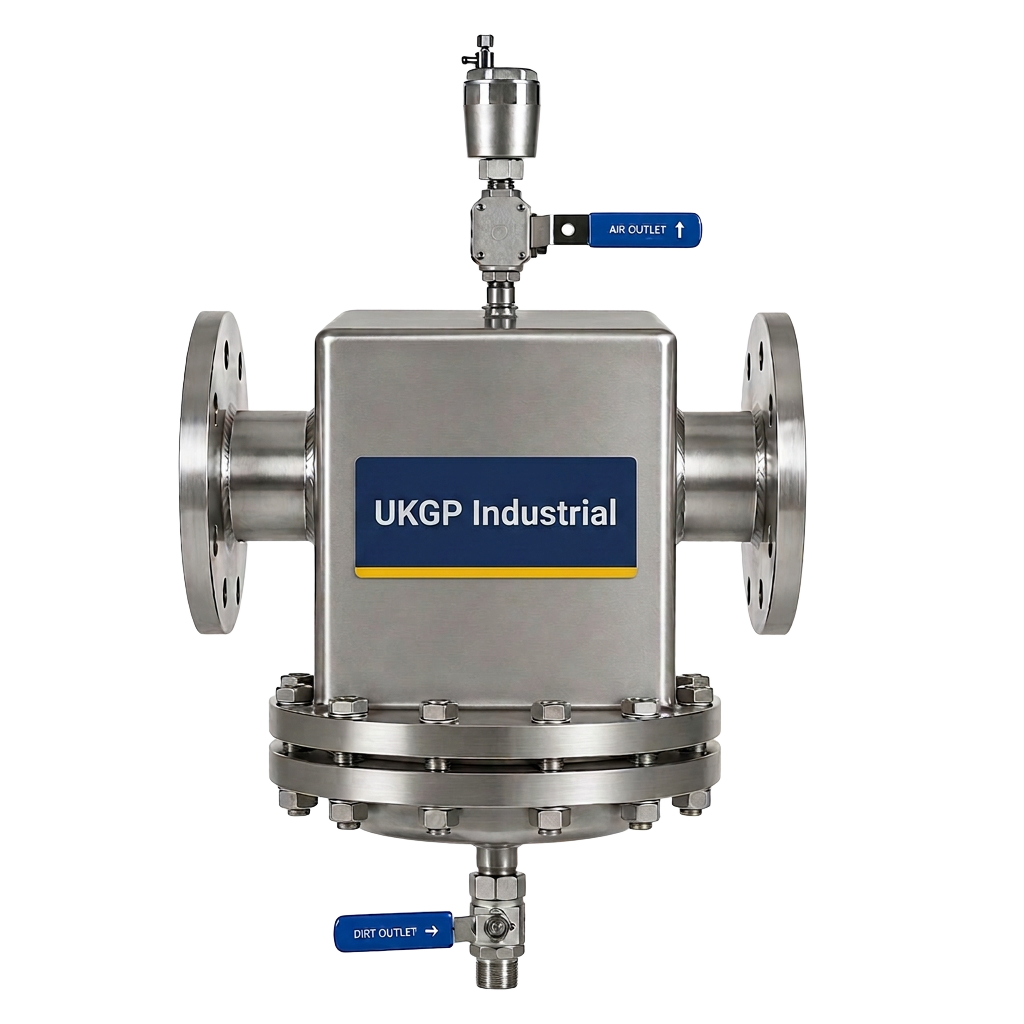
A holistic approach to plant-room design involves the careful integration of the dosing pot alongside other critical components such as air and dirt separators and expansion bellows. Using a dosing pot Revit family in conjunction with our other BIM assets allows for a comprehensive 'whole-system' view. For example, placing a dosing pot upstream of an air and dirt separator can sometimes be advantageous for ensuring chemicals are well-mixed before passing through filtration stages. This level of coordination is made significantly easier when all components are modeled with consistent LOD (Level of Development) standards.
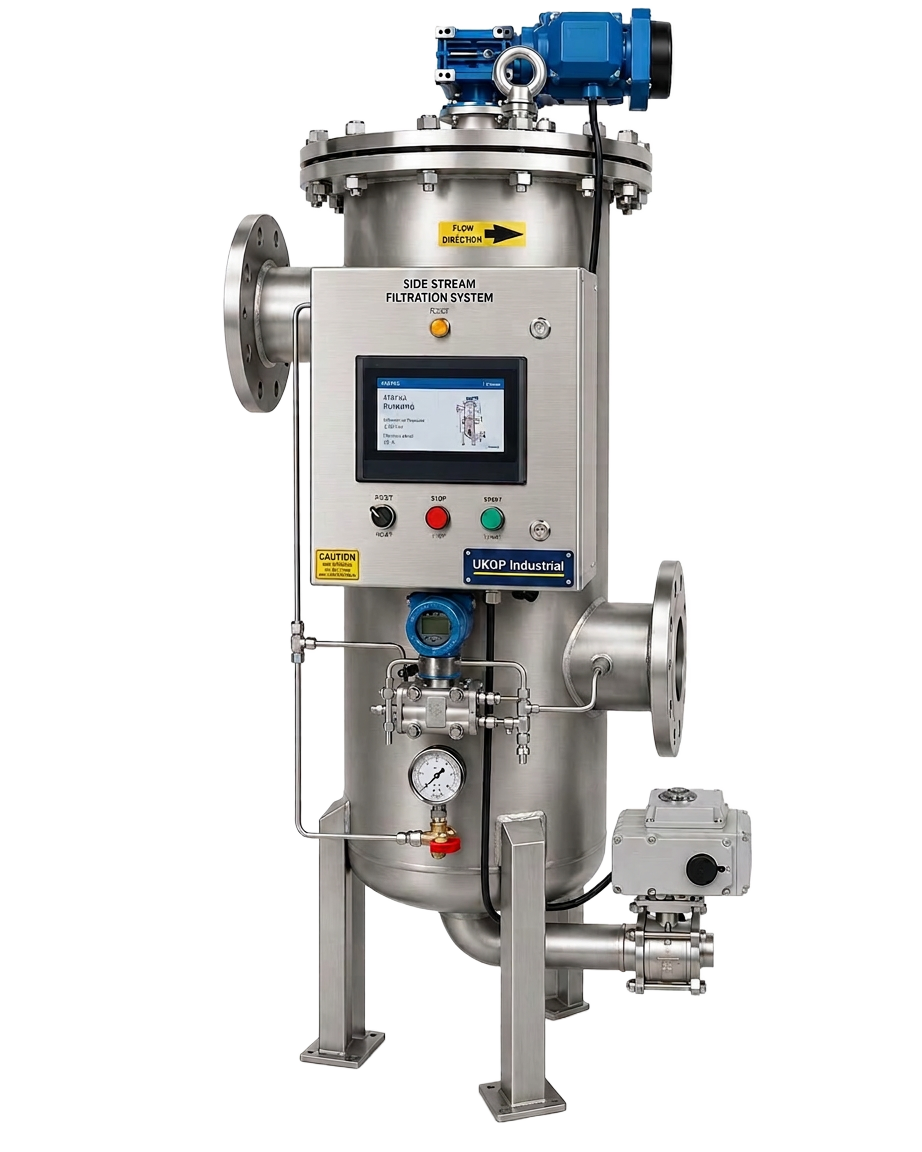
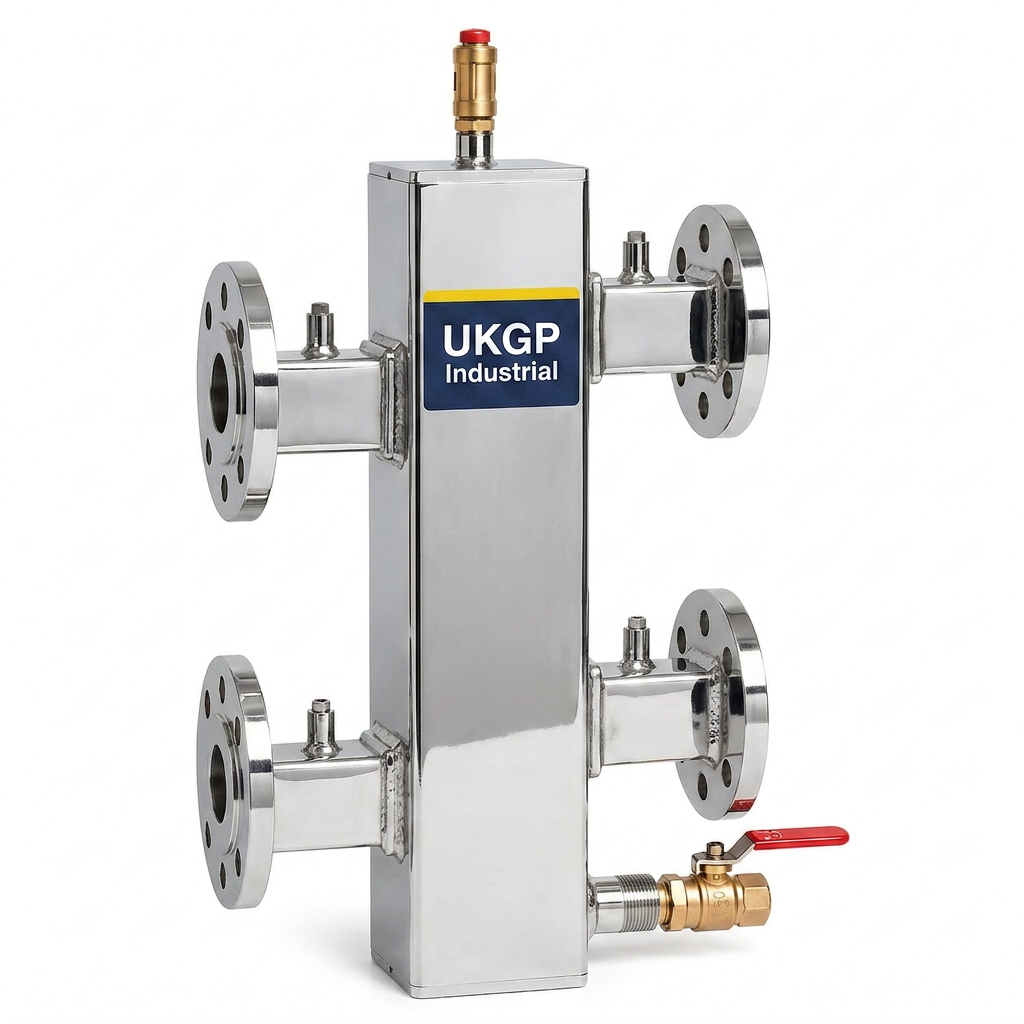
In commercial systems featuring low loss headers, the dosing pot must be positioned where it can effectively distribute chemicals to both the primary and secondary circuits. By visualising this in Revit, the designer can ensure that the chemical dose will reach the main heat exchangers and the terminal units without getting trapped in stagnant zones. UKGP's range of products, including side-stream filtration skids and plate heat exchangers, are all designed to work in harmony. Coordinating these through Revit ensures that the hydraulic balance of the system is maintained while water quality is strictly controlled.
When designing for thermal expansion, the relationship between the dosing pot and expansion bellows must also be considered. While the dosing pot is a static vessel, its location within the header pipework must not interfere with the movement of bellows or the placement of pipe guides. Using accurate Revit families allows for the precise placement of anchors and guides, ensuring the mechanical integrity of the entire system. Requesting a quote for a UKGP dosing pot ensures you receive a unit that is manufactured to the highest standards, ready for integration into these complex, high-performance mechanical environments.
- Coordinate with air and dirt separators for optimal water quality
- Ensure chemical distribution through low loss headers
- Protect plate heat exchangers from fouling via regular dosing
- Prevent interference with expansion bellows and pipe supports
Installation Best Practices for Dosing Pots
While the dosing pot Revit family provides the blueprint, the physical installation must follow strictly defined engineering practices to ensure longevity and safety. Dosing pots should always be installed in a bypass arrangement with isolation valves to allow for safe filling. The inclusion of a tundish and a drain valve facilitates the safe disposal of excess fluid and prevents spills during the chemical induction process. M&E contractors should refer to the Revit model to confirm the exact orientation of these valves, ensuring they are accessible for the FM team who will be tasked with the system's ongoing maintenance.
For larger systems, the 25L UKGP unit is often preferred to reduce the frequency of manual dosing. During installation, it is vital to ensure that the vent valve is piped to a safe discharge point, a detail that can be clearly identified and coordinated within the Revit model. This prevents the risk of accidental exposure to potentially harmful chemicals. Following the CIBSE commissioning codes, the dosing pot should be used to bring the system up to the required levels of inhibitor immediately following the pre-commission clean to prevent flash corrosion on internal pipe surfaces.
All UKGP dosing pots are supplied with a 2-year warranty, reflecting our confidence in the build quality of our carbon and stainless steel vessels. Contractors should ensure that the units are mounted on stable supports, as a full 25L pot can have significant weight. By leveraging the data from the Revit model, the structural requirements for these supports can be calculated early in the project. This proactive approach avoids last-minute site modifications and ensures the mechanical installation meets both the consultant's specification and the client's expectations for a professional, long-lasting plant-room.
- Install in a bypass configuration for maximum safety
- Utilise the vent valve to prevent air ingress during dosing
- Ensure the drain valve is accessible for system maintenance
- Secure the unit on robust supports based on Revit weight data
Streamlining Procurement with UKGP Industrial
Ultimately, the goal of using a dosing pot Revit family is to facilitate a smooth transition from design to procurement and installation. By specifying a UKGP unit in your BIM model, you are choosing a product that is designed specifically for the rigours of the UK commercial market. Our dosing pots are trusted by leading M&E contractors and FMs across the country for their reliability and ease of use. Whether you are dealing with a small-scale office heating system or a large industrial chilled water network, our range provides the perfect balance of performance and value.
When your project reaches the procurement stage, having an accurate schedule derived from your Revit model makes obtaining a quote straightforward. UKGP Industrial offers competitive lead times on 5L, 10L, and 25L units, available in both carbon and stainless steel. Our team of technical experts is on hand to assist with sizing queries and to ensure that the product you specify meets the exact needs of your hydraulic system. We understand the pressure of project deadlines and work closely with our partners to ensure timely delivery to site, complete with all necessary O&M documentation.
In an era where building performance and water quality are under intense scrutiny, don't leave your chemical dosing to chance. Incorporating a high-quality dosing pot into your design is a fundamental step in ensuring the long-term health of your HVAC assets. Contact UKGP Industrial today to discuss your project requirements or to request a quote for our dosing pots. Our commitment to quality, backed by our 2-year warranty, ensures your commercial heating and cooling systems are protected from the very beginning, delivering efficiency and reliability for the life of the building.
- Simplified procurement via Revit-generated schedules
- Expert technical support for sizing and material selection
- Fast lead times for UK-wide commercial projects
- Reliable 2-year warranty on all chemical dosing pots
Frequently asked questions
Why should I use a dosing pot Revit model in my design?
- Using a dosing pot Revit model ensures spatial coordination, prevents on-site clashes with other pipework, and allows for accurate equipment scheduling, which is essential for BIM Level 2 compliance in commercial M&E projects.
What sizes are available for UKGP chemical dosing pots?
- UKGP Industrial supplies chemical dosing pots in three standard sizes: 5L, 10L, and 25L. These are available in both carbon steel and stainless steel to suit various system requirements and water chemistries.
Do UKGP dosing pots come with a warranty?
- Yes, all our chemical dosing pots are supplied with a 2-year warranty, providing assurance of build quality and durability for commercial heating and chilled water applications.
How does a dosing pot assist with BSRIA compliance?
- A dosing pot provides the necessary entry point for corrosion inhibitors and glycol, as required by BSRIA BG29 and BG50, ensuring the system remains protected from internal corrosion and scale buildup.
Can I specify a stainless steel dosing pot for my project?
- Absolutely. UKGP offers stainless steel variants which are ideal for systems where high-grade materials are required to prevent corrosion or to meet specific industrial cleanliness standards.