The Role of Central Heating Cleaner and Inhibitor in BSRIA BG50
In the commercial sector, the maintenance of closed-loop hydronic systems is governed by strict technical standards to prevent scale, corrosion, and microbiological growth. Utilizing a high-quality central heating cleaner and inhibitor is not merely a recommendation but a necessity for compliance with BSRIA BG29 and BG50. The cleaning phase involves using a neutral or alkaline chemical cleaner to mobilize flux residues, oils, and installation debris. This is then followed by the introduction of a protective inhibitor that forms a passive film over the metallic surfaces. Failing to follow this sequence can lead to localized pitting and accelerated galvanic corrosion, which significantly reduces the operational lifespan of expensive plant room equipment.
When selecting a central heating cleaner and inhibitor package, M&E contractors must consider the system metallurgy. Many modern commercial boiler heat exchangers utilize aluminium or stainless steel, each requiring specific chemical formulations to avoid damaging the substrate. A generic approach to dosing can lead to the degradation of seals and gaskets. It is therefore vital to consult the technical data sheets for both the chemicals and the boiler plant. BSRIA BG50 emphasizes that water chemistry should be monitored regularly, with inhibitor levels checked at least annually to ensure the concentration remains within the manufacturer’s specified range for maximum protection.
The commercial viability of a project often hinges on the efficiency of the heat transfer process. By ensuring your central heating cleaner and inhibitor are applied correctly, you minimize the risk of insulating sludge layers forming on internal pipework. Sludge and magnetite buildup act as thermal insulators, forcing the burners to work harder to achieve the desired flow temperatures. This increase in energy consumption can be avoided by utilizing a structured dosing regime. For procurement leads and facility managers, the investment in high-grade chemicals is small compared to the potential costs of emergency repairs and the premature replacement of entire plant room circuits.
- Compliance with BSRIA BG50 water treatment standards
- Protection of multi-metal systems including aluminium and copper
- Prevention of magnetite and sludge accumulation
- Reduction in lifetime operational energy costs
Best Practices for Dosing Central Heating Cleaner and Inhibitor
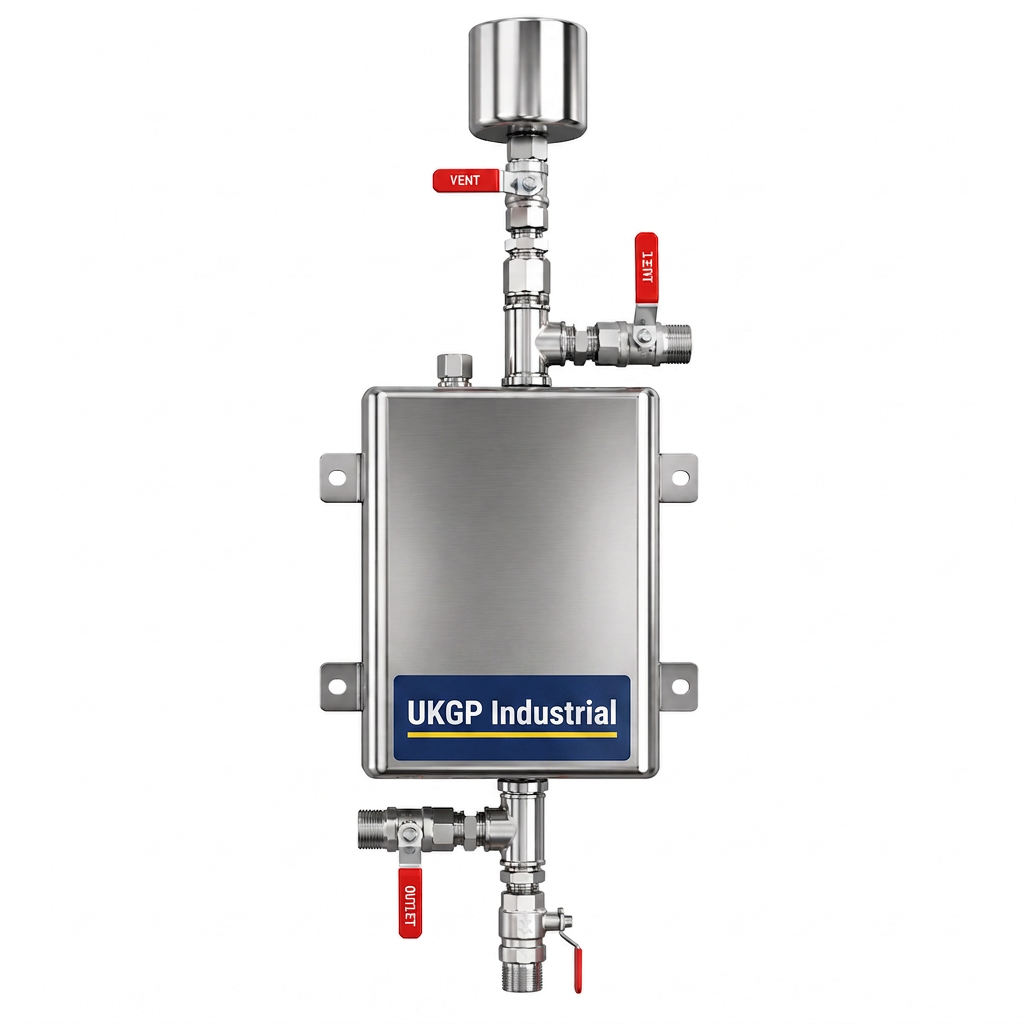
The physical introduction of any central heating cleaner and inhibitor into a commercial system requires a reliable and safe delivery mechanism. Pouring chemicals directly into open vent tanks is largely obsolete in modern pressurised systems. Instead, bypass-mounted vessels are used to ensure the chemicals are distributed evenly throughout the primary loop. The UKGP range of chemical dosing pots provides a professional solution for this task, available in 5L, 10L, and 25L capacities. These units are typically constructed from carbon steel or stainless steel and are designed to withstand the typical pressures found in large-scale commercial plant rooms while allowing for safe, atmospheric dosing.
A typical dosing procedure involves isolating the vessel, draining a small amount of water via the bottom drain valve, and then filling the pot with the required central heating cleaner and inhibitor through the top-mounted funnel. Once the pot is sealed, the isolation valves are reopened, allowing the system pressure to circulate the chemicals through the bypass. This method ensures that the chemical concentration is uniform and that no air is introduced into the system, which would otherwise contribute to oxidative corrosion. Our dosing pots include a 2-year warranty and are provided with all necessary valves and vents as standard, ensuring a long-term, maintainable installation.
Sizing the dosing pot is dependent on the total system volume and the concentration required by the chemical manufacturer. It is common to see systems requiring a 1% concentration, meaning a 1,000-litre system would require 10 litres of inhibitor. In such cases, a 10L UKGP dosing pot allows for a single-pass application, reducing the labour time required for the plant room engineer. Whether you are performing an initial pre-commissioning flush or a routine top-up of glycol and inhibitor, having a fixed, bypass-mounted vessel is the industry-standard approach for M&E contractors looking to provide a high-quality handover to the client.
- Available in 5L, 10L, and 25L configurations
- Carbon steel or stainless steel options available
- Complete with isolation valves, drain, vent, and funnel
- Ideally sized for easy inhibitor and glycol top-ups
Preventing Component Failure with Side Stream Filtration
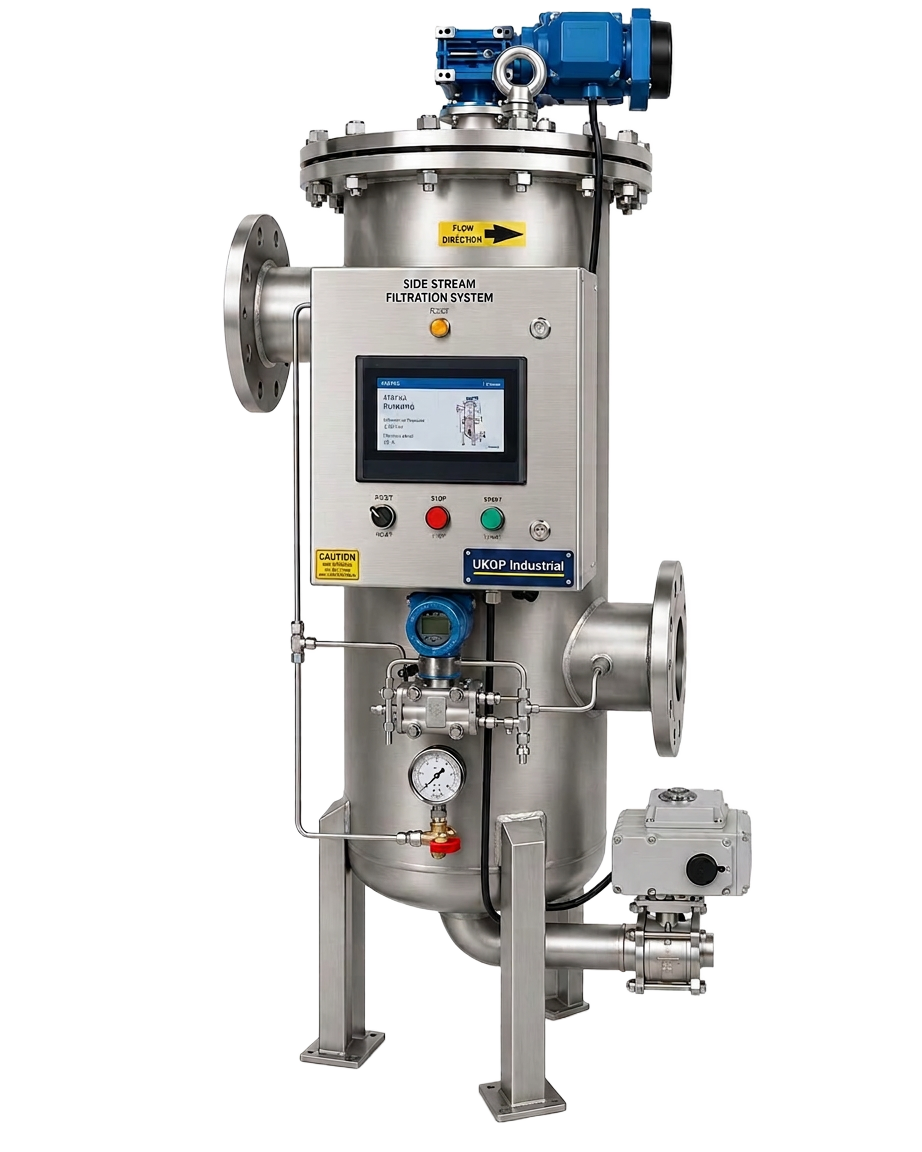
While the chemical application of a central heating cleaner and inhibitor is the first line of defence, it must be paired with physical filtration to be completely effective. Even with the best inhibitors, high-velocity systems can still experience the migration of existing scale or debris that was not fully removed during the initial flush. Side stream filtration works in tandem with water treatment chemicals by continuously removing suspended solids and magnetite. This ensures that the water remains clear and the chemicals can maintain contact with the metal surfaces to provide a protective barrier. Without filtration, the chemical treatment can become overwhelmed by high particulate loads.
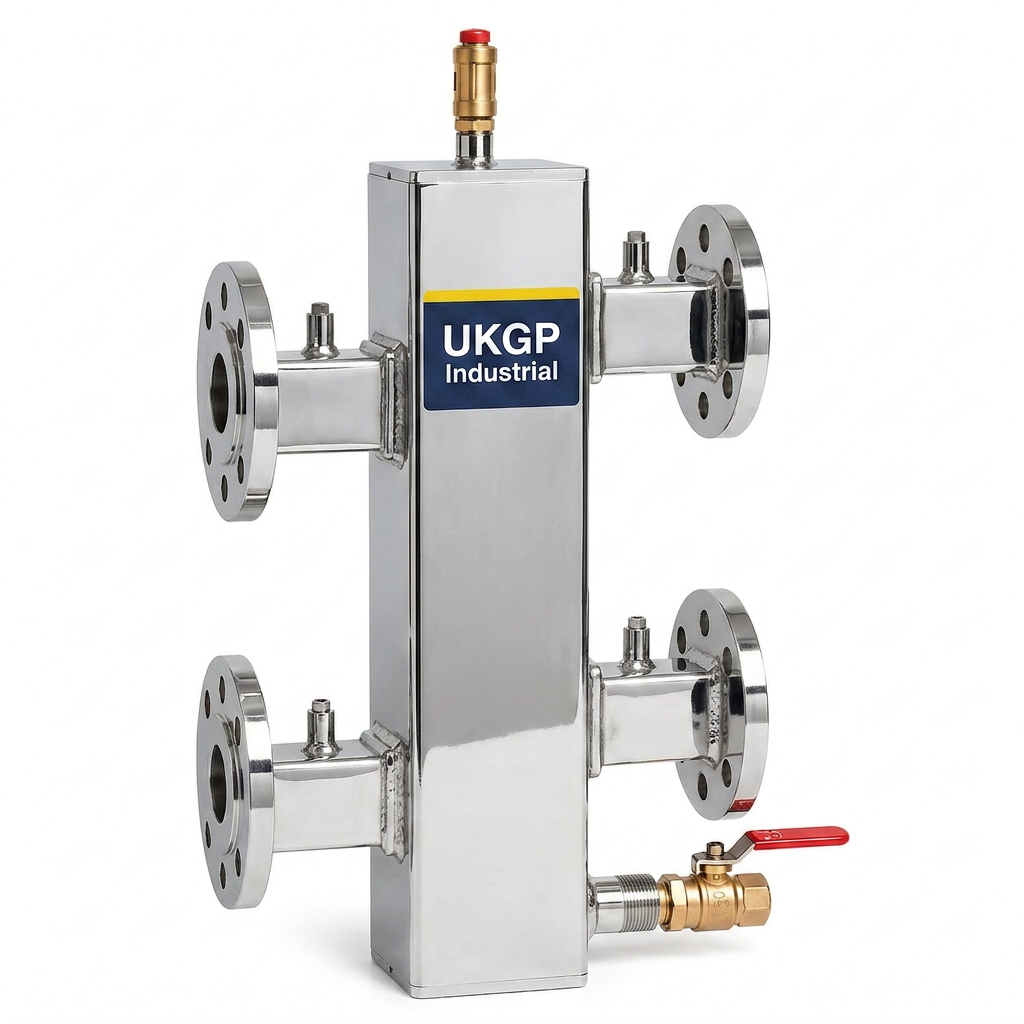
Integrating a side stream filtration skid alongside your dosing pot allows for a comprehensive water health strategy. These skids often include a fine-mesh filter or a magnetic separator that captures particles smaller than 5 microns. By removing these abrasive solids, you protect the mechanical seals within the primary circulating pumps and prevent the blockage of sensitive control valves. This is especially critical in systems utilizing low-loss headers or plate heat exchangers, where narrow galleries are prone to fouling. Proper filtration ensures that the central heating cleaner and inhibitor are free to perform their chemical role without physical interference from debris.
Consultants should specify both chemical dosing and side stream filtration to meet the requirements of BS 8552 for water sampling. Regular sampling is easier and more representative when the system is clean and chemically balanced. For contractors, installing these components as a package demonstrates a commitment to technical excellence and professional standards. Our side stream filtration systems are designed to be compact and easy to maintain, providing the perfect accompaniment to our dosing pot range. By addressing both the chemical and physical aspects of water quality, you significantly reduce the risk of future system downtime and warranty disputes with boiler manufacturers.
- Continuous removal of magnetite and suspended solids
- Protects sensitive components like plate heat exchangers
- Enhances the effectiveness of chemical inhibitors
- Critical for meeting BS 8552 water quality benchmarks
Maintaining Passive Protection in Closed Circuits
After the initial system cleaning, the long-term maintenance of the central heating cleaner and inhibitor levels is the responsibility of the facilities management team. Over time, system water can be lost due to minor leaks, the venting of air, or through maintenance activities. Every time fresh water is introduced via the pressurisation unit, the concentration of the inhibitor is diluted. If the concentration falls below the threshold, the system becomes vulnerable to microbial growth and corrosion. This is particularly dangerous in low-temperature systems, such as those served by heat pumps, where the water temperature is ideal for biological fouling.
To combat this, FM providers should implement a regular testing regime. High-quality test kits can quickly determine the parts-per-million of active central heating cleaner and inhibitor. If the levels are low, the UKGP dosing pot provides an instant access point to restore the system's chemical balance. It is also common to use these vessels for the introduction of glycol in chilled water or external heating circuits to provide antifreeze protection. Because our pots are available in stainless steel versions, they are highly resistant to the more aggressive chemical profiles sometimes found in industrial applications, ensuring the infrastructure remains robust for years to come.
The financial implications of neglecting water treatment are substantial. A system that is not properly treated with a central heating cleaner and inhibitor will suffer from reduced heat transfer efficiency, leading to higher gas or electricity bills. Furthermore, the cost of an emergency call-out to replace a seized circulator or a perforated heat exchanger far outweighs the cost of a proactive maintenance schedule involving a 25L dosing pot and annual water analysis. By choosing UKGP products, you are investing in British-manufactured hardware that is built to last, backed by a 2-year warranty to give you and your clients peace of mind.
- Mitigates the risk of oxygen-based corrosion
- Prevents metabolic by-products from biological growth
- Allows for rapid glycol replenishment for frost protection
- Robust design suitable for commercial and industrial plant rooms
Technical Selection of Dosing Equipment
Selecting the right hardware for the introduction of central heating cleaner and inhibitor is a matter of calculating the appropriate bypass volume. For large commercial buildings, a 25L capacity pot is often the most efficient choice, as it allows for the addition of large volumes of chemicals without having to repeat the refill and purge cycle multiple times. Our pots are designed with a wide-mouth funnel and large-bore isolation valves to speed up the process for the operative on-site. The bypass mounting ensures that even if the dosing pot requires maintenance, the main system flow is never interrupted, maintaining service to the building's occupants.
Materials of construction represent another critical decision for the specifying engineer. While carbon steel is the standard for most LTHW systems, stainless steel dosing pots offer superior longevity in more demanding environments or where there is a risk of external moisture causing corrosion. All UKGP dosing pots are manufactured with a focus on safety, featuring a secure vent valve to release pressure before opening the filling cap. This focus on practical, safe operation is why our products are favoured by leading UK M&E contractors for both new-build projects and plant room refurbishments where central heating cleaner and inhibitor are being upgraded.
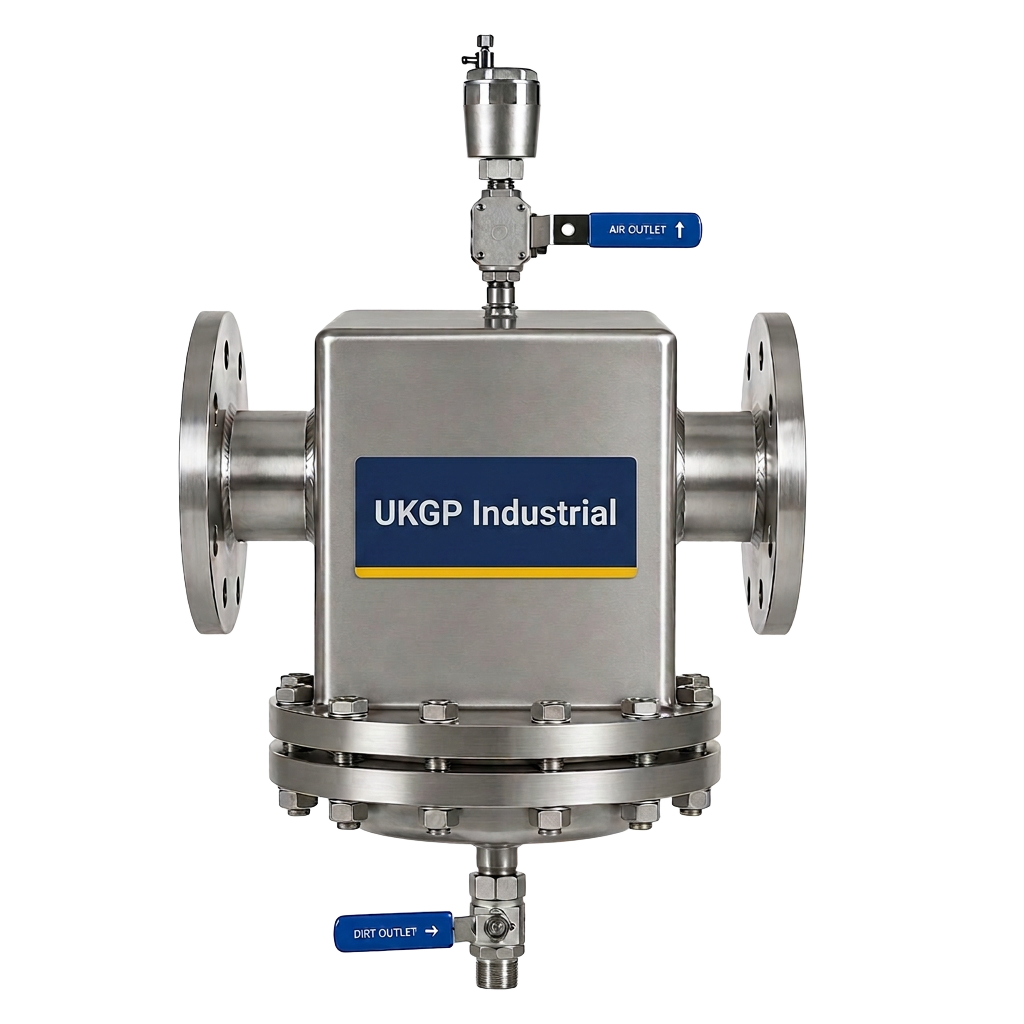
Finally, consideration must be given to the physical footprint within the plant room. Space is often at a premium, particularly in central London plant rooms. Our dosing pots are vertically oriented and wall-mountable using heavy-duty brackets, ensuring they do not take up valuable floor space. When combined with our range of air and dirt separators, these components create a comprehensive water protection station. Ordering a UKGP dosing kit ensures you receive the vessel, all necessary ball valves, a non-return valve, and a pressure gauge, facilitating a rapid installation and allowing the commission engineer to focus on the application of the central heating cleaner and inhibitor.
- Vertical design for space-efficient installation
- Supplied as a complete kit for rapid site assembly
- Venting mechanisms included for operator safety
- Choice of materials to suit the specific project environment
Summary: Achieving Long-Term System Stability
The successful delivery of a commercial HVAC project relies on more than just high-efficiency boilers; it requires a disciplined approach to water chemistry. The use of a central heating cleaner and inhibitor is the cornerstone of this strategy. By ensuring that systems are correctly cleaned following BSRIA BG29 and then inhibited to BG50 standards, engineers can guarantee the performance and longevity that clients expect. This proactive approach prevents the most common causes of system failure, including scale buildup and internal corrosion, which can void manufacturer warranties and lead to costly litigation or repair works.
As we have explored, the hardware used to deliver these chemicals is just as important as the chemicals themselves. A UKGP dosing pot, professionally installed on a bypass, remains the most effective and safe method for maintaining the correct chemical concentration of your central heating cleaner and inhibitor. With capacities ranging from 5L to 25L and a 2-year warranty on all models, our range is designed to meet the needs of any commercial or industrial project. Our lead times are geared toward the fast-paced nature of the UK construction industry, ensuring that you have the equipment you need, when you need it.
For those looking to procure high-quality water treatment hardware, UKGP offers expert technical support to assist with the sizing and selection process. Whether you require a carbon steel vessel for a standard heating loop or a stainless steel unit for a more specialized application, our team is ready to provide a competitive quote. Protect your investment, maintain your system efficiency, and comply with UK building standards by choosing the right delivery system for your central heating cleaner and inhibitor today. Contact us for technical data sheets or to discuss your specific project requirements.
- Expert technical support available for equipment sizing
- Fast lead times for UK-wide delivery
- High-spec finish suitable for professional plant rooms
- 2-year warranty as standard on all chemical dosing pots
Frequently asked questions
What volume of central heating cleaner and inhibitor do I need?
- Typically, inhibitors and cleaners are dosed at a rate of 0.5% to 1% of the total system volume. For example, a 2,000-litre system would require 20 litres of chemical. A UKGP 25L dosing pot would be ideal for this, allowing the entire dose to be added in one operation.
Can I use a dosing pot for glycol as well as inhibitors?
- Yes, our chemical dosing pots are perfect for adding glycol to both heating and chilled water systems. The bypass-mounted design allows for simple top-ups of glycol to maintain the required frost protection levels throughout the winter months.
Does BSRIA BG50 require special dosing equipment?
- While BSRIA BG50 focuses on the chemical parameters, it implicitly requires a safe and effective means of introducing those chemicals. A bypass dosing pot is the industry-standard method for ensuring the correct application of central heating cleaner and inhibitor without introducing air into the system.
What is the difference between carbon steel and stainless steel dosing pots?
- Carbon steel is the standard choice for LTHW systems where the internal water is treated with inhibitor. Stainless steel dosing pots offer increased resistance to external corrosion and are often specified for chilled water systems or high-specification industrial environments where chemical compatibility is a concern.
How often should I check the inhibitor levels in my system?
- According to BS 8552 and BSRIA BG50, commercial water systems should be sampled and tested at least once a year. If the levels of central heating cleaner and inhibitor have dropped, a dosing pot should be used to restore the concentration to the manufacturer's recommended level.