The Role of Boiler Inhibitor Fluid in HVAC Longevity
The integrity of a commercial heating or cooling system relies heavily on the chemical balance of the circulating water. Boiler inhibitor fluid is designed to create a protective barrier on internal metal surfaces, effectively passivating components like plate heat exchangers, carbon steel pipework, and commercial boiler heat exchangers. Without this chemical intervention, oxygen ingress and mineral deposits can lead to rapid pitting and localised corrosion. UK building services consultants often look to BSRIA BG50 guidelines to ensure that water treatment regimes are robust enough to handle the thermal stresses found in large-scale M&E projects. By maintaining the correct concentration of boiler inhibitor fluid, engineers can significantly reduce the risk of hydrogen gas buildup and system blockages caused by magnetite sludge.
Choosing the right chemical formulation is only half the battle; the delivery method is equally critical. For contractors installing new plant or retrofitting existing systems, ensuring that boiler inhibitor fluid is introduced without introducing air is a priority. This is typically achieved through correctly sized dosing equipment that allows for precision without shutting down the entire loop. Modern commercial boiler inhibitor fluid variants are formulated to work across multi-metal systems, protecting copper, brass, steel, and even aluminium components found in leading commercial boiler manufacturers' equipment. This versatility ensures that regardless of the specific hardware installed, the chemical protection remains consistent and effective across the entire primary circuit.
Furthermore, the commercial benefits of a well-inhibited system cannot be overstated. A system free from scale and corrosion operates at peak thermal efficiency, meaning lower fuel bills for the end client and a reduced carbon footprint. Since boiler inhibitor fluid helps maintain clean heat transfer surfaces, the energy required to meet building temperature setpoints remains stable over time. For facilities managers, this translates to fewer emergency call-outs and a predictable maintenance schedule. When writing specifications for new plant rooms in Surrey or London, incorporating a clear requirement for periodic testing of inhibitor levels ensures that the asset remains within warranty and operates according to the original design parameters of the M&E lead.
- Prevents the formation of black iron oxide (magnetite) sludge.
- Reduces lime-scale buildup in high-temperature zones.
- Protects multi-metal systems including aluminium and copper.
- Ensures compliance with BSRIA BG50 and BG29 maintenance standards.
Best Practices for Dosing Boiler Inhibitor Fluid
To achieve maximum efficacy, boiler inhibitor fluid must be introduced into a clean system. This process usually begins with a thorough flush in accordance with BSRIA BG29 for pre-commissioning cleaning. Once the system is flushed and neutralised, the inhibitor should be added promptly to prevent flash rusting of newly cleaned steel surfaces. In established HVAC circuits, the concentration of boiler inhibitor fluid should be checked annually at minimum. If levels have dropped due to water loss or system repairs, a top-up is required to maintain the chemical barrier. Using a dedicated dosing vessel is the industry standard for this task, as it provides a safe and controlled entry point for chemical additives without risking the introduction of fresh oxygen into the sealed loop.
The selection of the dosing vessel itself is a critical procurement decision for M&E contractors. For a typical commercial plant room, a 5L or 10L unit is often sufficient for routine top-ups of boiler inhibitor fluid, while larger 25L versions are preferred for extensive district heating loops or multi-storey commercial developments. These vessels must be constructed to withstand the operating pressures of the system, often requiring carbon steel or stainless steel builds that feature high-quality isolation valves. By integrating a bypass-mounted dosing pot, engineers can easily isolate the unit, pour in the required volume of boiler inhibitor fluid, and slowly bleed it into the main flow. This bypass configuration ensures that the dosing process does not interrupt the primary heating or cooling services provided to the building.
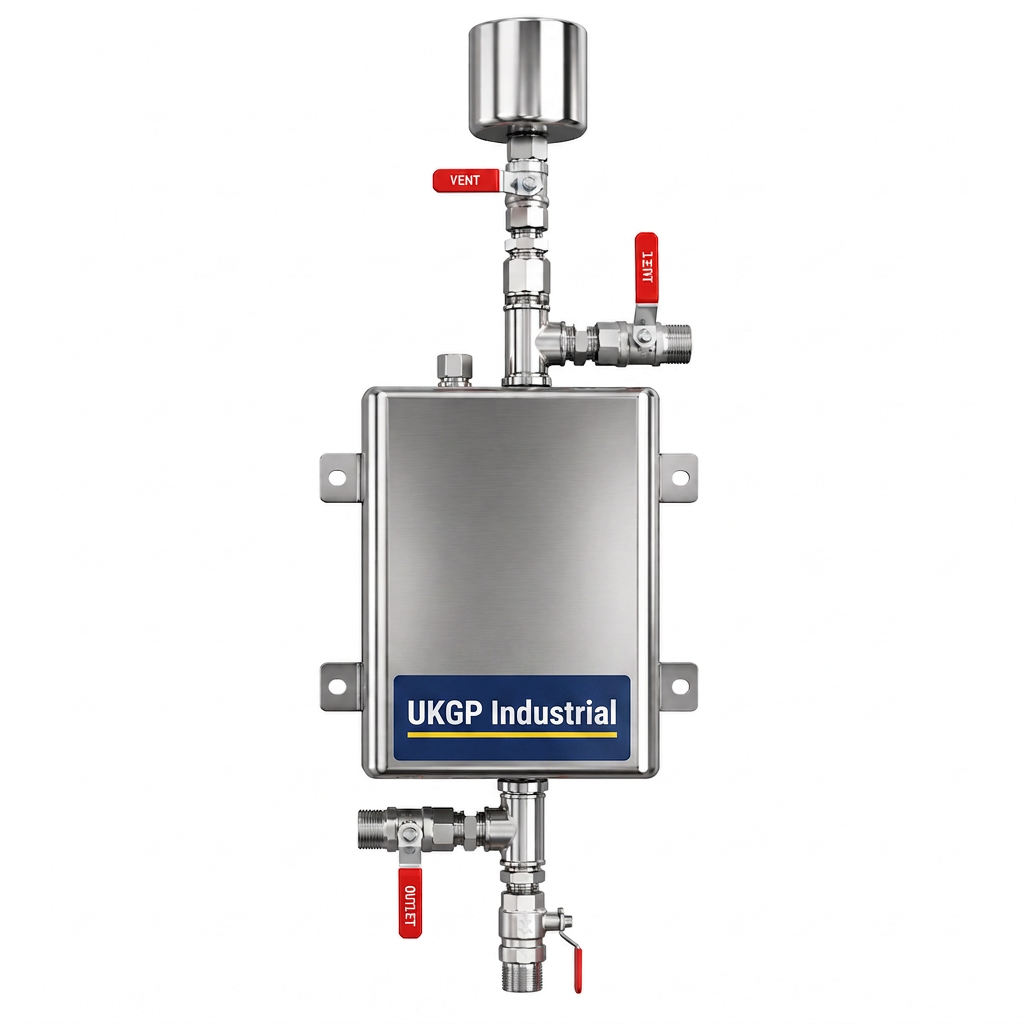
For those seeking reliable UK-manufactured solutions, UKGP offers a range of high-performance dosing pots perfect for this application. A UKGP chemical dosing pot (5L, 10L, 25L; carbon steel or stainless; bypass-mounted with isolation valves, drain & vent) is specifically sized for closed-system inhibitor and glycol top-up. These units come with a 2-year warranty, providing peace of mind for both the contractor and the end-user. Whether you are dealing with a standard boiler loop or a complex chilled water circuit, having a robust point of entry for your boiler inhibitor fluid ensures that your chemical water treatment strategy is both professional and easy to manage throughout the lifecycle of the HVAC plant.
- Bypass-mounting allows for chemical addition without system shutdown.
- Available in 5L to 25L capacities to suit any system volume.
- High-grade carbon or stainless steel construction for durability.
- Fitted with essential air vents and drain valves for safety.
Maintaining Efficiency in Closed-Loop Heating Systems
In the UK, the focus on building sustainability is driving more rigorous monitoring of closed-loop water quality. The presence of boiler inhibitor fluid is a primary indicator of system health. When system pressure drops, and fresh water is introduced via a pressurisation unit, the concentration of the inhibitor is diluted. This dilution creates an environment where 'under-deposit corrosion' can thrive, even if the system previously had high chemical levels. Regular world-class maintenance involves not just checking the pressure, but sampling the water to ensure the boiler inhibitor fluid remains at the manufacturer-recommended parts-per-million (PPM). This proactive approach prevents the slow degradation that usually goes unnoticed until a pump fails or a heat exchanger becomes blocked.
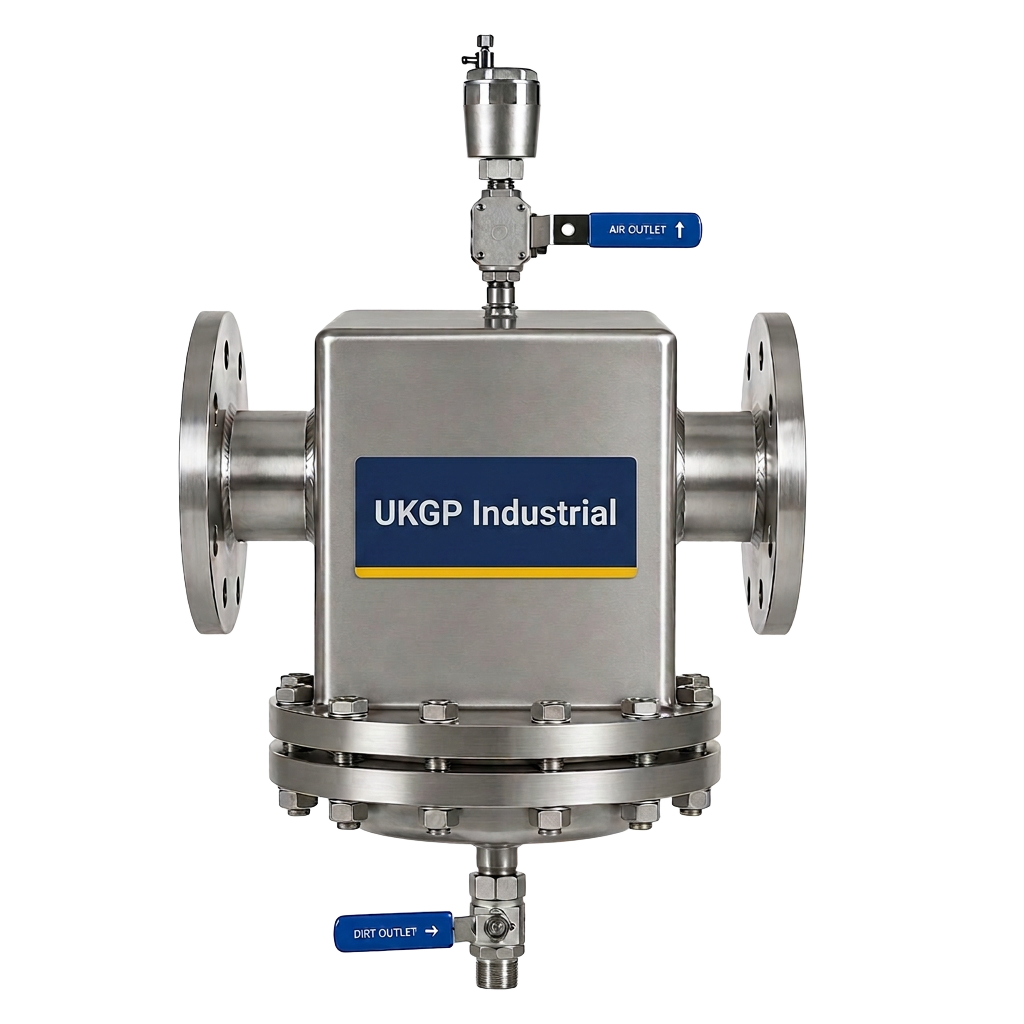
The interaction between boiler inhibitor fluid and other system components, such as air and dirt separators, is also a vital consideration. While chemical inhibitors prevent the creation of new debris, air and dirt separators are responsible for removing existing contaminants that may have entered during installation or maintenance. A clear, well-inhibited system allows these mechanical separators to work more efficiently, as the magnetic sludge is kept to a minimum and the water remains low-turbidity. For plant room engineers, this synergy between chemical treatment and mechanical filtration represents the gold standard in HVAC upkeep. It ensures that the heat produced by the plant is delivered to the emitters with minimal resistance and maximum thermal transfer, complying with the spirit of CIBSE guidelines for energy efficiency.
Procurement leads should also consider the life-cycle costs associated with water treatment. Investing in high-grade boiler inhibitor fluid and the necessary dosing hardware might seem like a secondary expense, but it avoids the astronomical costs of replacing commercial boilers or massive sections of corroded pipework. When you request a quote for a UKGP chemical dosing pot, you are investing in a tool that makes the regular maintenance of chemical levels a simple, five-minute task rather than a complex engineering challenge. This ease of use encourages site staff to maintain the system correctly, ensuring that the initial design intent is preserved and the plant room remains a reliable asset for the facility's lifespan.
- Reduces the load on mechanical air and dirt separators.
- Protects against the effects of accidental system dilution.
- Maintains heat transfer efficiency for lower energy consumption.
- Supports compliance with CIBSE energy efficiency recommendations.
Addressing Scale and Corrosion in Chilled Water Circuits
While often referred to as 'boiler inhibitor fluid', these chemical formulations are equally vital in chilled water circuits and heat pump loops. Cooling systems are prone to different microbiological challenges, but the underlying need for corrosion inhibition remains the same. In chilled systems, the fluid often contains a mixture of glycols and inhibitors to prevent freezing and corrosion simultaneously. Ensuring that the boiler inhibitor fluid remains stable in lower temperature ranges is essential for preventing the 'sludging' that can occur in fan coil units and AHU batteries. This is particularly important in large Surrey commercial offices where individual zone control depends on microscopic flow paths that are easily obstructed by corrosion by-products.
The technical application of chemical inhibitors in these scenarios requires a robust dosing point that can handle higher glycol concentrations. Using a UKGP chemical dosing pot sized for closed-system inhibitor and glycol top-up provides the necessary infrastructure to maintain these levels. Because these pots are bypass-mounted with isolation valves, they allow for the careful introduction of chemicals even while the pumps are running. This ensures the boiler inhibitor fluid is dispersed rapidly throughout the loop, reaching distant pipe runs and dead-legs that might otherwise become stagnant. For M&E contractors, this reliability is a major selling point when handing over a project to a commercial FM team.
Finally, it is worth noting that modern environmental regulations are becoming stricter regarding the discharge of treated water. Using a high-quality boiler inhibitor fluid that is designed for longevity means fewer system drains and less chemical waste. When systems are maintained correctly through a dedicated dosing pot, the need for 'flare and flush' corrective maintenance is virtually eliminated. This not-only saves water but also aligns with the corporate social responsibility (CSR) goals of modern UK businesses. By specifying high-quality UKGP products, engineers can ensure that their plant rooms are as green as they are efficient, protecting both the hardware and the environment.
- Essential for fan coil unit and AHU battery protection.
- Works in tandem with glycol in chilled water applications.
- Minimises the need for environmentally damaging system flushes.
- Supports zone-level flow temperature control.
Technical Specifications for Inhibitor Dosing Equipment
When specifying equipment to handle boiler inhibitor fluid, material compatibility is paramount. UKGP provides dosing pots in both carbon steel and stainless steel to match the metallurgy of the primary circuit. Carbon steel is often the standard for most commercial heating loops, offering excellent pressure resistance and cost-effectiveness. However, for systems where longevity and high corrosion resistance are required—such as in certain laboratory or industrial process environments—stainless steel dosing pots provide an added layer of security. Both versions are designed to be bypass-mounted, ensuring that the boiler inhibitor fluid is swept into the main flow by the differential pressure created across the system pumps.
Safety is another critical factor in the design of these units. A high-quality dosing pot must include a secure fill point, a vent valve to release trapped air, and a drain valve to allow for cleaning and maintenance of the vessel itself. These features ensure that the engineer can add boiler inhibitor fluid safely without the risk of splashing or pressurised discharge. UKGP's design philosophy prioritises these practical safety elements, ensuring that every unit meets the rigorous demands of a busy UK plant room. With 5L, 10L, and 25L options, these units are easily integrated into any piping layout, from compact basement plant rooms to large-scale rooftop installations in urban commercial centres.
Integrating a dosing pot also allows for easy water sampling. By taking samples directly from the dosing loop, engineers can verify the concentration of boiler inhibitor fluid without needing to tap into the main headers. This facilitates regular testing according to BS 8552, which is the British Standard for sampling and monitoring water quality in building services. This level of technical control is what separates a poorly managed plant room from a world-class facility. By choosing a UKGP chemical dosing pot (5L, 10L, 25L; carbon steel or stainless; bypass-mounted with isolation valves, drain & vent), you are choosing a solution designed specifically for the professional maintenance of UK HVAC systems.
- Available in both carbon steel and premium stainless steel.
- Fully equipped with air vent and drain valves for safety.
- Supports compliance with BS 8552 water sampling standards.
- Designed for easy integration into existing pipework configurations.
Summary: Securing Your HVAC System's Future
In summary, the role of boiler inhibitor fluid is central to the reliable operation of any UK plant room. From preventing the accumulation of magnetite to ensuring that high-efficiency boilers operate within their design life, the chemical management of the system water is a non-negotiable aspect of modern building services. By adhering to BSRIA standards and utilising high-quality chemicals, engineers can protect the substantial financial investment represented by the mechanical plant. However, the effectiveness of any boiler inhibitor fluid is fundamentally linked to the ease of its application. If dosing is difficult or messy, it is likely to be neglected, leading to inevitable system degradation over several years.
This is why the hardware used for dosing is just as important as the chemicals themselves. A reliable, UK-manufactured dosing pot simplifies the process, making it a routine part of the FM team's schedule. Whether you are dealing with a standard commercial heating circuit or a complex multi-stage cooling system, the ability to safely and quickly add boiler inhibitor fluid ensures that the system remains protected at all times. UKGP’s range of dosing pots is designed to meet this exact need, providing a durable and user-friendly interface for chemical water treatment that stands the test of time in harsh plant room environments.
Protecting your assets starts with the right equipment and the right chemicals. If you are currently designing a plant room or looking to upgrade your maintenance regime, consider the long-term benefits of a dedicated dosing station. Contact UKGP today to request a quote for a UKGP chemical dosing pot (5L, 10L, 25L; carbon steel or stainless; bypass-mounted with isolation valves, drain & vent). Our units are sized for closed-system inhibitor and glycol top-up and come with a 2-year warranty as standard. Ensure your boiler inhibitor fluid is doing its job by giving your engineers the tools they need for a compliant, efficient, and reliable HVAC system.
- Chemical treatment is cheaper than hardware replacement.
- Ease of dosing improves maintenance compliance rates.
- UKGP hardware provides a professional finish to any plant room.
- Two-year warranty offers long-term peace of mind for contractors.
Frequently asked questions
How often should boiler inhibitor fluid be tested?
- According to BSRIA BG50 guidelines, boiler inhibitor fluid levels should be tested at least annually in commercial systems. However, systems that experience frequent water loss or have recently undergone repairs should be tested more frequently to ensure chemical concentrations remain at the required PPM for corrosion protection.
Can I use boiler inhibitor fluid with aluminium heat exchangers?
- Yes, but you must ensure the boiler inhibitor fluid is specifically formulated for multi-metal systems. Many modern commercial boilers from leading UK manufacturers use aluminium-silicon alloys which require a pH-neutral inhibitor to prevent chemical attack of the metal.
What size dosing pot do I need for my system?
- Dosing pots should be sized based on the total volume of the system and the frequency of chemical top-ups. A 5L or 10L pot is standard for most medium-sized commercial plant rooms, while a 25L unit is ideal for large-scale district heating or multi-storey cooling loops where large volumes of glycol or inhibitor are required.
Does boiler inhibitor fluid prevent all types of corrosion?
- While boiler inhibitor fluid is highly effective against general corrosion and scale, it should be used as part of a holistic water treatment strategy. This includes the use of air and dirt separators to remove mechanical debris and ensuring the system is properly pressurised to prevent oxygen ingress.
Is a stainless steel dosing pot better than carbon steel?
- A stainless steel dosing pot offers superior resistance to corrosion and is often specified for high-end commercial or industrial applications where the fluid might be more aggressive or where the absolute longest service life is required. However, carbon steel is the industry standard for most LPHW heating systems.