Defining the core principles: What is a low loss header on a heating system?
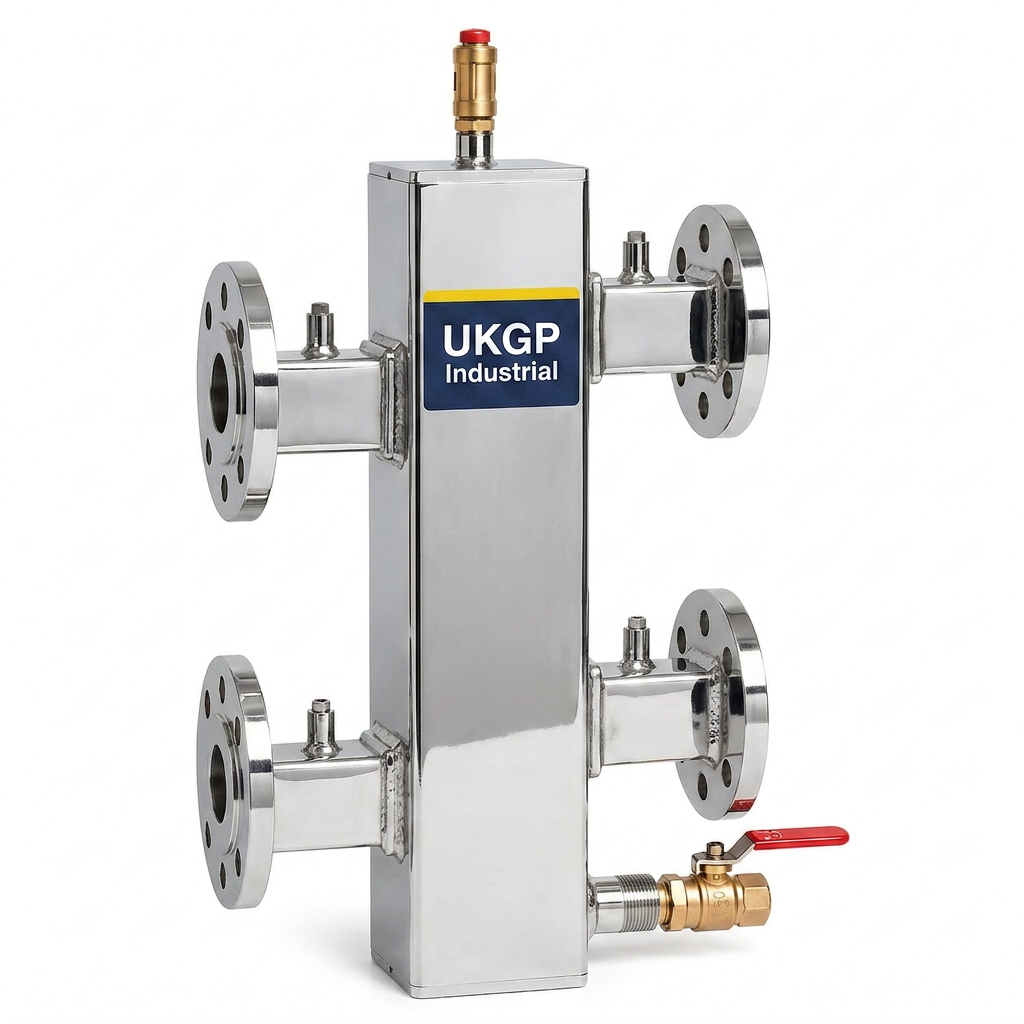
In the context of modern commercial HVAC design, understanding what is a low loss header on a heating system requires a look at hydraulic decoupling. Essentially, it is a vertical or horizontal vessel that allows the primary boiler circuit to operate at a constant flow rate while the secondary distribution circuit operates at a variable flow rate based on demand. Without this separation, the pumps in the distribution circuit could interfere with the delicate flow required across the heat exchanger of a modern high-efficiency boiler. This interference often leads to short-cycling, reduced efficiency, and premature component failure, which increases maintenance costs for facility managers. By providing a neutral point of low pressure, the header ensures that both circuits remain hydraulically independent despite their connection.
The physics behind the device is straightforward yet vital for system stability. Water enters from the primary circuit and the secondary circuit into a common chamber. Because the cross-sectional area of the header is significantly larger than the connecting pipework, the water velocity drops dramatically. This drop in velocity allows the primary and secondary pumps to operate without competing against each other. For UK contractors, specifying a high-quality header is not just about compliance with CIBSE guidelines; it is about ensuring the system delivers the design delta T reliably. UKGP Industrial specializes in these units, offering capacities from 40 kW to 2000 kW to suit a vast array of commercial applications from schools to large-scale offices.
Furthermore, when asking what is a low loss header on a heating system, one must consider its role as a troubleshooting tool. It mitigates the risks associated with oversized pumps or complex multi-zone layouts where varying pressure drops are common. In a well-designed plant room, the header acts as the 'heart' of the hydraulic flow, providing a buffer that absorbs pressure fluctuations. When you source a header from UKGP, you receive a unit that is expertly fabricated to manage these transitions smoothly. Our headers come with high-grade insulation jackets as standard, ensuring that heat loss is minimised in line with modern energy efficiency expectations and Part L building regulations.
- Facilitates hydraulic separation between primary heat sources and secondary zones.
- Prevents pump conflict and ensures constant flow through the boiler heat exchanger.
- Reduces the risk of boiler short-cycling and mechanical fatigue.
- Provides a neutral pressure zone for complex multi-circuit distribution.
The role of hydraulic separation in BSRIA BG29 and BG50 compliance
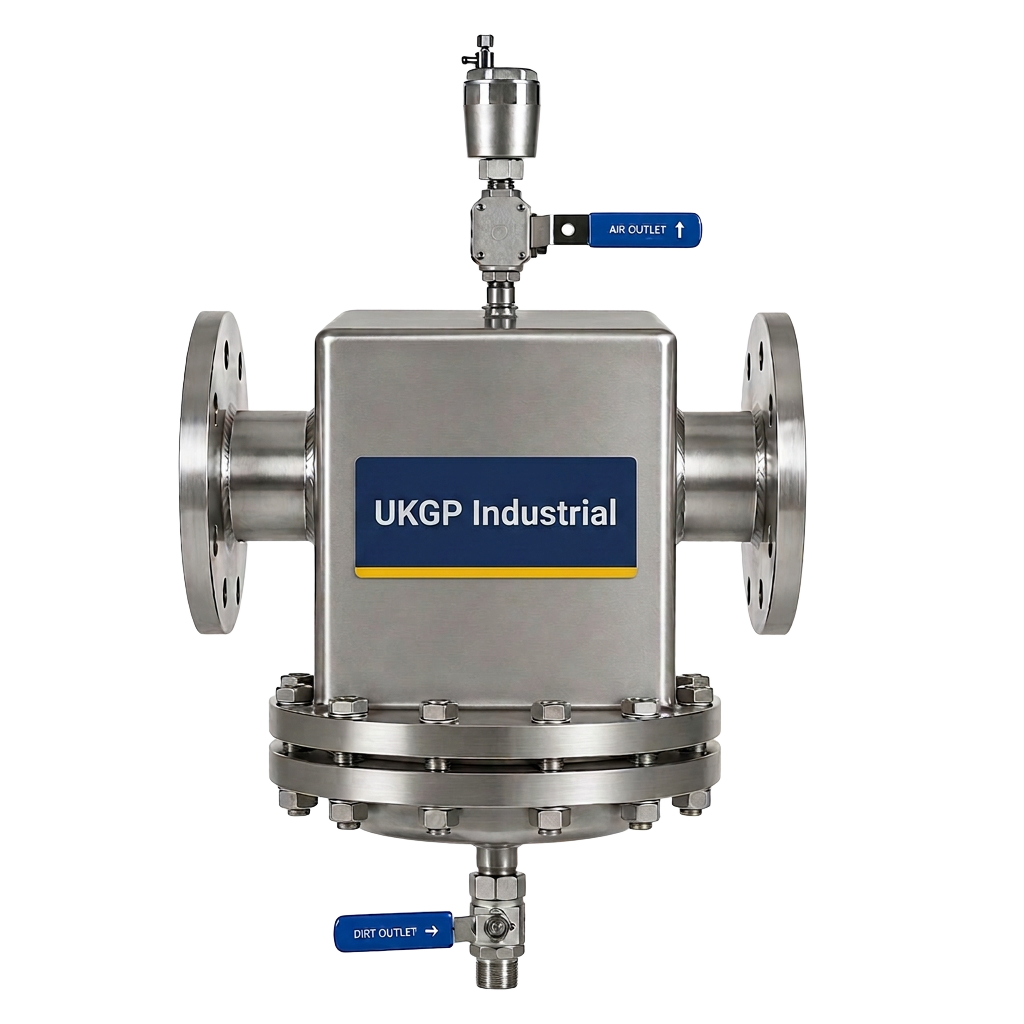
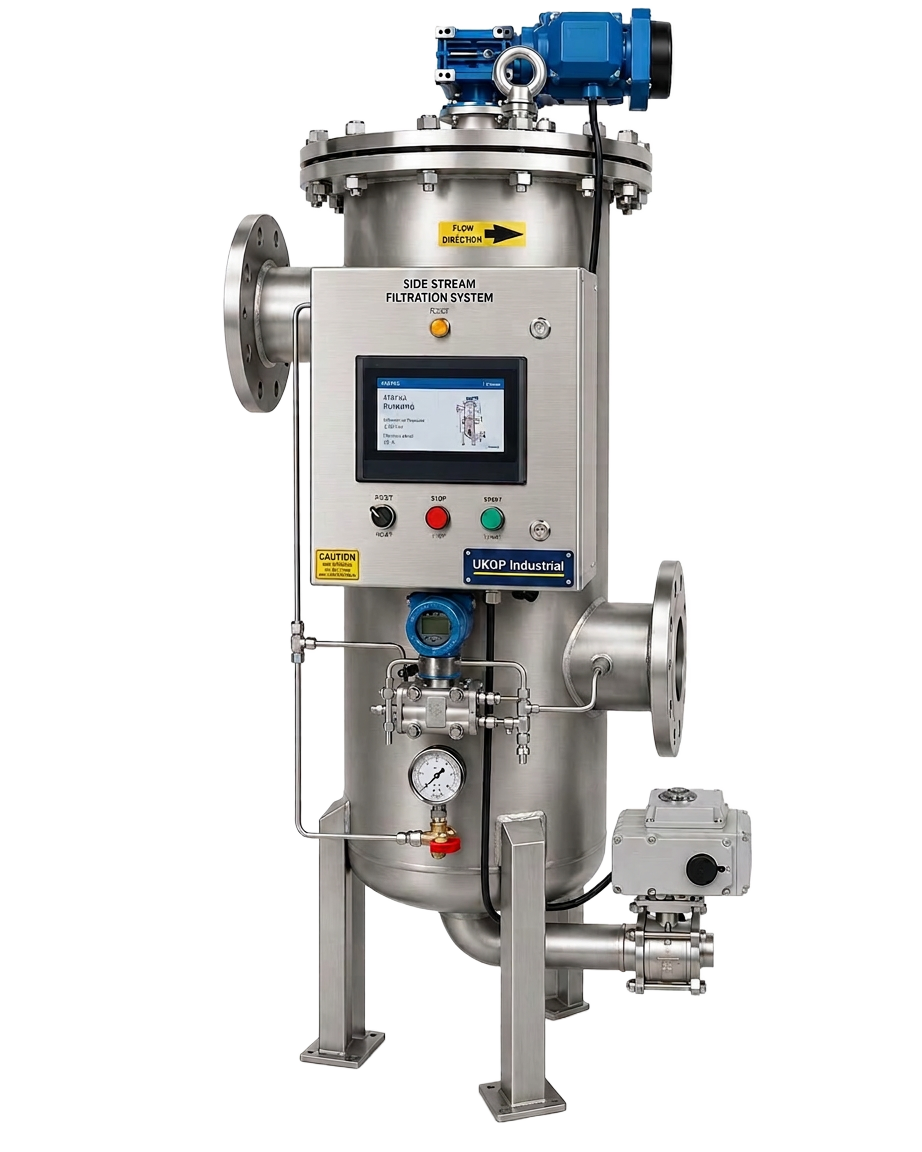
Adherence to industry standards like BSRIA BG29 (Pre-commission cleaning) and BG50 (Water treatment for closed heating and cooling systems) is essential for long-term project success. A low loss header plays a subtle but important role here by acting as a point of collection for heavy debris. While not a primary filter, the reduced velocity within the header often causes suspended solids to settle at the base, where a drain valve can be used for periodic blowdown. This assists the wider water quality management strategy, though it should always be complemented by a dedicated side stream filtration unit. Maintaining water quality is paramount for protecting the primary heat exchanger and ensuring that the hydraulic separation provided by the header remains effective over time.
In the planning phase, consultants often refer to BG50 to ensure that the system design prevents stagnant pockets of water which could encourage microbiological growth. The design of the UKGP low loss header promotes consistent movement while maintaining the necessary low-velocity zone. By decoupling the circuits, you also ensure that chemical dosing remains effective across the whole system. If you seek to enhance these protections, pairing the header with our high-performance side stream filters or air and dirt separators is highly recommended. These components work in tandem to keep the heating medium clear of magnetite and other contaminants that could settle in the low-velocity areas of the header.
Effective commission and water treatment are easier when the system is logically divided. What is a low loss header on a heating system if not a strategic demarcation point for maintenance? During the initial flush of a new system, the header can be isolated to protect the boilers from construction debris circulating in the secondary loops. This practical benefit is why many leading M&E contractors insist on flanged PN16 connections for ease of installation and maintenance. At UKGP, we provide both flanged and threaded BSP options to match your piping specification, ensuring that your installation meets the high standards required by BSRIA guidelines.
- Supports BSRIA BG29 standards by providing a settling point for heavy system debris.
- Assists in maintaining hydraulic stability during system cleaning and flushing protocols.
- Acts as a logical boundary for system chemical treatment and water quality monitoring.
- Reduces turbulence which can interfere with the accuracy of pH sensors and transmitters.
Sizing and selection: Matching headers to commercial boiler loads
Correct sizing is the most critical factor when determining what is a low loss header on a heating system for a specific project. If the header is undersized, the water velocity will remain too high, and the hydraulic decoupling will fail, leading to the very pump conflicts you are trying to avoid. Conversely, an oversized header is an unnecessary expense and can occupy valuable floor space in a tight plant room. UKGP Industrial provides a comprehensive range of headers sized specifically for commercial loads between 40 kW and 2000 kW. By selecting the correct kW rating, engineers ensure that the flow velocity within the vessel stays below 0.2 m/s, which is the industry-standard benchmark for effective separation.
Our selection process considers both the total heat load and the flow rates required by the secondary pumps. Whether your project involves a simple bank of wall-hung commercial boilers or a massive modular floor-standing installation, we have the flanged or threaded solutions ready for dispatch. We understand that on-site timelines are often compressed; therefore, we maintain a lead time of just 2-3 weeks for most standard configurations. Every unit is manufactured to exacting standards and supplied with a robust 2-year warranty, giving both the contractor and the end-user peace of mind regarding the durability of the plant room internals.
Beyond capacity, the physical connection type must be considered. In smaller commercial applications, threaded BSP connections are often preferred for their speed of installation. However, for larger 2000 kW systems, flanged PN16 connections provide the structural integrity required for high-volume flow. UKGP headers are supplied with a bespoke insulation jacket that is easily removed for inspection and then reinstalled to maintain thermal efficiency. This attention to detail ensures that the thermal loss across the header is negligible, keeping your operational costs low and your system performance high. Contact our technical team today for a quote on a unit tailored to your specific kW requirement.
- Covers a wide commercial range from 40 kW up to 2000 kW heat loads.
- Optimised for low-velocity flow (below 0.2 m/s) to ensure perfect separation.
- Available in various connection types including BSP threaded and PN16 flanged.
- Supplied with a tailored insulation jacket to comply with Part L requirements.
Improving system longevity and boiler protection
The primary reason engineers ask what is a low loss header on a heating system is to protect their most expensive asset: the boiler. Modern condensing boilers feature compact heat exchangers with narrow waterways. These are highly sensitive to changes in flow rate and temperature shocks. By using a header, you ensure that the boiler always receives the correct flow, regardless of how many radiators or fan coil units are active on the secondary side. This prevents the primary heat exchanger from overheating or experiencing thermal stress, which are the leading causes of warranty disputes and mechanical failure in recent years. Investing in a UKGP low loss header is, therefore, an investment in the longevity of the entire heating plant.
Additionally, the header facilitates better temperature control. By allowing the primary circuit to maintain a consistent delta T, the boiler can stay in condensing mode for longer periods, maximizing its seasonal efficiency. In a system without a header, the return temperature often fluctuates wildly, pulling the boiler out of its most efficient operating range. For facility managers looking to hit carbon reduction targets and reduce fuel bills, the header is an essential component. It works in mechanical harmony with other plant room components like expansion bellows, which manage the physical stresses of thermal expansion, ensuring a quiet and stable system.
UKGP Industrial’s commitment to quality means our headers are designed for the rigours of the UK commercial market. We use heavy-gauge steel and precision welding to ensure each vessel can withstand the constant thermal cycling of a busy heating circuit. Whether you are refurbishing an old school heating system or designing a new district heating network, the inclusion of a low loss header is the industry-standard method for ensuring hydraulic balance. Our 2-year warranty reflects our confidence in the build quality, ensuring that your procurement lead can sign off on the project with total confidence in the long-term reliability of the equipment.
- Extends the life of high-efficiency boilers by preventing thermal shock.
- Enables boilers to operate in condensing mode more consistently for energy savings.
- Provides an ideal location for air venting and sludge removal at the neutral point.
- Redices noise and mechanical wear across all system pumps.
Technical considerations for installation and orientation
When installing the unit, the question of what is a low loss header on a heating system often shifts to practical orientation. Most headers are installed vertically to allow air to collect at the top for venting and dirt to settle at the bottom for drainage. However, horizontal versions are available where headroom is a constraint. It is vital that the header is situated as close to the boilers as possible to minimise the pressure drop in the primary circuit. Proper positioning ensures that the 'neutral zone' is precisely where the system needs it to be. UKGP provides documented guidance to ensure that your site team can install the header correctly the first time, avoiding costly rework.
Another key technical point is the integration of sensors. Many modern boiler controllers require a temperature sensor to be placed within a pocket on the header. This allows the master controller to see the actual temperature being delivered to the secondary circuit, enabling more accurate modulation of the heat source. UKGP headers feature dedicated sensor pockets to accommodate these probes, ensuring seamless integration with your Building Management System (BMS). This level of control is essential for modern CIBSE-compliant designs where energy monitoring and precision control are non-negotiable requirements for handover.
Furthermore, engineers must decide on the connection sizes. It is a common mistake to size the header connections based on the boiler pipework rather than the actual flow requirements of the system. At UKGP, we help clarify what is a low loss header on a heating system by providing technical data sheets that map kW ratings to suggested flow rates and connection sizes. This prevents the common pitfall of 'bottlenecking' the system at the header. Our lead time of 2-3 weeks means that even if a design change occurs late in the project, we can supply the correctly sized unit without derailing the overall construction schedule.
- Vertical orientation preferred for integrated air and dirt management.
- Proximity to primary heat source minimizes unintended pressure drops.
- Includes sensor pockets for seamless BMS and boiler controller integration.
- Available for quick delivery (2-3 weeks) for all standard commercial sizes.
Conclusion: Optimizing your plant room with UKGP
In conclusion, understanding what is a low loss header on a heating system is the first step toward creating a robust, efficient, and long-lasting commercial HVAC system. By providing the necessary hydraulic separation, protecting primary assets, and facilitating better control, the header serves as the foundational component of any professional plant room project. UKGP Industrial is proud to support the UK engineering community with high-quality, reliable headers that meet the specific demands of modern buildings. Our units, ranging from 40 kW to 2000 kW, are designed to solve the complex hydraulic challenges faced by today's M&E contractors and consultants.
When you choose UKGP, you are choosing more than just a component; you are choosing a partner with a deep understanding of UK building services. From our flanged or threaded BSP/PN16 options to our standard-fit insulation jackets, every feature is designed with the installer and the end-user in mind. We also offer a range of complementary products, from expansion bellows to chemical dosing pots, allowing you to source all your critical plant room components from a single, trusted UK supplier. This streamlined procurement process, combined with our competitive lead times and 2-year warranty, makes UKGP the preferred choice for commercial heating projects nationwide.
For your next project, don't leave hydraulic balance to chance. Now that you know what is a low loss header on a heating system and why it is essential, take the next step by requesting a technical specification or a quote from our Surrey-based team. Whether you need a small 40 kW unit for a community centre or a large 2000 kW header for an industrial complex, we have the expertise and the inventory to deliver exactly what you need. Contact UKGP Industrial today to discuss your requirements and ensure your heating system operates at peak performance for years to come.
- Comprehensive stock of units from 40 kW to 2000 kW for any commercial scale.
- High-performance insulation included to exceed energy efficiency benchmarks.
- Durable construction backed by a 2-year warranty for total peace of mind.
- Fast 2-3 week lead times to keep your site schedule on track.
Frequently asked questions
What is the primary purpose of a low loss header?
- Its primary purpose is to provide hydraulic separation between the primary boiler circuit and the secondary heating circuits. This allows both to operate at different flow rates and pressures without interfering with each other's pumps.
What sized low loss headers does UKGP provide?
- UKGP Industrial supplies commercial low loss headers ranging from 40 kW to 2000 kW. These are available with either BSP threaded or PN16 flanged connections to suit various installation requirements.
Does a low loss header replace an air and dirt separator?
- While it can assist in collecting some debris and air at its neutral point, it is not a dedicated replacement. For full protection according to BSRIA BG50, a dedicated air and dirt separator should be used alongside the header.
Why is insulation important for a low loss header?
- Insulation is vital to prevent thermal energy loss into the plant room. UKGP headers come with a high-quality insulation jacket to ensure compliance with Part L of the Building Regulations and to maintain system efficiency.
What is the standard lead time for a UKGP header?
- Our standard lead time for commercial headers is 2-3 weeks, and all our units are supported by a comprehensive 2-year warranty.