The Fundamental Principles of Hydraulic Separation
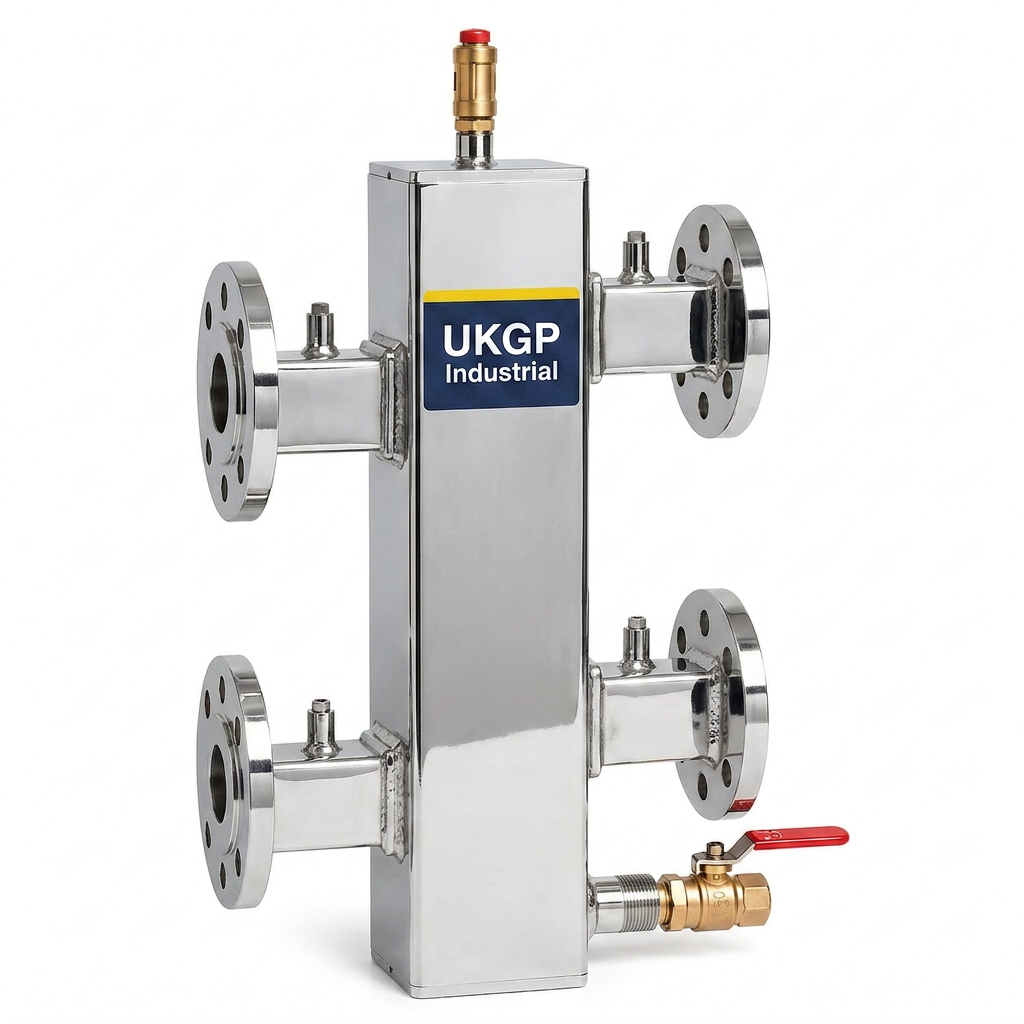
At its core, a low loss header is a vessel designed to create a zone of negligible pressure loss between two distinct circulating systems. In a typical commercial heating installation, the primary circuit consists of the boilers and their dedicated pumps, while the secondary circuit comprises the heat emitters, such as radiators, AHU batteries, or underfloor heating manifolds. Without an LLH, the pumps in these two circuits would compete, leading to unpredictable flow rates and potential mechanical failure of pump seals and bearings.
The 'low loss' terminology refers to the minimal pressure drop across the header itself. By providing a large cross-sectional area compared to the connecting pipework, the fluid velocity drops significantly as it enters the vessel. This reduction in velocity allows the primary and secondary pumps to operate according to their own head requirements without inducing a parasitic flow in the adjacent circuit. This is essential for the stable operation of modern high-resistance heat exchangers found in commercial boilers from manufacturers like leading UK boiler OEMs.
Hydraulic separation is governed by the relationship between flow (Q) and pressure (P). By ensuring that the pressure drop across the common bypass (the header) is near zero, the flow in the primary circuit becomes mathematically independent of the flow in the secondary circuit. This allows for precise control of the Delta T (ΔT) across the boiler, which is a prerequisite for maintaining condensing mode and achieving the seasonal efficiencies mandated by Part L of the Building Regulations.
- Decouples primary and secondary circuits.
- Maintains constant flow across the heat exchanger.
- Compensates for variable flow in secondary loops.
- Assists in debris and air removal.
Boiler Operation and Flow Rate Management
Modern condensing boilers are sensitive to flow rate fluctuations. Most commercial units require a minimum flow to prevent localised boiling (kettling) and to protect the heat exchanger from thermal stress. In a system without a low loss header, as TRVs (Thermostatic Radiator Valves) or 2-port valves close in the secondary circuit, the system resistance increases. Without an LLH or a bypass, this can starve the boiler of flow, leading to high-temperature cut-outs and shortened equipment lifespan.
The low loss header acts as a 'buffer zone' that manages the mismatch between the boiler's output and the building's current demand. For instance, if a boiler is designed for a 20°C ΔT but the secondary circuit is currently operating at a low load, the LLH allows the excess primary fluid to bypass the secondary circuit and return to the boiler. This prevents the boiler from cycling excessively, which is the primary cause of component wear and fuel inefficiency in commercial systems.
Furthermore, the use of an LLH is often a warranty requirement for large-scale boiler installations. Leading boiler manufacturers specify hydraulic separation to ensure that the primary pump, often integrated into the boiler or sized specifically for its internal resistance, is not subjected to the varying head pressures of an expansive secondary distribution network. This separation ensures that the boiler always 'sees' the flow rate it was commissioned to handle.
- Prevents flow-related lockout errors.
- Reduces thermal shock on heat exchangers.
- Ensures minimum flow rates are met during low-load periods.
Optimising System Integrity with Multi-Function Headers
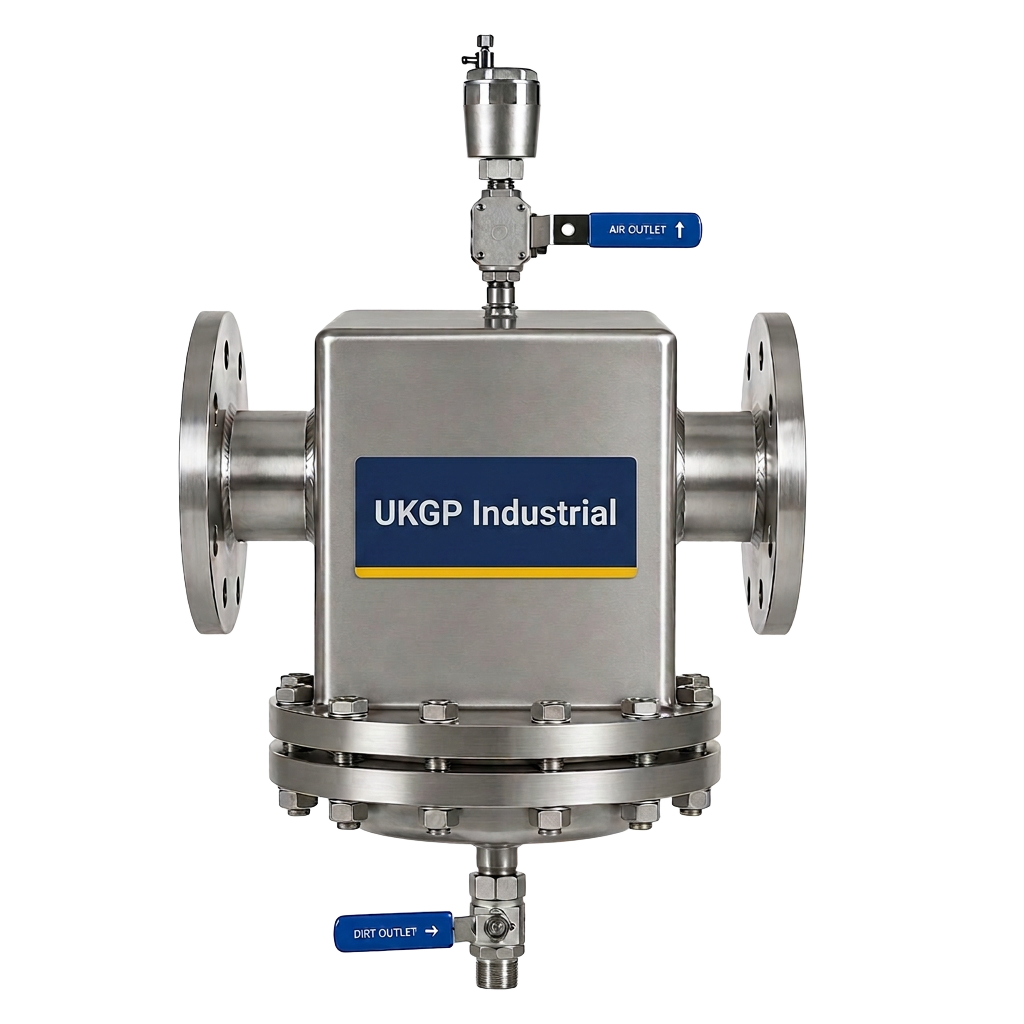
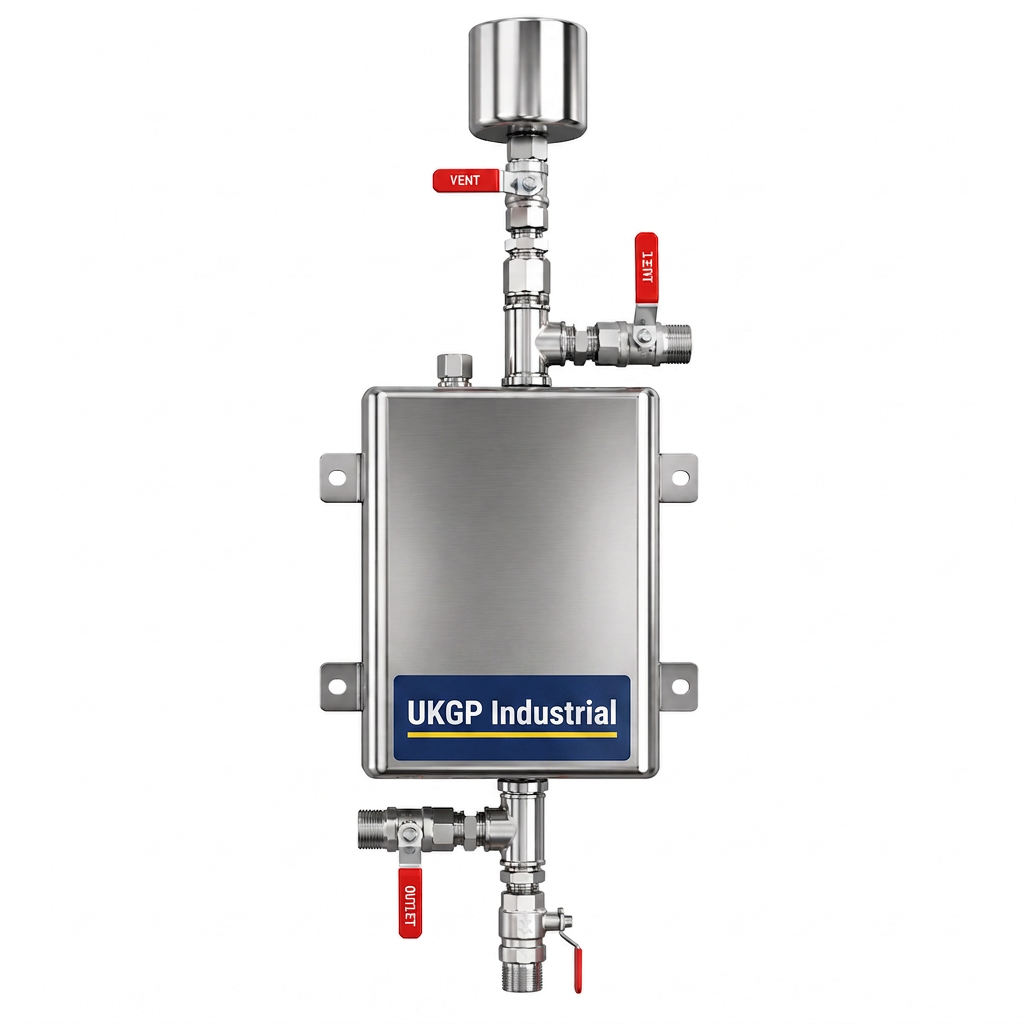
While the primary function of an LLH is hydraulic decoupling, the reduction in fluid velocity within the vessel creates an ideal environment for secondary functions: air and dirt separation. As the water enters the larger chamber of the header, the velocity typically drops to below 0.1 m/s. According to the principles of solubility and sedimentation, this allows micro-bubbles to rise to the top of the vessel and suspended solids to settle at the bottom.
UKGP Industrial low loss headers often incorporate internal baffles or coalescing media to enhance this process. By integrating these features, designers can save significant plant room space and reduce the total component count. An effective LLH should be fitted with an automatic air vent (AAV) at the highest point and a full-bore drain valve at the lowest point to facilitate the removal of 'magnetite' and other system sludge, as highlighted in BSRIA BG29/21 and BG50.
The orientation of the header also plays a role in its effectiveness. Vertical headers are standard for air and dirt separation as they leverage gravity and buoyancy most effectively. However, in height-restricted plant rooms, horizontal headers can be utilised, provided they are sized correctly to maintain the low-velocity threshold required for hydraulic independence. Proper insulation of the vessel is also paramount to prevent the header from becoming a significant source of standing heat loss.
- Standard LLH design.
- Integrated Air and Dirt Separation.
- Vertical vs Horizontal configurations.
Evaluating the Three Flow Scenarios
Understanding the three potential flow states within a low loss header is vital for effective commissioning. The first scenario, where primary flow is greater than secondary flow (Qp > Qs), is the most common in heating applications. In this state, a portion of the heated primary water mixes with the secondary return within the header before returning to the boiler. This ensures the secondary circuit receives water at the boiler's flow temperature, though it raises the return temperature to the boiler, potentially slightly reducing condensing efficiency.
The second scenario occurs when secondary flow exceeds primary flow (Qs > Qp). This typically happens in systems where secondary pumps are oversized or when all secondary circuits are calling for heat simultaneously. In this instance, some of the secondary return water is pulled back into the secondary flow, diluting the flow temperature. This can lead to complaints from end-users that radiators are not reaching design temperature, despite the boilers running at maximum output. It is a common symptom of poor hydraulic balance.
The third and theoretical 'ideal' is matched flow (Qp = Qs). In this perfectly balanced state, there is no mixing within the header. While difficult to maintain in variable-load systems, targeting this balance during commissioning—usually by aiming for a slightly higher primary flow (approx. 10%)—ensures system stability. Engineers should use ultrasonic flow meters or differential pressure gauges across the primary and secondary connections to verify these states during the handover phase.
- Primary flow exceeds secondary flow (Mixing).
- Secondary flow exceeds primary flow (Diversion).
- Matched flow (Balanced).
Technical Sizing and Calculation Criteria
Sizing a low loss header based solely on the pipe diameter of the boiler circuit is a frequent and costly error. Proper sizing must be based on the maximum anticipated flow rate (m³/h) and the desired velocity within the header body. To ensure effective hydraulic decoupling and debris separation, the diameter of the header should be significantly larger than the inlet and outlet pipes. A common rule of thumb is the '3D' or '4D' rule, where the header diameter is three to four times the diameter of the primary pipework.
For a more precise approach, engineers use the formula: Q = P / (1.16 × ΔT), where Q is the flow rate in m³/h, P is the load in kW, and ΔT is the temperature differential. Once the flow rate is established, the internal cross-sectional area of the LLH is calculated to ensure the velocity remains within the 0.1 to 0.2 m/s range. If the velocity is too high, the header will fail to decouple the circuits, and the turbulence will prevent air and dirt from settling.
The spacing between connections on the header also impacts performance. CIBSE AM14 suggests that connections should be staggered or spaced sufficiently to prevent high-velocity 'jets' from crossing the header and disrupting the neutral pressure zone. Manufacturers typically provide kW-rated charts for their headers, but these should always be cross-referenced against the specific ΔT of the project, as a header rated for 100kW at a 20°C ΔT will only handle 50kW at a 10°C ΔT.
- Velocity-based sizing (0.1m/s to 0.2m/s).
- Power-based sizing (kW ratings).
- Connection sizing vs vessel diameter.
The Impact of Variable Speed Drives (VSD)
In the era of ErP-compliant, high-efficiency pumps, Variable Speed Drives (VSDs) are ubiquitous. These pumps adjust their speed based on differential pressure or temperature to save energy. However, if multiple VSD pumps are installed in both primary and secondary circuits without hydraulic separation, they can enter a state of 'hunting,' where they constantly adjust their speed in response to the pressure changes caused by the other pumps. This leads to instability and increased electrical consumption.
A low loss header solves this by providing a point of constant pressure. The primary pump can be controlled to maintain a constant ΔT across the boiler, while the secondary pumps can independently modulate based on the demand of the heating zones. This allows each circuit to operate at its most efficient point. For industrial applications with large-scale distribution, this decoupling is essential for the longevity of the pump VSDs and the accuracy of the building management system (BMS) sensors.
When integrating an LLH with a BMS, sensors should be placed strategically. A common configuration is to place a temperature sensor in the top of the header (to monitor secondary flow temperature) and another on the primary return. This data allows the BMS to calculate the real-time load and adjust boiler sequencing accordingly. Without the stable hydraulic environment provided by the LLH, these sensor readings would fluctuate too rapidly to be useful for control logic.
- Reduces pump 'hunting'.
- Protects VSD components.
- Facilitates zoned control.
Maintenance and Longevity of Hydraulic Systems
Low loss headers are not 'fit and forget' components. Because they act as a collection point for air and sludge, they require a defined maintenance regime to prevent the vessel from becoming a source of system contamination. Over time, the lower section of the header can fill with magnetite, which, if not drained, can be re-entrained into the secondary circuit, causing damage to heat emitters and control valves.
The integration of a magnetic insert into the low loss header is a highly recommended upgrade for modern systems. Magnetite is a major cause of premature pump failure and reduced heat transfer across boiler heat exchangers. By capturing these metallic particles within the LLH, engineers can significantly improve the water quality of the entire system. This is often more cost-effective than installing standalone magnetic filters in large commercial circuits.
During annual maintenance, the LLH should be flushed via the drain valve while the system is under pressure. This 'blown down' procedure removes the settled solids. Simultaneously, the automatic air vent should be checked for signs of leakage or blockage from system additives. Ensuring the LLH remains clear is vital for maintaining the low-velocity environment required for hydraulic separation; a header half-full of sludge will have a reduced internal volume, leading to increased velocities and the loss of its 'low loss' characteristics.
- Managing magnetising particles.
- Internal mesh vs. baffle plates.
- Maintenance accessibility.
Compliance and Best Practice in the UK Market
Designers and contractors must ensure that the installation of low loss headers aligns with UK industry standards, notably BSRIA BG29/21 (Pre-commission cleaning of pipework systems) and BG50 (Water treatment for closed heating and cooling systems). The LLH provides an excellent location for chemical dosing and system sampling, but it also necessitates thorough flushing during the commissioning phase to remove any manufacturing debris or welding slag.
CIBSE Guide B provides additional context on the hydronic design of plant rooms, emphasizing the need for hydraulic independence in systems where multiple boilers are piped in parallel. The use of an LLH is the most common method to achieve the 'primary-secondary' pumping arrangement recommended in CIBSE AM14. Failure to implement these designs can lead to issues with the Heat Network Efficiency Scheme (HNES) requirements if the system is part of a larger district heating network.
Finally, the material specification of the header must be suitable for the system fluid and operating parameters. While carbon steel is standard for most heating systems, stainless steel may be required for certain process applications or chilled water systems to prevent corrosion. All headers should be UKCA/CE marked and pressure tested in accordance with the Pressure Equipment Directive (PED). By selecting a high-quality, correctly sized header from a reputable manufacturer like UKGP Industrial, engineers ensure the long-term reliability and efficiency of the heat network.
- BSRIA BG29/21 compliance.
- Cleaning and flushing procedures.
- Chemical dosing requirements.
Frequently asked questions
How do you size a low loss header for a commercial plant room?
- A header is typically sized based on a maximum flow velocity of 0.1 to 0.2 m/s through the vessel body to ensure effective pressure decoupling and air/dirt separation. This is significantly lower than pipework velocities.
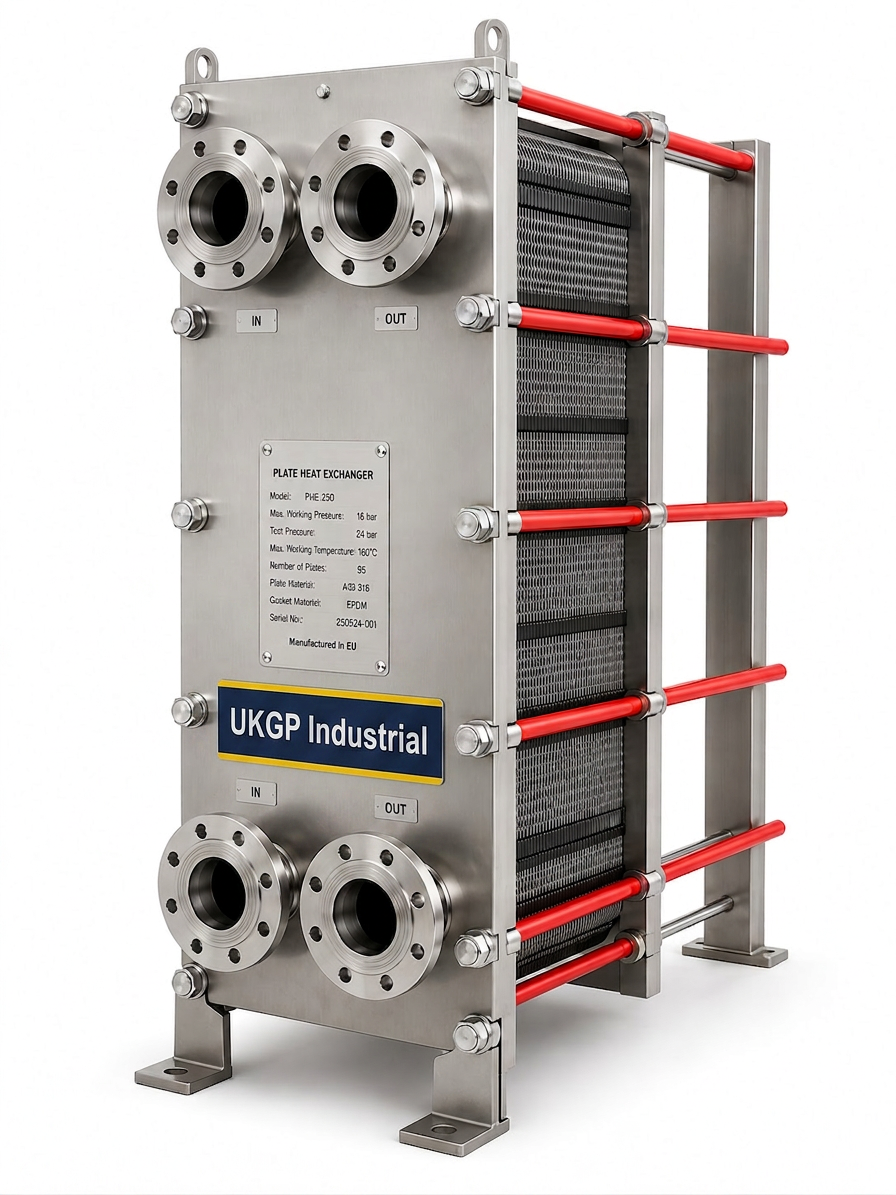
What is the difference between an LLH and a Plate Heat Exchanger?
- While both provide hydraulic separation, a plate heat exchanger creates a physical barrier between primary and secondary fluids, often used for system protection or pressure breaks. An LLH allows fluid mixing and is used strictly for hydraulic decoupling within the same circuit.
Should primary flow be higher than secondary flow?
- Ideally, the primary flow rate should be slightly higher (approx. 10%) than the secondary flow to ensure the design flow temperature reaches the terminal units and to maintain a positive pressure differential.
Can a low loss header act as an air and dirt separator?
- Yes, many commercial headers, such as those from UKGP Industrial, feature internal baffles and venting points that allow them to serve as combined air and dirt separators, reducing the need for additional plant room components.