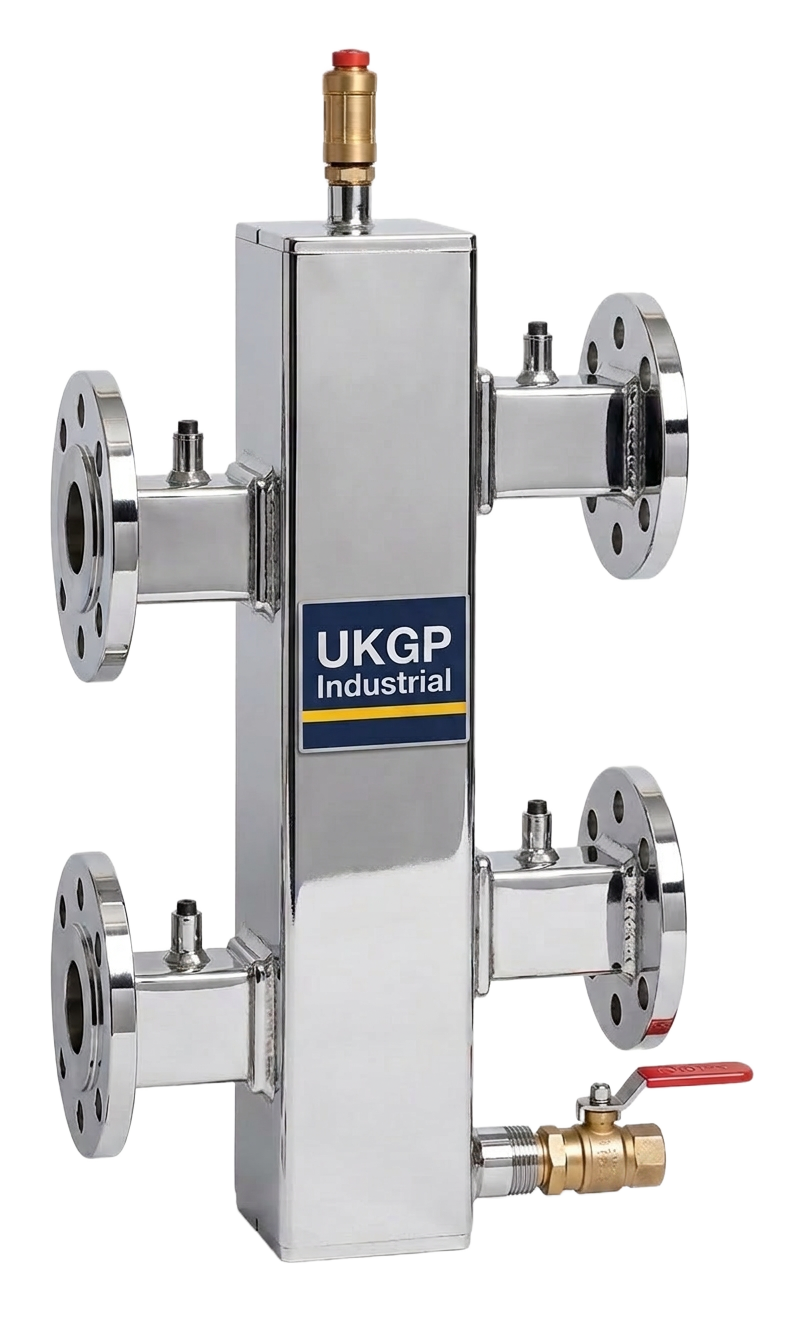
Defining the core function: What does a low loss header do?
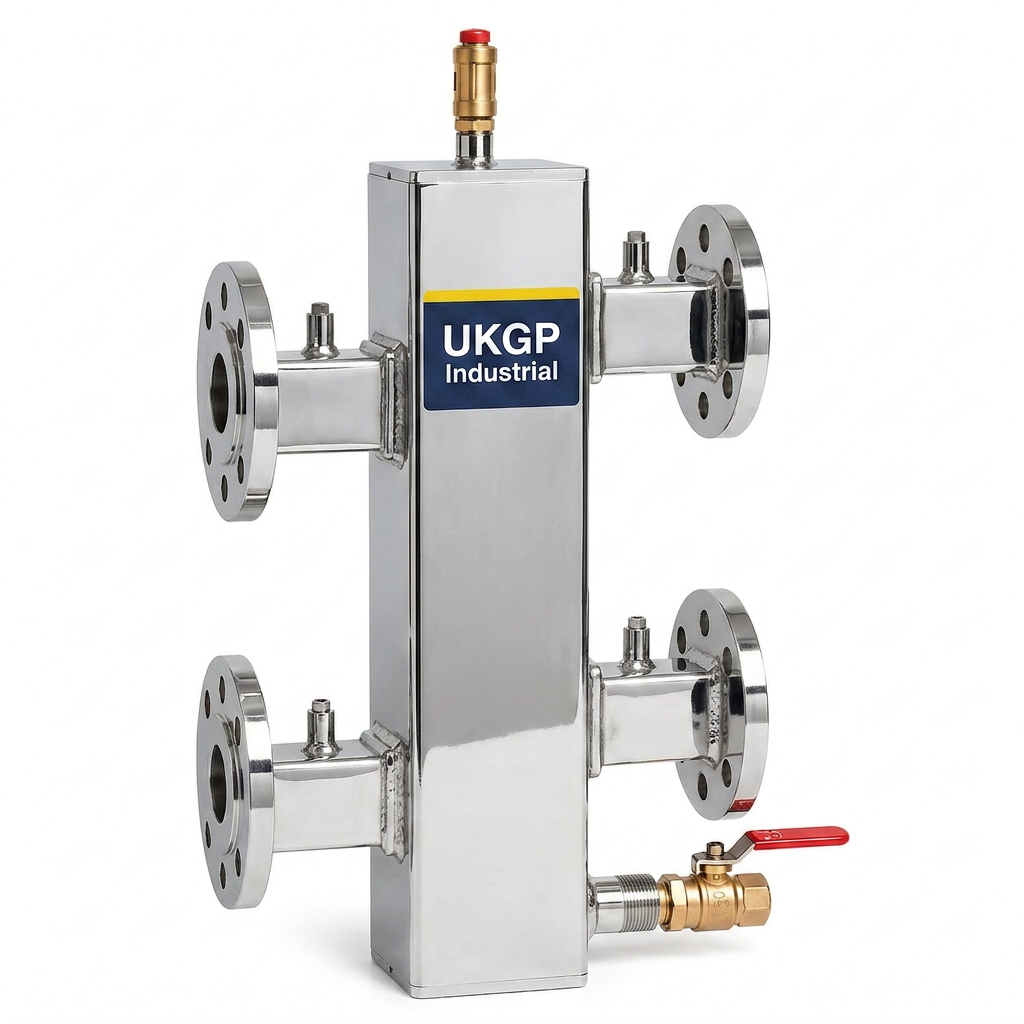
In modern UK commercial plant rooms, the integration of high-efficiency condensing boilers requires precise control over flow rates and temperature differentials. To understand what does a low loss header do, one must look at it as a hydraulic neutraliser that balances the primary circuit flow from the heat source with the secondary circuit flow required by the heat emitters. Without this component, the pumps in different circuits can conflict, leading to erratic pressures and potential pump cavitation. This balancing act is critical in multi-boiler cascades where maintaining the correct Delta T is essential for condensing operation and long-term reliability of the heat exchangers.
Furthermore, asking what does a low loss header do reveals its secondary role as a point of low velocity. As water enters the larger chamber of the header, the velocity drops significantly, allowing for air to rise to the top and debris to settle at the bottom. This mechanical process supports the requirements of BSRIA BG29 and BG50 regarding water quality and system cleanliness. By slowing down the fluid, the header effectively acts as a buffer that prevents the secondary pumps from 'pulling' water through the primary circuit faster than the boilers can supply it. This ensures that the primary pumps can maintain a constant volume flow, which is a key requirement for many commercial boiler warranties.
Finally, the low loss header facilitates accurate temperature sensing. By housing a sensor pocket within the header, the Building Management System (BMS) can monitor the actual flow temperature being delivered to the secondary circuits. This provides far more reliable data than individual boiler sensors, allowing for more intelligent weather compensation and load matching. In a B2B environment where energy costs are a primary concern, the efficiency gains from this hydraulic separation are substantial. For M&E contractors, specifying a high-quality UKGP header means ensuring the system meets design parameters from day one, avoiding the costly remedial work associated with hydraulic imbalance and short-cycling boilers.
- Provides hydraulic decoupling between primary and secondary circuits.
- Ensures constant flow rates through the primary heat source.
- Allows air and dirt separation through reduced fluid velocity.
- Enables accurate temperature monitoring for BMS integration.
Hydraulic separation and the BSRIA BG50 perspective
The guidance provided in BSRIA BG50 focuses heavily on the prevention of corrosion and the maintenance of system integrity. When we examine what does a low loss header do in the context of these standards, its role in preventing turbulence becomes clear. Turbulent flow can lead to increased oxygen absorption and the acceleration of corrosion within steel pipework. By providing a zone of low pressure and velocity, the header assists in maintaining a stable environment. This is particularly important in systems that utilise various pump speeds, as the header absorbs the kinetic energy changes that occur when secondary zones open or close via local TRVs or zone valves.
In larger installations, the header also serves as a crucial bypass. If the secondary demand is lower than the minimum flow requirement of the boiler, the header allows the excess hot water to return safely to the primary side without causing the boiler to trip on high temperature. This prevents the frequent stop-start cycles that significantly shorten the lifespan of commercial burners and heat exchangers. Engineers must ensure the header is sized correctly to handle the maximum potential flow of either the primary or secondary side, whichever is greater, to prevent it from becoming a bottleneck rather than a facilitator of efficiency.
The commercial 40-2000 kW range offered by UKGP Industrial is designed specifically to cater to these engineering requirements. Whether you require a vertical or horizontal configuration, these headers are built to withstand the rigours of commercial operation. With flanged (PN16) or threaded (BSP) connections, they integrate seamlessly into existing or new-build footprints. Every unit is supplied with a tailored insulation jacket to minimise standing heat losses, further supporting the energy efficiency targets outlined in CIBSE heat network guidelines. Investing in a robust header is a fundamental step in achieving the hydraulic stability required for long-term operational success.
- Reduces pump conflict and protects motor life.
- Facilitates compliance with BSRIA BG50 water quality guidelines.
- Prevents boiler short-cycling through effective bypass functionality.
- Supports variable speed drive (VSD) pump strategies.
Improving system longevity with air and dirt separation
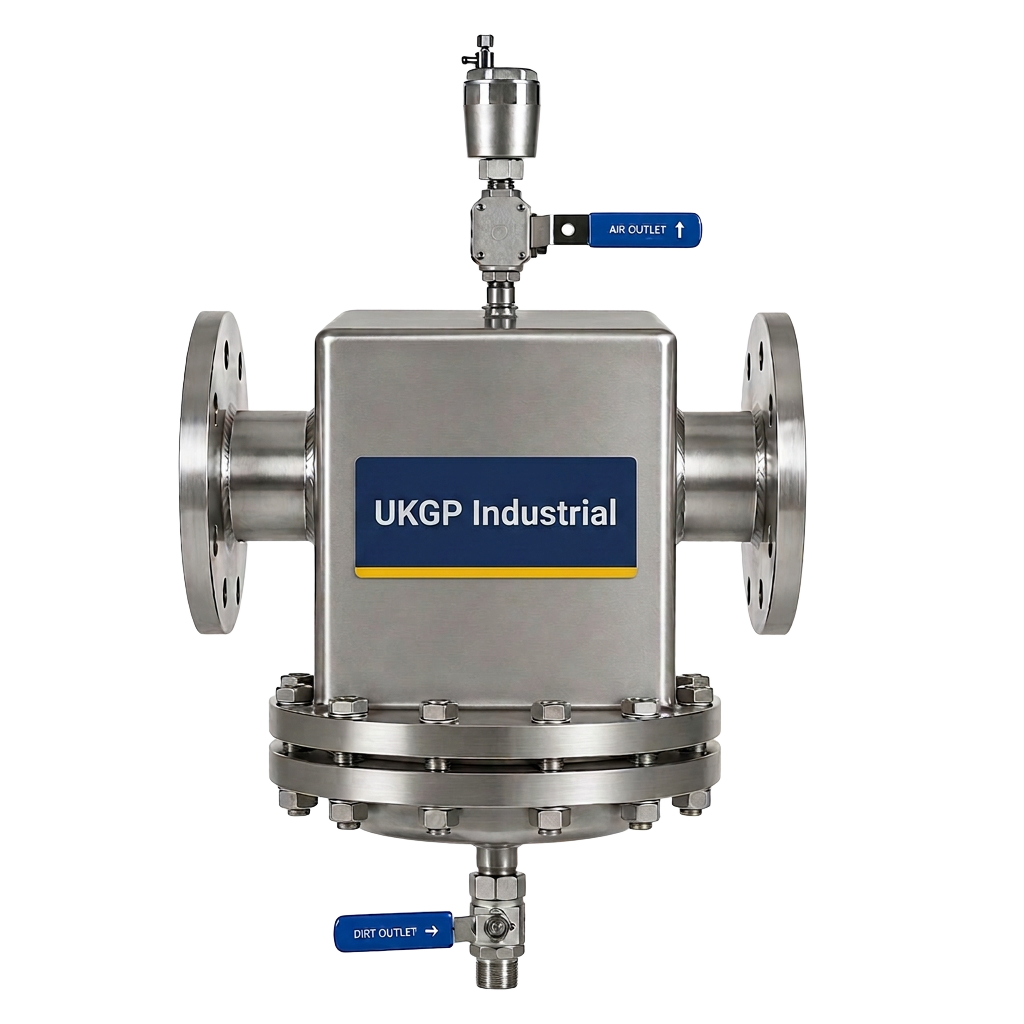
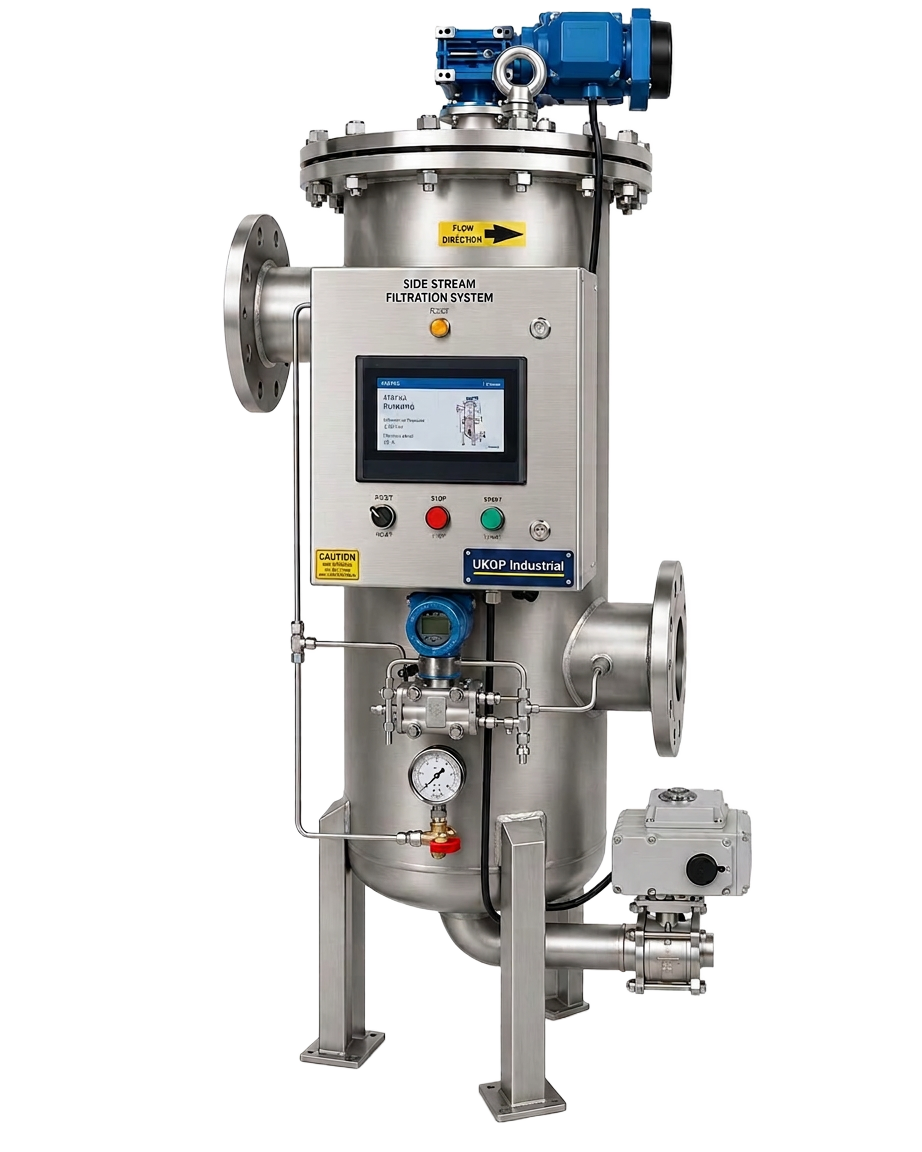
Beyond the primary hydraulic function, it is important to consider what does a low loss header do for the physical health of the system components. As water velocity slows within the header body, heavy particulates such as magnetite and scale tend to drop out of suspension. This makes the low loss header a strategic point for dirt collection. While it does not replace the need for high-performance side stream filtration, it acts as a primary stage for removing bulk debris before it can reach sensitive pump impellers or plate heat exchanger channels. This dual-purpose design makes the header a high-value asset in any commercial plant room.
Similarly, the reduction in velocity allows micro-bubbles of entrained air to coalesce and rise to the top of the vessel. Most low loss headers are equipped with an automatic air vent (AAV) at the highest point to purge this air from the system. Removing air is critical for preventing aerobic corrosion and for ensuring that heat transfer efficiency is not compromised by air pockets in the heat exchangers. For facilities managers, this means fewer call-outs for 'cold spots' in the building and a significant reduction in the noise often associated with air-bound commercial pipework, leading to better tenant satisfaction.
When combined with other water treatment strategies, such as the use of dedicated dirt separators, the low loss header helps create a 'clean' hydraulic environment. This is essential for the validity of manufacturer warranties on high-end condensing boilers and circulating pumps. By choosing a UKGP header with a 2-year warranty and lead times of just 2-3 weeks, contractors can ensure they have the necessary equipment to protect their installations. The inclusion of a robust insulation jacket as standard also ensures that the heat energy intended for the building is not lost to the plant room atmosphere, improving overall seasonal efficiency (SEDBUK) ratings.
- Reduces the load on secondary fine-filtration systems.
- Protects expensive boiler heat exchangers from larger debris.
- Assists in the removal of entrained air and micro-bubbles.
- Minimises maintenance requirements for secondary pump sets.
Technical considerations for sizing and installation
Correct sizing is the most critical factor when determining what does a low loss header do effectively within a system. If the header is undersized, it can cause excessive pressure drops and fail to decouple the circuits, leading to the same hydraulic conflicts it was meant to resolve. Typically, sizing is based on the 'rule of thumb' where the cross-sectional area of the header should be at least three to four times that of the primary pipework to ensure the required velocity reduction. UKGP provides technical data for flows ranging from 40 kW up to 2,000 kW, ensuring that from small office blocks to large industrial complexes, the hydraulic requirements are precisely met.
Orientation also plays a role in performance. While vertical headers are most common due to their excellent air and dirt separation capabilities, horizontal variants are available where plant room ceiling height is restricted. Installers must ensure that the header is mounted securely and that the insulation jacket is fitted correctly after commissioning to prevent condensation—particularly important if the system is also used for chilled water applications. The BSP or PN16 flanged options from UKGP allow for easy integration into standard pipework configurations, reducing onsite labor time and ensuring a leak-free installation that meets the pressure ratings required for multi-storey buildings.
For consultants and designers, specifying a header with a 2-year warranty provides peace of mind that the component is manufactured to high standards. These vessels are the 'heart' of the hydraulic distribution system, and their failure can bring an entire facility to a standstill. By sourcing from a Surrey-based manufacturer like UKGP, procurement leads can benefit from short 2-3 week lead times, avoiding the long logistical delays associated with international shipping. This reliability is essential during fast-track plant room refit projects where the heating must be restored quickly to maintain building occupancy and comply with health and safety regulations.
- Select header size based on maximum flow rate, not just boiler capacity.
- Ensure insulation jackets are fitted to limit energy wastage.
- Verify pressure ratings (PN16) match the system's static head.
- Consider vertical versus horizontal space constraints in the plant room.
Enhancing control logic with the low loss header
Modern Building Management Systems rely on precise data to modulate boiler output and pump speeds. If you ask a controls engineer what does a low loss header do, they will likely point to the temperature sensor pocket. By measuring the mixed flow temperature at the header, the BMS can accurately determine the load demand. This is far more effective than relying on return temperatures alone, which can be skewed by bypass flows or low-load conditions. This granular control allows for more effective load tailoring, ensuring that the primary heat source only produces exactly the amount of energy required by the secondary emitters.
In systems using variable primary flow (VPF), the low loss header acts as a critical safety valve that maintains the minimum flow required by the boiler even when the secondary system demand drops to zero. This is a common requirement for modern compact boilers which have high power-to-water volume ratios and are sensitive to overheating. By integrating a low loss header, you decouple the demand logic from the production logic. This simplifies the commissioning process significantly, as each circuit can be balanced independently without impacting the flow characteristics of the other, leading to a much more stable and predictable heating system.
Furthermore, the presence of a low loss header facilitates easier expansion of the system in the future. If additional heating zones are added, or if the heat source is upgraded to include renewable technologies like air source heat pumps, the header provides a common interface point. This future-proofs the installation, making it easier for facility managers to adapt the building's infrastructure as energy requirements change. UKGP's range of low loss headers, available in 40-2000 kW capacities, provides the versatility needed for these evolving commercial environments, ensuring that the initial investment continues to provide value for decades to come.
- Simplifies commissioning by isolating primary and secondary circuits.
- Enables precise BMS control through dedicated sensor pockets.
- Protects boilers from high-temperature trips during low-load periods.
- Provides a flexible interface for future system upgrades or additions.
Economic benefits and commercial ROI
From a commercial perspective, the question of what does a low loss header do is ultimately answered by the return on investment. While it adds an initial cost to the plant room build, the savings in pump energy and reduced boiler wear/tear are substantial. Reduced cycling means fewer burner replacements and lower maintenance costs over the life of the plant. Additionally, by ensuring the boilers stay in condensing mode for longer periods through better temperature control, the building's overall gas consumption is reduced, providing a direct saving on utility bills for the end-user or facility management company.
For M&E contractors, the use of a pre-fabricated, insulated header from UKGP reduces the time spent on-site. Instead of fabricating bespoke bypass pipework, a standardised header provides a professional finish and guaranteed performance. The 2-3 week lead time ensures that projects stay on schedule, while the 2-year warranty provides a safety net during the defects liability period. Ultimately, the low loss header is a small investment that protects much larger capital assets like industrial boilers and chillers, making it a non-negotiable component for any high-specification commercial heating project.
In conclusion, the low loss header is the silent workhorse of the modern plant room. It solves the complex hydraulic challenges that arise when trying to balance production and demand in a fluctuating environment. By providing separation, air removal, and dirt collection, it ensures that the entire system operates at its peak designed efficiency. For advice on selecting the correct model for your next project, or to receive a quote for a PN16 flanged or BSP threaded unit, contact the UKGP team today. Our experts can guide you through the technical nuances of each model to ensure your system performance is fully optimised and compliant with current UK standards.
- Lowers long-term operational costs through improved gas efficiency.
- Reduces contractor labor time with pre-fabricated, insulated units.
- Protects high-value assets like boilers from hydraulic stress.
- Ensures project deadlines are met with reliable 2-3 week delivery.
Frequently asked questions
What does a low loss header do in a multi-boiler system?
- In a multi-boiler cascade, the header allows each boiler to maintain its specific flow rate and temperature without being influenced by the fluctuating demands of the building's secondary circuits. It ensures the cascade can modulate correctly and maintain the required Delta T for condensing efficiency.
Is a low loss header required for all commercial boilers?
- While not strictly required by law, most major commercial boiler manufacturers highly recommend or require them to validate warranties. They are essential whenever the primary pump flow differs from the secondary pump flow to prevent hydraulic conflict and equipment damage.
Can a low loss header be used for cooling systems?
- Yes, they are frequently used in chilled water systems to decouple the chiller from the distribution pumps. In these cases, it is vital that the header is supplied with a high-quality, vapour-sealed insulation jacket to prevent condensation and corrosion on the vessel's exterior.
What is the difference between a low loss header and a buffer tank?
- The primary difference is volume. A low loss header is designed for hydraulic separation with minimal storage, while a buffer tank has a much larger volume designed to add thermal mass to a system, preventing short-cycling in systems with very low water content or high-modulating heat sources like heat pumps.
How do I choose between flanged and threaded headers?
- Threaded (BSP) headers are generally used for smaller capacities and lower pressures, typically up to 2 inches. Flanged (PN16) headers are the standard for larger commercial and industrial applications, providing a more robust, leak-resistant connection for high-flow rates and larger pipe diameters.