Understanding wh40 low loss header Fundamentals
In the UK commercial boiler market, the wh40 low loss header serves as a neutral pressure zone that allows the primary circuit pump and the secondary circuit pumps to operate independently. This separation is vital because modern high-efficiency condensing boilers require specific flow rates to maintain heat exchanger longevity, while secondary zones like underfloor heating or radiator banks often have fluctuating hydraulic demands. By implementing a wh40 low loss header, specifiers can ensure that the boiler plant is never starved of water and that the return temperatures are kept low enough to facilitate continuous condensing operation, aligning with seasonal efficiency targets.
The physics of a wh40 low loss header rely on the principle of low fluid velocity within the vessel. By increasing the cross-sectional area of the pipework at the intersection of the primary and secondary circuits, the velocity drops significantly, creating a point of negligible pressure drop. This allows the system to balance varying flow rates without the pumps ‘fighting’ each other. Engineering consultants often specify these units when moving from traditional constant-volume systems to modern variable-volume systems where TRVs and zone valves frequently alter the secondary resistance, ensuring the primary boiler circuit remains stable regardless of external demand spikes.
When integrating a wh40 low loss header into a schematic, British standards and CIBSE guidelines suggest that the size must be calculated based on the maximum potential flow rate of either the primary or secondary circuit. This ensures that even under full load conditions, the bypass velocity remains within the laminar flow range. UKGP Industrial specializes in providing these vessels to meet exact kilowatt requirements, offering robust flanged and threaded options that simplify the installation phase for M&E contractors who are working to tight project deadlines and strict performance specifications in public sector or high-end commercial builds.
- Facilitates hydraulic decoupling between primary and secondary circuits
- Enables constant flow through the boiler heat exchanger
- Supports variable flow rates in the secondary distribution loops
- Prevents pump cavitation and excessive wear on mechanical components
Compliance with BSRIA BG29 and BG50 Standards
The installation of a wh40 low loss header must be considered alongside BSRIA BG29 'Pre-commission cleaning of pipework systems' and BG50 'Water treatment for closed heating and cooling systems'. A low loss header can potentially act as a dead-leg or a collection point for system debris if not managed correctly. During the initial flushing and chemical cleaning phases, it is imperative that the header is included in the circulation to remove any manufacturing oils or installation shards. Standard practice now dictates that these headers should be equipped with drainage valves and air vents to facilitate the removal of contaminants that could otherwise harm primary boiler pumps.
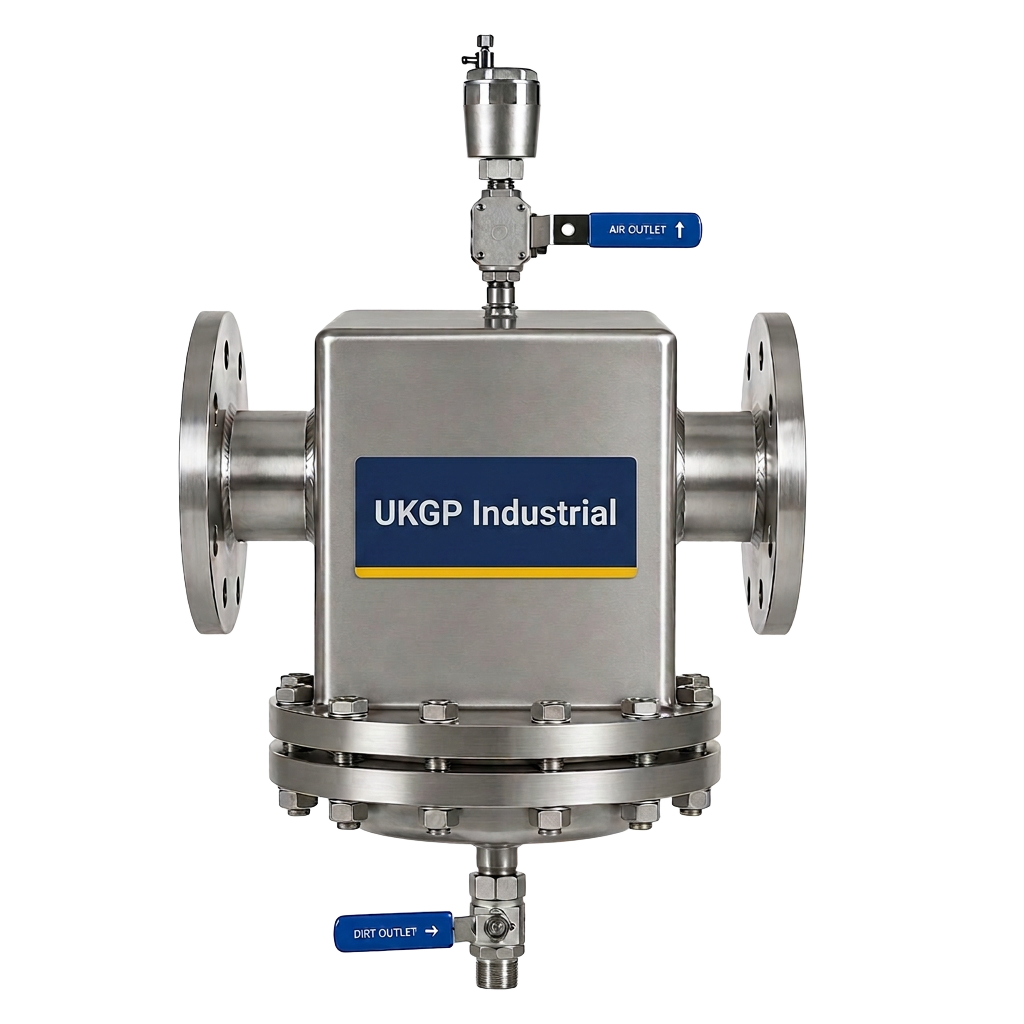
Corrosion management is another critical factor highlighted in BS 8552 regarding the sampling and monitoring of water in building services. Because the wh40 low loss header reduces fluid velocity, it can inadvertently encourage the settling of magnetite. UKGP designs often advocate for the addition of high-performance air and dirt separators alongside the header to ensure that total suspended solids are captured before they can accumulate. This is particularly important in retrofit scenarios where old steel pipework may be connected to new high-efficiency boilers, where the risk of scaling and oxygen-induced corrosion is significantly higher than in new-build closed-loop systems.
Adhering to BG50 ensures that the long-term integrity of the plant room is maintained. A poorly maintained wh40 low loss header can lead to stratified temperature zones that confuse boiler sensors, leading to 'cycling' where the boiler turns on and off rapidly. This not only wastes energy but puts unnecessary thermal stress on the equipment. Contractors should always ensure that the header is fully insulated with a high-quality thermal jacket to prevent heat loss, a standard feature offered with UKGP's range of units, which helps in meeting Part L of the Building Regulations regarding conservation of fuel and power.
- Ensures alignment with BSRIA BG29 pre-commissioning cleaning protocols
- Reduces risk of pump failure via improved hydraulic transparency
- Improves system longevity by facilitating localized air and dirt removal
- Maintains lower return temperatures for maximum condensing efficiency
Sizing and Selecting your wh40 low loss header
Correct sizing of a wh40 low loss header is determined by the maximum power output and the temperature differential (delta-T) of the system. For a standard 40kW to 2000kW range, the header diameter must be sufficient to ensure the vertical velocity in the header remains below 0.1 to 0.2 metres per second. If the velocity is too high, the header fails to act as a neutral pressure zone, and the hydraulic circuits remain coupled. UKGP provides comprehensive sizing charts that allow engineers to select between BSP threaded connections for smaller applications or PN16 flanged connections for larger commercial installations, ensuring a secure and leak-free fitment.
Material choice and build quality are paramount when selecting a wh40 low loss header for high-specification projects. Many low-quality alternatives suffer from poor weld integrity or inadequate internal baffle design, leading to turbulent mixing that disrupts the temperature sensors located at the top of the header. UKGP headers are manufactured to exceed standard industrial requirements, featuring pre-built sensor pockets and robust support legs. This attention to detail ensures that the commissioning engineer can accurately monitor the flow temperature going out to the secondary circuits, which is essential for the BMS to control the boiler modulation effectively.
For procurement leads and plant room engineers, lead time and warranty are often as important as technical specs. UKGP offers a wh40 low loss header (covering commercial 40-2000 kW) with a standard lead time of just 2-3 weeks, significantly faster than many bespoke fabricators. Every unit comes with a 2-year warranty and a high-quality insulation jacket as standard. Whether you require a compact unit for a school refurb or a large-scale flanged header for a district heating project, these units provide the technical reliability needed to satisfy the most demanding UK building services consultants and mechanical contractors.
- Standard power range coverage from 40kW to 2000kW
- Available in BSP threaded or PN16 flanged connection types
- Includes dedicated sensor pockets for precise BMS temperature monitoring
- Supplied with a 2-year warranty and thermal insulation jacket
Installation Best Practices for the wh40 low loss header
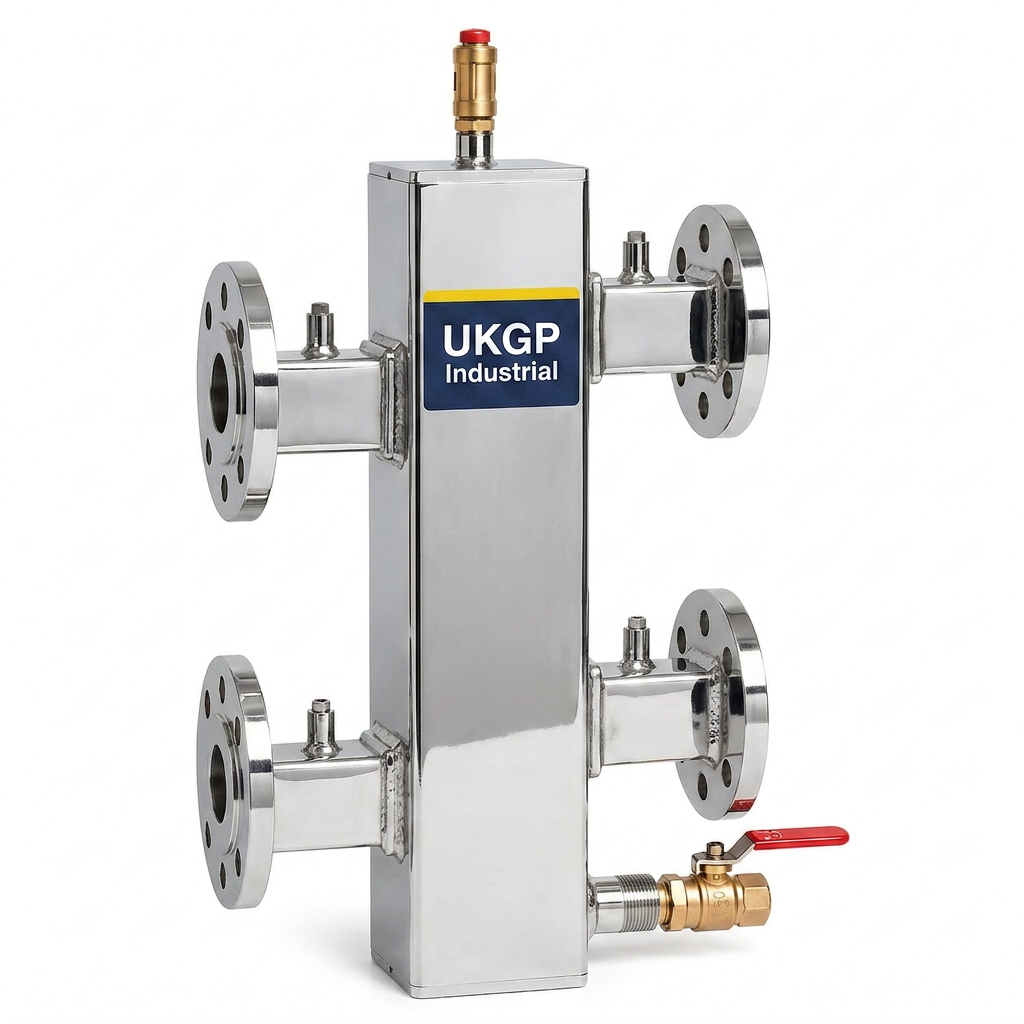
When installing a wh40 low loss header, the orientation and positioning relative to the boilers are crucial. The header should be located as close to the primary heat source as possible to minimize pressure drops in the primary loop. It is essential to ensure that the primary flow and return connections are piped correctly—typically with the flow at the top and the return at the bottom of the same side. Reversing these can lead to short-circuiting where the secondary loops receive mixed water rather than the full flow temperature, drastically reducing the heat output to the building and causing cold-spot complaints from facility managers.
A common mistake in the field is neglecting the air vent and drain valve connections on the wh40 low loss header. Because the velocity drops inside the vessel, air bubbles naturally rise to the top while heavy particles settle at the bottom. Installing an automatic air vent on the top tapping and a full-bore drain valve on the bottom allows the header to act as a secondary purification point. For systems with significant scaling risks, mechanical contractors often install chemical dosing pots near the header to allow for easy introduction of corrosion inhibitors, ensuring the entire system remains compliant with BS 8552 water quality standards throughout its operational life.
Support and weight management must also be considered during installation. A wh40 low loss header filled with water is significantly heavier than its dry weight, and the pipework should not be used as the primary support. UKGP units typically feature integrated floor-standing legs or wall-mounting brackets to take the load off the connecting valves. Furthermore, expansion bellows should be used in the surrounding pipework to prevent thermal expansion stresses from being transferred to the header's welded joints. By following these practical installation steps, engineers can ensure a quiet, efficient, and long-lasting hydraulic system that requires minimal intervention from the FM team.
- Position the header close to heat sources to minimize primary heat loss
- Ensure correct flow/return orientation to prevent internal short-circuiting
- Utilize integrated support legs to remove stress from connecting pipework
- Install air vents and drain valves to utilize the header's de-aeration properties
Thermal Efficiency and Heat Management
Thermal performance is a key metric in modern plant design, especially with the rising costs of energy and the drive toward Net Zero. A wh40 low loss header that is not properly insulated becomes a massive radiator in the plant room, wasting energy and increasing the ambient temperature to levels that can damage sensitive electronics in BMS panels. UKGP provides bespoke-fit insulation jackets for their low loss headers, ensuring that the thermal energy stays within the fluid stream. These jackets are designed for easy removal and refitting during maintenance inspections, facilitating routine checks without compromising the building's overall energy efficiency rating.
Beyond simple insulation, the wh40 low loss header plays a strategic role in return temperature management. In a condensing boiler system, the goal is to keep the return water below the dew point (approx. 54°C). If the primary pump is significantly more powerful than the secondary pump, hot flow water will bypass directly into the return pipe via the header. This 'thermal bypass' raises the return temperature and stops the boiler from condensing. By using a header with a large enough diameter, the mixing is minimized, allowing the BMS to modulate the primary pump speed to match the secondary demand and maintain that crucial temperature differential.
In complex multi-boiler cascades, the wh40 low loss header ensures that the addition or subtraction of a boiler from the sequence does not cause hydraulic shock to the rest of the system. This stability is particularly valued by plant-room engineers who manage facilities with critical heating requirements, such as hospitals or data centers. The reliable supply of a UKGP header, with its 2-3 week lead time, allows contractors to meet project milestones while ensuring that the final mechanical installation is robust, efficient, and fully compliant with the highest UK engineering standards, including the necessary PN16 or BSP connections for industrial durability.
- Removable insulation jackets reduce plant room heat gains
- Maintains hydraulic stability across multi-boiler cascade systems
- Aids in maintaining return temperatures below the condensing dew point
- Designed for 40-2000 kW commercial applications
Procurement and Logistics for UK Projects
For procurement leads at M&E firms, the wh40 low loss header represents a vital component that can often be a bottleneck if not sourced correctly. Many custom fabricators have lead times exceeding 6-8 weeks, which can delay the commissioning phase of a project. UKGP Industrial addresses this by maintaining a streamlined manufacturing process that delivers high-quality headers in 2-3 weeks. This reliability allows project managers to plan their site activities with confidence, knowing that the hydraulic heart of their plant room will arrive on time and ready for installation. Each unit is pressure tested and inspected to ensure it meets the rigours of commercial operation.
When requesting a quote for a wh40 low loss header, it is important to specify whether flanged (PN16) or threaded (BSP) connections are required. Flanged connections are typically preferred for larger systems (above 150kW) for ease of maintenance and superior sealing, while threaded connections offer a compact solution for smaller 40kW to 100kW installations. UKGP’s technical team can provide guidance on the most appropriate connection type based on the specific pressures and flow rates of your project. This level of technical support ensures that the specified product is fit-for-purpose and integrates seamlessly with other plant room components like expansion bellows and dosing pots.
Choosing a UK-based supplier like UKGP also provides peace of mind regarding after-sales support and warranty claims. The 2-year warranty on the wh40 low loss header is a testament to the build quality and durability of the materials used. In an industry where reliability is non-negotiable, having a supplier that understands the specific requirements of UK building services—including knowledge of BSRIA BG50 and BS EN 14917—is invaluable. By choosing UKGP, you are investing in a product that combines rapid delivery, commercial competitiveness, and engineered excellence for your next heating system installation or plant room upgrade.
- Fast 2-3 week lead times for immediate project requirements
- Manufactured in the UK to suit commercial M&E specifications
- Support for both PN16 flanged and BSP threaded pipework architectures
- Direct access to technical experts for sizing and specification support
Frequently asked questions
What is the primary function of a wh40 low loss header?
- The primary function is to decouple the primary boiler circuit from the secondary distribution circuits, allowing both to operate at different flow rates and pressures without interference.
Can a wh40 low loss header be used for both heating and cooling?
- Yes, while most commonly used in heating to protect boilers, they can be utilized in chilled water systems to provide hydraulic separation between chillers and air handling units.
What connection types are available for the UKGP low loss headers?
- UKGP provides units with either BSP threaded connections for smaller applications or PN16 flanged connections for larger commercial projects, typically ranging from 40kW to 2000kW.
Does the header come with insulation?
- Yes, all UKGP low loss headers are supplied with a high-quality, removable insulation jacket as standard to improve energy efficiency and meet building regulations.
What is the typical lead time for a commercial wh40 low loss header?
- The standard lead time is 2-3 weeks, making it one of the quickest professional-grade options available for UK contractors.