Understanding the Role of a Spirocross Low Loss Header
In modern commercial heating systems, maintaining the correct flow rates across the boiler heat exchanger is paramount to preventing thermal shock and cycling. A spirocross low loss header serves as a hydraulic neutral point, decoupling the constant flow of the primary boiler circuit from the variable flow of the secondary heating zones. By integrating a spirocross low loss header, engineers can ensure that the pumps in the distribution network do not interfere with the internal pumps of the heat source. This separation is critical in high-efficiency systems where precise temperature control and flow management are required to meet BSRIA BG50 guidelines for water quality and system longevity.
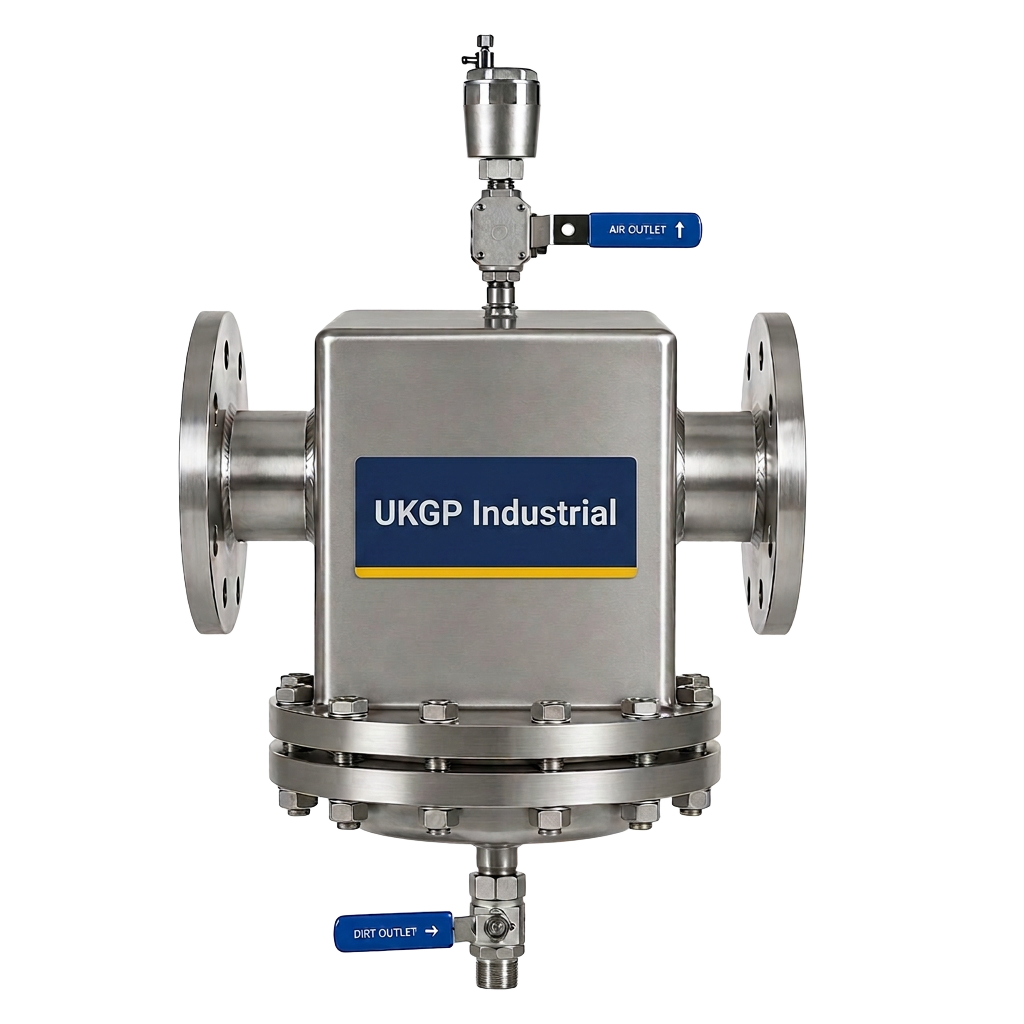
The fundamental design of a spirocross low loss header leverages cross-flow technology to facilitate the removal of micro-bubbles and magnetite particles. Unlike a standard vertical header, this specific unit utilise an internal mesh or honeycomb structure that slows down the fluid velocity, allowing air to rise to the automatic air vent and debris to settle at the bottom for blow-down. For M&E contractors and consultants, the choice of a spirocross low loss header represents a compact solution that reduces the footprint of the plant room while providing three distinct functions: hydraulic separation, deaeration, and dirt separation. This multifunctionality is particularly valuable in London refurbishments where space is at a premium.
When calculating the sizing for these units, it is essential to consider the maximum flow rate rather than just the boiler output in kilowatts. A mis-sized spirocross low loss header can lead to turbulence and poor temperature stratification, undermining the very efficiency it was meant to protect. Designers must ensure the vertical velocity within the header remains below 0.5 metres per second to allow for effective separation of contaminants. At UKGP Industrial, we support engineers in selecting the correct hydraulic interface, offering robust alternatives and complementary components that ensure your system architecture aligns with CIBSE CP1 standards for heat networks and commercial boiler installations.
- Elimination of hydraulic interference between primary and secondary pumps
- Continuous deaeration and micro-bubble removal for improved heat transfer
- Effective dirt separation to protect sensitive control valves and heat exchangers
- Reduction in plant room footprint through multi-functional design
- Enhanced system stability and reduced maintenance intervals
Integrating UKGP Low Loss Headers into Commercial Schemes
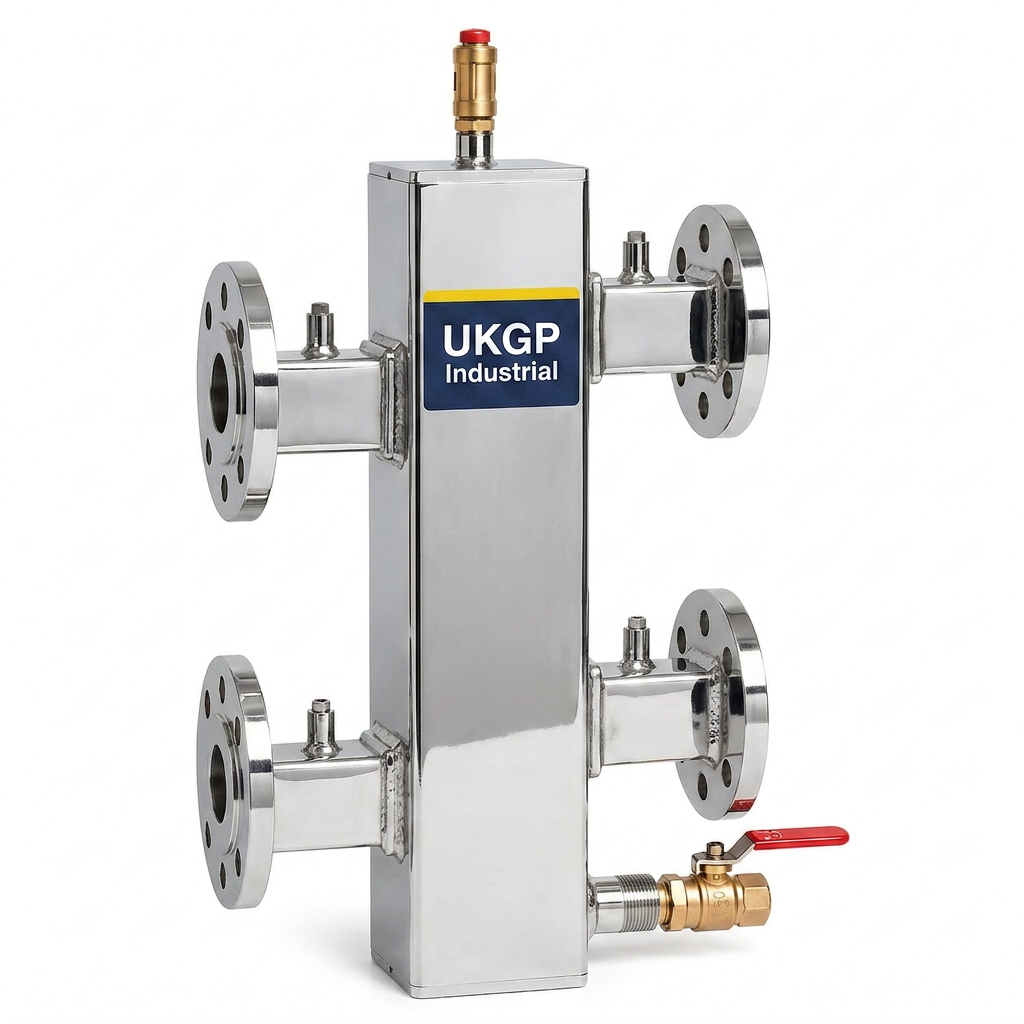
While the spirocross low loss header is a well-regarded configuration, UKGP Industrial provides an extensive range of commercial low loss headers designed to meet the rigorous demands of UK plant rooms. Our units are engineered for outputs ranging from 40 kW to 2000 kW, making them suitable for everything from small commercial units to large-scale district heating schemes. Each low loss header we supply is available with either threaded BSP or PN16 flanged connections, ensuring compatibility with standard UK pipework specifications. Furthermore, our units come complete with high-quality insulation jackets to minimise standing heat losses, which is a core requirement for compliance with Part L of the Building Regulations.
Contractors often face tight deadlines, which is why UKGP Industrial maintains a standard lead time of just 2-3 weeks for our bespoke and standard header ranges. Reliability is backed by a 2-year warranty, providing peace of mind to facility managers and building owners alike. Whether you are replacing an existing spirocross low loss header or designing a completely new system from scratch, our technical team is on hand to ensure the pressure drops and flow rates are perfectly matched to your boiler requirements. By choosing a UKGP low loss header, you are investing in a product that combines heavy-duty construction with high-performance hydraulic decoupling, ensuring the long-term health of the entire HVAC network.
In addition to the physical header, UKGP provides all the necessary peripheral components to complete a professional installation. This includes high-performance sensors and air vents that complement the hydraulic separation process. Our low loss headers are manufactured to the highest standards, ensuring that weld integrity and material thickness exceed the baseline requirements for commercial pressurised systems. For teams working under BSRIA BG29 pre-commissioning cleaning protocols, the inclusion of a high-quality header facilitates easier flushing and chemical dosing by providing a central point for system access and debris collection. Request a quote today to see how our PN16 flanged or BSP threaded options can fit your next project.
- Commercial capacity range from 40 kW up to 2000 kW
- Available with bespoke BSP or PN16 flanged connections
- Supplied with rapid 2-3 week lead time for UK sites
- Standard 2-year warranty on all commercial units
- Includes high-efficiency thermal insulation jackets
Technical Compliance with BSRIA and CIBSE Standards
Adhering to industry standards like BSRIA BG50 and BS 8552 is non-negotiable for modern building services engineers. A spirocross low loss header plays a vital role in these compliance frameworks by acting as a primary filtration and deaeration point. Poor water quality is the leading cause of premature failure in commercial boilers, particularly with the sensitive heat exchangers found in low-emissions appliances. By utilising the separation characteristics of a spirocross low loss header, the system can effectively manage the 'black sludge' or magnetite that often plagues older carbon steel systems, preventing it from recirculating through the expensive boiler primary heat exchangers and causing catastrophic blockages.
Furthermore, the CIBSE Guide S on circulation and pumps highlights the necessity of maintaining low pressure drops across the hydraulic interface. A properly specified spirocross low loss header ensures that the pressure differential between the flow and return manifolds is negligible. This 'low loss' characteristic allows the pumps to operate in their most efficient range, reducing energy consumption and mechanical wear. For sustainability leads and procurement officers, this translates to lower operational costs and a reduced carbon footprint over the lifecycle of the building. It is not just about moving water; it is about moving it intelligently while protecting the capital investment of the plant room.
In domestic and light commercial settings, some might overlook the need for such sophisticated separation, but in high-output environments, the stakes are much higher. The technical advantage of a spirocross low loss header lies in its ability to handle high flow velocities internally while maintaining a quiet, laminar flow at the outlets. This acoustic benefit is often cited by facility managers in residential blocks or hospitals where plant room noise must be kept to a minimum. By following the best practices set out by major UK commercial boiler OEMs and industry bodies, engineers can guarantee a robust installation that stands up to the rigours of 24/7 operation throughout the heating season.
- Compliance with BSRIA BG50 for water quality management
- Alignment with CIBSE guidelines for hydraulic decoupling
- Assistance in reaching Part L energy efficiency targets
- Reduction in system noise and mechanical vibration
- Facilitates easier compliance with BS 8552 sampling protocols
Enhancing Filtration with Side Stream Technology
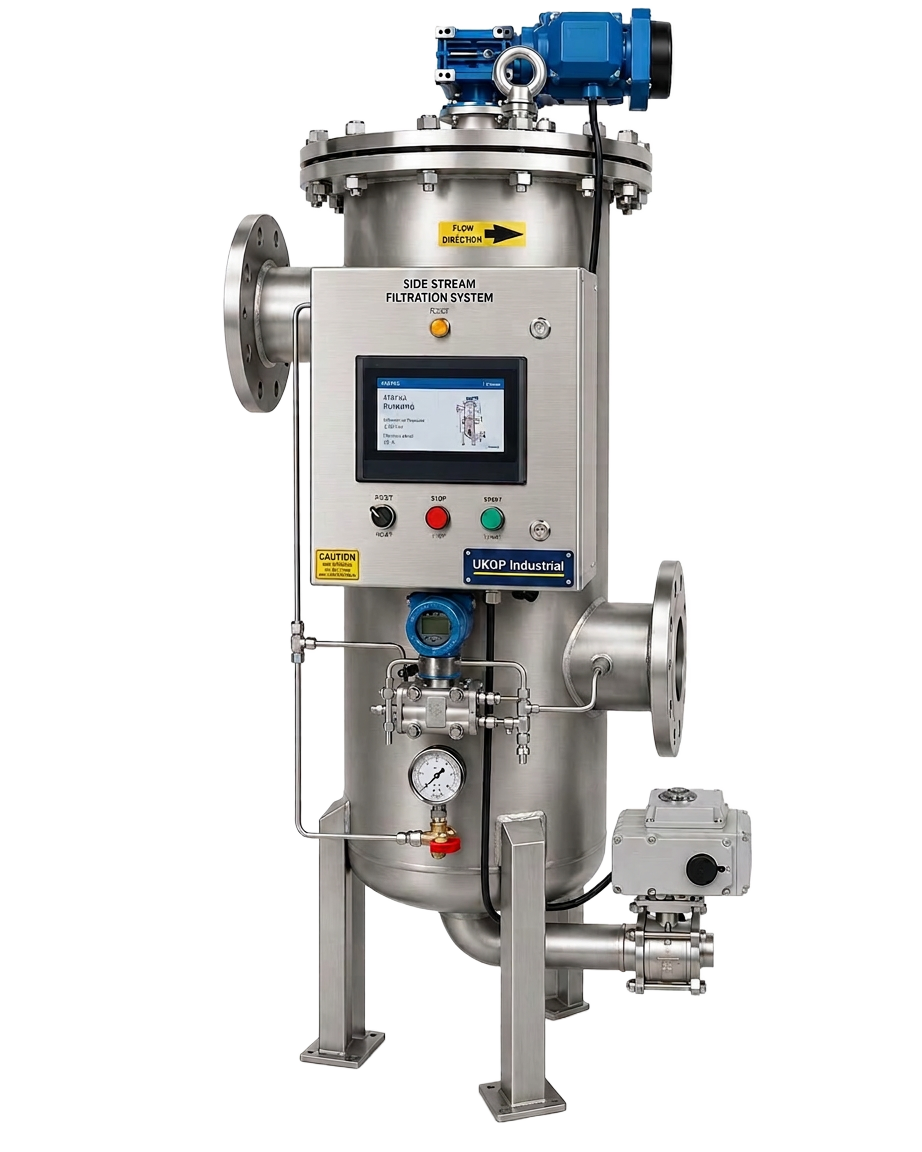
While a spirocross low loss header provides essential first-pass filtration and air removal, complex commercial systems often benefit from secondary protection layers. Side stream filtration skids are an excellent accompaniment to a manifold or header setup, especially in systems with high volumes of suspended solids. While the spirocross low loss header captures larger particles and micro-bubbles, a side stream unit can continuously polish the water, removing particles down to sub-micron levels. This dual-action approach ensures that even as the system ages, the heat transfer efficiency remains as high as the day it was commissioned, avoiding the drift in performance often seen in unmanaged HVAC circuits.
UKGP Industrial offers advanced side stream filtration solutions that work in harmony with our low loss headers. By diverting a percentage of the total flow through a high-performance filter, the system can be cleaned without requiring a full shutdown. This is particularly relevant for 24-hour facilities such as data centres or healthcare sites. Integrating these technologies ensures that the magnetite which might escape a standard spirocross low loss header is caught elsewhere. When consultants specify both a robust low loss header and side stream filtration, they are creating a resilient ecosystem that significantly reduces the frequency of emergency call-outs and component replacements, leading to a much lower Total Cost of Ownership.
The synergy between different plant room components is what defines a high-performing system. For example, using a spirocross low loss header alongside a precision chemical dosing pot allows for the controlled introduction of inhibitors, ensuring that the entire system volume is treated uniformly. This integrated approach to water treatment and hydraulic separation is what UKGP Industrial specialises in. We provide the technical expertise to help you select the right combination of products, ensuring that your secondary circuits are protected from the scale and corrosion issues that can compromise system integrity. Our equipment is built to handle the pressures of modern commercial environments, providing long-term reliability for M&E contractors.
- Continuous water polishing without system downtime
- Removal of fine suspended solids and magnetite
- Complementary protection for the header and boilers
- Easy maintenance with replaceable filter cartridges
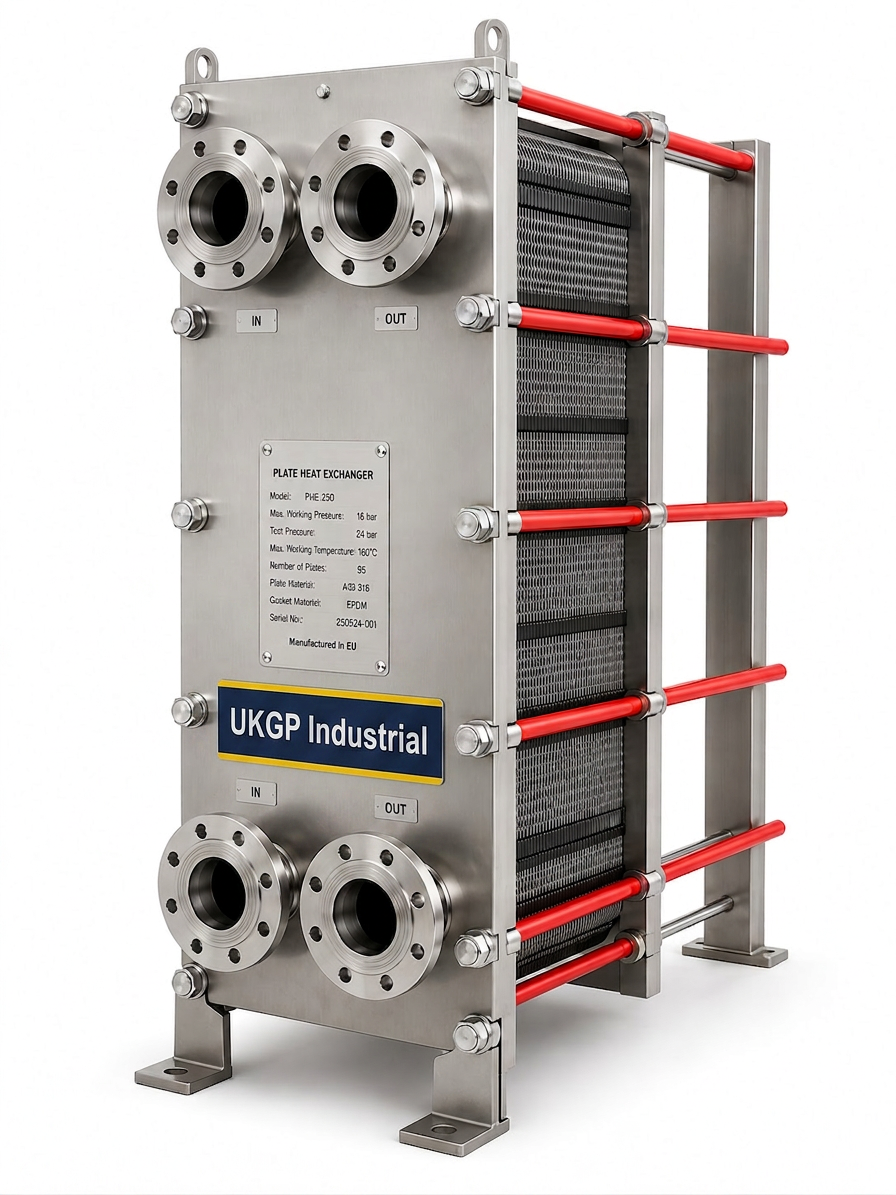
- Improved heat transfer across plate heat exchangers
Mechanical Requirements for Expansion and Pressure
Thermal expansion is another critical factor when installing a spirocross low loss header. As the water temperature fluctuates within the header and the wider circuit, the resulting volume changes must be managed to prevent over-pressurisation or vacuum conditions. Engineers must ensure that expansion vessels and bellows are correctly sized and positioned relative to the low loss header. In many designs, the spirocross low loss header acts as the 'point of no pressure change,' making it the ideal location for connecting the expansion line. Ensuring this relationship is technically sound prevents the common issue of air being drawn into the system through automatic air vents, which often leads to localized corrosion and pump cavitation.
At UKGP Industrial, we emphasize the importance of matching the pressure rating of the spirocross low loss header with the rest of the plant room equipment. Our own range of headers is designed to withstand standard commercial operating pressures, but for high-rise buildings or high-temperature applications, bespoke PN16 or PN25 flanged units may be required. Using high-quality expansion bellows alongside the header further protects the system by absorbing the mechanical stresses caused by pipework elongation. This holistic view of the plant room ensures that every component, from the heater to the header, is protected from mechanical fatigue, a frequent cause of leaks in systems that have been poorly designed or installed with sub-standard materials.
Installation of a spirocross low loss header also requires careful consideration of support and weight. When full of water, these units are heavy, and the bracketry must be sufficient to prevent stress on the connecting pipework. Our UKGP headers come with robust integrated supports or can be custom-mounted to suit specific plant room layouts. By providing a 2-year warranty and clear technical documentation, we assist engineers in verifying that their designs meet all safety and performance criteria. If you are currently working on a tender or a site design, our team can provide the necessary CAD drawings and data sheets to integrate our low loss headers seamlessly into your mechanical model, ensuring a smooth installation process for the onsite team.
- Strategic placement for expansion vessel connection
- Absorption of thermal stresses with expansion bellows
- Pressure ratings suitable for high-rise commercial builds
- Robust mounting and support structures as standard
- CAD support available for seamless BIM integration
Procurement and Installation of Commercial Headers
For procurement leads and M&E contractors, the availability and lead time of components like a spirocross low loss header can make or break a project schedule. Waiting 8-10 weeks for an imported unit is often not an option when a boiler replacement must be completed during a short window. UKGP Industrial addresses this by offering a 2-3 week lead time on our commercial low loss headers, manufactured to the highest UK standards. This speed of delivery, combined with our 2-year warranty, makes our products a preferred choice for contractors working on time-sensitive hospital, school, or office refurbishments. We provide the documentation required for O&M manuals upfront, simplifying the handover process once the project is complete.
During the installation phase, the versatility of the connection types is key. Whether the project calls for threaded BSP connections for smaller 40 kW units or PN16 flanged connections for a 2000 kW master header, we ensure the equipment arrives on site ready to meet the specification. The inclusion of a high-efficiency insulation jacket as standard not only helps with energy savings but also saves the contractor the additional step of having to source and fit bespoke thermal cladding. This 'out of the box' readiness is a hallmark of the UKGP approach. When replacing an old spirocross low loss header, our team can often provide a unit with matching dimensions to minimize the need for extensive pipework modifications, reducing both labor costs and site risk.
In conclusion, the spirocross low loss header and its equivalents are essential components for any resilient commercial heating or cooling system. By ensuring hydraulic separation, removing air, and capturing dirt, they provide a multi-layered defense against system inefficiency. At UKGP Industrial, we are committed to supplying the UK market with high-performance low loss headers that meet and exceed industry expectations. From technical support during the design phase to reliable delivery for the installation team, we provide a comprehensive service for building services professionals. To discuss your specific flow rate requirements or to receive a competitive quote for a 40-2000 kW low loss header, contact our Surrey-based technical sales team today for expert assistance.
- Fast 2-3 week turnaround to keep projects on track
- Bespoke manufacturing available for specific dimensions
- Supplied with professional insulation as standard
- Full technical data provided for O&M compliance
- Cost-effective alternatives to long-lead imported products
Frequently asked questions
What is the primary function of a spirocross low loss header?
- The primary function of a spirocross low loss header is to provide hydraulic separation between the boiler and the distribution circuits, while simultaneously removing air and dirt from the system water.
How do I size a spirocross low loss header for a commercial project?
- Sizing is based on the maximum flow rate (m3/h) rather than just boiler output. You must ensure the velocity within the header is low enough (typically <0.5m/s) to allow for effective air and dirt separation.
Can UKGP provide alternatives to the spirocross low loss header?
- Yes, UKGP Industrial manufactures a full range of commercial low loss headers from 40 kW to 2000 kW, available with BSP or PN16 flanged connections and 2-3 week lead times.
Do these headers come with insulation?
- Yes, all UKGP low loss headers are supplied with a high-quality insulation jacket as standard to prevent heat loss and comply with energy efficiency regulations.
What standards do UKGP headers comply with?
- Our products are designed to support compliance with BSRIA BG29 and BG50, CIBSE design guides, and relevant BS EN standards for pressure vessels and heating systems.