Understanding the Role of a Sinus Low Loss Header
In the UK commercial heating sector, the sinus low loss header has long been recognized for its ability to create a neutral pressure zone between primary and secondary circuits. This hydraulic decoupling ensures that the primary circuit pump, often integral to high-efficiency condensing boilers, is not influenced by the variable flows of the secondary distribution pumps. When these circuits are not properly separated, pump hunting and debris carryover can lead to premature failure of heat exchangers and catastrophic system inefficiencies. UK designers must adhere to CIBSE Guide AM14 to ensure that these vessels are sized correctly for the total plant capacity, preventing issues where the primary flow rate is lower than the secondary demand.
Choosing a sinus low loss header alternative requires a deep dive into the engineering specifications to ensure flow velocities remain below 0.5 metres per second within the vessel body. This low velocity is essential for the effective separation of air and dirt, according to BSRIA BG29 pre-commission cleaning guidelines. While Sinusverteiler products are well-engineered, UKGP Industrial designs our headers to provide the same laminar flow characteristics, ensuring that thermal stratification is maintained for high Delta T return water. This is particularly important for modern heat pump and condensing boiler hybrids where tight control over the return temperature is the difference between peak efficiency and failing to meet decarbonisation targets.
M&E contractors often face the challenge of procurement delays when sourcing specific branded components like the sinus low loss header from international distributors. This is where British manufacturing provides a distinct advantage for those working on tight project timelines. Our UK-based production facility in Surrey focuses on providing heavy-duty, reliable vessels that match the technical performance of established European brands. By maintaining a more agile supply chain, we can offer custom dimensions or standard PN16/BSP configurations that drop directly into existing plant room layouts without requiring extensive piping modifications or costly site-work adjustments that can delay a phased handover.
- Ensures complete hydraulic decoupling between primary and secondary circuits.
- Reduces flow velocity to promote air and dirt separation in accordance with BSRIA BG50.
- Protects boiler heat exchangers from thermal shock and variable flow rates.
- Maintains stable pressure levels across all system load conditions.
Technical Comparison: UKGP vs Sinus Low Loss Header
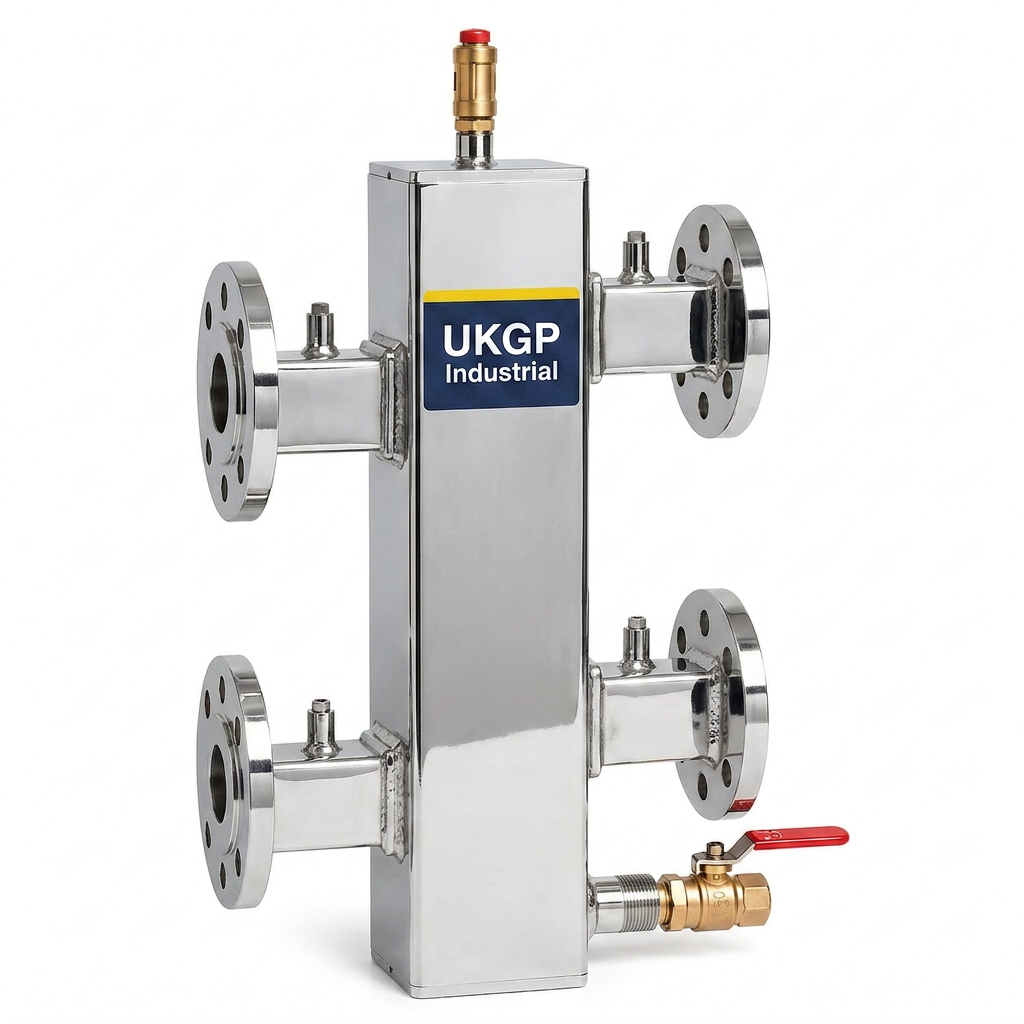
When comparing our units against a sinus low loss header, the technical parity is evident in the vessel construction and performance metrics. UKGP headers are designed to handle power ranges from 40 kW to 2000 kW, ensuring coverage for everything from light commercial office blocks to large-scale industrial heating plants. Like the sinus models, our units feature internal baffles and flow directors that prevent turbulence and ensure that the incoming hot water is distributed evenly. We strictly follow BS EN 13445 standards for pressure vessel design, ensuring that every weld is tested and the vessel is rated for the specific operating pressures and temperatures of your site.
One common point of comparison for engineers is the connection versatility. While a sinus low loss header often features standard metric flanges, UKGP offers a broader range of connectivity including both flanged PN16 and threaded BSP options. This flexibility is vital during plant room refits where legacy heating pipework might be in imperial sizes or restricted by space constraints. Furthermore, each UKGP low loss header comes standard with a high-density, fire-rated insulation jacket. These jackets are essential for modern compliance with Part L of the Building Regulations, ensuring that heat loss within the plant room is kept to an absolute minimum while providing easy access for periodic inspections and maintenance tasks.
Durability is another factor where UKGP provides a compelling alternative to the sinus low loss header. Our vessels are manufactured from high-grade carbon steel and finished with a robust anti-corrosion coating. In the aggressive environment of a commercial plant room, the risk of external corrosion due to atmospheric moisture or minor leaks is high. By providing a 2-year warranty as standard, we offer peace of mind to facility managers (FMs) who require long-term reliability from their capital equipment. This matches or exceeds the expectations of consultants who are specifying for high-end residential developments or critical public sector infrastructure where downtime is not an option.
- Power ratings available from 40 kW up to 2000 kW for varied applications.
- Multiple connection types including BSP threaded and PN16 flanged as standard.
- Includes integrated high-density insulation jackets for Part L compliance.
- Manufactured in the UK to BS EN standards with a 2-year warranty.
Complying with BSRIA BG29 and BG50 Standards
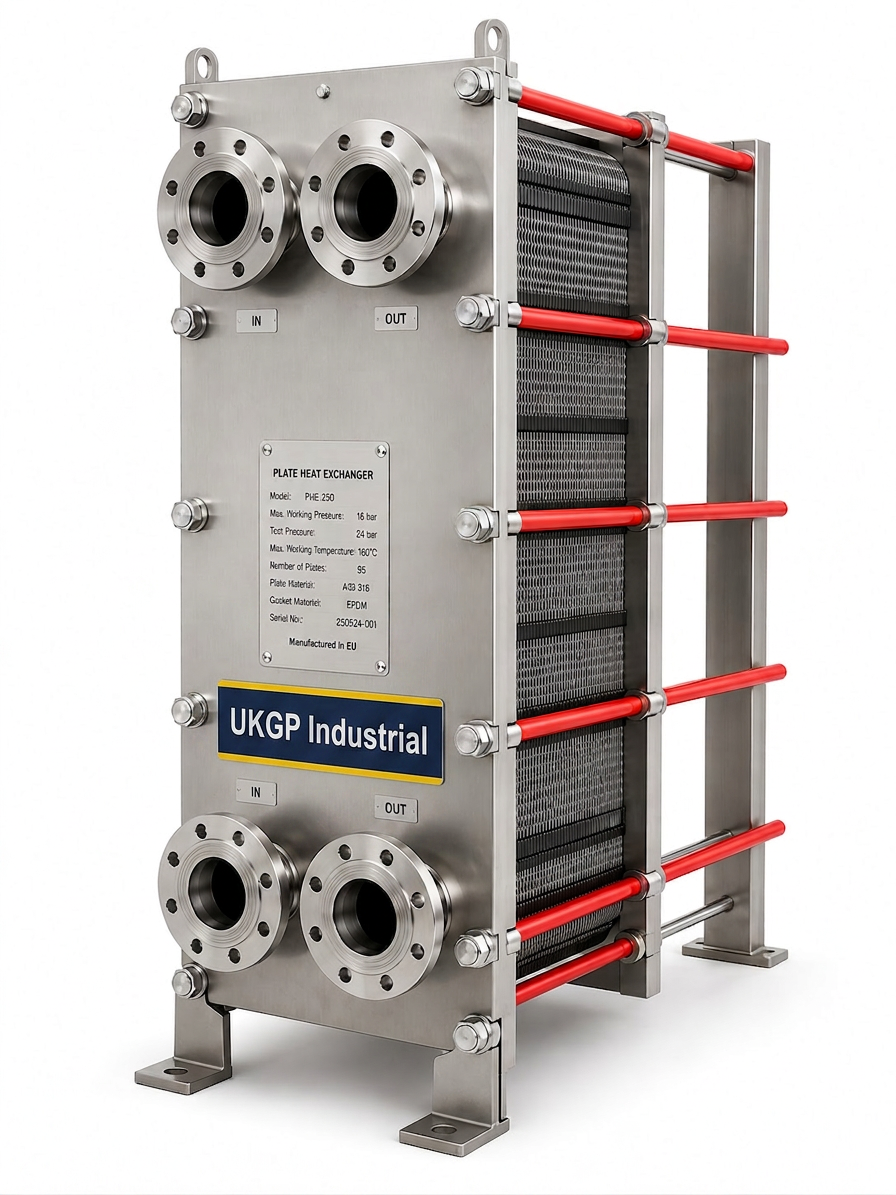
Effective water treatment and system cleanliness are the hallmarks of a well-maintained UK heating system. Whether you are installing a sinus low loss header or a UKGP equivalent, adherence to BSRIA BG29 for pre-commission cleaning and BG50 for ongoing water quality is mandatory. A low loss header acts as a natural collection point for non-magnetite debris due to the velocity drop. Therefore, incorporating a UKGP header into your design facilitates the removal of these particulates before they reach sensitive components such as plate heat exchangers or control valves. This proactive approach to system health reduces the frequency of emergency call-outs and extends the operational life of the entire HVAC asset.
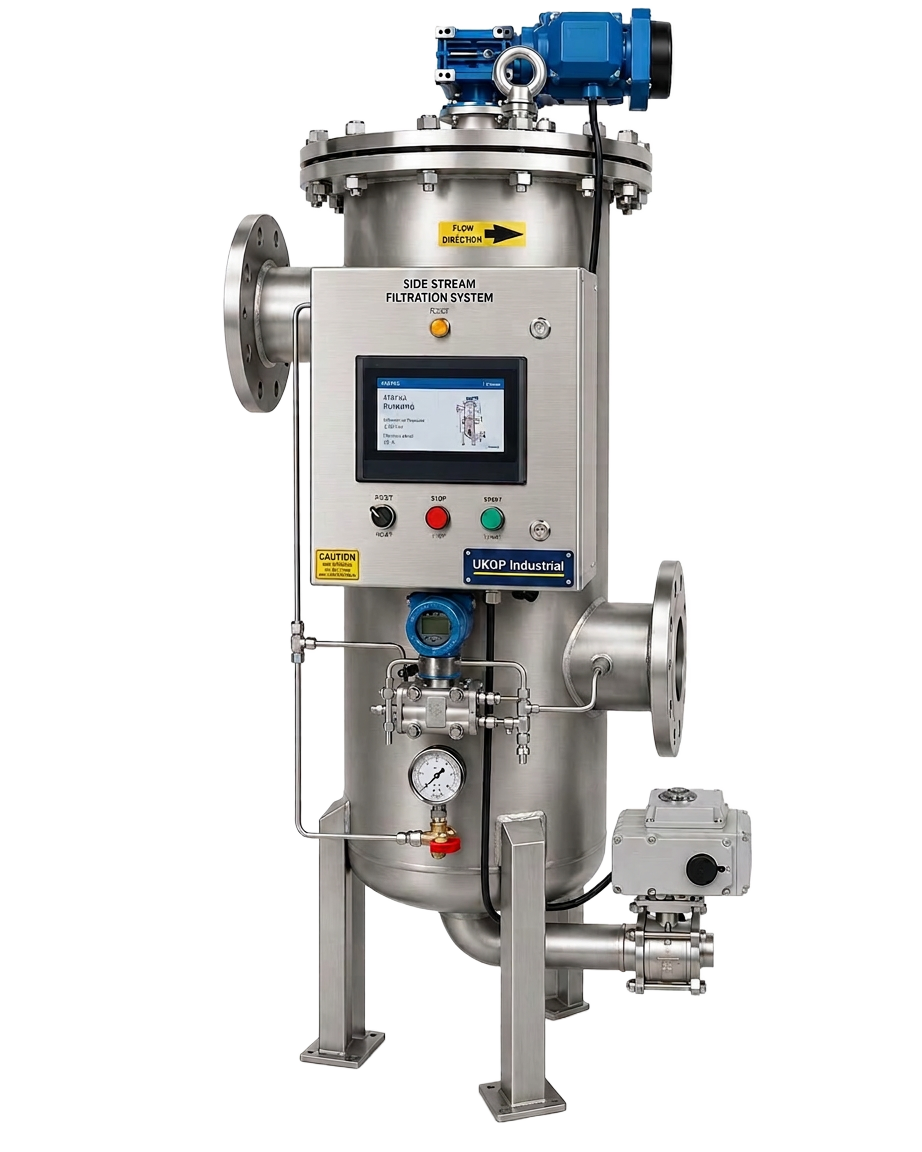
In addition to the hydraulic separation provided by the sinus low loss header alternative, many engineers choose to pair these vessels with dedicated filtration solutions. While the header handles large debris via gravity, a side stream filtration unit is often necessary to remove finer suspended solids and magnetic particles. Integrating a side stream filter downstream of the low loss header ensures that the secondary circuit remains free of the sludge that typically accumulates in radiators and fan coil units. This dual-vessel strategy is recognized as a best-practice engineering approach for ensuring that the system chemical balance stays within the parameters defined by BS 8552, protecting the facility from internal corrosion.
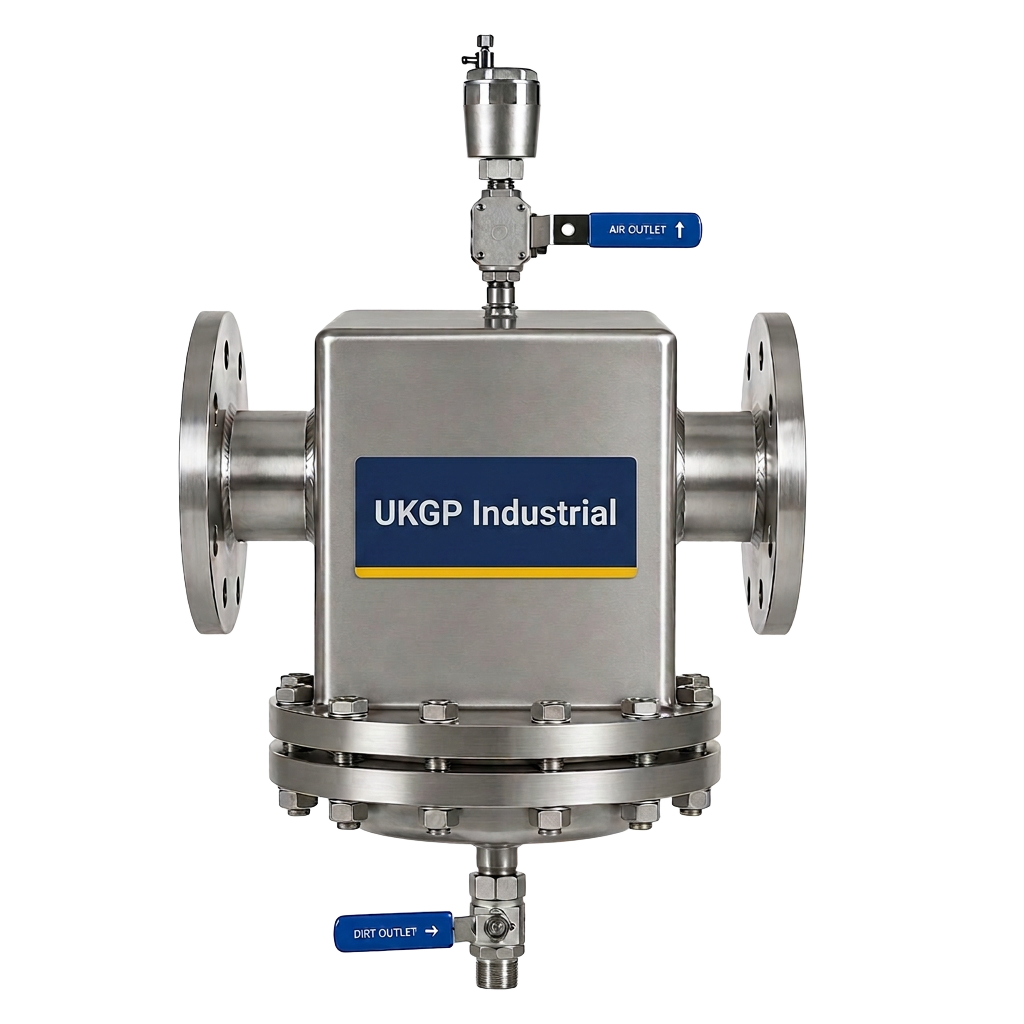
System safety also relies on the integration of air and dirt separators alongside the primary hydraulic break. While a sinus low loss header can capture some air bubbles, a dedicated microbubble deaerator is often required in systems with complex pipework and high elevations. UKGP supplies a range of separators that complement our headers, helping contractors achieve the 'clean system' status required for modern high-efficiency boiler warranties. By sourcing the header, separators, and filtration skids from a single UK supplier like UKGP, procurement leads can consolidate shipping, ensure compatibility across all connections, and streamline the documentation process for the site's O&M manuals.
- Aligns with BSRIA BG29/BG50 water quality management protocols.
- Functions as a collection point for system debris to protect boiler integrity.
- Pairs perfectly with side stream filtration for comprehensive water treatment.
- Essential for achieving the thermal efficiencies required for BREEAM certification.
Optimising Lead Times and Project Delivery
In the current economic climate, project delays are the primary source of cost overruns for M&E contractors. Importing specialized equipment like a sinus low loss header can lead to lead times extending beyond 6-8 weeks, especially with ongoing logistics challenges in the Channel crossings. UKGP Industrial addresses this by maintaining a robust UK manufacturing presence. Our standard low loss headers carry a 2-3 week lead time, allowing projects to remain on schedule even when design changes occur late in the construction phase. This local presence means that technical support is available in our Surrey office during UK business hours, providing immediate answers to installation queries.
Choosing a UKGP header over a sinus low loss header also simplifies the procurement process. Because our products are designed with British pipework standards in mind, there is less risk of needing expensive adapters or on-site welding to rectify mismatched fittings. For contractors working under JCT or NEC contracts, the ability to rely on a fixed delivery window is invaluable for managing labour costs on site. Knowing exactly when the header will arrive allows for the precise scheduling of cranage and pipework fitters, reducing the 'dead time' that often occurs when waiting for imported components to clear customs and reach the site in London or elsewhere.
Furthermore, our commercial low loss headers are designed for ease of installation. With clear labelling and robust lifting eyes, they are built for the reality of busy plant rooms. For engineers looking to replace an existing sinus low loss header, the dimensions of our LLH range often allow for a 'like-for-like' replacement with minimal disruption. We encourage procurement leads to reach out for a quote, where our team can provide technical drawings and performance data sheets to prove the compatibility of our units with your existing system designs. This proactive service model ensures that you receive a high-specification product tailored to the specific demands of your UK-based project.
- Standard 2-3 week lead time for all commercial-grade headers.
- UK-based technical support for immediate consultation and site advice.
- Simplified logistics and reduced risk of customs-related project delays.
- Ready-to-install units with integrated lifting eyes and clear labelling.
Strategic Importance of Hydraulic Separation
The fundamental physics behind the sinus low loss header and its UKGP alternatives revolve around Bernoulli's principle. By increasing the cross-sectional area of the pipe within the header, the fluid velocity drops, creating a point of zero pressure differential. This allows the primary pump to maintain the specific flow rate required by the boiler heat exchanger to prevent overheating, while the secondary pumps can modulate their flow based on the actual demand from the building. Without this separation, pumps will 'fight' each other, leading to noise, vibration, and significantly increased energy consumption. This is a critical consideration for those targeting PAS 2035 standards in retrofit scenarios.
When specifying an alternative to the sinus low loss header, it is important to consider the internal volume of the vessel. A larger volume provides better buffer capacity, which can help prevent short-cycling of the boilers. UKGP headers are sized generously to provide this buffering effect, which is particularly useful in systems with low water content, such as those utilizing compact wall-hung commercial boilers. By preventing the boiler from cycling on and off too frequently, you extend the life of the burner and the ignition components, further reducing the total cost of ownership (TCO) for the end-client or building owner.
The selection of a UKGP low loss header also impacts the long-term maintenance strategy. Our units feature easily accessible drain valves and air vents. In contrast to some variants of the sinus low loss header that may require proprietary accessories, UKGP uses standard UK fittings that are stocked in every major merchant. This ensure that should a peripheral component like an automatic air vent fail in ten years' time, the FM team will have no trouble finding a replacement part that fits perfectly. It is this focus on practical, long-term operation that makes our headers the preferred choice for many Surrey and London-based engineering firms.
- Prevents pump conflict and hydraulic noise in complex distribution networks.
- Reduces boiler short-cycling through increased system water volume.
- Facilitates easier maintenance with standard UK-standard peripheral fittings.
- Essential for modern systems with variable primary and secondary flow rates.
Specifying UKGP for Your Next Commercial Project
Finalising the specification for an alternative to a sinus low loss header involves more than just matching the flow rate. Engineers must also consider the physical footprint of the unit. UKGP low loss headers are designed to be as compact as possible without sacrificing hydraulic performance. This 'footprint-conscious' design is a result of years of feedback from plant room engineers who often have to fit large output equipment into tiny basement or rooftop enclosures. By choosing a UKGP solution, you gain the benefits of German engineering principles combined with British common sense regarding space constraints and installation workflows.
Our team at UKGP Industrial is ready to assist with the transition from a sinus low loss header specification to a UK-manufactured equivalent. We provide comprehensive data sheets that detail the flow capacities across our 40-2000 kW range. Whether you require a vertical header for a compact plant room or a larger unit with PN16 flanges for a district heating project, we have the manufacturing capacity to deliver. We also offer advice on the correct placement of sensors and transmitters within the system to ensure that the BMS can accurately monitor the temperature differential across the header, providing the data needed for energy optimization and reporting.
To get started with your UKGP low loss header order, simply provide our team with your primary flow rate and temperature requirements. We will match you with a vessel that provides the exact hydraulic break you need, complete with a 2-year warranty and a high-quality insulation jacket. Don't let long lead times from overseas suppliers like those for a sinus low loss header hold up your project. Contact UKGP today for a competitive quote and discover why we are the leading choice for UK M&E contractors and consultants seeking reliability, performance, and world-class manufacturing right here in Surrey.
- Available in power ranges from 40 kW to 2000 kW for any commercial site.
- Compact footprint designed specifically for restricted UK plant rooms.
- Full technical documentation provided for seamless consultant approval.
- Competitive lead times of 2-3 weeks to keep your site on schedule.
Frequently asked questions
How does a UKGP unit compare directly to a sinus low loss header?
- Direct technical parity exists between the two; both provide hydraulic decoupling using low-velocity principles. UKGP headers are manufactured in the UK, offering much shorter lead times (2-3 weeks) and use standard UK connections (BSP/PN16) with a 2-year warranty.
Are UKGP low loss headers compatible with BSRIA BG29?
- Yes, our low loss headers are designed to support BSRIA BG29 and BG50 guidelines by promoting the separation of air and dirt through reduced flow velocities (below 0.5m/s), which is essential for system cleanliness and water quality.
What is the maximum flow rate a UKGP header can handle?
- Our standard range covers outputs from 40 kW up to 2000 kW. For specific flow rates in m3/h, our technical team provides bespoke sizing charts to ensure the vessel maintains laminar flow for your specific Delta T requirements.
Do you provide insulation for your low loss headers?
- Every UKGP low loss header is supplied with a high-density, fire-rated insulation jacket as standard to ensure compliance with Building Regulations Part L and to maximize plant room energy efficiency.
Can I replace a Sinusverteiler unit with a UKGP header on an existing site?
- Yes, our headers are frequently used as like-for-like replacements. Since we manufacture in the UK, we can often match the connection heights and sizes of the sinus low loss header being replaced to minimize pipework rework.