Understanding the function of a rubber expansion joint pipe
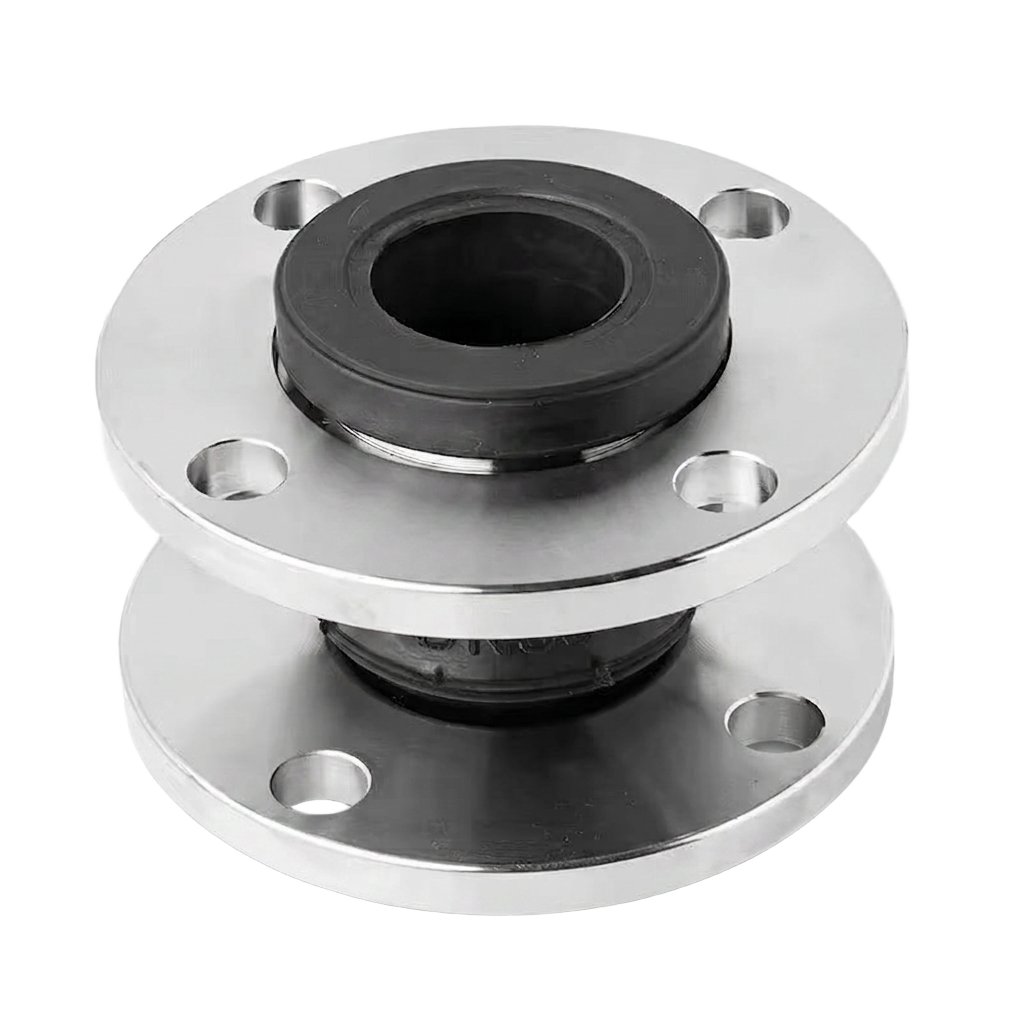
In modern UK commercial plant rooms, the rubber expansion joint pipe serves as a vital component for managing thermal expansion, vibration dampening, and noise reduction within the piping network. Unlike rigid steel components, these flexible connectors are designed to absorb axial, lateral, and angular movements that occur during system start-up and temperature fluctuations. For M&E contractors, selecting the correct material—whether EPDM for standard LTHW systems or NBR for oil-based applications—is the first step in ensuring compliance with CIBSE guidelines and long-term operational stability. Failure to account for the specific movement profile of the system can result in over-extension or compression, which compromises the integrity of the elastomer body and the internal reinforcement layers of the joint itself.
The application of these joints is particularly critical in systems using variable speed pumps where hydraulic shock and vibration are prevalent. A rubber expansion joint pipe acts as a mechanical buffer, protecting sensitive equipment like pumps and chillers from the stresses exerted by rigid pipework. When specifying these units, engineers must consider the pressure ratings and vacuum limits of the bellows. For instance, UKGP provides solutions ranging from DN15 to DN600, ensuring that every diameter from small domestic branches to large primary headers is covered. These units are often the first line of defence against pipework fatigue, making their correct installation a cornerstone of professional plant room design and longevity in the rigorous environment of industrial building services.
Crucially, the lifecycle of a rubber expansion joint pipe is heavily influenced by the pre-installation environment. Before the unit even reaches the flange, it must be inspected for any surface abrasions or cracks that may have occurred during transit. For UK building services consultants, ensuring that the specified component meets BS EN 14917 standards where applicable, or adheres to the robust manufacturing tolerances of the UKGP range, provides peace of mind. By focusing on high-quality materials such as EPDM, NBR, or PTFE-lined options, procurement leads can mitigate the risk of premature failure. Every UKGP expansion bellows comes with a 2-year warranty, reflecting our confidence in the build quality and the importance of using certified components in mission-critical HVAC infrastructure across the United Kingdom.
- Absorption of thermal expansion and contraction
- Isolation of mechanical vibration from pumps
- Reduction of hydraulic noise in commercial buildings
- Compensation for minor pipework misalignment
Pre-installation checks and system alignment
Before installing a rubber expansion joint pipe, the surrounding pipework must be correctly aligned and supported by fixed anchors and guides. It is a common mistake in the field to use the flexibility of the joint to compensate for significant piping misalignment. According to BSRIA BG29 and general engineering best practices, a bellows should never be stretched or compressed during installation to bridge a gap. If the pipework is out of alignment by more than 3mm, the resulting stress on the rubber body will drastically shorten its service life and may lead to catastrophic failure under pressure. Contractors must ensure that the piping system is fully supported such that none of the weight of the steel pipework rests on the flexible rubber element.
The physical condition of the mating flanges is equally paramount. The technician must ensure that the flange faces are clean, flat, and free from sharp edges or burrs that could cut the rubber bead. When using a rubber expansion joint pipe with a full-face integrated rubber flange, there is typically no need for additional gaskets, as the elastomer provides the seal. However, the surface of the mating pipe flange must be inspected to ensure it does not have a reduced serrated face that could bite too deeply into the rubber. Proper preparation prevents micro-tears during the bolting process, which are often the hidden causes of slow leaks once the system is chemically treated and pressurized in line with BS 8552 monitoring.
Anchoring is perhaps the most misunderstood aspect of installing a rubber expansion joint pipe. In an un-restrained system, the pressure thrust will try to force the joint open. This force can be enormous even at moderate pressures, potentially tearing the joint apart or damaging adjacent equipment. Therefore, robust main anchors must be installed on either side of the expansion joint to contain this force. If the pipework cannot be adequately anchored, tied bellows or units with control rods must be specified. These rods limit the movement of the bellows and prevent over-extension. UKGP supplies flanged and weld-end bellows with various tie-bar configurations to suit specific site requirements, ensuring that every thermal expansion scenario is safely managed.
- Verify pipe alignment is within 3mm tolerance
- Inspect flange faces for sharp burrs or debris
- Ensure the pipework weight is independently supported
- Check that main anchors are positioned according to design
Advanced water treatment and its impact on rubber components
The longevity of a rubber expansion joint pipe is not solely dependent on mechanical installation; the chemical environment within the system plays a decisive role. BSRIA BG29 and BG50 provide clear frameworks for the pre-commission cleaning and ongoing water treatment of closed-loop systems. High concentrations of certain biocides or corrosion inhibitors can aggressively attack certain elastomer types if not properly monitored. For example, while EPDM is excellent for thermal resistance, it can be degraded by certain oil-based additives. This is why UKGP offers a range of materials including EPDM, NBR, and stainless steel to ensure chemical compatibility with the specific water treatment regime specified by the plant room engineers or FM team.
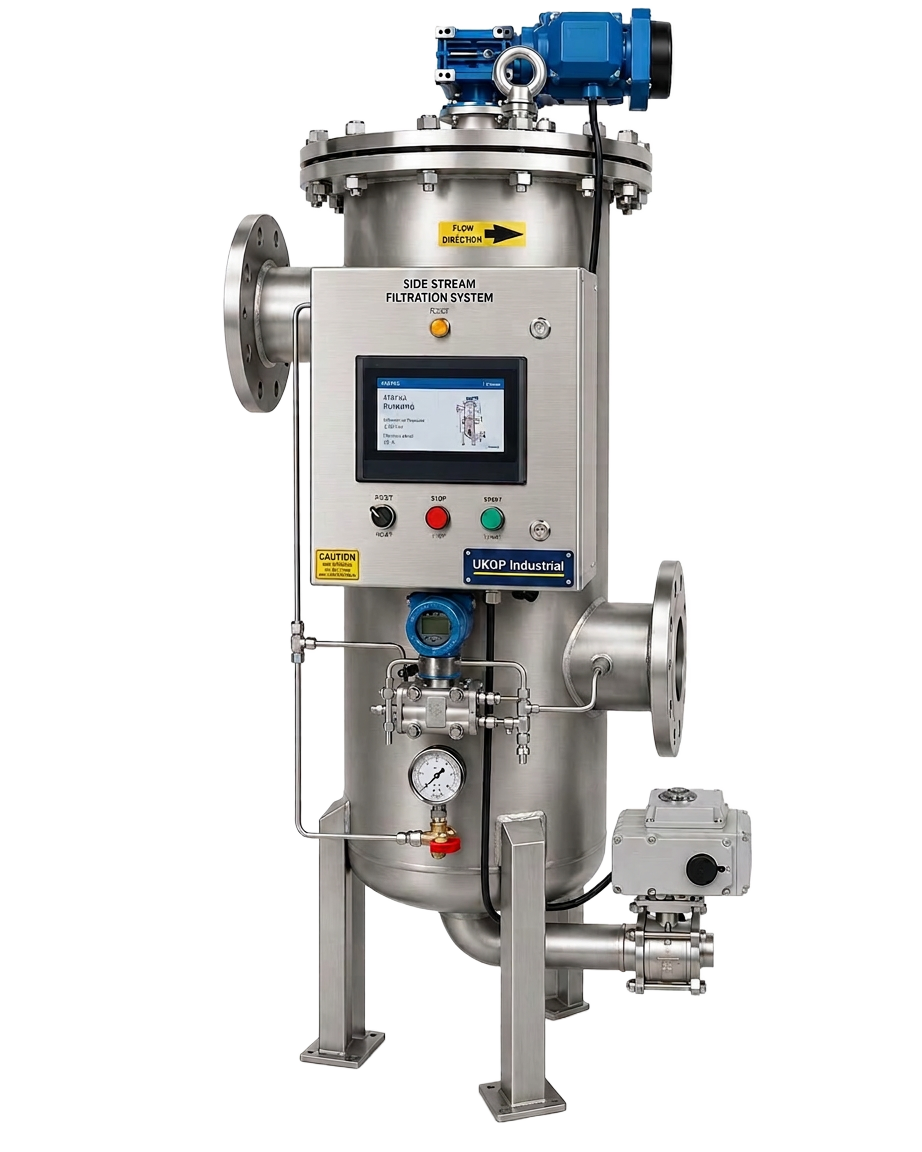
To maintain the health of the rubber expansion joint pipe and the wider system, it is often necessary to integrate advanced filtration and chemical management tools. Side stream filtration skids are essential for removing suspended solids that can become trapped in the folds or convolutions of a bellows, causing localized abrasion. Furthermore, the use of chemical dosing pots ensures that inhibitors are introduced into the system safely and at the correct concentrations. By maintaining a stable pH and low turbidity, the risk of chemical degradation to the rubber membranes is significantly reduced, extending the intervals between maintenance inspections and preventing the brittle failure of the elastomer during peak heating or cooling loads.
Monitoring these parameters is now a standard requirement for high-performance buildings. Utilizing pH sensors and transmitters allows for real-time tracking of the water chemistry, providing an early warning system if the environment becomes corrosive or harmful to the rubber expansion joint pipe. In these controlled environments, UKGP's expansion bellows, backed by their 2-year warranty, provide a reliable solution for practitioners who value system stability. When the mechanical installation is paired with rigorous water treatment protocols as per BS 8552, the entire plant room functions more efficiently, with fewer reactive maintenance calls and a lower total cost of ownership for the facility management provider.
- Match elastomer material to chemical additives
- Implement side stream filtration to prevent abrasion
- Use real-time pH monitoring for system health
- Maintain logs of water chemistry per BSRIA BG50
Selection criteria for your rubber expansion joint pipe
Choosing the right rubber expansion joint pipe for a project involves calculating the total movement expected in the pipe run and selecting a unit that can handle those loads with a safety margin. CIBSE guides provide the formulas required to calculate thermal expansion based on the temperature differential and the coefficient of expansion for the pipe material. Whether you require DN15 for a small plant connection or DN600 for a district heating primary, the selection must account for the maximum operating pressure and temperature. At UKGP, we provide technical support to help consultants select from our EPDM, NBR, stainless steel, PTFE, or fabric bellows, ensuring the chosen product perfectly matches the application's unique mechanical demands.
Another critical factor in selecting a rubber expansion joint pipe is the end connection type. While flanged connections are the standard for most commercial HVAC applications due to their ease of replacement and maintenance, weld-end options are available for specific industrial settings. Our range includes units with PN10, PN16, and PN25 ratings, as well as ANSI standards if required. It is vital to ensure that the flange drilling on the bellows matches the pipework precisely to avoid stress on the bolts. A properly specified rubber expansion joint pipe from UKGP not only simplifies the installation process for the M&E contractor but also ensures that the final assembly meets the stringent safety and performance requirements of the UK building regulations.
Commercial awareness in procurement means looking for a balance between initial cost and long-term reliability. Opting for a generic, unbranded rubber expansion joint pipe can lead to hidden costs if the material quality is inferior or if the warranty support is non-existent. UKGP's commitment to quality is demonstrated through our 2-year warranty and a diverse product stock that caters to immediate site needs. By sourcing directly from a Surrey-based expert supplier, M&E contractors and procurement leads can ensure they receiving components that have been vetted for the UK market. Requesting a quote for UKGP expansion bellows allows your team to secure competitive pricing on professional-grade hardware designed for the most demanding plant room environments across the country.
- Calculate total axial and lateral movement required
- Verify pressure and temperature operating limits
- Select EPDM or NBR based on fluid compatibility
- Ensure flange ratings match existing system standards
Correct bolting techniques and commissioning
The final stage of installing a rubber expansion joint pipe is the bolting procedure, which must be executed with precision. Bolts should be inserted from the bellows side where possible to ensure that the bolt head, rather than the sharp threaded end, is closest to the rubber. If bolts must be installed with the threads facing the joint, they must be trimmed to ensure no contact can occur during the expansion or contraction phases. Bolts should be tightened in a cross-star pattern in three or four stages to ensure even pressure distribution across the flange face. This prevents the rubber expansion joint pipe from becoming distorted and ensures a leak-free seal without over-compressing the elastomer.
Over-tightening is a common cause of failure for a rubber expansion joint pipe. It can crush the internal reinforcement and cause the rubber to bulge, leading to a structural weakness that may fail under pressure. Using a torque wrench and adhering to the manufacturer's recommended torque settings is essential. Once the system is filled, it is normal for the joint to settle; therefore, a bolt-tightness check should be performed after the first thermal cycle or 24 hours of operation. This proactive approach during the commissioning phase, as encouraged by BSRIA standards, identifies potential issues before the project is handed over to the facility management team, ensuring the 2-year warranty remains valid through correct handling.
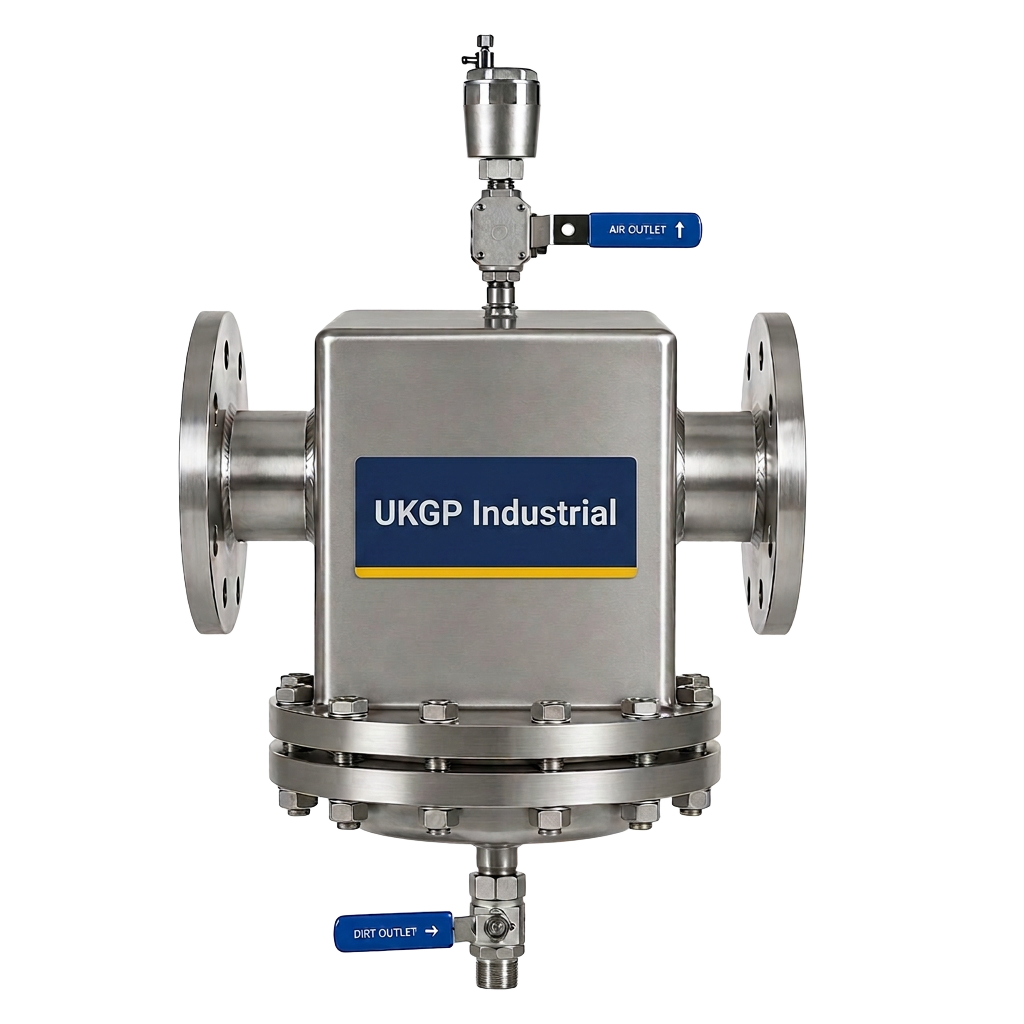
During commissioning, the rubber expansion joint pipe should be visually monitored as the system reaches its operating temperature. Any sign of excessive bulging, twisting, or the joint pulling away from the flanges indicates an anchoring or alignment issue that must be addressed immediately. It is also the ideal time to ensure that any air or dirt separators in the system are functioning correctly, as excessive internal turbulence can cause premature wear on the flexible internal surfaces of the bellows. By following these rigorous install best practices, contractors can deliver a high-quality, reliable HVAC or process system that stands up to the rigours of modern industrial demands while protected by UKGP's robust product guarantees.
- Use a cross-star tightening sequence for even pressure
- Orient bolts with heads facing the rubber bellows
- Adhere to specified torque settings to prevent crushing
- Perform a follow-up bolt check after the first heat cycle
Ongoing maintenance and life-safety considerations
While a rubber expansion joint pipe is designed to be low-maintenance, regular inspections are a requirement of a robust PPM (Planned Preventative Maintenance) schedule. Engineers should look for 'chalking' or surface crazing, which can indicate UV damage or chemical fatigue. In outdoor installations, protective covers may be required to shield the EPDM or NBR body from solar radiation. Furthermore, ensure that the metal components, such as the flanges and tie bars, remain free from corrosion. Should any weepage occur at the flange, it is important to re-torque the bolts progressively rather than simply cranking down on a single bolt, which could cause further damage to the rubber membrane.
In the event of a system upgrade or relocation, a rubber expansion joint pipe should generally not be reused if it has been in service for more than five years or if it shows signs of permanent set. The cost of a new UKGP expansion bellows is negligible compared to the cost of a flood in a high-value plant room. Replacement should always involve a like-for-like material check to ensure the new installation matches the original design intent. Our team at UKGP can assist in identifying the correct replacement units from our DN15-DN600 range, ensuring that your facility remains compliant with the latest O&M manual requirements and BSRIA recommendations for long-term plant health.
Ultimately, the safety of plant room personnel depends on the integrity of every rubber expansion joint pipe in the network. A failure in a large diameter steam or high-pressure LTHW line can be catastrophic. By sourcing expansion bellows with a proven track record and a 2-year warranty from a reputable UK supplier like UKGP, you are investing in the safety and reliability of your infrastructure. We encourage all M&E contractors and FMs to get in touch for technical datasheets or to request a quote for our range of rubber, stainless steel, and PTFE bellows. Our Surrey-based technical team is ready to provide the commercial and engineering support needed to ensure your next installation is a textbook example of best practice.
- Schedule biannual visual inspections for surface cracks
- Check tie-bar nuts for tightness and signs of wear
- Replace joints that show signs of hardening or loss of flexibility
- Maintain O&M records of installation and replacement dates
Frequently asked questions
Do I need a gasket for a rubber expansion joint pipe?
- Generally, if the joint has a full-face integrated rubber flange (a 'spool' type or 'beaded' type), an additional gasket is not required as the rubber itself creates the seal against the mating flange. Always check the specific UKGP datasheet for your model.
What temperature can an EPDM rubber expansion joint pipe handle?
- Standard EPDM expansion bellows from UKGP are typically rated for temperatures up to 100°C to 110°C, making them ideal for LTHW and many MTHW applications. For higher temperatures, stainless steel or PTFE-lined bellows may be required.
Can I use a rubber expansion joint pipe to fix misaligned pipes?
- No, this is against best practice. Misalignment puts constant stress on the rubber, leading to premature failure. Pipework should be aligned within a 3mm tolerance before the bellows is installed.
Why are control rods or tie bars used on expansion bellows?
- Tie bars are used to prevent the rubber expansion joint pipe from over-extending due to pressure thrust, especially in systems where the pipework is not adequately anchored. They limit the movement to within the safety parameters of the bellows.
How often should I replace my rubber expansion joint pipe?
- While service life depends on the environment and media, we recommend a thorough inspection every 12 months. Many units last over 10 years, but any signs of hardening, cracking, or bulging should trigger an immediate replacement to avoid failure.