Understanding the Role of Thermal Expansion Bellows
In modern UK building services, pipework systems are subject to significant temperature fluctuations that lead to physical expansion and contraction. Without the integration of high-quality thermal expansion bellows, these forces exert immense pressure on anchors, guides, and connected equipment like pumps or heat exchangers. Failure to accommodate this movement often results in mechanical fatigue, joint leaks, or even catastrophic pipe failure. Expert procurement leads and M&E contractors must understand that these components are not merely accessories but critical safety devices designed to neutralise the inherent kinetic energy generated by thermal cycles within the metalwork of the building's infrastructure.
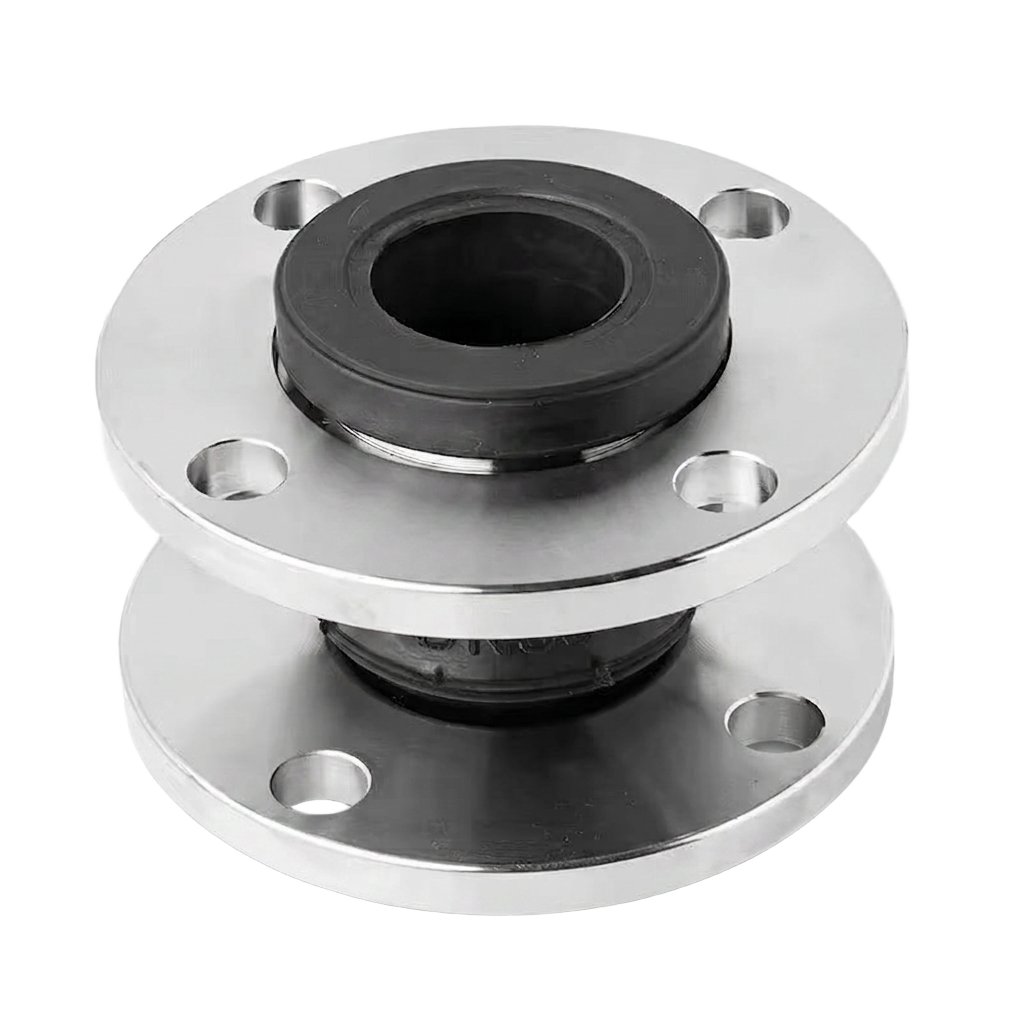
When specifying thermal expansion bellows, engineers must look beyond basic dimensions and consider the chemistry and physics of the application. The selection of materials, whether EPDM for standard Chilled Water (CHW) or Low Temperature Hot Water (LTHW) systems, or stainless steel for higher temperature steam applications, determines the system’s overall reliability. UKGP Industrial provides a comprehensive range of solutions including rubber EPDM/NBR, stainless steel, PTFE, and fabric options. Aligning your selection with BSRIA BG29 and BG50 guidelines ensures that the movement compensation is matched by a robust approach to system cleanliness and pressure management, preventing premature component degradation in demanding commercial environments.
Choosing the right manufacturer is as vital as the technical specification itself. A reliable thermal expansion bellows should be backed by a substantial warranty and conform to relevant British Standards such as BS EN 14917. At UKGP Industrial, we supply flanged or weld-end units ranging from DN15 to DN600, all supported by a 2-year warranty to provide peace of mind to facility managers and site engineers. By integrating these units early in the design stage, consultants can ensure that pipe runs are protected against the rigours of commissioning and long-term operation, avoiding the costly remedial works associated with poorly managed thermal movement in rigid piping systems.
- Absorption of axial, lateral, and angular movement in HVAC pipework.
- Protection of sensitive plant equipment from mechanical stresses.
- Noise and vibration attenuation for improved indoor environments.
- Compliance with BS EN 14917 for metal bellows construction.
Calculating Movement and Expansion Requirements
The first step in sizing thermal expansion bellows is the accurate calculation of the expected thermal growth. This is achieved by multiplying the total length of the pipe run by the temperature difference (between ambient installation temperature and maximum operating temperature) and the coefficient of thermal expansion for the specific pipe material. For instance, carbon steel and copper have vastly different expansion rates, meaning a one-size-fits-all approach to selection will inevitably lead to failure. Engineers must account for the 'worst-case' scenario, typically during system heat-up from a cold start, to ensure the bellows chosen has sufficient stroke capacity to handle the predicted elongation without over-compressing.
Once the total expansion is known, the placement of anchors and guides becomes the next technical priority. Thermal expansion bellows can only function correctly if the pipework is steered in a controlled manner. Fixed anchors must be positioned to divide the piping into manageable sections, while secondary guides ensure the pipe does not bow under pressure, which would otherwise apply damaging lateral loads to an axial-only bellows. Failing to provide adequate guiding is the most common cause of premature bellows failure in UK plant rooms. It's essential to reference CIBSE Guide B for best practice recommendations on pipe support spacing and anchor load calculations to ensure the integrity of the entire distribution network.
A common oversight during the design phase is neglecting the pressure thrust forces generated when the system is pressurised. Thermal expansion bellows are, by nature, flexible elements that want to extend under internal pressure. This force must be countered by robust main anchors capable of withstanding the sum of the bellows' internal pressure thrust and the force required to deflect the bellows itself. For systems where such heavy anchoring is impractical, engineers might consider 'tied' expansion joints or pressure-balanced units. UKGP Industrial offers expert technical support to help M&E contractors calculate these loads accurately, ensuring that the selected DN15-DN600 flanged or weld-end bellows are perfectly suited for the site's unique hydraulic conditions.
- Calculation based on material coefficients and Delta T.
- Strategic placement of main and intermediate anchors.
- Installation of primary and secondary guides per BSRIA standards.
- Assessment of pressure thrust and its impact on structural supports.
Material Selection for System Compatibility
Selecting the correct material for thermal expansion bellows is a nuanced process that depends entirely on the fluid medium, temperature, and pressure. For most LTHW and CHW systems found in commercial offices and hospitals, rubber bellows composed of EPDM are favored for their excellent vibration damping properties and cost-effectiveness. However, if the system involves oils or fuels, NBR (Nitrile) must be specified to prevent the rubber from swelling and degrading. In higher temperature settings, such as steam or thermal oil circuits, stainless steel bellows are mandatory as they offer the thermal resilience required to withstand temperatures well above the limits of synthetic elastomers, while still providing the necessary flexibility.
For highly corrosive environments or chemical processing applications, PTFE-lined thermal expansion bellows offer unparalleled resistance to aggressive media. These are often used in industrial settings where standard metallics or rubbers would succumb to chemical attack. Fabric bellows, on the other hand, are typically reserved for low-pressure ducting systems to handle exhaust gases or ventilation airflows. At UKGP Industrial, we stock a wide variety of these materials in sizes from DN15 up to DN600. Ensuring your material choice aligns with BS 8552 for water sampling and system monitoring is crucial, as the wrong internal liner could potentially leach contaminants or fail in the presence of specific water treatment chemicals.
The mechanical connection type—whether flanged or weld-end—also plays a role in the selection process. Flanged connections are often preferred in UK building services for their ease of maintenance and replacement during the facility's lifecycle. However, weld-end units provide a permanent, leak-free solution for high-pressure or critical service lines where weight savings are beneficial. Regardless of the material or connection type, all UKGP expansion bellows are built to last, coming with a 2-year warranty as standard. When you request a quote for our expansion solutions, our team can advise on the best material combinations to meet both your technical requirements and your project budget.
- EPDM/NBR for standard HVAC and oil-based applications.
- Stainless steel for high-temperature and high-pressure steam.
- PTFE liners for aggressive chemical handled in industrial processes.
- Fabric options for large-diameter air ducting and exhaust systems.
Integration with Side Stream Filtration and Air Separation
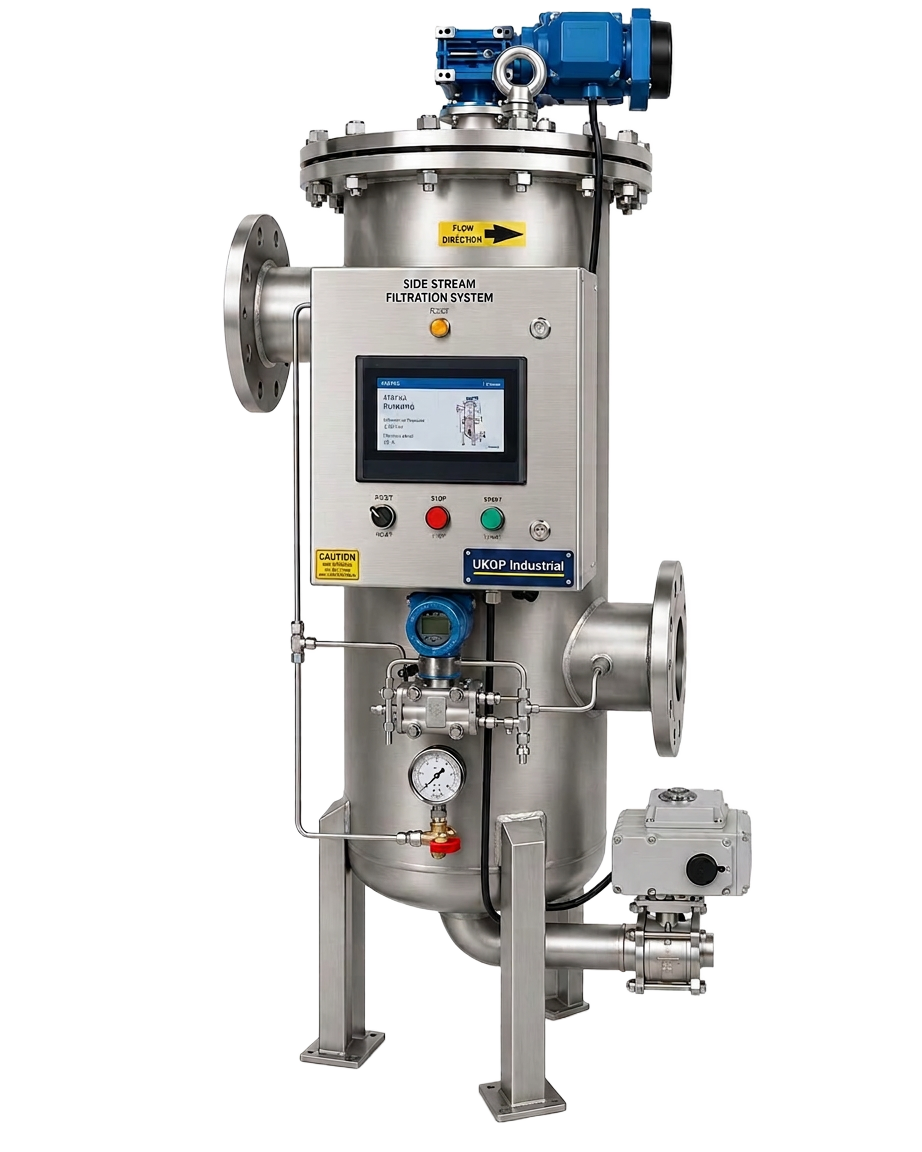
The performance of thermal expansion bellows is intrinsically linked to the overall water quality in the HVAC circuit. Suspended solids and debris can settle within the convolutions of a metal bellows, leading to erosion or the formation of stress-corrosion cracks. This is why BSRIA BG50 emphasizes the importance of continuous water treatment and filtration. By installing a UKGP side stream filtration skid alongside your expansion joints, you can ensure that the system water remains clear of the magnetite and scale that often disrupts the movement of flexible components. A cleaner system reduces the abrasive wear on bellows liners, extending the operational life of the entire installation.
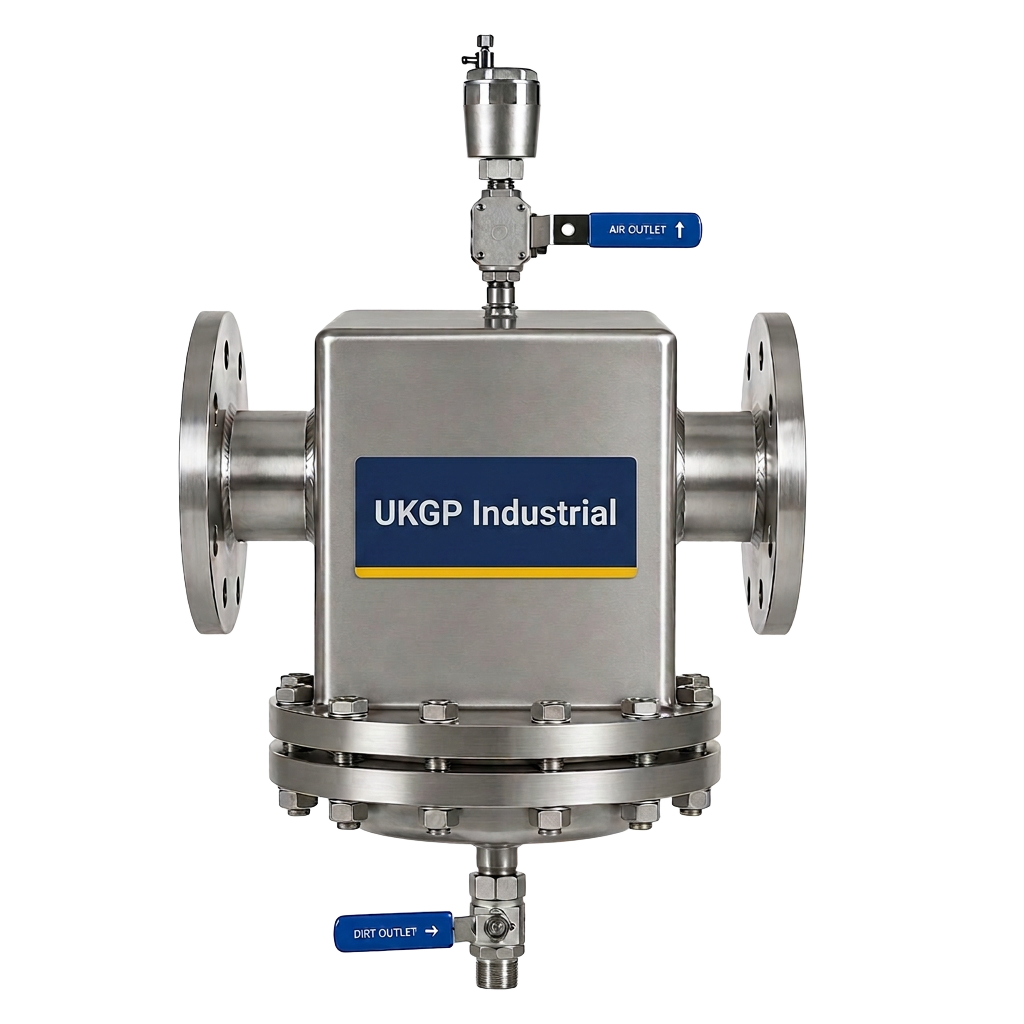
Similarly, air and dirt separators play a vital role in protecting the bellows' integrity. Microbubbles in the system can lead to cavitation or localized oxidation within the thin-walled convolutions of a stainless steel bellows. Integrating high-efficiency air and dirt separators ensures that the fluid medium is deaerated, which is a fundamental requirement for maintaining the design life of thermal expansion bellows. When a system is free from trapped air and debris, the bellows can operate with minimal risk of external or internal scaling, ensuring that the spring rate of the unit remains within its original manufacturer-specified tolerances throughout its service life.
For M&E contractors, the commercial advantage of a holistic approach to plant room design cannot be overstated. By sourcing thermal expansion bellows, side stream filtration skids, and air separators from a single reliable UK supplier like UKGP Industrial, you simplify the procurement process and ensure component compatibility. This integrated strategy aligns with the rigorous standards of modern building regulations and client expectations. We offer a full range of DN15 to DN600 expansion solutions that pair perfectly with our filtration and separation technologies, providing a complete package for resilient and efficient commercial heating and cooling systems.
- Protection of bellows convolutions from sediment and magnetite.
- Prevention of cavitation and erosion through deaeration.
- Alignment with BSRIA BG50 water quality management protocols.
- Enhanced system longevity through integrated filtration skids.
Installation Best Practices and Common Pitfalls
Correct installation is the factor that most often determines the success or failure of thermal expansion bellows in the field. One of the most critical errors is 'cold pulling' a bellows to fill a gap caused by inaccurate pipework measurement. Bellows are precision-engineered to operate within specific movement limits; forcing them into place pre-loads the component and significantly reduces its remaining travel capacity, leading to premature fatigue. It is essential that pipework is correctly aligned before the bellows is installed. Any misalignment should be corrected by adjusting the pipe supports, never by straining the flexible joint to bridge a gap that it was not designed to accommodate.
Furthermore, the shipping bolts or limit rods often found on new thermal expansion bellows must be treated with care. These rods are frequently used to maintain the unit's length during transit and installation. However, once the anchors are secured and the system is ready for commissioning, these 'shipping pins' must be removed or adjusted to allow the bellows to move freely. Leaving them in place essentially turns the flexible joint into a rigid pipe, which will cause the anchors or the pipework itself to fail as soon as thermal expansion occurs. Installers should always consult the manufacturer's technical data sheet provided by UKGP Industrial to ensure these final commissioning steps are completed correctly.
Finally, insulation must be applied correctly around thermal expansion bellows. While it is tempting to wrap the entire unit in thick lagging, it is vital to ensure that the insulation does not interfere with the natural movement of the bellows convolutions or the movement of any associated limit rods. For rubber bellows, excessive heat build-up under insulation can sometimes lead to accelerated aging of the elastomer if the internal fluid temperature is already near the material's limit. By sourcing your DN15 to DN600 flanged or weld-end units from us, you gain access to our technical expertise on how to properly house and maintain these components for long-term UK plant room service, backed by our 2-year warranty.
- Avoidance of 'cold pull' and pre-loading during installation.
- Ensuring correct removal of shipping bolts before commissioning.
- Verification of pipe alignment and guide spacing.
- Appropriate insulation techniques to allow for free movement.
Maintenance and Lifecycle Management of Expansion Joints
Proactive maintenance of thermal expansion bellows is a core responsibility for UK facility managers and plant room engineers. Regular visual inspections are necessary to check for signs of fatigue, such as fine cracks in the rubber or 'squirm' in metal bellows where the convolutions lose their shape due to over-pressurisation. In systems where water treatment is managed according to BS 8552, the risk of internal corrosion is lower, but external environmental factors—such as salt spray in coastal regions or chemical fumes in industrial sites—can still degrade the bellows' external surfaces. Early detection of leaks or deformation allows for planned replacement during scheduled shutdowns, avoiding the chaos of emergency repairs.
Records should be kept regarding the age and performance of every installed thermal expansion bellows. Given that these components have a finite cycle life, knowing when a unit is nearing its manufacturer-intended limit is essential for risk management. UKGP Industrial’s 2-year warranty offers initial protection, but many of our high-specification DN15-DN600 units will provide many years of service if the system parameters remain within design limits. If a system's operating temperature or pressure is increased—perhaps due to a plant room upgrade involving new boilers—the existing bellows must be re-evaluated to ensure they are still fit for the revised purpose.
When replacement is eventually required, choosing a direct equivalent from a trusted UK supplier ensures that the dimensions and movement capacities match the original design. UKGP Industrial provides a wide range of EPDM, NBR, stainless steel, and PTFE bellows that can be quickly dispatched to site. We encourage procurement leads to keep critical spares on-hand, particularly for larger sizes or specialized flanged units. By maintaining a relationship with an expert supplier, you ensure that your building's heating and cooling systems remain safe, quiet, and fully operational, protected by the best thermal expansion technology available in the UK market.
- Visual inspection for squirm, fatigue, and elastomer hardening.
- Monitoring for external corrosion in aggressive environments.
- Re-assessment of bellows suitability during plant room upgrades.
- Provision of critical spares for rapid response to system issues.
Frequently asked questions
What is the difference between an axial and a lateral thermal expansion bellows?
- An axial bellows is designed to compress or extend along its longitudinal axis to manage the direct elongation of a pipe run. A lateral bellows (often tied) is designed to accommodate movement perpendicular to the pipe's direction, often used in 'L' or 'Z' shaped bends to manage offsets.
Do thermal expansion bellows require regular servicing?
- While they do not have moving internal mechanical parts like a pump, they require regular visual inspections for signs of deformation, cracking, or leakage. Following BSRIA BG50 for water quality also indirectly 'services' the bellows by preventing corrosive build-up in the convolutions.
Can I use EPDM rubber bellows for steam applications?
- No, EPDM rubber thermal expansion bellows are typically rated for temperatures up to 100-110°C depending on the grade, which is unsuitable for steam. For steam and high-temperature thermal oil, stainless steel bellows must be specified to ensure safety and longevity.
Why is pipe guiding so important for expansion bellows?
- Without correct guiding, the pressure thrust from the bellows can cause the pipe to buckle or bow. This imposes lateral or angular stresses on an axial bellows that it was not designed to handle, leading to rapid mechanical failure and potential system leaks.
Are UKGP expansion bellows compliant with British Standards?
- Yes, our thermal expansion bellows are manufactured to high standards, including compliance with BS EN 14917 for metal bellows, and are suitable for use in systems designed to BSRIA and CIBSE guidelines.