Understanding Hydraulic Separation in Commercial HVAC
In modern commercial heating installations, the primary heat source—often a series of high-efficiency boilers—requires a constant flow to prevent thermal shock and ensure heat exchanger longevity. However, the secondary circuits, such as underfloor heating manifolds or AHU heat recovery coils, operate with variable flow patterns influenced by TRVs and building management system inputs. Low loss headers act as a neutral point of pressure, allowing these two distinct hydraulic circuits to operate independently without causing pump conflict. This hydraulic decoupling is essential for system stability and preventing the 'hunting' of boiler controls.
Without the integration of low loss headers, the secondary pump can potentially overcome the primary pump, leading to inadequate flow across the boiler heat exchanger. This lack of control often results in high return temperatures, which prevents condensing boilers from operating in their most efficient mode, thereby increasing carbon emissions and fuel costs. By utilizing a header, you create a bypass that allows excess primary water to return to the boiler, maintaining the minimum flow rates specified by leading commercial boiler manufacturers for their latest 40-2000 kW units.
Furthermore, implementing these headers aligns with the best practices outlined in CIBSE Guide AM14 and BSRIA guidance. Proper sizing of the header vessel is critical; a vessel that is too small will fail to provide the necessary neutral pressure zone, while one that is oversized may lead to excessive thermal inertia. UKGP Industrial designs ensure that the velocity within the header remains below 0.1 m/s, promoting effective separation and allowing for the secondary circuit to draw exactly the volume of heated water required for the instantaneous building load without affecting the primary loop's integrity.
- Eliminates pump conflict between primary and secondary circuits
- Protects boiler heat exchangers from low flow conditions
- Enables condensing boilers to operate at peak thermal efficiency
- Facilitates easier system balancing for M&E commissioning engineers
Technical Selection of Low Loss Headers
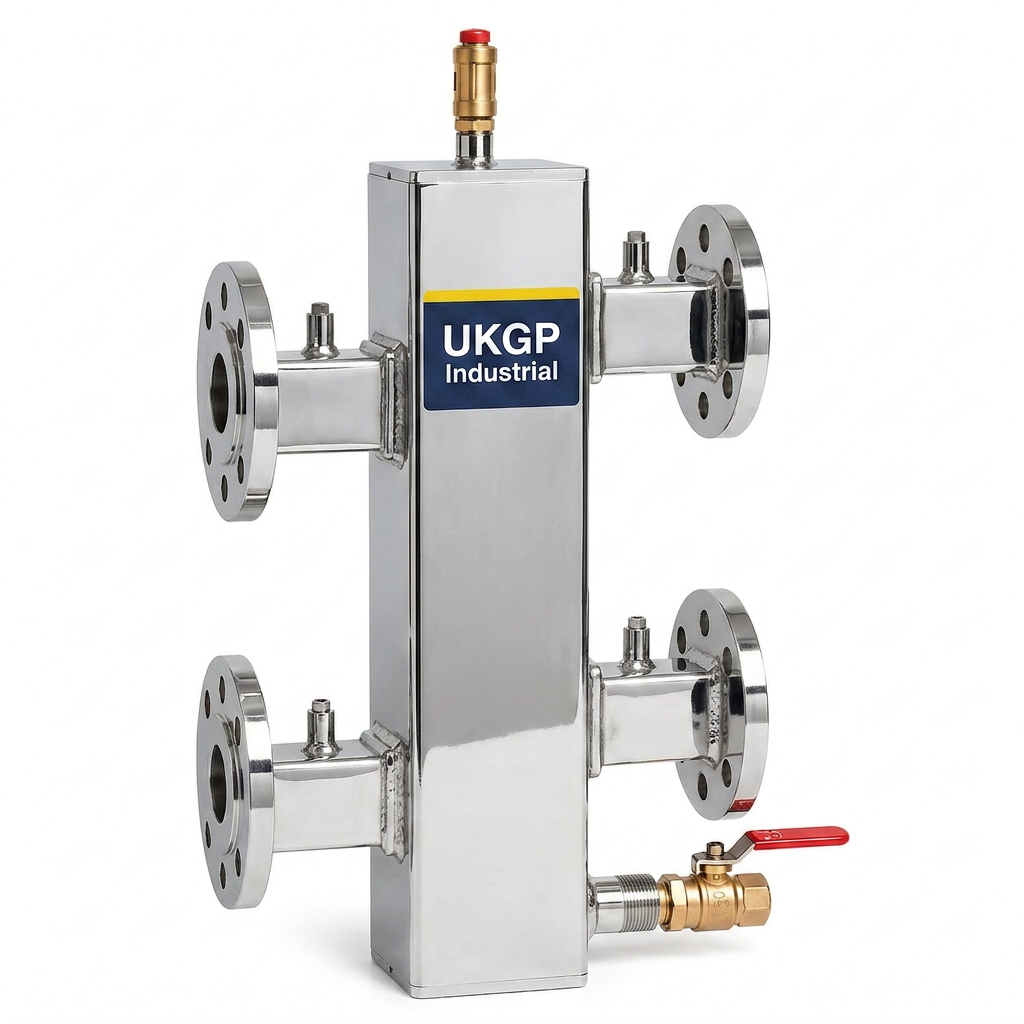
Selecting the correct specification for low loss headers involves more than just matching pipe diameters. Engineers must calculate the total coincident load of the secondary circuits and compare this with the primary heat generation capacity. UKGP Industrial offers a comprehensive range of headers ranging from 40 kW to 2000 kW, ensuring that whether you are working on a small refurbished plant room or a massive district heating scheme, there is a technical fit available. Our units are available with both flanged PN16 connections and threaded BSP options to suit various installation preferences and high-pressure requirements.
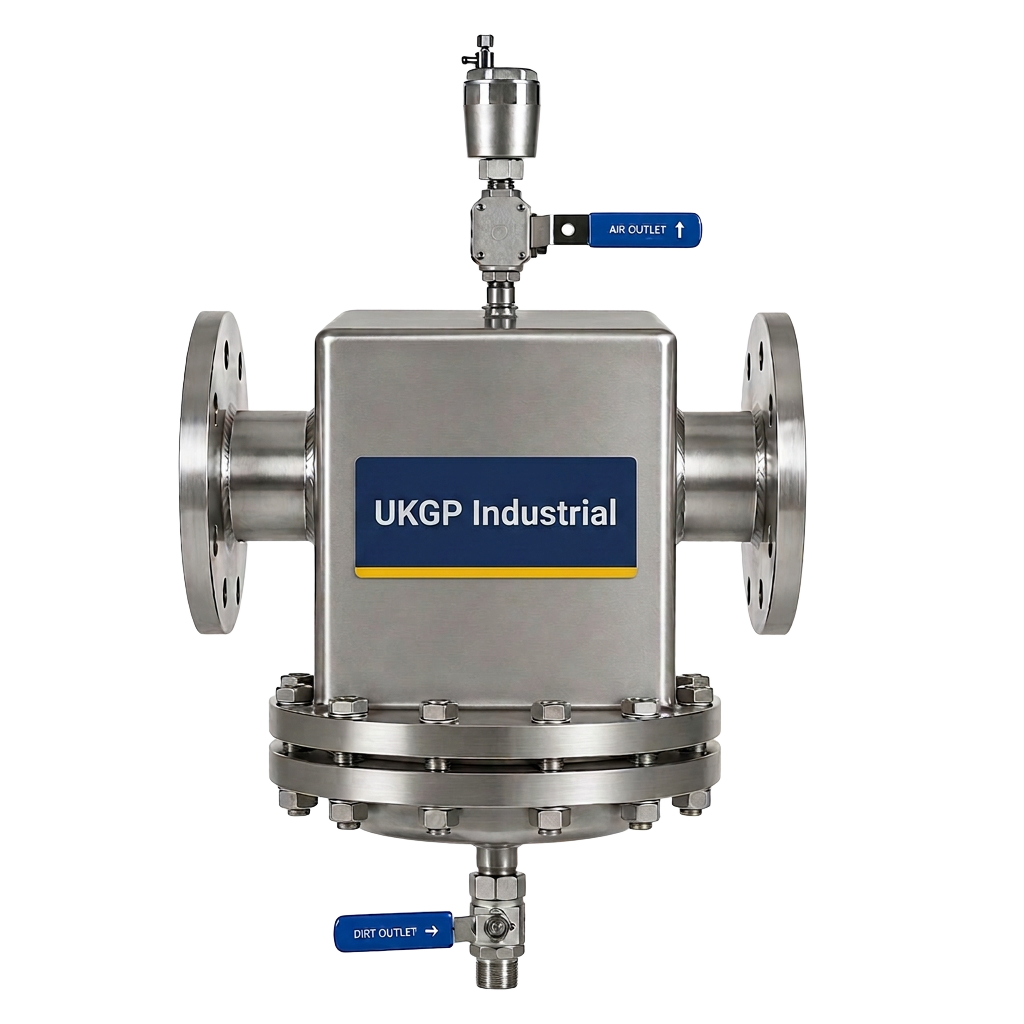
Internal velocity is the key metric for any engineer when reviewing technical data sheets. If the water velocity within the vertical body is too high, the header begins to act like a pipe rather than a buffer, losing its hydraulic neutrality. Our designs prioritise a stagnant or low-velocity core which not only provides separation but also allows for basic air and dirt separation. To ensure the highest levels of energy retention, each UKGP header is supplied with a high-quality thermal insulation jacket as standard, meeting the stringent requirements for energy efficiency in commercial building services and helping to reduce plant room heat gain.
Beyond the standard specifications, durability and warranty are paramount for Facilities Managers and procurement leads. With a robust 2-year warranty and a standard lead time of only 2-3 weeks, our UK-manufactured headers provide peace of mind in fast-track construction projects. Each unit is pressure tested to ensure it can withstand the rigours of commercial closed-loop systems. Whether you require a horizontal or vertical orientation, the engineering focus remains on reducing the pressure drop across the bridge, ensuring that the primary pumps are not working harder than necessary to overcome internal resistance.
- Available capacities from 40 kW up to 2,000 kW to suit all plant sizes
- Universal connection types including BSP threaded or PN16 flanged
- Includes high-grade insulation jackets to prevent thermal losses
- Standard 2-week to 3-week lead times for reactive project needs
Compliance with BSRIA BG29 and BG50 Standards
Water quality is the single most significant factor in the lifespan of commercial HVAC components. BSRIA BG29 'Pre-commission Cleaning of Pipework Systems' and BG50 'Water Treatment for Closed Heating and Cooling Systems' provide the framework for maintaining a healthy system. Low loss headers play a supporting role in this by acting as a collection point for system debris. Many of our designs incorporate a drain valve at the lowest point, allowing for the removal of heavy sludge that settles out of the flow due to the sudden reduction in velocity within the header vessel.
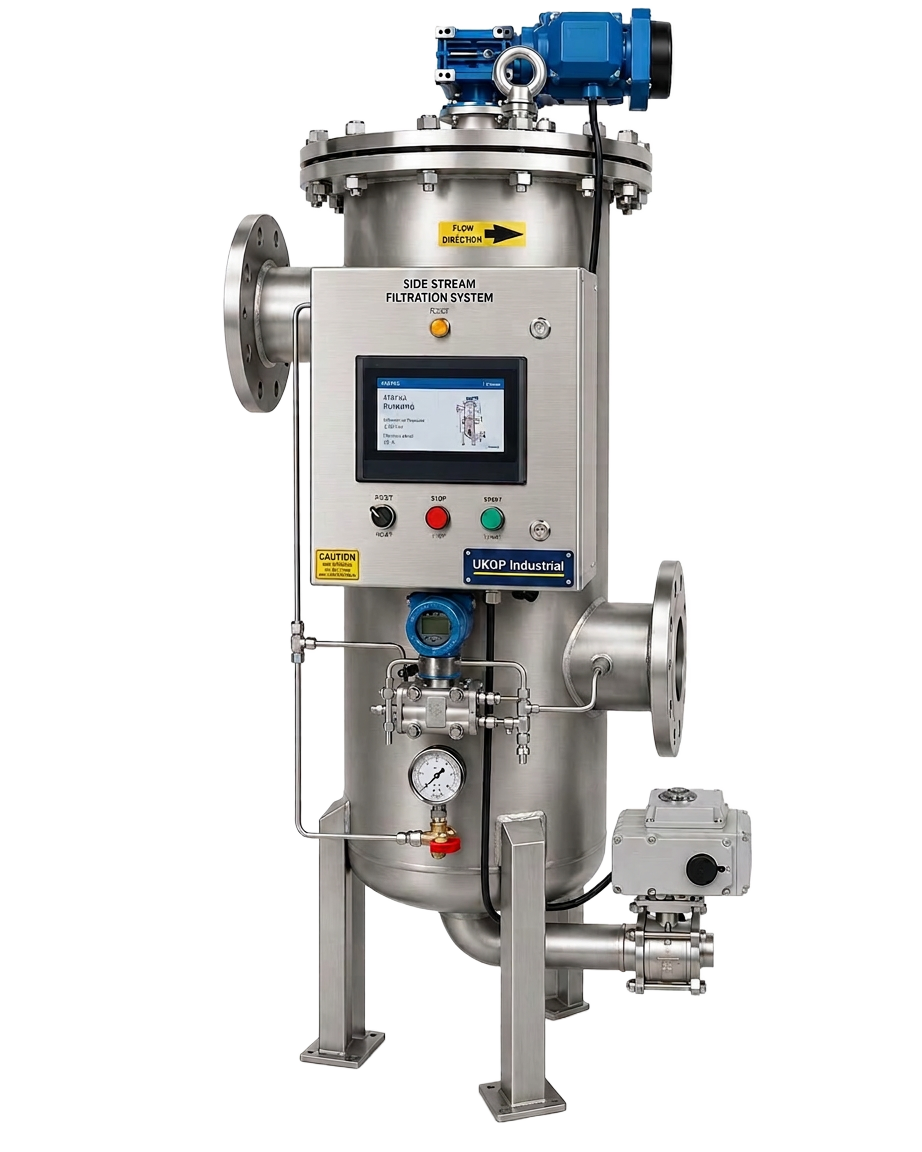
To further enhance the protection of the boiler plant, many engineers choose to install a side-stream filtration unit in conjunction with their low loss headers. While the header provides a degree of settlement, a dedicated filtration skid ensures that fine magnetite and suspended solids—which can be smaller than 5 microns—are actively removed from the system. This combined approach is particularly effective in older systems being retrofitted with modern, sensitive high-efficiency boilers. Ensuring the water chemistry remains within BS 8552 parameters is essential for any contractor looking to avoid costly warranty disputes with boiler manufacturers.
Moreover, the installation of a header facilitates the placement of temperature sensors for the Building Management System (BMS). By placing a sensor in the top of the header, the BMS can accurately read the mixed flow temperature reaching the secondary circuits, allowing for more precise modulation of the primary heat source. This technical integration is a hallmark of a well-engineered plant room, moving away from simple on/off control to a sophisticated, demand-driven heating strategy that significantly reduces operational expenditure and improves the overall comfort levels for building occupants.
- Supports BSRIA BG29/BG50 water quality management strategies
- Acts as a natural settlement point for system sludge and debris
- Provides an ideal location for BMS temperature sensor placement
- Reduces risk of magnetite buildup in sensitive heat exchangers
Protecting Assets with Low Loss Headers and Expansion Steelwork
Thermal expansion is another critical consideration in large-scale commercial heating. As water temperatures rise from ambient to operating levels of 80°C or higher, the resulting pressure increase must be managed correctly. While low loss headers manage the flow and pressure dynamics between pumps, they must be part of a wider design that includes correctly sized expansion vessels and, where necessary, expansion bellows to manage the physical growth of the pipework. High-temperature systems without adequate expansion control risk stressing the welding on the header and the boiler connections.
In systems where high Delta-T is required, such as those incorporating heat pumps with boiler top-up, the role of low loss headers becomes even more vital. The header allows for the mixing of different temperature returns, ensuring that the cold return from a large AHU doesn’t plunge the boiler into a low-temperature state too quickly. This thermal buffering capacity, although modest compared to a dedicated thermal store, provides enough of a dampening effect to smooth out the control logic of the primary heat source, extending the life of mechanical components like motorised valves and pumps.
Contractors should also consider the physical footprint of the plant room. UKGP Industrial headers are designed for compact installation without compromising on the internal volumes required for hydraulic separation. Given that many UK plant rooms are located in basements or rooftop enclosures with limited space, having a reliable, high-specification header that can be delivered quickly and fits within standard height constraints is a major logistical advantage. Our technical team can provide full dimensions and CAD files to assist in the 3D modelling phase of M&E design, ensuring a 'right first time' installation.
- Integrated design approach with expansion and pressure management
- Smooths out thermal fluctuations in hybrid heating systems
- Space-efficient designs suitable for cramped UK plant room layouts
- Full technical documentation and CAD support for M&E consultants
The Commercial Advantage of Standardised Header Design
From a procurement perspective, standardising the use of UKGP low loss headers across a property portfolio offers significant advantages for Facilities Managers. Standardisation simplifies the spares inventory and ensures that maintenance teams are familiar with the purging and cleaning procedures for each unit. Because our headers are built to withstand the rigorous demands of commercial use, including PN16 pressure ratings, they offer a far superior life-cycle cost compared to lower-spec, domestic-grade alternatives found in smaller commercial light-duty ranges.
When specifying for a new build or a major plant room refurbishment, the lead time can often become the bottleneck. UKGP’s ability to deliver high-capacity industrial headers within 2 to 3 weeks helps keep projects on schedule, avoiding the costly delays associated with bespoke fabrications. Furthermore, each unit's 2-year warranty provides the project's end-user with the assurance that they are investing in UK-manufactured quality that meets BS EN 14917 and other relevant British standards for pressure equipment and welding integrity.
Ultimately, the goal of any building services professional is to deliver a system that is reliable, efficient, and easy to maintain. By insisting on a dedicated low loss header for any multi-boiler or multi-zone installation, you are adhering to the fundamental principles of hydraulic engineering. This simple addition to the plant room schematics prevents the most common causes of boiler failure and system noise, ensuring that the final handover to the client is smooth and that the system performs to its design intent for years to come.
- Reduces long-term maintenance costs through component standardisation
- 2-year comprehensive warranty for project security and peace of mind
- Fast-track delivery schedules to meet tight construction deadlines
- Engineered to meet BS EN standards for high-pressure applications
Installation Best Practices for Low Loss Headers
Correct orientation is vital when installing low loss headers. While vertical installation is the most common and generally preferred for its ability to assist in air and dirt removal, horizontal configurations are possible if the internals are designed accordingly. When installing, it is essential to ensure that the primary flow and return are connected to the correct ports to maintain the intended temperature stratification. Incorrect piping can lead to short-circuiting where the heated primary water returns immediately to the boiler without ever reaching the secondary load.
Support and bracing are often overlooked. A large 2000 kW header filled with water is a significant weight and must be supported by adequate floor-standing or wall-mounted brackets to avoid putting stress on the boiler's internal pipework. Furthermore, ensuring that there is sufficient clearance above the header for an automatic air vent and below the header for a drain valve is non-negotiable for future maintenance. UKGP Industrial headers are provided with the necessary tappings to make these additions straightforward for the site engineers, reducing on-site fabrication time.
Finally, always ensure that the insulation jacket is fitted only after the final leak tests and commissioning are complete. Leaving a header uninsulated in a cold plant room can result in significant energy waste, as the high surface area of the vessel acts as a large radiator. By following these practical installation steps and choosing a high-performance UKGP header, contractors can ensure that they are delivering a professional, efficient, and compliant heating solution that reflects the high standards of the UK building services industry.
- Verify flow and return port orientation to prevent thermal short-circuiting
- Install robust supports to handle the full static weight of the vessel
- Maintain access for air venting and sludge drainage points
- Always fit the supplied insulation jacket to maximize heat retention
Frequently asked questions
What is the primary function of low loss headers in a commercial system?
- The primary function is hydraulic separation. They allow the primary heating circuit (boilers) to operate at a different flow rate than the secondary circuits (heating zones), preventing pump conflict and ensuring the boilers always receive the minimum required flow rate for safe operation.
How do I size low loss headers for my project?
- Sizing is based on the maximum flow rate of the system. The header must be large enough so that the internal water velocity remains low (typically below 0.1 m/s). UKGP Industrial offers units from 40 kW to 2000 kW, with technical data sheets available to match the header to your specific pump duties.
Do low loss headers replace the need for air and dirt separators?
- While a header provides some natural air and dirt separation due to reduced velocity, it is not a dedicated separator. For full compliance with BSRIA BG50 and to maximize boiler protection, we recommend using a dedicated air and dirt separator or a side-stream filtration skid alongside the header.
What pipe connections are available for UKGP headers?
- We provide both BSP threaded connections for smaller loads and PN16 flanged connections for larger commercial and industrial heating applications. This flexibility allows for integration into most UK pipework specifications without the need for complex adaptors.
What is the lead time for a UKGP low loss header?
- Our standard lead time is 2-3 weeks. We manufacture in the UK, which allows us to provide faster turnaround times than many European suppliers, helping M&E contractors stay on track with tight installation schedules.