Defining the low loss header tank and its core function
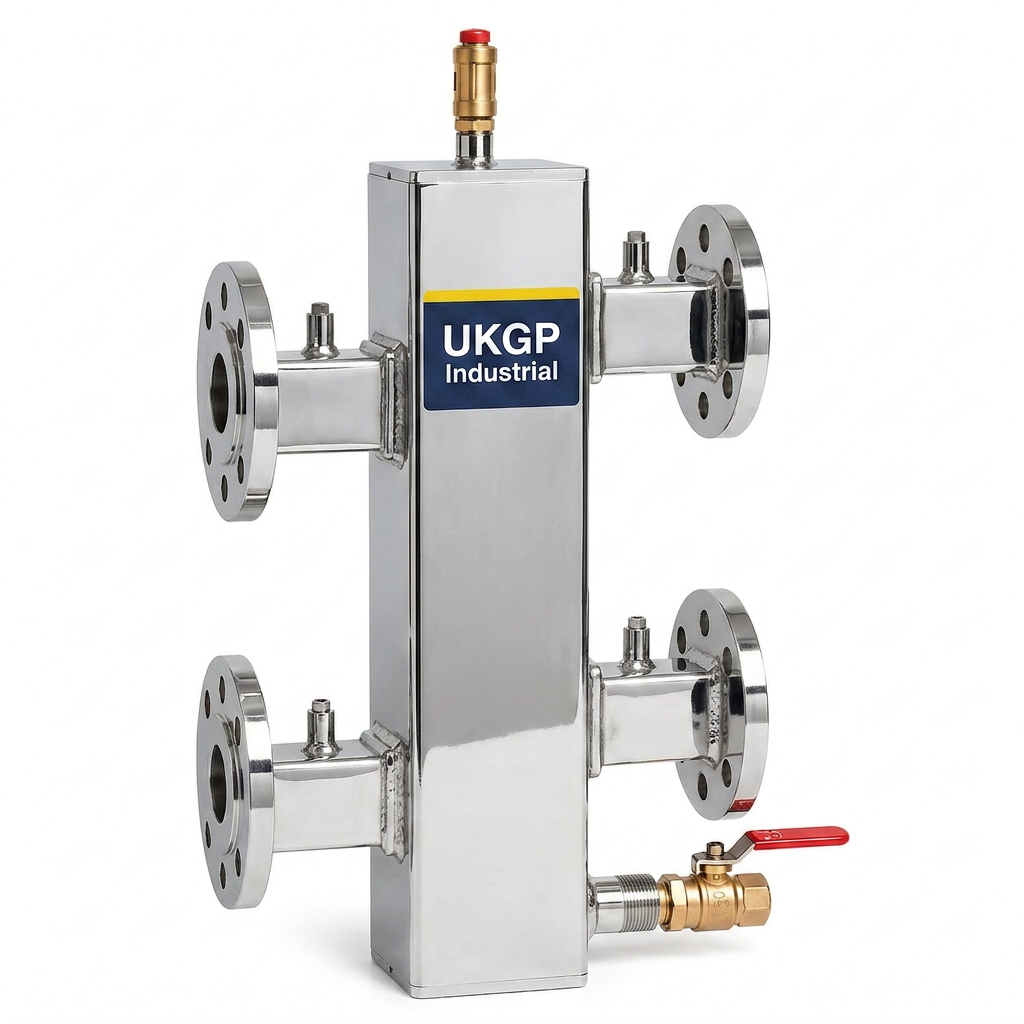
In modern UK commercial plant rooms, a low loss header tank serves as the critical point of hydraulic decoupling between the primary heat source and the secondary heating circuits. While a standard header facilitates flow separation, the 'tank' terminology often refers to units with increased internal volume designed to act as a thermal buffer. This configuration is vital when the minimum flow rate of the boilers cannot be matched by the varying loads of the building, preventing the common but damaging issue of boiler short-cycling. By maintaining a neutral pressure zone, the header ensures that pumps in different circuits do not interfere with one another, maintaining the design temperature differential required for condensing efficiency.
Choosing a UKGP low loss header tank provides engineers with a robust solution capable of managing outputs from 40 kW up to 2000 kW. These units are built to withstand the rigours of commercial demand, available in both flanged PN16 and threaded BSP connections to suit specific project site requirements. Because these headers provide a calm region for water to circulate, they allow for the natural separation of debris and air, although dedicated separators are often used in tandem. When calculating the physical size of the header, plant-room engineers must account for the total system flow rate to ensure velocities remain below 0.5 metres per second within the vessel body, preserving the low-pressure drop characteristics.
To satisfy building services consultants and satisfy BSRIA BG29 requirements for pre-commissioning cleaning, the internal volume of the header must be accessible or clearly documented. A well-specified tank acts as a reservoir of heat, smoothing out the thermal transitions that occur when secondary zone valves open or close. This is particularly relevant in systems utilising heat pumps or high-turndown condensing boilers, where the primary heat exchanger is sensitive to rapid changes in return temperature. By integrating a UKGP header with a 2-year warranty and high-grade insulation jacket, contractors ensure long-term thermal retention and operational reliability that meets British Standards and CIBSE recommendations for heating system performance.
- Hydraulic decoupling for multi-circuit systems
- Primary and secondary circuit pressure isolation
- Enhanced thermal inertia for boiler plant protection
- Simplified pump head calculations for M&E designers
When buffer volume becomes mandatory for system stability
The decision to specify a low loss header tank with significant internal volume usually hinges on the ratio between the minimum boiler output and the lowest predictable building load. In many modern UK commercial buildings, the use of highly modulated burners means boilers can operate at a fraction of their peak capacity. However, if the secondary system contains low water volume—a common occurrence with radiant panels or modern fan coil units—the primary circuit may heat up too quickly, causing the boiler to reach its set-point and shut down prematurely. This 'hunting' or short-cycling significantly reduces the lifespan of combustion components and increases fuel consumption, making the buffer capacity of the header a technical necessity.
CIBSE AM15 guidelines highlight the importance of system inertia in biomass or heat pump applications, but the principle applies equally to gas-fired condensing boilers. A low loss header tank provides that missing inertia, allowing the boiler to run for a minimum required duration to reach peak efficiency. It is often the case that a standard vertical separator does not provide enough residence time; in these instances, an oversized or 'tank-style' header is the preferred solution. Procurement leads should consider that while these units are larger, the 2-3 week lead time for a UKGP bespoke header allows for precise plant-room planning without delaying the broader construction schedule on-site.
Furthermore, in retrofit scenarios where old atmospheric boilers are replaced with modern condensing units, the system volume often changes drastically. If the new primary circuit is significantly 'tighter' than the legacy secondary system, the mismatch in flow dynamics can lead to cavitation at the pumps or thermal shock at the heat exchanger. By inserting a high-quality low loss header tank, contractors create a buffer zone that absorbs these flow fluctuations. This design approach is recommended under BSRIA BG50 for water treatment and system maintenance, as the header can also serve as a secondary collection point for suspended solids that bypass the main filtration components.
- Mitigation of boiler short-cycling during low-load periods
- Support for high-turndown ratio condensing boilers
- Compensation for low-water-content secondary emitters
- Alignment with CIBSE AM15 recommendations for inertia
Protecting the system with side stream filtration
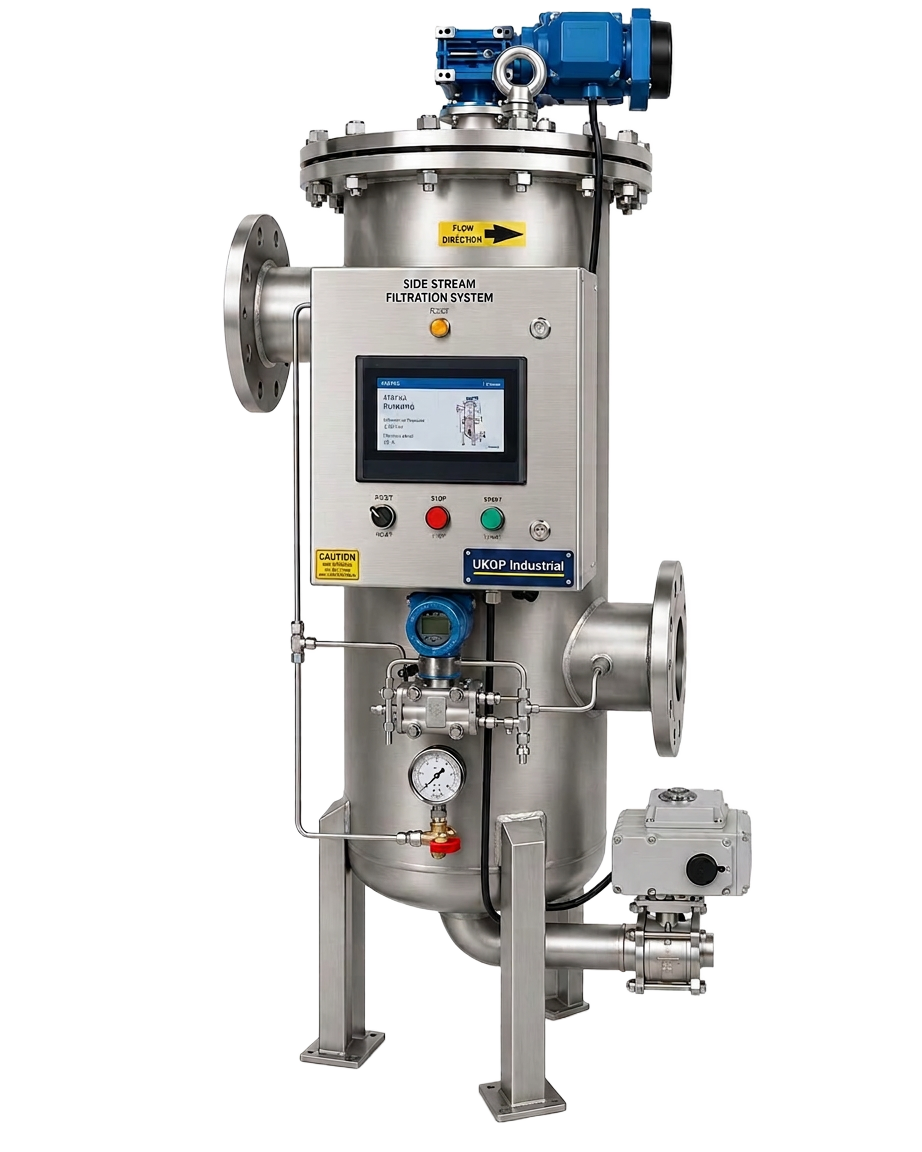
While the low loss header tank manages hydraulic and thermal concerns, the presence of magnetite and sludge remains a constant threat to commercial systems. Even within the calm water of a header tank, fine particulates can remain in suspension and eventually coat the high-efficiency heat exchangers of modern boilers. This is why UKGP advocates for the installation of side stream filtration alongside any header specification. By continuously stripping out debris down to sub-micron levels, these units ensure that the benefits provided by the header—such as stable temperature profiles and laminar flow—are not undermined by the accumulation of 'black muck' or scale.
BSRIA BG29 highlights that the cleanliness of a system is paramount from the moment of first fill. A low loss header tank can sometimes act as a settlement chamber, but it is not a substitute for active filtration. By combining a flanged PN16 header with a side stream filter, M&E contractors can provide FM teams with a system that is significantly easier to maintain. This proactive approach prevents the clogging of delicate sensors and valves within the secondary circuits, ensuring that the hydraulic balance achieved by the header is maintained throughout the seasonal operation of the building plant.
For plant-room engineers, the integration point for filtration is often in the return leg just before it re-enters the primary loop through the header. This ensures that only clean, treated water is returned to the boiler heat exchanger. When requesting a quote for a 40-2000 kW low loss header, it is commercially prudent to include a side stream filtration unit in the specification. This holistic approach to plant-room design protects the 2-year warranty of the header and the multimillion-pound investment in the boilers themselves, providing a robust solution for the building owner.
- Continuous removal of magnetite and non-magnetic debris
- Reduction in system-wide erosion and pump wear
- Prevention of silt build-up within the header base
- Easier compliance with BSRIA BG29 and BG50 standards
Technical considerations: Flow rates and insulation
Calculating the required size for a low loss header tank involves more than just selecting a connection size. The primary calculation must ensure that the vertical velocity of the water within the header remains extremely low—typically below 0.5 m/s. If the velocity is too high, the hydraulic decoupling effect is lost, and the unit essentially becomes a turbulent pipe junction. This leads to temperature mixing where the flow temperature to the secondary circuits is lower than the primary flow, reducing the effectiveness of the emitters. UKGP provides headers that are sized specifically to the kW rating and flow requirements of the project, ensuring the internal volume is sufficient for the intended buffer effect.
Insulation is another critical factor that is often overlooked during the procurement stage. A low loss header tank has a large surface area, and without adequate thermal protection, it becomes a significant source of standing heat loss in the plant room. All UKGP commercial headers come with a high-quality insulation jacket as standard. This not only improves the energy efficiency of the system, helping to meet Part L of the Building Regulations, but also prevents the header from becoming a safety hazard due to high surface temperatures. This is a vital consideration for Facility Managers responsible for health and safety in operational plant environments.
The connection types—whether BSP threaded for smaller 40 kW units or PN16 flanged for larger 2000 kW systems—must be selected based on the specified pipework material and pressure rating. Most commercial UK projects follow the BS EN standards for flanged connections to ensure compatibility across all components. When ordering a low loss header tank, contractors should specify the secondary branch orientation and any additional tappings required for air vents, drain valves, or temperature sensors. Having these tappings pre-fabricated at the Surrey-based facility ensures a faster and cleaner installation compared to on-site modifications.
- Maintain internal water velocity below 0.5m/s
- Factory-fitted insulation jackets for energy compliance
- Multiple tapping points for air, drain, and sensors
- Flanged PN16 or BSP threaded options for site flexibility
Integrating a low loss header tank with CIBSE standards
The integration of a low loss header tank into a commercial heating system is not just good practice; it is supported by various CIBSE and British Standards. These documents emphasise the need for stable flow and the separation of variable flow secondary circuits from the constant or regulated flow of the primary boilers. By following these guidelines, consultants can ensure that the systems they design will operate as intended under peak and part-load conditions. The header serves as the 'zero pressure point' which is fundamental for the correct operation of twin-head circulators and variable-speed drives that are now standard in UK commercial applications.
Furthermore, BS 8552 provides guidance on the sampling and monitoring of water quality in closed-circuit systems. An integrated low loss header tank often features a low-velocity zone at the bottom of the vessel, which makes it an ideal location for a drain valve to clear settled solids during routine maintenance. This alignment with British Standards ensures that M&E contractors can hand over a system that is fully compliant with modern insurance and warranty requirements. The use of a UKGP header provides the peace of mind that comes with a 2nd year of warranty coverage, exceeding the standard twelve-month industry offering.
From a commercial perspective, procurement leads appreciate the transparency of lead times and technical support provided by UK suppliers. A 2-3 week lead time for a high-specification tank is competitive and allows for just-in-time delivery to site, reducing the risk of damage or theft during the early stages of a project. When sourcing a low loss header tank, ensuring that the manufacturer understands the nuances of BSRIA BG50 and the specific needs of UK plant rooms is essential for a smooth project lifecycle. The result is a heating system that is hydraulically balanced, easy to maintain, and energy efficient over its entire operating life.
- Support for zero-pressure zone system design
- Compliance with BS 8552 for water quality monitoring
- Alignment with Part L Building Regulations via insulation
- Reduction in pump control errors and sensor interference
Maximising boiler efficiency through thermal buffering
The primary goal of any heating system design is to keep the return water temperature as low as possible to promote condensing within the boilers. A poorly sized or incorrectly applied low loss header tank can lead to 'temperature bypass,' where hot flow water is sucked directly back into the return, raising the return temperature and knocking the boiler out of condensing mode. By ensuring the header has the correct internal volume (buffer) and height/diameter ratio, engineers can prevent this bypass. The volume acts as a thermal cushion, ensuring that any cold return water from the secondary circuits is properly mixed before reaching the boiler heat exchanger.
For systems ranging from 40 kW to 2000 kW, the scale of the challenge increases with the size of the plant. Large-scale commercial developments, such as schools and hospitals, often have highly dynamic loads. Here, the low loss header tank becomes the central hub of the plant room. By choosing a UKGP unit with BSP or PN16 connections, installers can ensure a high-integrity seal that prevents leaks and oxygen ingress, both of which are common causes of corrosion in closed-loop systems. The inclusion of a robust insulation jacket further ensures that the energy harvested by the boilers is delivered to the building's zones without waste.
In conclusion, specifying a low loss header tank is a strategic move for any M&E professional looking to deliver a high-performance HVAC system. It solves the dual problems of hydraulic interference and thermal short-cycling, which are the most common causes of system failure and high energy bills. With a 2-year warranty and a short 2-3 week lead time, UKGP Industrial offers a commercial solution that meets the technical demands of CIBSE and BSRIA while remaining commercially viable for large-scale UK construction projects. Whether you are replacing a single boiler or designing a multi-megawatt plant room, the header remains the most important vessel in your hydraulic layout.
- Maintains low return temperatures for condensing boilers
- Eliminates temperature bypass through correct sizing
- Reduces operational fuel costs by increasing efficiency
- Provides 2 years of warranty protection for peace of mind
Frequently asked questions
Does every commercial boiler system need a low loss header tank?
- While not every system requires a header, any installation with multiple circuits, varying flow rates, or boilers sensitive to return temperature changes will benefit significantly from a low loss header tank to provide hydraulic isolation and thermal stability.
What is the difference between a low loss header and a buffer tank?
- A low loss header primarily provides hydraulic decoupling with some thermal mass, whereas a dedicated buffer tank is much larger and designed specifically to store thermal energy for systems with long dwell times, such as biomass or thermal solar.
How do I size a low loss header tank for a 500 kW system?
- Sizing is based on the maximum flow rate (m3/h) to ensure the vertical velocity within the header remains below 0.5 m/s. UKGP provides technical support to help you select the correct unit from our 40-2000 kW range.
Can a low loss header tank be installed horizontally?
- While most low loss headers are vertical to allow for air and dirt separation, horizontal versions can be manufactured if plant-room height is restricted, provided the internal baffles and flow paths are designed correctly.
What is the typical lead time for a UKGP header?
- We typically offer a 2-3 week lead time for our commercial low loss headers, including those with flanged PN16 or threaded BSP connections and custom insulation jackets.