Understanding Hydraulic Separation via a Low Loss Header Sizing Calculator
In modern commercial boiler rooms, the integration of high-efficiency condensing boilers with varying secondary circuit demands often leads to hydraulic imbalances. A low loss header sizing calculator assists engineers in determining the physical dimensions required to create a zone of low pressure where the primary and secondary flows can interact without interference. According to CIBSE guidelines, maintaining a neutral pressure point is vital for ensuring that the primary pump, dedicated to the boiler loop, does not conflict with the secondary pumps serving the building's emitters. Without a correctly sized header, you risk high return temperatures that inhibit condensing mode, significantly reducing the seasonal efficiency of the plant room.
Precision in sizing is not merely about volume; it is about managing the velocity of the water as it passes through the vessel. If the velocity is too high, the 'neutral' characteristic of the header is lost, leading to turbulence and unexpected pressure drops that can strain pump motors. By inputting the total kilowatt output and the design Delta T into a low loss header sizing calculator, engineers can define the necessary diameter to keep internal velocities below 0.1 to 0.2 meters per second. This low-velocity zone is critical for allowing air bubbles to rise and dirt particles to settle, effectively acting as an initial stage of water quality management in line with BSRIA BG29 pre-commissioning cleaning standards.
When consulting with UKGP Industrial for your project, our technical team uses rigorous criteria to ensure every unit is fit for purpose. For commercial applications ranging from 40 kW to 2000 kW, selecting the right header means balancing the peak flow requirements of multiple boiler modules against the varied loads of heating, hot water, and ventilation circuits. Our headers are available in both flanged PN16 and threaded BSP configurations to suit any site requirement. Relying on an accurate low loss header sizing calculator ensures that every component in the system, from the heat source to the terminal units, operates within its specified flow parameters, prolonging the lifespan of the entire installation.
- Eliminates pump conflict between primary and secondary circuits
- Encourages boiler condensing through better temperature control
- Reduces mechanical stress on boiler heat exchangers
- Provides a dedicated point for air and dirt collection
The Core Mechanics of Sizing for Commercial HVAC
The mathematical foundation behind any reputable low loss header sizing calculator relies on the relationship between power, specific heat capacity, and temperature change. For standard water-based systems, the formula Flow Rate (m³/h) = Power (kW) / (1.16 x Delta T) provides the baseline volumetric flow. However, many systems today operate with a Delta T of 20°C for modern condensing boilers, whereas older systems might use 11°C. A professional calculator must account for these variables to prevent undersizing, which is a common cause of short-cycling in leading commercial boiler modules. UKGP Industrial recommends a conservative approach to sizing to ensure that even at peak load, the hydraulic crossover remains stable.
Beyond the flow rate, the physical height and orientation of the connections play a significant role in the performance of the header. A low loss header sizing calculator typically suggests a minimum distance between the primary and secondary nozzles to ensure effective mixing and thermal stratification. This is particularly important when integrating diverse heat sources or when the secondary circuit features high-temperature radiators alongside low-temperature underfloor heating. In these scenarios, the header acts as a thermal buffer, smoothing out temperature fluctuations that could otherwise trigger fault codes in the boiler control system or cause discomfort for building occupants in Surrey commercial properties.
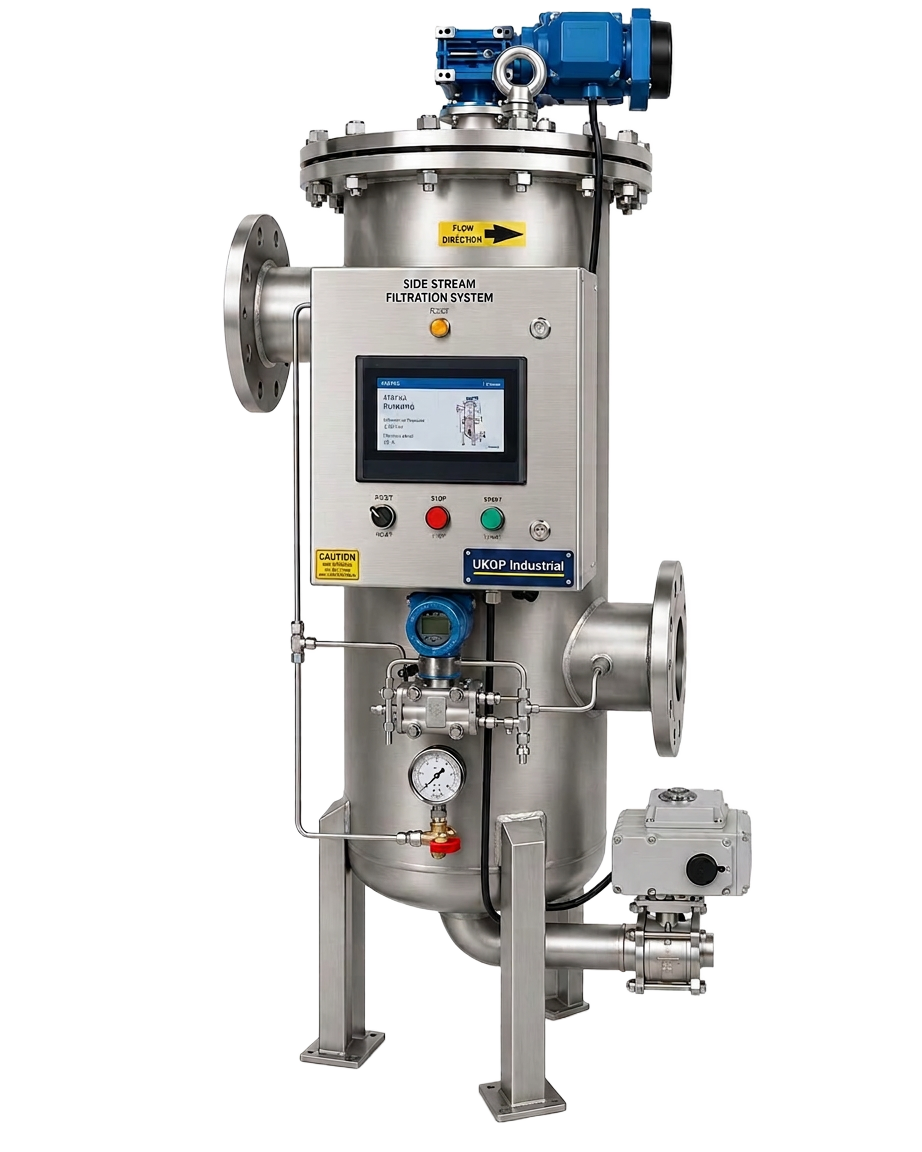
While calculations provide the theoretical framework, real-world installation variables such as pipework debris and air ingress must also be managed. BSRIA BG50 highlights the importance of water treatment and debris removal in closed-loop systems. While a header provides some settlement benefits, it should be complemented by dedicated filtration. UKGP Industrial offers side stream filtration skids that work in tandem with our low loss headers to maintain the water quality required for long-term operational efficiency. Ensuring your header is sized correctly via a low loss header sizing calculator is the first step, but protecting that investment with high-quality ancillary components is just as critical for facility managers.
- Accounts for varying Delta T requirements (e.g., 11K vs 20K)
- Determines optimal nozzle spacing for thermal stability
- Mitigates the risk of boiler short-cycling and premature wear
- Facilitates easier system balancing during commissioning
Material Specifications and Site Installation Standards
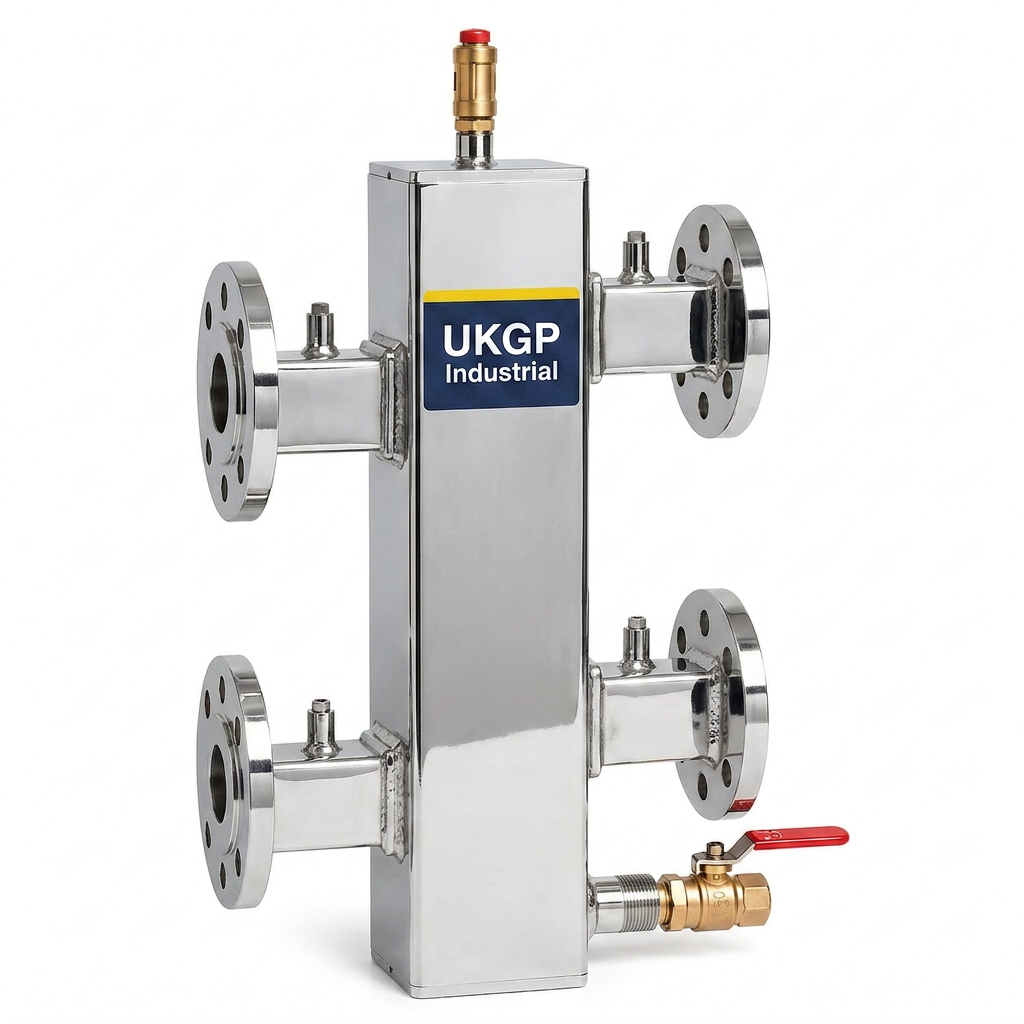
Once a low loss header sizing calculator has defined the required capacity, the focus shifts to material durability and compliance with British Standards. UKGP Industrial low loss headers are manufactured to the highest standards, featuring robust steel construction designed to withstand the pressures of commercial heating environments. Whether you require a compact BSP threaded unit for a 40 kW plant or a large PN16 flanged header for a 2000 kW multi-boiler cascade, the build quality remains consistent. Furthermore, every unit we supply comes with a bespoke insulation jacket to minimise standby heat losses, ensuring compliance with Part L of the Building Regulations and improving the overall energy rating of the building.
Practicality on-site is a major factor for M&E contractors. A header that is correctly sized but poorly designed for installation can lead to project delays. That is why UKGP offers a standard lead time of 2-3 weeks, allowing for tight construction schedules to be met without compromising on quality. Each header is backed by a 2-year warranty, providing peace of mind to both the installer and the end-user. When you use a low loss header sizing calculator to specify a UKGP unit, you are not just getting a vessel; you are getting a precision-engineered solution that includes air vent and drain valves as standard, simplifying the ongoing maintenance tasks for plant-room engineers.
Finally, consideration must be given to the physical footprint of the equipment. In many London and Surrey plant rooms, space is at a premium. A low loss header sizing calculator helps in making the most of available vertical and horizontal space by specifying the most efficient container size for the required flow. Our technical team can assist in interpreting these calculations to ensure the chosen model fits within the architectural constraints while still providing the necessary hydraulic buffer. For procurement leads, the combination of competitive pricing, rapid lead times, and British manufacturing quality makes UKGP the preferred choice for commercial separation solutions.
- Compliant with PN16 pressure ratings for commercial use
- Includes high-quality insulation jackets as standard
- Supplied with a 2-year warranty for long-term reliability
- Standard lead times of 2-3 weeks for fast-track projects
The Role of Temperature and Flow Sensors
Modern Building Management Systems (BMS) require accurate data to modulate boiler firing rates and pump speeds. A low loss header sizing calculator often indicates the ideal location for temperature sensor pockets. By placing a sensor in the header, the BMS can monitor the flow temperature of the mixed water entering the secondary circuit, allowing for more precise weather compensation and load matching. This data-driven approach is essential for large-scale developments where energy efficiency is closely monitored. UKGP Industrial headers are equipped with multiple tapping points to accommodate sensors, air vents, and drain valves, providing maximum flexibility for the control strategy.
In addition to temperature, monitoring the pH levels and chemical balance of the system water is a requirement under BS 8552. Poor water chemistry can lead to internal corrosion of the header and other system components, even if they were correctly sized. Integrating pH sensors and transmitters into the plant room design allows for real-time monitoring of the system health. If the internal diameter defined by your low loss header sizing calculator is correct, the flow will be laminar enough to provide stable readings for these sensors. This integrated approach ensures that the hydraulic heart of the system is not only sized correctly but also protected from the chemical degradation that often plagues older commercial systems.
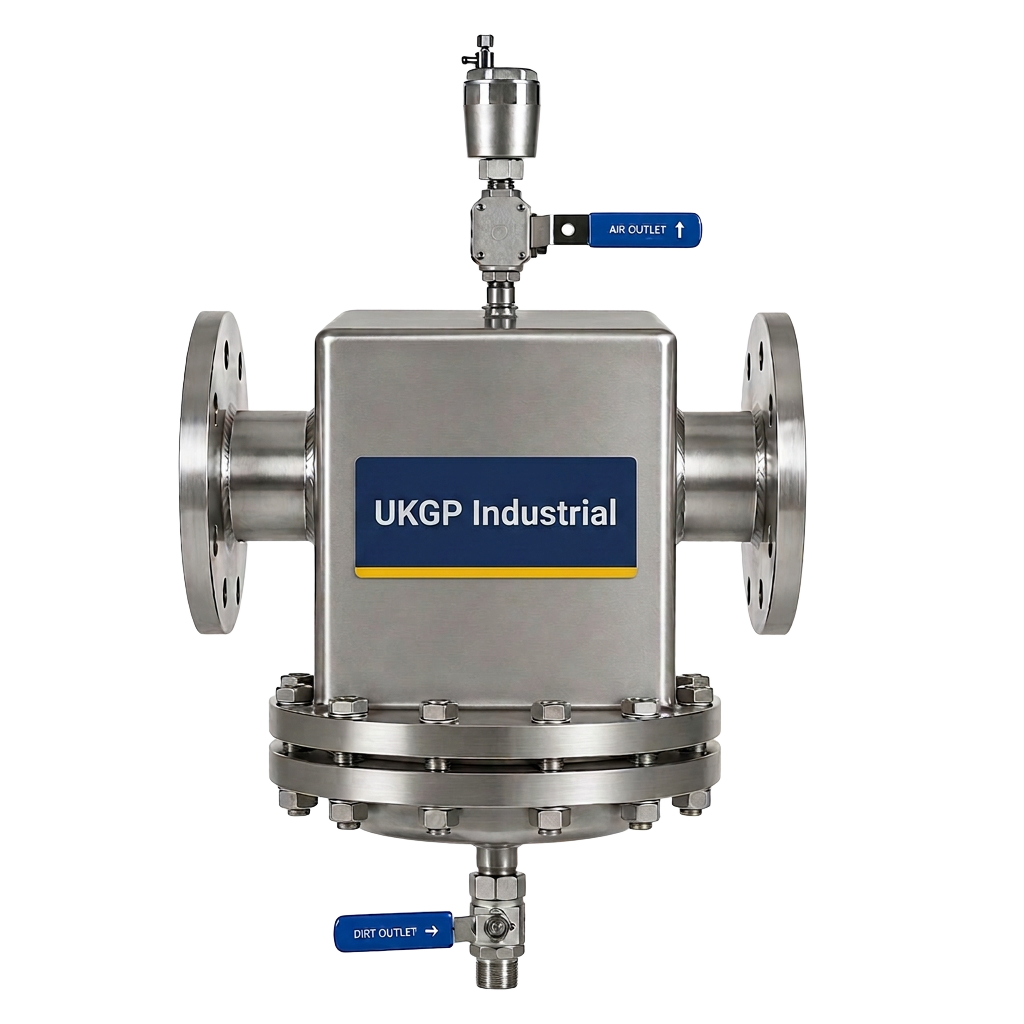
Contractors should also consider the impact of air entrainment on sensor accuracy. Micro-bubbles can cause erratic readings and lead to pump cavitation. While the low loss header provides a point of air separation, it is best practice to install dedicated air and dirt separators on the main flow lines. By using a low loss header sizing calculator in conjunction with a total system design approach, you ensure that every component is working in harmony. This holistic mindset is what separates a standard boiler replacement from a high-performance system upgrade that will deliver reliable heat for decades to come, reducing the total cost of ownership for the client.
- Sensor pockets allow for seamless BMS integration
- Facilitates accurate temperature monitoring for weather compensation
- Supports compliance with BS 8552 water quality standards
- Multiple tapping points for air vents and drain valves
Mitigating Thermal Stress and Expansion Issues
Hydraulic separation is only one part of the equation in a large heating network. Thermal expansion of the pipework and the header itself must be managed to prevent mechanical failure. When using a low loss header sizing calculator, engineers should also calculate the anticipated expansion based on the water volume and operating temperature range. Large headers, especially those serving 2000 kW systems, can undergo significant thermal movement. To protect the header and the connected boiler heat exchangers, the installation of expansion bellows is highly recommended. These components absorb the axial and lateral movement, ensuring that the flanged or threaded connections remain leak-free over years of thermal cycling.
The selection of the header's mounting arrangement also impacts its ability to handle stress. Large-format headers from UKGP Industrial come with sturdy support feet, but these must be installed on a level, weight-bearing surface that allows for the minor movements associated with temperature change. Because our headers are designed for a wide range of commercial outputs (40 kW to 2000 kW), we provide the necessary technical data to help structural engineers design appropriate supports. Consulting a low loss header sizing calculator early in the design phase ensures that the plant room layout accounts for both the equipment size and the required clearance for maintenance and pipework expansion.
For UK building services consultants, the priority is often the resilience of the system. A bespoke low loss header sizing calculator provides the confidence that the design will perform under peak winter loads without starving any single circuit of heat. Furthermore, by choosing UKGP, you are choosing proximity and expertise. Our Surrey-based support team can provide rapid quotes and technical drawings to verify that the specified header meets the project's exact hydraulic and physical requirements. This level of service is vital for meeting the demanding specifications of hospitals, schools, and large residential blocks where heating downtime is not an option.
- Reduces stress on connections via thermal expansion management
- Essential for large-scale 2000 kW commercial systems
- Works alongside expansion bellows for system longevity
- Robust support structures provided for all header sizes
Case Study: Optimising Boiler Cascade Performance
Consider a recent project involving a multi-boiler cascade where the secondary circuit included multiple diverse loads. Initially, the system suffered from frequent boiler cycling and inconsistent secondary flow temperatures. By revisiting the design with a low loss header sizing calculator, it was discovered that the original separation vessel was dramatically undersized for the 800 kW peak load. This resulted in excessive flow velocity through the header, causing the primary and secondary pumps to 'tug' against each other. Replacing the unit with a correctly specified UKGP low loss header immediately stabilised the system, allowing the boilers to modulate smoothly down to their minimum fire rate.
The new installation utilised a PN16 flanged header with an integrated insulation jacket. The immediate benefit was a 15% reduction in fuel consumption, as the boilers were finally able to maintain the low return temperatures necessary for continuous condensing operation. By using the low loss header sizing calculator to select a vessel with a generous diameter, the velocity was reduced to 0.15 m/s, which also significantly improved the performance of the air and dirt separation. This case illustrates that even the most advanced commercial boilers cannot perform at their peak without the correct hydraulic framework, highlighting the critical role of calculation-based selection.
For FMs and plant-room engineers, the takeaway is clear: the low loss header is the most vital passive component in your plant room. Whether you are upgrading an existing site or designing a new build, using a low loss header sizing calculator ensures that you are not guessing at the requirements. UKGP Industrial's range, covering 40 kW through to 2000 kW, offers the versatility needed for any commercial project. With our 2-year warranty and local manufacturing, we provide the technical security required for high-stakes M&E projects across the UK. Contact us today for a quote or a technical review of your current sizing requirements to ensure your system is running at maximum efficiency.
- Prevents boiler short-cycling in cascade installations
- Improves system-wide fuel efficiency by over 15%
- Ensures stable flow for diverse secondary heating loads
- Local UK support for rapid technical validation
Frequently asked questions
Why is a low loss header sizing calculator necessary for commercial boilers?
- It ensures that the primary and secondary circuits are hydraulically decoupled, preventing pump conflict and ensuring boilers can modulate and condense efficiently as per CIBSE and BSRIA guidelines.
What information is needed to use a low loss header sizing calculator?
- You primarily need the total boiler plant output in kW and the design temperature differential (Delta T). This allows the calculator to determine the required flow rate and the vessel diameter needed to maintain low internal velocities.
What size range does UKGP Industrial offer for low loss headers?
- We provide headers for commercial outputs ranging from 40 kW to 2000 kW, with options for BSP threaded or PN16 flanged connections and a 2-year warranty.
Can an undersized low loss header cause system noise?
- Yes, if the header is undersized, water velocity increases, leading to turbulence, vibration, and air-related noise, which can be avoided by using a low loss header sizing calculator during the design phase.
How long is the lead time for a UKGP low loss header?
- Our standard lead time is 2-3 weeks for most commercial sizes, and all units come with a tailored insulation jacket to comply with energy efficiency regulations.