Understanding Hydraulic Separation in Commercial HVAC
In modern UK district heating and commercial plant rooms, the primary objective is to maintain a constant flow through the boiler circuit while allowing the secondary distribution side to vary according to demand. Searching for a low loss header for sale is often the first step in resolving issues where variable speed pumps on the secondary side interfere with the minimum flow requirements of high-efficiency boilers. By creating a neutral pressure zone, these vessels ensure that the primary and secondary pumps do not fight one another. This separation is critical for prolonging the lifespan of heat exchangers and ensuring that the BMS can accurately modulate boiler output based on return temperatures without being misled by bypass flow.
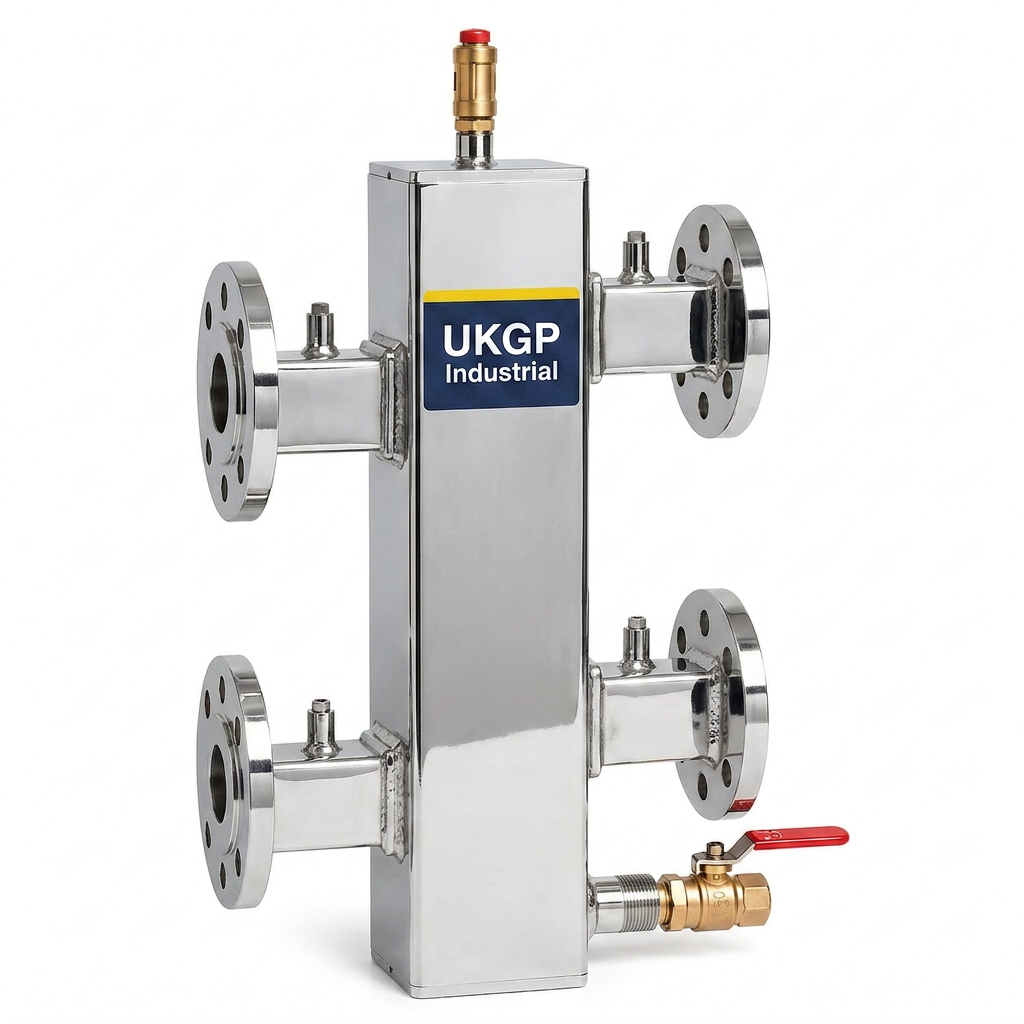
From a technical standpoint, the low loss header acts as a bridge where the pressure drop is almost negligible, hence the name. For those looking at a low loss header for sale in the UK, it is vital to understand that the sizing is not just about pipe diameter but about maintaining a low vertical velocity, typically below 0.5 metres per second, to allow for effective air and dirt separation. This adhereance to CIBSE guidelines ensures that the plant room operates at peak efficiency. UKGP Industrial offers headers ranging from 40 kW to 2000 kW, ensuring that whether you are refurbishing a school plant room or designing a large-scale residential block, the hydraulic parameters are perfectly matched to your specific primary flow requirements.
Neglecting hydraulic separation often leads to 'hunting' where boilers fire and cut out rapidly due to temperature sensor errors caused by improper mixing. Mechanical and Electrical (M&E) contractors should specify a low loss header for sale that includes thermal insulation to minimise standing heat losses, as per Part L of the Building Regulations. Our units come with high-quality insulation jackets as standard, helping to achieve those critical BREEAM or LEED ratings. By ensuring the primary and secondary circuits are properly decoupled, you reduce the mechanical stress on pumps and bypass valves, leading to a more robust, long-term installation for the facility management team responsible for the building's lifecycle.
- Ensures primary boiler flow remains constant regardless of secondary circuit demand.
- Prevents pump conflict and 'cycling' in modern high-efficiency heat sources.
- Reduces pressure drops across the hydraulic system for lower operational costs.
- Acts as a buffer to mitigate thermal shock in cast iron or stainless steel heat exchangers.
Technical Specifications for a Low Loss Header For Sale
When browsing for a low loss header for sale, the physical connection type and pressure rating are the primary procurement drivers. UKGP Industrial's range includes both flanged PN16 and threaded BSP options, providing the flexibility needed for both new builds and complex retrofits. For smaller commercial applications, threaded connections up to 2 inches are common, whereas larger industrial systems often require PN16 flanged connections to handle the higher flow rates associated with multi-megawatt outputs. These headers are designed to handle system temperatures typically found in LTHW (Low Temperature Hot Water) circuits, providing a durable solution that stands up to the rigours of 24/7 commercial heating and cooling operations.
It is also important to consider the lead times when a project is hitting its terminal phase. While many suppliers may cite months for bespoke vessels, UKGP maintains a standard lead time of just 2 to 3 weeks for most commercial sizes. This allows M&E contractors to stay on track with BSRIA BG29 pre-commissioning cleaning schedules, as the header is often a central point for chemical dosing and initial flushing. Each low loss header for sale is manufactured to high British standards, ensuring the internal baffle designs are optimised for laminar flow, which is essential for accurate air removal and sediment settlement before water re-enters the primary boiler loop.
Warranty and reliability are often overlooked during the initial procurement phase. Our units come with a comprehensive 2-year warranty, reflecting our confidence in the build quality and material thickness used in our UK-based production. When comparing a low loss header for sale against generic alternatives, always check the wall thickness and the quality of the finish. A high-quality epoxy coating or industrial paint finish ensures that corrosion is kept at bay, especially in damp plant-room environments. By choosing a UKGP solution, you are investing in a product that has been rigorously pressure tested and inspected before dispatch, ensuring a 'right first time' installation for your engineering team.
- Capacities available from 40 kW up to 2000 kW for diverse commercial footprints.
- Available in BSP threaded or PN16 flanged connections to suit project specs.
- Manufactured in the UK with a reliable 2-3 week lead time for fast-tracked projects.
- Supplied with a 2-year warranty for peace of mind in high-value installations.
Integrating Air and Dirt Separation for System Health
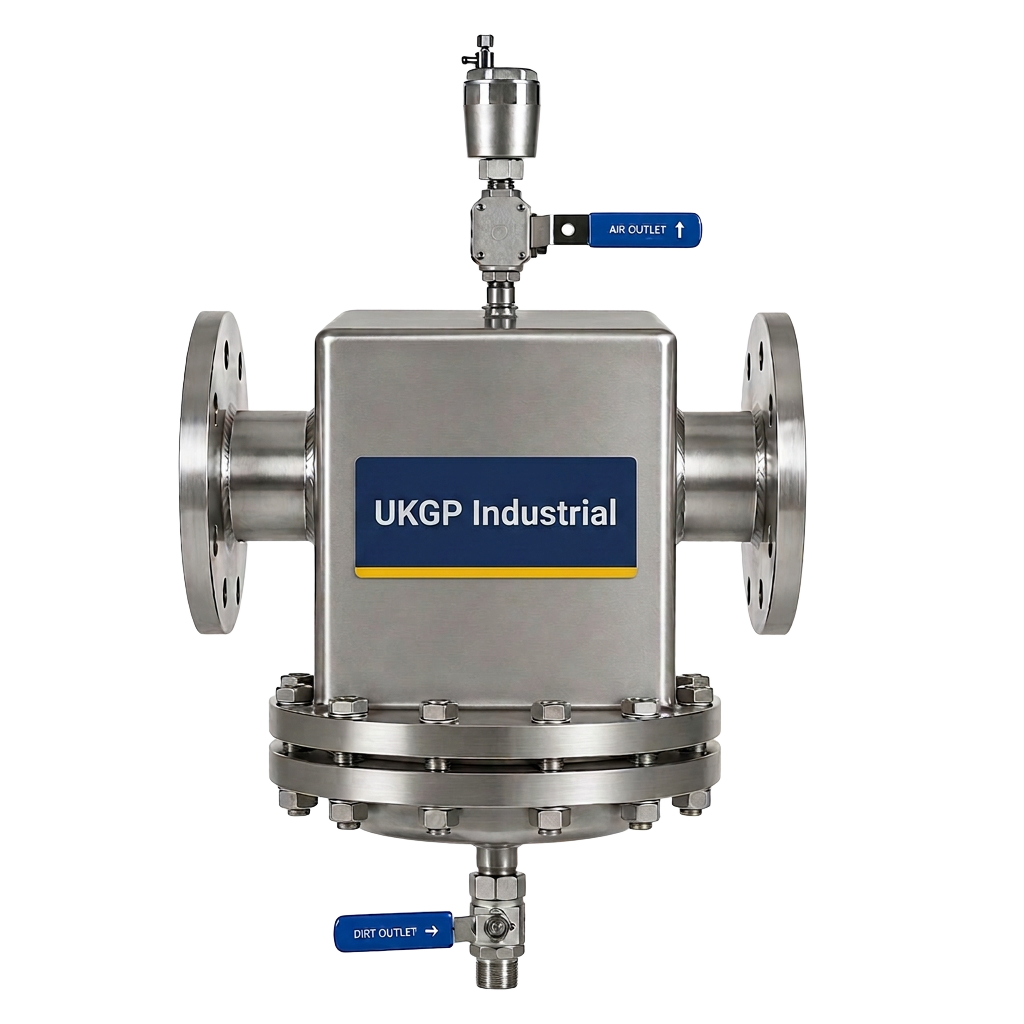
A low loss header for sale is frequently used as the primary point for air and dirt separation. In accordance with BSRIA BG50 guidelines for water treatment in closed heating systems, maintaining low levels of dissolved oxygen and suspended solids is non-negotiable. While the header itself facilitates some separation due to the reduction in water velocity, integrating a dedicated air and dirt separator alongside your low loss header ensures that even the smallest magnetite particles are captured before they can damage boiler heat exchangers or clog control valves. This dual-layered approach to water quality is standard practice for high-spec commercial plant rooms across the UK.
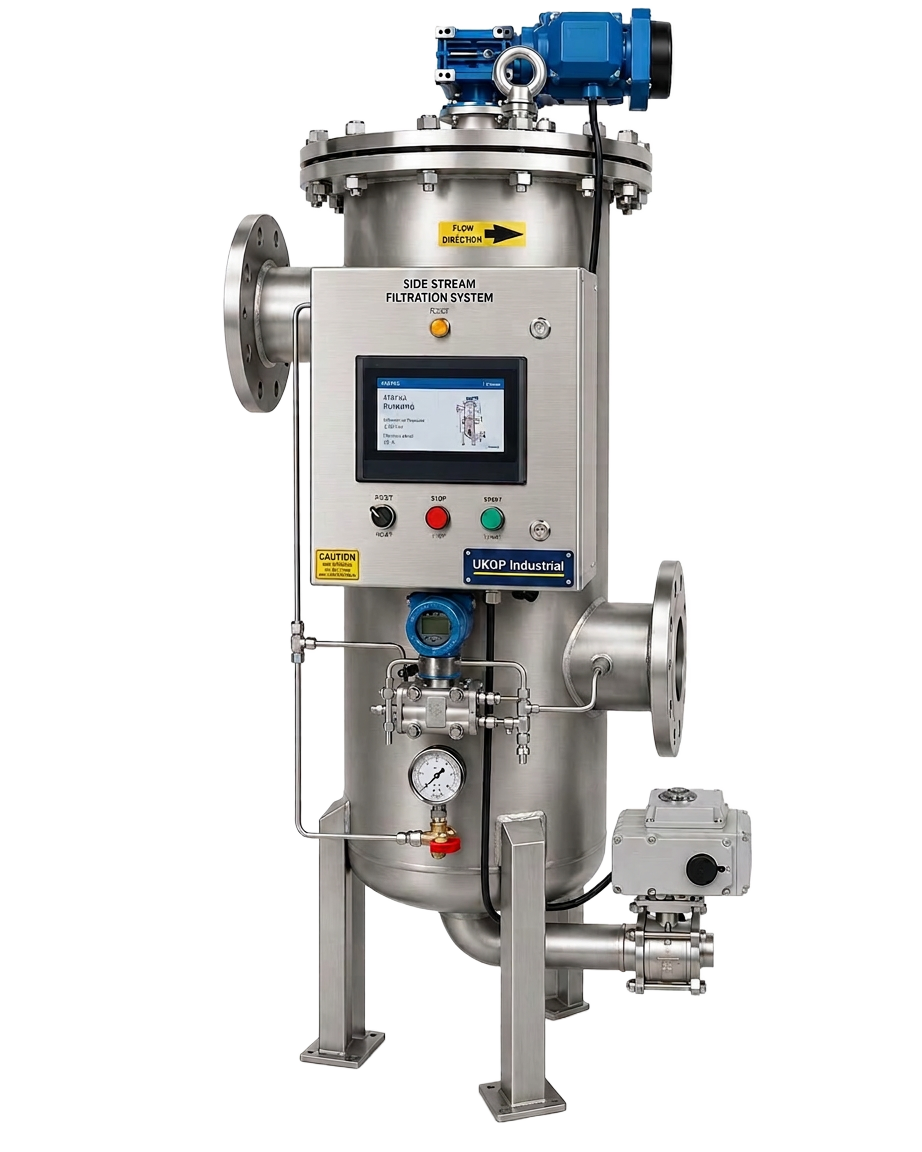
System contaminants such as flux residues and installation debris can settle in the base of the header, which is why UKGP headers feature a drain valve connection at the lowest point. This allows engineers to perform regular blow-downs during maintenance visits, purging the system of accumulated sludge. If the water quality is not managed from day one, even the best low loss header for sale will eventually suffer from efficiency losses. We recommend installing a side stream filtration unit in conjunction with the header for larger systems where BSRIA BG29 compliance is critical. This ensures that the water remains 'polished' throughout the life of the building.
The presence of microbubbles can lead to cavitation in pumps and localized overheating in boiler sections. By positioning the air venting point at the top of the low loss header, where temperature is highest and pressure is lowest, oxygen is efficiently removed from the flow. When viewing a low loss header for sale, ensure it has the appropriate tappings for an automatic air vent (AAV). This prevents air-locking in secondary circuits and reduces the risk of internal corrosion caused by oxidation. Combined with a robust chemical dosing regime, these headers become the cornerstone of a healthy, efficient, and quiet HVAC system that meets all current UK engineering standards.
- Internal baffle designs facilitate the separation of air and microbubbles.
- Lower velocity zones allow heavy dirt and magnetite particles to settle for easy removal.
- Compatible with high-efficiency automatic air vents and drain valves.
- Essential for achieving long-term BSRIA BG50 water quality compliance.
The Role of Insulation in Energy Benchmarking
In the current climate of rising energy costs and strict carbon reduction targets, thermal efficiency is a major consideration when selecting a low loss header for sale. An uninsulated header is essentially a large radiator in the plant room, wasting kilowatt-hours that should be delivered to the building's emitters. All UKGP headers are supplied with a bespoke, removable insulation jacket. These jackets are designed for easy access during maintenance or inspection, while providing a high thermal resistance to keep the water at its design temperature as it transitions between the primary and secondary circuits.
The use of high-quality insulation also prevents the risk of condensation in chilled water applications. If you are searching for a low loss header for sale for a cooling system, the jacket becomes even more critical to prevent pipework corrosion and ceiling damage from dripping moisture. Our insulation is designed to fit snugly around the vessel and its connections, eliminating thermal bridges and ensuring that the plant room ambient temperature remains controlled. This attention to detail is what differentiates a professional-grade UKGP Industrial header from basic alternatives that require expensive, third-party lagging post-installation.
By specifying a low loss header for sale that includes factory-fitted insulation, M&E contractors can accurately predict the heat loss coefficients of the system during the design phase. This contribute to the overall efficiency calculations for CIBSE TM54 energy performance modeling. Furthermore, it aestheticizes the plant room, providing a clean and professional finish that reflects the quality of the engineering work. Whether the heat source is a cascade of high-efficiency gas boilers or a heat pump array, the thermal integrity of the header ensures that energy is moved where it is needed most, rather than heating the floor of the plant room.
- Removable thermal jackets included as standard for all commercial models.
- Crucial for meeting Part L Building Regulations regarding heat loss.
- Protects against condensation in cooling and chilled water applications.
- Improves plant room safety by reducing the surface temperature of the vessel.
Installation Best Practices for Commercial Headers
Correct installation is as important as the quality of the low loss header for sale itself. It should be positioned as close to the primary heat source as possible to maintain a stable pressure differential. Installers must ensure that the header is mounted vertically and that all air vent and drain tappings are accessible for future maintenance. Supporting the weight of the vessel is also paramount; larger PN16 flanged units can be heavy when filled with water, so robust floor stands or wall-mounting brackets are essential. UKGP provides technical drawings to assist with the structural integration of the header into the plant layout.
Commissioning engineers should verify the flow rates on both sides of the header. The primary flow rate (boiler side) should typically be slightly higher than the secondary flow rate to ensure that the primary return temperature remains stable and prevents the boiler from short-cycling. If you have purchased a low loss header for sale and find the system is not balancing, it is often due to an undersized header or incorrect pump speed settings. We provide detailed capacity charts for our 40-2000 kW range to ensure that consultants can size the unit accurately based on the total system Delta T and required mass flow rates.
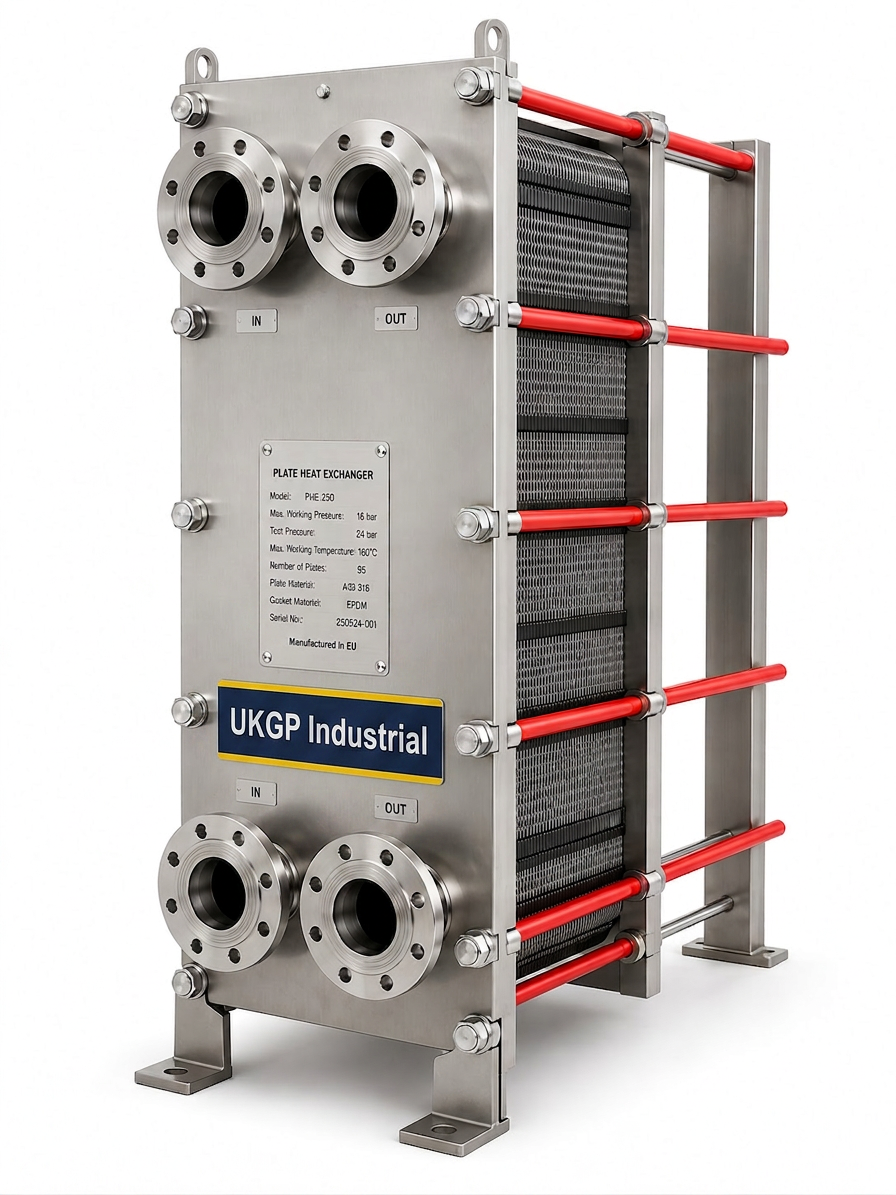
Finally, always ensure that the low loss header is part of a wider water treatment strategy. This includes the installation of dosing pots for corrosion inhibitors and side stream filtration for continuous cleaning. When you source a low loss header for sale from UKGP, you are getting more than just a steel vessel; you are gaining access to technical support that understands the complexities of the UK's commercial heating landscape. Our team can advise on the best pairing of headers with our expansion bellows and heat exchangers to create a complete, high-performance hydraulic circuit that will serve the building for decades.
- Orient vertically to allow for effective air release and dirt collection.
- Ensure primary flow exceeds secondary flow for optimal boiler modulation.
- Provide adequate structural support for the weight of the water-filled vessel.
- Maintain clear access to all tappings for maintenance and commissioning.
Why Choose UKGP for Your Low Loss Header?
UKGP Industrial stands out in the UK market by offering a low loss header for sale that balances rapid availability with industrial-grade durability. Our understanding of the B2B sector means we know the pressure contractors are under to deliver projects on time and within budget. This is why our 2-3 week lead time is a core part of our service offering, reducing the stress of long lead items in your procurement cycle. We don't just supply the hardware; we provide a component that is essential for the longevity of the entire heating system, backed by a 2-year warranty that is standard across our range.
Our headers are built to handle the demands of various heat sources, from traditional gas boilers to innovative biomass and heat pump systems. By facilitating hydraulic independence, our products allow these diverse heat sources to operate in their most efficient windows. When you look for a low loss header for sale, you need to know that the manufacturer understands BS EN standards and CIBSE recommendations. Our engineering team ensures every unit meets these benchmarks, providing a reliable interface between primary generation and secondary distribution that M&E contractors can trust.
To get a quote for a low loss header for sale, simply contact our Surrey-based sales team with your system output in kW and your preferred connection type. Whether you need a standard 100 kW threaded unit or a bespoke 2000 kW flanged assembly with specific tappings for BMS sensors, we can provide a competitive price and a technical data sheet within 24 hours. Experience the difference of working with a UK-specific supplier that prioritises technical excellence and commercial speed, ensuring your next plant-room project is a resounding success.
- Prompt UK delivery with a typical lead time of just 2 to 3 weeks.
- Vast power range from 40 kW to 2 MW to cover all commercial project sizes.
- Expert technical support from a Surrey-based team of industrial specialists.
- Durable construction with high-grade materials and 2-year peace-of-mind warranty.
Frequently asked questions
What size low loss header do I need for a 500 kW system?
- For a 500 kW system, the sizing depends on your design temperature drop (Delta T). Typically, at a 20°C Delta T, you would require a header capable of handling approximately 21.5 cubic metres per hour. UKGP offers flanged units specifically rated for this output range to ensure low internal velocities.
What is the typical lead time for a low loss header for sale?
- At UKGP Industrial, we pride ourselves on speed. Our standard lead time for commercial low loss headers is 2 to 3 weeks, significantly shorter than many other industrial suppliers, helping you meet tight commissioning deadlines.
Do your low loss headers come with insulation?
- Yes, every UKGP low loss header for sale is supplied with a high-quality thermal insulation jacket. This is vital for meeting UK Building Regulations and ensuring your plant room remains energy efficient.
Can I get a low loss header with flanged connections?
- Absolutely. We offer both BSP threaded connections for smaller systems and PN16 flanged connections for larger commercial and industrial applications, allowing for secure and standard-compliant installation.
Why is hydraulic separation important for high-efficiency boilers?
- High-efficiency boilers often have low water content and require specific minimum flow rates. A low loss header decouples the boiler circuit from the rest of the building, preventing secondary pumps from reducing the flow through the boiler and causing overheating.