What is a low loss header explained for plant rooms?
In the UK commercial boiler market, the term low loss header explained refers to a vessel designed to allow the primary heat source to maintain a constant flow rate regardless of the varying demands from the secondary heating circuits. As M&E contractors are aware, modern high-efficiency condensing boilers often have low water content and high resistance. If the secondary pump rates vary due to zone demand or thermostatic radiator valve movement, it can cause the primary pump to operate outside of its designed curve. By installing a low loss header, you create a neutral point of pressure where the primary and secondary flows can decouple, effectively preventing hydraulic interference between the two circuits and protecting the lifespan of the heat exchangers.
The fundamental principle of having a low loss header explained involves the management of pressure drop across the vessel. In a correctly sized unit, the velocity of the water slows significantly as it enters the larger diameter of the header. This reduction in velocity results in a negligible pressure drop, which is why it is termed low loss. For consultants designing systems under BSRIA BG29 and BG50 guidelines, ensuring this hydraulic balance is critical for maintaining consistent delta-T temperatures across the boilers. Without this separation, system commissioning becomes a significant challenge as pumps frequently fight against one another, leading to premature component failure and inefficient heat transfer across the entire facility.
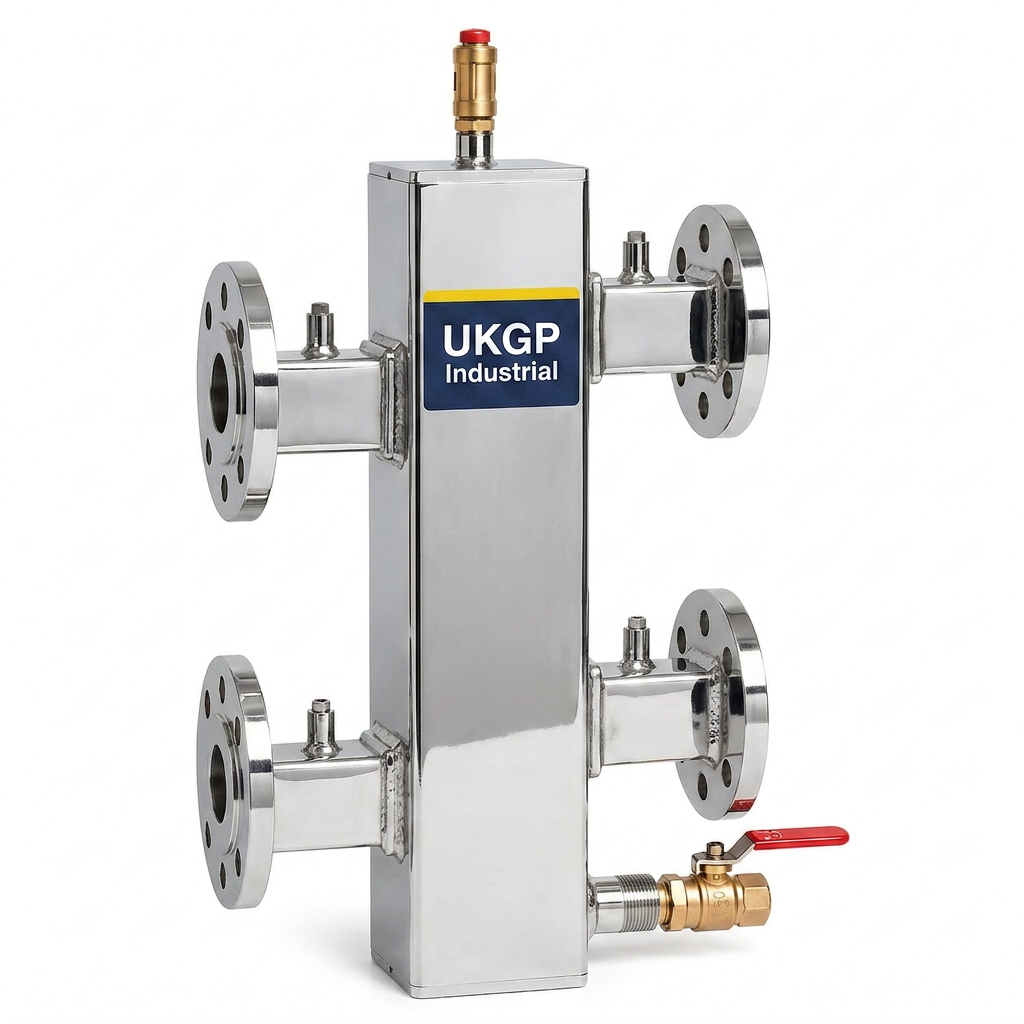
When procurement leads evaluate these systems, they must consider the physical footprint and the integration of ancillary components. Our UKGP low loss header range covers thermal outputs from 40 kW to 2000 kW, providing a versatile solution for varied commercial applications from schools to large industrial units. Available with both flanged PN16 and threaded BSP connections, these units are fabricated to handle the rigours of high-pressure environments. By choosing a pre-engineered solution, contractors can slash on-site installation time while ensuring that the hydraulic separation meets the specific design intent of the mechanical engineer, ultimately resulting in a more stable and reliable heating system for the end user.
- Facilitates hydraulic decoupling between primary and secondary circuits
- Prevents pump conflict and ensures stable flow rates for boilers
- Acts as a neutral pressure zone within the heating distribution network
- Simplifies the commissioning process for complex multi-zone systems
- Protects high-efficiency condensing boilers from variable secondary loads
The role of flow velocity in system performance
Maintaining low velocities within the header is the primary objective of any skilled design team. Typically, engineers target a velocity of less than 0.5 metres per second within the vessel to ensure that the kinetic energy of the water is dissipated. Having a low loss header explained in terms of fluid dynamics helps contractors understand why size matters; if the vessel is too small, the water will bypass at high speed, failing to achieve the required separation. This can lead to hot return temperatures to the boiler, which prevents condensing and significantly lowers the overall seasonal efficiency of the plant room. Proper sizing ensures that the primary and secondary flows can mix or separate as thermal demand dictates.
Furthermore, the reduction in velocity allows the header to perform secondary functions that are often overlooked during the initial procurement phase. As the water slows down, heavy particles and debris can settle at the bottom of the vessel, where they can be purged via a drainage valve. While a dedicated dirt separator is always recommended for full system protection, the header provides an extra layer of defense for the boiler heat exchangers. This is particularly important in older systems where existing pipework may still contain significant amounts of magnetite and rust. Ensuring the header is correctly positioned and vented allows for both debris collection and the release of micro-bubbles from the system medium.
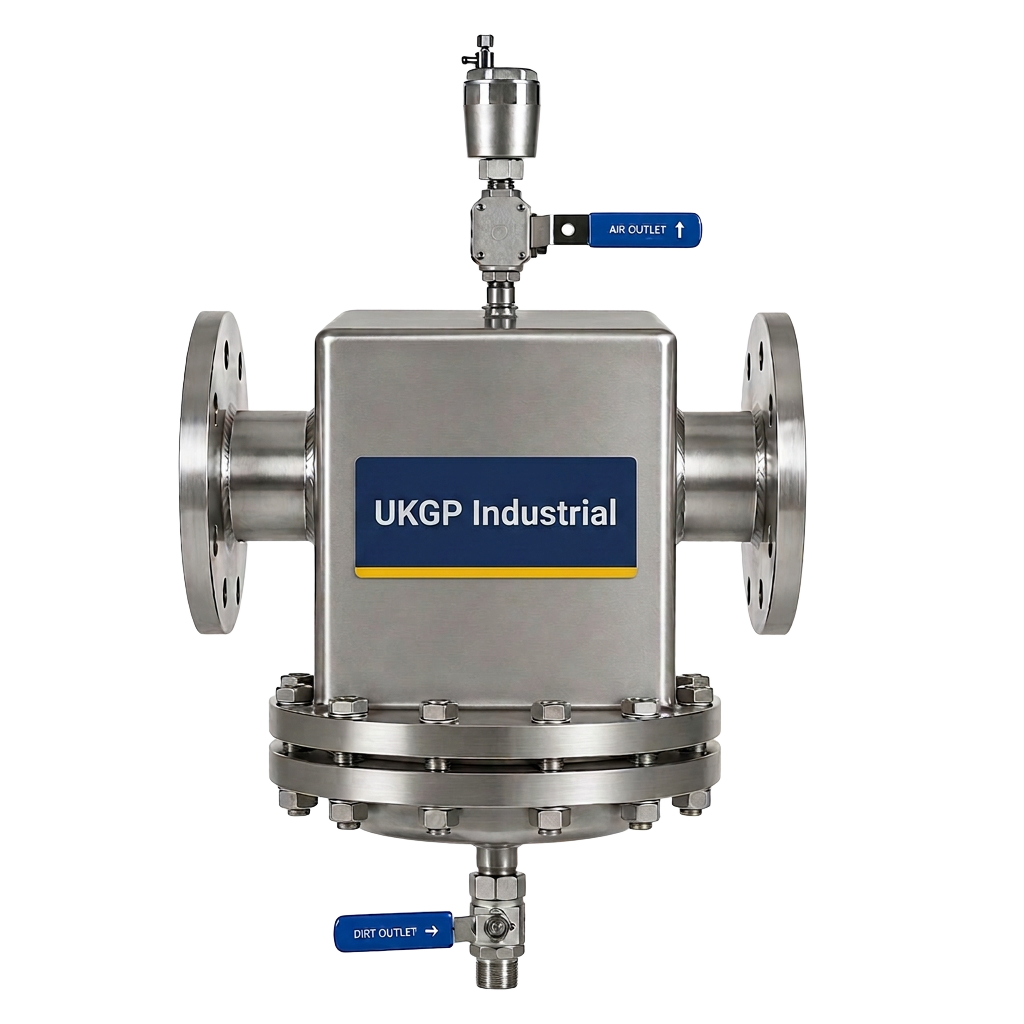
To complement these hydraulic headers, we often see contractors specify our air and dirt separators to further enhance system cleanliness in line with BSRIA BG50. Our separators work in harmony with the decoupling header to ensure that the water quality is maintained throughout the life of the building. By managing both the hydraulic balance and the physical cleanliness of the fluid, M&E contractors can reduce the frequency of maintenance call-outs and avoid issues with blocked heat exchangers or failing control valves. This holistic approach to plant room design is what separates a standard installation from an industry-leading high-performance heating system.
- Ensures water velocity remains below 0.5m/s for effective separation
- Encourages debris settling for easier system maintenance and purging
- Aids in the removal of micro-bubbles when fitted with automatic air vents
- Protects the boiler's condensing capability by maintaining delta-T
- Reduces noise and vibration caused by high-velocity turbulent flow
Sizing and selection for commercial applications
Selecting the right unit requires more than just looking at the kW rating; it requires a detailed analysis of the maximum flow rate required by both the primary and secondary sets. When we have a low loss header explained to junior engineers, we emphasize that the header should be sized for the maximum possible flow rate of whichever circuit is higher. If the primary flow from the boilers is 15 cubic metres per hour, but the secondary zones require 18, the header must be sized to accommodate 18 to ensure there is no bottleneck. Our UKGP units are manufactured across a wide range of capacities, ensuring that from the smallest commercial project to the largest district heating scheme, there is a technical fit.
In addition to flow rates, the mechanical connections must align with the site pipework. We offer our headers in both threaded BSP for smaller applications and flanged PN16 for larger commercial and industrial projects. This flexibility allows for easier integration into existing systems during plant room refurbishments. Procurement leads also appreciate the commercial security offered by our 2-year warranty and the 2-3 week lead times, which are among the most competitive in the UK market. Being able to secure a high-specification header with an insulation jacket included as standard ensures that the project remains on schedule and compliant with Part L of the Building Regulations regarding heat loss.
The impact of an incorrectly sized header can be catastrophic for system control. If undersized, the pressure drop increases, and the hydraulic separation is lost, essentially turning the header into a simple pipe junction. This leads to 'ghost' flows where secondary pumps pull water through cold boilers, wasting energy. Conversely, an oversized header is rare but typically only results in higher capital costs and a larger footprint rather than operational failure. By providing detailed technical data sheets, UKGP assists contractors in verifying that their selection will provide the necessary performance to meet the consultant's specification and the client's long-term operational goals.
- Size based on the highest flow rate of either primary or secondary circuits
- Match connection types (BSP or PN16) to existing or planned pipework
- Ensure compliance with Part L using high-standard insulation jackets
- Verify thermal output capacity from 40 kW up to 2000 kW
- Account for future system expansion when selecting header volume
Installation best practices for M&E contractors
Proper installation is as crucial as correct selection. When a low loss header explained by senior site managers is reviewed, they often highlight the importance of vertical orientation and the correct placement of sensors. A pocket for a temperature sensor is typically provided near the top of the header, which allows the Building Management System (BMS) to monitor the blended flow temperature. This temperature is used to modulate the boilers to meet the actual demand of the secondary circuits. If this sensor is poorly placed or the header is installed incorrectly, the BMS will receive inaccurate data, causing the plant to hunt or short-cycle, which significantly degrades fuel efficiency.
Contractors should also consider the weight of the vessel when full of water. Large headers, particularly those in the 500kW to 2000kW range, require substantial support. Wall-mounting brackets or floor-standing sets should be utilized to prevent stress on the connecting pipework. Furthermore, ensure that there is sufficient clearance for maintenance, particularly around the drain valve and the automatic air vent. In line with BSRIA BG29, the system should be thoroughly flushed before the header is brought online to prevent construction debris from settling in the vessel and causing initial operation issues. Our UKGP headers are designed with these site realities in mind, offering robust construction and clear port identification.
Integration with other plant room components is the final step. Often, the header is situated near the chemical dosing pot to ensure that water treatment chemicals are distributed effectively through the decoupled circuits. For contractors, the simplicity of the UKGP design means that whether you are installing a threaded unit for a small office block or a massive PN16 flanged header for a hospital, the process remains consistent. We supply every unit with a high-quality insulation jacket to minimize standby losses and ensure that the plant room environments remain at a manageable temperature for other sensitive electronic controls and pumps.
- Install vertically to allow for air venting and debris collection
- Position temperature sensors correctly for accurate BMS feedback
- Use appropriate supports to manage the weight of the water-filled vessel
- Allow for adequate maintenance access to drain and vent valves
- Flush the system thoroughly in accordance with BSRIA BG29
Compliance with UK engineering standards
Compliance with BSRIA and CIBSE guidelines is a non-negotiable aspect of modern UK commercial engineering. Within these standards, having a low loss header explained as a tool for improving water quality and hydraulic stability is common. BS 8552 and BSRIA BG50 emphasize the need for effective air and dirt removal, and while the header acts as a settlement point, it must be part of a wider water treatment strategy. Our components are fabricated to the highest standards to ensure they meet the mechanical stresses defined in relevant British and European standards, providing M&E contractors with the peace of mind that the products they install are fit for purpose and built to last.
The use of high-quality insulation is another compliance highlight. Under modern building regulations, thermal efficiency is scrutinized. A bare steel header can lose significant heat to the plant room, reducing the overall system COP (Coefficient of Performance). UKGP provides tailored insulation jackets that are easy to remove for inspections but provide a tight thermal seal during operation. This focus on efficiency is a core part of our design philosophy, ensuring that the plant rooms we supply are as green as they are functional. Contractors can rely on our documentation to satisfy building control and sustainability auditors that the equipment meets both energy and safety requirements.
For larger projects involving district heating or multi-boiler cascades, the header becomes the heart of the system. Without it, the complex interactions between different heat sources—such as merging gas boilers with heat pumps—would be almost impossible to manage. The header provides the common point where different flow rates and temperatures can be blended safely. This versatility is why the low loss header remains a staple of commercial HVAC design. By sourcing from a Surrey-based manufacturer like UKGP, contractors benefit from domestic technical support and a deep understanding of the specific challenges faced by the UK building services industry.
- Adheres to CIBSE and BSRIA hydraulic separation recommendations
- Supports compliance with Part L building regulations for heat loss
- Enables integration of diverse heat sources like ASHPs and boilers
- Manufactured to withstand rigorous commercial operating pressures
- Designed to facilitate the water quality standards of BS 8552
Why choose UKGP for your header requirements?
For M&E contractors, the choice of supplier is often driven by a balance of technical specification, price, and availability. UKGP Industrial excels in all three. Our low loss header range is engineered specifically for the UK market, with a focus on durability and ease of installation. We understand that on-site delays cost money, which is why we maintain a 2-3 week lead time for our standard commercial range. This allows contractors to plan their plant room fit-outs with confidence, knowing that the hydraulic heart of their system will arrive when needed, complete with its insulation jacket and necessary connections ready for immediate installation.
Beyond the product itself, our technical expertise provides a valuable resource for contractors. Whether you are dealing with a complex refurbishment where space is at a premium or a high-output industrial project requiring custom PN16 flanging, our team is available to assist with sizing and selection. We stand by the quality of our British-engineered products with a 2-year warranty, which is twice the industry standard for many equivalent vessels. This commitment to quality ensures that once a project is handed over, the FM leads and building owners can enjoy trouble-free operation with minimal maintenance requirements for the hydraulic separation components.
In a market where supply chains are often stretched, having a reliable Surrey-based partner offers a significant commercial advantage. We manufacture our headers using heavy-grade carbon steel, ensuring they can withstand decades of service. By choosing UKGP, you are choosing a partner that understands the nuances of the UK building services sector—from BSRIA compliance to the practicalities of flanged BSP connections. We invite M&E contractors and consultants to reach out for a competitive quote on our header range, which covers the full spectrum of commercial needs from 40 kW to 2000 kW. Upgrade your next plant room project with the reliability and performance that only UKGP can provide.
- Surrey-based manufacturing with competitive 2-3 week lead times
- Industry-leading 2-year warranty on all commercial header units
- Versatile connection options including PN16 flanged and BSP threaded
- Comprehensive output range from 40 kW to 2000 kW
- Supplied with professional insulation jackets as standard
Frequently asked questions
What is the primary function of a low loss header?
- The primary function is to achieve hydraulic separation between the primary boiler circuit and the secondary heating circuits, allowing them to operate at different flow rates without interfering with one another's pumps.
Why is sizing critical for a low loss header?
- An undersized header leads to high water velocity and pressure loss, destroying the hydraulic separation. Correct sizing ensures velocity stays below 0.5m/s, allowing for neutral pressure and efficient debris/air removal.
Do UKGP headers come with insulation?
- Yes, all UKGP low loss headers are supplied with a bespoke insulation jacket as standard to prevent heat loss and ensure compliance with building regulations regarding plant room efficiency.
What are the common connection types for commercial headers?
- Standard UK commercial headers are typically supplied with either BSP threaded connections for smaller loads or PN16 flanged connections for larger installations. UKGP offers both variants from 40-2000 kW.
How does a header assist in system cleanliness?
- Because of the low velocity within the vessel, heavy particles tend to fall to the bottom of the header where they can be purged via a drain valve, acting as a secondary settlement point for system debris.