The Role of an Ideal Low Loss Header in Hydraulic Separation
In modern commercial heating installations, the primary circuit containing the boilers and the secondary distribution circuits often operate at significantly different flow rates. An ideal low loss header acts as a neutral point of pressure, allowing these circuits to operate independently while facilitating efficient heat transfer. Without this separation, variable speed pumps on the secondary side can interfere with the primary boiler pumps, leading to erratic flow sensors, reduced heat exchange efficiency, and potentially damaging mechanical stress on the heat exchanger. By installing a correctly sized header, engineers ensure that the flow rate of the primary circuit is never dictated by the demands of the heating zones, preserving the design delta T and ensuring the boilers operate within their intended parameters.
From a technical standpoint, the vessel serves as a decoupling point that mitigates the risk of 'pump hunting' and hydraulic noise. When a plant room serves multiple zones such as underfloor heating, radiators, and air handling units, the fluctuations in demand are constant. An ideal low loss header absorbs these changes, maintaining a steady pressure differential across the primary and secondary connections. This is particularly vital when integrating high-efficiency condensing boilers from leading commercial manufacturers, as these units require precise flow control to maintain the low return temperatures necessary for latent heat recovery. Failure to achieve this separation often results in the boilers failing to condense, which drastically reduces the overall seasonal efficiency of the building.
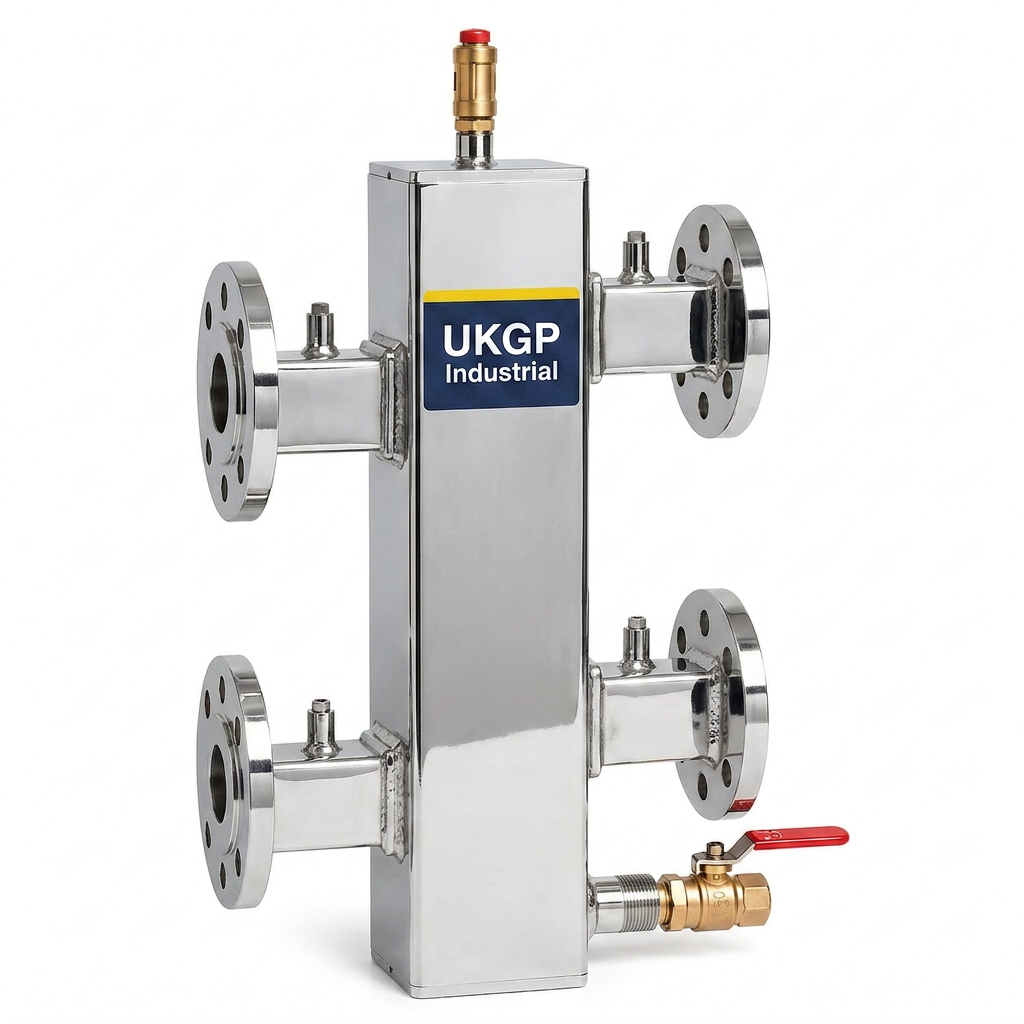
At UKGP Industrial, we manufacture low loss headers ranging from 40 kW to 2000 kW capacity, catering to everything from small commercial units to large-scale district heating schemes. Our units are available with either BSP threaded or PN16 flanged connections to suit precise site requirements. Because we understand the urgency of M&E projects, we offer a standard lead time of 2-3 weeks, significantly faster than many bespoke alternatives. Each header is supplied with a high-quality insulation jacket to minimise heat loss to the environment and comes with a 2-year warranty for peace of mind. Specifying our technology ensures your plant room meets the rigorous demands of modern UK heating design while maintaining professional aesthetic standards.
- Eliminates hydraulic interference between primary and secondary pumps.
- Maintains stable flow rates across high-efficiency boiler heat exchangers.
- Specifically designed for commercial capacities between 40 kW and 2000 kW.
- Available in both flanged PN16 and threaded BSP configurations for diverse pipework.
Maintaining BSRIA BG50 Standards and System Longevity
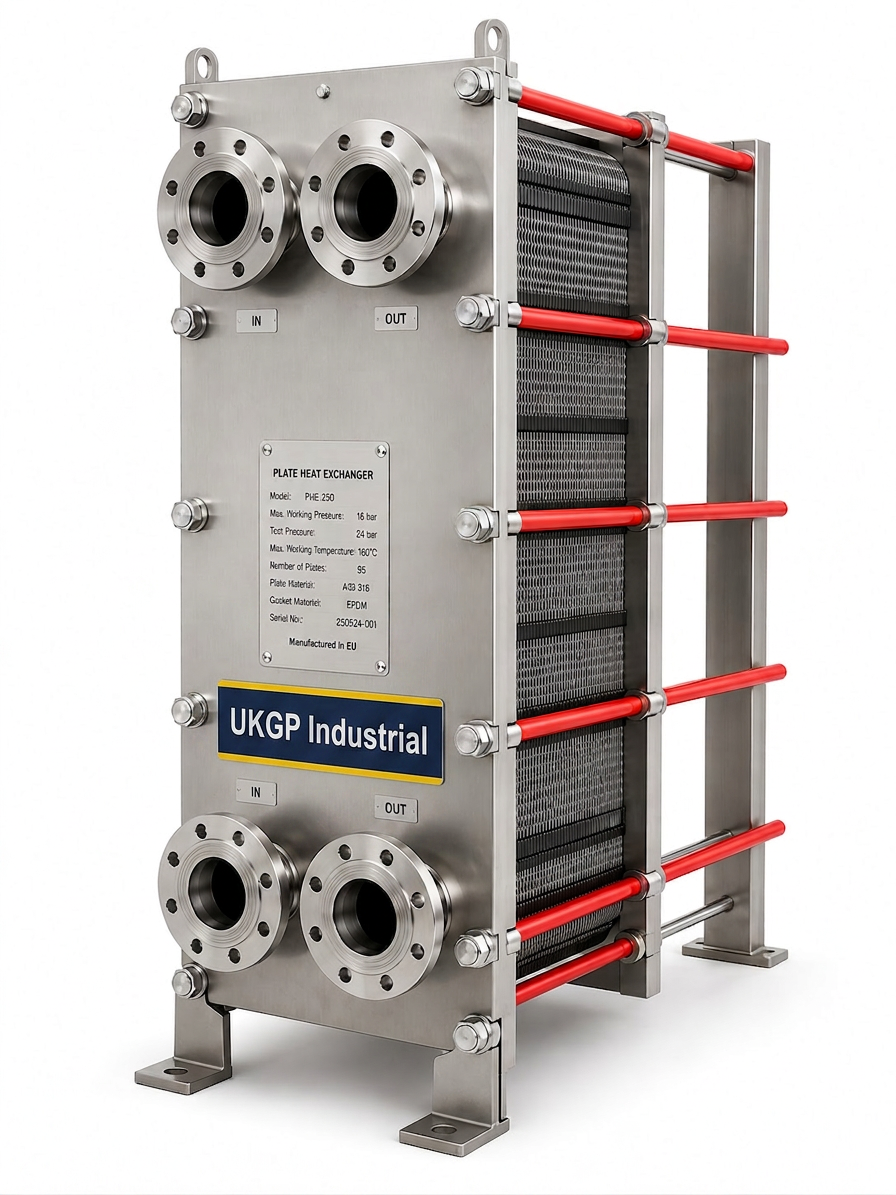
Compliance with BSRIA BG50 'Water Treatment for Closed Heating and Cooling Systems' is a cornerstone of professional plant room maintenance. An ideal low loss header provides a secondary but vital function as a point of low velocity where suspended solids can settle. By reducing the water velocity as it passes through the enlarged body of the header, heavy particles of magnetite and debris drop out of the flow. This sediment can then be easily removed through a blow-down valve at the base of the vessel. Integrating this functionality within the hydraulic separator reduces the load on secondary filtration systems, ensuring that sensitive components such as control valves and plate heat exchangers remain free from debris that could cause blockages or erosion.
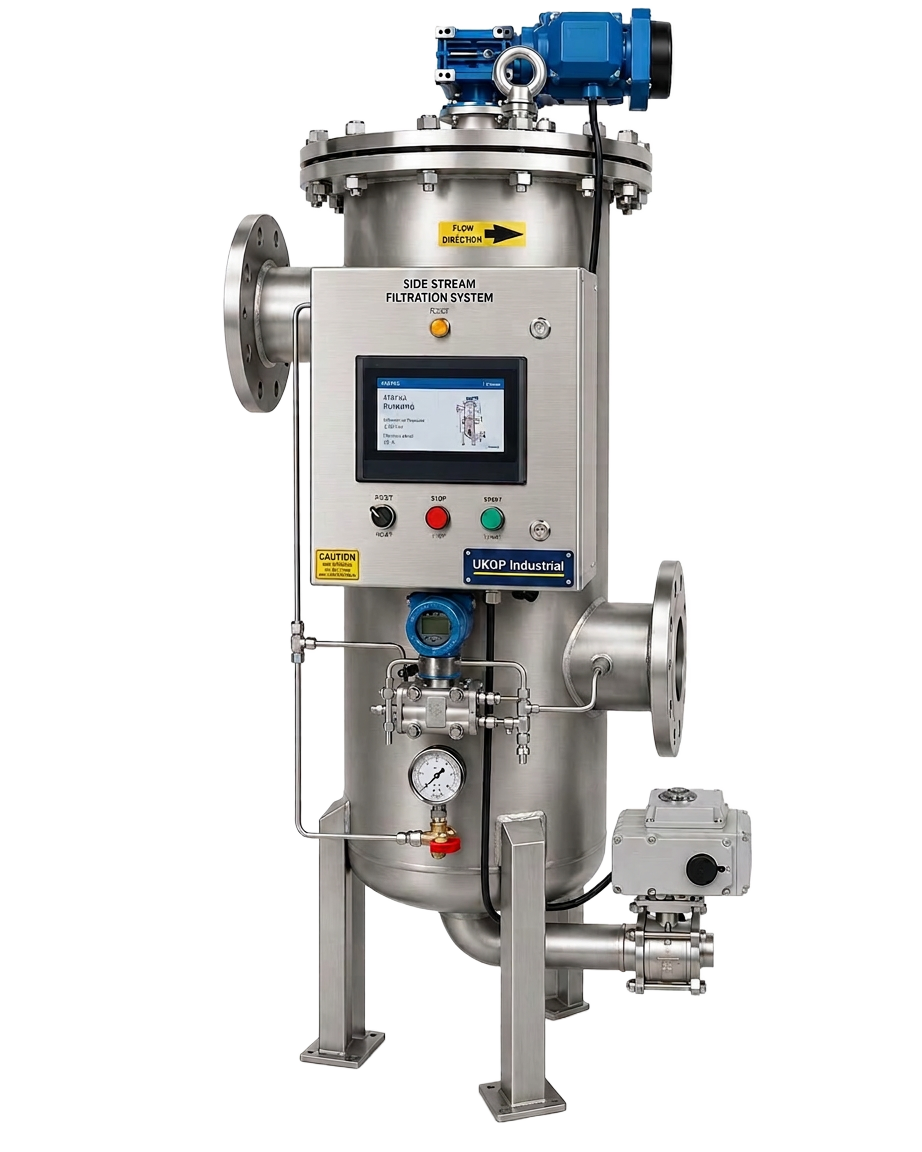
For comprehensive protection, designers often pair an ideal low loss header with a high-performance side stream filtration unit. While the header handles bulk settlement of larger particles, the filtration skid manages finer microscopic magnetite, which is essential for preserving the warranty of modern boiler systems. Following the guidelines in BS 8552 for water sampling and BSRIA BG29 for pre-commission cleaning, the combination of hydraulic separation and active filtration ensures a stable chemical environment. This holistic approach prevents the buildup of internal corrosion, which is the leading cause of heat exchanger failure in the UK commercial sector. Maintaining clean water helps to stabilise the system pressure and ensures that the low loss header continues to function as a neutral pressure zone without internal scaling.
M&E contractors should note that neglecting the debris management aspect of a low loss header can lead to increased maintenance costs and system downtime. Our UKGP Industrial headers are designed with internal baffle arrangements that further encourage the release of microbubbles and the settlement of dirt. When combined with our rapid lead times and robust construction, these vessels become a strategic asset in any commercial retrofit or new build project. By selecting our BSP or PN16 flanged units, you are choosing a solution that supports the goals of BSRIA BG50, keeping the heating water within the specified parameters for conductivity, pH levels, and suspended solids throughout the building's lifecycle.
- Enhances debris settlement to protect downstream heat exchangers and valves.
- Supports BSRIA BG29 and BG50 compliance for water quality management.
- Features low-velocity zones that aid in the removal of system magnetite.
- Robust construction suitable for integration with side stream filtration skids.
Technical Sizing for Optimal Delta T
The effectiveness of an ideal low loss header is entirely dependent on correct sizing. If the header is too small, the velocity remains too high, defeating the purpose of hydraulic decoupling and causing turbulence. Conversely, an oversized header adds unnecessary cost and thermal mass to the system. The calculation must account for the peak flow rate of the secondary system versus the minimum required flow of the primary boilers. Our technical team at UKGP Industrial assists consultants in selecting the correct model from our 40-2000 kW range to ensure the velocity through the vessel never exceeds the recommended 0.1 to 0.2 m/s. This slow movement is what allows for the clear separation of the flow and return temperatures, ensuring that the 'neutral' characteristic of the header is maintained.
Using an ideal low loss header also simplifies the commissioning process. By providing a stable reference point for temperature and pressure, it allows engineers to accurately balance the secondary circuits without the primary pump influencing the readings. This is essential for achieving the temperature differentials specified by CIBSE guidelines. In systems where there is a large difference between flow and return temperatures, such as those utilizing heat pumps alongside gas boilers, the low loss header acts as a thermal buffer that smooths out spikes in demand. This thermal stability protects the boiler plant from thermal shock, which is a common issue in large-scale commercial installations where large volumes of cold return water can suddenly enter the primary loop.
Choosing UKGP Industrial for your hydraulic separation needs means access to UK-manufactured expertise. Our low loss headers come as standard with a high-performance insulation jacket to satisfy Part L of the Building Regulations, preventing energy wastage in the plant room. We offer both threaded and flanged versions to simplify on-site installation, regardless of whether you are working with traditional iron pipework or modern press-fit systems. With a 2-year warranty and a 2-3 week turnaround on orders, our products represent the pinnacle of reliability for UK-based building services engineers. Request a quote today to see how our headers can be integrated into your next project to ensure a balanced and efficient heating circuit.
- Ensures flow velocity remains below 0.2 m/s for effective decoupling.
- Protects primary boilers from thermal shock and high-velocity turbulence.
- Complies with Part L Building Regulations via included insulation jackets.
- Assists in achieving intended Delta T and CIBSE design temperatures.
Installation and Commissioning Best Practices
When installing an ideal low loss header, orientation and positioning are paramount. It should be located as close to the primary boiler loop as possible to minimize the pressure drop between the boiler outlets and the header inlets. Proper support is also essential; while our units are robust, the weight of the water-filled vessel and the associated PN16 flanged pipework requires substantial wall or floor mounting. Air management is another critical factor; since the header is a point of low velocity, it is an ideal location for an automatic air vent. This helps in removing trapped air from the primary circuit during the initial fill and subsequent operation, preventing air-locked pumps and noisy radiators throughout the building.
Documentation and labeling are often overlooked but are required for high-quality commercial handovers. Every ideal low loss header should be clearly marked with the direction of flow for both the primary and secondary connections. During the commissioning stage, temperature sensors should be placed on the primary flow and return, as well as the flow to the secondary circuit. Monitoring these four points allows the commissioning engineer to verify that the header is operating in the intended mode—whether that is flow-balanced, primary-heavy, or secondary-heavy. This data is invaluable for fine-tuning the building management system (BMS) and ensuring that the fuel consumption aligns with the original design intent and environmental targets.
At UKGP Industrial, we provide the full technical documentation required for O&M manuals. Our headers are designed for versatility, supporting heating systems from 40 kW up to 2 Megawatts. The 2-3 week lead time ensures that even on fast-track refurbishment projects, you won't be held up by long manufacturing cycles. By choosing our flanged or BSP threaded options, you gain a solution that is ready for immediate integration on-site. The standard 2-year warranty reflects our confidence in the 100% UK-manufactured quality of our vessels, providing long-term security for facility managers and building owners alike. Contact our Surrey office for specific flow rate calculations and bespoke installation advice for your next commercial plant room upgrade.
- Mount headers close to the primary loop to minimize circuit pressure loss.
- Utilize automatic air vents at the peak of the header for efficient degassing.
- Verify hydraulic balance via four-point temperature monitoring during commissioning.
- Include full technical datasheets in O&M manuals for future facility management.
The Commercial Benefits of UK Manufacturing
Sourcing an ideal low loss header from a UK manufacturer like UKGP Industrial offers significant logistics and quality advantages. In a market where global supply chains can be unpredictable, our 2-3 week lead time represents a significant competitive edge for M&E contractors who are working to strict project deadlines. Each of our headers is manufactured in Surrey using high-grade materials, ensuring that every weld and flange meets the highest UK standards. This proximity also means that our technical support team is available during UK business hours to provide immediate assistance with sizing or specification queries, rather than having to wait for international time zones or complex shipping schedules.
Commercial clients, particularly those in the public sector or healthcare, demand products with proven reliability. Each ideal low loss header we produce comes with a 2-year warranty, which is 100% backed by our local engineering team. We offer a range of sizes that cater to the heating requirements of schools, office blocks, and retail centers, from 40 kW up to 2000 kW. By providing both threaded BSP and PN16 flanged options, we ensure that our headers can be used in both modern and legacy systems, facilitating easier retrofits where existing pipework configurations must be respected. The inclusion of a tailored insulation jacket as standard also simplifies the task of meeting energy efficiency targets on site.
Furthermore, by internalising our production processes, we maintain strict quality control over every component. From the thickness of the steel to the precision of the flange alignment, our headers are built to withstand the rigours of high-pressure commercial environments. Whether your circuit involves integrated chemical dosing pots or advanced expansion bellows, the low loss header remains the hydraulic heart of the system. Investing in a quality vessel from UKGP Industrial means investing in the longevity of the entire HVAC asset. We invite you to explore our full range of plant room components and request a quote for your specific kW requirements, knowing that you are supporting British manufacturing and receiving a product built for the long haul.
- Short 2-3 week lead times avoid project delays common with imported goods.
- Expert UK-based technical support for all sizing and specification queries.
- Comprehensive 2-year warranty provides security for large commercial assets.
- Full range from 40-2000 kW satisfies diverse commercial building demands.
Integrating Precision with pH Sensors and Air Separators
To achieve a truly high-performing plant room, the ideal low loss header should work in harmony with various sensor and separation technologies. For instance, monitoring the water chemistry is essential for preventing corrosion within the header and the wider system. UKGP Industrial offers advanced pH sensor and transmitter setups that provide real-time data to the BMS. High levels of acidity or alkalinity can accelerate the degradation of the steel within the low loss header and other plant room vessels. By constantly monitoring these levels, facilities managers can adjust chemical dosing via a dosing pot before any significant damage occurs, thereby extending the life of the entire heating installation significantly.
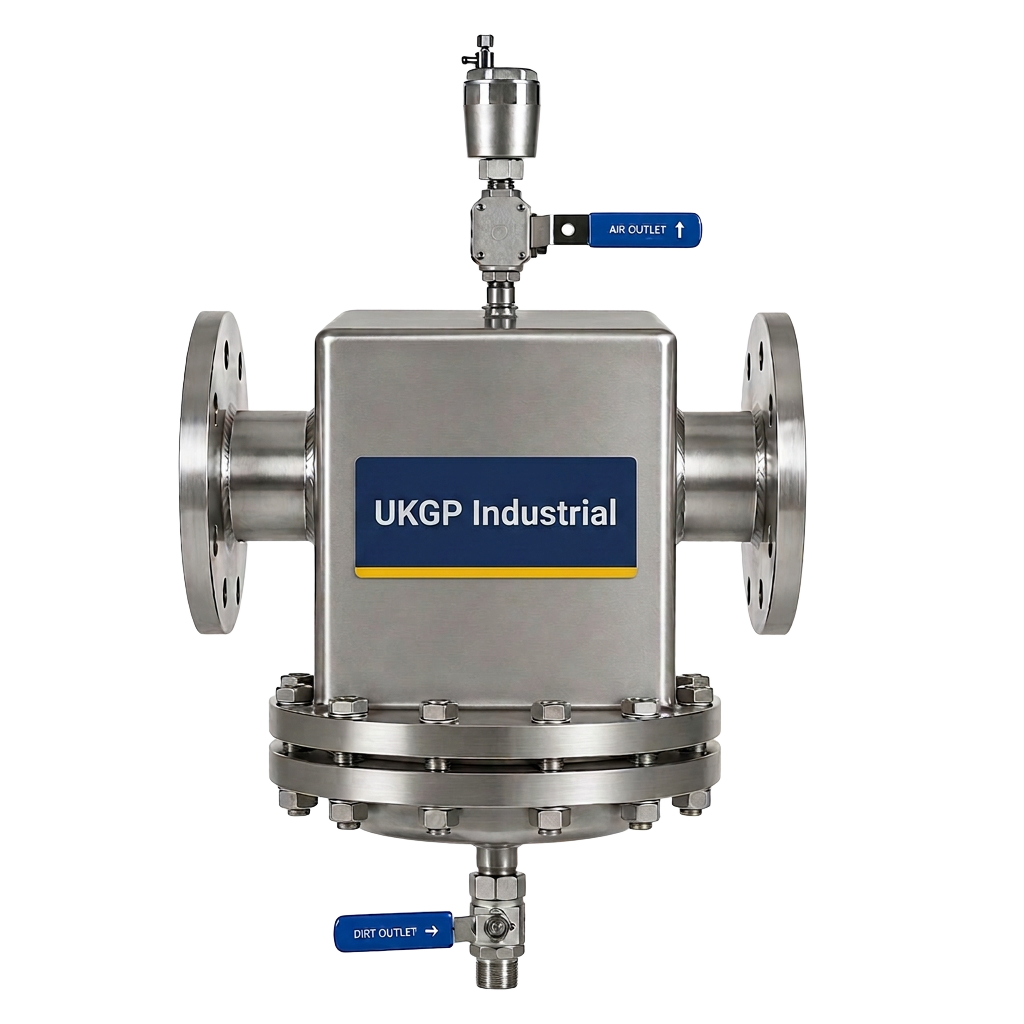
Air and dirt separators also play a complementary role. While the ideal low loss header handles large-scale separation and settlement, a dedicated air and dirt separator is often placed on the main flow or return to ensure that even the finest microbubbles and silt are removed. This triple-layered defense—incorporating the header, the separator, and a side stream filter—creates the cleanest possible environment for high-efficiency boilers to operate. This is especially important in high-rise buildings where air accumulation can be a persistent problem. Ensuring that the low loss header is part of a managed hydraulic circuit reduces the cavitation risk for pumps and ensures that the heat transfer surfaces remain clean and efficient.
Choosing to spec our 40-2000 kW headers means you are integrating a component designed with the whole system in mind. Our headers are compatible with all modern boiler brands and feature the necessary connections for secondary air removal and debris blow-down. With our 2-3 week lead time and 2-year warranty, UKGP Industrial provides the reliability required for time-sensitive commercial projects. Whether you are using flanged PN16 for large district schemes or BSP threaded for smaller commercial offices, our low loss headers provide the robust foundation your hydraulic circuit needs. Contact us today to discuss how we can support your project with our full range of UK-manufactured plant room solutions.
- Compatible with pH sensors and transmitters for active chemistry monitoring.
- Works alongside air and dirt separators for multi-stage system protection.
- Reduces pump cavitation and air-lock risks in high-rise applications.
- Aids in maintaining high-efficiency heat transfer across the entire circuit.
Frequently asked questions
What is the primary function of an ideal low loss header?
- The primary function is to decouple the primary boiler circuit from the secondary heating circuits. This allows both to operate at different flow rates and pressures, preventing hydraulic interference and ensuring the boilers maintain their design Delta T.
What kW range do UKGP Industrial low loss headers cover?
- Our range covers commercial capacities from 40 kW up to 2000 kW, making them suitable for a wide variety of commercial applications, from schools to large industrial plant rooms.
What connection types are available for these headers?
- UKGP Industrial offers both BSP threaded connections for smaller applications and PN16 flanged connections for larger, high-pressure commercial systems.
Do the headers come with insulation?
- Yes, every ideal low loss header is supplied with a high-quality insulation jacket as standard to comply with Part L of the Building Regulations and minimise heat loss.
What is the standard lead time and warranty?
- We offer a standard lead time of 2-3 weeks for our low loss headers, and each unit is backed by a comprehensive 2-year warranty.