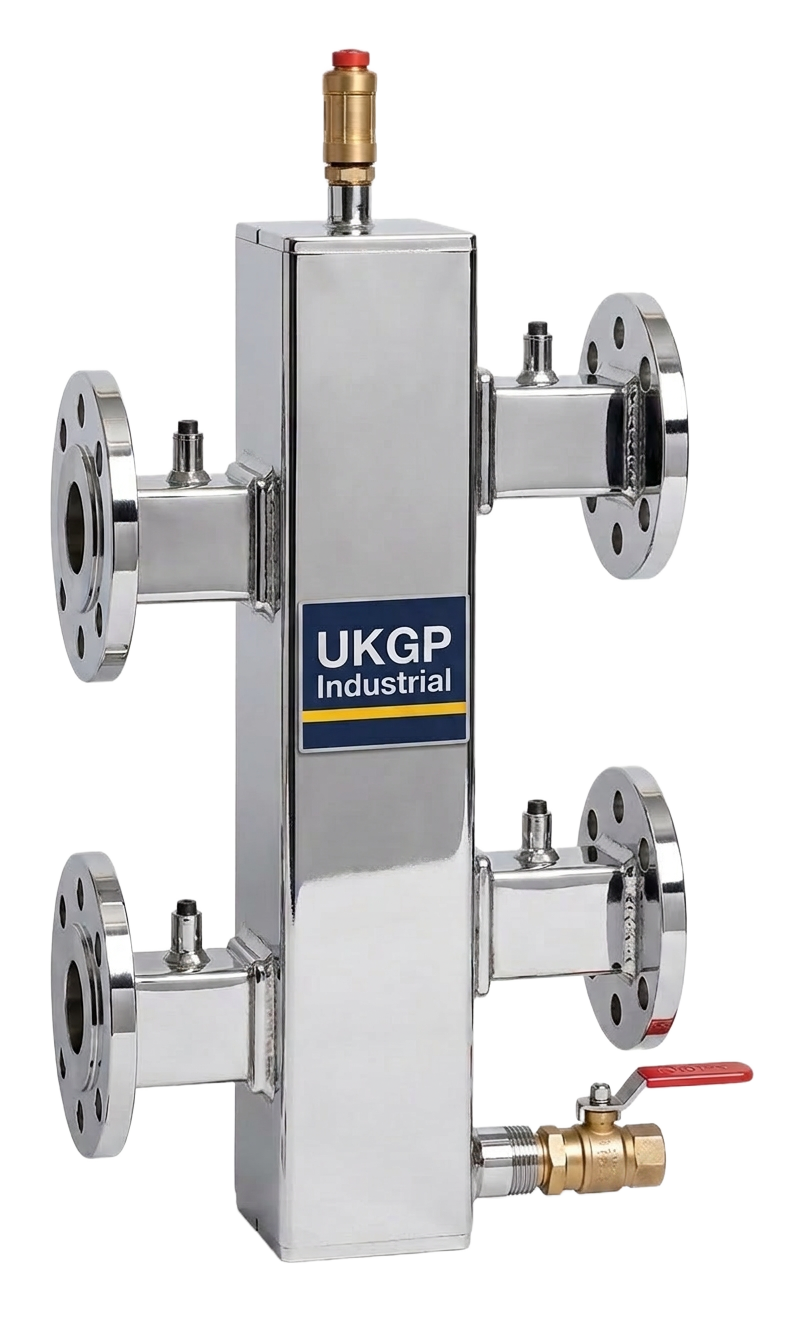
The fundamental principles of how to size a low loss header
In the UK commercial sector, learning how to size a low loss header begins with calculating the maximum possible flow rate of the secondary system. This figure is typically derived from the total heat load required by the building and the design temperature differential, often referred to as the Delta T. For modern condensing boiler arrangements, a Delta T of 20K is frequently utilised to maximise efficiency. By establishing these parameters, engineers can ensure the header acts as a neutral pressure zone, preventing the primary boiler pumps from being affected by the varying demands of the secondary circulators. Failing to account for the total peak flow often leads to turbulence and poor heat distribution throughout the facility's heat emitters.
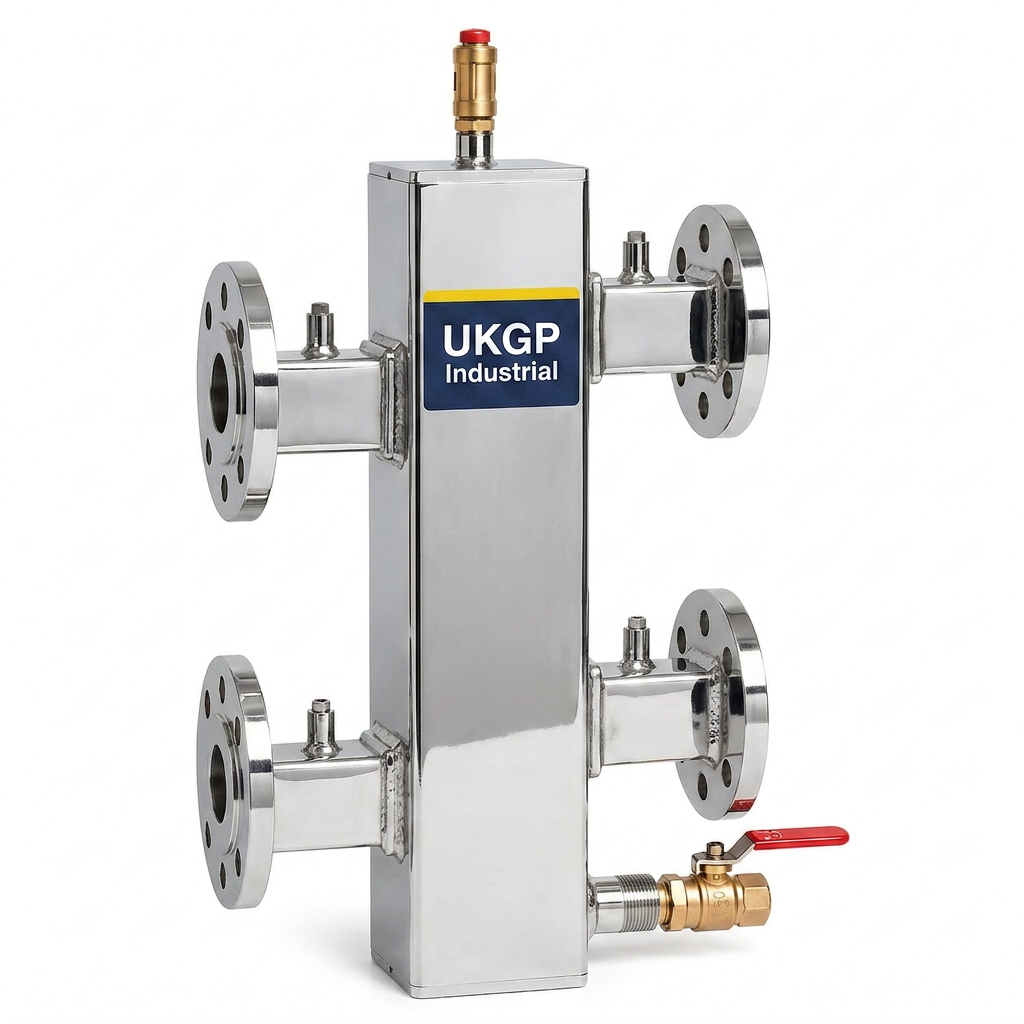
Crucially, the physical dimensions of the header are dictated by the velocity of the water passing through the vessel. To maintain the low-pressure drop environment required for hydraulic decoupling, the internal velocity should ideally not exceed 0.1 to 0.2 metres per second. If the velocity is too high, the header fails to act as a neutral point, leading to unwanted mixing and reduced system efficiency. Engineers must also consider the vertical height of the vessel to facilitate natural buoyancy, allowing air to rise to the top for venting and dirt to settle at the base for easy removal through a dedicated drain valve, as per BSRIA BG29 guidelines for pre-commissioning cleaning processes.
When consulting with UKGP Industrial on selection, we look at your maximum kW output and pipework configuration to ensure the vessel can handle the volumetric throughput. A common mistake in the field is over-sizing the primary pumps relative to the header capacity, which can force water through the vessel at speeds that negate its decoupling properties. By precisely calculating the required volume and velocity, you ensure that the boilers operate within their design parameters, protecting the heat exchangers from thermal shock and ensuring the longevity of the entire plant room. Our technical team supports consultants in verifying these calculations to avoid common pitfalls during the design and procurement phase.
- Calculate total secondary flow rate based on peak kW and Delta T
- Maintain internal vessel velocity between 0.1m/s and 0.2m/s
- Account for temperature stratification for improved boiler efficiency
- Verify connection sizes match the higher flow rate requirement
Integrating headers with BSRIA BG50 water quality standards
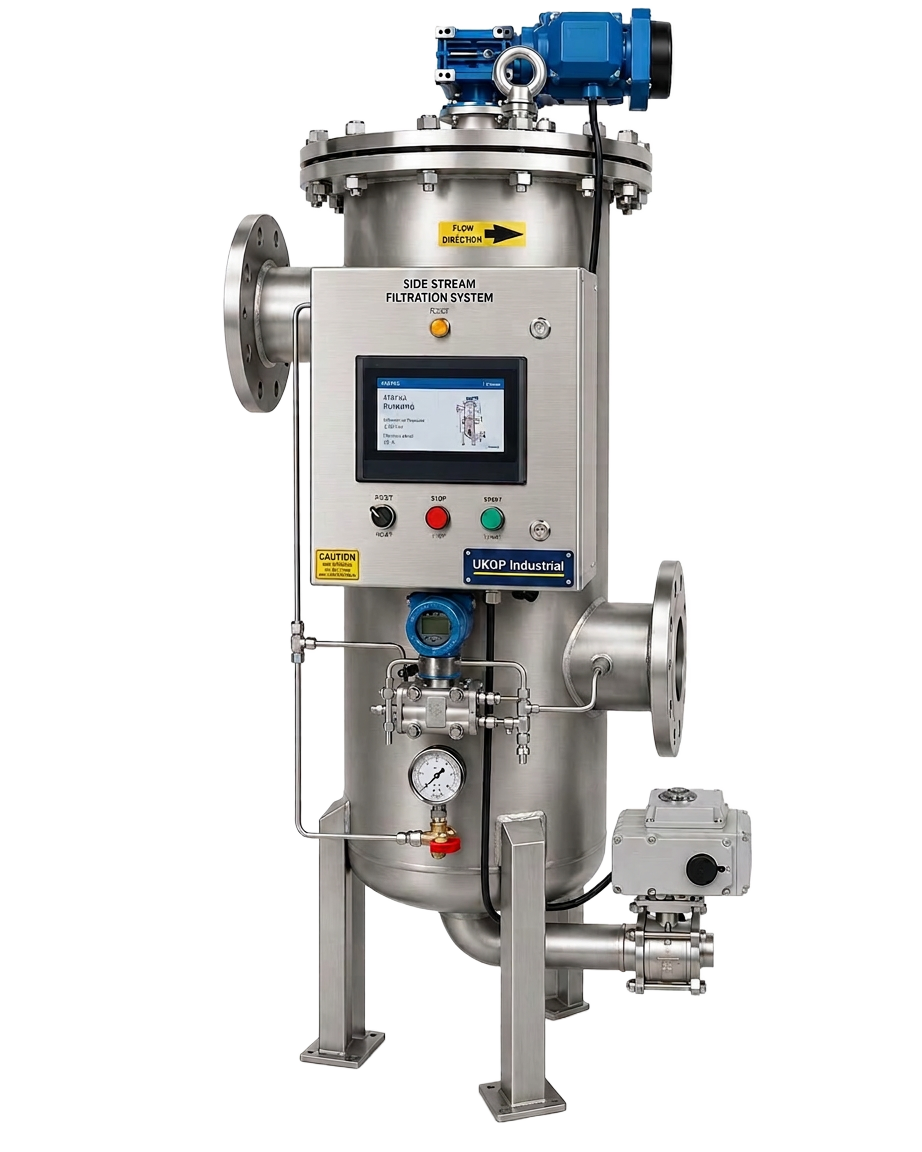
The role of the low loss header extends beyond simple hydraulic separation; it is a critical component in maintaining water quality according to BSRIA BG50. Because the header acts as a point of low velocity, it naturally assists in the deposition of suspended solids. However, to fully protect the commercial boilers, additional debris management is usually required. This is where the synergy between the header and auxiliary components becomes vital. By ensuring the header is sized correctly, you create a stable environment for chemical dosing and filtration to work effectively. If the water remains too turbulent within the vessel due to undersizing, particulates remain in suspension and can cause erosion in the primary heat exchangers.
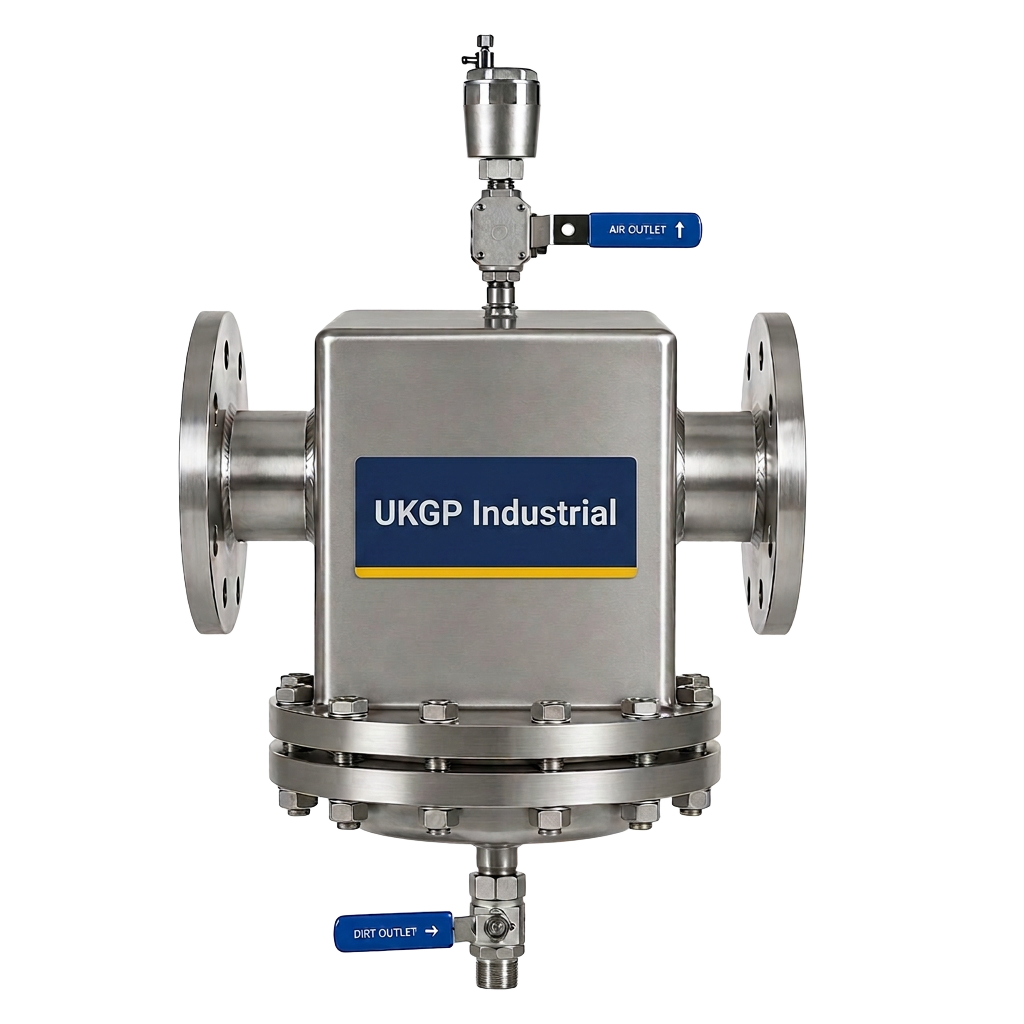
Contractors should also consider the installation of air and dirt separators in conjunction with the header to meet BS 8552 monitoring standards. A well-designed system will allow for the controlled bypass of water for sampling, ensuring that the inhibitor levels and bacterial growth are kept within safe limits. When we discuss how to size a low loss header with M&E contractors, we often emphasize that the vessel serves as the perfect mounting point for sensors and transmitters. Integrating these technologies allows for real-time monitoring of the system's health, which is essential for Facilities Managers overseeing high-value commercial assets in Surrey and across the wider UK.
Finally, ensure that the header insulation is robust enough to prevent heat loss, which can skew temperature readings and trigger false boiler starts. UKGP Industrial provides bespoke insulation jackets as standard with our headers, ensuring compliance with Part L of the Building Regulations. By maintaining a stable temperature profile within the header, the building management system (BMS) can receive accurate data from the sensors, allowing for more precise control over the cascade staging and reducing overall carbon emissions. This holistic approach to plant room design ensures that the heating system operates as a single, efficient unit rather than a collection of conflicting parts.
- Facilitate debris settlement to protect boiler heat exchangers
- Integrate with side stream filtration for BSRIA BG50 compliance
- Ensure insulation jackets are used to prevent thermal losses
- Utilise low-velocity zones for accurate BMS sensor placement
The impact of flow velocity on boiler longevity
In a cascade boiler arrangement, the primary circuit is often highly sensitive to pressure changes. If you are unsure how to size a low loss header, the safest route is to consult the 3D-rule or 4D-rule for header diameter. These rules of thumb suggest that the diameter of the header should be at least three to four times the diameter of the largest incoming pipe. This physical volume ensures that the kinetic energy of the water is dissipated, allowing the primary and secondary pumps to operate independently. This is particularly important for modern high-efficiency pumps that use variable speed drives, as hunting can occur if the hydraulic circuits are not properly decoupled.
From a commercial perspective, procuring a UKGP low loss header ensures you get a vessel rated for systems from 40 kW up to 2000 kW. Our flanged or threaded units, available in BSP or PN16 connections, allow for seamless integration into any plant room design. With a lead time of just 2-3 weeks and a 2-year warranty, you can stay on track with project timelines while ensuring the equipment meets the rigorous demands of UK industrial standards. Properly sizing these units prevents the 'short-cycling' of boilers, which is a major cause of premature component failure in commercial gas appliances, leading to costly call-outs and tenant dissatisfaction.
Furthermore, the use of a low loss header simplifies the commissioning process. When the primary and secondary circuits are decoupled, balancing the system becomes significantly more straightforward. Instead of struggling with interactive flow rates that change every time a zone valve opens, engineers can balance the primary circuit to the boilers and the secondary circuit to the building loads independently. This reliability is why our technical support team is always on hand to provide quote-specific advice for contractors. Whether you are refurbishing an older plant room or designing a new-build energy centre, the inclusion of a correctly sized header is a non-negotiable step for professional M&E installations.
- Protect primary pumps from variable secondary system pressure
- Prevent boiler short-cycling for reduced maintenance costs
- Ensure compatibility with PN16 or BSP flanged connections
- Simplify the system balancing and commissioning phase
Material selection and BS EN 14917 considerations
Material durability is an often-overlooked aspect when determining how to size a low loss header. While the hydraulic dimensions are paramount, the construction material must be robust enough to handle the thermal expansion and contraction cycles typical of commercial heating. At UKGP Industrial, our headers are manufactured to withstand the stresses of large-scale systems, and we often advise on the inclusion of expansion bellows where long pipe runs lead into the header. Referring to BS EN 14917 for metal bellows ensures that the mechanical stresses from thermal movements are not transferred to the header or the boiler connections, which could otherwise lead to weld fatigue and leaks.
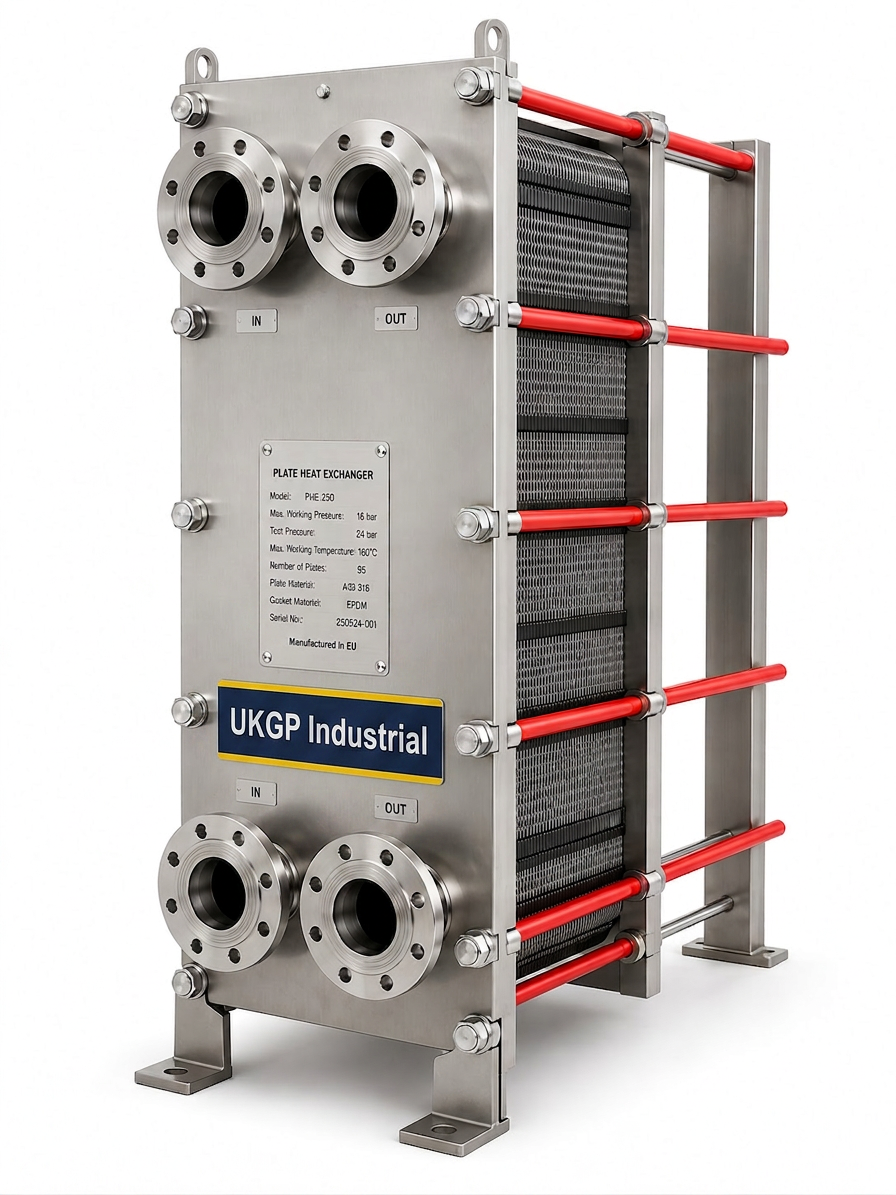
Integrating a header into a system also requires high-quality air and dirt separation. In larger commercial systems, a combined unit can be used, but many engineers prefer a dedicated low loss header followed by independent side stream filtration. This modularity allows for more thorough cleaning of the system water, which is vital for the protection of fine-tolerance components like plate heat exchangers and control valves. By sizing the header to accommodate the full design flow, you ensure that any downstream water treatment equipment receives a stable flow of water, maximizing the capture rate of magnetite and other non-magnetic debris that can plague older heating systems.
To get a quote for a header that meets your specific project requirements, it is essential to provide the total heat load and the flow/return temperatures. Our range of commercial low loss headers (40-2000 kW) is designed to serve as the heart of your plant room, providing a reliable point of hydraulic balance. With our UK-based manufacturing and 2-year warranty, you can specify with confidence, knowing the product will arrive ready for installation with its custom insulation jacket. This attention to detail reduces on-site labour time and ensures that the final installation meets the high expectations of UK building services consultants and their end-user clients.
- Include expansion bellows to manage thermal pipe movement
- Ensure header construction matches system design pressure
- Specify high-quality finishes to resist external corrosion
- Select headers with 2-year warranties for project security
Technical specification and procurement for M&E contractors
When it comes to the actual procurement phase, the question of how to size a low loss header becomes a matter of matching performance data to physical space constraints. Commercial plant rooms in Surrey and London are often tight on space, so selecting a header with an efficient vertical profile can be advantageous. Our headers are designed to be compact without sacrificing the hydraulic volume needed for effective decoupling. This allows contractors to install high-output cascade systems in restricted footprints, such as basement refurbishments or rooftop pods, while maintaining the necessary 2-3 week lead time to hit the critical path of the construction schedule.
Our low loss headers are available in both threaded BSP for smaller commercial applications and flanged PN16 configurations for larger industrial sites. This versatility ensures that regardless of the pipework material—be it steel, copper, or multilayer—the header can be integrated swiftly. By using a header as the primary hydraulic break, the system becomes more resilient to future changes. For instance, if additional boiler modules are added to a cascade in a later phase, a correctly oversized header will often accommodate the extra flow without requiring a complete replacement, providing a future-proof solution for growing commercial facilities.
Finally, always ensure that the header is equipped with an adequate insulation jacket. Heat loss from an uninsulated 2000 kW header can be substantial, negating the efficiency gains of modern condensing boilers. UKGP Industrial headers are supplied with jackets that are easy to remove and replace for maintenance inspections, ensuring that the plant room remains a safe and cool environment for engineers to work in. If you are looking for a reliable, UK-sourced hydraulic solution, contact our team today for a technical consultation or a quote on our full range of plant room equipment, from headers to dosing pots and sensors.
- Choose between BSP threaded or PN16 flanged connections
- Verify header kW rating matches total cascade capacity
- Account for access space for future maintenance and venting
- Insulate the vessel to maintain peak system efficiency
Ensuring optimal cascade performance with accurate sizing
The final step in mastering how to size a low loss header is verifying its performance under part-load conditions. In a cascade system, it is rare for all boilers to be firing at 100% capacity simultaneously. A well-sized header must maintain hydraulic neutrality even when only a single boiler is operating at its minimum modulation. If the header is sized too large without regard for minimum flow velocities, air removal efficiency can drop. Conversely, if too small, the pressure drop across the vessel increases dramatically at peak load. Striking this balance is why technical expertise from UKGP Industrial is invaluable for M&E contractors who need to guarantee system performance.
Incorporating a low loss header also provides a convenient location for the system's main temperature sensors. By placing sensors within the header, the BMS can get a true representation of the blended flow temperature being delivered to the building. This prevents 'false' temperature readings that might occur if sensors are placed too close to individual boiler outlets. It ensures the cascade manager logic can accurately decide when to bring additional boilers online or when to modulate them down, directly contributing to energy savings and reduced operational costs for the building owner over the system's lifecycle.
To ensure your next project benefits from this level of hydraulic precision, reach out to UKGP Industrial for a quote on a low loss header tailored to your commercial heating needs. Our products, ranging from 40 to 2000 kW, represent the highest standard in UK manufacturing, backed by a 2nd-year warranty for peace of mind. With standard lead times of 2-3 weeks, we help you bridge the gap between design and delivery, ensuring that your plant room installations are efficient, compliant with standards like BSRIA BG50, and built to stand the test of time in the most demanding commercial environments.
- Verify performance at both minimum and maximum load
- Use the header for central BMS temperature monitoring points
- Ensure 2-3 week lead times align with your project schedule
- Consult UKGP Industrial for expert sizing and selection support
Frequently asked questions
Why is it important to know how to size a low loss header for cascade boilers?
- Correct sizing ensures hydraulic decoupling, preventing the primary boiler pumps and secondary system pumps from interfering with each other's flow rates, which protects the heat exchangers and improves efficiency.
What is the maximum velocity allowed inside a low loss header?
- To ensure effective hydraulic separation and air/dirt removal, the internal water velocity should be kept low, typically between 0.1 and 0.2 metres per second.
Do UKGP low loss headers come with insulation?
- Yes, our commercial headers (40-2000 kW) are supplied with high-quality insulation jackets as standard to comply with energy efficiency regulations and prevent heat loss.
What connection types are available for UKGP headers?
- We offer both threaded BSP connections for smaller systems and flanged PN16 connections for larger industrial applications, providing flexibility for M&E contractors.
What is the typical lead time for a UKGP low loss header?
- Our standard lead time for low loss headers is 2-3 weeks, allowing for efficient project planning and site delivery across the UK.