Understanding the Role of a Horizontal Low Loss Header
In complex UK commercial heating and cooling systems, the horizontal low loss header serves as a hydraulic bridge between the primary boiler circuit and the secondary distribution circuits. Its primary function is to decouple these two systems, allowing them to operate at independent flow rates. This is essential for modern high-efficiency condensing boilers, which require specific temperature differentials to maintain their efficiency. Without a correctly sized horizontal low loss header, the variable flow rates required by secondary heat emitters could interfere with the primary loop, leading to shortened boiler life cycles and increased energy consumption across the plant room.
When specifying a horizontal low loss header for a commercial project, engineers must consider the laminar flow characteristics within the vessel. The vessel acts as a neutral point of pressure, where the velocity of the water is significantly reduced to allow for the separation of air and the settlement of dirt, though dedicated separators are still advised for full compliance with BSRIA BG29. Because the horizontal orientation often has a larger footprint than vertical units, it is frequently chosen for plant rooms with height restrictions or where the pipework configuration naturally lends itself to a lateral layout. This ensures that the primary and secondary pumps do not 'fight' each other, providing a stable hydraulic base.
UKGP Industrial provides a robust range of headers designed for capacities from 40 kW up to 2000 kW. These units are typically supplied with a high-quality insulation jacket to minimise thermal losses, which is a critical consideration under current Part L building regulations. Whether you require a flanged PN16 or threaded BSP connection, the horizontal low loss header from UKGP is engineered to facilitate easy installation and long-term reliability. With a standard 2-year warranty and a prompt 2-3 week lead time, these units are the preferred choice for M&E contractors looking to maintain tight project schedules without compromising on British engineering standards or hydraulic integrity.
- Maintains independent flow rates between primary and secondary circuits
- Reduces water velocity to facilitate stable hydraulic conditions
- Compensates for variable secondary loads without affecting primary boilers
- Essential for the protection of high-efficiency condensing heat exchangers
Technical Specifications and Sizing Criteria
Correct sizing of a horizontal low loss header is non-negotiable for system stability. The sizing calculation is based on the maximum possible flow rate of whichever circuit is greater—primary or secondary. If the header is undersized, the water velocity will remain too high, preventing effective hydraulic separation and potentially causing turbulent mixing that raises return temperatures to the boiler. According to CIBSE guidelines, velocities within the header should generally not exceed 0.5 metres per second. Using the correct horizontal low loss header ensures that the 'dead zone' in the middle of the vessel stays truly neutral, allowing the heat to pass through without mechanical interference.
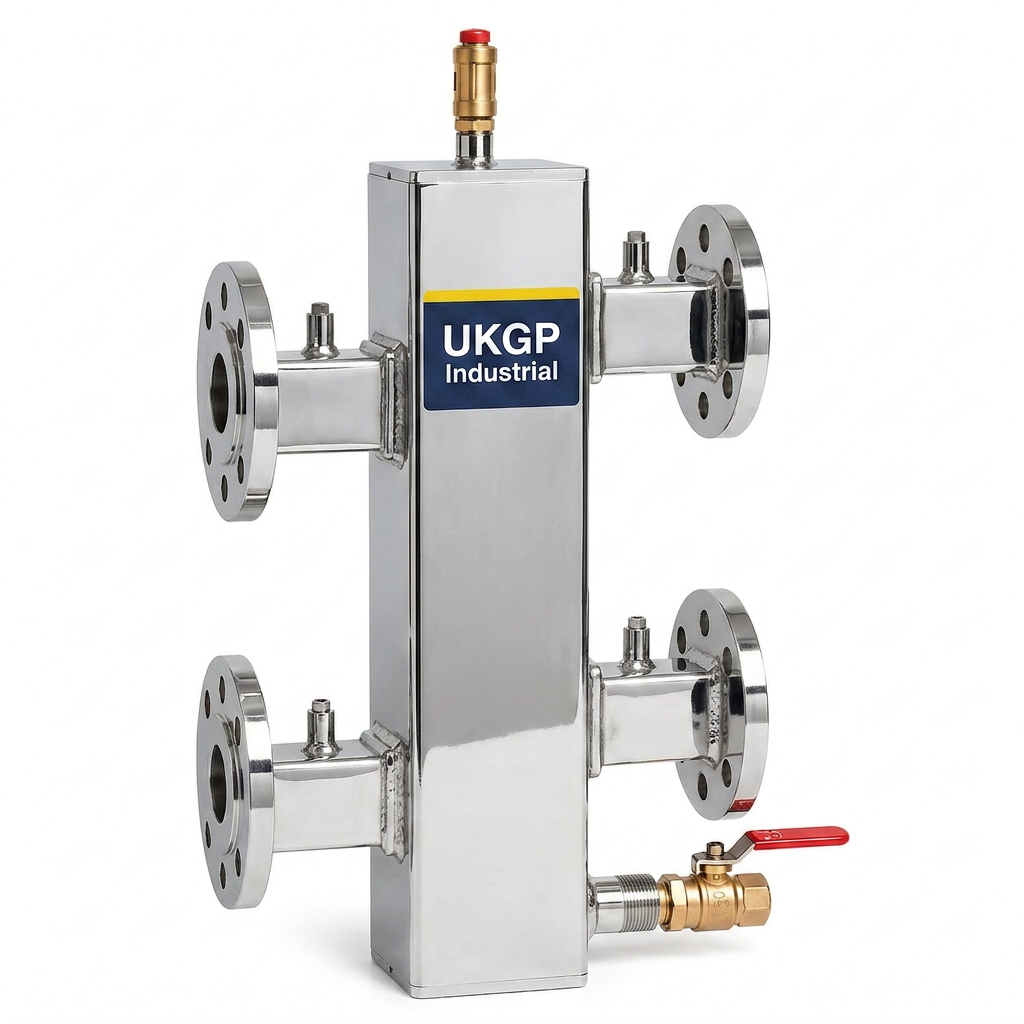
The physical dimensions of the horizontal low loss header must also account for the configuration of the inlets and outlets. Standard practice involves staggering the connections to promote better mixing and separation performance. For industrial applications, UKGP offers flanged PN16 connections as standard for larger outputs, ensuring a secure and leak-free interface with commercial pipework. The inclusion of an integrated sensor pocket is another vital feature, allowing for accurate monitoring of the flow temperature which can then be fed back into the Building Management System (BMS). This level of control is necessary for achieving the seasonal efficiency targets set out in modern UK building services specifications.
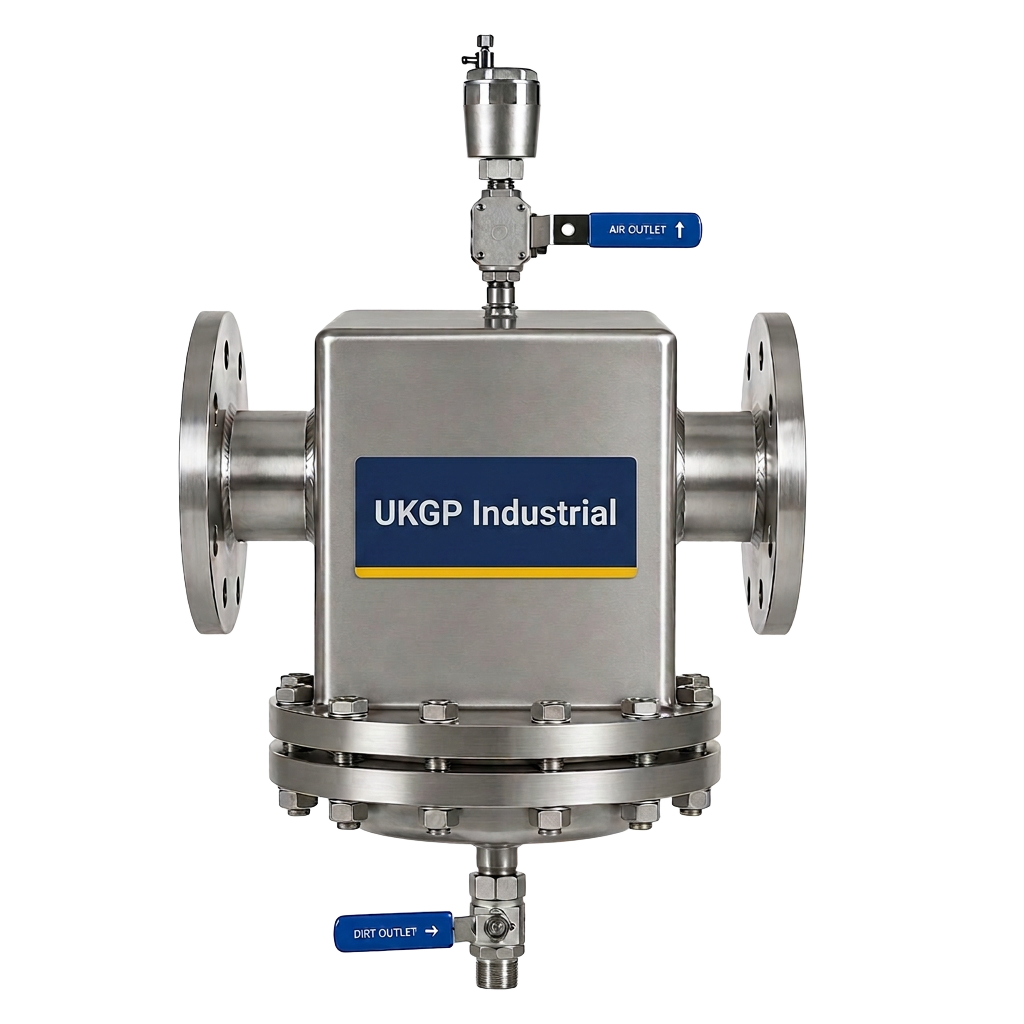
Beyond the basic vessel, engineers must consider the weight and support requirements of a horizontal low loss header. Due to the volume of water held within a 2000 kW unit, the static load on plant room floors can be significant. UKGP units are designed with robust mounting points to ensure stability. Furthermore, utilizing air and dirt separators in conjunction with the header is a best-practice approach to meeting BSRIA BG50 requirements for water quality. By removing microbubbles and suspended solids before they reach the heat exchangers, the overall lifespan of the system is extended, and the risk of costly downtime or emergency repairs is significantly reduced for the facility manager.
- Calculated based on maximum flow rate to maintain low velocity (<0.5m/s)
- Staggered connection ports for optimal thermal stratification
- Integrated sensor pockets for BMS temperature monitoring and control
- Compatible with PN16 flanged or BSP threaded pipework standards
Best Practice for Horizontal Low Loss Header Installation
The physical installation of a horizontal low loss header requires precision to ensure that it operates as a true hydraulic decoupler. The vessel must be perfectly level to prevent air pockets from forming at the top of the chamber, which could impede flow and cause corrosion. When positioning the header, ensure there is adequate clearance for the removal of the insulation jacket and for future maintenance access to the drain valve and air vent. Under BS EN 12828, proper venting and drainage are mandatory for all closed-loop heating systems, and the header often serves as a convenient collection point for residual debris that has bypassed the primary filter.
Piping geometry leading into the horizontal low loss header is equally important. To avoid unnecessary turbulence, it is recommended to have a straight run of pipework before the inlets, typically five times the diameter of the pipe. This ensures that the water enters the header in a laminar state, facilitating better separation. If you are working with an existing plant room with tight constraints, the flexibility of the UKGP range—available in various connection sizes and orientations—allows for a more tailored fit. Contractors should always verify the flow directions stamped on the vessel to avoid cross-contamination of the flow and return paths, which would negate the benefits of the header.
Commissioning the horizontal low loss header involves confirming that the pressure drop across the vessel is negligible. If a significant pressure drop is measured, it usually indicates that the header is undersized for the current flow rate or that there is an internal blockage. After installation and the initial flush, which should be conducted in accordance with BSRIA BG29, the insulation jacket should be securely fitted. UKGP's supplied jackets are designed to fit the specific contours of our 40-2000 kW range, providing high thermal resistance and a professional finish that meets the aesthetic and performance expectations of modern UK commercial plant rooms.
- Ensuring perfectly level mounting to avoid internal air entrapment
- Maintaining straight pipe runs (5x diameter) before header inlets
- Verifying flow and return directions to ensure hydraulic separation
- Post-install flushing according to BSRIA BG29 pre-commissioning cleaning
Maintaining Water Quality and System Longevity
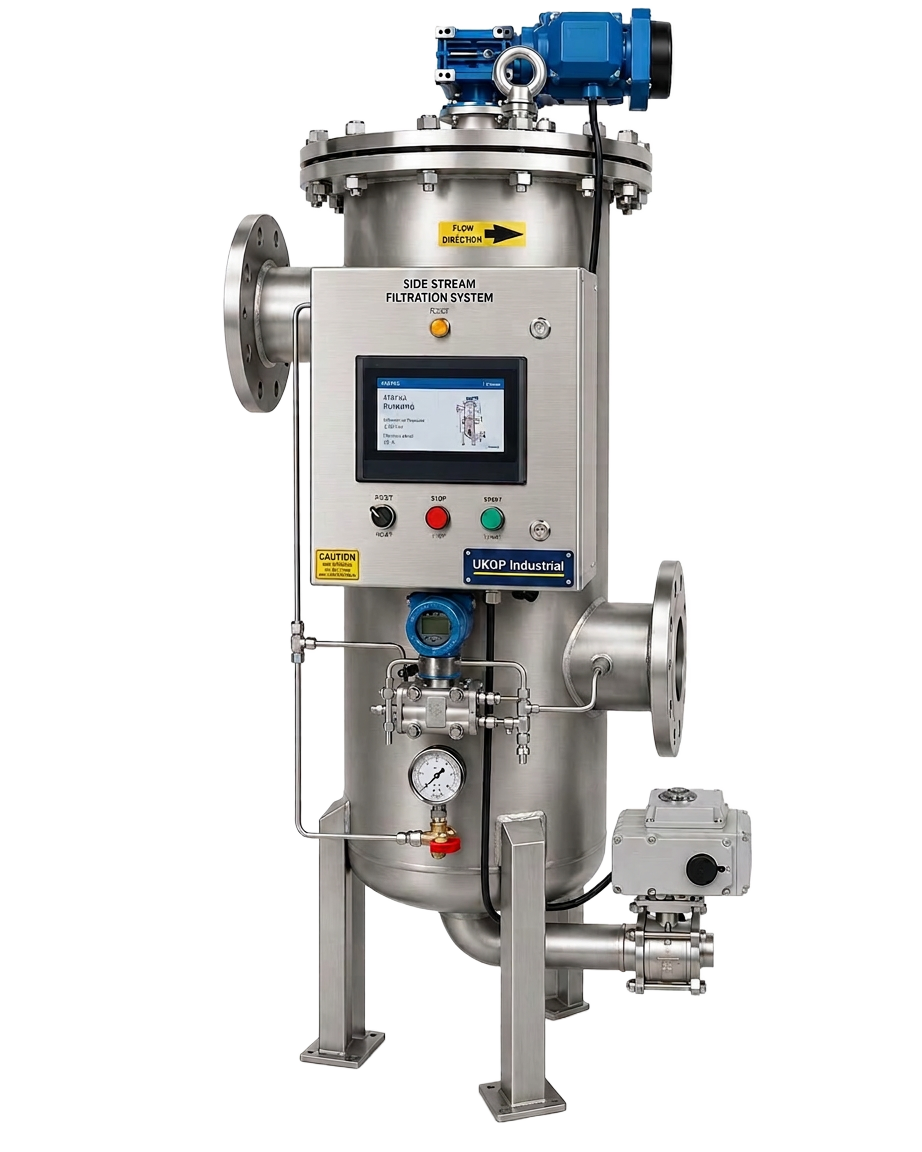
While the horizontal low loss header helps manage hydraulic flows, it cannot compensate for poor water chemistry. BSRIA BG50 highlights the importance of regular monitoring and treatment of water in closed-loop systems to prevent scale and corrosion. The header is often the location where chemical dosing pots are integrated into the bypass or where side stream filtration is connected. By maintaining a neutral pH and low conductivity, you protect the internal surfaces of the horizontal low loss header and the more sensitive components like the boiler heat exchanger. Failure to manage water quality often leads to a buildup of magnetite, which can settle in the header and restrict flow.
Regular maintenance of the horizontal low loss header should include periodic flushing of any sediment collected at the base of the vessel. Even in well-maintained systems, fine particulates can settle due to the low velocity inside the header. By utilizing the drain valve at the lowest point, engineers can remove these solids during routine plant room inspections. This proactive approach ensures that the header continues to function as a low-resistance path, maintaining the balance between the primary and secondary circuits. If the system incorporates sensors, these should be calibrated annually to ensure the BMS is receiving accurate data for efficient pump modulation and burner control.
For plant room engineers, the visibility of system performance is key. Integrating pH sensors and transmitters downstream of the horizontal low loss header allows for real-time monitoring of the system's chemical health. If values drift outside the parameters defined in BS 8552, immediate corrective action can be taken via the dosing pot. This integrated approach to plant room management, combining high-quality hardware like UKGP's headers with rigorous water treatment protocols, ensures the longest possible service life. High-performance systems demand high-performance components, and a properly installed header is the foundation upon which efficient, long-lasting UK commercial heating systems are built.
- Compliance with BSRIA BG50 for proactive water chemistry management
- Integration of side stream filtration to remove magnetite and debris
- Annual sensor calibration and sediment flushing to maintain efficiency
- Monitoring pH and conductivity to protect the header's internal surfaces
Commercial Advantages of UKGP Headers
Choosing a horizontal low loss header from a UK-based manufacturer like UKGP Industrial offers significant commercial advantages, particularly regarding lead times and technical support. In an industry where plant room refurbishments often run on tight schedules, our 2-3 week lead time ensures that contractors can meet their milestones without the delays associated with international shipping. Furthermore, the availability of both flanged PN16 and threaded BSP options means that our headers can be integrated into both modern new-builds and older heritage systems with ease. Reliability is further backed by our 2-year warranty, providing peace of mind for both the installer and the end-user.
Efficiency is a major driver for modern HVAC design. By installing a horizontal low loss header that comes complete with a bespoke insulation jacket, heat loss to the plant room is significantly reduced. This not only helps in meeting energy efficiency targets but also improves the working environment by keeping ambient temperatures manageable. The 40 kW to 2000 kW range ensures that regardless of the scale—from a small community centre to a large district heating scheme—there is a UKGP solution that fits the hydraulic profile perfectly. When you request a quote, our technical team can assist in verifying that the chosen model meets your specific flow and temperature requirements.
Finally, the robustness of British manufacturing cannot be overstated. Our horizontal low loss header units are built to withstand the rigours of commercial operation, using high-grade materials that resist the thermal stresses of constant cycling. For procurement leads, this means a lower total cost of ownership through reduced maintenance requirements and a longer asset life. When quality, speed of delivery, and technical expertise are paramount, UKGP stands as a leading partner for the UK's building services sector, providing the essential components that keep the nation's commercial buildings heated and operational throughout the year.
- Rapid 2-3 week lead times for time-sensitive M&E projects
- Comprehensive 2-year warranty on all commercial header units
- Insulated jackets included to enhance overall plant room efficiency
- Available in a wide range of sizes from 40 kW up to 2000 kW
Conclusion: Integrating your Horizontal Low Loss Header
In summary, the horizontal low loss header is a critical component for any multi-circuit commercial heating system. It provides the necessary hydraulic separation to protect boilers and ensure secondary pumps can operate at varying loads without interference. By following the installation guidelines outlined in this article—level mounting, correct sizing for low velocity, and adherence to BSRIA water quality standards—M&E contractors can ensure a stable and efficient system. The choice of a horizontal low loss header should always be based on the maximum system flow rate and the physical constraints of the plant room, ensuring that both performance and maintenance access are optimised.
The shift towards low-carbon heating technologies, such as heat pumps and high-efficiency condensing boilers, only increases the importance of the horizontal low loss header. These systems are highly sensitive to flow rates and return temperatures, making the decoupling function of the header more relevant than ever. UKGP Industrial remains committed to providing the UK HVAC market with high-specification, durable headers that meet these evolving technical challenges. Our focus on quality assurance, rapid delivery, and technical clarity makes us the ideal supplier for consultants and engineers who refuse to compromise on the integrity of their building services designs.
Ready to upgrade your plant room or specify a new project? A horizontal low loss header from UKGP provides the reliability and performance required for demanding commercial environments. With options ranging from 40-2000 kW and custom connection types including PN16 or BSP, we can cater to any installation requirement. Contact our Surrey-based technical team today to discuss your project specifications or to request a competitive quote. Let us help you ensure your next HVAC installation is perfectly balanced and fully compliant with the latest industry standards for hydraulic separation.
- Ensures total hydraulic separation in multi-boiler configurations
- Optimises performance for modern low-carbon heating technologies
- Expert technical support available for sizing and specification
- Durable British construction designed for long-term commercial use
Frequently asked questions
What is the maximum flow rate for a 2000 kW horizontal low loss header?
- The flow rate depends on the design Delta T (temperature difference). For a 2000 kW UKGP header at a typical 20°C differential, the flow rate is approximately 86 m³/h. We recommend sizing for a velocity under 0.5m/s inside the vessel.
Do UKGP low loss headers come with insulation?
- Yes, all our horizontal low loss headers, from 40 kW to 2000 kW, are supplied with an custom-fit insulation jacket as standard to prevent thermal loss and improve energy efficiency in the plant room.
What are the standard lead times for UK orders?
- We typically operate on a 2-3 week lead time for our standard commercial range, including both flanged PN16 and threaded BSP low loss headers, ensuring your project stays on schedule.
Can I use a horizontal low loss header for cooling systems?
- Absolutely. While commonly used in heating, they are equally effective in chilled water systems to decouple the primary chiller circuit from variable secondary distribution loops, provided the insulation is vapour-sealed.
Is a horizontal low loss header better than a vertical one?
- Performance is identical if sized correctly. The choice usually depends on plant room floor space versus height. Horizontal headers are ideal for plant rooms with low ceilings or lateral pipework runs.