Understanding the role of expansion bellows in piping
In modern building services, the thermal expansion and contraction of metallic pipework can exert immense force on fixed anchor points and sensitive equipment like heat exchangers or pumps. The primary function of expansion bellows in piping is to absorb this axial, lateral, or angular movement, thereby preventing fatigue and potential system failure. When designing systems in accordance with CIBSE Guide B, engineers must account for the high temperatures typically found in LTHW and MTHW circuits. Without the correct flexible joints, the resulting stress can lead to catastrophic joint failure or distorted pipe alignment, which significantly shortens the lifespan of the entire installation and increases maintenance costs for facility management teams.
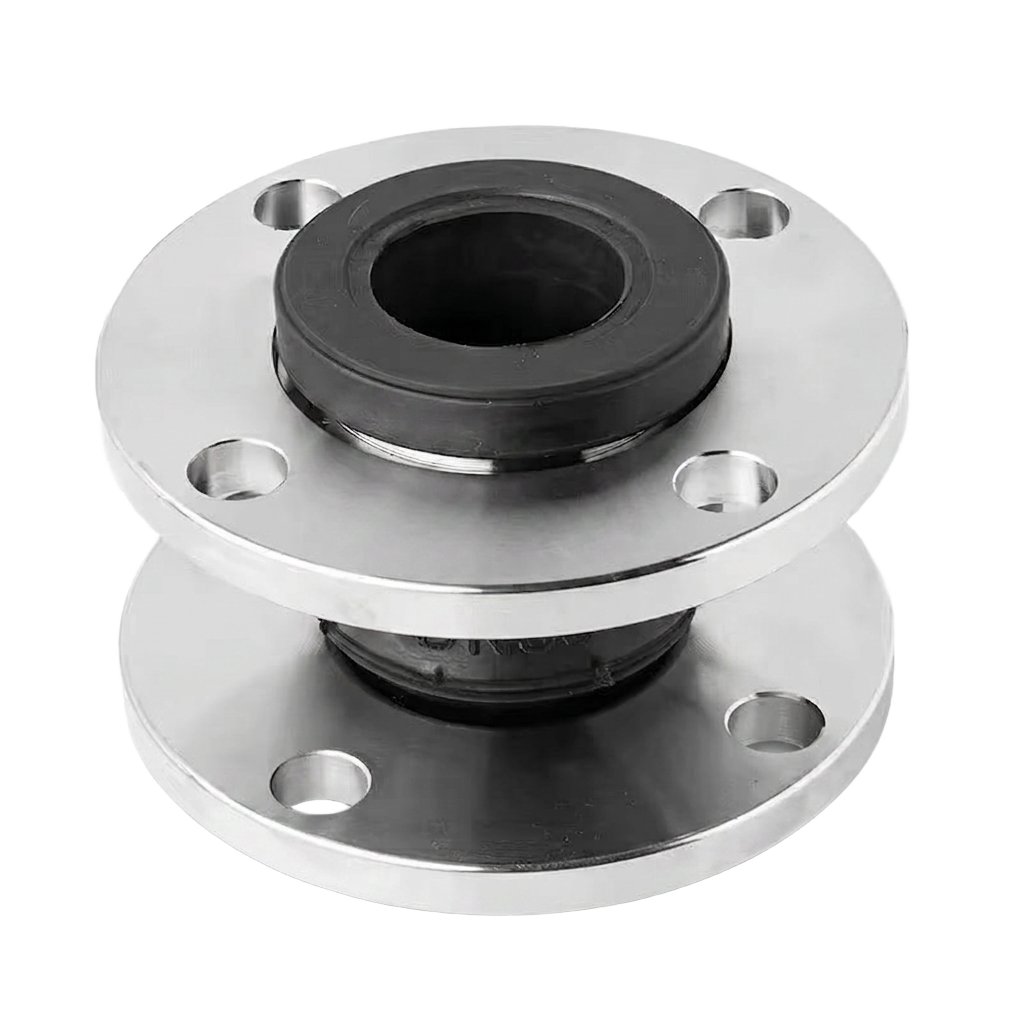
Choosing UKGP expansion bellows in piping ensures that your system is equipped to handle these dynamic loads effectively. Our range spans from DN15 to DN600, available in flanged or weld-end configurations to suit specific site requirements. Whether the project involves EPDM or NBR rubber for lower temperatures or stainless steel and PTFE for superior chemical and thermal resistance, every unit we supply is designed for reliability. By integrating high-quality expansion solutions at the design stage, M&E contractors can mitigate the risk of noise transfer and vibration, which is particularly vital in commercial office environments and residential blocks where acoustic comfort is a priority.
Precision in specification is not just about diameter; it is about understanding the movement profile of the circuit. Expansion bellows in piping must be placed strategically between anchors, following strict guidelines to prevent squirm or buckling under pressure. At UKGP Industrial, we provide the technical support necessary to ensure your calculations align with the physical reality of the plant room. Our bellows come with a 2-year warranty, reflecting our confidence in their durability under heavy-duty cycles. As systems become more complex with the integration of heat pumps and low-carbon technologies, the demand for high-performance flexible connectors that can withstand varying pressure regimes has never been more prevalent in the UK market.
- Absorption of thermal expansion in LTHW/MTHW systems
- Vibration isolation for pumps and plant room equipment
- Reduction of mechanical stress on fixed anchor points
- Mitigation of noise transmission through metallic pipework
Compliance with BS EN 14917 standards
BS EN 14917 is the definitive European standard for metal bellows expansion joints for pressure applications. This standard outlines the rigorous design, manufacture, and testing protocols that ensure expansion bellows in piping can perform safely under operational loads. For building services consultants, verifying that a manufacturer adheres to these standards is essential for professional indemnity and structural safety. The standard covers everything from material selection—typically austenitic stainless steels like 316L—to the convoluted geometry that defines the spring rate and fatigue life of the component. Ignoring these specifications can lead to premature failure, especially in high-pressure steam or district heating applications where thermal cycling is frequent.
The standard also details the pressure testing requirements that every unit must undergo before leaving the factory. When purchasing expansion bellows in piping from UKGP, you are assured of components that have been engineered to meet these exacting safety margins. This is particularly important when considering the BSRIA BG29 and BG50 guidelines for water treatment and system maintenance. If a bellow fails due to poor material quality or incorrect pressure rating, it can lead to system-wide contamination or loss of treated water, necessitating expensive chemical dosing interventions. Properly rated bellows act as a safeguard, maintaining system closed-loop integrity over decades of operation.
Beyond the metallic components, BS EN 14917 principles often influence the testing of non-metallic variants, such as EPDM and PTFE. While the specific standard applies to metal, the engineering rigor it demands sets the benchmark for the entire industry. UKGP offers stainless steel, fabric, and rubber options to ensure that regardless of the fluid medium or temperature profile, there is a compliant solution available. Proactive selection based on BS EN 14917 data ensures that M&E contractors can avoid the pitfalls of inferior imports that lack the necessary certifications or fatigue testing data required for high-occupancy commercial buildings.
- Verification of material grades for corrosion resistance
- Detailed pressure and fatigue life calculations
- Strict manufacturing tolerances for convoluted sections
- Standardised testing procedures for safety assurance
Material selection for expansion bellows in piping
Material compatibility is a cornerstone of reliable HVAC design. For most standard heating and chilled water applications, EPDM (Ethylene Propylene Diene Monomer) is the preferred choice for expansion bellows in piping due to its excellent resistance to heat and aging. However, in systems where oils or hydrocarbons might be present, NBR (Nitrile) is required to prevent material degradation. For more aggressive environments or higher temperatures exceeding 100 degrees Celsius, stainless steel bellows are the industry standard. UKGP Industrial stocks a wide variety of materials, ensuring that procurement leads can find the exact match for their site-specific chemical and thermal demands without compromising on lead times.
PTFE-lined bellows offer a specialist solution for chemical dosing lines or systems handling highly corrosive fluids. These are often used in industrial processing or pharmaceutical plant rooms where standard rubber or steel would fail. By choosing the correct material for your expansion bellows in piping, you ensure that the component does not become the weak link in the pressurized system. Our DN15 to DN600 range ensures that from small-bore secondary circuits to large primary headers, the material properties are matched to the flow rate and pressure. This attention to detail is what differentiates a standard installation from an expertly engineered system that meets BS 8552 water quality standards.
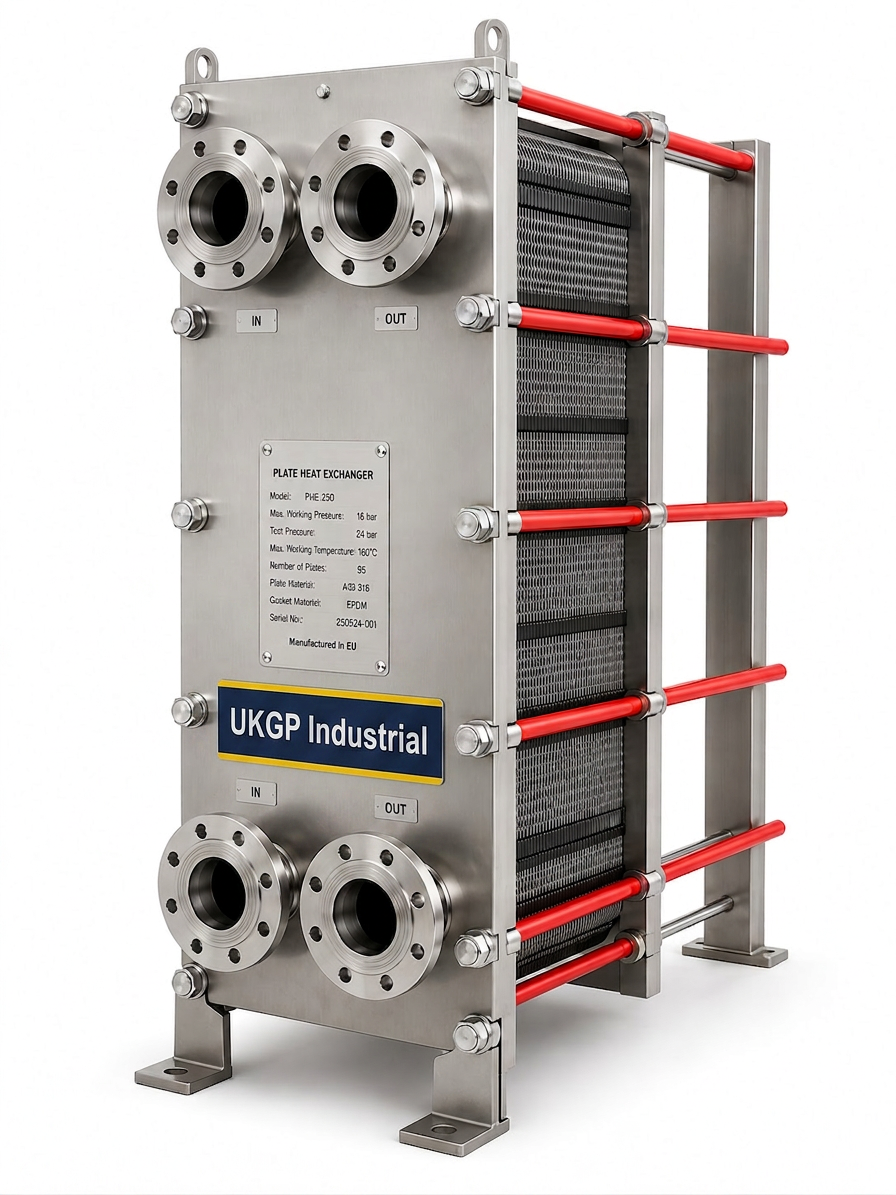
Fabric expansion joints also play a role in low-pressure ducting and exhaust systems, providing flexibility where high temperatures but low pressures are present. At UKGP, we understand that no two plant rooms are identical. That is why our technical team is available to discuss the specific parameters of your project. If you are replacing aged bellows that have shown signs of cracking or 'perishing', it is often a sign of incorrect material selection or excessive UV exposure. Our 2-year warranty provides the peace of mind that once installed, our bellows will withstand the rigours of modern building operation, protecting your plate heat exchangers and pumps from unnecessary stress.
- EPDM and NBR for standard HVAC and oil-resistant needs
- Stainless steel (304/316) for high-pressure and MTHW
- PTFE liners for chemical and corrosive fluid handling
- Fabric options for large-scale ducting and exhaust
Installation best practices and BSRIA guidelines
Correct installation is just as critical as component selection. BSRIA BG29 and BG50 emphasize the importance of system cleanliness and the protection of components during the pre-commissioning cleaning process. When installing expansion bellows in piping, it is vital to ensure they are not used to compensate for pipework misalignment, unless specifically designed as a lateral compensator. The internal sleeves, if present, must be installed in the direction of flow to prevent turbulence and erosion. Failure to align the bellows correctly can lead to uneven stress distribution on the convolutions, significantly reducing the fatigue life and potentially causing a breach during pressure testing.
Anchoring and guiding are the most misunderstood aspects of using expansion bellows in piping. Without robust fixed anchors, the pressure thrust generated by the bellows will simply push the pipework away, leading to failure. Guides must be installed at specific intervals—typically 4 diameters and 14 diameters from the bellows—to ensure the pipe moves in a straight line into the expansion joint. UKGP Industrial provides detailed installation manuals for all our products, from DN15 flanged units to large weld-end steel bellows. Following these guidelines ensures that the 2-year warranty remains valid and the system operates within the design parameters specified by the consulting engineer.
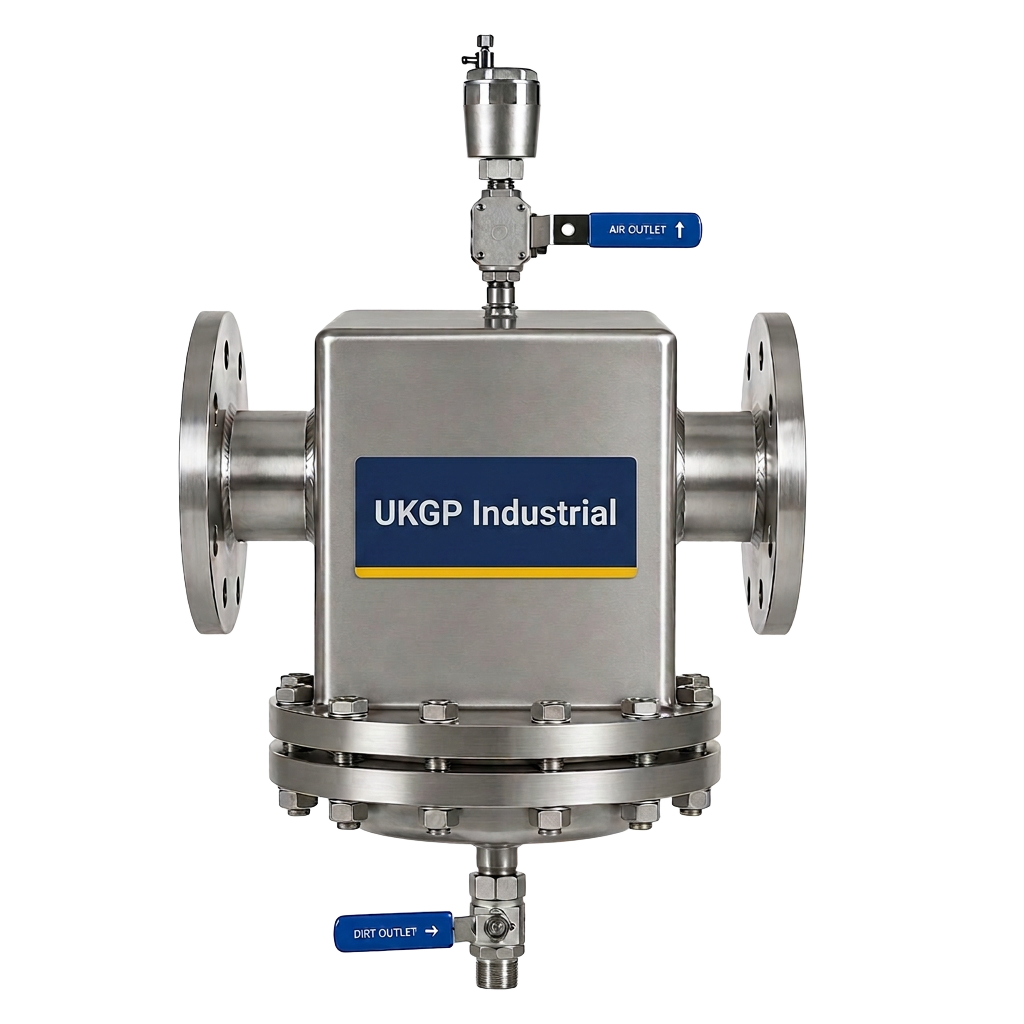
In many plant rooms, expansion bellows in piping are located near air and dirt separators to protect the delicate internals of the separator from mechanical vibration. By isolating the pump sets with flexible connectors, you reduce the risk of structural noise being carried through the building’s steel frame. This is a common requirement in CIBSE technical specifications for high-end residential developments. Our flanged and weld-end options allow for easy integration into existing pipework during retrofits or new builds, ensuring that the installation team can work efficiently while maintaining compliance with BS EN 14917 and other relevant British Standards.
- Ensure flow direction matches internal sleeve orientation
- Never use standard bellows to correct pipe misalignment
- Install primary and secondary guides as per manufacturer specs
- Verify anchor points can withstand total pressure thrust
The importance of the 2-year warranty and UKGP quality
In the UK B2B sector, reliability and after-sales support are paramount. Providing a 2-year warranty on all expansion bellows in piping is our commitment to quality at UKGP Industrial. Many competitors only offer a standard 12-month guarantee, which often expires before a building has completed its first full seasonal cycle of heating and cooling. Our bellows are built to last, manufactured from premium grade materials that are traceable and tested. This long-term reliability is essential for facility managers who are responsible for the lifecycle costs of the building, as premature failure of a single expansion joint can lead to significant flood damage and system downtime.
When procurement leads evaluate suppliers, they must look beyond the initial purchase price. The cost of replacing failed expansion bellows in piping involves not just the component, but the labour, system drain-down, and potential loss of service to tenants. By choosing UKGP, you are investing in a product that has been rigorously vetted for the UK market. Our DN15 to DN600 range covers almost every conceivable commercial application, and our technical department can assist with tailored solutions for unconventional plant room layouts. This bespoke service ensures that even the most challenging expansion problems are solved with engineered precision.
Our Surrey-based team understands the local regulatory landscape, from BS EN 14917 compliance to the practicalities of CIBSE design guidelines. We don’t just sell components; we provide the technical expertise to ensure your expansion bellows in piping are a perfect fit for your application. Whether you need stainless steel flanged units for a high-rise DHW circuit or EPDM weld-end bellows for a basement plant room, we maintain high stock levels to meet tight project deadlines. Contact us today for a quote and see how our commitment to quality can benefit your next mechanical and electrical project.
- Extended 2-year warranty for long-term peace of mind
- Expert technical support from our Surrey-based team
- High stock availability across DN15-DN600 sizes
- Full traceability for QA and compliance documentation
Technical considerations for DN15 to DN600 sizing
Sizing expansion bellows in piping requires a deep understanding of fluid dynamics and thermal physics. As the pipe diameter increases from DN15 to DN600, the cross-sectional area and the associated pressure thrust grow exponentially. This means that a large-diameter bellow requires significantly more robust anchoring than a small-bore unit. Engineers must calculate the 'effective area' of the bellows to determine the load that will be placed on the structure. At UKGP, we provide all the necessary technical data sheets to make these calculations straightforward, ensuring that your design is safe and compliant with BS EN 14917 from the outset.
The choice between flanged and weld-end connections often comes down to the preferred installation method of the M&E contractor and the specific maintenance requirements of the site. Flanged expansion bellows in piping are easier to replace during future maintenance cycles, making them a popular choice for facility managers. Weld-end units, conversely, offer a permanent, leak-proof connection that is ideal for high-pressure or inaccessible pipe runs. Whatever your preference, our range is designed to meet the rigorous demands of the UK construction industry, ensuring that heat networks and HVAC systems remain operational under all thermal conditions.
Finally, the movement capacity of the bellows—be it axial compression, extension, or lateral offset—must be checked against the calculated expansion of the pipe run. Over-compressing a bellow during installation to 'make it fit' is a leading cause of failure. Our technical guides help ensure that the cold pull and installation gaps are correctly managed. For high-performance expansion bellows in piping, trust UKGP Industrial to deliver the components you need with the technical backing you deserve. Reach out to our team today for a competitive quote on your DN15 to DN600 bellows requirements.
- Accurate calculation of pressure thrust for anchor design
- Comparison of flanged vs. weld-end installation benefits
- Verification of axial, lateral, and angular movement limits
- Strict adherence to cold pull and installation gap settings
Frequently asked questions
What is the primary standard for expansion bellows in UK piping?
- The primary standard is BS EN 14917, which specifies the requirements for design, manufacture, and testing of metal bellows expansion joints for pressure applications.
When should I use EPDM versus stainless steel expansion bellows?
- EPDM is ideal for standard HVAC water systems up to approx 100°C. Stainless steel is required for higher temperatures, high-pressure steam, or where chemical compatibility demands a metallic solution.
Do UKGP expansion bellows come with a warranty?
- Yes, all our expansion bellows, from DN15 to DN600, come with a comprehensive 2-year warranty, covering various materials like EPDM, NBR, and stainless steel.
How many guides are needed for an expansion bellow installation?
- Typically, at least two pipe guides are required on each side of the bellow. The first should be within 4 pipe diameters and the second within 14 diameters to ensure linear movement.
Can I use expansion bellows to fix misaligned pipes?
- No, standard expansion bellows in piping should not be used to compensate for installation misalignment. This places lateral stress on the convolutions and can cause premature failure.