Fundamental Principles of Expansion Bellows Design
In the UK's commercial building sector, expansion bellows design is a critical component of mechanical system integrity. When hot water or steam flows through steel pipework, thermal expansion is inevitable; without a managed path for this movement, the resulting stresses can lead to catastrophic failure of pump flanges, valves, and joints. A robust design strategy calculates the precise axial, lateral, and angular movement anticipated within a given temperature range. Consultants must account for the coefficient of thermal expansion specific to the piping material, whether it be carbon steel, copper, or stainless steel, to select the appropriate bellows configuration. Failure to implement a validated design can lead to premature buckling of pipework or localized stress fractures that compromise the entire plant room safety and operational efficiency.
Precision in expansion bellows design also involves a thorough understanding of system pressure and flow rates. High-velocity systems can induce vibrations that interfere with the bellows' ability to absorb thermal shifts, necessitates the use of internal liners to smooth the flow and prevent erosion of the convolutions. Furthermore, the design must consider the external environment, including potential exposure to chemicals or extreme ambient temperatures. For M&E contractors, selecting the right material—be it EPDM for general HVAC or stainless steel for high-pressure district heating—is the bedrock of a reliable installation. UKGP Industrial provides technical support to ensure your design parameters align with real-world application demands, reducing the risk of costly post-commissioning modifications or emergency repairs that disrupt building services.
Compliance with British Standards, specifically BS EN 14917 for metal bellows and BS 6129 for general selection and application, is non-negotiable in professional specifications. A well-executed expansion bellows design incorporates these standards to provide a safety margin that accounts for unexpected system surges. By working with UK-based manufacturers who understand these regulatory frameworks, procurement leads can ensure that the components arriving on-site are fit for purpose. It is essentially about creating a flexible yet durable bridge within the rigid structure of the piping system. This level of technical oversight during the early design phase prevents the common pitfalls of noise transmission and mechanical vibration that often plague poorly specified commercial plant rooms across the United Kingdom.
- Calculation of total thermal movement based on delta T
- Selection of convolution geometry to handle specific pressure ratings
- Adherence to BS EN 14917 for metal expansion joint reliability
- Assessment of lateral and angular offset requirements
Anchoring and Guiding Within Expansion Bellows Design
No expansion bellows design is complete without a comprehensive anchoring and guiding strategy. Expansion joints are, by their nature, the weakest point in a piping system; they rely on main anchors to absorb the pressure thrust and directional guides to ensure the pipe moves linearly into the bellows. Without correct guiding, the pipe may squirm or bow, causing the bellows to compress unevenly and fail prematurely. CIBSE Guide B provides ample evidence that inadequate anchoring is the primary cause of flexible joint failure in high-rise developments. Engineers must ensure that anchors are capable of withstanding both the pressure thrust and the spring rate of the bellows. This requires structural verification of the building fabric to which the anchors are fixed, ensuring the load-bearing capacity is never exceeded during peak thermal events.
Intermediate anchors and secondary guides also play a vital role in complex expansion bellows design, particularly in long pipe runs spanning multiple floors or large horizontal distances. These components prevent the mass of the pipe and its contents from exerting lateral force on the bellows. Standard practice suggests placing the first guide within four pipe diameters of the bellows, and the second guide within fourteen diameters. This configuration ensures the bellows only deals with the axial movement it was designed for, rather than unpredictable torsional or bending stresses. When UKGP specifies expansion bellows, we emphasize that the bellows is only one-third of the solution; the anchors and guides form the remaining two-thirds of a successful installation. Neglecting this synergy leads to excessive noise and eventual component rupture.
For plant room engineers, the space constraints of modern UK developments often make traditional 'U' loops impractical, making sophisticated expansion bellows design even more essential. By utilizing multi-convolution bellows or tied units, designers can manage significant movement within a compact footprint. However, this compactness should not come at the expense of accessibility for inspection. BSRIA BG29 highlights the importance of keeping these units clear of debris and accessible for maintenance. A design that hides a bellows behind other services or in an unreachable ceiling void is a risk to the long-term facility management strategy. Ensuring every guided run is clear and every anchor is secure is the hallmark of a professional M&E installation that meets the rigorous demands of UK building regulations.
- Requirement for main anchors to handle full pressure thrust
- Specific guide spacing intervals per CIBSE recommendations
- Use of planar guides to prevent piping squirm
- Verification of structural load points for anchor points
Material Selection for Durable Expansion Bellows Design
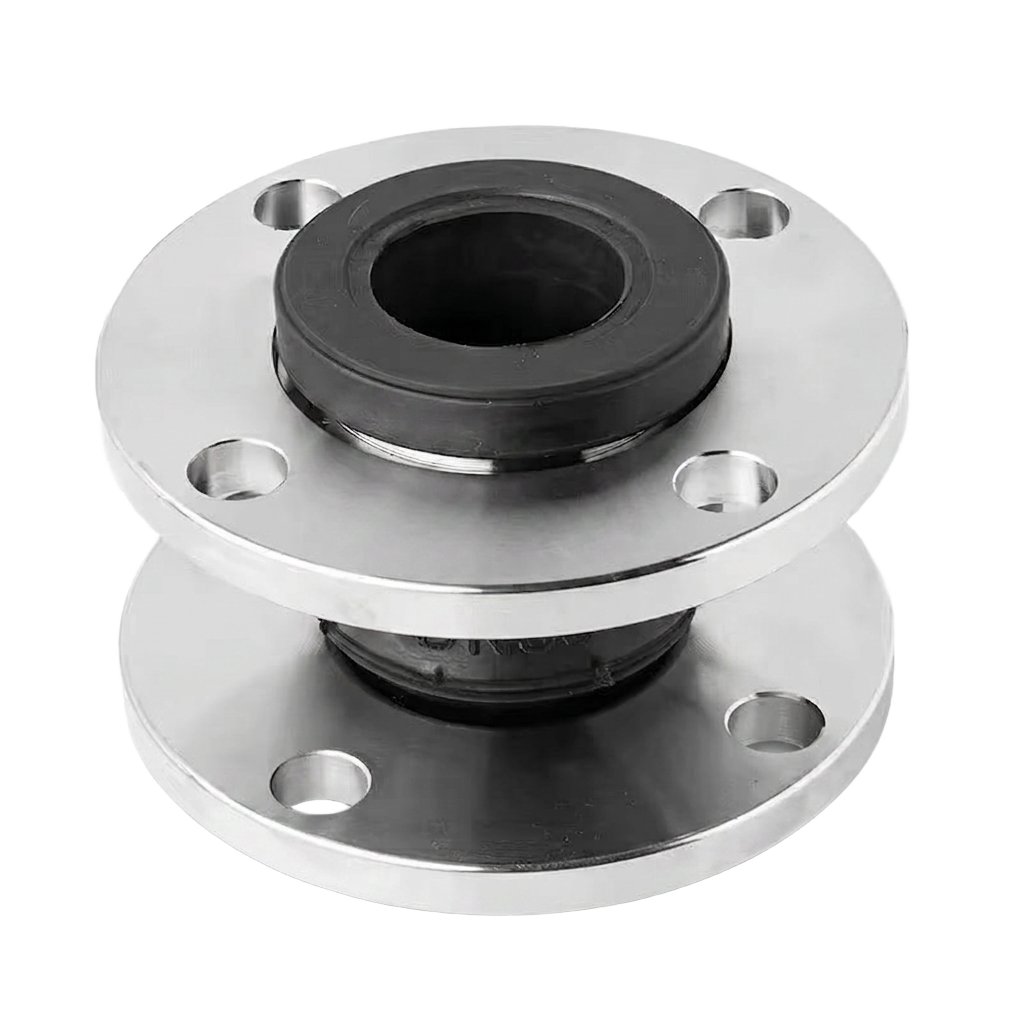
The choice of material is a pivotal aspect of expansion bellows design that dictates the unit's longevity and chemical resistance. For standard LTHW (Low Temperature Hot Water) and CHW (Chilled Water) systems, EPDM rubber bellows are often the preferred choice due to their excellent noise-damping properties and flexibility. However, these must be carefully specified based on the water treatment chemicals in use, as outlined in BSRIA BG50. If the system contains specific inhibitors or glycols, the elastomer must be compatible to prevent swelling or degradation of the rubber. UKGP provides NBR, PTFE, and fabric options to suit various industrial and commercial media, ensuring that the bellows material remains inert and structural throughout its two-year warranty period and well beyond.
In high-pressure or high-temperature steam applications, expansion bellows design shifts toward stainless steel (often Grades 304 or 316L). These metallic units offer the heat resistance required for primary heating circuits and district energy centers. However, stainless steel is susceptible to chloride-induced stress corrosion cracking if the external environment is saline or if water treatment is poorly managed. Consequently, the design phase must include a review of the likely atmospheric conditions and the system chemistry. Incorporating a shroud or external cover can protect the delicate convolutions from site damage and environmental contaminants. This level of foresight in material selection distinguishes a high-performance system from a standard one, providing peace of mind for procurement leads and facility managers alike.
For specialized applications involving aggressive chemicals or ultra-pure water, PTFE-lined bellows or full PTFE units are incorporated into the expansion bellows design. These offer unparalleled chemical inertness and are often used in pharmaceutical or high-end industrial processing. Regardless of the material, the bellows must be rated for the maximum test pressure of the system, not just the operating pressure. This is a common oversight where units are specified for 6 bar operation but fail during a 10 bar hydraulic test because the design didn't account for the testing phase. At UKGP, we offer a range from DN15 to DN600 with various end connections, including flanged or weld-end, ensuring that the material and connection type perfectly match your specific project requirements and technical constraints.
- EPDM and NBR for standard HVAC applications
- Grade 316L Stainless Steel for high-temperature durability
- PTFE liners for aggressive chemical environments
- Pressure rating verification for hydraulic testing phases
Integrating Air and Dirt Separation with Bellows Integrity
While expansion bellows design focuses on mechanical movement, the longevity of these components is intrinsically linked to the overall water quality in the system. High levels of suspended solids and entrained air can cause erosion within the bellows' convolutions, leading to premature thinning of the walls and eventual pinhole leaks. This is particularly problematic in metallic bellows where high-velocity debris acts as an abrasive. By integrating high-efficiency air and dirt separators into the plant room design, engineers can remove these damaging particles before they reach the flexible connectors. This synergy between movement control and water quality management is a cornerstone of BSRIA BG29/2020 and BG50/2013 best practices for UK closed-loop systems.
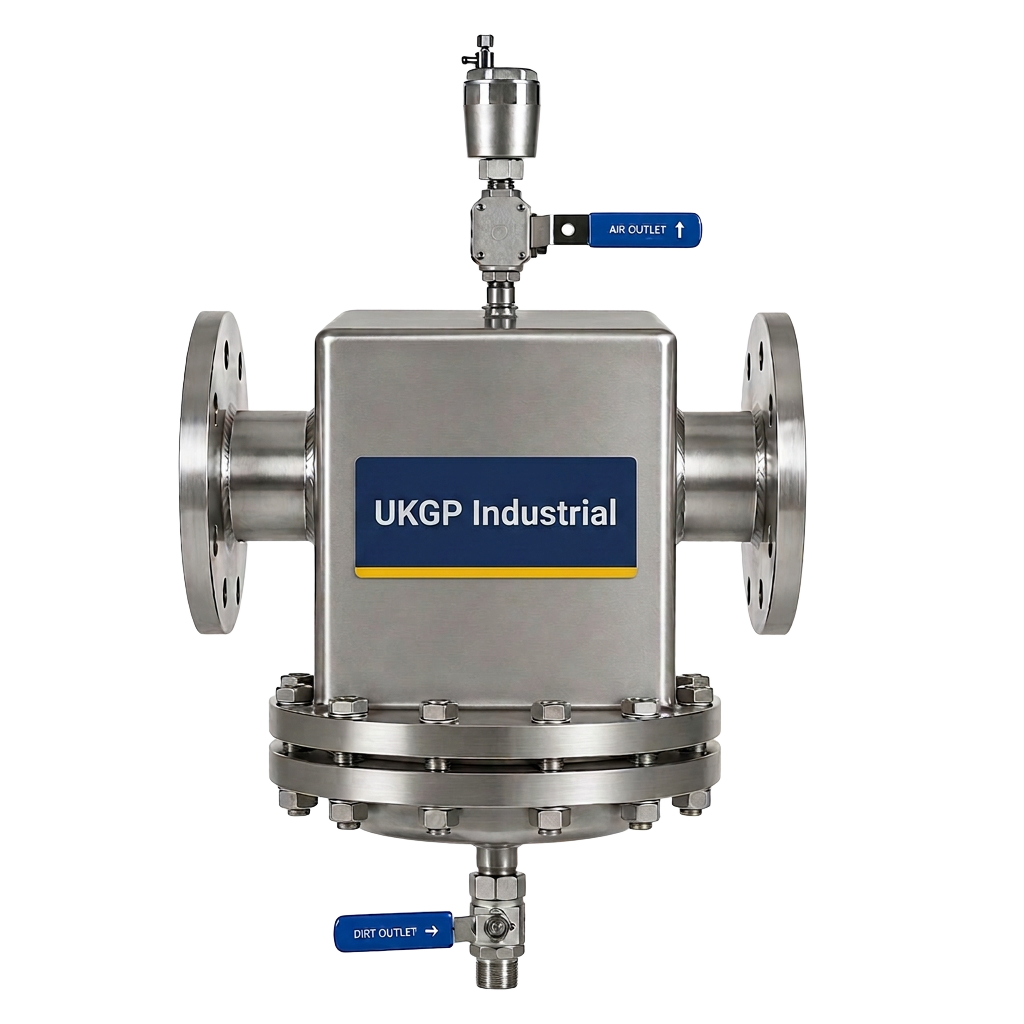
Automated air and dirt separators work by slowing the flow through a larger chamber, allowing air bubbles to rise and heavier particles to sink. When positioned correctly—usually at the point of lowest solubility for air—they protect all downstream components, including expansion bellows and heat exchangers. A clean system reduces the turbulent flow that can otherwise lead to 'vibration fatigue' within a bellows unit. Furthermore, removing air reduces the risk of oxidation and corrosion that can attack the thin-walled convolutions from the inside out. Specifying these units alongside expansion bellows provides a holistic approach to system reliability, ensuring that the mechanical flexibility designed into the system is not undermined by poor hydraulic conditions or chemical imbalances within the circulating fluid.
M&E contractors should consider the placement of these separators in relation to the main pump sets and the expansion bellows. By maintaining a debris-free system, the maintenance lifecycle of the bellows is significantly extended, reducing the frequency of replacements and the associated system downtime. UKGP Industrial offers a range of high-performance air and dirt separators that complement any well-considered expansion bellows design. Investing in secondary protection devices is a commercially aware decision that protects the primary capital investment in the piping infrastructure. This integrated approach ensures that the system meets the high standards expected by FM teams and building owners, facilitating a smooth transition from commissioning to long-term operation without the headache of early-stage component failures.
- Prevention of convolution erosion via particle removal
- Reduction of vibration fatigue through laminar flow promotion
- Compliance with BSRIA water quality standards
- Synergy between air/dirt removal and bellows longevity
Maintenance and Lifecycle of Expansion Bellows Design
A successful expansion bellows design must account for the reality of long-term facility management. Bellows are considered 'wearing parts' and, whilst durable, require periodic inspection to identify early signs of fatigue, corrosion, or incorrect movement. Following the guidelines in BS 8552 for sampling and water quality monitoring can provide early warnings of conditions that might threaten the bellows. During annual plant room surveys, engineers should check that the bellows are not being compressed beyond their design limit and that guides have not become seized. If a bellows appears 'over-extended' or 'squashed' while the system is at ambient temperature, it indicates a failure in the original anchoring or a shift in the building's structure that needs immediate attention.
The commercial impact of a failure is significant, often resulting in total plant shutdown and extensive water damage. Therefore, procurement leads should prioritize expansion bellows design that incorporates ease of replacement. Using flanged connections rather than weld-end units can dramatically reduce the time required to swap a unit during a planned maintenance window. At UKGP Industrial, our expansion bellows (available in rubber EPDM/NBR, stainless steel, PTFE and fabric; DN15-DN600) are designed for straightforward installation and come with a 2-year warranty to provide initial peace of mind. However, the true value lies in the long-term support and technical advice we provide to ensure the units remain operational for decades, provided the surrounding system is maintained to CIBSE standards.
Finally, documentation is an often-overlooked part of the maintenance cycle. Every expansion bellows design should be accompanied by a technical datasheet and a record of the cold-fill versus operating lengths. This data allows FM teams to track the health of the system over time. If a unit needs to be replaced, having the exact specification at hand ensures that a like-for-like component is sourced, maintaining the integrity of the original design. Avoid the temptation to install a 'generic' flexible connector that may not have the same spring rate or movement capacity. Stick to high-quality, UK-supplied units from UKGP to ensure that your plant room remains a safe, efficient, and compliant environment for the duration of its service life. Contact us today for a bespoke quote for your next project.
- Visual inspection for convolution deformation or leaks
- Verification of guide and anchor integrity during shutdowns
- Adherence to BS 8552 for proactive water chemistry monitoring
- Maintenance of detailed technical records for replacement planning
Common Pitfalls in Expansion Bellows Design and How to Avoid Them
One of the most frequent errors in expansion bellows design is the 'misalignment' of the piping during installation. Installers sometimes use the bellows to take up gaps caused by poor pipe fitting. This 'pre-stressing' robs the bellows of its intended movement capacity and leads to rapid fatigue. A bellows should never be used to compensate for poor workmanship in pipe alignment. Another common mistake is the over-specification of movement. If a bellows is designed for 50mm of movement but only realizes 5mm, it may not flex enough to stay healthy, or conversely, if underspecified, it will simply bottom out and transmit forces to the anchors. Precise calculation based on realistic temperature differentials is the only way to ensure the unit performs as intended.
The exclusion of tie bars in applications where anchors are insufficient is another critical failing. In some plant room layouts, it is impossible to install a main anchor capable of resisting the full pressure thrust. In these cases, a 'tied' expansion bellows design should be utilized. Tie bars limit the bellows' movement and prevent it from extending fully under pressure, effectively transferring the load across the joint itself. This is particularly relevant in pump discharge lines where high pressure and vibration are present. Understanding when to use tied versus untied units is a sophisticated part of M&E engineering that requires a deep understanding of hydraulic forces. Consultants should always specify the exact nature of the tied assembly to prevent onsite confusion.
Lastly, ignoring the insulation requirements can compromise an expansion bellows design. Bellows should generally not be covered in thick lagging that prevents heat dissipation or hides leakages, unless specific removable thermal jackets are used. If a bellows is insulated too heavily, the temperature of the convolutions can exceed the design limits of the elastomer or metal, leading to hardening or brittleness. Always ensure that the design allows for 'breathing' room and that the insulating materials do not contain chlorides that could corrode stainless steel units. By avoiding these common pitfalls and working with UKGP Industrial for your expansion bellows (DN15-DN600, flanged or weld-end), you ensure a professional, compliant, and robust solution for any UK commercial plant room.
- Avoid using bellows to correct piping misalignment
- Appropriate use of tie bars for pressure thrust management
- Careful selection of removable insulation jackets
- Verification of movement limits against actual thermal expansion
Frequently asked questions
What information is needed for an expansion bellows design?
- To complete an accurate expansion bellows design, you need the pipe material, the maximum and minimum operating temperatures, the maximum system pressure, the pipe diameter, and the fluid medium. This allows engineers to calculate the total thermal expansion and choose the correct material and movement rating.
How many guides are required in a typical expansion bellows design?
- According to industry standards, at least two guides are required on each side of the bellows. The first guide should be within 4 pipe diameters of the bellows, and the second within 14 diameters. Additional guides are placed at regular intervals along the remaining pipe run.
Can I use rubber bellows for high-temperature steam systems?
- No, rubber EPDM or NBR bellows are typically limited to temperatures below 100-110°C depending on pressure. For steam systems, expansion bellows design must utilize stainless steel convolutions to withstand the high temperatures and pressures involved.
What is the difference between axial and lateral movement in bellows design?
- Axial movement refers to the compression or extension of the bellows along its longitudinal axis. Lateral movement occurs when the two ends of the bellows move perpendicular to each other. Your expansion bellows design must specify both to ensure the unit can handle the system's specific geometry.
Is a 2-year warranty standard for expansion bellows?
- UKGP Industrial provides a 2-year warranty on our expansion bellows (DN15-DN600), which covers manufacturing defects. However, the actual service life depends heavily on correct expansion bellows design, including proper anchoring, guiding, and water treatment.