Hydraulic Separation and the Copper Low Loss Header
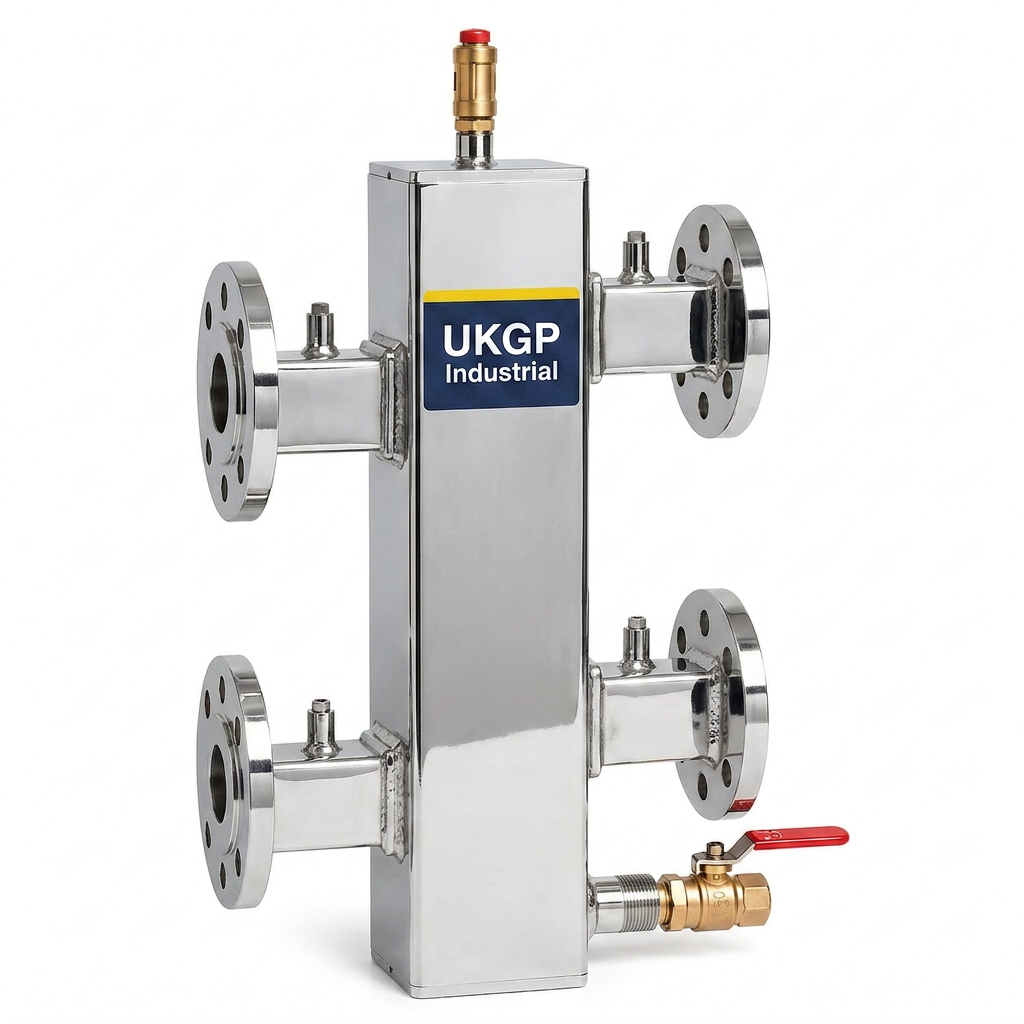
In modern commercial heating installations, the copper low loss header acts as a critical interface between the constant flow of the boiler loop and the variable flow of the building's heat emitters. Without this component, the high-resistance circuits found in many commercial buildings would cause significant pressure drops, potentially forcing primary pumps out of their performance curve. By utilizing a copper low loss header, mechanical designers can decouple these circuits, ensuring that the primary boiler pump only needs to overcome the resistance of the boiler itself and the header's minimal internal friction. This is particularly vital when dealing with high-output modular boiler banks where flow requirements can shift rapidly based on seasonal demand.
Precision in manufacturing is what sets a professional copper low loss header apart from temporary or on-site fabricated alternatives. Unlike mild steel options which may be prone to higher internal corrosion rates if water chemistry is poorly managed, copper offers excellent thermal conductivity and natural resistance to various forms of pitting. When installing a copper low loss header in a plant room, it is essential to consider the velocity of the fluid entering the vessel. Standard practice dictates that velocities should be kept low to allow for the effective separation of air and the settlement of heavier debris, which ultimately protects the primary heat exchanger from common failure modes associated with modern condensing boilers.
From a commercial perspective, opting for a copper low loss header provides a robust solution for medium-scale installations where weight and space might be a constraint. While steel headers are common for massive industrial outputs, the copper variant is a preferred choice for commercial 40-2000 kW applications where corrosion resistance and ease of installation are prioritised. At UKGP Industrial, we provide these essential components with short lead times, typically 2-3 weeks, ensuring your project timeline remains on track. Each unit is supplied with a 2-year warranty as standard, giving M&E contractors and facility managers peace of mind that the hydraulic heart of their system is built to last.
- Eliminates pump conflict between primary and secondary loops.
- Facilitates easier balancing of complex multi-zone heating systems.
- Reduces thermal shock to boilers by maintaining stable return temperatures.
- Provides a convenient location for air venting and dirt removal.
Navigating BSRIA BG29 and BG50 Compliance
Designers and plant-room engineers must adhere to the stringent guidelines set out in BSRIA BG29 (Pre-commission cleaning of pipework systems) and BG50 (Water treatment for closed heating and cooling systems). A copper low loss header assists in achieving these standards by acting as a point of low velocity within the system. This allows for sediment to collect at the bottom of the vessel where a drain valve can be positioned for periodic flushing. Properly managed water chemistry, supported by the installation of a copper low loss header, significantly reduces the risk of magnetite build-up which is a primary cause of system inefficiency and premature pump failure in the UK commercial sector.
The chemical compatibility of a copper low loss header makes it an excellent choice for systems undergoing intensive chemical cleaning as described in BG29. Copper is less reactive than carbon steel to many of the acidic flushes used during the commissioning phase, although neutral cleaners are always recommended to preserve the integrity of all system metals. By ensuring that the hydraulic separation is robust, the header prevents the migration of contaminants from the old secondary pipework back into the clean primary boiler loop. This segregation is critical for maintaining the efficiency ratings provided by major UK commercial boiler OEMs, who often stipulate specific water quality parameters in their warranty terms.
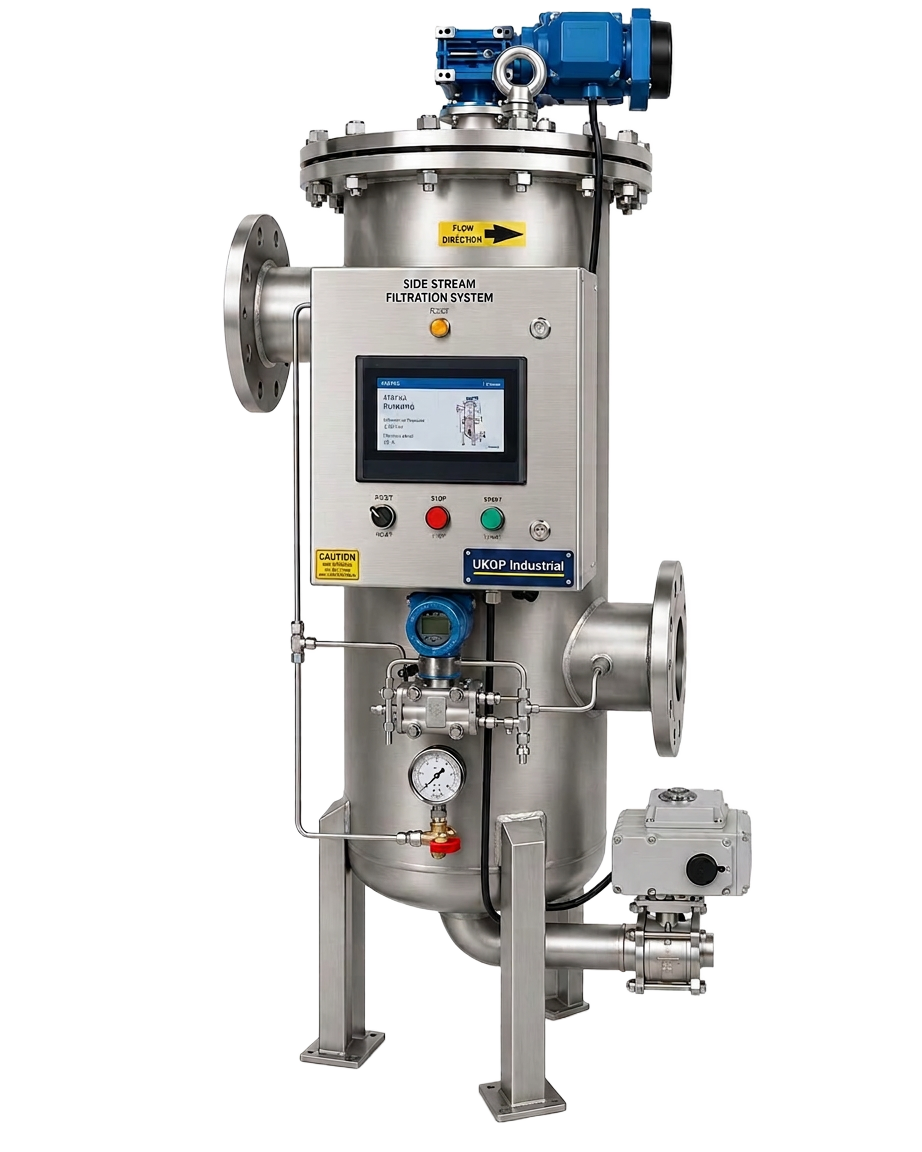
To further enhance the water quality and protection of the plant room, engineers should consider the integration of a side stream filtration system alongside their header. While the copper low loss header manages the flow dynamics, active filtration ensures that suspended solids are removed before they can settle in the header or the heat exchangers. At UKGP Industrial, we specialise in providing the full suite of plant room equipment, from the primary separation vessel to bespoke side stream filtration skids. Investing in high-quality copper components ensures that the entire system remains compliant with the long-term maintenance strategies outlined in BSRIA BG50, protecting the owner's capital investment.
- Supports BG29 pre-commissioning cleaning by providing high-point venting.
- Aids BG50 compliance through simplified sludge and debris removal.
- Protects expensive heat exchangers from larger debris bypass.
- Copper construction ensures long-term resistance to oxygen-rich water.
Technical Specifications for Commercial Headers
When specifying a copper low loss header, the sizing calculation is paramount. The internal volume must be sufficient to ensure that the vertical velocity of the water remains below 0.5 metres per second. This low-velocity zone is what allows the header to perform its secondary functions as a dirt separator and deaerator. UKGP Industrial offers a range of headers specifically designed for the 40-2000 kW power range, making them suitable for everything from large residential blocks to commercial office complexes. Our headers are available with various connection types, including threaded BSP for smaller outputs and flanged PN16 connections for higher flow installations, ensuring seamless integration with existing site pipework.
Thermal efficiency is another core concern, which is why every copper low loss header we supply can be provided with a tailored insulation jacket. Without adequate insulation, the header itself acts as a large heat emitter in the plant room, leading to wasted energy and higher operational costs. The use of high-quality copper in the header construction also ensures maximum heat transfer efficiency where it matters, while the insulated jacket minimises convective and radiative losses. These features are essential for achieving the high COP and overall system efficiency targets necessitated by modern building regulations and CIBSE recommendations for sustainable commercial heating.
Furthermore, our manufacturing process ensures that every copper low loss header meets rigorous quality standards before leaving the factory. With a 2-year warranty and a standard lead time of just 2-3 weeks, we enable M&E contractors to meet tight project deadlines without sacrificing component quality. Whether you require a standard threaded unit or a high-capacity flanged vessel, our technical team is available to provide detailed dimensional drawings and performance data. We understand the pressures of commercial procurement and aim to be the most reliable supplier in the Surrey region and wider UK market for all hydraulic separation and plant room vessel requirements.
- Suitable for commercial capacities ranging from 40 kW to 2000 kW.
- Available with threaded BSP or flanged PN16 end connections.
- Supplied with professional insulation jackets to minimise heat loss.
- Robust 2-year warranty on all standard copper vessels.
Protecting the System: Air and Dirt Management
While a copper low loss header provides hydraulic separation, it is often the first line of defence against air entrainment and debris. Within the body of the header, the reduction in water velocity allows micro-bubbles to coalesce and rise to the top of the vessel, where they can be purged via an automatic air vent. Similarly, heavy particles settle at the base. Over time, these small efficiency gains add up to significant savings in fuel consumption and a noticeable reduction in system noise. For facilities managers, the inclusion of a high-quality copper low loss header simplifies annual maintenance tasks, as the central vessel becomes a primary point for monitoring the health of the heating fluid.
In systems where high levels of magnetite are expected—particularly during the refurbishment of older systems—the copper low loss header should be used to isolate the new, high-efficiency boilers from the existing radiators and pipework. By creating this hydraulic break, you prevent the boilers from being subjected to the erratic pressure variations typical of older, gravity-fed or poorly balanced systems. This isolation is a core recommendation of major boiler manufacturers to ensure that their internal pumps and heat exchangers are not compromised by external hydraulic conditions. Using copper for this separation is a mark of a high-specification installation that prioritises longevity and corrosion resistance.
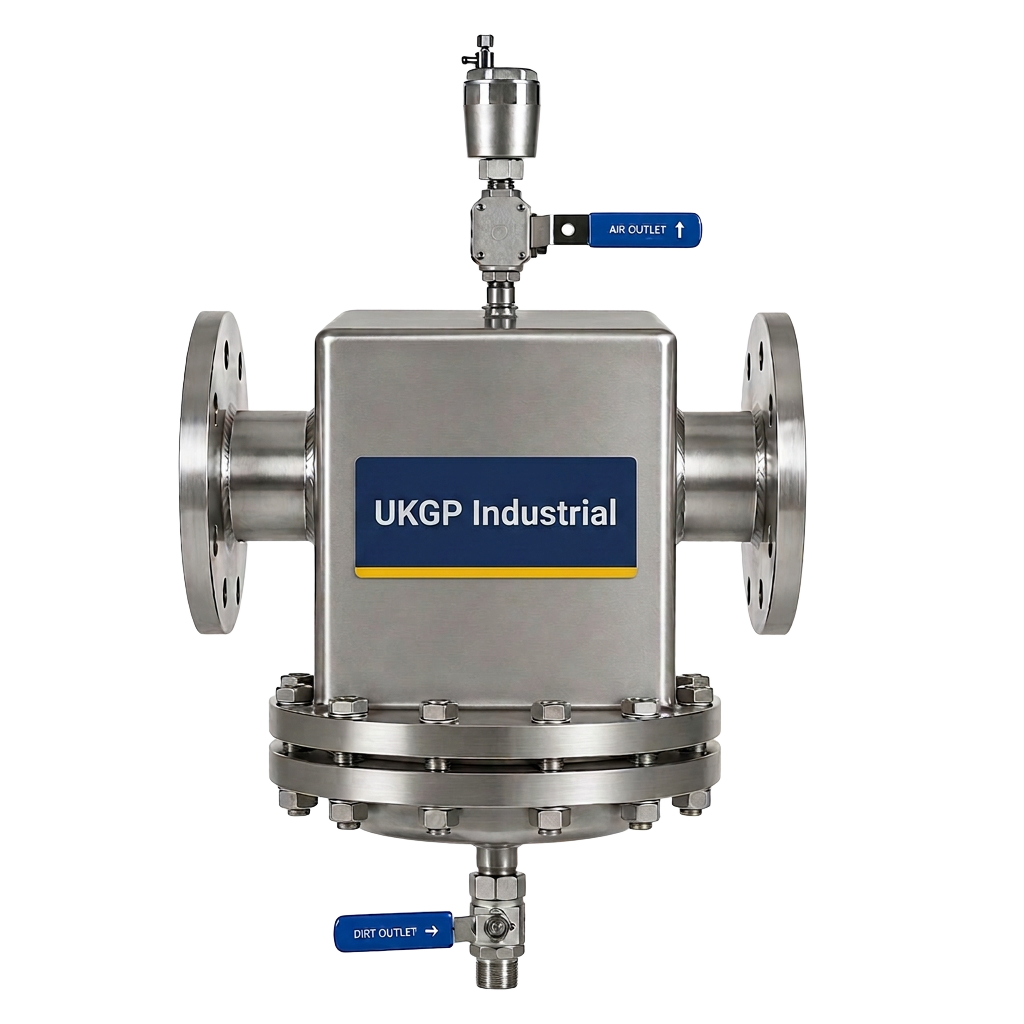
For even greater protection, many engineers choose to install dedicated air & dirt separators upstream of the copper low loss header. This multilevel approach to water quality management is the gold standard in plant room design. By combining the hydraulic benefits of the header with dedicated separation technology, you ensure that the plant room operates at peak performance throughout its lifecycle. UKGP Industrial stocks a wide range of these components, allowing for a single-source procurement process that reduces shipping costs and simplifies logistics for busy site managers. Request a quote today to see how our competitive pricing and 2-3 week lead times can benefit your next commercial project.
- Naturally aids in deaeration through velocity reduction.
- Prevents the recirculation of heavy sludge back into the boilers.
- Essential for refurbishments involving old secondary pipework.
- Reduces technical call-outs by improving overall system stability.
Integration with Expansion and Pressure Control
A copper low loss header must be integrated correctly with the system's expansion and pressurisation equipment to function effectively. The point of no pressure change is typically located near the suction side of the secondary pumps, often in close proximity to the header connections. This ensure that the expansion bellows and pressurisation units can accurately manage the volumetric changes of the water without being confused by the differential pressures created by the pumps. A well-designed plant room will account for these factors in the design phase, using the copper low loss header as the 'anchor' for the hydraulic layout, ensuring all zones receive the correct flow regardless of how many zones are active.
When selecting expansion bellows for a system featuring a copper low loss header, it is important to match the pressure ratings and material types. BS EN 14917 guidelines for metal expansion joints should be consulted to ensure that the thermal expansion of the copper or steel pipework does not put undue stress on the header's inlets and outlets. Because copper has a different thermal expansion coefficient than steel, using a copper low loss header in a system primarily comprised of copper pipework can simplify the stress analysis and reduce the number of flexible joints required. Our technical support team can assist in verifying that your proposed layout meets these necessary engineering standards.
Ultimately, the success of a commercial HVAC installation relies on the harmony between its components. The copper low loss header is the conductor of this harmony, ensuring that the primary heat source and the secondary heat emitters work together without conflict. By sourcing your headers and expansion equipment from UKGP Industrial, you are guaranteed products that have been tested to withstand the rigours of commercial operation. We offer flanged and threaded options to suit any pipework configuration, backed by the knowledge that our products facilitate easier commissioning and long-term BS 8552 water quality monitoring.
- Acts as a neutral point for accurate system pressurisation.
- Compatible with high-quality expansion bellows for stress relief.
- Facilitates the installation of BS 8552 sampling points.
- Ensures thermal expansion is managed at the boiler-header interface.
The Commercial Case for Quality Headers
Procurement leads and M&E contractors often face the challenge of balancing initial capital expenditure with long-term operational reliability. While a bespoke, site-fabricated header might seem cheaper initially, the performance and reliability of a factory-tested copper low loss header far outweigh the marginal savings. A manufactured header from UKGP Industrial comes with documented flow rates, pressure drop data, and a 2-year warranty, which reduces the professional liability for the installer. Furthermore, the inclusion of a tailored insulation jacket ensures that the building meets its EPC ratings by minimising standing heat losses, a factor that is increasingly scrutinised by tenants and building owners.
Lead times are often the deciding factor in project delivery. UKGP Industrial prides itself on a 2-3 week lead time for standard copper low loss header units, which is significantly faster than many international competitors. This agility allows contractors to react to site changes or tight handover schedules without compromising on the quality of the plant room components. Our headers are designed for versatility, supporting commercial boilers from 40 kW up to 2000 kW, providing a scalable solution for various project sizes. When quality, speed, and technical support are non-negotiable, UK engineers turn to our Surrey-based experts for their plant room requirements.
In conclusion, the copper low loss header is an indispensable tool for any high-quality HVAC installation. It solves the most common hydraulic issues faced in commercial buildings, protects the most expensive parts of the system, and ensures compliance with industry best practices such as BSRIA BG29. Whether you are designing a system for a new build or retrofitting an existing plant room, specifying a UKGP Industrial header ensures your system is built on a foundation of engineering excellence. Contact our sales team today for a formal quotation or to discuss the specific flanged or threaded requirements for your upcoming heating project.
- Shorter lead times of 2-3 weeks for rapid project deployment.
- Factory-backed 2-year warranty for contractor security.
- Significantly lower standing heat losses with pre-fitted jackets.
- Technical documentation provided for easy O&M manual inclusion.
Frequently asked questions
What is the primary benefit of using a copper low loss header over mild steel?
- Copper offers superior corrosion resistance in oxygen-rich or poorly treated water environments. It also provides excellent thermal conductivity and is easier to handle for smaller to mid-sized commercial installs (40-2000 kW) due to its weight-to-strength ratio.
Can these headers be used with both flanged and threaded pipework?
- Yes, UKGP copper low loss headers are available with BSP threaded connections for smaller applications and PN16 flanged connections for larger commercial flow rates, ensuring compatibility with all UK plant room standards.
Do the headers come with insulation as standard?
- We provide bespoke insulation jackets to accompany our headers. This is highly recommended to meet energy efficiency standards and prevent the header from becoming an uncontrolled heat emitter in the plant room.
What are the typical lead times for a UKGP copper low loss header?
- Our standard lead time is 2-3 weeks from the point of order, making us one of the fastest suppliers for high-quality commercial separation vessels in the UK.
Is a warranty provided with these units?
- Yes, every copper low loss header supplied by UKGP Industrial comes with a 2-year warranty, covering manufacturing defects and ensuring long-term reliability for your HVAC system.