Identifying the Root Causes of a Boiler Manifold Leak
In a busy commercial plant room, a boiler manifold leak typically originates from one of three areas: thermal stress, corrosion, or mechanical seal failure. When high-output modular boilers cycle rapidly, the manifold is subjected to constant thermal expansion and contraction. If the pipework was not designed with sufficient flexibility or if the expansion bellows are improperly sized according to BS EN 14917, the resulting stress concentrates at the welded joints or threaded connections. Over time, these fatigue points fail, leading to weeping joints that escalate into full-scale system depressurisation. Addressing this requires a thorough inspection of the manifold's structural integrity and the surrounding support brackets to ensure they are not restricting natural pipe movement.
Corrosion is the second silent killer of commercial manifolds, often exacerbated by poor water chemistry. If the system has not been treated in accordance with BSRIA BG50 standards, oxygen ingress can lead to localised pitting and internal thinning of the manifold wall. A boiler manifold leak caused by internal corrosion is particularly dangerous because it suggests the entire distribution network may be compromised. Facility managers should look for signs of magnetite buildup or rust-coloured staining around the leak site. If the manifold is made of low-grade carbon steel without proper protective coatings, the lifespan of the component is significantly reduced, necessitating a high-quality replacement that can withstand the rigours of a modern multi-boiler configuration.
Finally, mechanical failure at the flange or thread interfaces can trigger a sudden boiler manifold leak. In many UK plant rooms, vibrations from primary pumps or improper torqueing of bolts during many years of maintenance can loosen seals. Once the fundamental seal is broken, system additives and glycol can seep out, damaging floor surfaces and nearby electrical controls. It is essential for M&E contractors to distinguish between a simple gasket failure and a structural crack in the manifold body. While a gasket can be replaced, a fissure in the manifold wall usually mandates a complete redesign of the hydraulic interface to prevent recursive failures and to maintain the 24/7 operational demands of the building.
- Thermal expansion fatigue at welded junction points.
- Oxygen-led internal corrosion due to poor water treatment.
- Vibration-induced loosening of threaded or flanged connections.
- Inadequate support for heavy modular boiler pipework.
The Role of Hydraulic Separation in Preventing Leaks
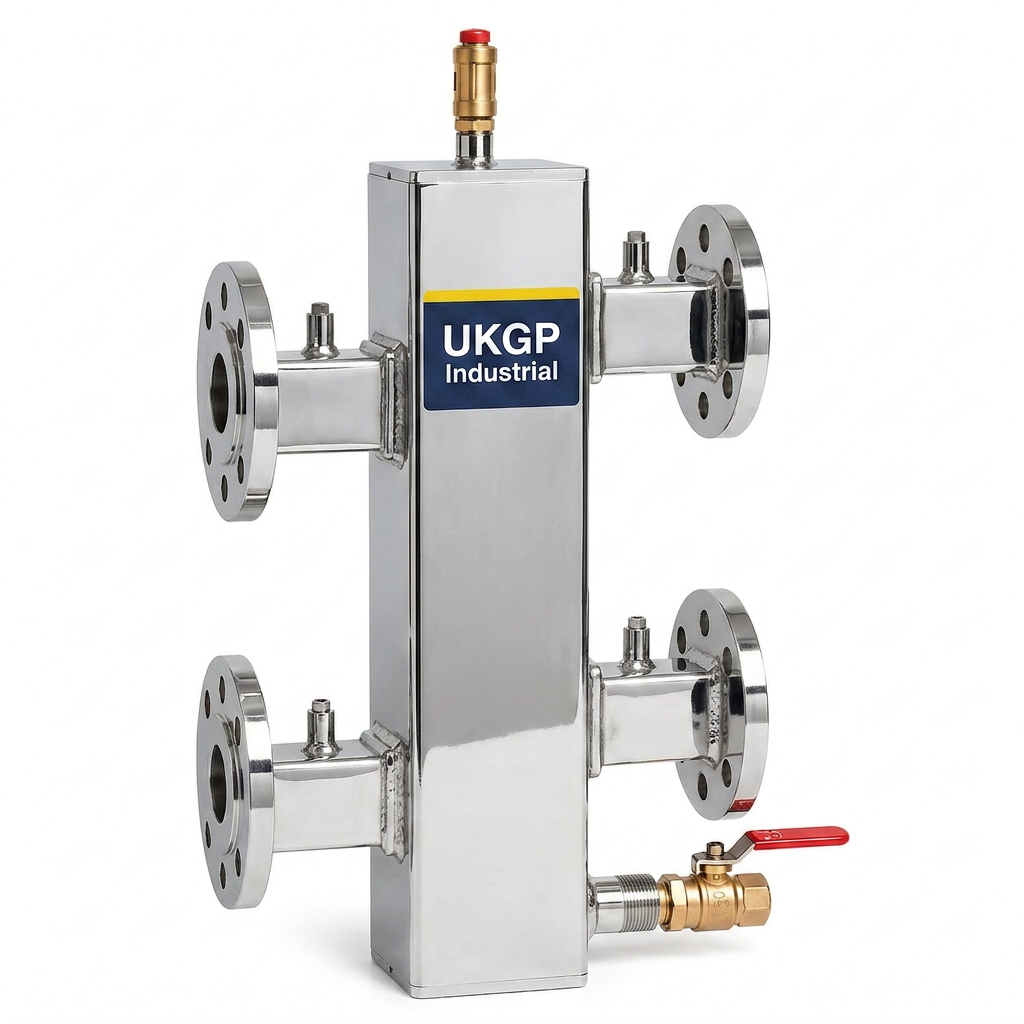
One of the most effective ways to mitigate the risk of a boiler manifold leak is to ensure proper hydraulic separation within the system. Without a dedicated separation vessel, the primary boiler circuit and the secondary heating circuits can interfere with one another, leading to erratic pressure fluctuations and flow turbulence. This turbulence increases the mechanical load on the manifold, making it the focal point for stress-related failures. By installing a high-specification low loss header, engineers can decouple these circuits, allowing the boilers to operate at their design flow rate regardless of the demand on the secondary side. This stabilises the internal pressure and significantly reduces the physical strain on the manifold interfaces.
From a commercial perspective, preventing a boiler manifold leak is about protecting the longevity of the plant. High-efficiency condensing boilers are sensitive to flow variations; if the manifold is leaking, it often implies that the flow rates are not being managed correctly. CIBSE guidelines suggest that hydraulic balance is critical for system efficiency. A professional-grade low loss header acts as a neutral point in the system, ensuring that the primary pumps are not 'fighting' the secondary pumps. This mechanical harmony prevents the surging pressures that often blow out gaskets or cause hairline fractures in poorly manufactured manifolds. It is a proactive measure that pays for itself through reduced downtime and lower maintenance frequency.
When specified by building services consultants, the integration of a low loss header also provides an additional point for de-aeration. Since many leaks are accelerated by air pockets trapped within the manifold, removing micro-bubbles at the point of separation is a strategic move. UKGP provides solutions that serve this dual purpose, ensuring that the structural integrity of your pipework is not undermined by 'air-locking' or cavitation. If you are currently dealing with a recurring boiler manifold leak, it may be time to move away from a basic header pipe and adopt a fully jacketed, engineered separation vessel that offers both thermal efficiency and hydraulic stability across the entire 40 to 2000 kW range.
- Decoupling primary and secondary circuits to reduce pressure spikes.
- Ensuring constant flow rates across the boiler heat exchangers.
- Reducing the risk of pump cavitation and associated vibration.
- Providing a stagnant zone for debris and air removal.
Water Quality and BSRIA BG50 Compliance
The impact of water chemistry on a boiler manifold leak cannot be overstated. BSRIA BG50 sets out clear requirements for the monitoring and maintenance of water quality in closed heating systems. If the dissolved oxygen levels are too high or if the pH balance is incorrect, the internal surfaces of the manifold will undergo rapid oxidation. This creates thin spots that eventually give way under normal operating pressures. Engineers should regularly test the system water and use high-purity chemical dosing to maintain the protective magnetite layer on the steel. Neglecting this part of FM responsibility almost guarantees a manifold failure within the first five to ten years of a plant room's operational life.
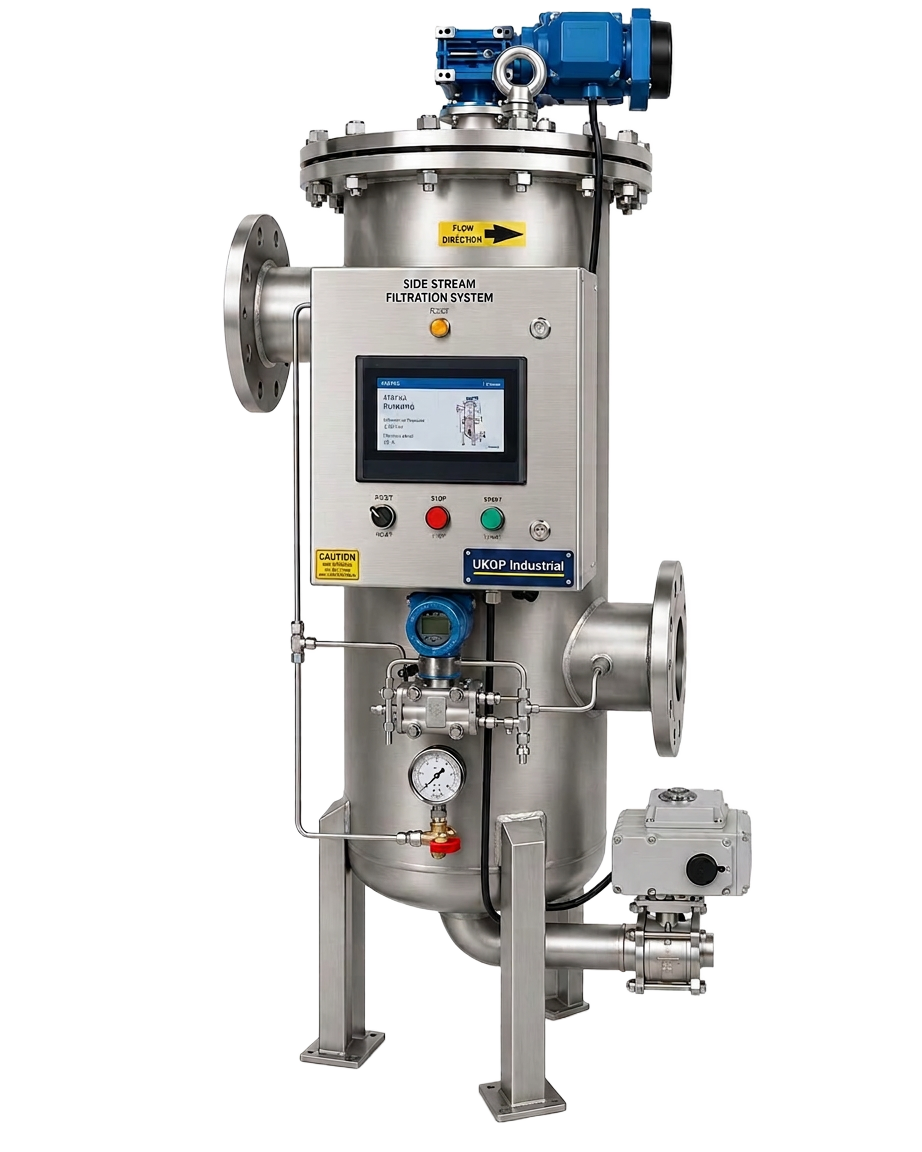
To combat the internal causes of a boiler manifold leak, active filtration and de-aeration are necessary. Side stream filtration systems work alongside the manifold to remove suspended solids that can cause erosion-corrosion at high-velocity zones within the header. When debris settles in the bottom of a manifold, it creates a site for under-deposit corrosion, which is a common but often overlooked cause of leaks in commercial buildings. By combining chemical treatment with mechanical filtration, you create a robust environment where the manifold and headers can thrive. UKGP's range of filtration and dosing products is designed to meet these exact BSRIA standards, providing peace of mind for procurement leads and site engineers alike.
Regular monitoring of pH levels is also vital, as acidic conditions can strip away the protective coatings of both the boilers and the distribution manifold. Utilizing pH sensors and transmitters allows for real-time data collection, ensuring that any deviation from the optimal range is addressed before it leads to a catastrophic boiler manifold leak. In a 24/7 commercial environment, such as a hospital or a data centre, the cost of an emergency shutdown far outweighs the investment in high-quality monitoring equipment. Ensuring your manifold is part of a managed water treatment programme is the most effective way to guarantee the 2-year warranty and beyond for your plant room components.
- Adherence to BSRIA BG50 for chemical treatment and monitoring.
- Integration of side stream filtration to remove erosive debris.
- Real-time pH monitoring to prevent acidic corrosion of steel.
- Regular sampling and laboratory analysis of system water.
Technical Specifications for Replacement Manifolds
When a boiler manifold leak is deemed unrepairable, selecting a replacement requires careful attention to technical specifications. For commercial applications ranging from 40 kW to 2000 kW, the manifold must be robust enough to handle the maximum system pressure and temperature. Standard options include threaded BSP connections for smaller modular setups or PN16 flanged connections for larger, high-volume systems. It is also essential to ensure the replacement is supplied with a high-quality insulation jacket. This not only prevents energy loss in line with Part L of the Building Regulations but also protects the external surface of the manifold from 'sweating' and external corrosion in damp plant room environments.
UKGP Industrial offers low loss headers and bespoke manifolds that are designed specifically to resolve the issues leading to a boiler manifold leak. With a lead time of just 2-3 weeks, we can help contractors meet tight project deadlines during emergency replacement works. These units are manufactured to the highest standards, ensuring that every weld is pressure tested and compliant with UK safety regulations. Choosing a replacement with a 2-year warranty provides additional security for the end-user, ensuring that the new component is a long-term fix rather than a temporary patch. Our technical team can assist in sizing the unit to match your specific boiler flow rates and system Delta-T requirements.
Installation quality is just as important as the component itself. When replacing a manifold after a boiler manifold leak, contractors must ensure that all gaskets are high-temperature rated and that the pipework is correctly aligned. Forcing a manifold into place creates mechanical tension that will eventually lead to a new leak. Professional plant room engineers recommend using EPDM gaskets for flanged connections and high-quality PTFE tape or hemp for smaller threaded joints. Once installed, the system should be slowly brought up to temperature to allow for initial thermal expansion, followed by a double-check of all bolt torques to ensure a permanent, leak-free seal across the entire primary circuit.
- Available for commercial systems from 40 kW to 2000 kW capacity.
- Standard PN16 flanged or BSP threaded connection types.
- Supplied with bespoke insulation jackets to meet Part L regs.
- Fast 2-3 week lead times for emergency plant room repairs.
The Dangers of Ignoring a Minor Leak
Ignoring a small boiler manifold leak is a recipe for disaster in a commercial setting. Even a minor drip can lead to the loss of expensive treated water, forcing the automatic pressurisation unit to introduce raw, oxygenated water into the system. This 'fresh' water brings in new minerals and oxygen, which accelerates the rate of corrosion throughout the entire heating network. What started as a small weep on a manifold can quickly evolve into a widespread problem affecting the boiler heat exchangers and the terminal units. Therefore, detecting a boiler manifold leak early through thermal imaging or moisture sensors is a critical part of a modern facilities management strategy.
Beyond the mechanical damage, a boiler manifold leak poses a significant safety risk. Escaping steam or hot water can cause severe burns, and if the leak is located near electrical switchgear or boiler control panels, it could cause a short circuit or even a fire. Many commercial plant rooms are located in basements or confined areas where water accumulation can lead to structural damage or mould growth. Insurance companies are increasingly looking at maintenance records; if a major failure occurs and there is evidence of a pre-existing, ignored leak, it may complicate the claims process. Protecting your asset means responding to every leak with a professional diagnostic approach.
Finally, the commercial cost of a leak is reflected in the energy bills. A system that is constantly losing water and pressure cannot operate at peak efficiency. The boilers may struggle to maintain the required flow temperature, and the circulation pumps will work harder to overcome the air pockets created by the leak. By investing in a UKGP low loss header or a high-grade manifold replacement early, you eliminate these inefficiencies. Requesting a quote for a properly engineered solution is the first step toward reclaiming plant room control and ensuring that your budget is spent on heat delivery rather than reactive, emergency repairs.
- Oxygen ingress from frequent water top-ups accelerates corrosion.
- Potential for electrical damage and fire hazards in the plant room.
- Increased energy costs and reduced boiler efficiency.
- Higher long-term maintenance costs compared to early intervention.
Future-Proofing Your Plant Room
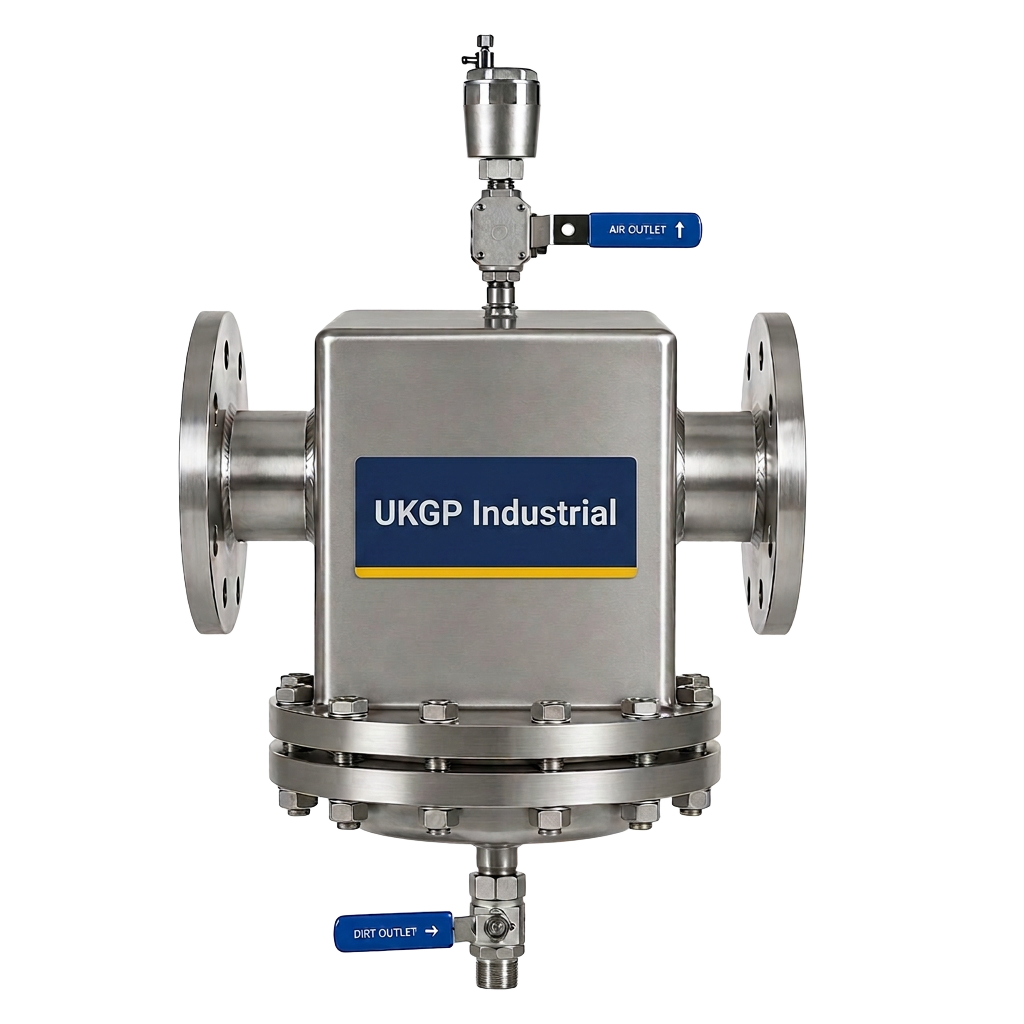
To prevent a boiler manifold leak from recurring, future-proofing your installation is essential. This involves moving beyond standard 'off-the-shelf' pipework and selecting components designed for the specific pressures of your building. Using a low loss header with integrated air and dirt separation is a best-practice approach often recommended by CIBSE. These units provide a dedicated space for water to slow down, allowing air to rise to the top and dirt to settle at the bottom. By removing these contaminants at the manifold level, you protect the most vulnerable parts of the system and ensure that joints and seals are not subjected to abrasive particles or oxidative stress.
Effective expansion management is also a core part of future-proofing. As discussed in BS EN 14917, the expansion of metal components must be accounted for in the design of the manifold assembly. If a boiler manifold leak was caused by thermal stress, the replacement must be installed with compatible expansion bellows or flexible loops. This allows the system to 'breathe' during start-up and shut-down cycles. UKGP's range of expansion bellows and headers provides a comprehensive solution for contractors looking to build resilient systems that can last for decades. Combining these with high-quality valves and sensors creates a modern, intelligent plant room that requires far less manual intervention.
Ultimately, the goal of any M&E professional is to provide a reliable service to the building occupants. Whether it is a school, an office block, or an industrial facility, the heating system is the heart of the building. Resolving a boiler manifold leak with a UKGP solution—featuring flanged or threaded options, 2-year warranties, and rapid UK delivery—ensures the highest standards of engineering. Our low loss headers are specifically built for the UK market, keeping compliance and commercial reality at the forefront of the design. Contact our Surrey-based team today to discuss your project requirements and prevent future leaks from compromising your operations.
- Integration of air and dirt separators to protect piping.
- Proper expansion management using BS EN 14917 bellows.
- Utilising high-quality UKGP components for long-term reliability.
- Focus on system-wide hydraulic balance and water quality.
Frequently asked questions
What is the most common cause of a boiler manifold leak?
- The most common causes are thermal expansion fatigue at the joints and internal corrosion due to poor water treatment (non-compliance with BSRIA BG50). Mechanical vibration and poor initial installation are also frequent contributors.
Can I repair a boiler manifold leak or do I need a replacement?
- Small gasket leaks at the flanges can often be repaired. However, if the leak is due to a crack in the manifold body or extensive internal pitting, a full replacement with a high-quality low loss header is recommended to prevent recurring failures.
How does a low loss header prevent manifold leaks?
- A low loss header decouples the primary and secondary circuits, which stabilises system pressure and reduces flow turbulence. This physical separation lowers the mechanical stress on the manifold and surrounding pipework.
What are the lead times for a UKGP replacement manifold?
- UKGP Industrial offers a 2-3 week lead time for our commercial low loss headers and manifolds, which are available for systems ranging from 40 kW to 2000 kW.
Are UKGP manifolds supplied with insulation?
- Yes, our low loss headers and manifolds come with custom-fit insulation jackets to ensure compliance with Part L of the Building Regulations and to prevent external corrosion from condensation.