Thermal expansion and the role of the bellows expansion joint
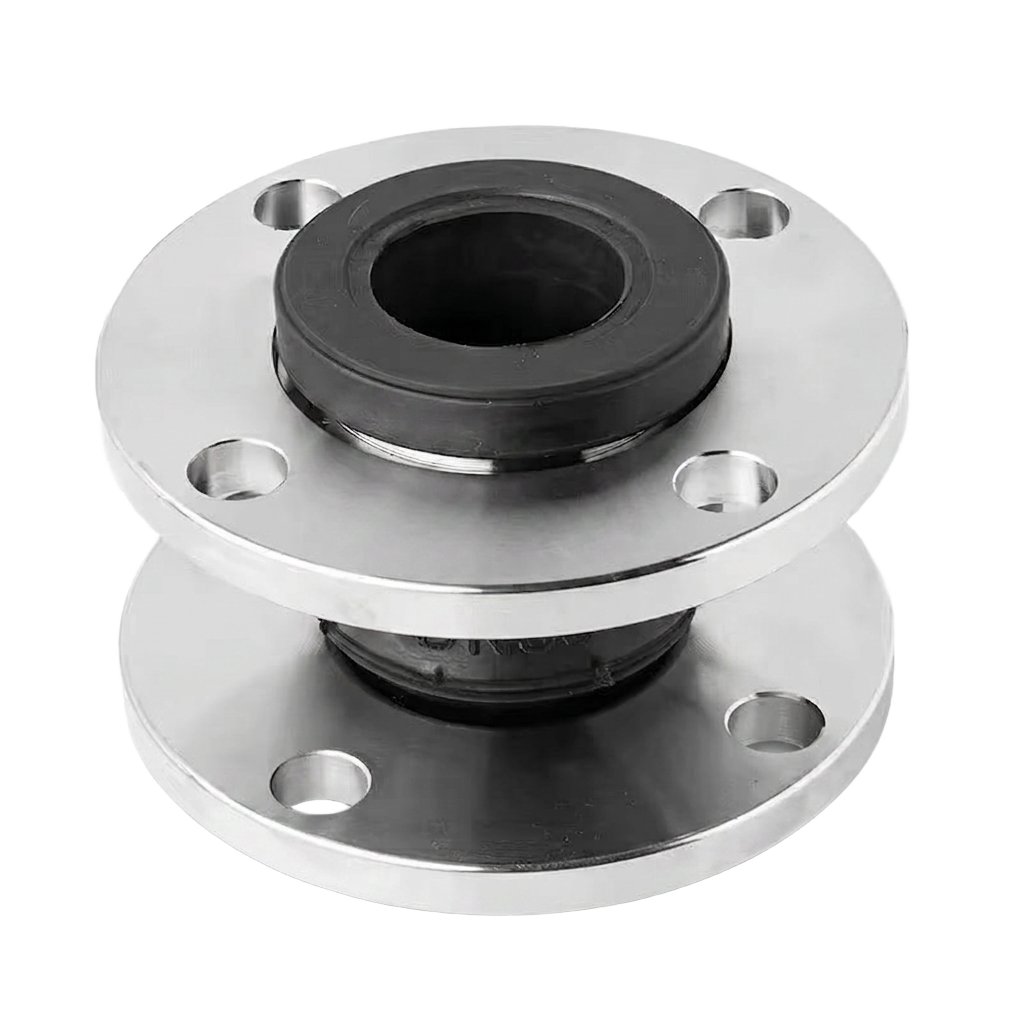
In modern commercial building services, the management of thermal movement is non-negotiable. As water temperatures fluctuate within LTHW or chilled water circuits, the metallic pipework undergoes significant linear expansion and contraction. Without the integration of a specifically engineered bellows expansion joint, this movement would exert immense stress on fixed points, pumps, and boilers, leading to catastrophic weld failures or flange leaks. Engineers must calculate the precise amount of movement expected across a pipe run by considering the material's coefficient of expansion and the maximum temperature delta. This technical calculation forms the baseline for selecting a unit that can handle the required axial, lateral, or angular movement without fatigue.
When consulting CIBSE Guide C, it becomes clear that failing to account for pipe stress is a leading cause of mechanical failure in UK plant rooms. A bellows expansion joint serves as the flexible member that absorbs this energy, protecting the investment of the client and ensuring the system operates within its design parameters. At UKGP Industrial, we focus on providing expansion solutions that match the rigorous demands of BSRIA BG29 and BG50 maintenance frameworks. By installing a robust compensator, M&E contractors can mitigate the risk of pipe buckling, which is often a hidden precursor to expensive system downtime and emergency repairs in high-occupancy commercial premises.
The selection process goes beyond just choosing a diameter; it involves understanding the medium being transported and the external environment of the installation. For example, a bellows expansion joint used in a secondary heating circuit may require different metallurgy or elastomer compounds compared to one used in a process cooling line. UKGP Industrial offers a comprehensive range, including rubber EPDM/NBR, stainless steel, PTFE, and fabric options, ensuring that whether you are dealing with aggressive chemicals or standard potable water, the thermal compensation remains reliable. Providing units from DN15 to DN600, we ensure that every scale of commercial pipework is covered by a solution that carries a 2-year warranty for peace of mind.
- Calculated thermal expansion based on BS EN 14917 standards
- Mitigation of mechanical stress on terminal units and pumps
- Protection against vibration and acoustic transmission in steel pipework
- Prevention of fatigue-related failures in welded joints
Sizing a bellows expansion joint for commercial systems
Sizing is the most critical phase of the design process. An undersized bellows expansion joint will reach its limit of compression or extension too quickly, leading to premature failure of the convolutions. Conversely, an oversized unit may lack the necessary flexibility to respond to small, frequent temperature cycles, or may introduce unnecessary cost and bulk into the pipework layout. To size correctly, engineers must identify the 'effective area' of the bellows and the resultant pressure thrust that will be applied to the anchors. This thrust can be substantial, often reaching several tonnes in large diameter high-pressure systems, requiring substantial structural steelwork to contain the forces generated during system pressurisation.
We recommend that M&E contractors utilise precise software modelling or manufacturer tables to correlate the installation temperature with the maximum and minimum operating temperatures. This allows for the 'cold pull' or 'pre-setting' of the bellows expansion joint if required, ensuring it sits in its neutral position during the most common operating state. UKGP Industrial provides technical data sheets for our full range of stainless steel and EPDM units to assist in these calculations. Proper sizing ensures that the bellows operates within its elastic limit, significantly extending the service life of the component and reducing the maintenance burden on facilities management teams who are following BS 8552 water quality and system monitoring guidelines.
Beyond linear movement, sizing must also account for potential lateral offset if the pipework is not perfectly aligned. While a standard axial bellows expansion joint is designed primarily for straight-line movement, many commercial builds involve complex tight-radius bends where a lateral or angular compensator is more appropriate. UKGP Industrial stocks a wide variety of flanged or weld-end configurations to suit these specific geometric challenges. When you order from our DN15-DN600 range, you receive a product engineered to exact UK specifications, backed by a 2-year warranty that reflects our confidence in the durability of our EPDM, NBR, and stainless steel constructions.
- Evaluation of maximum axial compression and extension requirements
- Assessment of pressure thrust forces on main and intermediate anchors
- Consideration of flow velocity and the need for internal sleeves
- Verification of temperature and pressure ratings against system peaks
Installation best practices and anchor placement
Installation of a bellows expansion joint must be executed with precision to avoid 'squirm' or instability. The pipework must be adequately guided; typically, the first guide should be placed within four pipe diameters of the expansion joint, with the second guide within fourteen diameters. This prevents the bellows from bowing under pressure. Furthermore, main anchors must be robust enough to withstand the sum of the pressure thrust and the force required to deflect the bellows. Many onsite failures attributed to the product are actually the result of inadequate anchoring, which allows the pipework to move uncontrollably and over-extend the flexible element beyond its design limits.
During the installation phase, it is vital to ensure that the bellows expansion joint is not used to correct for poor pipe alignment unless it is specifically designed to handle lateral movement. Forcing a flanged bellows into a gap that is too wide or misaligned can introduce torsional stress, which is the primary cause of rapid fatigue in stainless steel convolutions. For contractors working on plant room refurbishments, checking the integrity of existing anchors is as important as the installation of the new joint. Using our weld-end or flanged options provides the flexibility needed for various connection methods, ensuring a leak-free seal that stands up to the rigours of commercial heating cycles.
A final check before system commissioning involves verifying that all shipping bolts or transit bars have been removed from the bellows expansion joint. These bars are essential for protecting the unit during transport and handling but will prevent the unit from functioning if left in place during operation. At UKGP Industrial, we ensure our units are clearly marked and easy to install. Whether you are fitting a PTFE-lined unit for corrosive environments or a standard EPDM bridge for a secondary return, following these guiding principles will ensure your system meets the high standards required by BSRIA BG29 for pre-commissioning cleaning and long-term stability.
- Primary guide placement within 4D of the expansion joint
- Verification of anchor strength to resist full pressure thrust
- Removal of transit bars only after anchors and guides are secured
- Strict adherence to flange bolting torques to prevent gasket failure
Maintaining water quality to protect expansion units
While mechanical installation is critical, the chemical environment inside the pipework also dictates the longevity of a bellows expansion joint. BSRIA BG50 highlights the importance of controlling corrosion and scaling in closed-loop systems. In stainless steel bellows, the presence of high chloride levels can lead to stress corrosion cracking (SCC), particularly in the highly stressed regions of the convolutions. Therefore, integrating high-quality water treatment and filtration solutions is essential. A system that is poorly filtered will allow debris to settle in the bellows' ridges, leading to localised corrosion and restricted movement, which ultimately causes a breach in the system boundary.
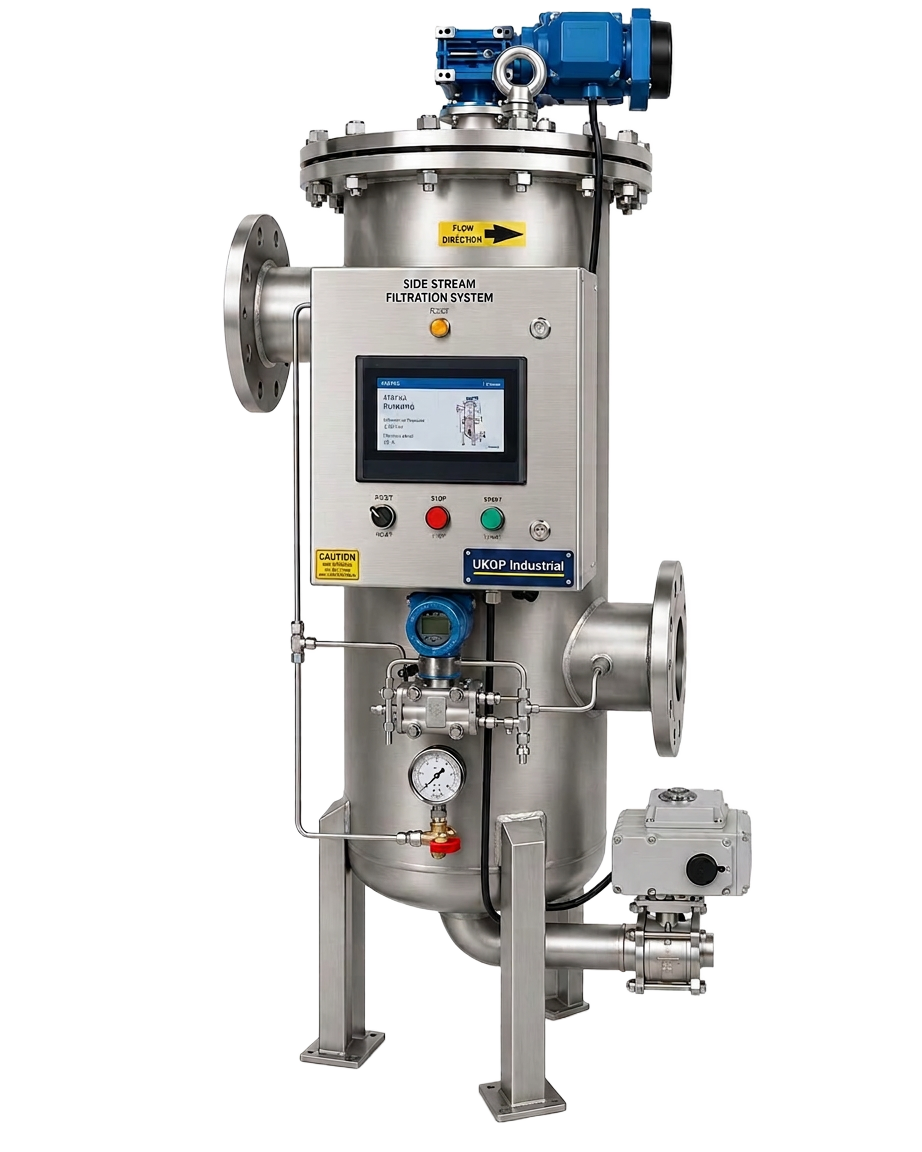
To mitigate these risks, UKGP Industrial recommends the use of side stream filtration skids alongside our expansion solutions. By removing suspended solids and magnetite down to 5 microns, you protect the thin-walled convolutions of the expansion bellows from erosion and particulate build-up. Similarly, ensuring the system pH is correctly balanced using our pH sensors and transmitters can prevent the aggressive de-passivation of stainless steel surfaces. A holistic approach to system health—combining mechanical flexibility with chemical stability—is the only way to achieve the 20-year service life often expected in commercial contracts.
For engineers managing historical plant rooms, the addition of a chemical dosing pot is a cost-effective way to maintain inhibitor levels that protect both the heat exchangers and the flexible expansion joints. When a bellows expansion joint is installed in a system with superior water quality, the risk of fatigue is significantly lowered. Our technical team can advise on the best combination of rubber or metallic joints based on your specific water treatment regime, ensuring that your DN15-DN600 components remain in peak condition long after the standard 2-year warranty period has concluded.
- Prevention of stress corrosion cracking through chloride monitoring
- Removal of abrasive particulates that cause convolution erosion
- Regular dosing of inhibitors via dedicated dosing pots
- Integration of side stream filtration to maintain low turbidity
Materials selection: EPDM versus Stainless Steel
The choice of material for a bellows expansion joint depends primarily on temperature, pressure, and the medium. EPDM rubber bellows are excellent for chilled water and LTHW systems where temperatures do not exceed 100-110 degrees Celsius. They offer superior acoustic damping and can absorb a significant amount of vibration, making them ideal for connections to pumps and chillers. However, for high-temperature steam or high-pressure DHW systems, stainless steel is the industry standard. Stainless steel units provide the structural integrity required for high-stress applications and are resistant to a wider range of chemical profiles, provided the water chemistry is managed according to BS EN standards.
Fabric and PTFE bellows serve more niche applications, such as air handling ducts or highly corrosive chemical lines where metallic or rubber options would quickly degrade. At UKGP Industrial, we stock a versatile range to ensure any M&E project can find a suitable match. Our stainless steel bellows are often preferred for their robustness in commercial risers, while our NBR options are specifically sourced for oil-bearing media. Understanding the mechanical properties of these materials—such as the spring rate and the cycle life—is essential for the procurement leads who must balance upfront project costs with long-term operational expenditure.
Regardless of the material chosen, the quality of the manufacture is paramount. Every bellows expansion joint supplied by UKGP Industrial undergoes rigorous quality control to ensure it meets the dimensional tolerances required for easy onsite fitment. With options for flanged or weld-end connections across our DN15 to DN600 range, we provide the versatility needed for both new builds and complex plant room retrofits. Should you require assistance in selecting between a stainless steel or EPDM unit for your specific application, our Surrey-based technical team is available to provide expert guidance and competitive quotes for your entire bill of materials.
- EPDM: Best for vibration isolation and LTHW systems
- Stainless Steel: Ideal for high pressure, steam, and thermal extremes
- PTFE: Essential for aggressive chemical or high-purity media
- Nitrile (NBR): Specifically designed for oil and gas service
Ensuring longevity with UKGP Industrial expansion solutions
In conclusion, the successful deployment of a bellows expansion joint requires a detail-oriented approach to sizing, material selection, and installation. By adhering to the guidelines set out in CIBSE and BSRIA documentation, and by referencing BS EN 14917 for flexible pipework, engineers can avoid the common pitfalls that lead to system failure. The cost of a high-quality expansion joint is a fraction of the cost of a major flood or a prolonged system shutdown, making the specification of UKGP Industrial products an investment in building resilience and operational continuity for any FM or contractor.
Our commitment at UKGP Industrial is to provide Surrey and the wider UK market with high-performance components that exceed industry standards. Every bellows expansion joint we supply, from the smallest DN15 to the largest DN600, is backed by a 2-year warranty. We understand that procurement leads and site engineers need reliability and fast lead times, which is why we maintain a robust stock profile of rubber, stainless steel, and PTFE units. By choosing a UK-based supplier with deep technical expertise in plant room dynamics, you gain more than just a component; you gain a partnership focused on engineering excellence and commercial efficiency.
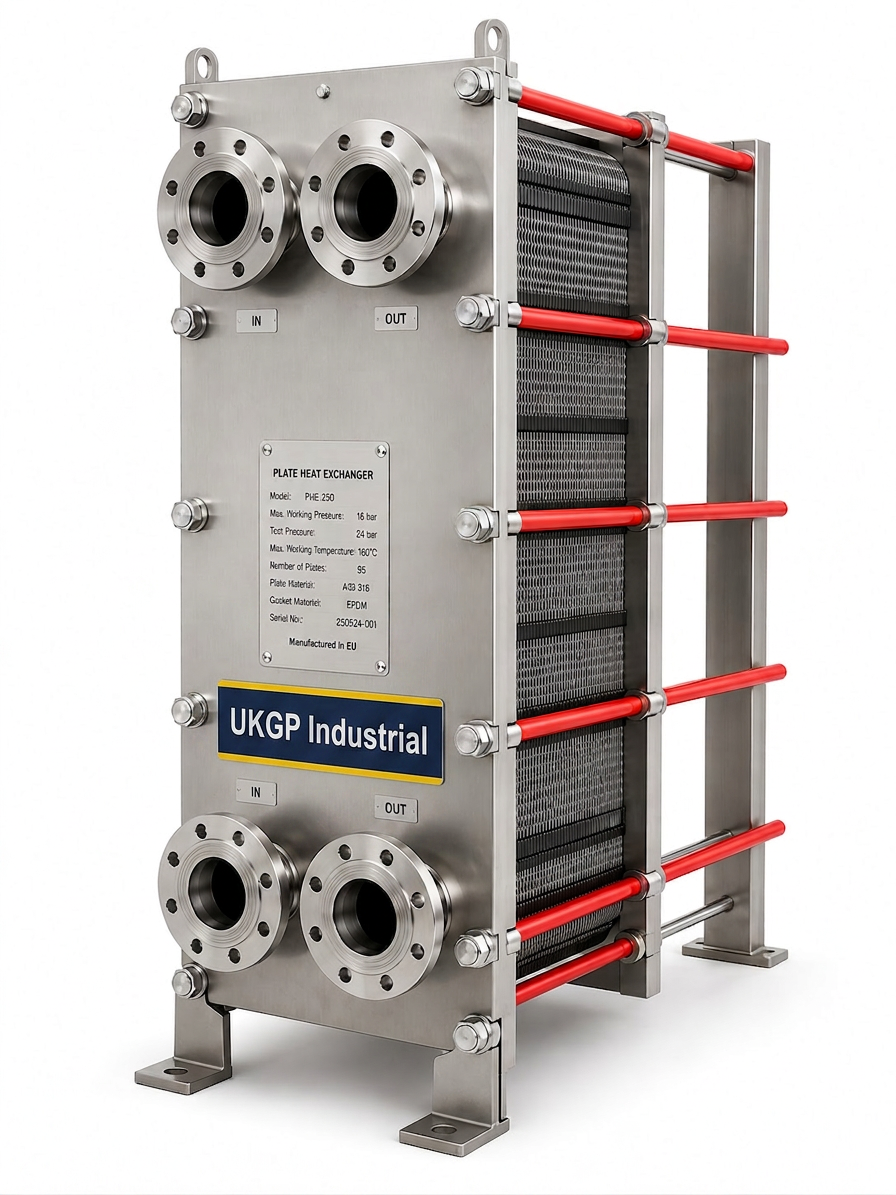
If you are currently at the design or procurement stage for a commercial pipework project, we invite you to reach out for a technical consultation. We can help you navigate the complexities of bellows expansion joint sizing to ensure your anchors are correctly loaded and your pipework is fully protected against thermal stress. From plate heat exchangers to low loss headers, UKGP Industrial is your one-stop shop for high-quality HVAC and industrial plant room equipment. Contact our team today to discuss your requirements or to request a quote for our expansion bellows range, and see why we are the preferred choice for UK building services consultants.
- 2-year warranty on all EPDM and stainless steel expansion units
- Technical support for sizing and anchor load calculations
- Vast stock range from DN15 to DN600 for rapid UK delivery
- Compliance with BS EN 14917 and CIBSE recommendations
Frequently asked questions
What is the primary purpose of a bellows expansion joint?
- The primary purpose is to absorb thermal expansion and contraction in pipework, preventing stress build-up on anchors and sensitive equipment like pumps or boilers.
How do I choose between a rubber and a stainless steel bellows expansion joint?
- Choose rubber (EPDM/NBR) for vibration isolation and LTHW/chilled water up to 110C. Choose stainless steel for higher temperatures, steam, high pressures, or where mechanical robustness is critical.
Are UKGP expansion bellows compliant with industry standards?
- Yes, our units are designed and manufactured in alignment with BS EN 14917 and are suitable for systems following BSRIA BG29 and BG50 guidelines.
What sizes are available for the bellows expansion joint range?
- UKGP Industrial supplies units from DN15 up to DN600, with options for flanged or weld-end connections to suit any commercial pipework system.
Do your expansion bellows come with a warranty?
- Every bellows expansion joint supplied by UKGP Industrial comes with a 2-year warranty, covering EPDM, NBR, stainless steel, and PTFE material types.