The Engineering Logic Behind a 40kw Low Loss Header
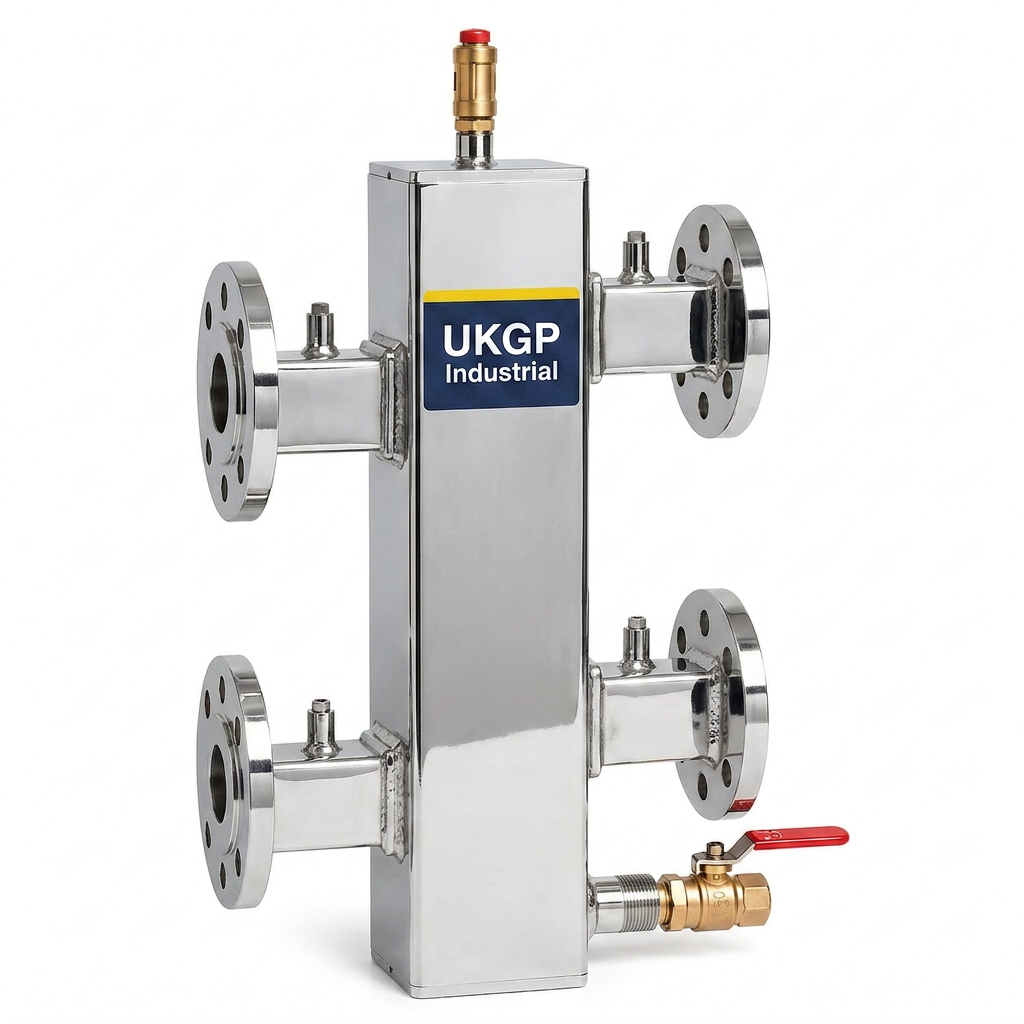
In modern commercial heating installations, the 40kw low loss header serves as the fundamental point of hydraulic decoupling. By creating a neutral pressure zone, it allows the primary boiler loop to operate at a constant flow rate independently of the variable flow requirements within the secondary heating circuits. This is particularly vital for plant rooms where high-efficiency condensing boilers are utilized, as it ensures that the returns are sufficiently cool to promote condensation while preventing the primary pump from being influenced by secondary zone valves or pumps. Failure to install a correctly sized header can lead to chaotic thermal distribution and excessive wear on boiler components due to rapid cycling.
From a technical perspective, the primary objective is to maintain a low velocity within the header body, typically below 0.5 metres per second. This low-velocity environment allows for natural air separation and dirt settlement, which aligns with best practices outlined in BSRIA BG29 for pre-commissioning cleaning and BG50 for water treatment. When choosing a 40kw low loss header, engineers must calculate the peak flow rate of the system to ensure the vessel diameter is sufficient to manage the fluid dynamics without inducing turbulence. This ensures that the temperature sensor located at the top of the header provides an accurate representation of the supply water temperature to the building management system.
UKGP Industrial provides precision-engineered headers that cater to these specific light-commercial demands. Our units are designed to handle the 40-2000 kW range, ensuring that even at the lower end of the spectrum, the hydraulic integrity of your system remains uncompromised. Whether you are working with a single boiler or a small cascade, incorporating a dedicated header is a robust way to future-proof the installation against common commissioning headaches. All units come with high-quality insulation jackets as standard to minimize heat loss, which is a key requirement for achieving Part L compliance in UK building regulations.
- Decouples primary and secondary hydraulic circuits effectively
- Prevents pump conflict in multi-zone commercial applications
- Supports boiler longevity by reducing frequent start-stop cycles
- Enables accurate thermal monitoring for BMS integration
Calculating Flow Rates for Commercial Heating
To accurately size a 40kw low loss header, an engineer must first determine the design temperature drop, usually denoted as Delta T. For a standard 40 kW load with a Delta T of 20°C (common in condensing boiler sets), the flow rate would be approximately 1.72 cubic metres per hour. However, if the system is designed for a lower Delta T of 11°C, the flow rate increases significantly to roughly 3.12 cubic metres per hour. It is this volume of water that dictates the physical dimensions of the header. If the internal velocity exceeds the recommended limits, the header will fail to provide true hydraulic separation, leading to bypassed flow and reduced system efficiency.
M&E contractors must also account for the secondary side flow requirements, which may fluctuate based on thermostatic demands. If the secondary flow exceeds the primary flow, the return water from the heating circuits will mix with the supply water within the header, effectively lowering the flow temperature to the emitters. Selecting a 40kw low loss header with sufficient internal volume helps buffer these changes, providing a more stable thermal environment. It is also worth noting that CIBSE guidelines suggest that oversizing a header slightly is far more beneficial than undersizing, as the primary goal is total pressure neutrality between the interconnected pipework loops.
At UKGP, we simplify this process by offering flanged or threaded options that suit standard pipework configurations. Our 40kw units are available with BSP or PN16 connections, allowing for a seamless fit into any plant-room layout. With a lead time of just 2-3 weeks, procurement leads can keep projects on schedule without sacrificing quality. Furthermore, the 2-year warranty provided with our headers offers peace of mind to facility managers and building owners, ensuring that the critical infrastructure of their HVAC system is backed by a reliable UK-based manufacturer known for technical excellence.
- Calculate flow rate using Q = P / (1.16 × ΔT)
- Maintain internal velocity stay below 0.5 m/s
- Consider secondary pump head and its influence on the neutral zone
- Ensure compatibility with both flanged and threaded pipework
Protecting the 40kw Low Loss Header with Side Stream Filtration
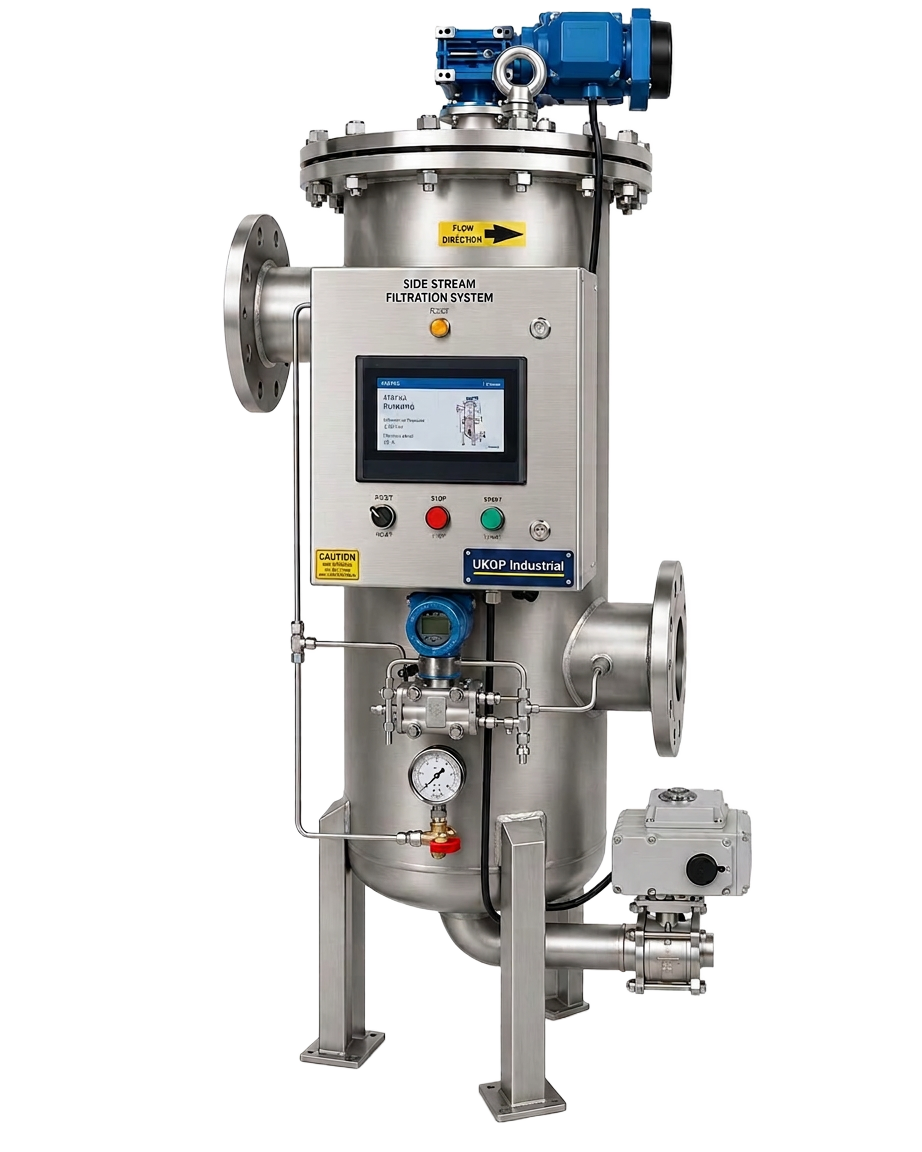
While the 40kw low loss header acts as a natural collection point for debris, it should not be the only line of defence against system contamination. BSRIA BG50 highlights the importance of maintaining water quality to prevent the accumulation of magnetite and scale, which can significantly reduce the heat transfer efficiency of the boiler and the header itself. High-velocity particles can cause erosion and corrosion within the delicate components of a commercial system. Therefore, integrating a high-performance side stream filtration unit alongside your header is highly recommended for any commercial installation reaching 40 kW and above.
Side stream filtration works by diverted a portion of the system flow through a high-efficiency filter medium, removing suspended solids down to sub-micron levels. When installed in conjunction with a 40kw low loss header, the filtration system ensures that the water passing through the boilers remains clean, protecting heat exchangers from fouling. This is particularly relevant in retrofit scenarios where old steel pipework may be present, as the introduction of new high-efficiency boilers can often dislodge existing sludge. By keeping the water clear, you maintain the designed flow rates and ensure the low loss header operates as the manufacturer intended.
UKGP Industrial offers a range of side stream filtration skids that complement our header range perfectly. By specifying both components together, M&E contractors can ensure a cleaner, more efficient system from day one. Proper water treatment, including the use of dosing pots and routine monitoring via pH sensors, further extends the lifespan of the entire HVAC network. For those managing strict project budgets and timelines, our rapid turnaround and expert technical support ensure that your water quality management strategy is both compliant with BS 8552 and commercially viable for the end-user.
- Reduces magnetite and suspended solids accumulation
- Complies with BSRIA BG50 water quality guidelines
- Protects expensive boiler heat exchangers from fouling
- Maintains design flow rates and thermal efficiency over time
Installation Best Practices for Low Loss Headers
Correct installation of a 40kw low loss header is paramount for its effectiveness. The unit must be mounted vertically to allow the air and dirt separation features to function correctly. An automatic air vent should be installed at the top tapping point, and a drain valve at the bottom to allow for periodic blow-down of collected sludge. It is also essential that the header is properly insulated to prevent unnecessary heat gain in the plant room, which our UKGP units facilitate through the provision of custom-fit, high-performance insulation jackets. This is often an overlooked detail that can significantly impact the overall energy rating of the HVAC system.
Positioning of the temperature sensors is another critical factor. The BMS sensor should ideally be placed in a dedicated pocket on the supply side of the header to ensure it reads the blended temperature accurately. This allows the boiler controller to modulate input based on the actual demand of the secondary circuits. For contractors dealing with tight plant-room spaces, our compact headers provide a versatile solution without compromising on the internal volume necessary for hydraulic decoupling. Always ensure that there is sufficient clearance for maintenance, particularly for accessing the air vent and the drain-off point during routine service intervals.
When piping the header, check that the primary flow is entering at the highest side connection and returning from the lowest on the same side, while the secondary side follows the opposite logic. This creates a cross-flow pattern that encourages the mixing and separation needed. Using a 40kw low loss header from UKGP means you are getting a product designed by engineers who understand these nuances. Our headers are robustly manufactured and pressure tested to ensure they meet the rigorous demands of UK commercial environments. Request a quote today to see how our PN16 or BSP options can be integrated into your next project with minimal fuss.
- Mount vertically to facilitate air and dirt separation
- Install automatic air vents at the highest tapping point
- Utilize the provided insulation jacket for Part L compliance
- Ensure correct primary and secondary pipework orientation
Material Compatibility and BS EN Standards
The construction material of a 40kw low loss header must be compatible with the rest of the system's metallurgy. Most commercial headers are manufactured from carbon steel, which is perfectly suitable for closed-loop heating systems provided that water chemistry is strictly managed according to BS 8552. At UKGP, we ensure that our headers are fabricated to the highest standards, including a durable external finish to prevent atmospheric corrosion in damp plant-room environments. For systems involving significant thermal expansion, it is also advisable to consider the placement of expansion bellows to manage the stresses on the header's connection points.
Conformity to standards such as BS EN 14917 for expansion joints and relevant pressure vessel directives ensures that the installation remains safe and reliable over its lifecycle. A 40kw low loss header might seem like a simple vessel, but its role in managing system pressure and thermal expansion is significant. When secondary zones cycle on or off, the header mitigates the resulting pressure shocks that could otherwise damage boiler seals or sensitive control valves. This mechanical robustness is why UK-based consultants prefer UKGP equipment; we don't just supply hardware, we provide components that align with the high engineering standards expected in the UK construction industry.
Professional installers also appreciate the ease of commissioning that comes with a high-quality header. By providing a stable pressure environment, balancing the secondary circuits becomes a much simpler task for the commissioning engineer. This often results in a faster handover process and fewer call-backs during the initial heating season. Whether you require a standard threaded 40kw low loss header or a bespoke flanged unit for a more complex manifold, our technical team is available to assist with sizing and selection. Our 2-week lead time ensures that even last-minute design changes don't derail your project completion date.
- Manufactured from high-grade carbon steel for durability
- Compatible with BS 8552 water quality management protocols
- Reduces mechanical stress on boiler seals and control valves
- Supports faster and more accurate system commissioning
Procurement and Performance Guarantee
For procurement leads and FM managers, the reliability of the supply chain is as important as the performance of the equipment itself. Choosing a UKGP 40kw low loss header ensures that you are sourcing from a reputable Surrey-based supplier with deep expertise in the UK market. We understand that project delays are costly, which is why we maintain a lean production process that delivers high-quality headers within a 2-3 week window. This speed of delivery, combined with a comprehensive 2-year warranty, makes our headers a low-risk, high-reward choice for any commercial HVAC installation planning to operate within the 40-2000 kW range.
The performance of a 40kw low loss header is often the lynchpin of a building's comfort and energy efficiency. An incorrectly specified header will lead to uneven heat distribution and higher utility bills, frustrating facility managers and tenants alike. By selecting a unit that is specifically designed for low velocity and high-efficiency separation, you are investing in the long-term health of the building's infrastructure. Our technical datasheet provides all the necessary measurements for flanged and threaded types, ensuring that your CAD and BIM models are accurate from the start, reducing the risk of coordination errors on site during the installation phase.
In conclusion, the 40kw low loss header is an indispensable component for modern, high-efficiency boiler plants. It bridges the gap between complex primary heat generation and varied secondary distribution, providing the hydraulic stability necessary for peak performance. With UKGP Industrial, you get more than just a steel vessel; you get a engineered solution backed by practical UK expertise and a commitment to quality. Contact us today for a competitive quote or to discuss the specific flow rate requirements of your next 40 kW commercial project with one of our lead engineers.
- Surrey-based manufacturing for reliable UK supply chains
- Short 2-3 week lead time for both standard and custom units
- 2-year warranty on all commercial low loss header units
- Available in PN16 flanged or BSP threaded configurations
Frequently asked questions
Why is a 40kw low loss header needed for a single boiler?
- Even with a single boiler, a header is necessary to decouple the primary pump from the secondary system, ensuring the boiler always receives the correct flow rate regardless of how many heating zones are active.
What is the typical lead time for a 40kw low loss header?
- UKGP Industrial offers a standard lead time of 2-3 weeks for our low loss headers, including those in the 40-2000 kW range, complete with insulation jackets.
Can I get a 40kw low loss header with flanged connections?
- Yes, our headers are available with both BSP threaded and PN16 flanged connections to suit your specific project requirements and pipework standards.
Does the 40kw low loss header help with air and dirt separation?
- Yes, by reducing fluid velocity to below 0.5 m/s, the header allows air to rise to the top for venting and dirt to settle at the bottom for drainage, aiding compliance with BSRIA BG50.
Is insulation included with the 40kw low loss header?
- Every UKGP low loss header comes with a bespoke, high-performance insulation jacket as standard to ensure thermal efficiency and Part L compliance.