Understanding the Fundamentals: What is pH Meter Technology?
To define what is ph meter technology in a B2B industrial context, one must look beyond simple handheld devices used in laboratory settings. In building services, a pH meter is a sophisticated analytical assembly designed to provide a real-time measurement of the acidity or alkalinity of system water. This measurement is expressed on a logarithmic scale from 0 to 14, where a value of 7.0 is neutral. For closed-loop heating and chilled water systems, maintaining a stable alkaline environment—typically between 8.2 and 10.0 depending on the metallurgy involved—is critical. If the pH level drops below these thresholds, the fluid becomes acidic, leading to the rapid degradation of carbon steel and copper components through oxygen-driven corrosion processes.
The components that answer what is ph meter functionality in the field include a high-impedance electrode and a reference junction. When immersed in the process fluid, the glass membrane of the sensor develops a potential difference based on the concentration of hydrogen ions. This millivolt signal is then interpreted by a transmitter and converted into a standardised industrial output, such as 4-20 mA or Modbus RTU, for integration into a Building Management System (BMS). Without this automation, facility teams are forced to rely on manual dip-testing, which often fails to capture the transient fluctuations in water chemistry that occur during system top-ups or chemical dosing events, leaving the plant vulnerable to long-term structural damage.
When consulting engineers ask what is ph meter precision in the context of BSRIA BG50 monitoring, they are looking for repeatability and low drift. Industrial-grade sensors are engineered to withstand the pressures and temperatures of a commercial plant room while providing a reliable data stream. It is not merely a tool for measurement but a defensive asset that triggers alarms when chemical inhibitors have depleted or when bacterial activity begins to sour the system water. By implementing a permanent sensing solution, contractors can demonstrate compliance with rigorous risk management protocols and ensure that the initial water treatment strategy remains effective throughout the building's lifecycle, protecting the client's capital investment from the outset.
- Measures hydrogen-ion activity in liquid-based closed-loop systems.
- Converts electrochemical potential into a readable digital or analogue signal.
- Crucial for maintaining BSRIA BG50 and BG29 water quality standards.
- Provides 24/7 monitoring to prevent acidic pitting of heat exchangers.
Integration with BSRIA BG50 and Water Quality Standards
In the UK building services sector, the management of water quality is dictated by the BSRIA BG50 'Water Treatment for Closed Heating and Cooling Systems' guidelines. These documents place a heavy emphasis on consistent monitoring to prevent the build-up of corrosion products and microbiological growth. When evaluating what is ph meter integration, engineers must consider how the data supports these regulatory requirements. High-quality pH monitoring allows for the early detection of issues that lead to sludge formation and restricted flow. By trending pH data over weeks and months, maintenance teams can move away from reactive repairs and toward a data-driven predictive maintenance model that satisfies the most demanding insurance and health & safety audits.
Furthermore, BS 8552:2012 provides a code of practice for sampling and monitoring water quality in buildings, highlighting the limitations of periodic grab sampling. A fixed pH sensor offers a continuous oversight that manual interventions cannot match. When liquid chemistry shifts, perhaps due to the introduction of raw make-up water, the pH can drop significantly before a scheduled service visit. This drop increases the solubility of metals, leading to the thinning of pipe walls and the fouling of secondary circuits. Integrating a robust industrial pH transmitter into the loop ensures that such deviations are logged instantly, allowing the BMS to modulate dosing pumps or alert the FM partner before the damage becomes irreversible.
The role of pH measurement also extends to the commissioning phase covered by BSRIA BG29. During pre-commission cleaning, the removal of debris and the application of passivating films require tight control over alkalinity levels. An accurate understanding of what is ph meter reliability means during this phase can prevent the failure of the newly installed plant. If the pH is not recovered to the required levels after acid cleaning or flushing, the system starts its operational life in a hyper-corrosive state. Specifying high-spec sensing equipment at the design stage ensures that contractors can verify the success of the cleaning process and provide the end-user with a certified, stable environment for their HVAC assets.
- Ensures compliance with BSRIA BG50 Water Treatment guidelines.
- Supports BS 8552 code of practice for continuous water monitoring.
- Facilitates proof of passivation during BG29 pre-commission cleaning.
- Reduces reliance on manual sampling and reduces labour costs.
Total Protection: Combining Sensors with Side Stream Filtration
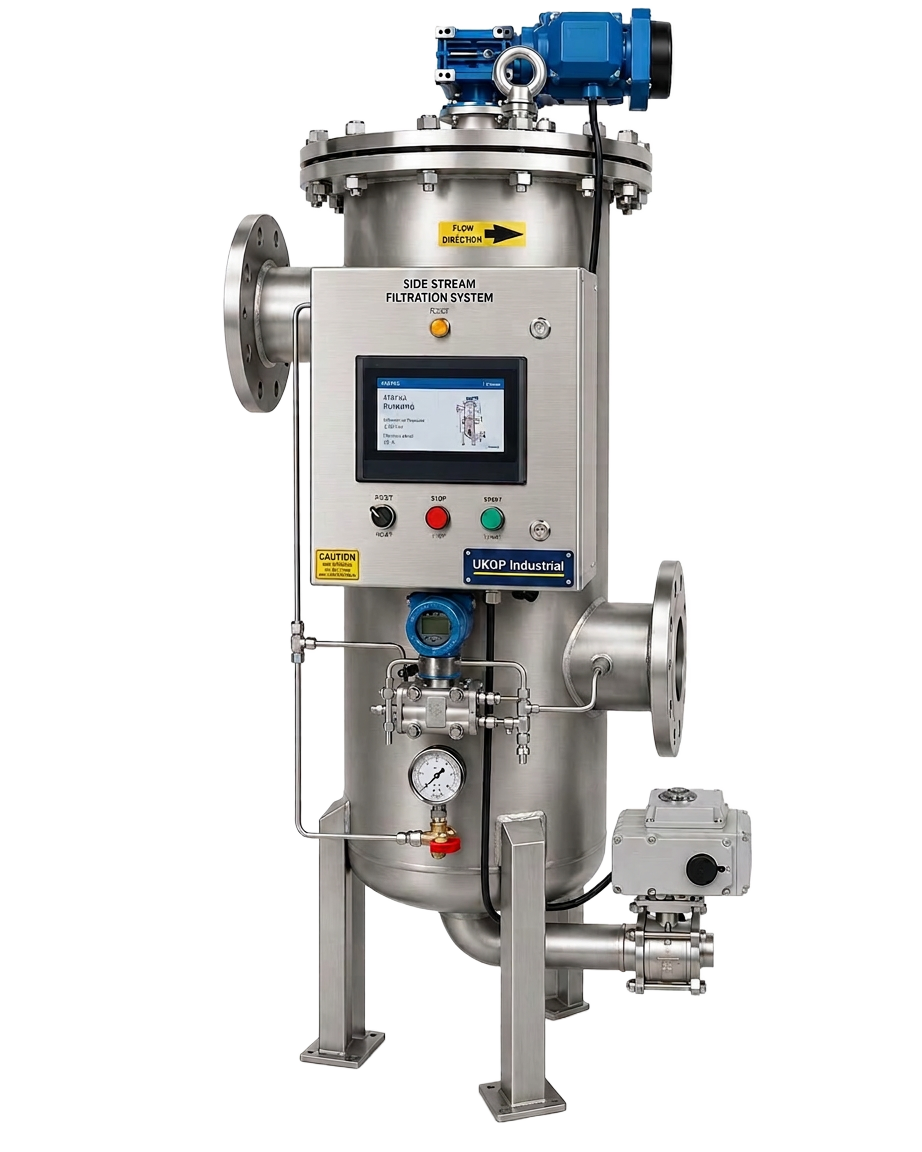
While knowing what is ph meter data helps manage chemical balance, it is only one part of a holistic water treatment strategy. To truly protect a heat network, pH monitoring should work in tandem with physical debris removal. UKGP side stream filtration skids are often the first line of defence, removing suspended solids and magnetite that can interfere with sensitive sensor probes. If a pH sensor becomes coated in iron oxide, its response time slows and its accuracy drifts, leading to false readings or 'flatline' data. By maintaining high water clarity through continuous filtration down to 5 microns, the environment for the pH sensor is optimised, extending the interval between calibration cycles and ensuring the probe's longevity.
Combining real-time analytical data with mechanical filtration allows for an intelligent plant room. For example, if the pH transmitter indicates a steady decline in alkalinity while the pressure drop across a side-stream filter increases, it is a strong indicator of active corrosion and biomass production. This 'dual-track' monitoring gives FMs the evidence they need to justify a chemical top-up or a deep system flush. In high-efficiency boilers and modern plate heat exchangers with narrow waterways, even small amounts of debris can lead to localized under-deposit corrosion, which is often accelerated in low-pH environments. The synergy between chemical oversight and physical filtration is the standard for modern high-performance buildings.
When specifying a new plant room layout, UK-based consultants should consider a packaged approach. Placing the pH sensor housing near the side stream filtration loop ensures the probe is exposed to a representative, filtered flow of the system fluid. This setup minimises the risk of 'ragging' or particle impingement on the glass electrode. At UKGP, we provide the technical expertise to integrate these components into a seamless package, ensuring that your 4-20 mA or Modbus signals are accurate and that your system remains free of the magnetic sludge that ruins pumps and valves. Request a technical quote for our filtration and sensing bundles to secure your project's performance.
- Prevents magnetite build-up from fouling sensitive pH electrodes.
- Improves sensor accuracy by maintaining high fluid clarity.
- Aligns with CIBSE CP1 standards for heat network maintenance.
- Provides a comprehensive overview of chemical and physical water health.
Technical Specifications of an Industrial pH Transmitter
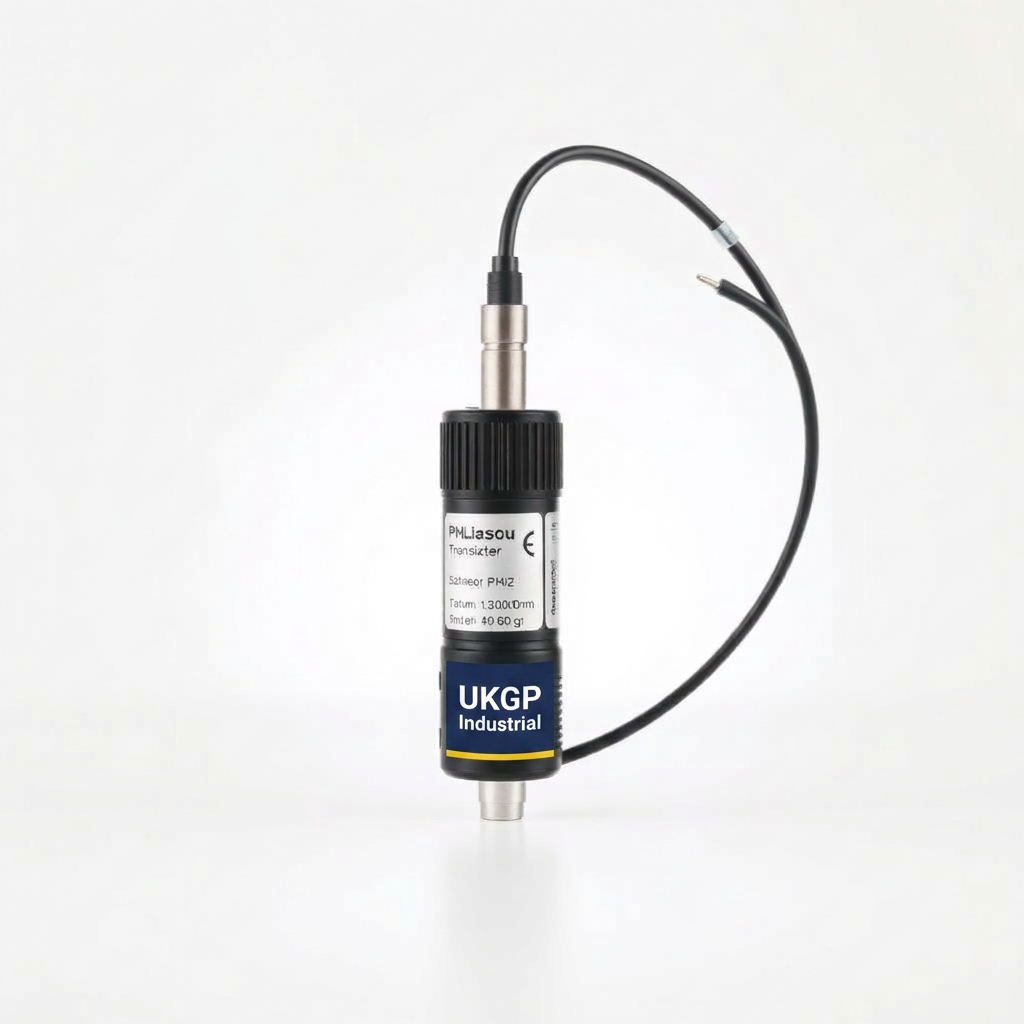
For a procurement lead or plant engineer, the question of what is ph meter quality is answered by its industrial specifications. A commercial building requires more than a plastic hobbyist probe; it needs a solution designed for immersion and pressure. The UKGP industrial pH sensor & transmitter kit is a professional-grade assembly consisting of a high-accuracy sensor, a dedicated transmitter, and a robust M12 cable kit. These units are factory-calibrated to save time during onsite commissioning, ensuring that the first reading you get is one you can trust. With an IP68 rating, the assembly is protected against moisture ingress, a common cause of failure in damp or humid plant-room environments where condensation is prevalent.
The transmission of data is handled via 4-20 mA or Modbus protocols, making it universally compatible with modern BMS controllers. This digital backbone is what separates an industrial sensor from a basic meter; it allows for long-cable runs without signal loss and provides diagnostic data that can alert the operator to a broken cable or a failing electrode. Our kits come with a 2-year warranty as standard, reflecting the confidence we have in our hardware's ability to withstand the rigours of continuous operation. When you choose a UKGP sensor, you are not just buying a component; you are investing in a reliable data source that forms the heart of your water quality management plan.
Installation should always be considered during the selection process. The UKGP kit includes the necessary mounting hardware to ensure horizontal or vertical integration is straightforward for M&E subcontractors. Because the units are factory-calibrated, the 'plug-and-play' nature of the M12 cable kit reduces the technical burden on the commissioning engineer. In the event of eventual sensor depletion after years of service, the modular design allows for the sensor head to be replaced without discarding the entire transmitter, providing a sustainable and cost-effective maintenance path. Contact our Surrey-based technical team today to discuss how our kits can be integrated into your next project specification.
- High-accuracy factory-calibrated sensors for immediate deployment.
- Industrial 4-20 mA or Modbus outputs for seamless BMS integration.
- IP68 rated waterproof housing suitable for plant-room conditions.
- Comprehensive 2-year warranty and modular sensor replacement.
The Commercial Impact of Accurate pH Monitoring
From a commercial perspective, understanding what is ph meter importance scales with the size of the estate. For a large-scale commercial office in London or a sprawling NHS campus, the cost of a full system failure due to corrosion can run into hundreds of thousands of pounds. Replacing a major plate heat exchanger or retubing a boiler is a significant capital expense that can be avoided with a relatively small investment in sensing technology. By maintaining the pH within the manufacturer's specified range, you protect the thermal efficiency of the entire network. Acidic water leads to the leaching of metals, while overly alkaline water can contribute to scale; both scenarios insulate the heat transfer surfaces and drive up energy bills.
M&E contractors can also leverage pH monitoring to reduce their liability. By providing a logged history of water chemistry, they can prove that the system was maintained within specification during the defects liability period. If a component fails due to poor water treatment by the client's maintenance provider, the data provides an indisputable record. This transparency builds trust and can lead to long-term service contracts. At UKGP, we support contractors by providing the sensors and transmitters that make this level of professional reporting possible. Our technical documentation and UK-based support mean you have an expert partner to call upon when designing your control logic for pH-based chemical dosing.
Environmental ESG goals are also supported by accurate measurement. By precisely controlling the pH, the volume of chemical additives—such as corrosion inhibitors and biocide surfactants—can be optimised. Over-dosing is not only wasteful and expensive but can also alter the conductivity of the water and lead to other complications. A precise pH meter ensures that chemicals are only used when necessary, aligning with corporate sustainability targets. To receive a detailed proposal for our pH sensing and transmitter range, reach out to our team at UKGP today; we offer full technical support and fast lead times for UK-wide delivery from our Surrey facility.
- Protects high-value heat exchangers and boilers from costly failure.
- Reduces energy consumption by preventing scale and corrosion fouling.
- Provides an audit trail for liability protection and warranty claims.
- Optimises chemical usage, supporting corporate sustainability and ESG.
Selecting the Right Sensor for the Job
The selection process for what is ph meter excellence begins with understanding your system temperature and pressure requirements. High-pressure systems require reinforced sensor bodies, while high-temperature circuits may need specialized electrolytes to prevent reference poisoning. The UKGP range is specifically curated for the building services engineer, meaning we don't present you with thousands of laboratory variants. Instead, we offer industrial-strength sensors that are fit for purpose in HVAC headers and secondary circuits. Whether you are monitoring a small LTHW circuit or a massive district heating network, the principles remain the same: reliability, accuracy, and ease of integration into the wider control strategy.
A critical factor often overlooked is the cable and connectivity. In commercial environments, electromagnetic interference (EMI) from large VFDs and pumps can corrupt low-voltage signals from sensors. This is why our kits include shielded M12 cable sets and transmitters that convert the sensitive pH voltage into a robust 4-20 mA or digital Modbus signal right at the measurement point. This ensures that the data reaching the BMS is clean and actionable. When you speak to our technical team about your requirements for an industrial pH sensor & transmitter, we will help you identify the best mounting points and communication protocols to ensure your installation is a success from day one.
Ultimately, the goal is peace of mind. Knowing that your system water is within the 'goldilocks zone'—not too acidic and not too alkaline—allows you to focus on other aspects of facility management. With the UKGP pH sensor & transmitter, you get a factory-calibrated solution that is backed by a 2-year warranty and expert UK-based support. We understand the pressures of project deadlines and the importance of reliable hardware. Don't leave your water quality to chance or infrequent manual tests. Invest in the technology that provides continuous protection and professional-grade data. Request your technical consultation and quote from UKGP today to see how we can streamline your plant-room monitoring.
- Select sensors based on heat network pressure and temperature profiles.
- Prioritise shielded cabling to prevent signal interference from pumps.
- Ensure modularity for easy future sensor replacement and maintenance.
- Verify factory calibration to accelerate onsite commissioning times.
Frequently asked questions
How often should an industrial pH meter be calibrated?
- While our UKGP sensors are factory-calibrated, BSRIA BG50 suggests regular verification. For critical HVAC systems, we recommend a calibration check every 6-12 months, or sooner if the system has undergone significant chemical changes or flushing.
Can I connect the pH transmitter directly to my BMS?
- Yes, our transmitters are designed for UK building services and offer standard 4-20 mA analogue or Modbus RTU digital outputs, allowing for direct connection to almost any Building Management System (BMS) for real-time monitoring and alarming.
What is the difference between a laboratory pH meter and an industrial one?
- A laboratory meter is for intermittent use in controlled environments. An industrial pH meter, like the UKGP assembly, is designed for continuous immersion in pressurised pipes (IP68), features robust materials to resist fouling, and provides industrial output signals for automation.
Is the M12 cable kit included with the UKGP pH sensor?
- Yes, our industrial pH sensor & transmitter kit comes complete with the sensor, transmitter, and a high-quality M12 cable kit to ensure a secure, moisture-resistant connection in demanding plant-room environments.
Why is pH monitoring important for plate heat exchangers?
- Plate heat exchangers have narrow channels and thin plates. If the pH drops (acidic), the plates can pit and leak; if it's too high, scale can form and reduce heat transfer efficiency. A pH meter provides the data needed to keep the water in a safe, non-corrosive range.