The Fundamentals of Plate Heat Exchanger Thermal Design
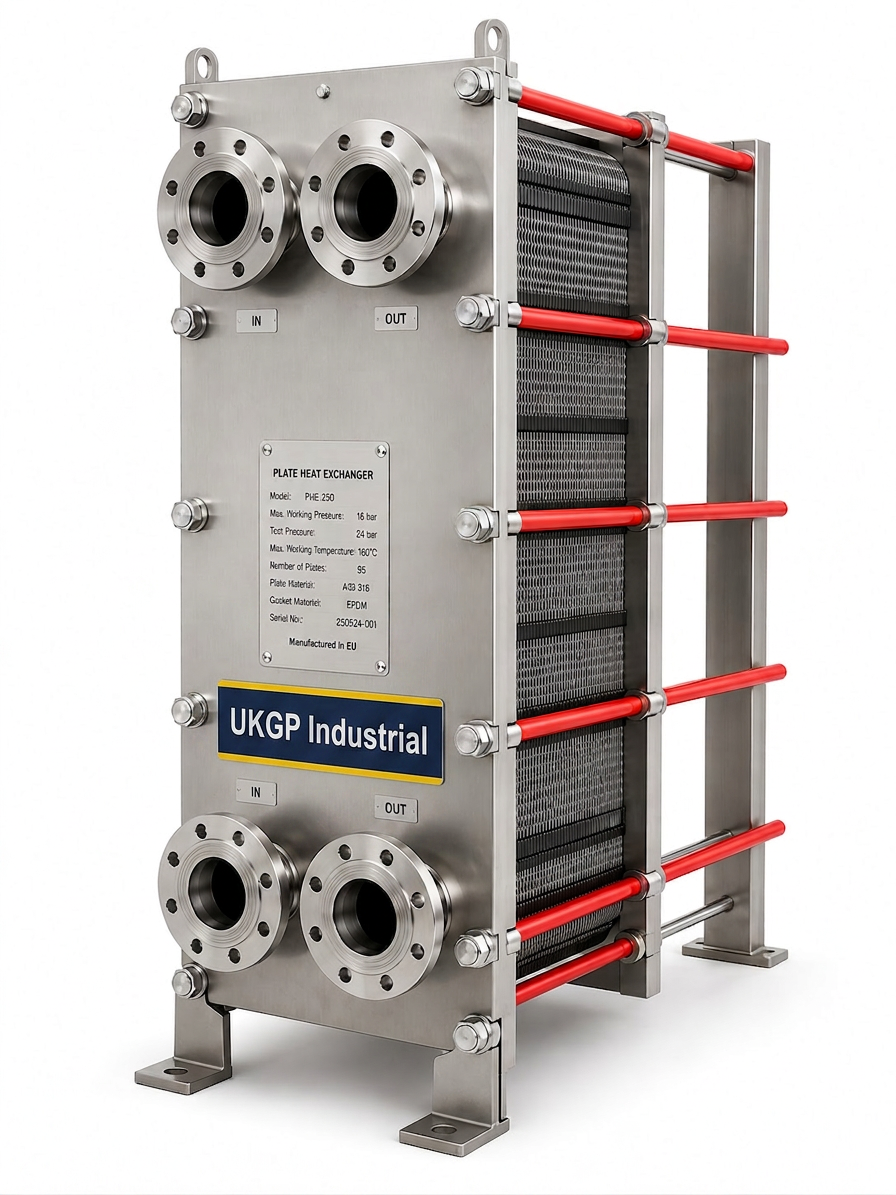
When approaching the task of plate heat exchanger thermal selection, engineers must first consider the Log Mean Temperature Difference (LMTD) and the specific heat capacity of the fluids involved. In a typical UK commercial HVAC setting, the plate heat exchanger acts as the critical bridge between the primary heat source—such as a boiler or heat pump—and the secondary building circuit. Achieving a 'close approach' temperature is often the goal, but this requires a larger surface area and careful plate configuration. Consultants must provide accurate flow rates and temperature drops to ensure the unit performs as intended without excessive pressure loss. At UKGP Industrial, we handle this complexity by sizing every plate heat exchanger from a full thermal spec to match your specific application requirements exactly.
The heat transfer coefficient is influenced heavily by the turbulence created within the plate pack. High turbulence improves heat transfer but increases the pressure drop across the unit. Therefore, the selection process is a balancing act between thermal performance and the pumping power required to overcome resistance. Under-sizing a plate heat exchanger can lead to insufficient heat delivery during peak winter loads, while over-sizing can lead to low flow velocities that encourage fouling and sedimentation, particularly in systems not strictly adhering to BSRIA BG29 flushing protocols. It is vital to work with a supplier that understands these mechanical trade-offs and provides detailed thermal data sheets before procurement begins.
To ensure long-term reliability, the materials selected for the plates and gaskets must be compatible with the system fluid and operating temperatures. Stainless steel 316 is the standard for most LTHW applications, but more corrosive environments might require titanium. Gasket materials like EPDM are preferred for heating, while Nitrile might be used for oil-based cooling. When you request a quote for a plate heat exchanger from UKGP Industrial, you gain access to our technical expertise in material selection, ensuring that your unit is not only thermally efficient but also resilient against the chemical additives often found in closed-loop systems managed under BS 8552 monitoring.
- LMTD calculation for precise thermal transfer
- Assessment of maximum allowable pressure drop
- Fluid compatibility and material metallurgy
- Optimisation for close approach temperatures
Integrating Side Stream Filtration with your Plate Heat Exchanger
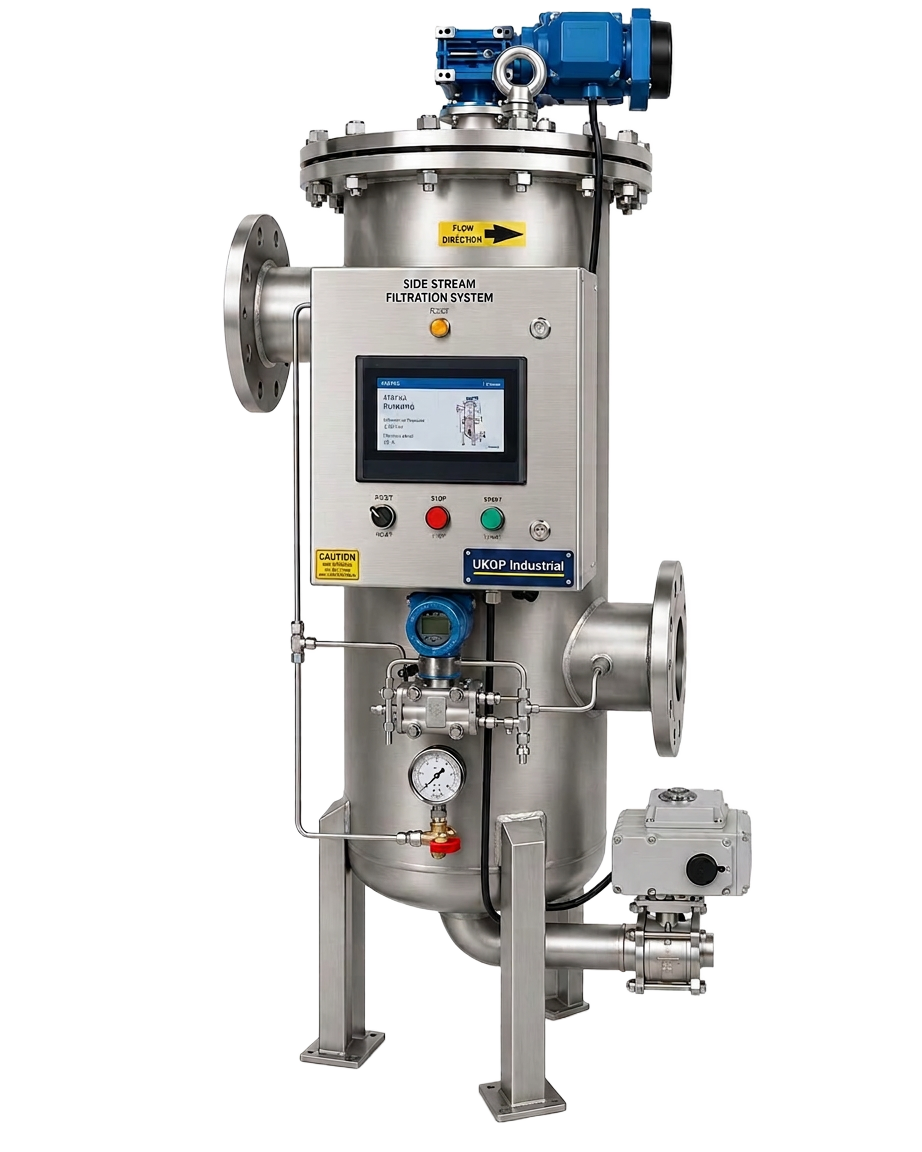
Even the most precise plate heat exchanger thermal selection can be undermined by poor water quality. Suspended solids and magnetite build-up within the narrow channels of a PHE will drastically reduce the heat transfer coefficient, leading to system inefficiencies and increased energy costs. BSRIA BG50 highlights the importance of maintaining low turbidity and controlling corrosion in closed-loop systems. To prevent the plate heat exchanger from becoming an expensive filter for the rest of the building, the installation of a high-quality side stream filtration unit is highly recommended for all commercial plant rooms. This proactive approach ensures the narrow thermal passages remain clear and functional over the lifecycle of the equipment.
Magnetic filtration combined with stainless steel mesh elements can capture microscopic debris before it settles in the corrugated plates of the heat exchanger. In systems where a plate heat exchanger is used for hydraulic separation, the primary side is often cleaner than the secondary side, where older pipework may exist. A side stream filter should be installed on the secondary return to protect the PHE from debris coming back from the building. This reduces the frequency of maintenance shutdowns and preserves the 2-year warranty coverage provided on UKGP units. By maintaining water chemistry, you ensure that the calculated thermal performance remains consistent year after year.
Practical experience shows that systems lacking adequate filtration often suffer from 'thermal drift,' where the secondary flow temperature slowly drops despite high primary input. This is almost always due to fouling on the plate surfaces. By combining a correctly sized plate heat exchanger with robust side stream filtration, M&E contractors can deliver a system that meets the stringent requirements of BSRIA BG29 and BG50. At UKGP, we offer integrated solutions that address both the heat transfer and the water quality aspects of modern HVAC design, helping consultants de-risk their projects from the design phase through to commissioning.
- Removal of magnetite and non-magnetic debris
- Protection of narrow PHE plate channels
- Compliance with BSRIA BG50 water quality guidelines
- Reduction in lifetime maintenance costs
Thermal Specification Requirements for Gasketed and Brazed Units
The choice between a gasketed and a brazed plate heat exchanger depends on the scale of the project and the required serviceability. Gasketed units are preferred for large DN20 to DN300 installations where the ability to strip, clean, and expand the plate pack is necessary. For smaller, high-pressure applications where a compact footprint is essential, brazed versions offer excellent thermal density. Regardless of the type, the plate heat exchanger thermal selection remains dependent on accurate input data. UKGP Industrial specialises in both formats, providing units sized from DN20 to DN300 to suit various load profiles from domestic hot water (DHW) generation to large-scale district heating interfaces.
For projects requiring high resilience, such as hospitals or data centres, the thermal selection must account for redundancy. Often, two 100% duty units or three 50% duty units are specified. This ensures that while one plate heat exchanger is being serviced, the building remains operational. Our gasketed range allows for easy plate replacement and re-gasketing on-site, which is a significant advantage over brazed units that are essentially 'fit and forget' until failure. Every UKGP plate heat exchanger comes with a 2-year warranty, reflecting our confidence in the build quality and the precision of our thermal sizing software, which calculates performance based on your specific primary and secondary temperature profiles.
Lead times are a critical factor in procurement for M&E contractors. Currently, UKGP maintains a lead time of 4-6 weeks for most standard and bespoke plate heat exchanger orders. This allows for scheduled plant room upgrades or new builds without the lengthy delays often associated with overseas manufacturers. When you provide a full thermal spec—including kW load, primary/secondary temperatures, and allowable pressure drops—our engineers can quickly return a proposal that balances technical compliance with commercial viability. We ensure that every unit meets UK safety standards and is ready for integration into the building’s BMS via standard sensor ports and connection flanges.
- Gasketed units for DN20 to DN300 applications
- Brazed units for compact, high-efficiency needs
- Redundancy planning for critical infrastructure
- Fast 4-6 week lead times for UK sites
Impact of Pressure Drop and Flow Rates on PHE Performance
In the context of plate heat exchanger thermal selection, pressure drop is the limiting factor that most frequently dictates the physical size of the unit. A lower allowable pressure drop requires more plates to provide the same thermal duty, as the flow is distributed across a larger cross-sectional area, reducing velocity. While this saves on pump energy, it increases the capital cost of the plate heat exchanger. Conversely, allowing a higher pressure drop can mean a smaller, more cost-effective unit, but it may lead to higher operational costs over time. Finding the 'sweet spot' is a key part of the technical support we provide at UKGP to ensure your plant room is both efficient and economical.
Flow rates must be carefully calculated based on the energy demand (kW) and the temperature delta (ΔT). If the flow rate is too low, the plate heat exchanger may operate in a laminar flow regime rather than a turbulent one, significantly reducing its efficiency. CIBSE guidelines suggest that maintaining adequate velocity is essential for self-cleaning and thermal consistency. When specifying a plate heat exchanger, it is important to communicate any planned variations in flow, such as those caused by variable speed pumps, so that we can verify the thermal performance at both part-load and full-load conditions to avoid any cold-bridge issues.
Furthermore, the connection sizes of the plate heat exchanger (ranging from DN20 to DN300) should ideally match the system pipework to avoid unnecessary friction losses at the transitions. If a plate heat exchanger thermal selection results in a unit with much smaller connections than the main headers, it may indicate that the pressure drop is too high or the velocity is exceeding recommended limits. Our internal technical team reviews every specification to ensure that the chosen DN size is appropriate for the calculated flow rates, providing a 2-year warranty that covers the structural integrity and the performance of the unit under specified design conditions.
- Balancing capital cost vs. pumping energy
- Maintaining turbulent flow for maximum efficiency
- Ensuring connection sizes align with DN20-DN300 pipework
- Part-load performance validation
Material Selection and Durability in Commercial HVAC
The longevity of a plate heat exchanger is largely determined by the harmony between material selection and the operating environment. In regions of the UK with hard water, the risk of scaling on the heat transfer surfaces is high. Without a comprehensive plate heat exchanger thermal selection process that accounts for fouling factors, the unit may fail to meet its duty within months of installation. We recommend a conservative fouling allowance in the design phase to ensure that the heater or cooler still performs even as minor deposits form. This is particularly relevant for DHW applications where potable water is heated directly, necessitating the use of WRAS-approved components and often double-wall plates to prevent cross-contamination.
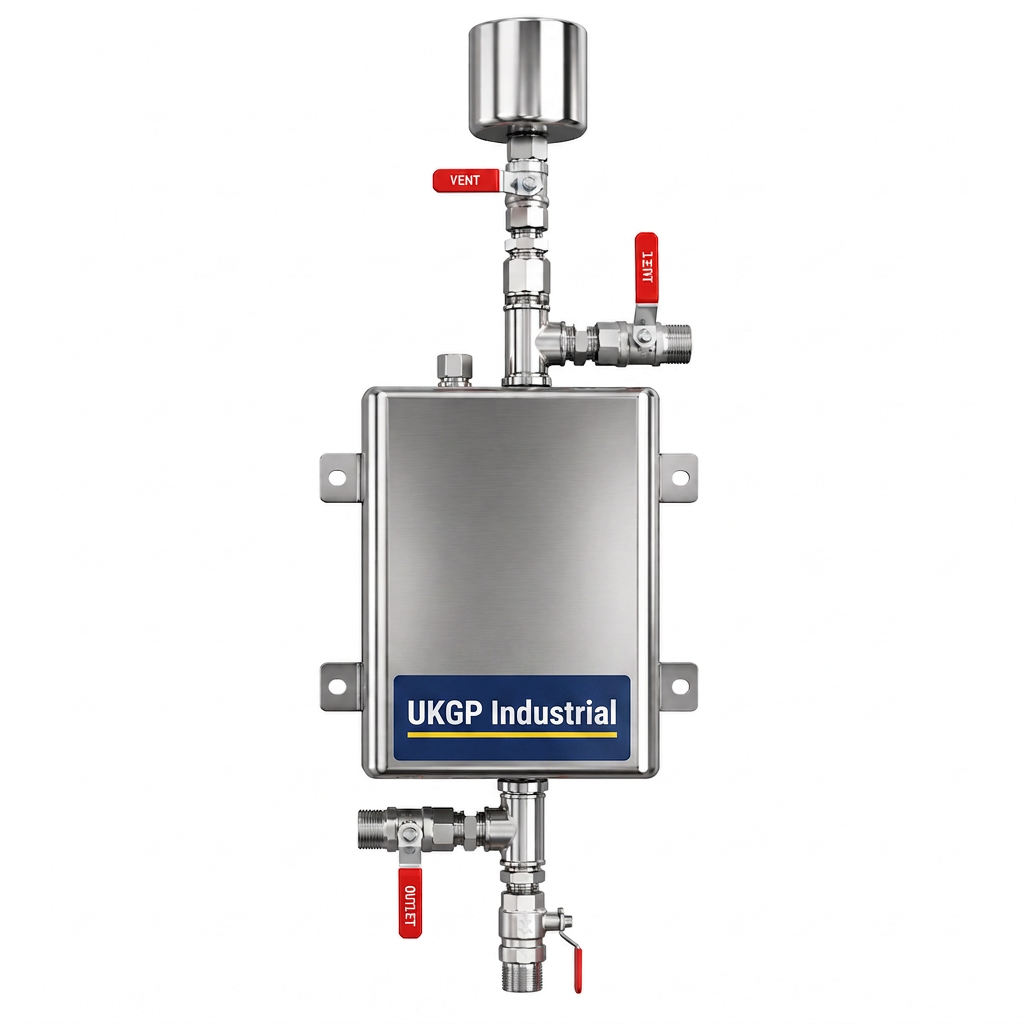
Corrosion resistance is another vital consideration. In systems where chemical dosing pots are used to introduce inhibitors, the chemical composition of the fluid must be cross-referenced with the gasket and plate materials. High chloride levels, for example, can lead to pitting corrosion in standard stainless steel, making the selection of high-grade 316L or even exotic alloys necessary. At UKGP Industrial, we don't just supply a product; we provide a plate heat exchanger that is matched to the specific chemical and thermal realities of your project. This technical rigour is why our units are trusted by consultants and FMs across the Surrey and the wider UK commercial market.
Finally, the mechanical design must adhere to relevant standards such as BS EN 14917 for expansion bellows where they are used to isolate the PHE from pipework vibration or thermal expansion. Protecting the plate heat exchanger from external mechanical stresses ensures that the gaskets maintain a tight seal over their service life. Whether you are looking for a gasketed unit for easy maintenance or a compact brazed unit for a tight plant room, our 4-6 week lead time and 2-year warranty provide the peace of mind needed for high-stakes M&E projects. Requesting a quote based on a full thermal spec is the best way to ensure your selection is technically sound and commercially competitive.
- 316L Stainless Steel and Titanium options
- WRAS approved gaskets for DHW applications
- Fouling factors integrated into thermal calculations
- Compatibility check with system corrosion inhibitors
Summary of Plate Heat Exchanger Specification Best Practices
To conclude, effective plate heat exchanger thermal selection requires a holistic view of the HVAC system. From initial kW demand and temperature profiles to long-term water quality management under BSRIA BG50, every detail matters. Specifying a unit with the correct DN20 to DN300 sizing and connection type ensures a seamless installation for contractors, while the FM benefits from a unit that is easy to maintain and energy-efficient. UKGP Industrial is committed to supporting UK engineers with high-quality, technically verified solutions that stand the test of time and usage in demanding environments.
Always ensure your supplier provides a full thermal data sheet during the tender stage. This document should clearly state the heat exchange area, the LMTD, the pressure drops on both sides, and the fluid velocities. Without this data, comparing two different plate heat exchanger quotes is impossible, as one may be under-sized and destined for early failure. Our team at UKGP provides this transparency as standard, ensuring that every plate heat exchanger we deliver meets the exact needs of the building services consultant's design intent. With a 2-year warranty and a 4-6 week lead time, we are the preferred partner for rapid-response and scheduled plant room projects.
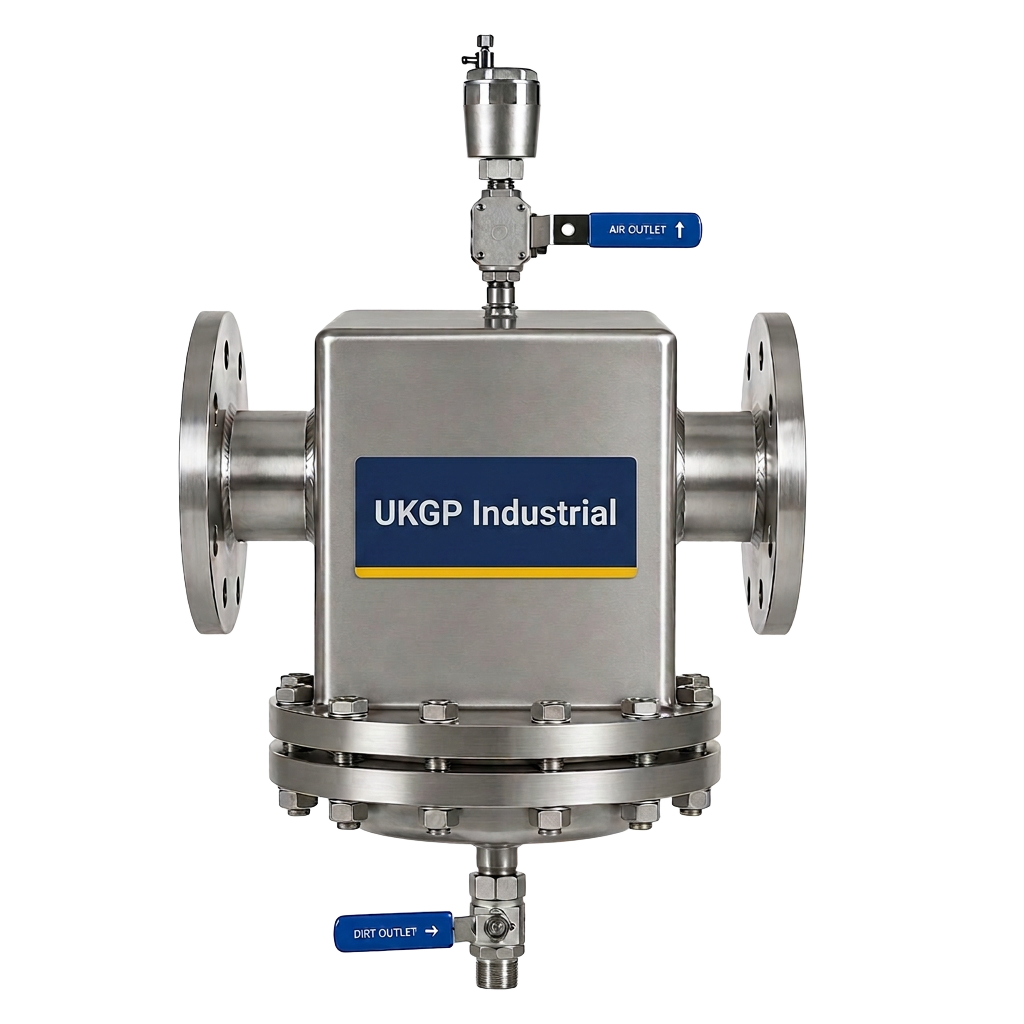
Modern plant rooms demand more than just components; they demand integrated thermal solutions. By considering the role of air & dirt separators, chemical dosing pots, and side stream filtration alongside your plate heat exchanger, you create a robust ecosystem that prevents thermal degradation. If you are currently working on a plant room design or a replacement project, contact UKGP Industrial today for an expert plate heat exchanger thermal selection. We will help you navigate the complexities of CIBSE standards and BSRIA guidelines to find the perfect gasketed or brazed unit for your specific thermal and hydraulic requirements.
- Insist on detailed thermal data sheets for every quote
- Verify 2-year warranty and UK lead times
- Coordinate PHE sizing with filtration and separation assets
- Ensure compliance with CIBSE and BSRIA standards
Frequently asked questions
What information is needed for a plate heat exchanger thermal selection?
- To provide an accurate sizing, we require the total heat load in kW, the primary inlet and outlet temperatures, the secondary inlet and outlet temperatures, and the maximum allowable pressure drop for both circuits.
What is the typical lead time for a UKGP plate heat exchanger?
- Our standard lead time for both gasketed and brazed units across our DN20 to DN300 range is 4-6 weeks, providing a reliable window for M&E project planning.
Does the plate heat exchanger come with a warranty?
- Yes, all UKGP plate heat exchangers are supplied with a 2-year warranty as standard, covering manufacturing defects and performance against the provided thermal specification.
Can I use a plate heat exchanger for Domestic Hot Water (DHW)?
- Absolutely. We provide WRAS-approved gasket materials and can supply double-wall plates (safe-break) for DHW applications to ensure there is no risk of cross-contamination between the heating fluid and potable water.
How does BSRIA BG50 affect my choice of heat exchanger?
- BSRIA BG50 focuses on water quality in closed-loop systems. Poor water quality leads to fouling in the narrow channels of a plate heat exchanger. Adherence to these guidelines, alongside side-stream filtration, is essential for maintaining the thermal efficiency of the unit.